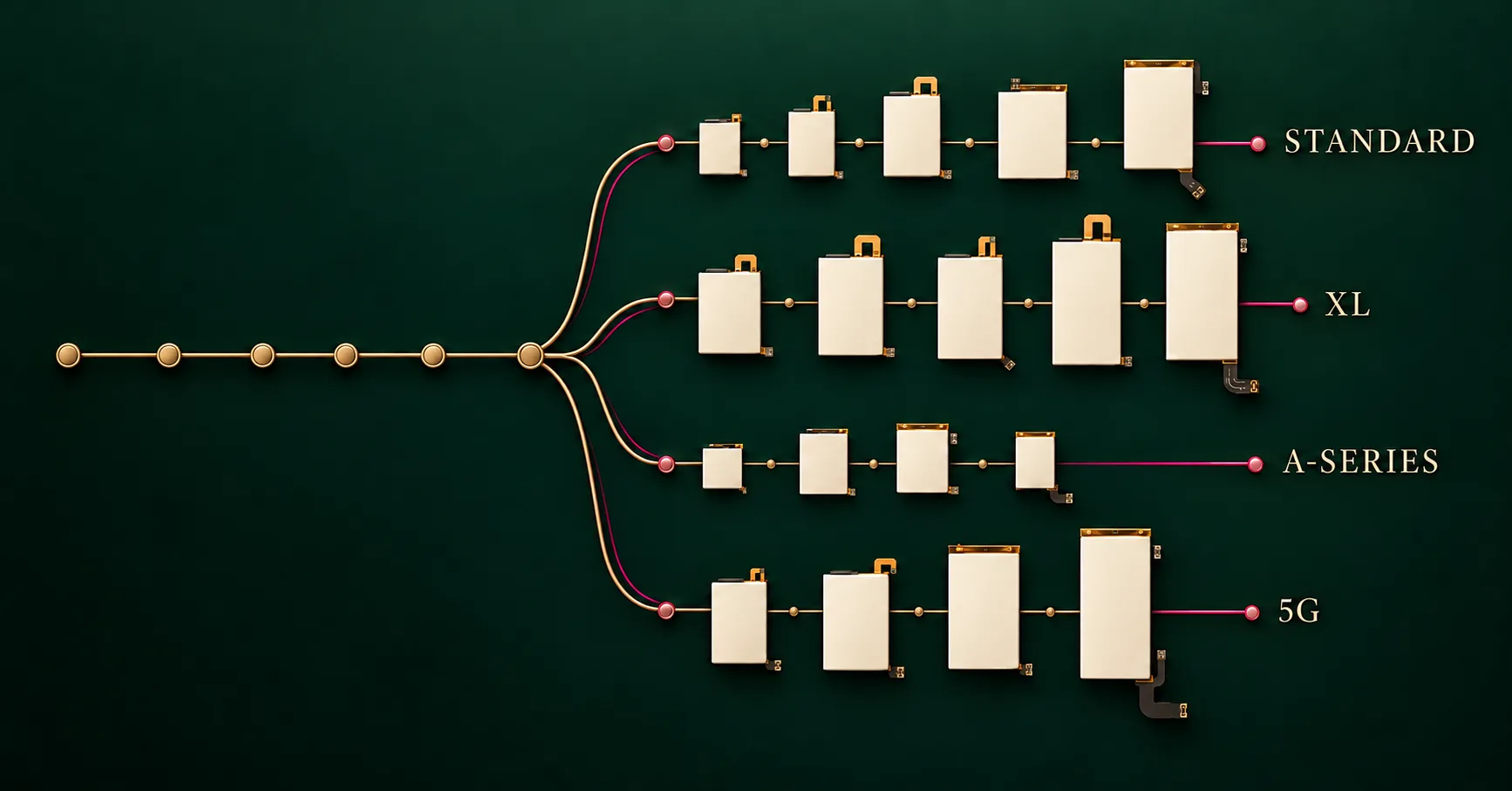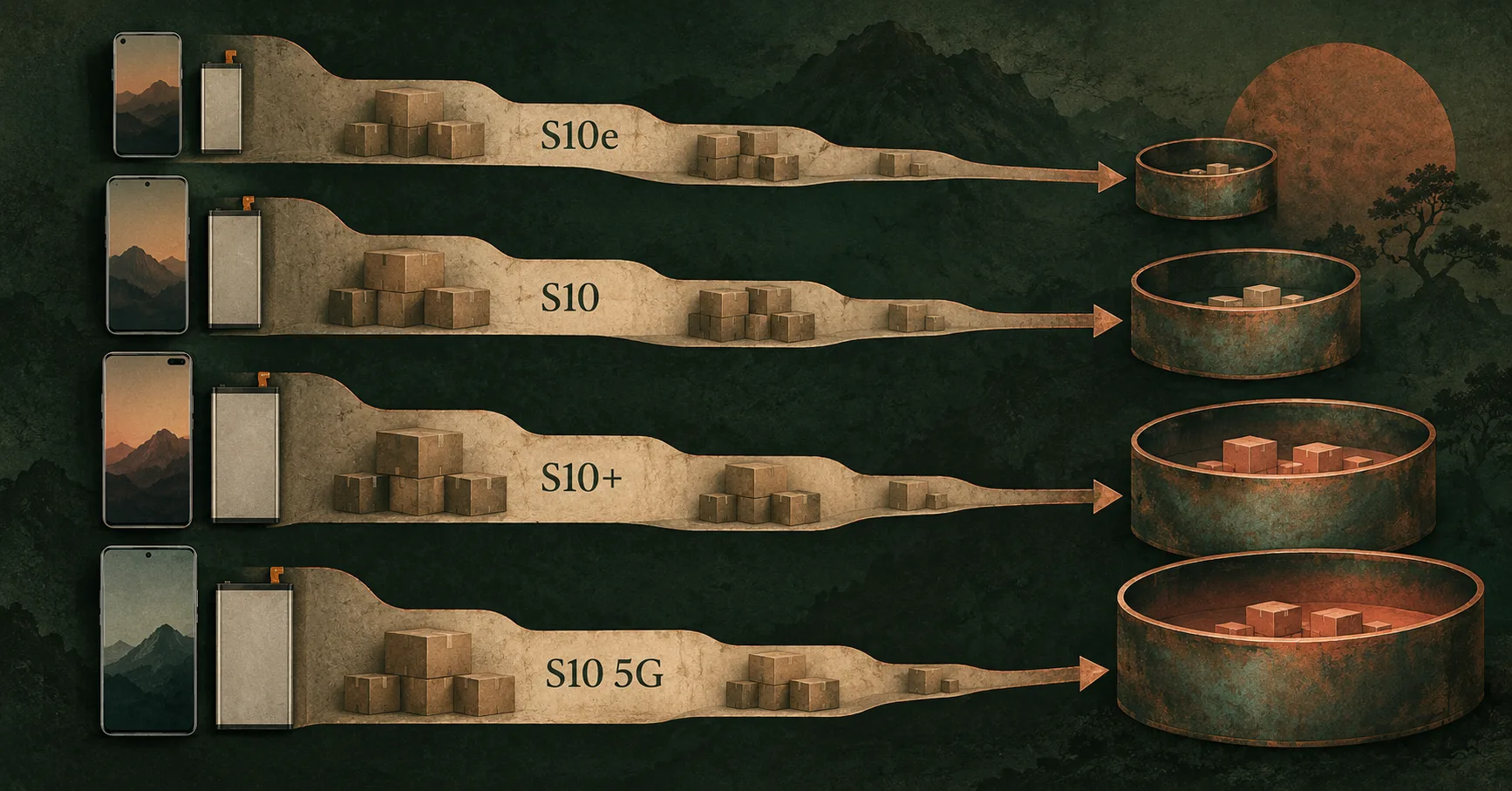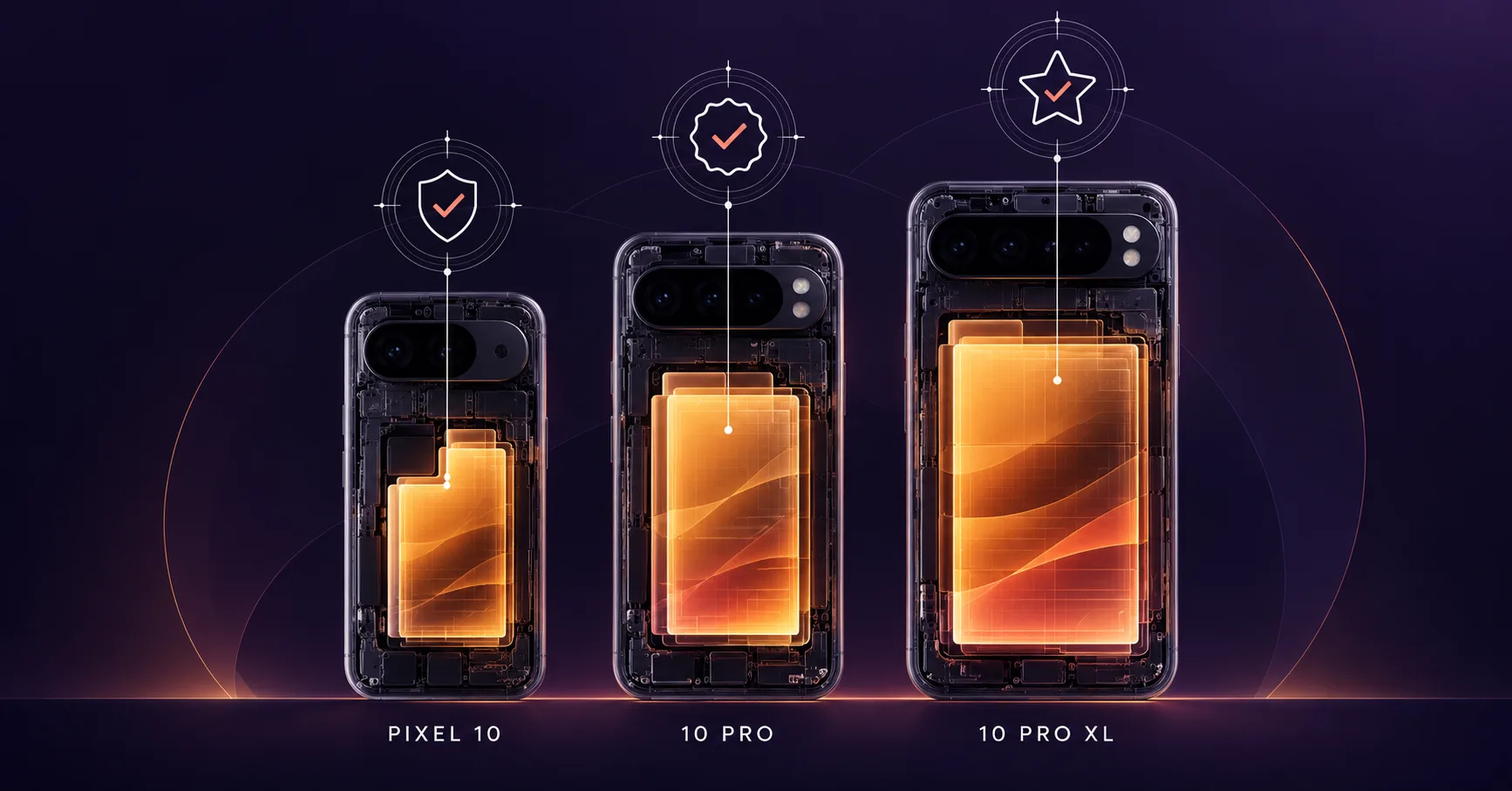

Quick answer: a replacement battery for a Kyocera rugged flip phone should be purchased by exact device model and validated as part of the complete rear assembly. Battery reference, dimensions, contacts, electrical specification, back-cover fit and locking screw all matter. For enterprise fleets, the purchasing decision also includes spare ratio, multi-bay charging, lot traceability and future availability.
A search for a battery for kyocera flip phone can lead to a single product listing, but “Kyocera flip phone” covers multiple generations and carrier variants. The buyer should capture the device model from the label inside the battery well, match it to the proposed battery reference and verify the assembly in representative fleet devices before placing a bulk order.
Start With the Device Label, Not the Retail Name
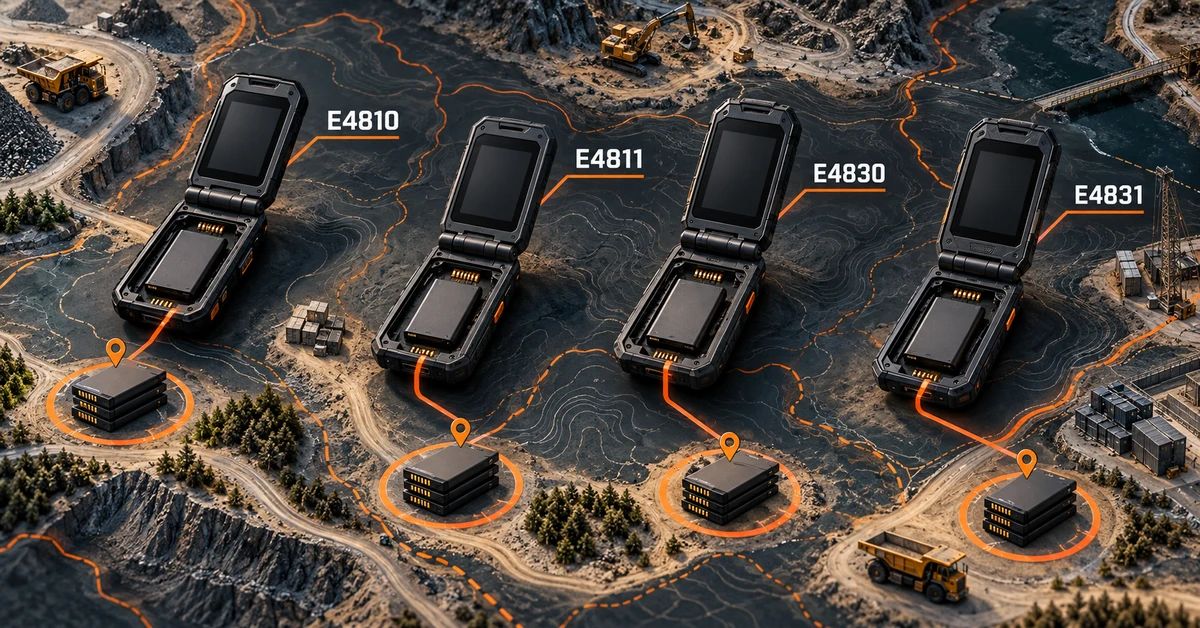
Kyocera's current official battery page lists the removable SCP-73LBPS pack for four rugged models: DuraXV Extreme E4810, DuraXV Extreme+ E4811, DuraXE Epic E4830 and DuraXA Equip E4831. It also states that the battery will not fit other legacy models and instructs buyers to check the device label in the battery well.
| Device family | Model | Fleet context | Approval treatment |
|---|---|---|---|
| DuraXV Extreme | E4810 / E4810NC | Rugged flip phone, including non-camera variant | Verify full model and carrier configuration |
| DuraXV Extreme+ | E4811 / E4811NC | Updated rugged flip-phone fleet | Independent device record |
| DuraXE Epic | E4830 | Enterprise and field-work deployment | Independent device record |
| DuraXA Equip | E4831 | Rugged workforce deployment | Independent device record |
The official SCP-73LBPS battery page gives the most useful procurement instruction in plain language: “Please check your phone model prior to purchasing.” Apply that rule to every proposed kyocera flip phone battery, including batteries sold under older marketing names or cross-references.
Resolve Capacity and Part-Reference Differences Before Approval
Current official sources do not present one perfectly uniform capacity number. The official accessory page lists SCP-73LBPS at 1,720 mAh, 3.8 V and 6.6 Wh. Some official device pages describe a removable 1,770 mAh lithium-ion battery. This difference should be treated as a document-control question, not silently averaged or copied into a specification.
Ask the supplier to state the exact battery reference, label capacity, nominal voltage, watt-hours, drawing revision and applicable devices. Then compare those fields with the current target-device documentation. Capacity can reflect different typical, nominal or rounded device descriptions; only the current controlled pack specification and test method can define the purchasing requirement.
A kyocera battery offer that lists only “1,700 mAh class” or “fits DuraXV” is incomplete. The RFQ must make any discrepancy visible before samples arrive, and the approval report should preserve the accepted label and drawing revision.
Validate the Battery Door as Part of the Power System
Unlike a sealed smartphone pack, these batteries are designed for field removal. That makes contact alignment, battery seating, back-cover condition, gasket interface and lock engagement part of compatibility. A battery can have the right voltage and still fail operationally if it rocks in the bay, loses contact under vibration or prevents the rear cover from sealing correctly.
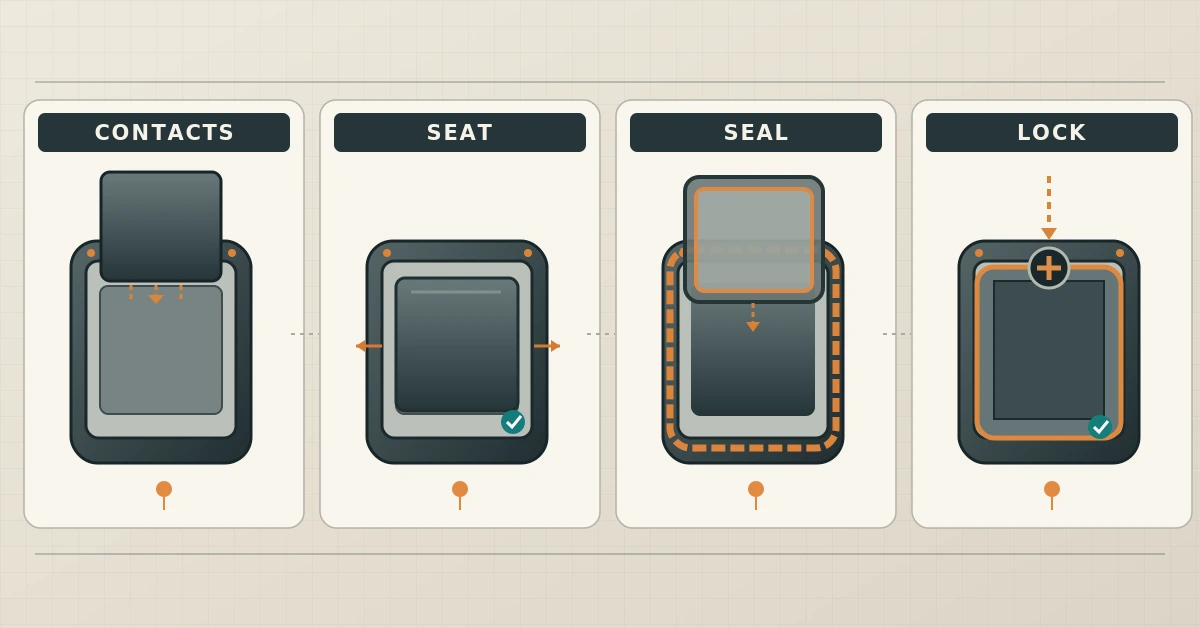
Kyocera's official replacement battery-door page states that the cover assembly includes a locking screw and instructs users to ensure the door is “fully sealed and screw is tightened.” A replacement-battery validation should therefore include the actual cover and fastener used in the fleet, not only an open-bay power-on test.
- Inspect battery contacts for position, finish, contamination and damage.
- Confirm the pack seats flat without foam shims or forced pressure.
- Close the original or approved replacement door without interference.
- Engage the locking screw using the approved service method.
- Check for movement, intermittent power and charging-contact behavior.
Do not claim restored water, dust, drop or hazardous-location performance from battery fit alone. Those properties apply to a qualified device configuration and correct assembly. A third-party replacement component requires project-specific review before any ruggedness or hazardous-location statement is made.
What a Sample Approval Package Should Prove
Identity and construction
Record the device model, carrier or market, supplier SKU, battery cross-reference, label artwork, production date, cell lot and finished-pack lot. Require a controlled drawing showing length, width, thickness, contact position, polarity, keying features and case geometry. Document any change to the cell, plastic housing, contacts, protection circuit or label.
Electrical and capacity evidence
Confirm polarity, terminal voltage under the agreed receiving condition, nominal voltage, watt-hours and protection behavior. Capacity testing should state charge method, discharge rate, cutoff voltage, temperature, rest periods, sample count and equipment. The battery capacity testing guide provides general test-control principles that can be adapted to the removable pack.
Installed operation
Test initial boot, idle stability, representative calling or push-to-talk activity, charging through USB-C where applicable and charging through approved rear contacts or cradle. Record device firmware, charger, cradle, ambient conditions and run time. The goal is repeatability, not a single successful startup.
For a kyocera duraxv extreme battery, include both camera and non-camera devices when both are in the fleet. The common battery reference does not remove the need to verify each actual fleet configuration and service workflow.
Plan Fleet Spares From Operational Risk
Enterprise buyers should calculate spare stock from fleet size, shift pattern, charging opportunity, battery-swap policy, lead time, field locations and acceptable downtime. A public-safety or remote-service fleet may need a different reserve than a warehouse with centralized charging and same-day parts access.
| Planning input | Question | Procurement effect |
|---|---|---|
| Fleet size | How many active devices share the exact pack? | Base demand pool |
| Shift coverage | Can batteries recharge between shifts? | Spare ratio and charger count |
| Field distance | How quickly can a site receive replacements? | Local safety stock |
| Failure evidence | Which model, lot and usage pattern drives removals? | Reorder and investigation priority |
| Supply continuity | Is the approved configuration repeatable? | Last-buy or dual-source review |
A large search volume does not equal fleet consumption. Use deployment records, battery swaps, service tickets and historical lead times. Review the reserve regularly so a one-time rollout does not become permanent excess inventory.
Control Incoming Lots and Long-Term Storage
On receipt, quarantine stock until identity, packaging, label, dimensions, contacts and electrical condition pass the approved plan. Sample each defined lot rather than treating a multi-date shipment as one population. ESCCharge's mobile phone battery incoming-inspection guide can structure release, hold and reject decisions.
Store accepted batteries under documented conditions, protect contacts from shorting or contamination and separate them by SKU and lot. Rotate inventory using the mobile phone battery storage SOP. Periodically review older reserves instead of assuming removable packs can remain indefinitely in a vehicle, field cabinet or charger.
Prevent Picking and Field-Replacement Errors
Label each bin and field kit with the exact compatible device list and battery reference. Do not shorten the description to “Kyocera rugged battery” if legacy models are present. Train users to read the device label under the battery, inspect contacts, seat the pack correctly and lock the cover.
A kyocera flip phone battery replacement procedure should also define what happens to the removed battery. Record its device, lot if readable, symptom, condition and disposition. Keep damaged packs isolated and route them through approved transport, recycling or disposal procedures.
Build Warranty Evidence Around Fleet Records
When a battery is reported as short-running, intermittent or unable to charge, preserve the phone model, battery lot, charger or cradle, operating environment, symptom and test result. Cross-test with known-good equipment when safe and approved. Use the battery warranty-claims workflow to separate battery, contact, cover, charger, device, environment and evidence-insufficient cases.
Fleet-level data is more useful than isolated anecdotes. If failures cluster by one lot, site, charger bank or vehicle environment, the corrective action may differ. Keep suspect stock on hold while the investigation remains open.
Send an RFQ That Produces Comparable Offers
- exact device models, carrier variants and fleet quantities;
- battery reference, label artwork and controlled dimensional drawing;
- declared capacity type, voltage, watt-hours and complete test conditions;
- contact material, housing, keying and protection-circuit information;
- sample and pilot-lot quantities with installed-device test scope;
- packaging, contact protection, barcode and lot-traceability requirements;
- target environments and any project-specific compliance needs;
- lead time, change notice, warranty investigation and continuity plan.
MOQ, lead time, warranty, capacity and documentation depend on the confirmed configuration, quantity, destination and agreement. Do not assume that an official compatibility list or a competitor catalog claim automatically applies to a third-party offered pack.
Frequently Asked Questions
Does one SCP-73LBPS battery fit every Kyocera flip phone?
No. Kyocera lists specific compatible models and says it will not fit other legacy models. Check the model label in the battery well.
Why do official sources show 1,720 mAh and 1,770 mAh?
Treat the difference as a specification-control issue. Confirm the current pack label, part number, drawing, capacity definition and device application before approval.
Is battery fit enough to preserve water or dust resistance?
No. Correct seating, cover condition, seal and lock matter, and ruggedness claims apply only to the properly assembled qualified device configuration.
How many spare batteries should a fleet hold?
Base the reserve on fleet size, shifts, charging opportunities, site distance, lead time, failure history and acceptable downtime. There is no universal percentage.
Should buyers test rear-contact or cradle charging?
Yes, when the fleet uses those charging paths. Test the approved phone, battery, cradle and power configuration together.
Source for Fleet Continuity, Not Just Part Availability
A reliable program links exact device identity, battery reference, physical fit, cover locking, installed testing, lot control and field evidence. That approach supports rugged-phone uptime while preventing a broad catalog description from becoming an expensive fleet-wide mistake.
Request a fleet-battery sourcing review: send ESCCharge the device models, fleet size, current battery reference, charging method, operating environment, forecast and acceptance plan. The team can review the requested configuration and propose a sample-to-pilot route. Final capacity, MOQ, lead time, warranty and documentation remain subject to confirmed project conditions.