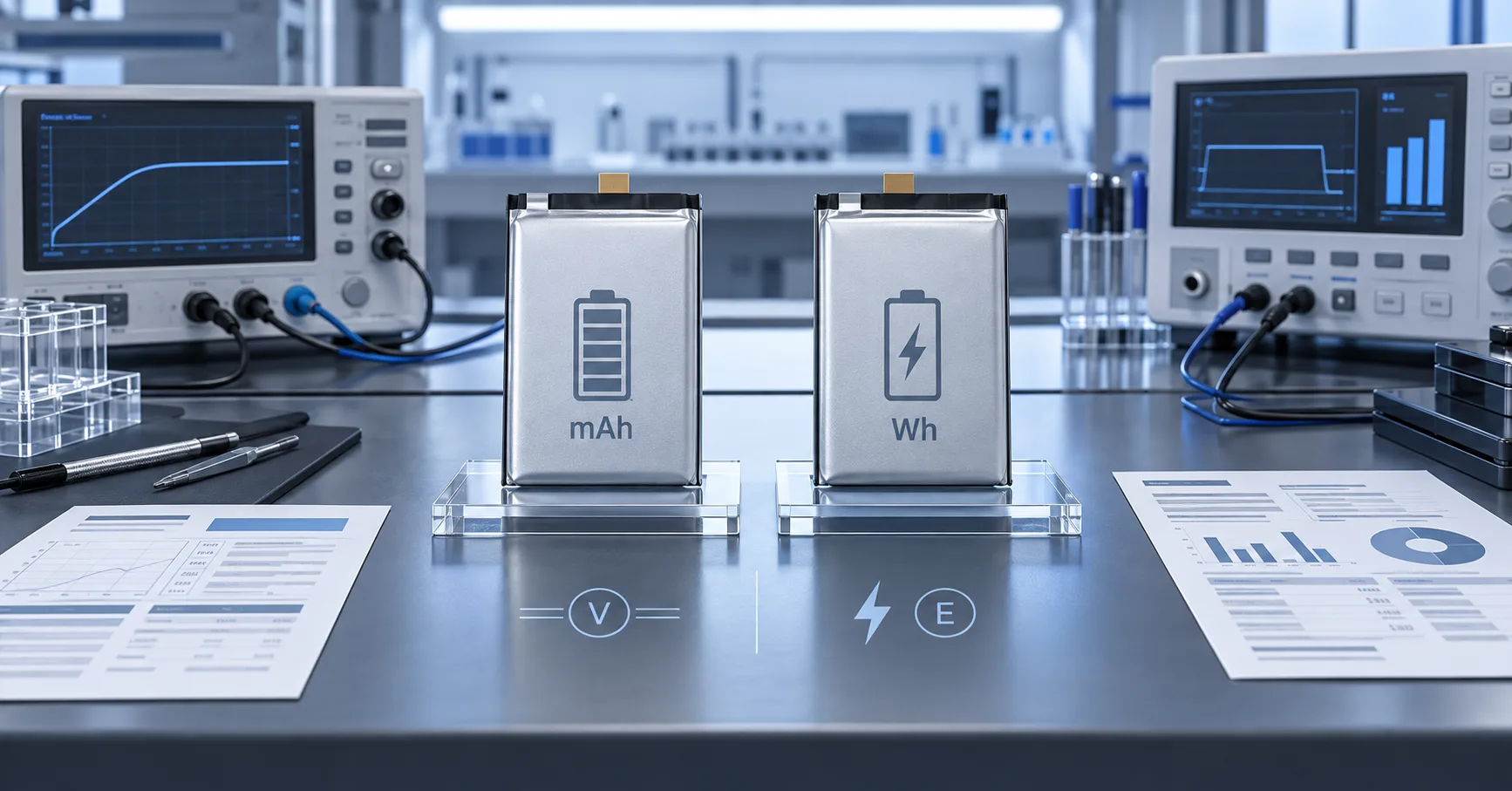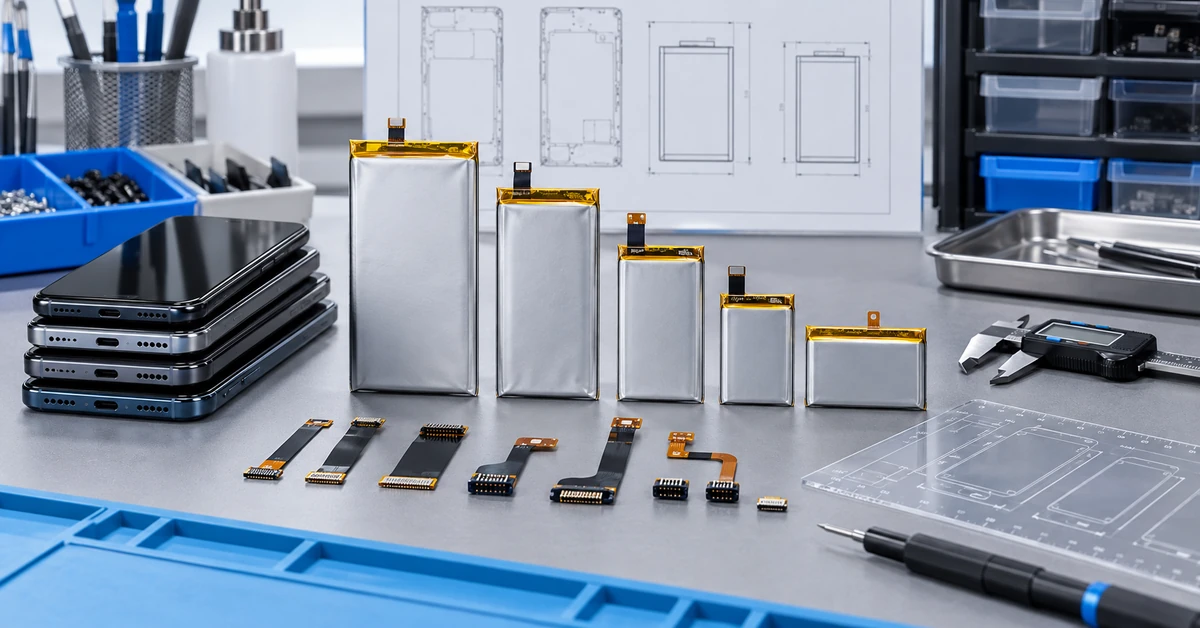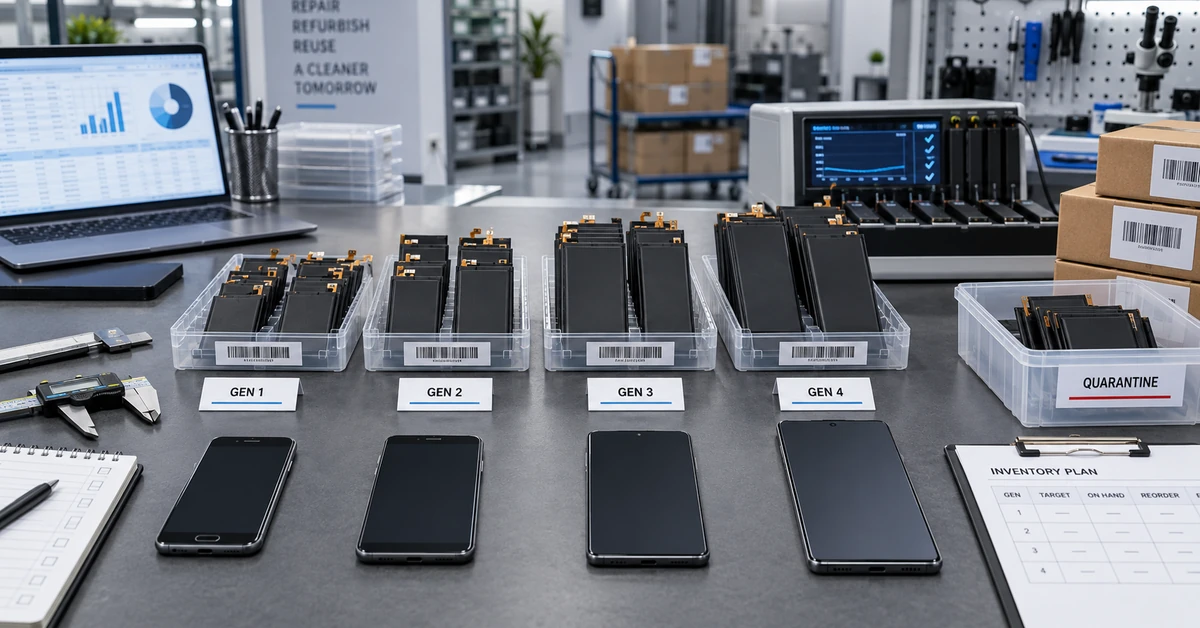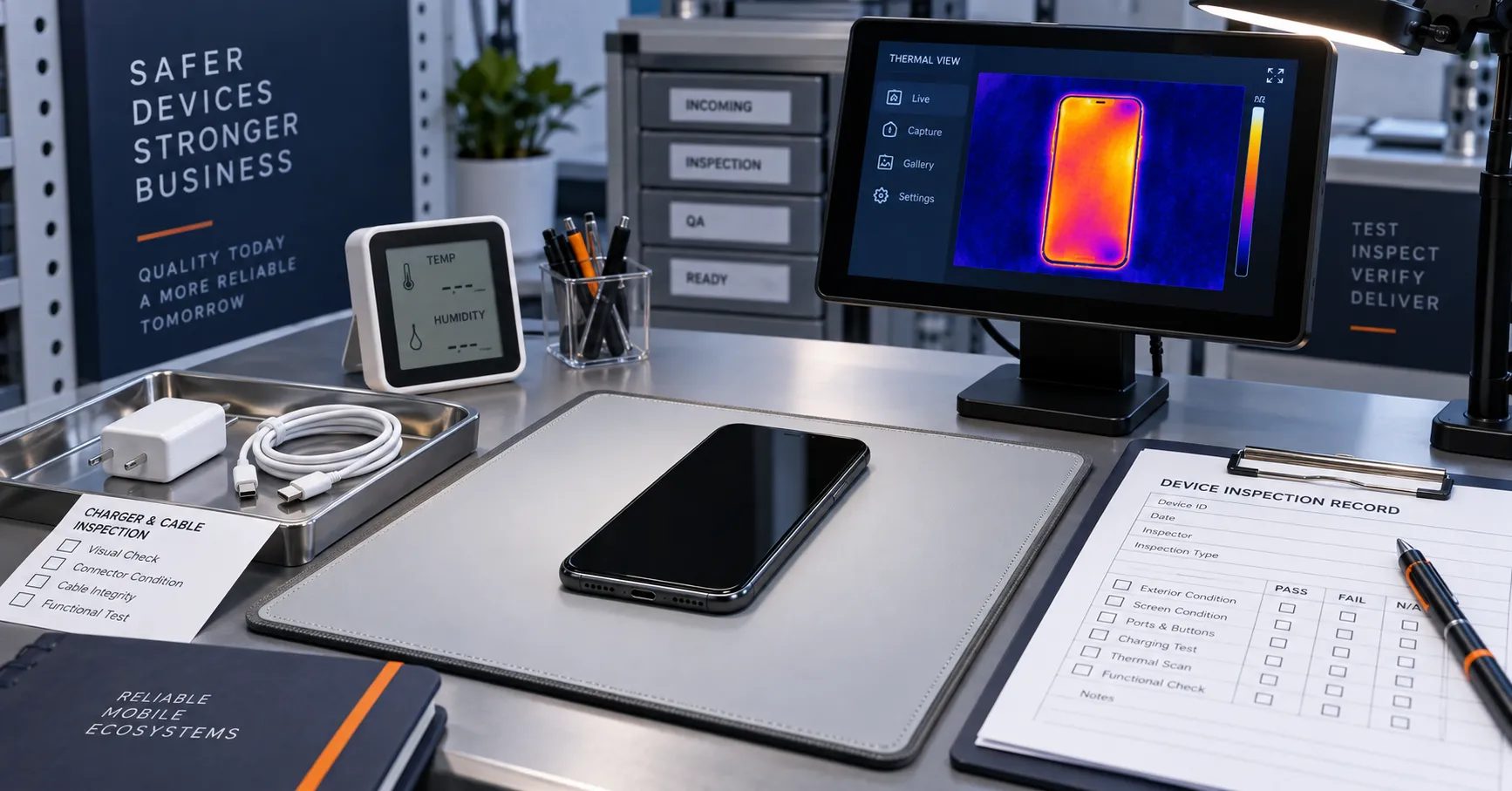


Mobile phone battery storage needs more than a clean shelf. A workable B2B system must preserve the approved condition of each battery, prevent model and batch mixing, identify abnormal stock early, and stop questionable units from returning to sale. For wholesalers, repair chains, refurbishment facilities, and private-label distributors, the warehouse SOP should connect receiving inspection, traceability, stock rotation, quarantine, and dispatch verification.
The key principle is simple: use the battery supplier’s approved storage limits for the specific model, then control every movement by SKU, batch, date, and status. Do not replace model-specific instructions with one generic temperature, state-of-charge, or shelf-life number.
Why Mobile Phone Battery Storage Is a Commercial Control Point
A replacement battery can remain in inventory for weeks or months before installation. During that period, uncontrolled heat exposure, moisture, physical compression, mixed lots, damaged packaging, or missed inspections can turn purchased stock into rework, warranty claims, and write-offs.
Storage also affects the quality of later decisions. If a warehouse cannot identify the supplier lot and receiving date behind a complaint, the buyer cannot determine whether the issue is isolated, model-specific, handling-related, or batch-wide. Traceability is therefore part of product quality, not merely an administrative task.
Buyers building a wider assortment can use ESC’s mobile phone battery wholesale inventory guide to plan model coverage. The storage SOP in this article begins after those SKUs enter the warehouse.
Define the Storage Specification Before the Goods Arrive
Ask the supplier for a storage and handling specification linked to the exact battery model or product family. The document should identify the permitted environmental range, packaging configuration, inspection interval, shelf-life or retest rule, and the action required when stock falls outside those conditions.
Your purchase file should also connect the commercial SKU to the physical product. At minimum, record:
-
Buyer SKU and supplier model code
-
Compatible device model or model range
-
Rated voltage and declared capacity
-
Connector and flex-cable version
-
Supplier lot or batch number
-
Production or packing date when supplied
-
Receiving date and quantity
-
Inspection status and release authority
-
Applicable transport documents and test-summary reference
Compatibility must be confirmed by device model and battery specification. Similar-looking packs should never be merged merely because their dimensions appear close. Connector position, flex geometry, protection-board configuration, thickness, and device software behavior can differ.
How to Build a Five-Zone Battery Warehouse
A small operation does not need complex automation, but it does need clear status separation. Use five physical or digitally enforced zones.
| Zone | Purpose | Release rule |
|---|---|---|
| Receiving | New deliveries awaiting count and inspection | No picking before receiving checks are complete |
| Approved stock | Released inventory available for normal orders | SKU, batch, date, and status must be readable |
| Quality hold | Stock awaiting retest, document review, or disposition | Release requires an authorized quality decision |
| Quarantine | Damaged, swollen, leaking, overheated, recalled, or otherwise suspect units | Never return to sale without a documented disposition |
| Dispatch staging | Released units assigned to a shipment | Final model, quantity, condition, and document check |

Keep batteries in protective packaging that prevents terminal contact and physical damage. Do not stack or compress cartons beyond the packaging design. The warehouse should also prevent uncontrolled exposure to heat sources, direct sunlight, water, condensation, conductive debris, and impact. Exact environmental limits must come from the approved product specification and local safety requirements.
Use FEFO, Not Blind FIFO
FIFO means first in, first out. FEFO means first expired or first due for review, first out. For mobile phone battery storage, FEFO is usually the stronger control because two lots received on the same date may have different production dates, retest dates, or supplier-approved storage windows.
Assign each lot a next-review date. The date may be based on the supplier’s documented shelf-life rule, an agreed retest interval, or a risk-based internal control. Do not invent a universal period. Older or slow-moving stock should trigger a commercial decision: promote, transfer, retest, return, or responsibly dispose of it before it becomes an after-sales problem.
A useful inventory dashboard tracks quantity on hand, monthly issue volume, age band, next-review date, hold quantity, warranty feedback, and stock-outs by SKU. This makes purchasing more accurate and exposes slow-moving variants before they absorb too much working capital.
Run Receiving and Periodic Condition Checks
Receiving inspection should confirm that the delivered product matches the approved order and sample. The detailed sampling plan depends on the buyer’s risk level, order size, supplier history, and product specification.
A practical receiving check can include:
-
Carton and inner-pack condition
-
SKU, model, batch, quantity, and label accuracy
-
Surface, edge, connector, and flex-cable condition
-
Signs of swelling, leakage, deformation, corrosion, or unusual odor
-
Voltage or other electrical checks under an approved test instruction
-
Document completeness and traceability
-
Comparison with the approved sample or specification
For a fuller receiving workflow, review ESC’s mobile phone battery incoming inspection guide. After release, periodic warehouse checks should focus on packaging integrity, visible condition, label readability, environmental records, overdue review dates, and unexplained inventory movement.
Any electrical measurement needs a defined method, calibrated equipment where applicable, acceptance criteria, and a recorded result. A voltage number without the battery model, test condition, equipment, date, and limit is not enough to support a release decision.
Create a Quarantine Rule That Staff Can Execute
Warehouse staff should not improvise when they find a suspect battery. Post a short escalation rule and train the team to stop movement, isolate the unit, record the evidence, and notify the responsible safety or quality person.
-
Stop picking, charging, testing, or repacking the suspect unit.
-
Move it to the designated quarantine process without creating additional damage or terminal contact.
-
Record SKU, batch, location, date, observed condition, and photographs.
-
Check nearby units and the remaining lot for similar signs.
-
Block the affected quantity in the inventory system.
-
Obtain a documented disposition from qualified personnel and the supplier where needed.
Do not ship a damaged or defective battery through a normal returns channel. Transport restrictions and packaging requirements can differ significantly for damaged, defective, recalled, waste, or recycling batteries. Confirm the route with a qualified dangerous-goods specialist and the carrier before movement.
ESC’s guide to battery swelling risk explains why buyers should avoid absolute “zero swelling” claims and instead assess design, manufacturing, storage, charging, and use conditions together.
Separate Warehouse Charge Policy from Air-Shipping Rules
A warehouse storage target and a transport state-of-charge requirement are not automatically the same thing. The storage target should come from the model-specific supplier specification. The shipment requirement depends on classification, packing instruction, mode, route, carrier, and the regulations in force on the shipping date.
For example, the IATA 2026 lithium battery guidance states that standalone lithium-ion cells and batteries shipped as UN 3480 must be offered for air transport at no more than 30% state of charge and are forbidden as cargo on passenger aircraft unless the relevant approval applies.
The same guidance requires manufacturers and subsequent distributors to make the applicable UN 38.3 test summary available. These are transport controls, not a universal warehouse recipe.
Before dispatch, confirm:
-
The correct UN classification and packing instruction
-
Whether batteries are shipped alone, packed with equipment, or contained in equipment
-
State-of-charge requirements for the actual shipment
-
UN 38.3 test-summary availability for the specific battery type
-
Required marks, labels, documents, package limits, and carrier acceptance
-
That no damaged, defective, recalled, or quarantined unit entered the shipment
Release Orders with a Final Dispatch Check
The dispatch check closes the traceability loop. Match the customer order against the physical SKU, compatible model, connector or flex version, batch, quantity, packaging, and label. Confirm that the inventory status is approved and that no overdue review or hold applies.
For mixed-model orders, use scan verification or an independent second check. A correct battery from the wrong bin is still a wrong shipment. Record which batches went to each customer so later feedback can be contained and investigated.
Private-label buyers should align carton marks, retail labels, barcodes, and model naming with the warehouse master data. ESC’s phone battery packaging guide provides a related planning checklist for repair, distribution, and branded sales channels.
Mobile Phone Battery Storage Audit Checklist
-
Is every SKU linked to an approved product and storage specification?
-
Can staff identify the batch and receiving date without opening the product?
-
Are receiving, approved, hold, quarantine, and dispatch stock separated?
-
Are environmental conditions monitored against model-specific limits?
-
Is FEFO or another documented rotation rule active?
-
Are periodic reviews and overdue lots visible in the inventory system?
-
Can suspect stock be blocked immediately?
-
Are measurement methods and acceptance limits documented?
-
Can each outgoing order be traced back to its batch?
-
Are transport classification and documents checked for every shipment route?
FAQ
What is the best temperature for storing replacement phone batteries?
There is no single temperature that should be published for every replacement battery. Use the approved storage range for the specific model or product family, monitor the actual warehouse conditions, and define an escalation rule for excursions.
Should mobile phone batteries be stored fully charged?
Follow the battery supplier’s model-specific storage specification. Do not assume the air-shipping state-of-charge limit is automatically the ideal long-term warehouse target, and do not apply one percentage to every chemistry, pack design, or storage duration.
How often should warehouse battery stock be inspected?
Set the interval according to the supplier’s documented requirements, stock age, environmental control, turnover speed, and complaint history. High-risk or slow-moving lots may need more frequent review than fast-moving approved stock.
What should a wholesaler do with a swollen battery?
Stop normal handling, isolate it through the approved quarantine process, block the associated inventory, document the finding, and obtain qualified guidance for disposition. Do not place it in a normal customer-return shipment.
What information should be traceable after a customer complaint?
The minimum useful record links the customer shipment to the SKU, battery model, batch, receiving and dispatch dates, inspection status, quantity, and relevant test or document references. The buyer should then be able to identify any remaining stock from the same lot.
Build the SOP Around Your Actual Battery Program
Effective mobile phone battery storage is a closed-loop control system: define the specification, inspect on arrival, separate stock by status, rotate by review date, quarantine exceptions, and verify every dispatch.
The goal is not to promise that storage removes all lithium-battery risk. The goal is to detect change early, preserve traceability, and prevent uncertain stock from reaching repair customers.
Send ESC your target models, monthly volume, sales market, packaging format, and current warehouse challenges. ESC can help you review a suitable mobile phone battery configuration, sample plan, labeling structure, and batch-control requirements.
External Source References
-
International Air Transport Association (IATA) — Guidance Document for Lithium Batteries and Sodium Ion Batteries, 2026 — 2026
-
United Nations Economic Commission for Europe (UNECE) — UN Manual of Tests and Criteria, Revision 8, and Amendment 1 — 2023–2025