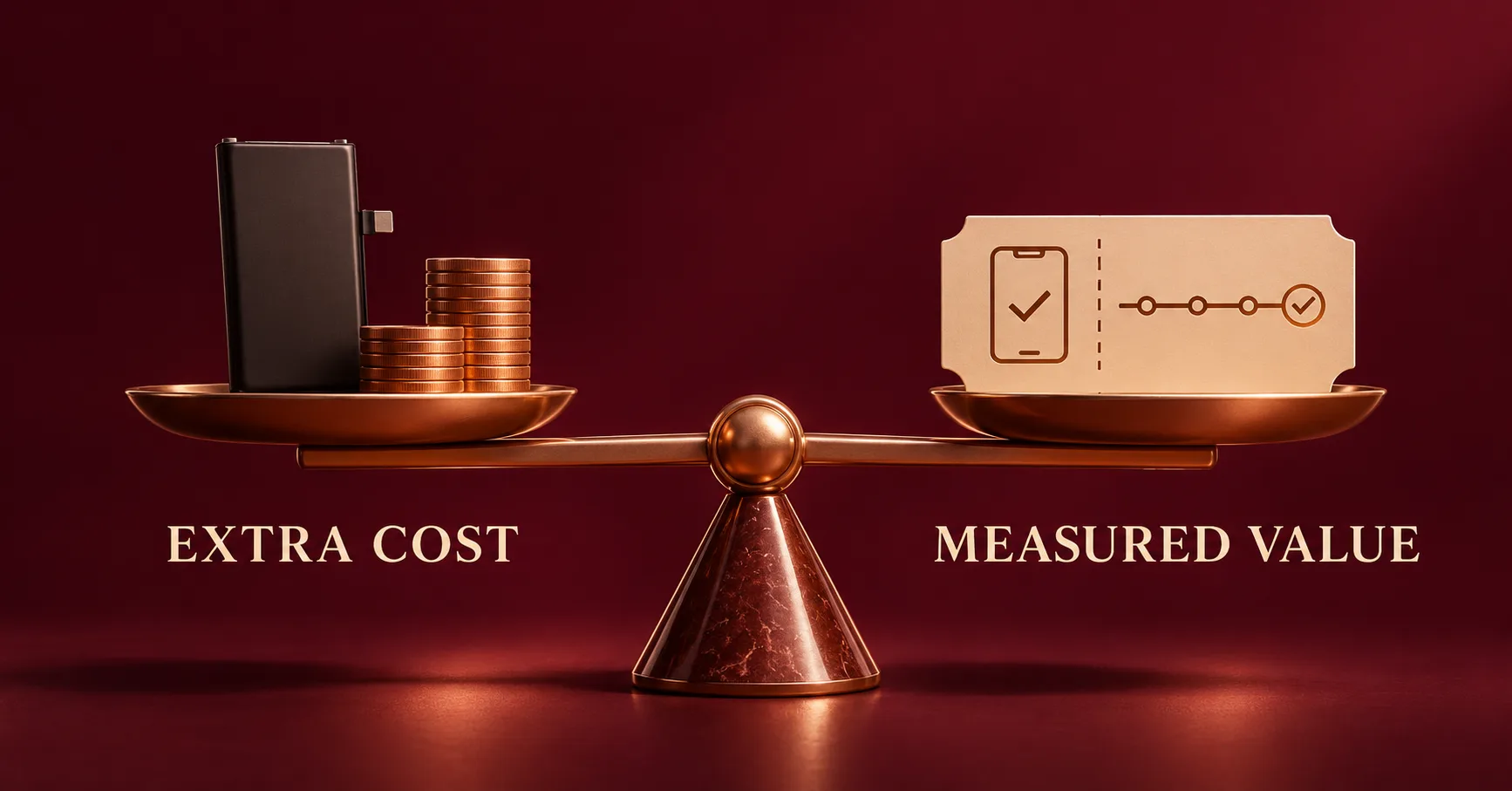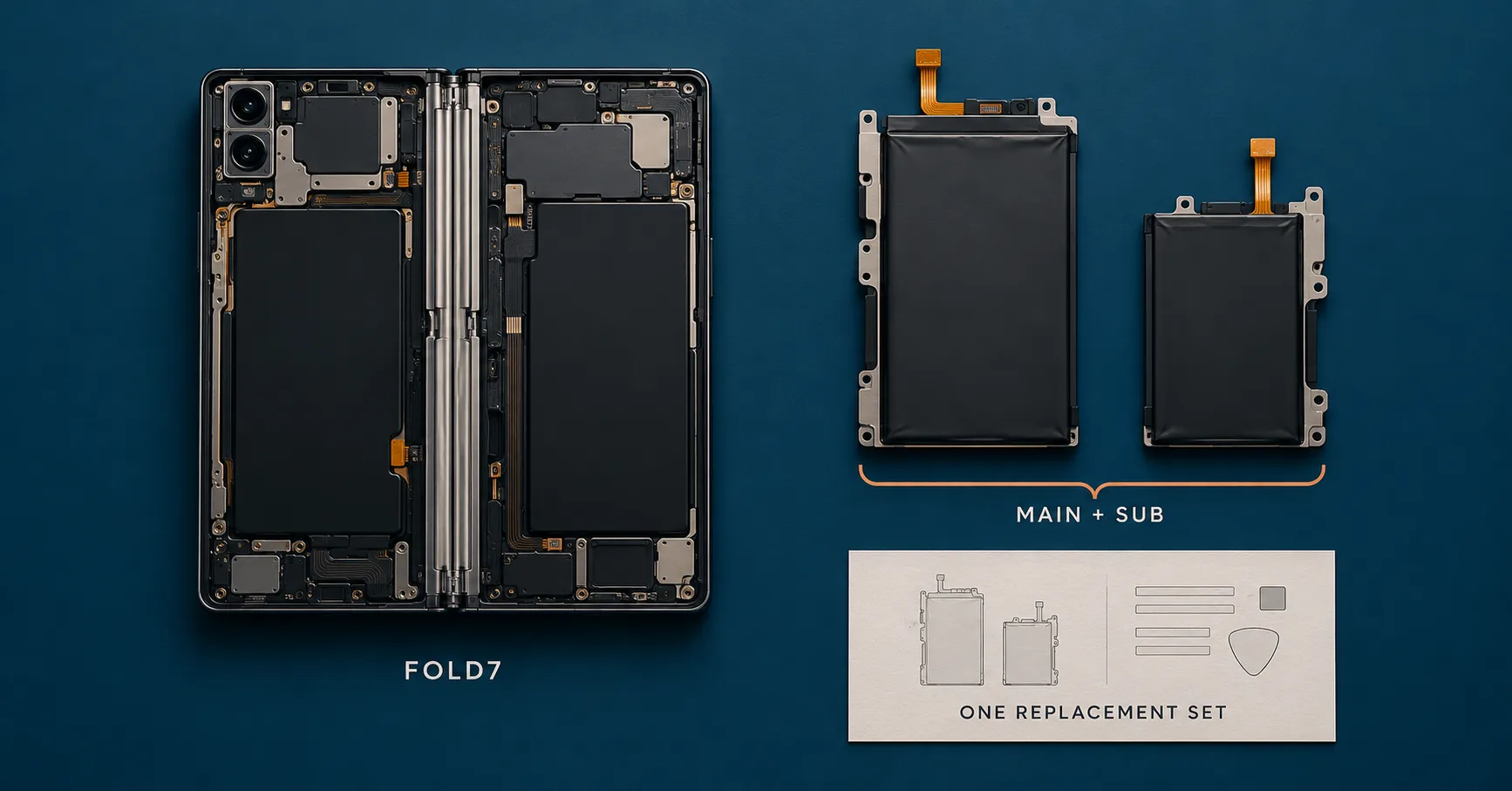


Which Benefits Matter to a Repair Business?
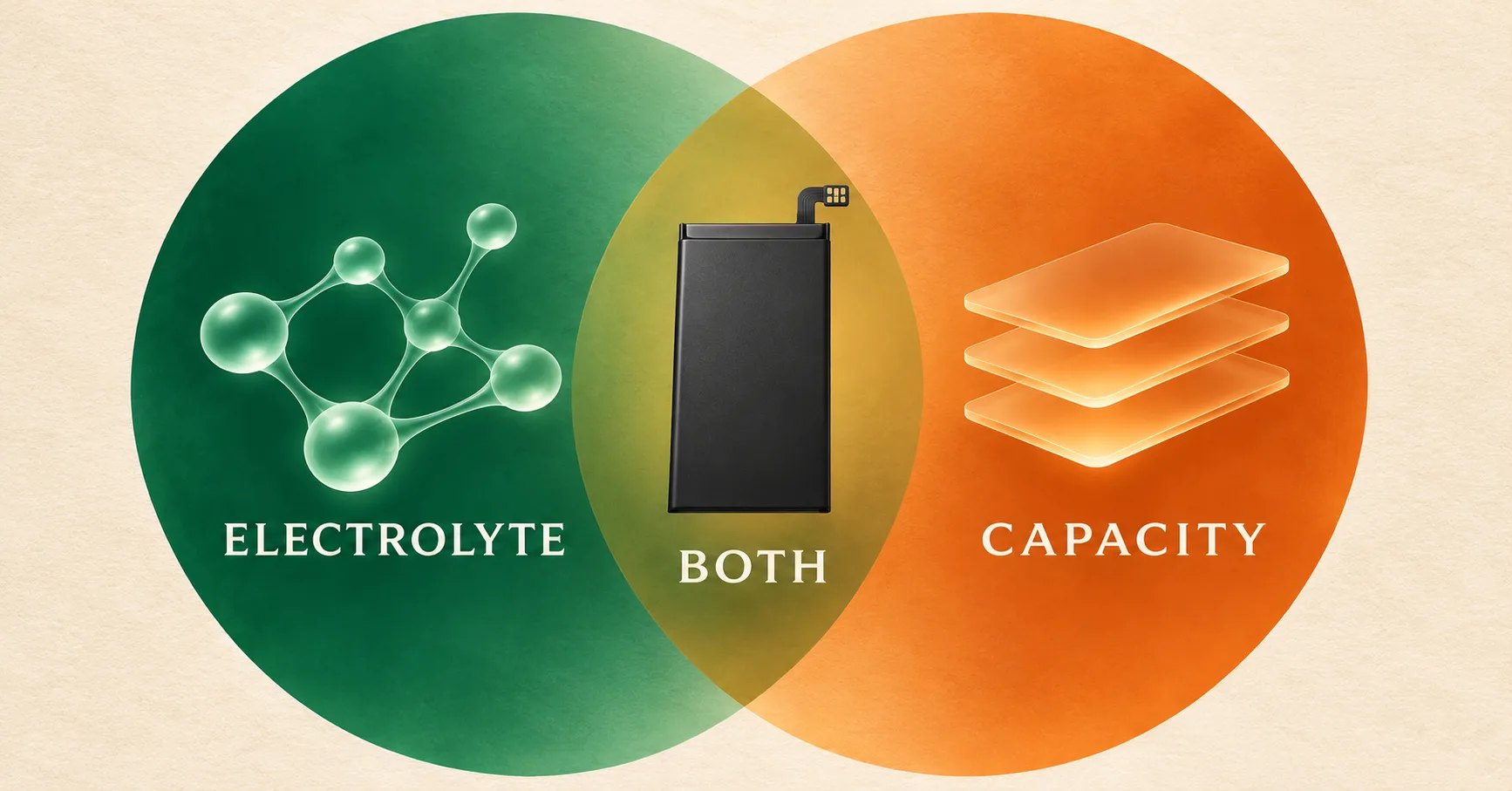
The most useful semi solid state iphone battery benefits are the potential for better electrolyte containment, improved safety behavior and more durable performance. Certain designs may also support higher energy density. For a repair business, however, each advantage needs evidence from the replacement assembly being purchased.
A material innovation creates commercial value when it helps deliver a reliable repair: suitable fit, measured usable energy, stable charging and predictable performance over time. A premium label alone does not establish any of those results.
This guide explains the technical opportunities and the questions buyers should ask before selecting a premium battery line. The verification steps are proposed purchasing controls. They are not ESCCharge test results, product guarantees or evidence that every semi-solid-state battery outperforms every conventional battery.
Understand What the Semi-Solid-State Label Describes
In gel-polymer approaches, a polymer network holds liquid electrolyte within its structure. Ma and colleagues' InfoMat review on in situ gel polymer electrolytes describes benefits including reduced leakage or flammability, useful ionic conductivity and improved electrode contact. These are formulation-dependent opportunities, rather than a universal specification.
Ask a supplier to explain what its semi-solid designation means: electrolyte approach, cell construction and which evidence supports the description. Commercial terminology can be broader than the precise material description needed for engineering approval. A product label is insufficient to identify the underlying design.
A semi solid state iphone replacement battery remains a complete electrical and mechanical assembly. Procurement must evaluate the cell together with its protection design, temperature sensing, connector, flex cable and enclosure fit. Evidence about an electrolyte sample answers a different question from evidence about that finished assembly.
Benefit 1: Better Electrolyte Containment
Restricting the mobility of liquid electrolyte is one reason gel systems attract interest. The polymer network described in the InfoMat review offers a route to reducing leakage. The practical opportunity is improved containment; it does not eliminate the need for sound pouch sealing and careful assembly.
For purchasing, ask how the finished product is assessed for seal integrity and changes after the agreed storage or cycling conditions. Check that the evidence identifies the cell model and production revision. A description of gel consistency cannot establish the condition of every finished battery.
Keep containment and swelling as separate evaluation questions. A battery can require investigation for dimensional change even when no visible leakage is present. Do not turn a reduced-leakage explanation into a promise that the battery will never swell, and do not interpret any material claim as permission to reuse a damaged battery.
Benefit 2: A Route to Improved Safety Behavior
The strongest case for semi solid state iphone battery safety starts with the complete design. In Chinese Physics B, Gan and colleagues discuss quasi-solid-state battery safety through what they call A systematic safety design
. Their review supports evaluating chemistry and construction together, rather than treating the electrolyte label as sufficient proof.
Buyers should request reports that identify the tested product, sample count, state of charge, conditioning, method and result criteria. Ask whether the report concerns a material, a cell or the supplied pack, and whether an independent laboratory performed the work. Match its scope to the claim being considered.
A puncture demonstration shows one sample under particular conditions. It cannot establish behavior under every short circuit, charging fault or mechanical event. Arrange destructive evaluations through qualified facilities; a workshop demonstration should not become a routine procurement experiment.
The commercial benefit is stronger evidence for the agreed application. Avoid promising that semi-solid technology removes the need for protection electronics, careful installation or appropriate handling.
Benefit 3: Potential for More Durable Performance
Research also examines how electrolyte and electrode interfaces influence degradation. A 2026 npj Energy Materials perspective by Kim and colleagues discusses gel approaches to limiting interphase degradation and gas evolution. The designs discussed include advanced research systems; they do not establish a service-life claim for an unspecified iPhone replacement battery.
For semi solid state iphone battery cycle life comparisons, require the starting capacity, charge and discharge rates, voltage limits, temperature, rest periods and end-of-life criterion. Review capacity retention alongside changes in resistance and thickness. A cycle count without those conditions is difficult to compare fairly.
Separate cycling evidence from storage-aging evidence. A repair chain may hold stock before installation, so ask for the date and condition of tested samples. A strong cycling result on newly produced cells does not answer every question about stock held under different conditions.
If a supplier claims longer life, compare against a clearly identified reference under the same method. Keep the conclusion limited to the tested conditions and product revision. Lower warranty cost is a separate business outcome that requires field records.
Benefit 4: More Options for Energy Density and Packaging
The npj Energy Materials perspective also considers gel electrolytes as enabling components for high-energy electrode designs. That makes energy density a relevant development opportunity. It does not mean that changing electrolyte alone automatically increases the capacity of a phone battery.
For a replacement project, compare delivered watt-hours, external dimensions and mass under a consistent measurement basis. Record rated voltage and the capacity test conditions. A larger milliamp-hour number on a label does not by itself demonstrate more usable energy within the same installation space.
Ask for thickness measurements and fit assessment at the agreed stages, including any specified aging or cycling evaluation. Approve closure, connector engagement and flex routing in the exact device application. A capacity increase is useful only when the finished assembly remains suitable for the handset.
Conductivity is another research consideration, but electrolyte performance does not determine phone charging power on its own. Verify charging in the target handset, with the specified charger, cable, software and starting conditions. Keep any faster-charging claim separate from the chemistry description.
Compare Benefits at Three Levels
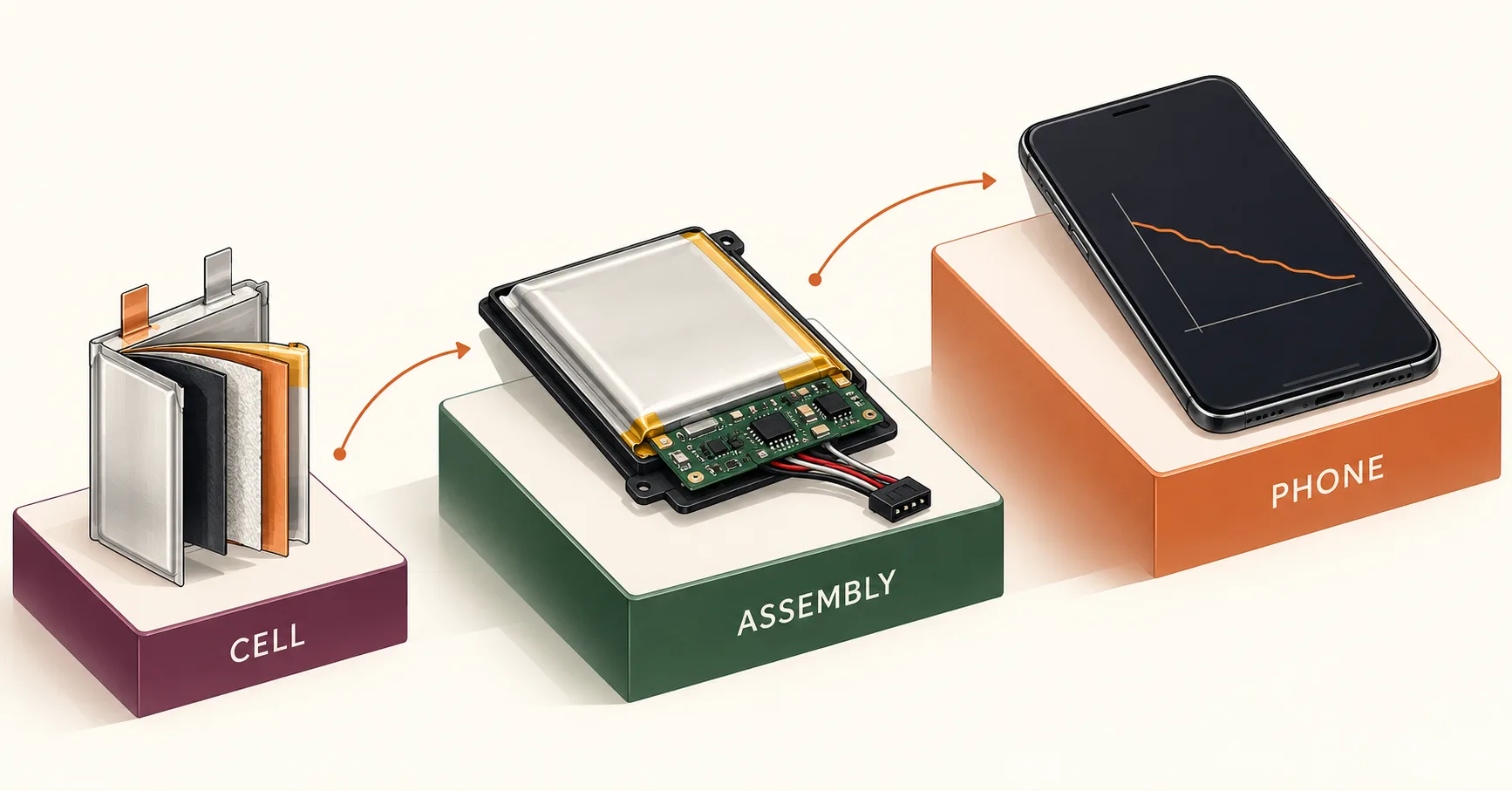
Use the following matrix to turn a broad advantage into a focused evidence request. Each level adds information that the previous level cannot supply.
| Evidence level | What it can support | What still needs checking |
|---|---|---|
| Material and cell | Electrolyte description and results for identified cells under stated conditions | Protection design, finished dimensions and handset operation |
| Replacement assembly | Ratings, mechanical configuration and assembly-level electrical results | Installed charging, runtime and software behavior |
| Installed phone | Performance in the tested handset and software configuration | Production consistency and longer-term field outcomes |
Maintain a claim register with the proposed statement, supporting report, exact model, conditions and approved wording. If evidence changes, revise the statement before it reaches packaging, sales materials or repair-counter scripts.
Apple states that the battery health information may not be accurate
for an unverified battery in its guidance on genuine iPhone batteries. Semi-solid chemistry therefore cannot guarantee a particular health display or prove genuine Apple status. Record system behavior separately from measured capacity.
Select a Supplier Around the Evidence You Need
When evaluating a semi solid state iphone battery supplier, begin with the exact phone application and proposed assembly. Request the specification, traceable samples, relevant reports and a written explanation of which benefits are supported. Confirm availability and commercial terms for the selected model.
Use a defined battery sampling plan to connect approved samples to later lots. Agree which changes require notification and renewed review, including changes to the cell, protection design or mechanical configuration.
At receiving, apply the incoming inspection process to verify identity, condition, sampled performance and records. Approval of a development sample should not be treated as automatic acceptance of subsequent production.
Track repair outcomes by assembly revision and lot. Measure complaints against the number of completed repairs and a defined observation period. Only then can your business assess whether an observed technical advantage also improves service cost or customer experience.
Send ESCCharge the intended iPhone models, order profile and evidence requirements for a sourcing discussion. Confirm the actual sample configuration, model-specific documentation and supply conditions before committing to a premium product claim.
FAQ
Are semi-solid-state batteries always better than conventional replacements?
No. Compare identified assemblies using consistent methods. Cell quality, protection design, fit and production consistency remain important to the purchasing decision.
Does semi-solid-state mean the battery cannot swell?
No. Require dimensional measurements and relevant aging evidence. A technology description does not justify an absolute swelling claim.
Can a research paper prove a supplier's battery performance?
It can explain a mechanism or research result. The supplier still needs evidence connecting the claimed benefit to the exact product being offered.
What should a repair business verify first?
Confirm assembly identity, handset fit and the evidence behind the proposed advantage. Evaluate semi solid state iphone battery benefits through measured product behavior before using them to justify a premium repair offer.
External Source References
- Ma and colleagues — In situ preparation of gel polymer electrolyte for lithium batteries: Progress and perspectives — InfoMat, 2022.
- Gan, Chen, Yu and Li — Understanding the battery safety improvement enabled by a quasi-solid-state battery design — Chinese Physics B, 2022.
- Kim and colleagues — Gel polymer electrolytes bridging safety and high energy density in advanced lithium batteries — npj Energy Materials, 2026.
- Apple — About genuine iPhone batteries.