
The Premium Is Worth Paying Only When the Numbers Support It
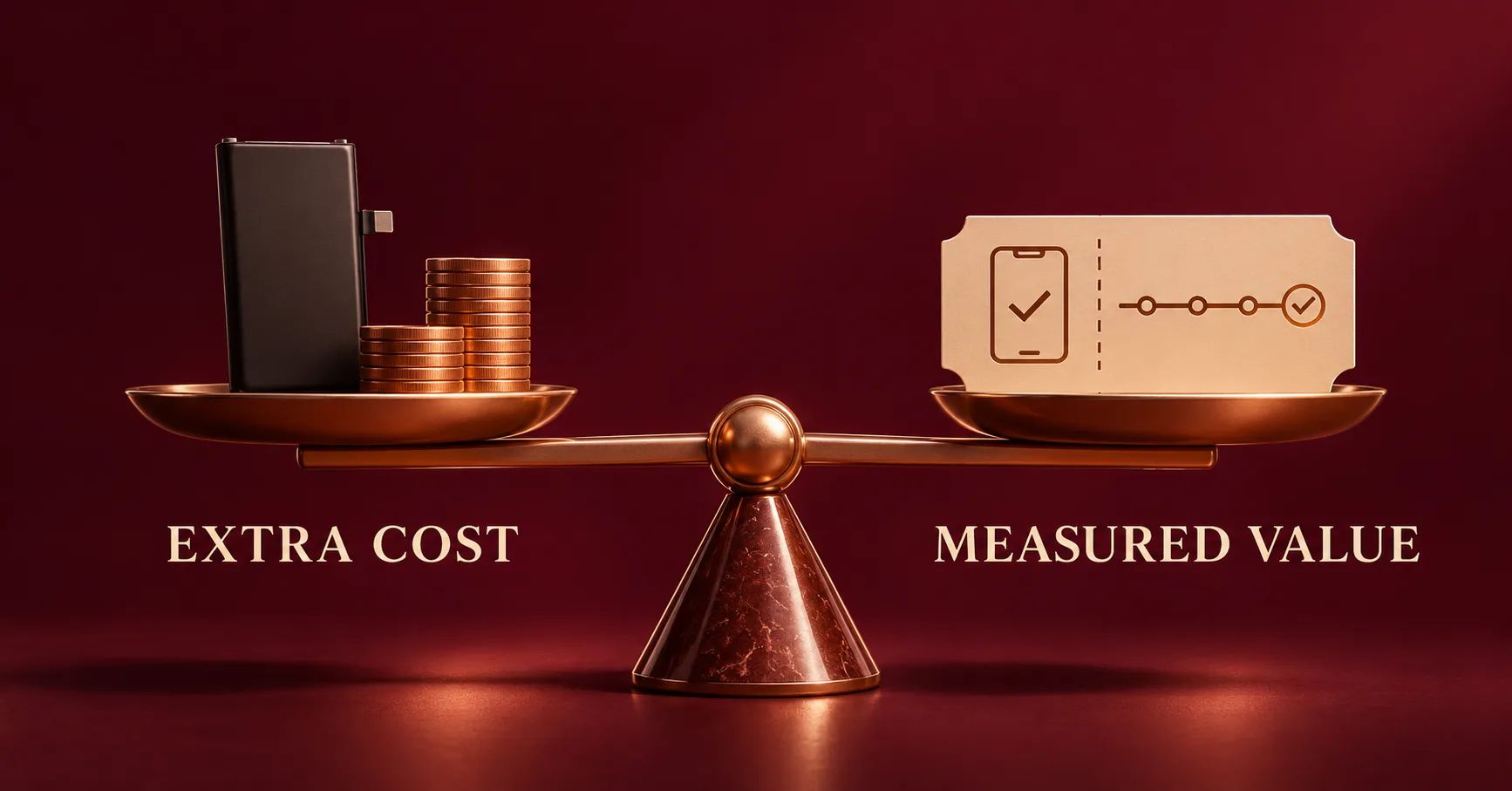
Is a semi solid state iphone battery worth it for a repair business? It can be, when verified operating savings or additional customer contribution exceed the extra purchasing and program costs. The technology name alone cannot establish that result.
A repair chain should compare two approved battery options for the same handset and service scope. Both must first meet the required safety, fit and functional criteria. Cost analysis then helps choose between acceptable options; it cannot compensate for an unacceptable product.
This guide provides a management calculation and a clearly labeled hypothetical example. No price, return rate or savings figure below represents an ESCCharge quotation, customer case or industry benchmark.
Separate Technical Potential from Commercial Return
There is a technical reason to investigate gel-based electrolyte designs. Ma and colleagues' InfoMat review on gel polymer electrolytes notes that suitable systems could reduce the electrolyte leakage or flammability
. That research describes material and battery-design opportunities. It does not establish lower field returns for a particular replacement assembly.
Use the existing semi-solid-state supplier evaluation guide for technical qualification. Here, the purchasing question is narrower: what additional cost can the business support after qualification?
Apple states in its guidance on genuine iPhone batteries that All rechargeable batteries are consumables and have a limited lifespan
. Do not price a premium repair as if future replacement or warranty handling disappears. Chemistry also does not establish genuine Apple status or guarantee a particular system display.
Build a Comparable Cost per Completed Repair
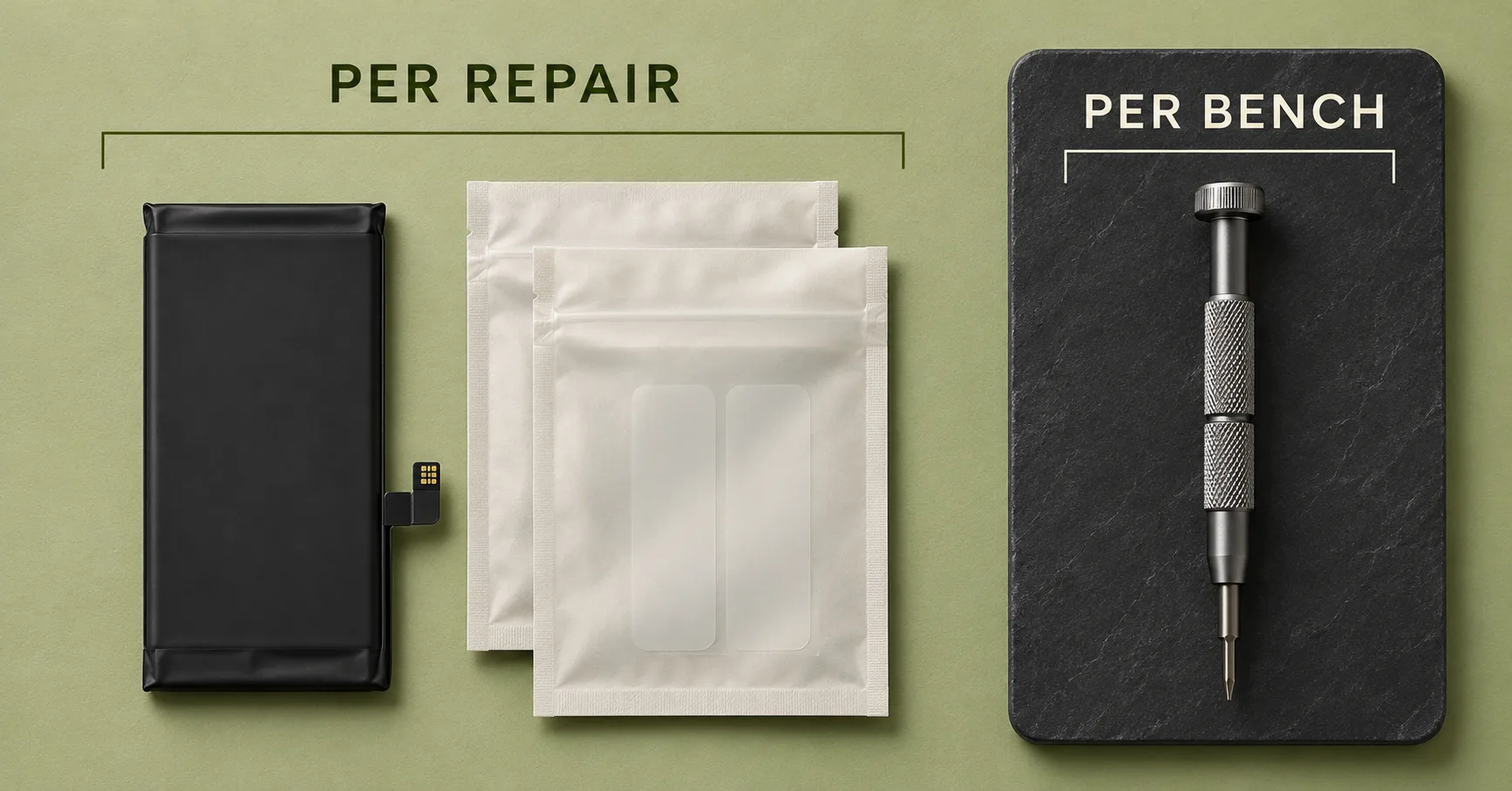
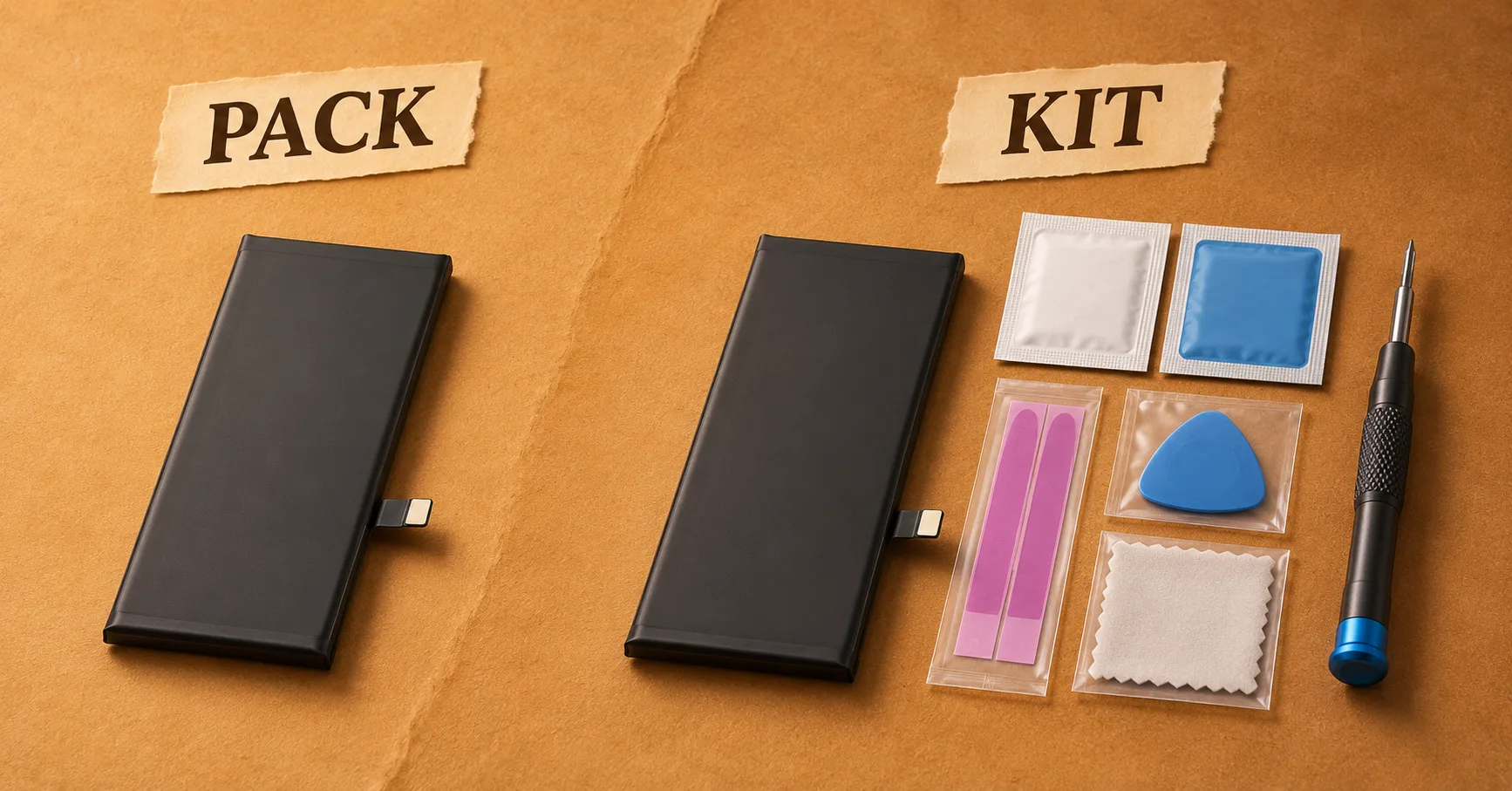
Start with the same denominator: one completed, accepted repair. Use consistent handset models, accessory scope, observation periods and accounting treatment. A loose cell quotation is not directly comparable with a complete replacement assembly, and a battery-only offer is different from a kit containing required consumables.
Record the following costs for each option. Allocate shared costs using the same method, and include only costs that change when making an incremental purchasing decision.
| Cost category | What to record | Comparison trap |
|---|---|---|
| Landed accepted battery | Purchase, allocated freight and applicable import costs, net of valid recoveries, divided by accepted units | Using ordered quantity when some units are rejected |
| Initial repair work | Materials, technician time, installation and acceptance checks | Ignoring extra preparation or double-counting consumables |
| Program overhead | Incremental qualification, training, labels and inventory handling | Spreading launch costs across an unrealistic sales volume |
| After-sales exposure | Expected additional support, return, rework and replacement cost | Assuming every complaint is a battery defect |
For semi solid state iphone battery cost comparisons, keep gross spend and supplier credits visible separately. A promised credit is not the same as cash received, and a replacement part may leave labor, support and freight costs with the repair business.
If the initial acceptance yield differs, normalize acquisition cost before comparing repairs. For example, divide the net acquisition spend for a lot by its accepted units. Then add repair-stage and after-sales costs without counting the same rejected part twice.
Estimate Warranty Exposure from Comparable Repair Cohorts
A simple planning estimate is: expected after-sales cost per completed repair equals the probability of a cost-bearing claim multiplied by the average incremental cost per claim. This works when the claim definition and treatment of repeat events are consistent.
If repeat visits are material, use the expected number of events per repair, or total attributable after-sales expense divided by completed repairs. Do not mix a count of unique customers with a count of service events.
Track the handset model, battery revision, lot, installation date, technician process, symptom and resolution. Compare groups with similar time in service. A recently launched premium product has had less opportunity to generate claims than an older standard product.
Use the battery warranty claims workflow to separate battery-related findings from installation, device and software issues. Operational cost can still exist when the battery is not defective, so retain both the financial outcome and the technical classification.
Safety acceptance remains a separate requirement. A small pilot with no incidents does not establish a rare-event safety rate, and the business should not assign an invented financial credit to an unproven safety improvement.
Find the Maximum Premium Your Business Can Support
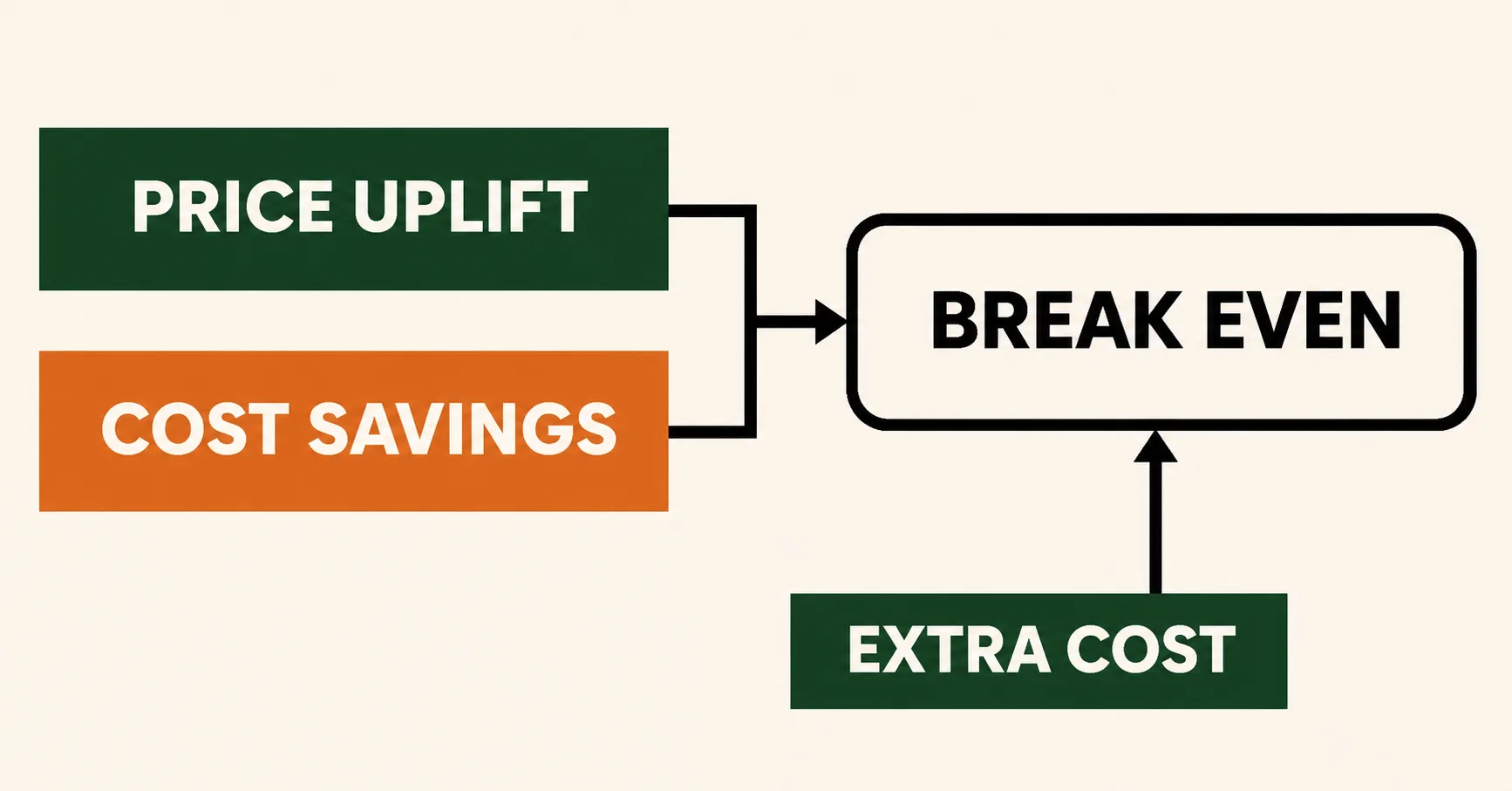
Define all amounts per completed repair. Let P be the additional landed accepted battery cost, O the other additional program and repair cost, S the verified operating savings, and U the additional net customer revenue after discounts, refunds and payment fees.
Change in contribution = U + S − P − O.
At break-even, the maximum supportable purchasing premium is U + S − O. A positive result leaves room for a premium; a negative result means that even a zero purchase premium would not cover the other added costs under those assumptions.
Keep each item in one category. If lower rework expense is counted in S, do not subtract it again from O. Use actual realized revenue for U, rather than the advertised price difference. For a minimum required contribution gain, subtract that target from the maximum premium.
When assessing a premium iphone replacement battery, run the model at the existing selling price first. That shows whether the option stands on operating performance alone. Then evaluate a separately justified premium service offer.
A Hypothetical Example: Lower Returns May Not Cover the Premium
The following numbers are invented solely to demonstrate the calculation. Assume both options have passed qualification. Currency is USD, and all amounts are normalized per completed repair except the cost per claim.
| Input | Standard option | Premium option |
|---|---|---|
| Landed accepted battery cost | $6.00 | $8.50 |
| Other initial repair cost | $9.00 | $9.00 |
| Additional program allocation | $0.00 | $0.50 |
| Assumed cost-bearing claim probability | 4% | 2% |
| Average incremental cost per claim | $25.00 | $25.00 |
| Expected after-sales cost | $1.00 | $0.50 |
| Total modeled cost | $16.00 | $18.50 |
The assumed reduction in claims saves $0.50 per repair. It does not cover the $2.50 battery premium plus the $0.50 program allocation. At the same net selling revenue, the premium option reduces contribution by $2.50 per repair.
If the business realizes an additional $3.00 of net revenue for the premium offer, contribution instead increases by $0.50: $3.00 + $0.50 − $2.50 − $0.50. Across 1,000 completed repairs, that is $500, provided all assumptions hold and all incremental costs have been included.
Without a selling-price uplift, break-even from claims savings alone would require a 12-percentage-point reduction: ($2.50 + $0.50) ÷ $25.00. That exceeds the assumed 4% baseline. In this example, eliminating every baseline claim would still be insufficient.
For iphone battery repair margin planning, the lesson is to test the complete equation. Even a large relative reduction in a small cost category may leave the premium unsupported.
Test Downside Cases Before Expanding the Program
Use a cautious case with no demonstrated claim reduction and no price uplift. In the example, contribution would fall by $3.00 per repair. If a $3.00 net uplift is achieved but claims remain unchanged, the offer only breaks even.
Then vary launch volume, accepted-unit yield, technician time, realized price and observed claim expense separately. Fixed qualification spending becomes more expensive per unit if fewer repairs are completed. Keep that volume effect visible rather than assuming every purchased unit will be installed.
When planning semi solid state battery wholesale purchases, separate high-volume models from slow-moving SKUs. A successful result on one handset does not establish the same commercial outcome across an entire range. Inventory age, minimum order quantities and replenishment conditions can change the economics.
Use a Pilot to Replace Assumptions with Evidence
Define the eligible handset models, approved assemblies, installation process and observation period before launch. Apply a documented sampling and lot-acceptance plan to production supply; that inspection plan does not replace field-outcome tracking.
Compare similar jobs and record installation acceptance, actual labor, realized revenue and after-sales expense. Retain the denominators and time in service alongside claim counts. A small difference in a small pilot may reflect uncertainty rather than a dependable saving.
Approve expansion only when technical requirements are met and the contribution model remains acceptable under realistic downside assumptions. Otherwise, negotiate the price or supply scope, narrow the model range, extend evaluation or retain the existing approved option.
For an ESCCharge sourcing discussion, provide the intended models, complete assembly scope, expected volume and evidence requirements. Request current model-specific pricing, documentation and commercial terms. Calculate value from the actual offer; do not infer a fixed premium, warranty or return reduction from this article.
FAQ
Does a higher purchase price mean lower lifetime repair cost?
No. The outcome depends on accepted-unit cost, additional work, after-sales expense and customer revenue. Compare complete, qualified options using the same basis.
Can laboratory cycle-life results predict warranty savings?
They can support technical evaluation under the reported conditions. Warranty savings need comparable field records and the business's actual claim-handling costs.
Should every iPhone model receive the premium option?
Evaluate by model and customer segment. A premium offer may work in one repair channel while remaining uneconomic in another.
What makes a semi solid state iphone battery worth it?
Verified suitability plus enough incremental revenue or operating savings to cover every added cost and the required contribution target. Use a pilot to test the inputs before committing to volume.
External Source References
- Ma and colleagues — In situ preparation of gel polymer electrolyte for lithium batteries: Progress and perspectives — InfoMat, 2022 issue; first published 2021: technical context, not evidence of repair-cost savings.
- Apple — About genuine iPhone batteries: limited battery lifespan, repair and system-status context.