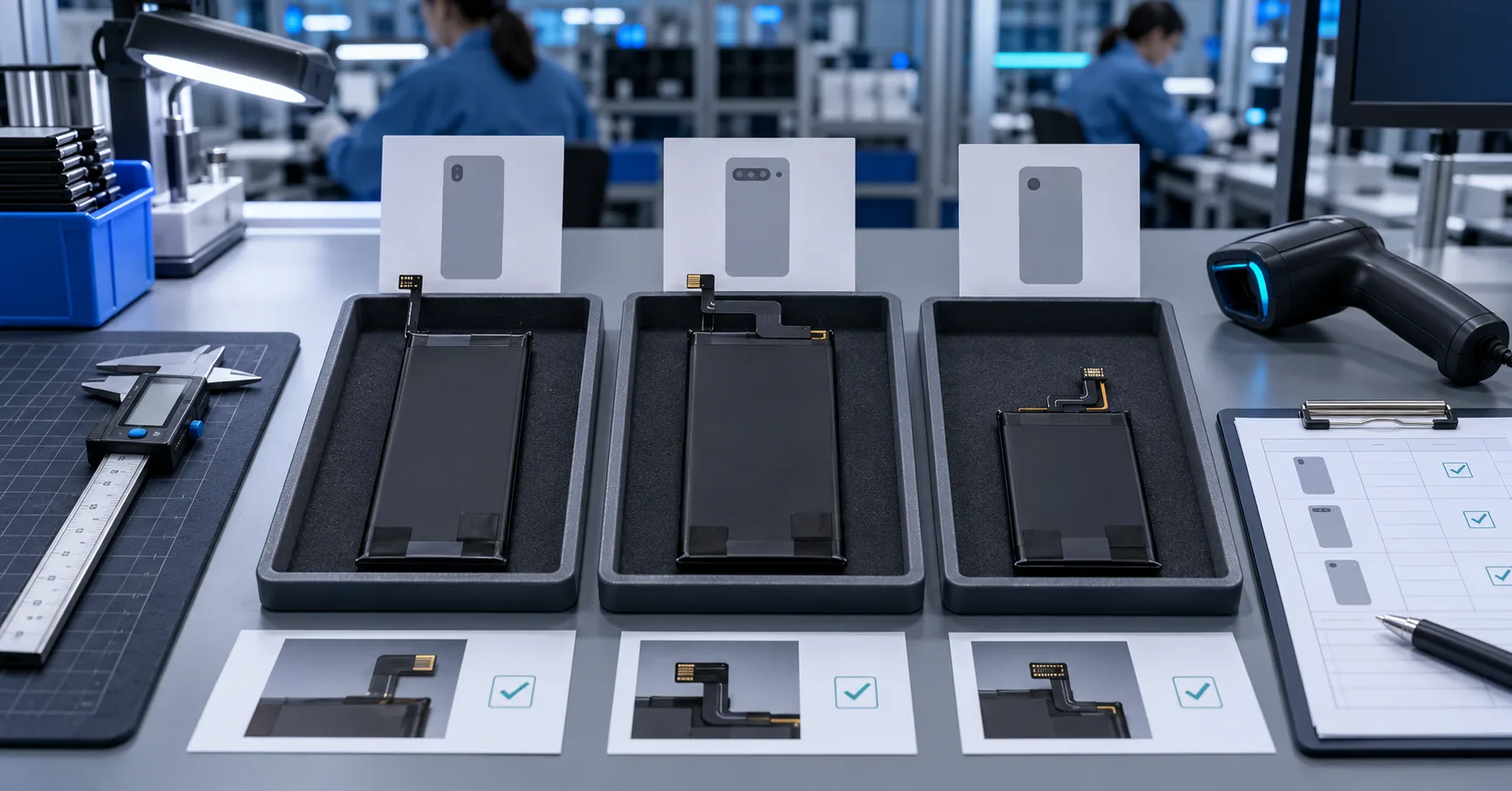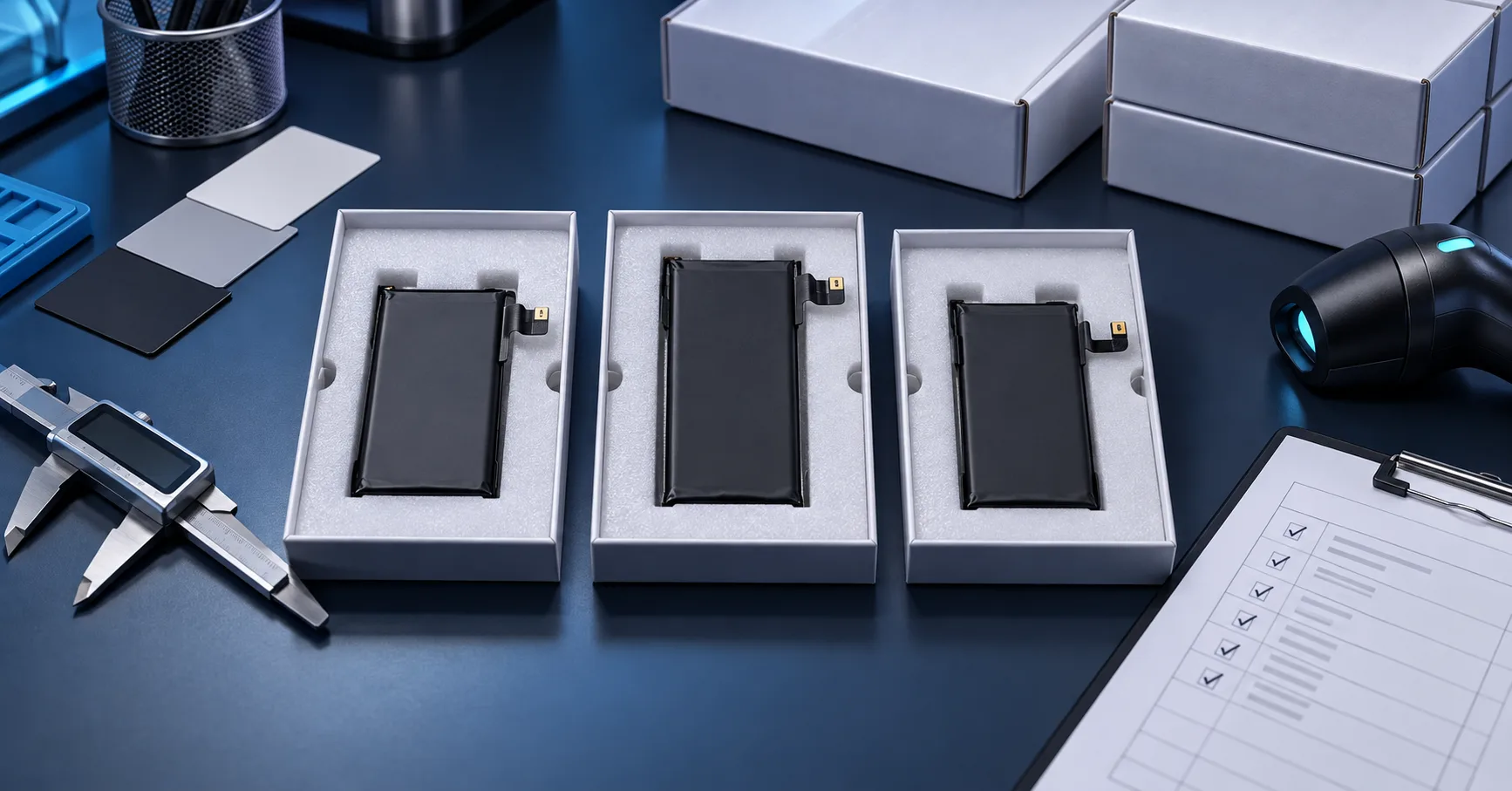

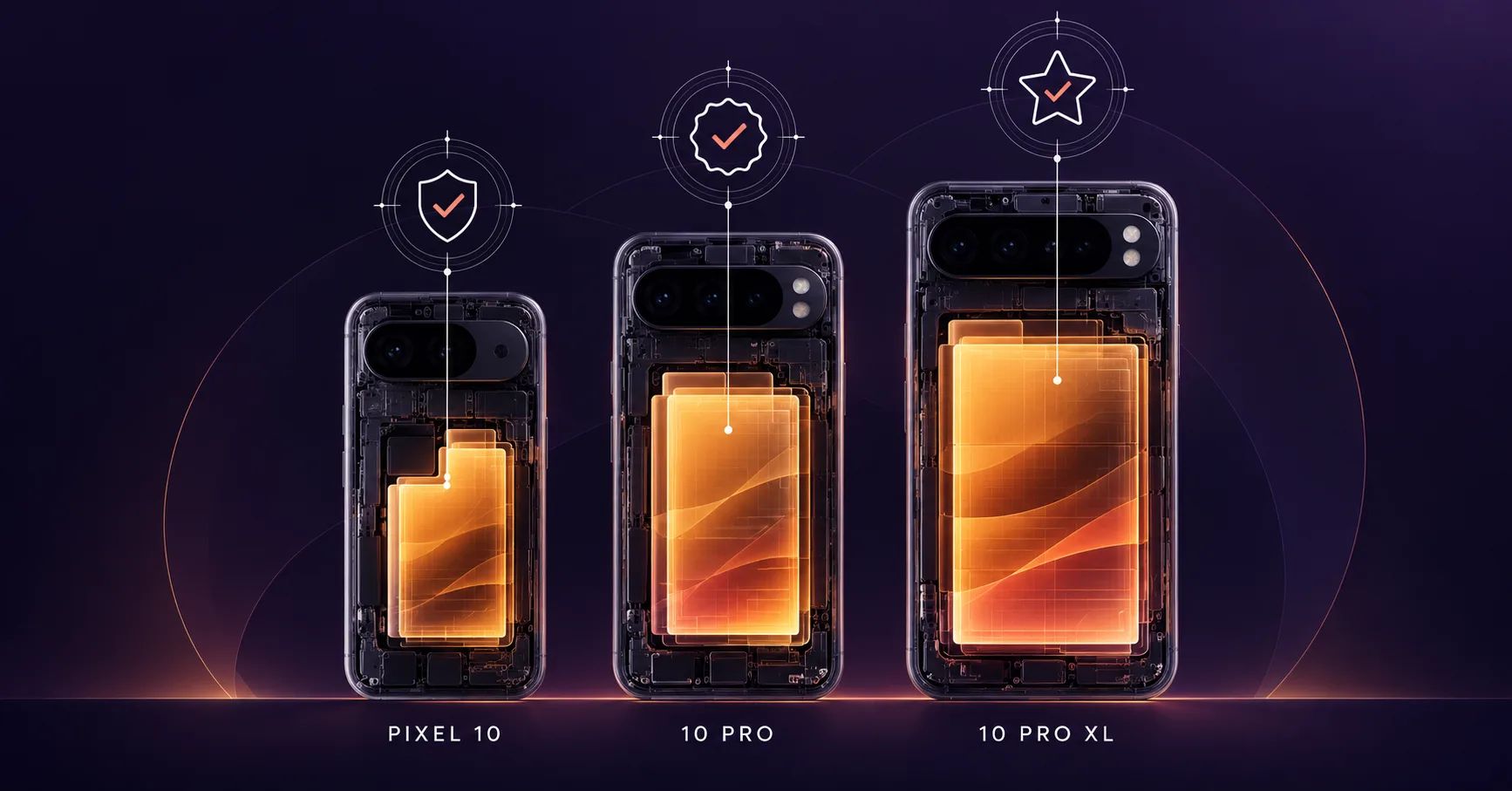
Quick answer: Pixel 10, Pixel 10 Pro and Pixel 10 Pro XL replacement batteries should be sourced as three independently controlled assemblies. Official device specifications provide useful capacity and charging references, but they do not prove that a third-party pack has the correct outline, thickness, flex, connector, protection path or installed behavior. B2B approval should connect each target device to a drawing, sample report, pilot lot and repeat-order inspection record.
A search for a pixel 10 battery often leads to a product title and one capacity number. Procurement needs more. The RFQ should identify the complete handset model and market, battery cross-reference, drawing revision, label data, adhesive scope, declared capacity type, test method and acceptance limits. Otherwise, two quotations with similar titles may describe different products.
Build Three Independent Pixel 10 Approval Paths
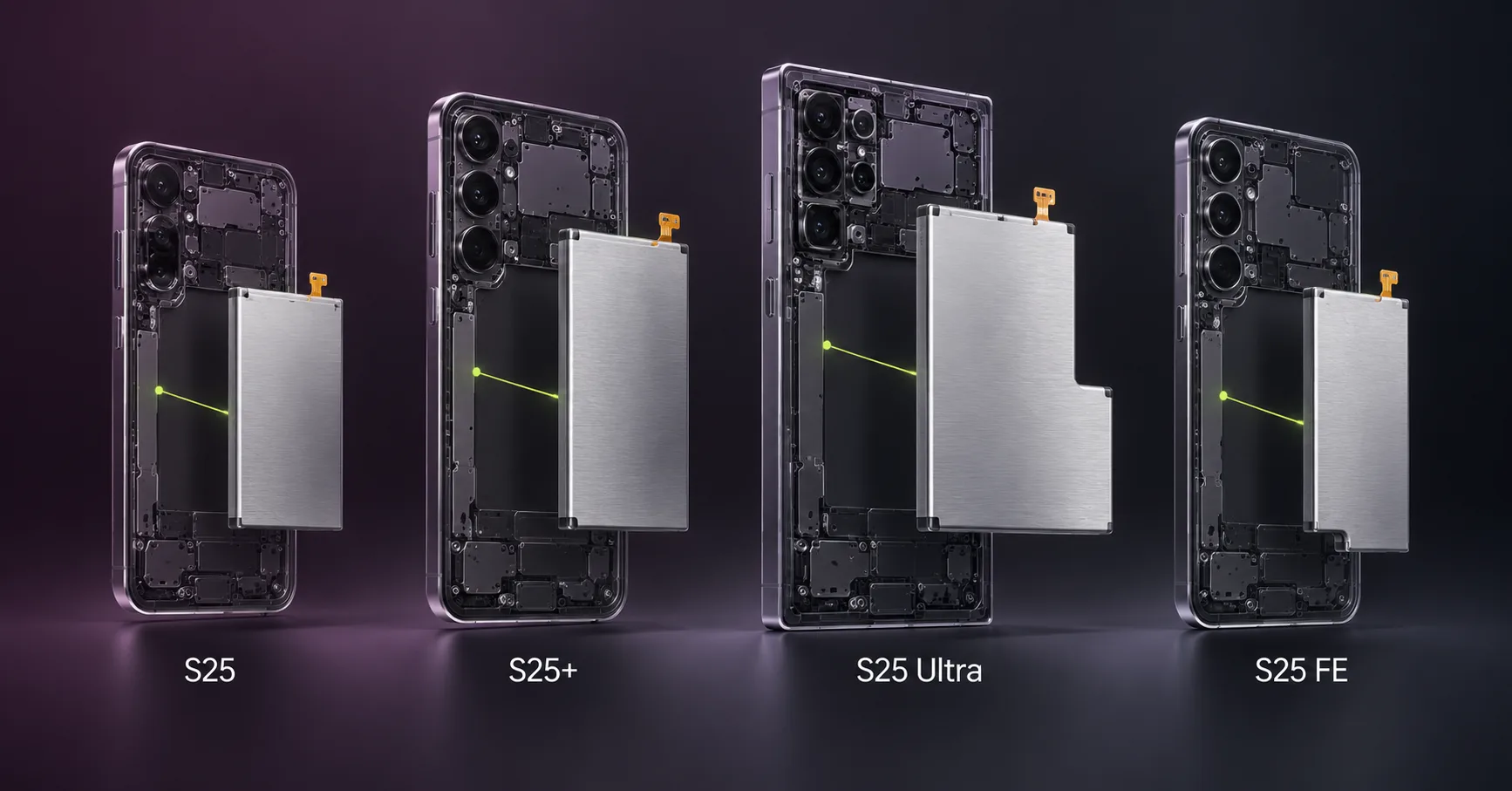
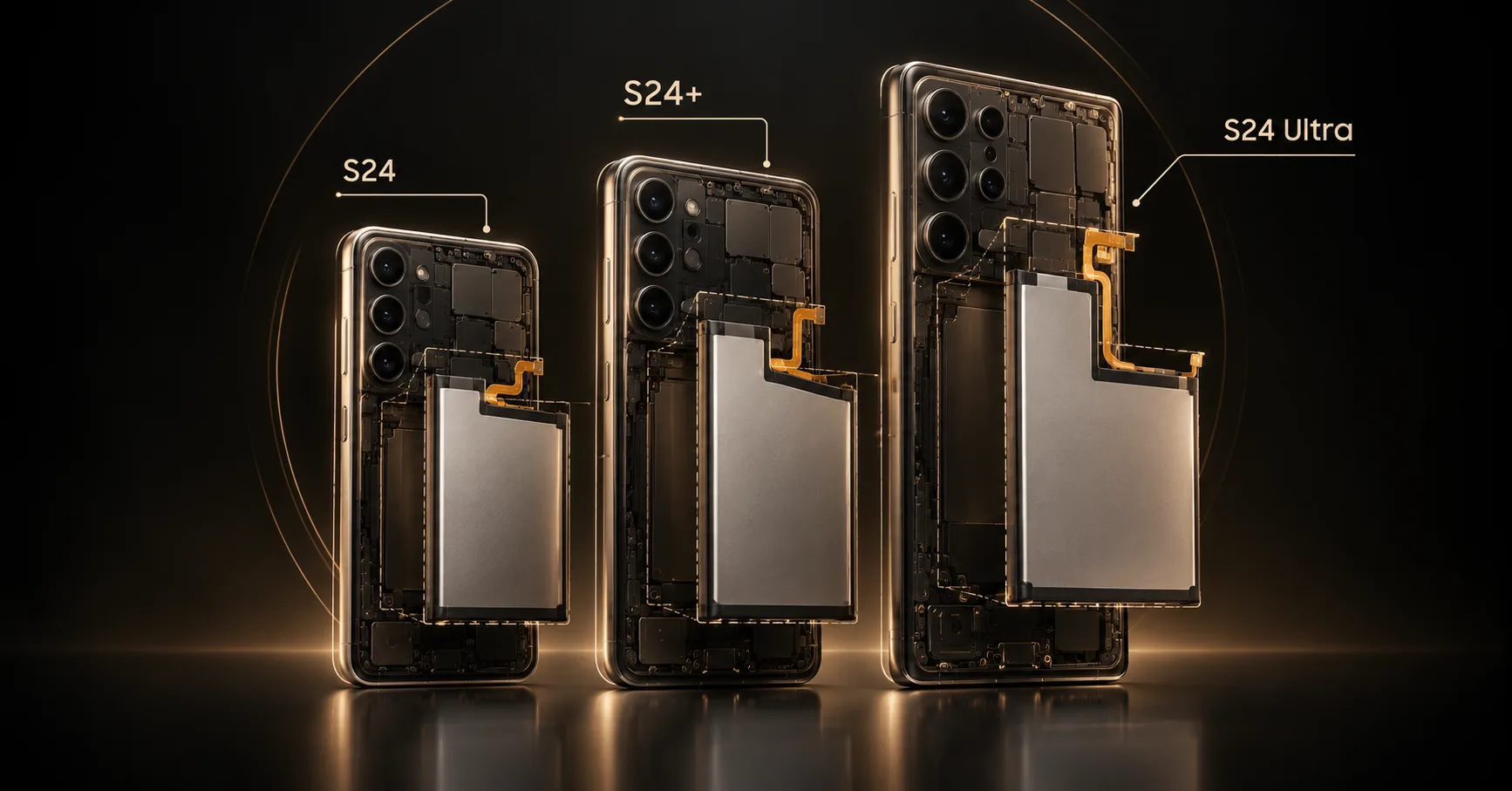
Google lists different device dimensions and battery references for the three slab-phone models. The base and Pro share a 6.3-inch class body, but that does not establish interchangeable internal battery assemblies. The Pro XL has a larger body, a different capacity and different charging reference. Region-specific device identifiers should be captured from the handset or approved service record because a retail family name is not a complete compatibility key.
| Device | Official typical capacity | Official minimum capacity | Official wired charging reference | Procurement treatment |
|---|---|---|---|---|
| Pixel 10 | 4,970 mAh | 4,835 mAh | Up to 55% in about 30 minutes with a 30 W or higher USB-C PPS charger | Separate SKU and approval record |
| Pixel 10 Pro | 4,870 mAh | 4,707 mAh | Up to 55% in about 30 minutes with a 30 W or higher USB-C PPS charger | Separate SKU and approval record |
| Pixel 10 Pro XL | 5,200 mAh | 5,079 mAh | Up to 70% in about 30 minutes with a 45 W or higher USB-C PPS charger | Separate SKU and approval record |
These values come from Google's Pixel phone hardware specifications and describe the devices, not every replacement product offered in the market. Google states that its battery testing uses “a mix of talk, data, standby, and use of other features.” That is why a device-level runtime statement should not be copied into a wholesale replacement-battery guarantee.
Pixel 10a and Pixel 10 Pro Fold are outside this page's approval scope. Similar naming does not justify adding either product to a three-SKU purchase order. Each requires its own demand analysis, architecture review and verification plan.
Convert Capacity and Size Searches Into Approval Evidence
Queries such as pixel 10 pro battery size and pixel 10 pro xl battery capacity reveal two buyer concerns: will the assembly physically fit, and will it deliver credible energy? Neither question can be answered from a retail title alone. “Size” must be translated into a controlled dimensional drawing; “capacity” must be translated into a defined electrical test.
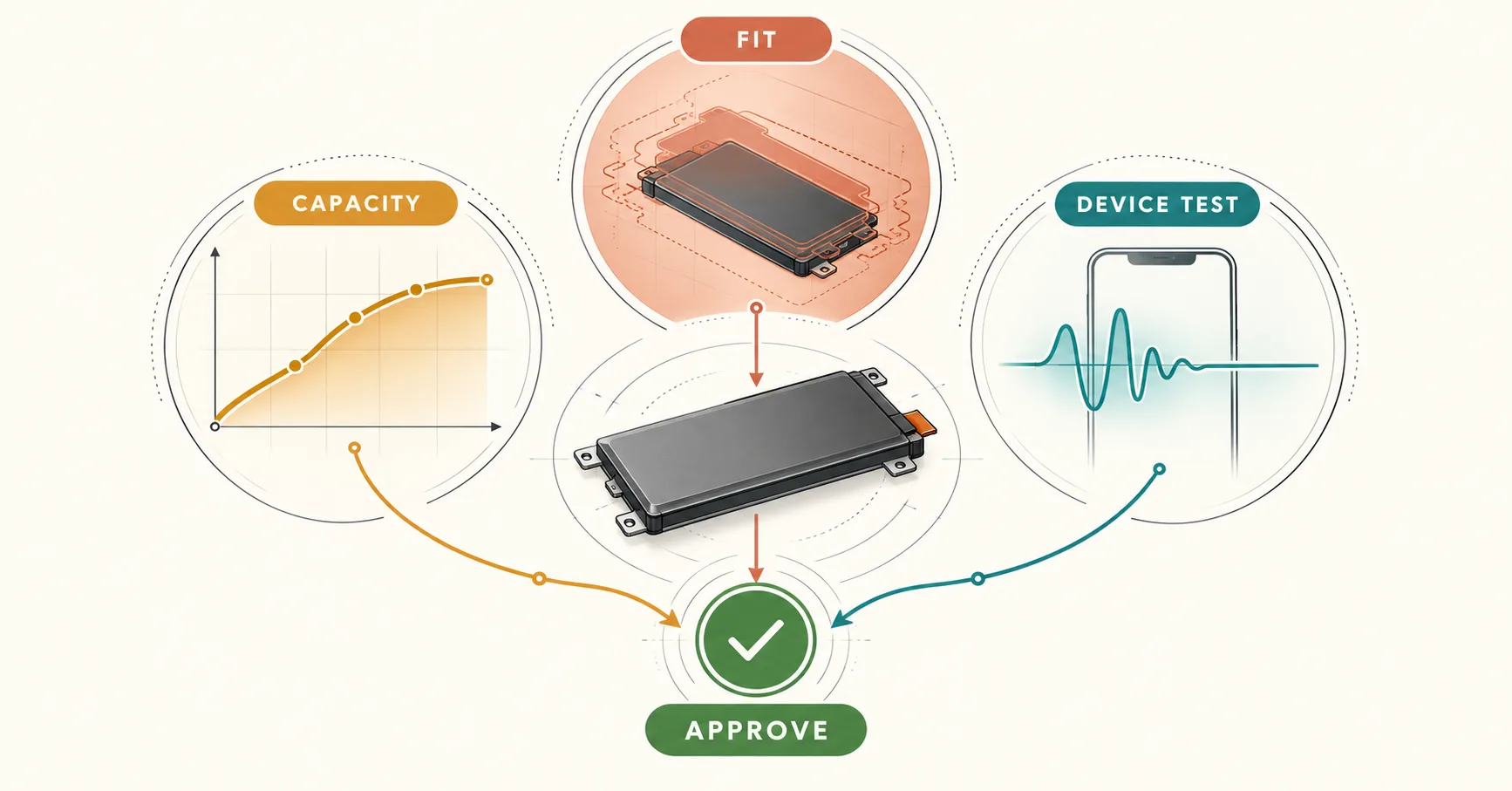
For physical approval, request overall length, width and thickness plus pouch edge, fold, flex-exit, connector and adhesive-zone dimensions. Define the measuring method, sample conditioning and allowable tolerance. A phone's external dimensions cannot be used to calculate the internal battery envelope, and a photograph without scale or revision control is not a production drawing.
For capacity approval, distinguish typical capacity, minimum capacity and measured discharge capacity. Request nominal voltage, watt-hours, charge procedure, discharge rate, cutoff voltage, temperature, rest periods, sample count and equipment. A printed number becomes comparable only when the test conditions are known.
What Every Sample Package Must Contain
1. Identity and revision evidence
- Complete target device name, model identifier and intended sales region.
- Supplier SKU, battery cross-reference, drawing revision and label artwork.
- Cell lot, finished-pack lot and production date in a traceable format.
- Included adhesive, liners, tabs or repair-kit components.
- Change-notification rules for the cell, board, flex, connector, insulation, adhesive and label.
A pixel 10 pro battery sample should never be approved merely because its connector engages. The physical item, drawing, label and target handset must resolve to the same controlled record.
2. Mechanical installation evidence
Inspect the pouch, edge seals, fold zones, insulation, flex route, connector orientation and adhesive alignment before installation. Use known devices and a documented repair process. Record whether the assembly seats without force, bending, connector strain or improvised adhesive changes. Check that nearby modules and covers return to their intended position.
3. Electrical and protection evidence
Verify polarity, receiving voltage condition, connector engagement and agreed protection behavior with qualified equipment. Abnormal-condition tests require controlled engineering procedures and appropriate safety controls. Do not improvise short-circuit, crush, puncture, overcharge or deep-discharge testing at a repair bench.
4. Installed-device behavior
Run a repeatable sequence covering first boot, charging recognition, charge progression, idle stability, a representative workload and cool-down. Record the software build, charger, cable, ambient conditions, network state and test duration. For the larger pixel 10 pro xl battery, use the correct target device and charging setup; the Pro XL's official charging reference differs from the base and Pro models.
Google's Pixel 10 safety and regulatory guide warns that opening or repairing a device can present “electric shock, device damage, fire and personal injury risks.” A commercial program therefore needs trained technicians, safe isolation rules, stop conditions and a controlled route for damaged or swollen batteries.
Do Not Turn Official Charging Data Into a Pack Guarantee
Charging speed depends on the phone, power adapter, cable, battery state, software, temperature and test method. Google's published percentages are device-level results under stated conditions. They are useful when designing an installed-device check, but they do not prove that every replacement pack will reproduce the same curve.
Set acceptance bands from controlled baseline testing with an approved pack and known devices. Record charge added over a defined interval, temperature behavior, messages, interruptions and final state. If a sample charges slowly or pauses, isolate the pack, installation, charger, cable, port, software and handset before assigning cause.
The same caution applies to runtime. Google notes in its safety guidance that “Batteries are consumable components that age over time.” A buyer should compare new samples under the same conditions and avoid promising a universal number of hours. ESCCharge's battery capacity testing guide provides a general framework that can be adapted with Pixel-specific fixtures and acceptance values.
Release a Pilot Lot Before Normal Volume
A hand-selected sample may not represent routine production. Freeze the approved sample with photographs, drawing revision, label file and measured results, then order a pilot lot. Define the lot, sample size, acceptance limits and escalation path before it arrives.
- Quarantine: keep incoming stock on hold until identity and condition checks pass.
- Verify labels: match device model, buyer SKU, supplier SKU, lot and quantity.
- Inspect construction: check deformation, swelling, contamination, insulation, flex and connector.
- Measure: compare dimensions and receiving electrical condition with the approved record.
- Install: test representative units in each target model and regional variant.
- Decide: release, hold or reject the lot with traceable evidence.
The mobile phone battery incoming-inspection guide can support this process. Repeat the relevant checks on later shipments. Any change to the cell source, protection board, flex, connector, adhesive, label or observed performance should trigger documented review and, where necessary, requalification.
Prevent Three-SKU Warehouse Errors
Use distinct internal SKUs, barcode rules and bins for Pixel 10, Pixel 10 Pro and Pixel 10 Pro XL. Avoid a parent label that says only “Pixel 10 Series Battery.” The order and scan record should expose the precise model before an operator confirms a pick.
| Control point | Required record | Risk reduced |
|---|---|---|
| RFQ | Exact device, region and drawing request | Wrong assembly quoted |
| Sample | Revision, label photos and installed-test results | Approval from description alone |
| Purchase order | Separate line for each approved device | Mixed production or packing |
| Receiving | Lot ID, inspection result and disposition | Unverified release |
| Warehouse | Dedicated barcode and bin | Mis-picks |
| Warranty | Device, battery lot, symptom and evidence | Untraceable claims |
Connect field failures to the battery warranty-claims workflow. Store unopened inventory under documented conditions and rotate it using the mobile phone battery storage SOP. These records help separate manufacturing issues from storage age, installation damage, charger problems or handset faults.
Compare Offers on Equivalent Scope
Build an evidence matrix with columns for device coverage, drawing control, capacity definition, physical inspection, installed results, pilot-lot support, traceability, change notification, packaging and warranty investigation. Mark each claim as documented, buyer-verified or open. Do not convert missing evidence into an assumed pass.
Normalize commercial scope before comparing prices. One offer may include model-level barcodes, adhesive, protective packaging and lot reports; another may cover only the battery assembly. Include receiving inspection, rework, mixed-SKU risk, repeat testing and claim-handling effort in the landed-cost decision.
Send a Complete Pixel 10 RFQ
- target device names, complete model identifiers, regions and annual forecast by SKU;
- battery cross-reference and revision-controlled dimensional drawing;
- declared typical or minimum capacity, nominal voltage and watt-hours;
- capacity-test method and sample-level results;
- cell, protection board, flex, connector, insulation and adhesive scope;
- label, barcode, packaging and private-label requirements;
- sample quantity, pilot-lot quantity and acceptance plan;
- target market and required model-level documentation;
- change-notification, traceability and warranty-investigation requirements.
MOQ, lead time, warranty and compliance support should be confirmed for the exact model, configuration, quantity and destination. The phone battery supplier comparison guide can support broader vendor qualification, while this page owns Pixel 10 series compatibility and approval.
Frequently Asked Questions
Can Pixel 10 and Pixel 10 Pro use the same replacement battery?
Do not assume so from similar external dimensions. Require separate drawings, assembly identification and installed-device tests for each model.
Is the official capacity the required result for every replacement pack?
No. It is an official device reference. The offered pack needs its own capacity definition, minimum acceptance value, test conditions and measured evidence.
Does a battery's external size prove compatibility?
No. Approval also requires flex routing, connector location, polarity, protection design, insulation, adhesive alignment and installed behavior.
Should Pixel 10a or Pixel 10 Pro Fold be added to the same SKU family?
No. They are outside this article's three-model scope and require separate architecture, compatibility and demand review.
How many samples should a B2B buyer test?
There is no universal number. Set the plan from model count, regional variants, order size, supplier history, test destructiveness and acceptable risk, then validate a pilot lot before normal volume.
Approve Evidence, Not a Product-Page Claim
A robust Pixel 10 program links the exact handset, controlled drawing, sample, installed test, pilot lot, receiving result and warranty record. This makes capacity and size data useful without mistaking either for complete compatibility proof.
Request a model-specific sourcing review: send ESCCharge the target device identifiers, markets, forecast, packaging needs and acceptance plan. The team can review the requested configuration and propose a sample-to-batch approval route. Final capacity, MOQ, lead time, warranty and documentation remain subject to the confirmed model and order conditions.