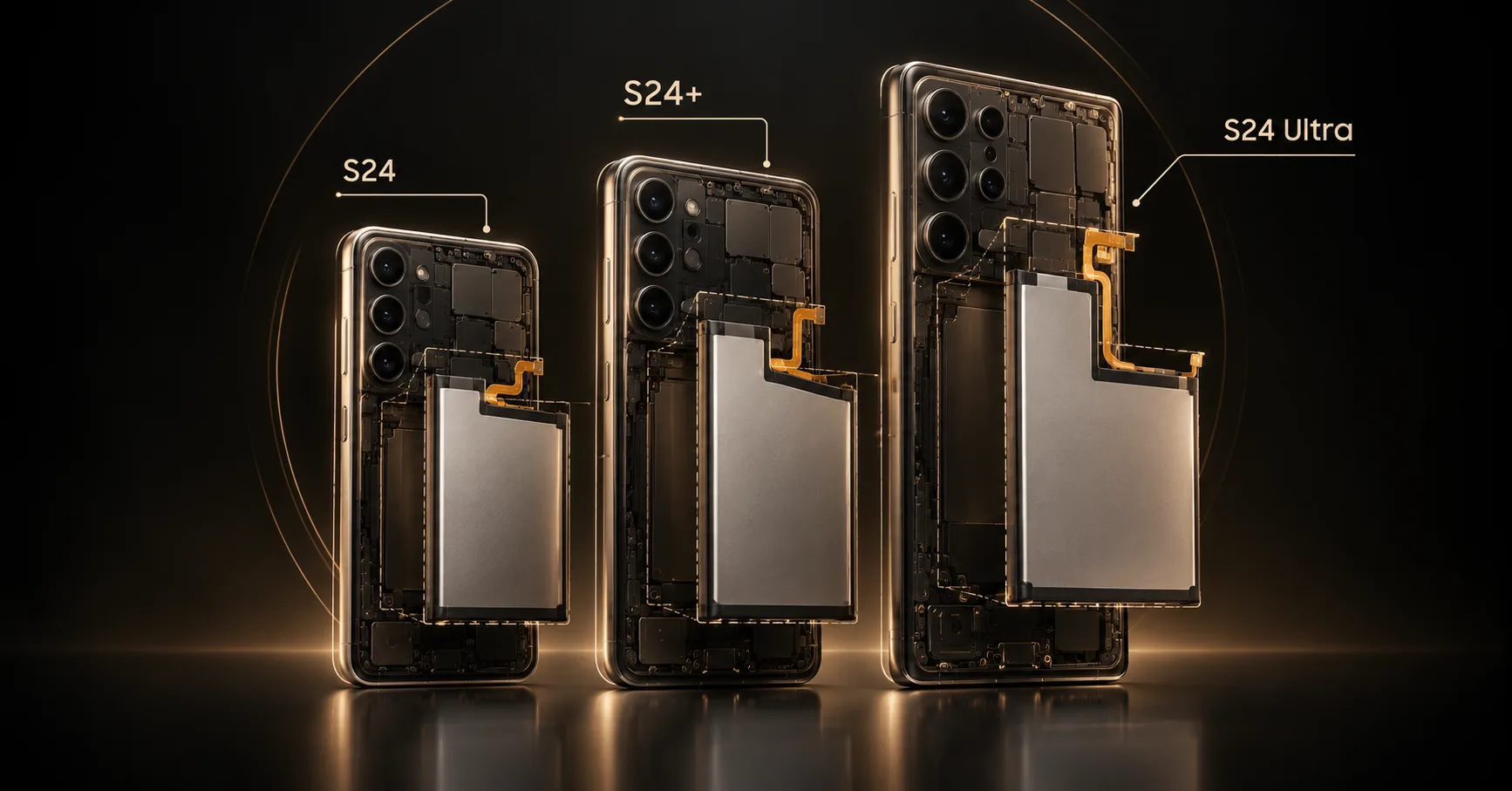

Quick answer: Galaxy Note20 and Galaxy Note20 Ultra need two independent replacement-battery SKUs. Their official device capacities and model families differ, and similar commercial names do not prove shared dimensions, flex geometry, connectors, protection electronics or installed behavior. B2B buyers should approve each assembly against its exact device lane and keep that evidence connected to every production lot.
The keyword cluster has modest but commercially focused demand and unusually low ranking difficulty across several Note20 and Note20 Ultra searches. A single series guide can answer those searches without creating two thin, repetitive pages. Its job is to help buyers prevent the more expensive mistake: treating two visually related phones as one battery program.
Build Two Device and Battery Approval Lanes
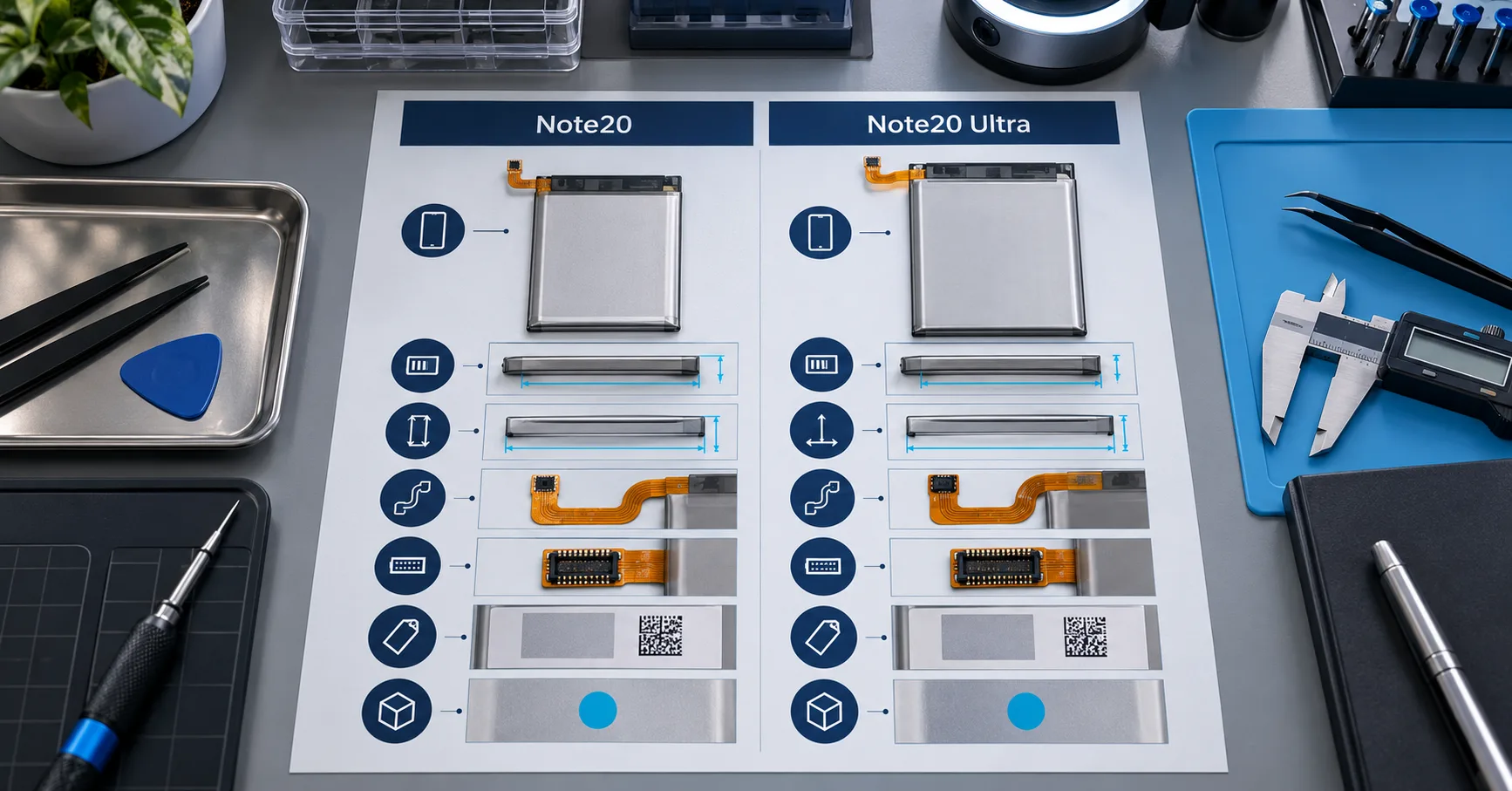
Samsung's official Galaxy Note20 model comparison identifies the Note20 family as SM-N980 and SM-N981 and the Ultra family as SM-N985 and SM-N986 in its test conditions. It also lists 4,300mAh typical for Note20 and 4,500mAh typical for Note20 Ultra. These are device-level references, not automatic validation of a replacement supplier's label.
| Approval lane | Official model family | Official device capacity | Common market battery reference |
|---|---|---|---|
| Galaxy Note20 | SM-N980 / SM-N981 | 4,300mAh typical; 4,170mAh rated minimum | EB-BN980ABY — verify against sample and device |
| Galaxy Note20 Ultra | SM-N985 / SM-N986 | 4,500mAh typical; 4,370mAh rated minimum | EB-BN985ABY — verify against sample and device |
Market battery references help procurement teams request and compare offers, but they remain cross-references until the finished assembly is verified. A matching code printed on a label cannot confirm the cell source, physical construction, flex, connector, protection board, capacity or device behavior. Never describe a third-party pack as Samsung genuine or authorized without documented authorization for that exact product.
Understand What the Capacity Numbers Do and Do Not Prove
Samsung explains that the typical value is the estimated average value considering the deviation in battery capacity among the battery samples
tested under IEC 61960. That wording distinguishes a typical device specification from a minimum rated value and from a buyer's own measured sample result.
For a samsung galaxy note 20 battery replacement, do not approve the pack only because its label says 4,300mAh. Ask for the supplier's capacity definition and test method. Record the battery model, equipment, charge procedure, discharge current, cutoff voltage, temperature, rest time and date. Use the same method when comparing initial samples, pilot production and later lots.
The same rule applies to a note 20 ultra battery labeled 4,500mAh. The official device reference makes a claim plausible; it does not make it true for an untested replacement. Capacity also does not establish compatibility. Two packs can carry similar electrical values while differing in dimensions, interface or protection behavior.
Turn Ranking-Page Product Fields into Verification Questions
Product listings in this search cluster commonly emphasize model names, battery chemistry, included adhesive, cycle status, test language and rapid availability. These fields reveal what buyers care about, but they should become questions in the RFQ rather than accepted promises.
- Model name: Which exact SM-N980, N981, N985 or N986 devices were used for validation?
- Battery reference: Is the code a documented cross-reference or only label artwork?
- Capacity: Is it a typical, minimum, nominal or measured value, and under what method?
- Cycle status: What is measured, reset or inferred, and what evidence accompanies the sample?
- Adhesive: What material and die-cut revision are included, and are they approved with the pack?
- Testing: Which checks were performed, on how many units and with what acceptance limits?
- Certification: Which document applies to the exact cell and finished configuration?
Claims such as “best,” “perfect fit,” “functionality assured” or unspecified compliance do not replace evidence. Define each requirement in a controlled specification and decide how it will be verified before the normal order.
Approve Identity and Physical Construction First
Start the samsung note 20 battery replacement approval with the phone, not the carton title. Record the complete device model, market, network variant, software build, repair history and reference-device condition. A previously repaired phone may contain adhesive residue, enclosure deformation or connector damage, so maintain more than one known reference when the project risk justifies it.
The finished-pack specification should include:
- buyer SKU, supplier code and intended device models;
- controlled photographs and label revision;
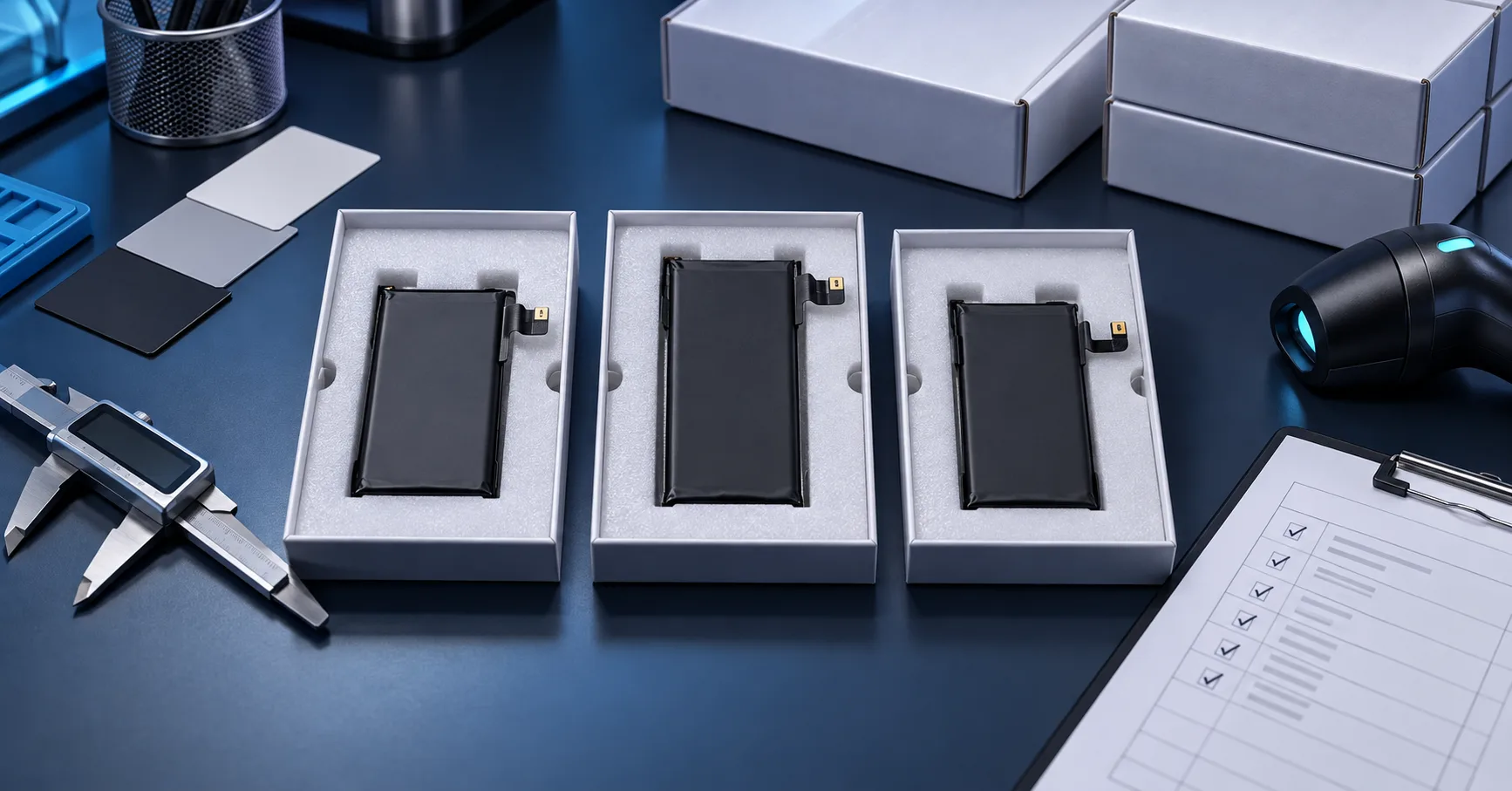
- length, width and thickness with measurement method;
- pouch orientation, edge condition, wrapping and insulation;
- flex length, exit direction, bend position and reinforcement;
- connector shape, orientation, contacts and alignment;
- protection-board and sensing requirements;
- adhesive position, pull tabs and any supplied service materials;
- barcode, lot code, inner box and carton identification.
During trial installation, the battery should sit flat, the flex should follow the intended route, and the connector should align without force. Stop if the pouch is compressed, the cable is stretched, the connector needs unusual pressure or the housing cannot close normally. Do not modify a cell or force the enclosure to make an incorrect assembly appear usable.
Use Installed Tests to Separate Battery and Device Problems
After physical approval, screen open-circuit voltage and compare variation across samples under consistent conditions. Perform controlled charge and discharge tests with documented equipment and limits. ESCCharge's battery capacity-testing guide provides a transferable evidence structure, although the actual limits must be approved for the Note20 configuration.
Installed testing should cover power-on, charging recognition, percentage progression, controlled discharge, standby observation, restart behavior and temperature under a stated workload. A samsung galaxy note 20 ultra battery replacement belongs in an Ultra reference device; a result from the standard Note20 does not establish Ultra fit or behavior.
Use a known-good control when a symptom appears. If both the candidate and control fail in one phone, investigate the device, connector, charging path or software before classifying the battery. Record the phone model, build, charger, cable, ambient conditions and technician. This turns troubleshooting into reproducible evidence rather than a subjective pass or fail.
Set Safety Stops and Repair Boundaries
Lithium-ion pouch cells require controlled handling. Stop work if a battery is swollen, leaking, unusually hot, punctured, dented, contaminated or electrically abnormal. Isolate suspect material according to the site's battery-safety procedure. Keep sharp objects and loose metal parts away from the pack, and do not bend or pry against the pouch.
Samsung notes that actual battery life may vary depending on network environment, usage patterns and other factors
. This official qualification is useful for warranty policy: runtime alone is not enough to identify a defective replacement battery. Claims need device condition, usage, charging, temperature, installation and battery-lot evidence.
Release a Pilot Lot Before Normal Volume
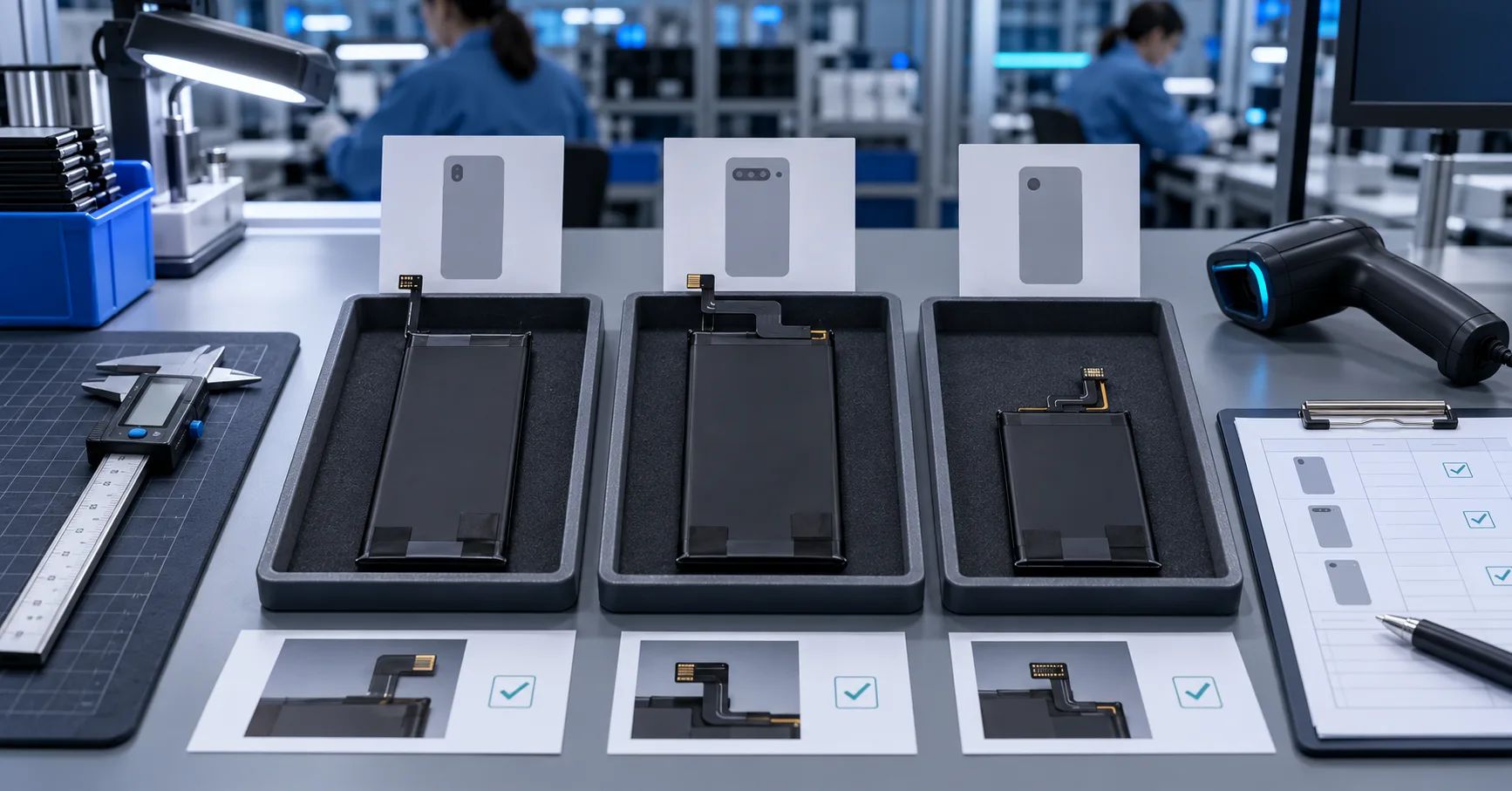
An approved sample is a reference, not proof of repeatability. Use a controlled pilot lot to confirm that the supplier can reproduce the cell, protection board, flex, connector, insulation, adhesive, label and packaging. Select inspection samples across cartons or production lots rather than taking every unit from one convenient box.
Compare identity, dimensions, visual condition, voltage distribution, capacity evidence and installed results with the approved reference. ESCCharge's mobile phone battery incoming-inspection guide explains how to combine complete shipment-identity checks with risk-based sampling and technical verification.
Define release, conditional release, hold, sort, rework and reject authority before the shipment arrives. If failures cluster by carton, lot or revision, contain the affected scope and increase inspection rather than treating each return as an isolated event.
Prevent Note20 and Ultra Warehouse Mix-Ups
The commercial names are similar, so packaging and warehouse controls must make the distinction obvious without relying only on color. Give each model a unique buyer SKU, scannable barcode, inner-box label and bin location. Put the full device name and approved cross-reference on the picking record. Test barcode behavior before the first volume shipment.
Require written notification before changes to the cell, protection board, flex, connector, insulation, adhesive, label, manufacturing site, key process or test method. Decide whether a proposed change requires document review, new samples, installed tests, transport-document review or full reapproval.
Track returns separately for Note20 and Note20 Ultra by battery SKU, supplier lot, technician, installation date, symptom and time in service. ESCCharge's battery warranty-claims workflow shows how to connect field evidence with containment and supplier corrective action.
Plan Inventory for a Mature Device Family
Note20 demand is now a mature-model opportunity, so inventory depth should follow real channel data. Use repair tickets, sell-through, refurbishment plans, branch transfers, claim rates and regional installed-device history. Search volume can help identify interest, but it is not a purchase forecast.
Separate core stock from project stock and long-tail safety stock. Use first-in-first-out controls, visible lot dates and an approved storage review. Excess inventory creates aging risk, while frequent emergency orders can increase freight and receiving costs. The correct balance depends on the buyer's lead time, service promise, demand variability and acceptable stock exposure.
Compare qualified cost rather than unit price alone. Include samples, testing, incoming inspection, installation yield, technician time, sorting, stock aging, returns and claim handling. A low purchase price does not compensate for mixed SKUs, uncertain fit or poor traceability.
Send an RFQ That Produces Comparable Offers
Create separate Note20 and Note20 Ultra rows. Request the device mapping, proposed battery reference, finished-pack drawing, voltage and capacity definition, interface details, sample quantity, pilot plan, packaging scope, traceability and change-control process. Ask which transport and compliance documents are available for the exact configuration and target market.
MOQ depends on the selected model and customization scope. Lead time depends on the model, quantity and customization. Warranty depends on the specific product and agreement. Certification availability must be confirmed for the exact model and market. ESCCharge's Samsung replacement-battery supplier guide covers the broader supplier-qualification questions that support this model-specific project.
Frequently Asked Questions
Can Galaxy Note20 and Note20 Ultra share one replacement battery?
No. Their device capacity references, model families and common battery cross-references differ. Approve two finished assemblies and two inventory SKUs.
Are EB-BN980ABY and EB-BN985ABY sufficient proof of compatibility?
No. They are useful market cross-references, but buyers still need controlled drawings, samples, physical verification, installed tests and lot traceability.
Does included adhesive make a battery ready for production repairs?
Not automatically. Verify the adhesive material, die cut, position, liner, storage condition and fit with the approved service process.
Should buyers demand a fixed cycle-life number?
Only when the supplier can state the battery model, temperature, charge and discharge conditions, cutoff, end-of-life definition and supporting data. Do not transfer a generic number to every pack.
What should trigger reapproval?
Any change that can affect identity, fit, electrical function, safety, capacity evidence, compliance, packaging or customer-facing claims should be reviewed. Cell, board, flex and connector changes normally require new samples.
Request a Note20 Series Sampling Plan
For a controlled samsung note 20 ultra battery replacement or Note20 program, send ESCCharge the target device models, market, expected quantity, packaging scope, available reference phones and required tests. ESCCharge can review the requested configuration and propose separate sample and pilot paths. Compatibility, capacity, documents, MOQ, lead time and warranty remain subject to confirmation for the selected battery and agreement.
External Source References
- Samsung — Galaxy Note20 and Note20 Ultra Models — official capacity, model-family and test-condition references.
- Samsung Business — Galaxy Note20 5G Series Datasheet — 2020.
- Samsung — Galaxy Note20 and Note20 Ultra Performance — battery-capacity and runtime qualifications.