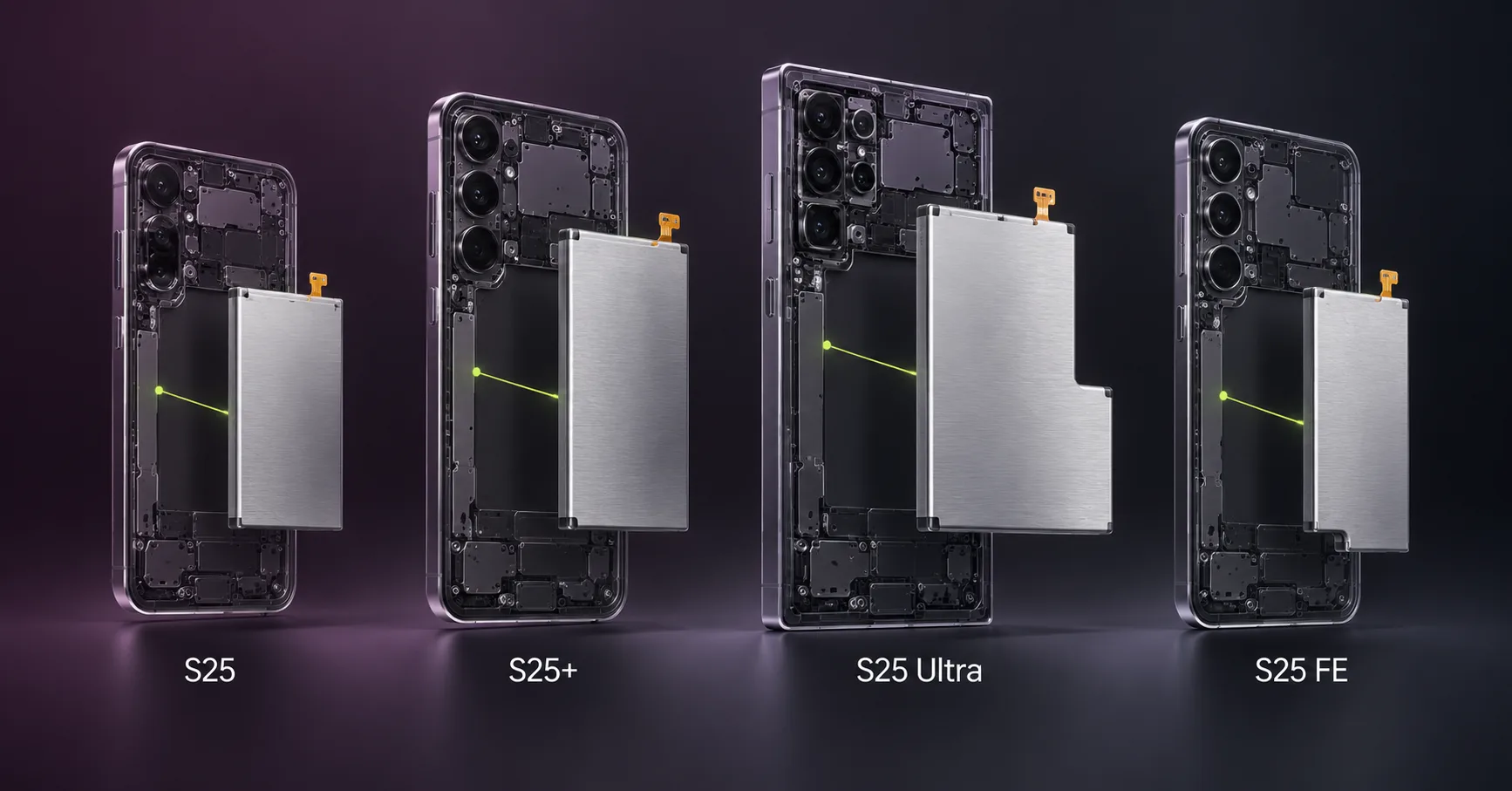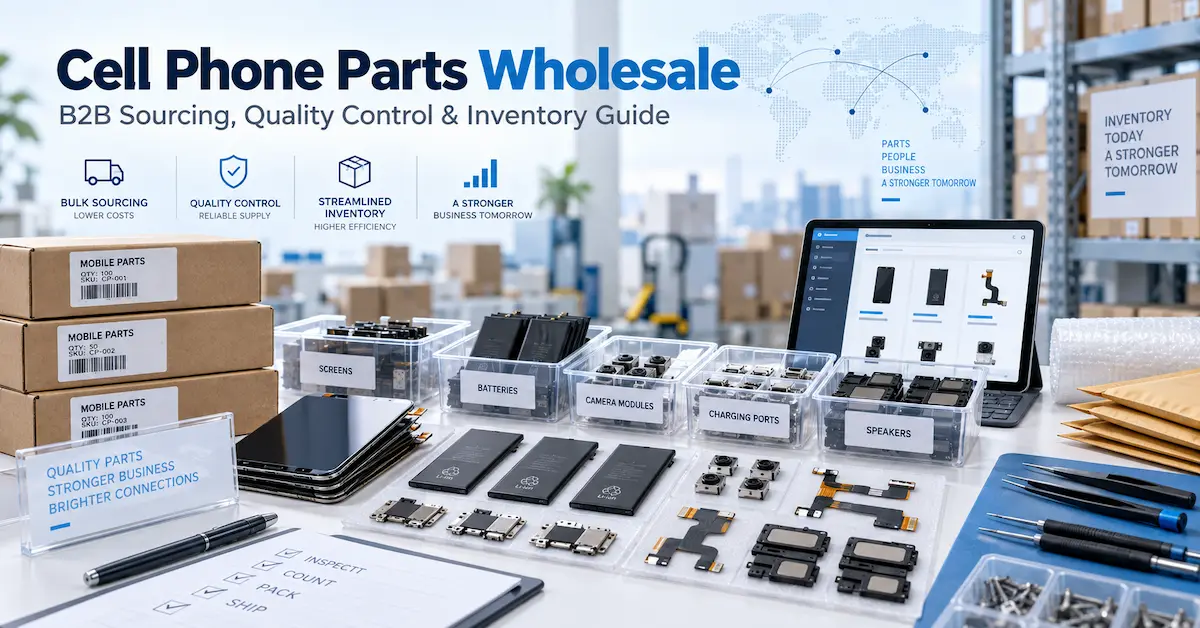

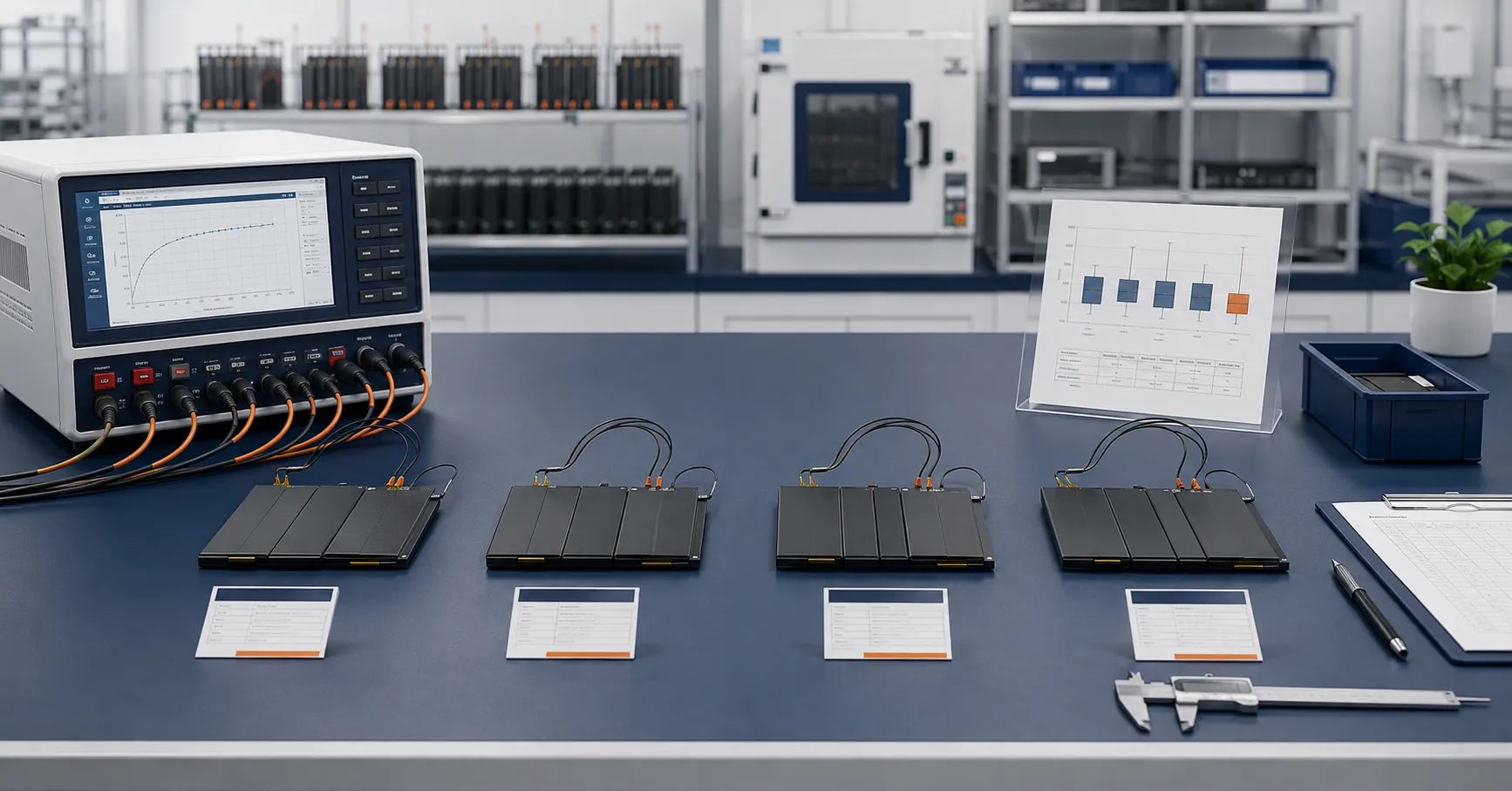
iPhone 14, iPhone 14 Plus, iPhone 14 Pro and iPhone 14 Pro Max require separate compatibility and lot-release records. A supplier's broad “14 series” statement cannot replace drawings, representative-device installation, controlled capacity testing and production-batch evidence.
This guide focuses on an iPhone 14 replacement battery batch-testing workflow. It does not repeat ESC's existing article about swelling-risk claims. Instead, it explains how buyers turn an approved sample into measurable incoming and production controls.
Start with Exact Model and Regional Identification
Apple's iPhone identification guide lists the four iPhone 14 models and their regional model numbers. Record the precise device used for every validation. Regional identity can also matter to the repair operation, so do not replace it with a photograph or a generic series description.
For each intended model, obtain a controlled battery SKU, drawing, critical dimensions, connector and flex description, label revision, sample lot and supported repair conditions. Compatibility must be confirmed by device model and battery specification. Do not infer it from a supplier's product family name.
Define the Difference Between Sample Approval and Batch Release
Sample approval decides whether a defined battery revision is suitable for a defined model and workflow. Batch release decides whether a production lot matches that approved configuration and remains within the buyer's acceptance limits. A good prototype does not prove that every future lot is consistent.
| Stage | Main question | Typical evidence |
|---|---|---|
| Document review | Is the offered revision clearly defined? | SKU, drawing, specification, label and change history |
| Sample approval | Does it fit and perform in representative devices? | Installation photos, capacity data, charging and function records |
| Pre-production confirmation | Does the planned build match the sample? | Controlled bill of materials and signed reference |
| Incoming or production release | Is the lot consistent with the approved baseline? | Identity, workmanship, dimensions, voltage distribution and sampled tests |
| Field monitoring | Does the released lot behave as expected? | Sales, installation rejection and warranty data by lot |
Test Samples Under a Defined Sequence
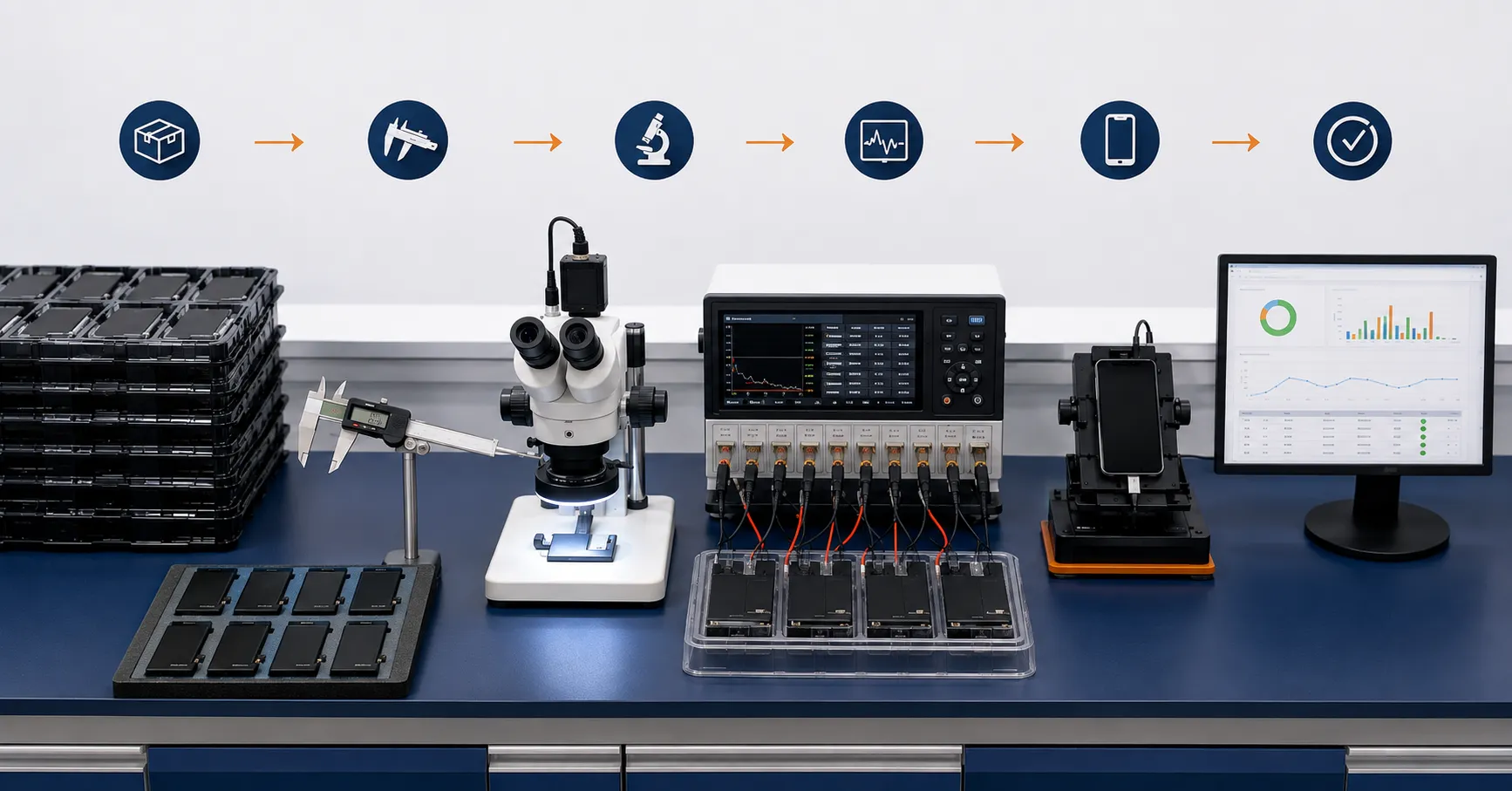
1. Identity and workmanship
Confirm supplier SKU, label revision, lot code and packaging match the request. Inspect for deformation, puncture, contamination, damaged flexes, connector defects and inconsistent printing. Quarantine any sample with uncertain identity or visible damage.
2. Dimensional and fit review
Measure length, width and thickness using a documented method. Install samples in representative devices with trained technicians. Record connector alignment, flex routing, adhesive position, edge clearance and reassembly. Forced bending, pressure or unusual rework is a failure signal even if the phone boots.
3. Electrical baseline
After a controlled rest period, measure incoming voltage using the same equipment and method. Review the distribution across samples rather than one isolated number. Follow with controlled charging and observe interruption, abnormal restart or excessive temperature behavior under the defined conditions.
4. Capacity and runtime
Capacity claims must be verified for the specific model and test method. Define equipment, temperature, charge procedure, discharge current or load, cutoff and rest periods before testing. ESC's iPhone battery capacity guide provides a starting structure. Installed-device runtime should use a fixed workload, settings, network state and endpoint; it should not be compared with uncontrolled personal use.
5. Functional and system observations
Record boot, charging, key device functions and displayed battery information under the tested iOS version. Apple explains possible repair-history states in its Parts and Service History guidance. Apple also lists supported parts and models in its Repair Assistant instructions. These records describe Apple's processes; they do not justify calling a third-party battery genuine Apple or promising a specific label.
Create Model-Specific Acceptance Criteria
The four models should not share one undifferentiated pass limit. Create a row for each model and define:
- approved supplier and internal SKU;
- approved drawing, label and construction revision;
- critical dimensional checks;
- connector and flex acceptance points;
- capacity method and acceptance rule;
- charging and runtime test conditions;
- temperature observation method;
- post-installation functions and system record;
- sample size and lot-selection method;
- rules for approval, conditional use, rejection and retest.
Use the ESC sampling-plan guide to match inspection depth to the buyer's model count, order size, supplier history and failure risk. Do not select only the easiest units or take every sample from one carton position.
Evaluate Batch Consistency, Not Just the Average
An average can hide individual weak units. Review distribution and outliers for dimensions, voltage and controlled capacity. Compare results with the approved sample and prior accepted lots. A shift that remains inside a broad limit may still signal a material or process change worth investigating.
Record all test-device IDs, equipment IDs, dates, operators and environmental conditions. If the buyer cannot reproduce the result, the number provides little protection during a supplier dispute or warranty review.
Control Claims About Capacity and Swelling
Higher stated capacity does not automatically mean better runtime, fit or reliability. Check whether the claim is physically plausible for the proposed construction and validate it under the declared method. Do not publish a capacity number as an ESC performance fact unless it has been approved for that model and condition.
Likewise, “no swelling” is not a valid unconditional guarantee. Swelling risk depends on cell quality, protection design, storage, charging, installation and operating conditions. ESC's existing iPhone 14 swelling-risk article addresses that claim separately; this batch guide uses lot evidence to identify abnormal trends without promising zero risk.
Apply Change Control After Approval
Require written notification before changes to the cell, protection board, connector, flex, adhesive, enclosure, label or packaging. Classify the change by risk and decide whether document review, partial retest or full model revalidation is required. Keep the approved golden sample and signed records accessible to incoming inspection.
When field complaints occur, preserve the device, battery, charger information, installation record and lot identity where possible. Link the investigation to ESC's mobile phone battery warranty workflow rather than replacing evidence with a verbal description.
Use Control Samples and Trend Review
Keep a retained sample from the approved build and, where practical, from released production lots. Store it under the documented policy and identify it so that it cannot be sold accidentally. A retained sample helps compare construction, labels and test behavior when an incoming or field problem appears.
An iPhone 14 battery capacity test should be interpreted as part of a trend, not as an isolated certificate. Plot or tabulate comparable results by lot, model, date and equipment. Review the mean, spread, minimum results, invalid tests and retest rate. Investigate a sustained shift even before it produces a large warranty signal.
The same principle applies to iPhone 14 battery batch testing for dimensions, voltage and workmanship. Trend records can reveal tool wear, material changes, handling damage or mixed revisions. Define who reviews the trend, how often, and which signal triggers quarantine or supplier investigation. Do not change limits after seeing a poor lot merely to make the data pass.
Frequently Asked Questions
Can one approved sample release a large order?
No single sample can demonstrate batch consistency. Use risk-based sampling across the lot and verify that production matches the approved construction.
Should iPhone 14 and 14 Pro share acceptance criteria?
No. Maintain separate model mappings and device evidence. Any shared test method still needs model-specific approval rows and conditions.
Does system status prove battery quality?
No. It documents one aspect of the repair result. Capacity, fit, charging, runtime, protection and consistency require separate checks.
When should a lot be quarantined?
Quarantine it when identity is uncertain, visible damage appears, measurements or results show abnormal patterns, an unapproved revision is found or traceability is incomplete.
Summary
iPhone 14 series sourcing requires separate model approval plus repeatable lot release. Control identity, fit, electrical behavior, capacity, runtime, system observations and change history, then monitor field results by batch. Send ESC your model list, target market, quantity, test conditions and traceability requirements to discuss a project-specific sample and batch plan.
External Source References
- Apple — Identify your iPhone model — accessed 2026
- Apple — About iPhone Parts and Service History — updated 2026
- Apple — Use Repair Assistant to finish an iPhone or iPad repair — updated 2026