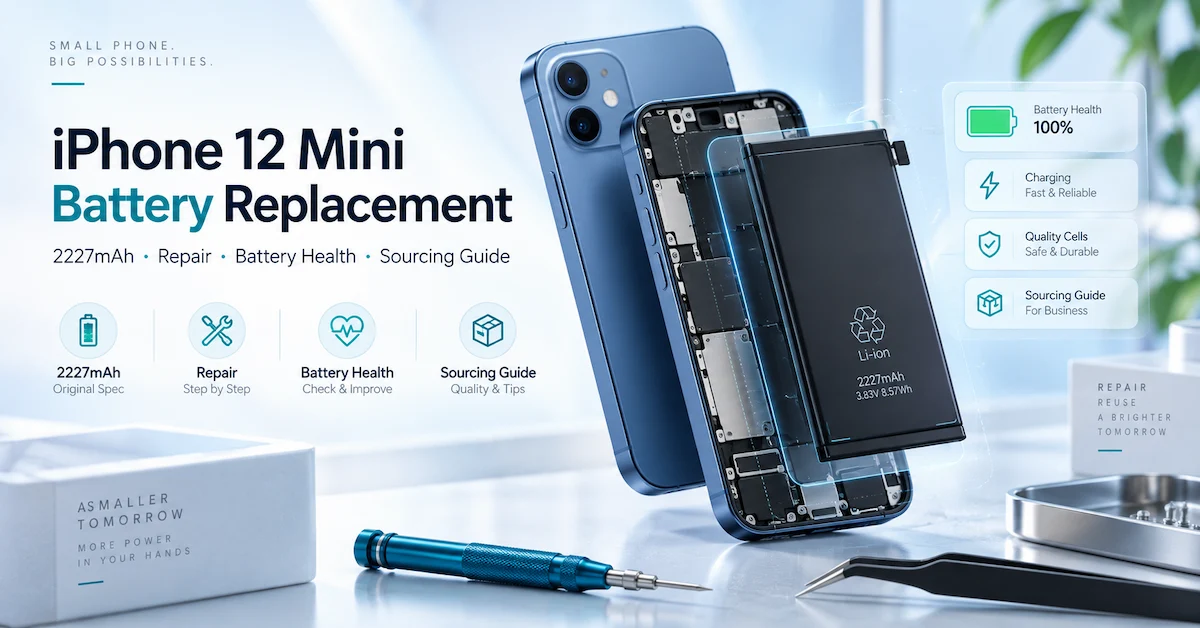

A professional compatibility decision cannot be made from “fits iPhone” or even from a generation name alone. Repair chains, refurbishers and wholesalers need a controlled record connecting the exact device identity to the battery sample, physical construction, electrical behavior, installation result and post-repair system status. This is the purpose of an iPhone replacement battery compatibility matrix.
The matrix is not a promise that one battery works in every regional device or software state. It is a living approval record. Buyers should confirm each SKU against representative devices, retain evidence and repeat critical checks when the supplier, construction, firmware, operating system or production lot changes.
Why Model Names Are Not a Complete Purchasing Specification
Apple markets devices by familiar names, but procurement teams should identify the exact device before approving a battery. Apple's official iPhone model identification guide lists model numbers and regional variants. A repair business should capture that identifier, region, operating-system version and repair history in its sample record.
Two batteries that appear similar can differ in outline, thickness, connector geometry, flex length, component position, adhesive layout or protection-board behavior. A listing that groups several generations together therefore needs evidence, not assumption. Compatibility must be confirmed by device model and battery specification, with all conditions recorded.
What a Compatibility Matrix Must Control
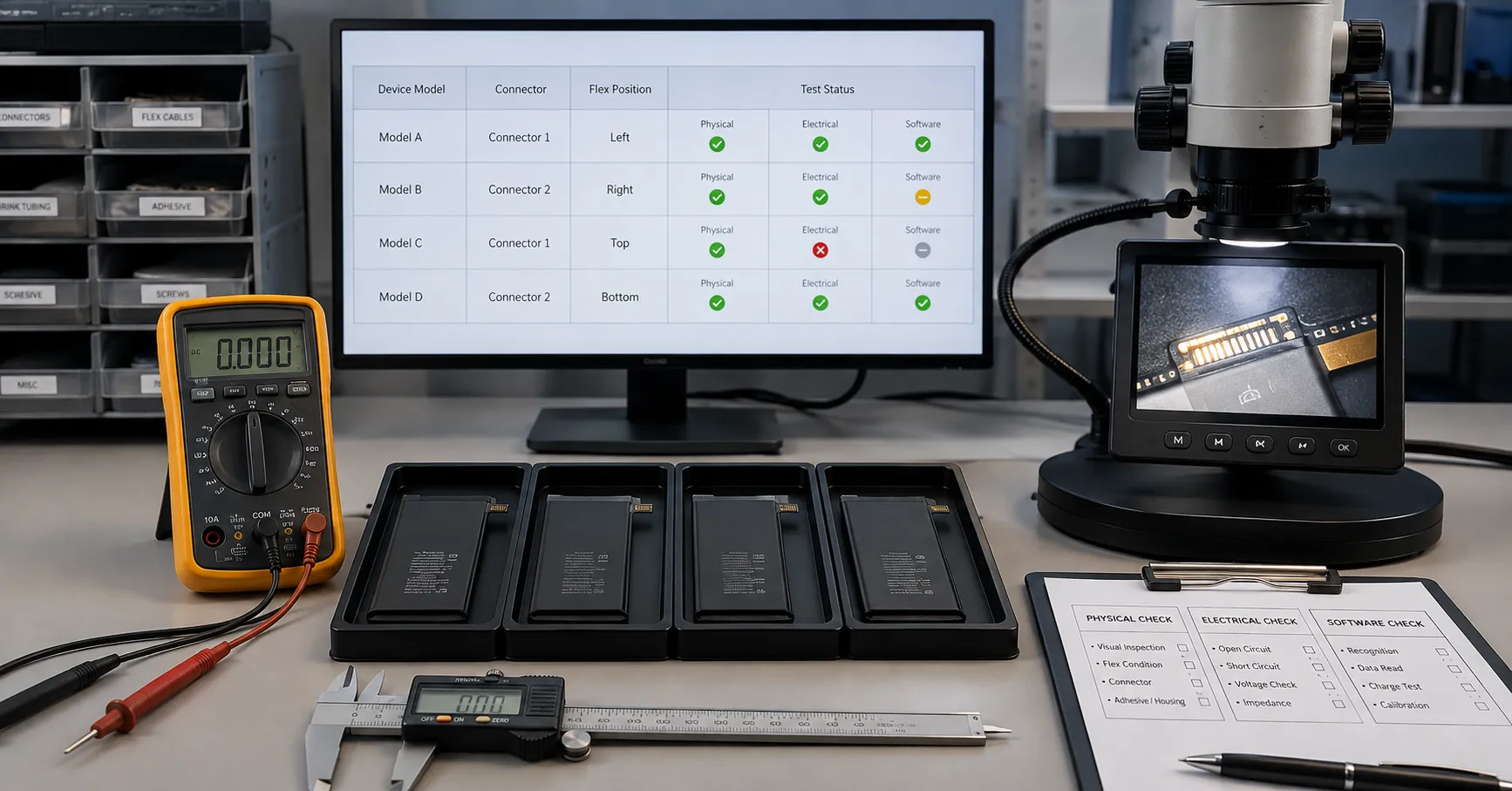
| Control field | Evidence to record | Risk if omitted |
|---|---|---|
| Device identity | Sales name, model number, region and test-device ID | The wrong variant may be approved |
| Battery identity | Supplier SKU, label revision, sample lot and construction revision | Future orders cannot be compared with the sample |
| Mechanical fit | Length, width, thickness, edge clearance and adhesive position | Pressure or reassembly problems may appear |
| Interconnect | Connector shape, pin alignment, flex routing and strain | Intermittent power or installation damage |
| Electrical baseline | Voltage, charging, discharge behavior and protection response | A fitting part may still behave incorrectly |
| System result | iOS version, notifications, battery information and functions | Customer-facing status may be misunderstood |
| Disposition | Approved, conditional, rejected or retest required | Unclear samples may enter inventory |
Separate Physical Fit from System Status
A battery may fit and power the phone while the system displays a repair-related message. Conversely, a clean screen after installation does not prove capacity, runtime, protection behavior or batch consistency. These are different approval dimensions and should never be collapsed into a single pass field.
Apple explains that Parts and Service History can show states such as Genuine, Used, Unknown or Finish Repair depending on the part, device and repair process. Its current Parts and Service History documentation notes that battery information is available for iPhone 12 models and later. Those labels belong to Apple's service ecosystem; a third-party supplier should not promise a particular label without device-level verification under the intended repair method.
Apple's Repair Assistant instructions identify supported models and parts and describe requirements for completing eligible repairs. Procurement teams should document whether their workflow involves this process, but should not treat it as a substitute for battery quality testing.
Build the Matrix Around Four Approval Layers
1. Documentary review
Start with the supplier's model list, battery drawing, label revision, specification sheet and sample lot identification. Reject ambiguous mappings such as “12 series” when construction differs by model. Commercial, carton and product labels should use the same controlled SKU.
2. Physical and installation review
Use representative devices and trained technicians. Measure the sample, inspect the connector under magnification and photograph flex routing after connection. Confirm that the battery sits without forced compression, abnormal edge contact or interference. Record adhesive type and removal method because serviceability affects installation risk and warranty investigations.
3. Electrical and functional review
Establish a repeatable baseline: incoming voltage, controlled charge, controlled discharge, device boot, charging behavior, temperature observations and abnormal shutdown checks. Capacity claims must be verified for the specific model and method. ESC's iPhone battery capacity testing guide can support the laboratory plan, while the mobile phone battery sampling plan helps define sample coverage.
4. Post-repair acceptance
Record the iOS version, displayed battery information, charging result, connectivity, cameras, audio, biometric functions where applicable and a controlled runtime check. Do not diagnose every failure as a battery problem. Installation damage, device condition, applications, network activity and software state can affect the result.
Use One Row per Tested Combination
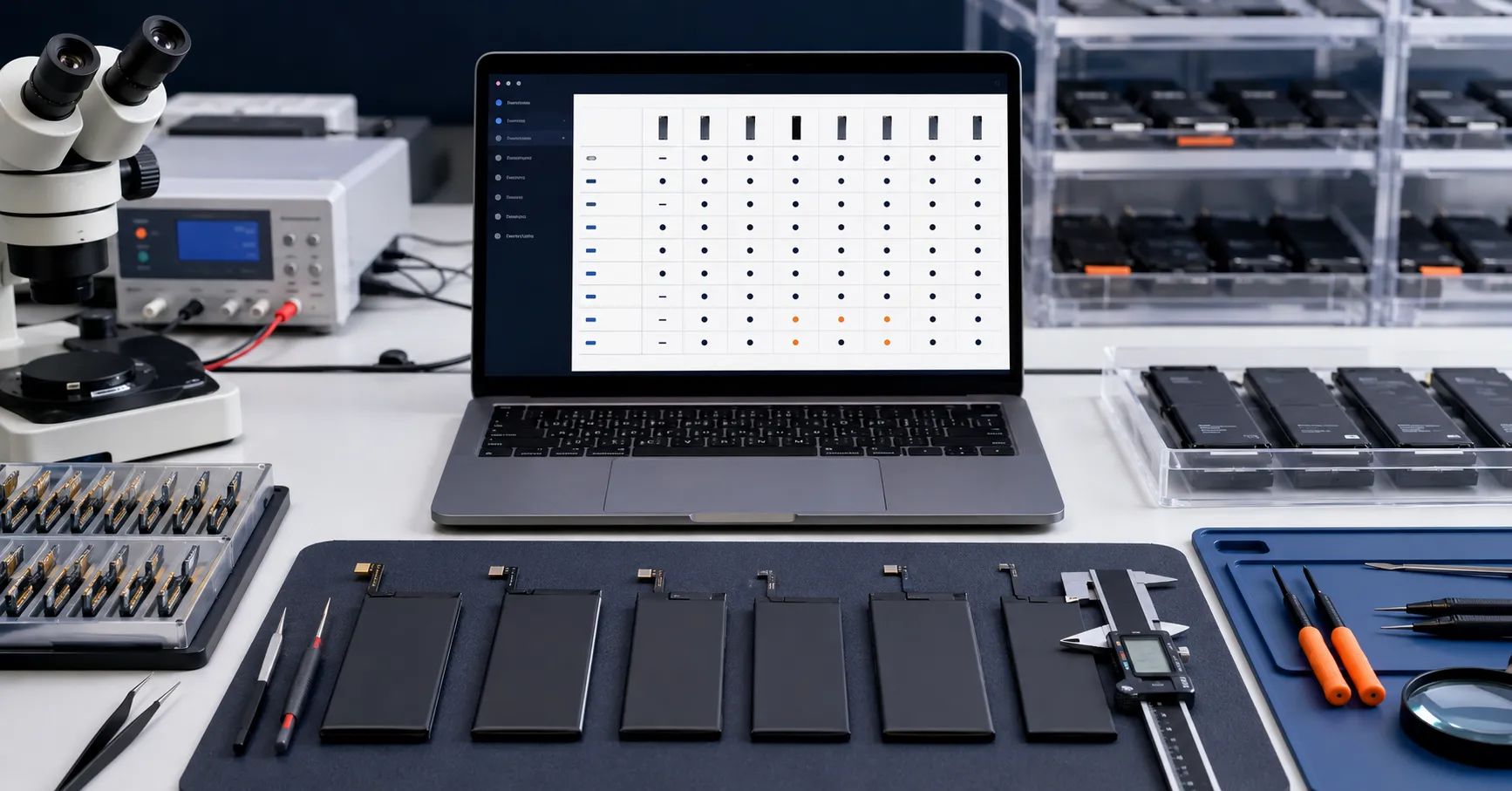
A useful iPhone battery compatibility matrix does not place one check mark beside an entire generation. It creates one row for each controlled combination of model, region, battery revision, lot, installation method and software baseline. If one element changes, the team decides whether approval remains valid or needs targeted retesting.
- Approved: all mandatory checks pass within documented limits.
- Conditional: suitable only for a named device, market, repair method or software condition.
- Rejected: a safety, fit, electrical, system or traceability requirement fails.
- Retest required: evidence is incomplete or a relevant revision changed.
Convert Sample Approval into Purchase Controls
Sample approval has little value if purchasing later receives an untraceable revision. Put the approved SKU, drawing revision, label revision and critical dimensions into the specification. Require notification before changes to the cell, protection board, connector, flex, adhesive, label or packaging. Incoming inspection should compare production goods with the retained golden sample.
Buyers planning a broader supplier review can use ESC's iPhone battery supplier guide. Warranty teams should connect failures to the original lot and evidence package using the mobile phone battery warranty workflow.
Audit Model Mapping Before Every Reorder
A periodic audit prevents an old approval from being applied to a changed product. Review iPhone battery model matching whenever a purchasing description, supplier code, drawing, label or construction revision changes. Select records from recent receipts and trace each finished pack backward to the purchase order, supplier lot, inspection result and original sample approval.
The audit should also compare sales descriptions with technical records. Marketing names can be shortened for customers, but the warehouse and quality teams still need an unambiguous internal code. If one online listing covers several models, the fulfillment system must prevent staff from selecting a battery by screen size or generation alone.
Review returns by model and lot rather than as one combined iPhone category. A small cluster of connector, installation or runtime complaints may be hidden inside a large portfolio total. Trend review should distinguish confirmed battery failures from device damage, installation errors, software conditions and unsupported compatibility claims. The result can trigger additional incoming inspection, targeted retesting, supplier corrective action or removal of a mapping.
RFQ Fields Buyers Should Send
- Exact iPhone models and regional identifiers
- Required battery configuration, connector, flex and adhesive arrangement
- Target market and repair workflow
- Sample quantity and representative device list
- Capacity, charging, runtime and temperature test requirements
- Label, packaging and traceability requirements
- Expected order quantity and repeat-order plan
MOQ, lead time, certification availability and warranty terms depend on the selected model, customization scope, target market and agreement. Confirm them for the project rather than copying a general statement.
Frequently Asked Questions
Can one battery SKU cover several iPhone models?
Only if drawings, specifications and representative-device testing support that mapping. Similar naming or appearance is not enough.
Does a normal battery-health screen prove compatibility?
No. It is one system observation. Physical fit, charging, capacity, runtime, protection behavior and production consistency still require evidence.
Should every production lot be fully revalidated?
Not necessarily. Buyers can combine incoming inspection, retained samples, change control and periodic verification. A material or construction revision should trigger an appropriate retest.
What should happen when one regional device fails?
Quarantine the affected mapping, identify the exact device and sample revisions, reproduce the failure and classify approval as conditional or rejected until evidence resolves the difference.
Summary
A reliable matrix connects exact device identity with a controlled battery revision and evidence from physical, electrical, functional and system checks. It carries approval into purchasing, incoming inspection and warranty traceability. Send ESC your target models, market, order quantity, repair workflow and validation requirements to discuss a model-specific sampling plan.
External Source References
- Apple — Identify your iPhone model — accessed 2026
- Apple — About iPhone Parts and Service History — updated 2026
- Apple — Use Repair Assistant to finish an iPhone or iPad repair — updated 2026