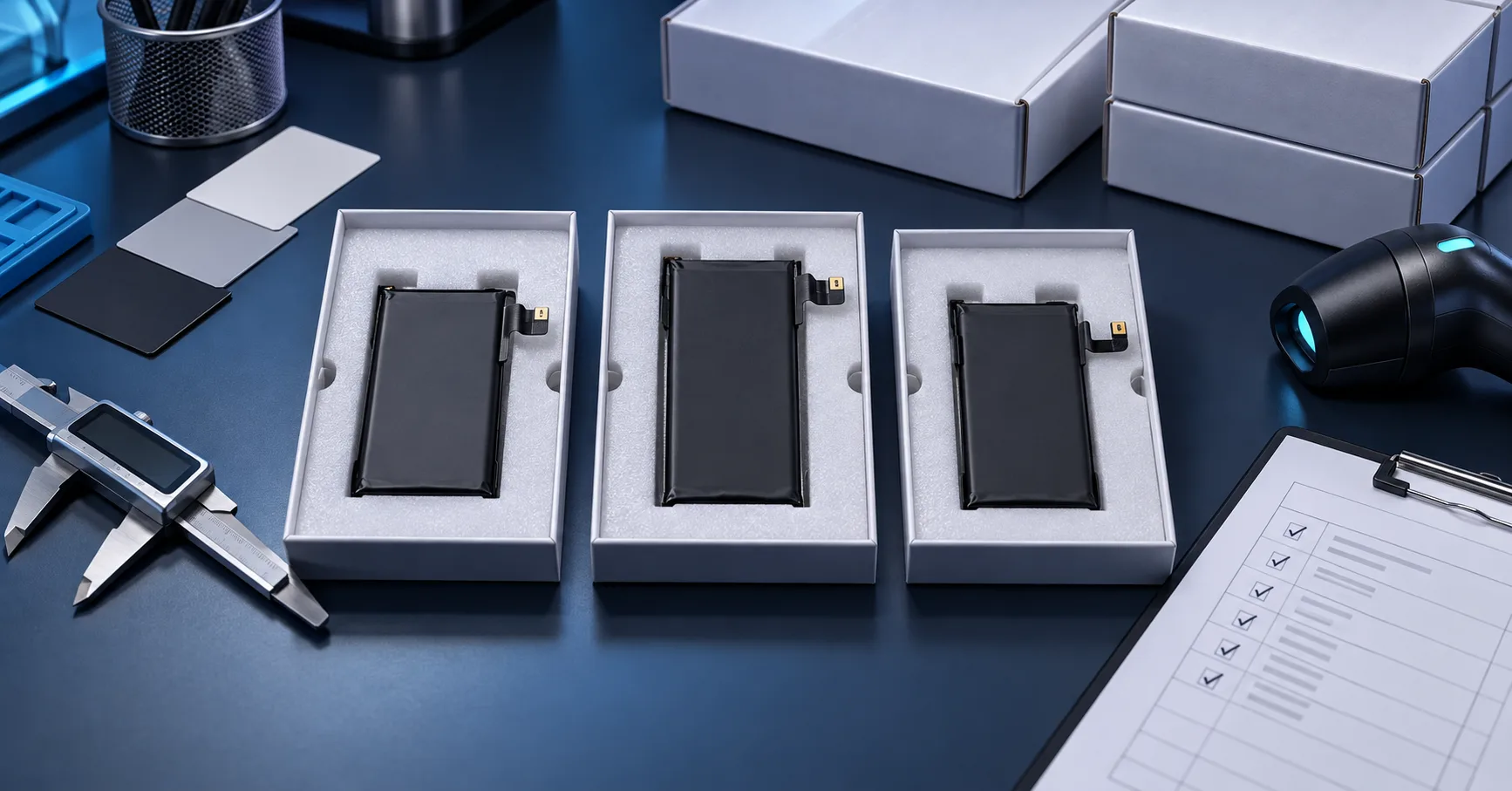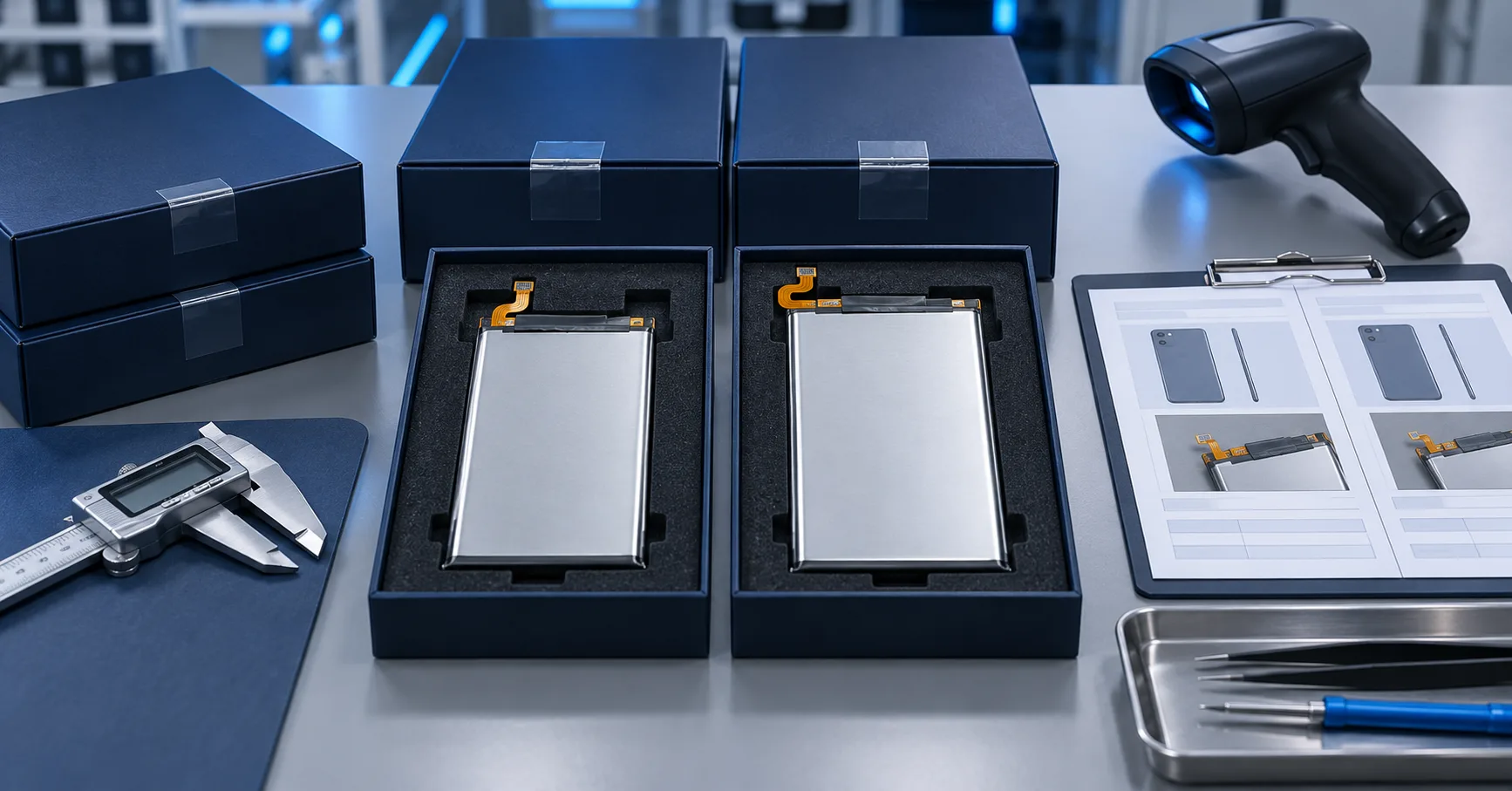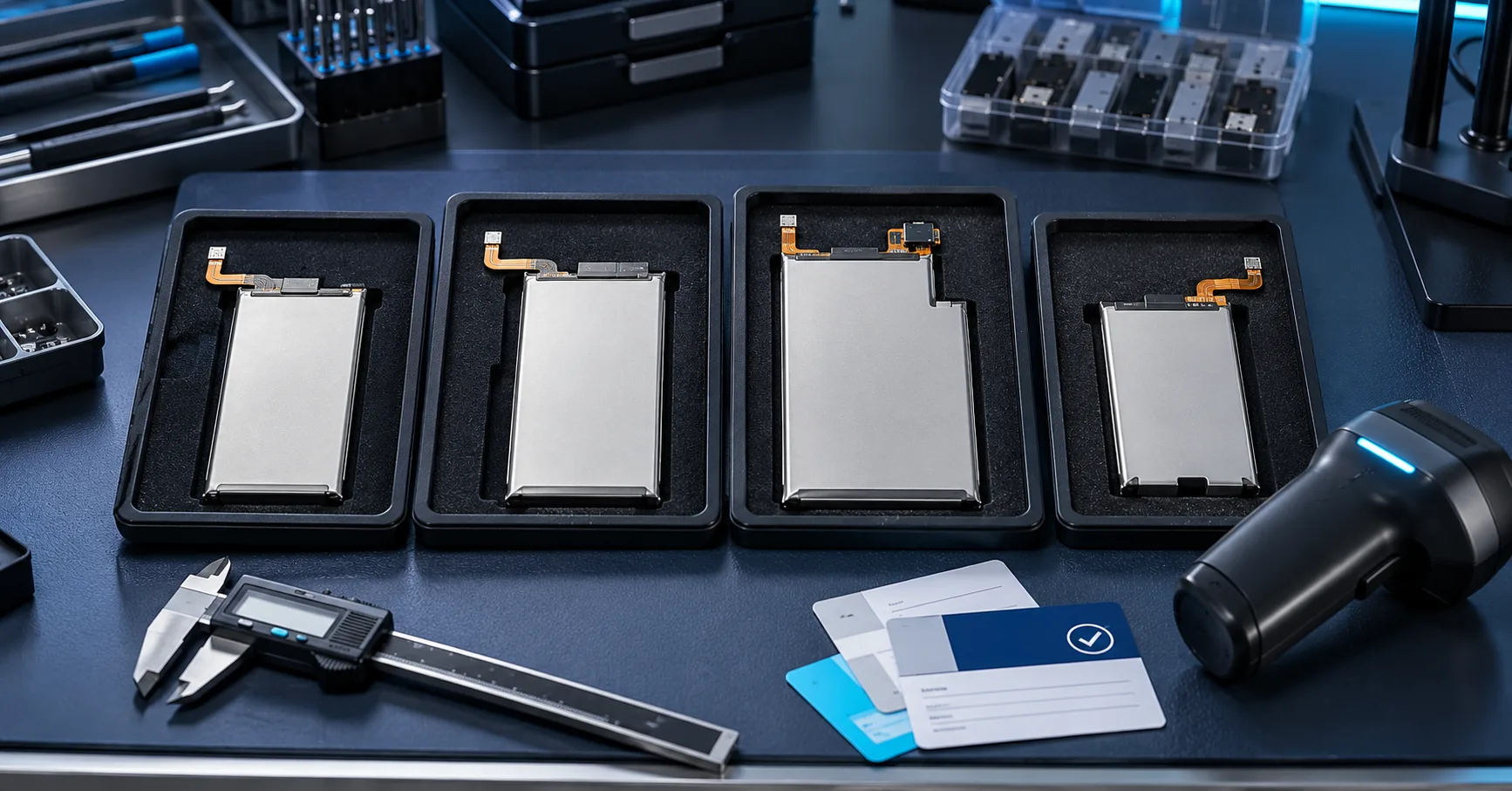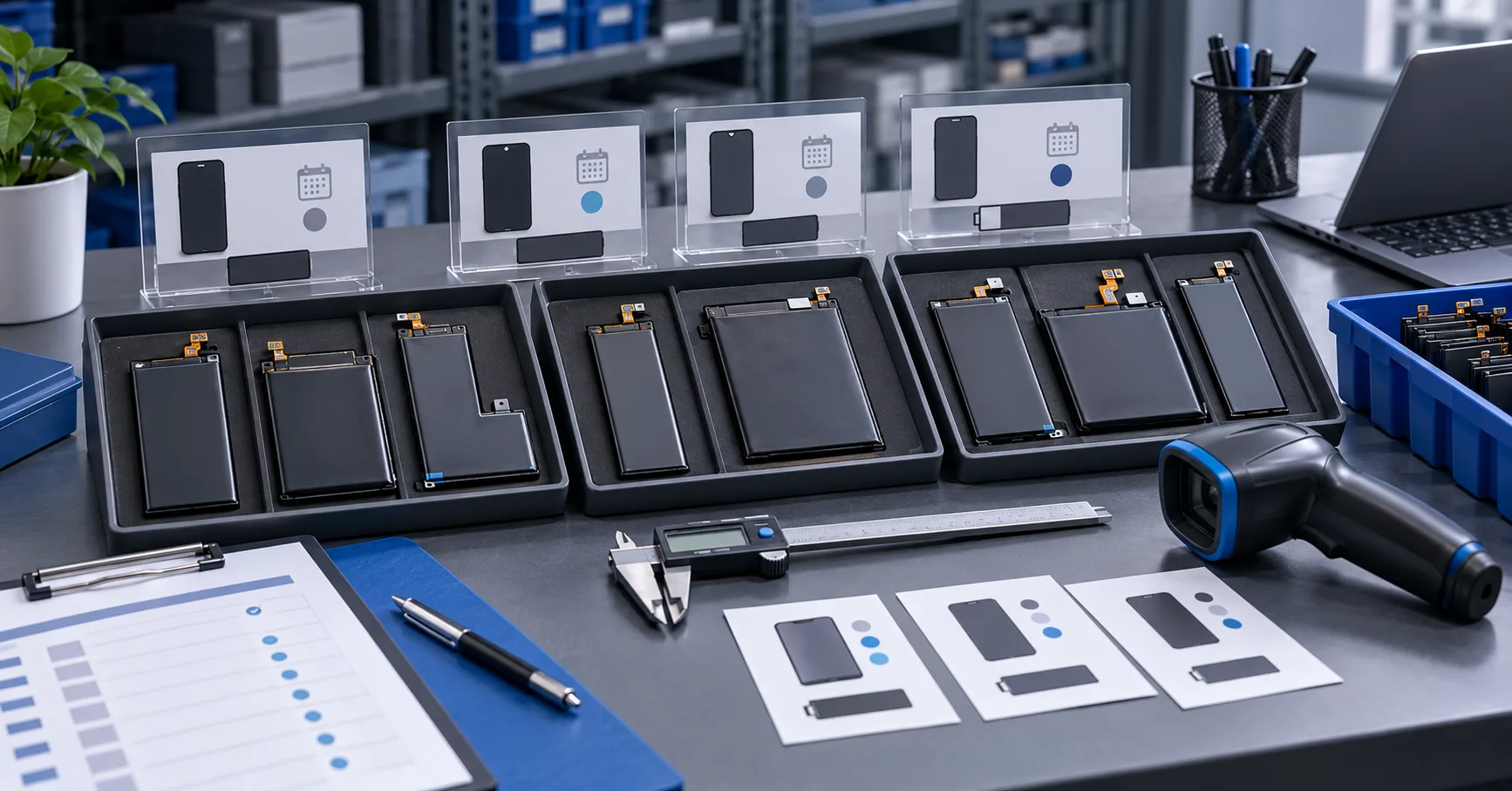

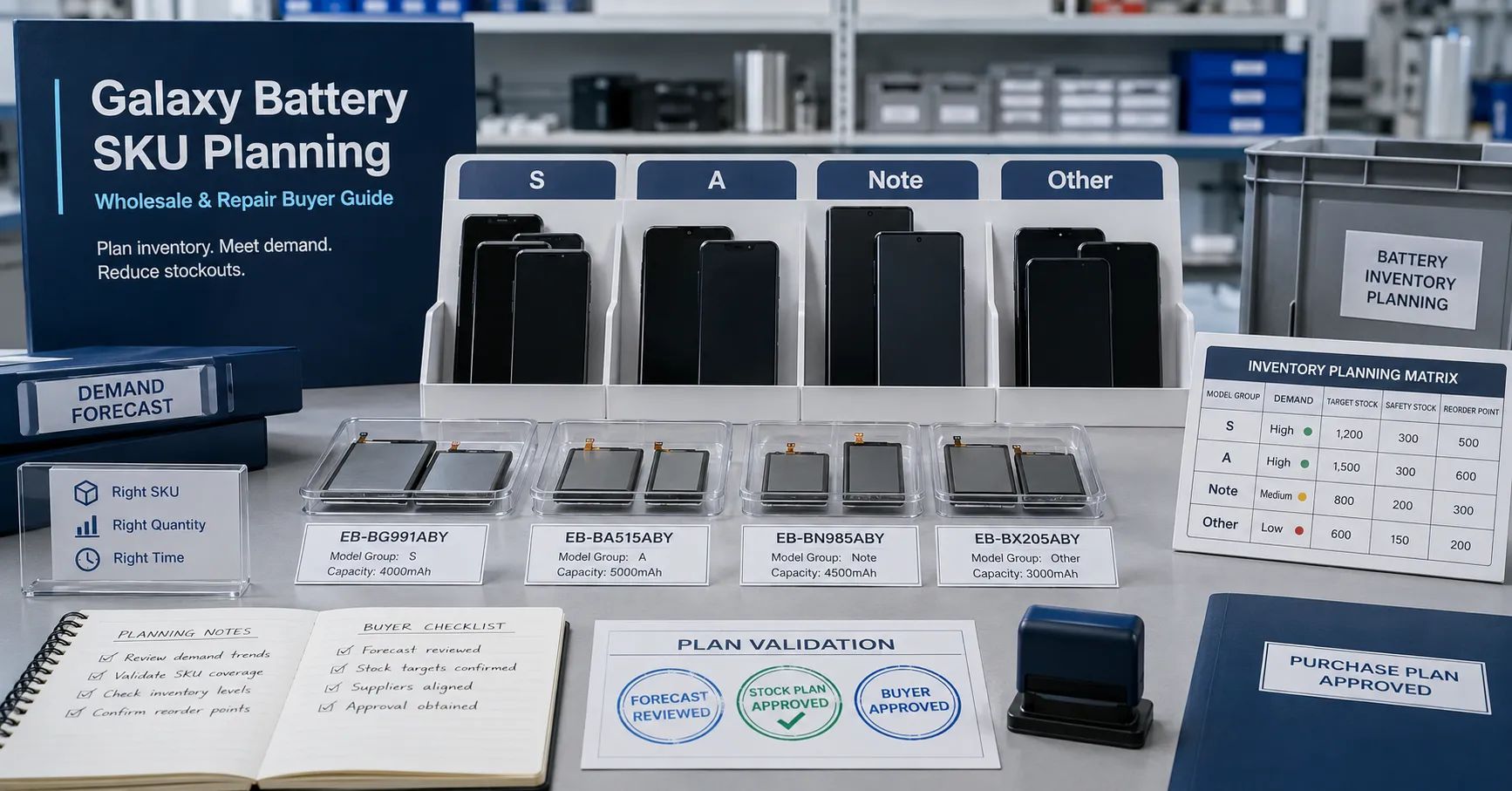
A Samsung Galaxy replacement battery assortment should be built from verified model-to-battery records, not from familiar names such as “Galaxy S,” “A series” or “Note.” Samsung sells many devices across generations, regions and carrier variants, and similar commercial names do not prove that the battery, flex, connector, dimensions or software behavior are the same. For B2B buyers, the safest unit of control is a buyer-owned SKU linked to exact device model codes, evidence, sample status and permitted sales markets.
This guide addresses assortment design and compatibility control. It does not repeat general supplier-selection advice and does not claim that third-party replacement parts are Samsung genuine or Samsung-authorized components.
Why Series Names Are Not Purchasing Specifications
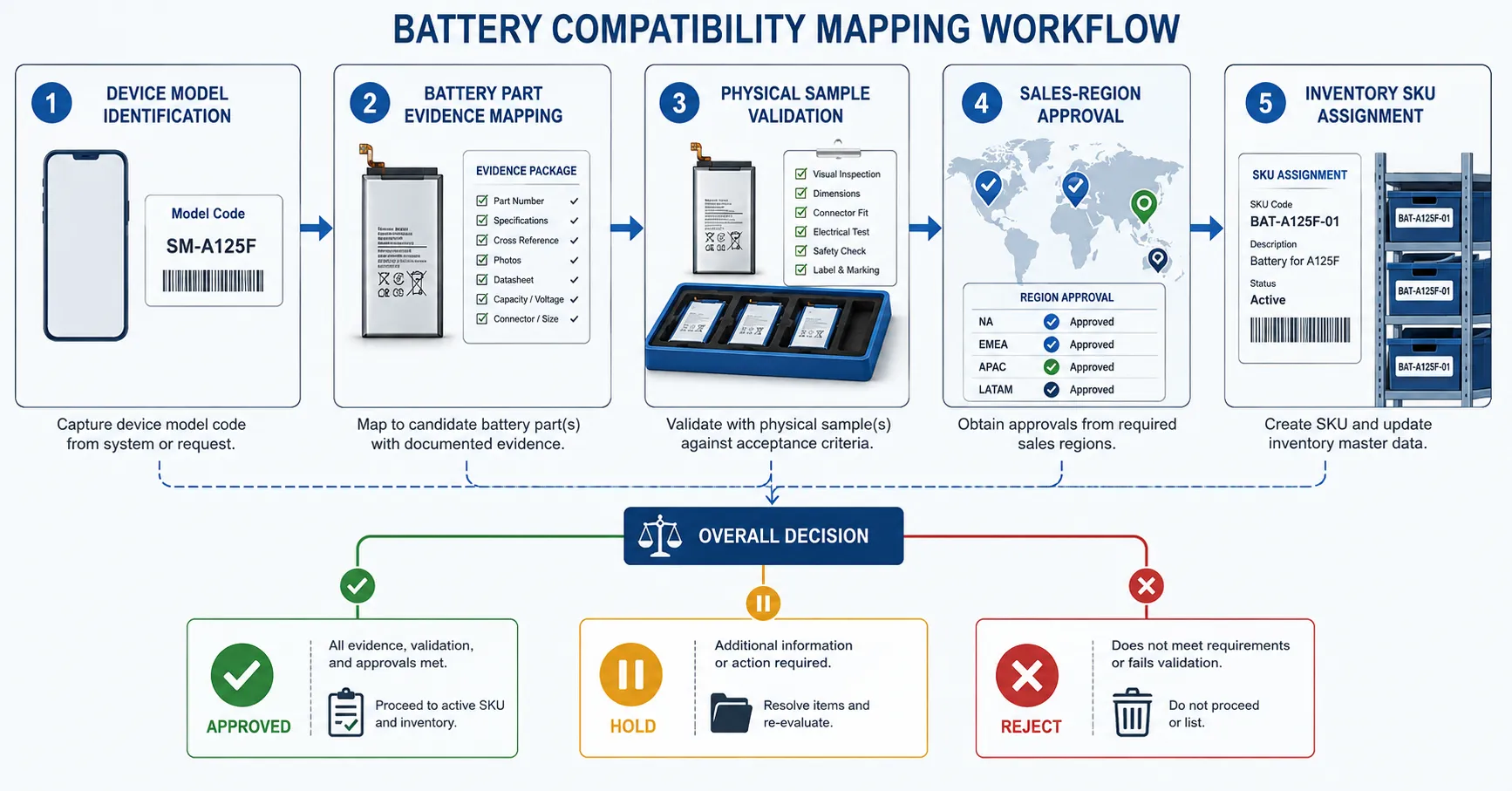
“Galaxy S24,” “Galaxy A55” or “Note 10” may be useful for customer navigation, but procurement needs the complete model code and region. Samsung's official model-number guidance explains that users can retrieve model information through device settings, the dialer or Samsung Members. Capture the exact code from the device and retain a photograph or system record when approving a match.
A listing should never collapse suffixes or carrier variants unless documented evidence supports the grouping. The same discipline applies to the battery: supplier code, printed battery identifier, drawing revision, connector and flex details, cell lot and protection-board revision need traceability.
Build the Model-to-Battery Master Record
| Record field | Purpose | Evidence |
|---|---|---|
| Device family and name | Customer-facing navigation | Device and official support page |
| Full model code | Primary compatibility key | Settings, label or verified device record |
| Sales region/carrier | Controls variant exposure | Channel and device data |
| Battery identifiers | Links sample to construction | Label photo, drawing and supplier record |
| Validation revision | Prevents stale approval | Test report and change history |
| Status | Controls sales and inventory | Approved, conditional, hold or rejected |
Keep aliases for search and sales use, but do not use them as the master key. A single physical inventory SKU may serve more than one device code only after those codes have documented fit and functional evidence. Conversely, one marketing model may require separate inventory records when regional or production differences affect the part.
Separate Evidence Levels
Compatibility evidence has different strengths. A supplier spreadsheet is a starting claim. Label and drawing comparison improve confidence. Physical installation in a controlled test device provides stronger evidence. Repeated results across samples and a pilot lot support production release. Record the level achieved rather than turning every claim into a yes/no answer.
- Unverified: name appears in a catalogue but no device or drawing evidence has been reviewed.
- Document matched: identifiers and drawings align, but installation is pending.
- Sample approved: defined samples passed physical and functional checks in identified devices.
- Lot approved: a production lot reproduced the approved sample result.
- Conditional: approval is restricted to named model codes, markets, quantities or revisions.
Samsung's phone support portal allows searches by model code or product name, and its Self-Repair information directs users to model-specific materials for supported products. These sources help identify devices and procedures; they do not validate an independent supplier's replacement battery.
Design the Assortment Around Demand and Risk
Galaxy battery SKU planning should start with service-ticket, sales and device-population data from the buyer's actual markets. Divide demand into core, regional, long-tail and trial groups. Core SKUs justify regular replenishment and deeper validation. Regional SKUs need market-specific model-code evidence. Long-tail SKUs may use controlled minimum stock or order-on-demand rules. Trial SKUs remain unavailable for general sale until validation is complete.
Use one scorecard with demand, gross-margin assumptions, return history, lead-time uncertainty, shelf-age risk, minimum order exposure and validation cost. Do not let search volume alone determine stocking. An old Galaxy model can generate inquiries but still create slow-moving inventory if local repair demand is weak.
Validate Before Merging SKUs
Before two model codes share inventory, compare battery outline, thickness measurement points, flex route, connector position, polarity, adhesive zone and clearances. Then conduct controlled installation, boot, wired charging, wireless charging where applicable, discharge, temperature and runtime checks. Keep raw results by sample and device.
An approved Samsung battery compatibility record should state exactly what was tested and what was not. Similar appearance, connector engagement or a successful boot alone is insufficient. If one unit fails, determine whether the cause is the device, installation, sample or design before changing the mapping.
Control Inventory After Approval
Create a distinct label and barcode for each approved inventory SKU. The label should point to the master record without making unsupported original-part claims. Separate physically similar batteries in storage, use scan validation during picking and train sales teams to request the full device code before confirming an order.
Apply documented receiving checks using the mobile phone battery incoming-inspection framework. Rotate inventory according to the approved battery storage SOP, and link returns to the shipped lot, customer-reported device code and installation evidence. Returns often reveal a mapping problem earlier than aggregate sales data.
Manage Changes and Portfolio Reviews
Require notification before changes to the cell, pouch dimensions, protection board, flex, connector, label, adhesive or manufacturing site. Classify the change and repeat the relevant document, bench or device tests. Update the revision in the master record; do not silently overwrite the previous approval.
Review the assortment quarterly or at a cadence suited to the market. Promote trial items when demand and evidence justify them, reduce long-tail exposure, quarantine SKUs with elevated mismatch claims and retire mappings that can no longer be supported. A clear supersession table prevents an obsolete code from remaining active in price lists.
Prepare a Better RFQ
Send suppliers the device families, complete model codes, target countries, expected monthly mix, required battery identifiers, packaging and labeling needs, validation method, sample quantity and traceability expectations. Ask them to flag uncertain mappings instead of filling gaps with assumptions. ESCCharge can discuss a model-level sample and pilot-lot plan after reviewing these inputs. Product specifications, certifications, MOQ, lead time, warranty and compatibility scope must be confirmed for the proposed order.
Frequently Asked Questions
Can buyers plan SKUs using only Galaxy model names?
No. Use complete model codes and regional evidence as the compatibility key.
When can several device codes share one battery SKU?
Only when documents and controlled sample testing support every included code and the approved scope is recorded.
How should uncertain matches be sold?
Keep them on hold or restrict them to a documented trial. Do not present an unverified catalogue claim as confirmed compatibility.
What triggers revalidation?
Relevant changes to the cell, dimensions, protection board, flex, connector, adhesive, production site or process should trigger risk-based review.