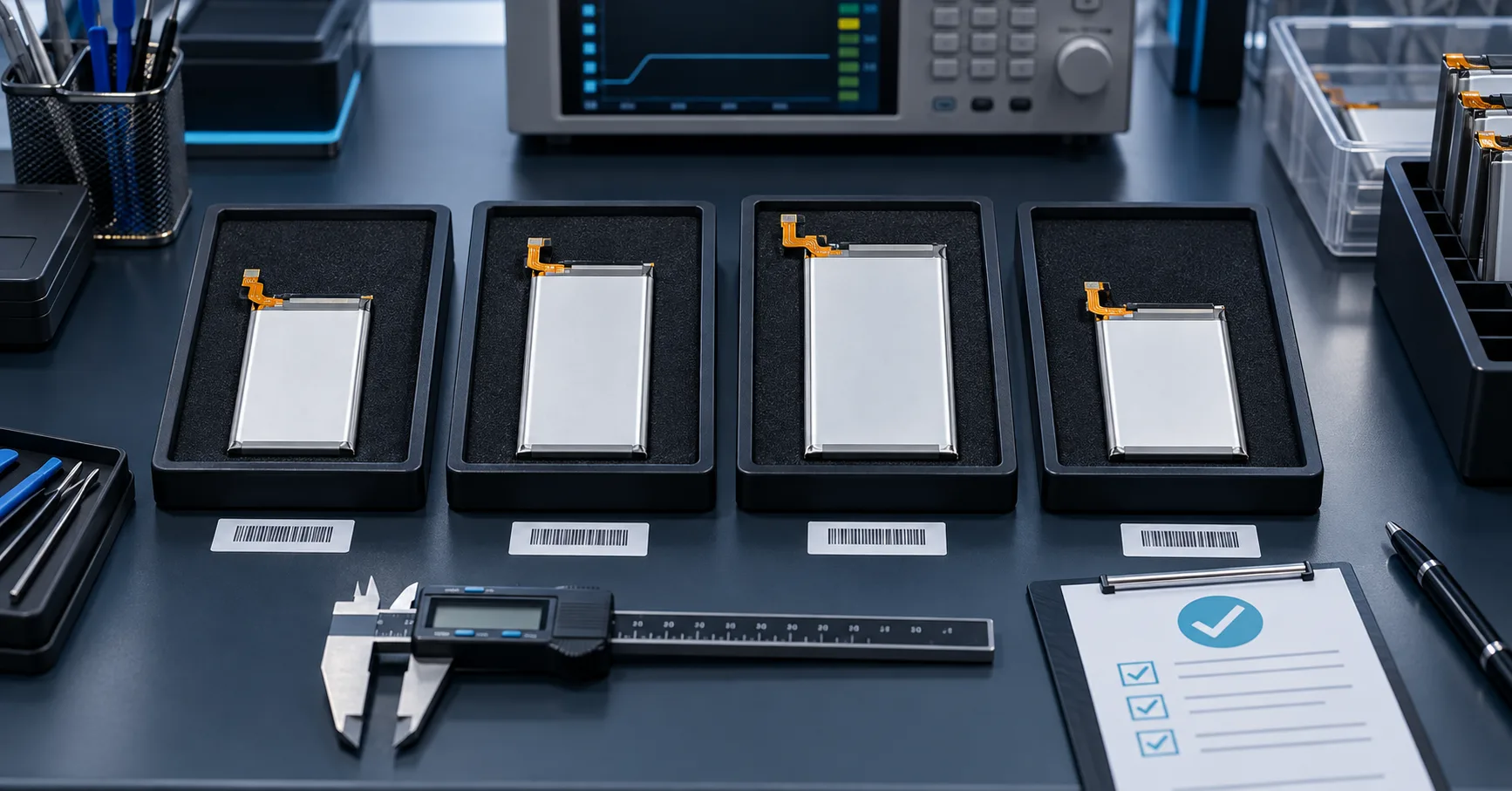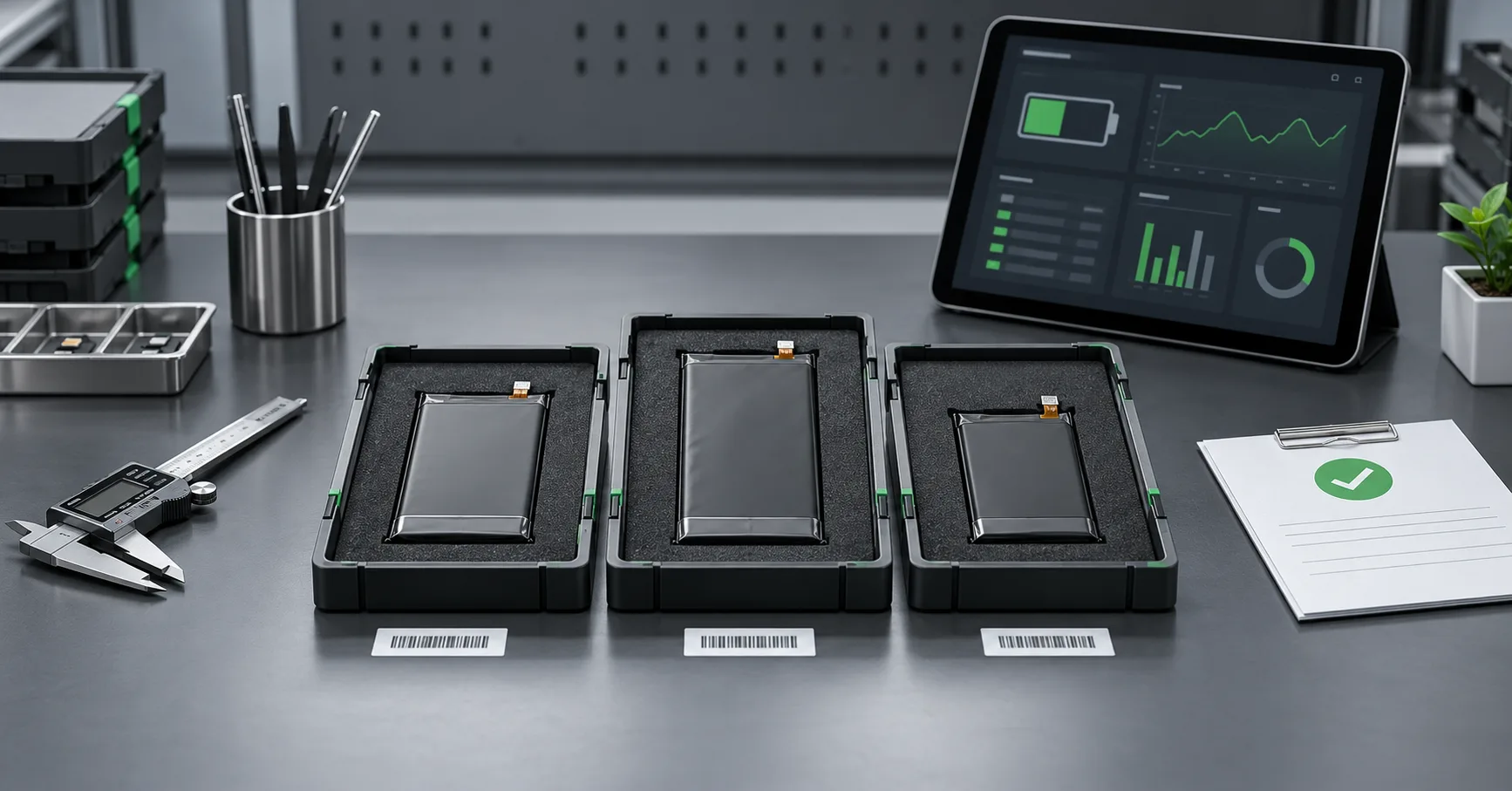

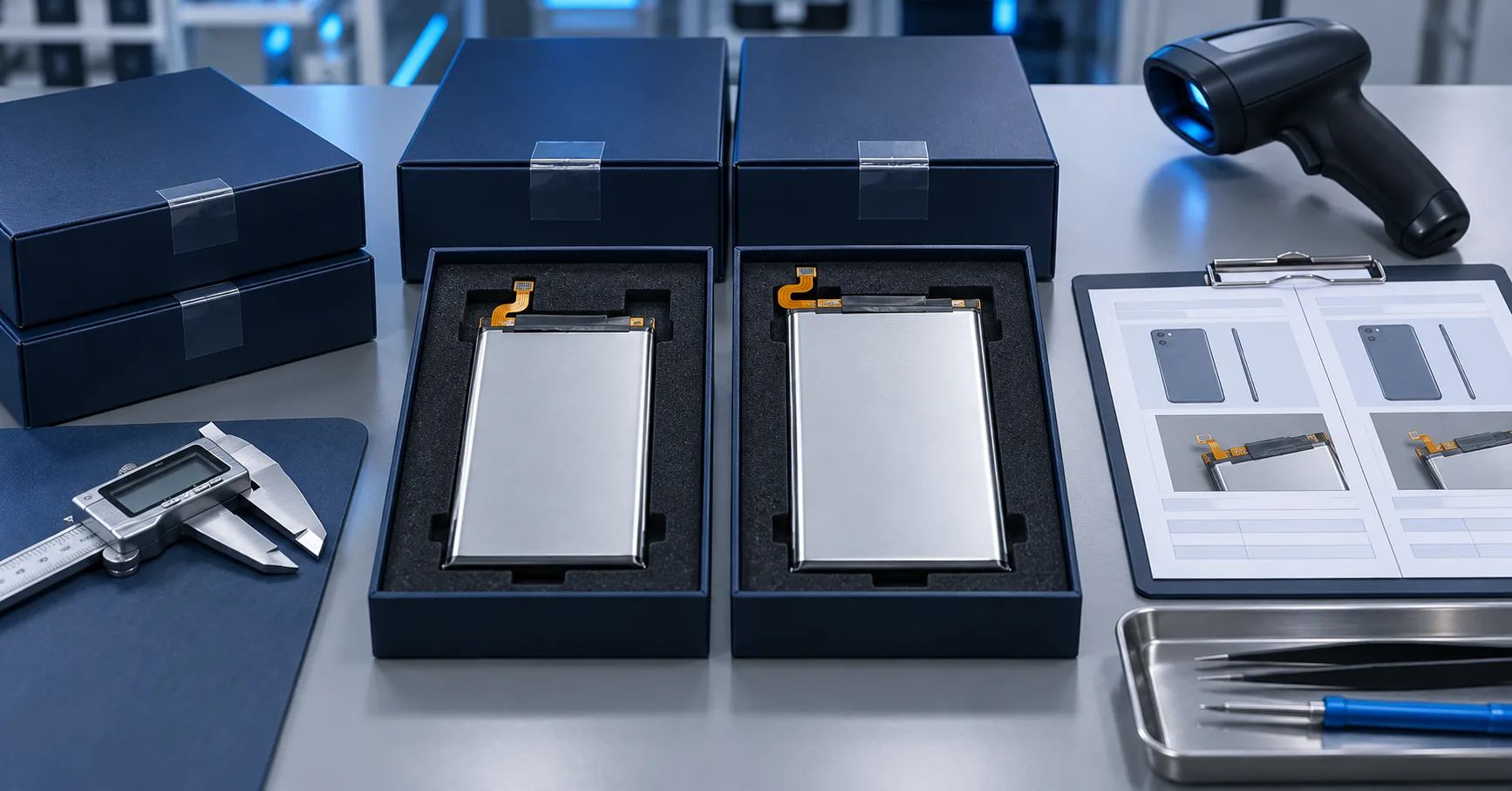
Quick answer: Pixel 8, Pixel 8 Pro and Pixel 8a replacement batteries should be sourced as three independent finished assemblies. Similar product names do not establish shared dimensions, flex routing, connectors, protection design or installed behavior. A B2B buyer should approve each model from a controlled reference, test samples in verified devices and connect every production lot to the approved configuration.
The keyword data supports one useful series guide rather than several thin pages. Searches for pixel 8 battery replacement and pixel 8 pro battery replacement each show meaningful demand, while Pixel 8a adds a smaller but distinct commercial lane. The purchasing decision is therefore not which battery is “best.” It is how to prevent model mix-ups, unsupported capacity claims and sample-to-production drift across a three-SKU program.
Separate the Pixel 8 Family into Three Approval Lanes
Begin with three buyer SKUs and three approval folders. The official device capacities and service references below are identification anchors, not automatic specifications for an aftermarket product. Google describes “typical capacity” as an estimate of typical capacity based upon testing and expected cell behavior
in its Pixel phone hardware specifications. A replacement supplier must separately substantiate its own label and measured results.
| Device lane | Official device capacity reference | Google repair-manual battery reference | Buyer control |
|---|---|---|---|
| Pixel 8 | 4,575 mAh typical; 4,485 mAh minimum | G949-00574-01 | Independent drawing, sample and warehouse barcode |
| Pixel 8 Pro | 5,050 mAh typical; 4,950 mAh minimum | G949-00705-01 | Independent drawing, sample and warehouse barcode |
| Pixel 8a | 4,492 mAh typical; 4,404 mAh minimum | G949-01097-00 | Independent drawing, sample and warehouse barcode |
The part references come from Google's Pixel 8, Pixel 8 Pro and Pixel 8a repair manuals. They help procurement teams identify the intended service lane, but a matching printed code alone does not prove that a third-party pack has the same cell, protection board, connector, flex geometry or performance. Do not describe a non-authorized battery as genuine, original or Google-authorized.
Build the Specification from the Device, Pack and Commercial Record
A reliable google pixel 8 battery replacement order starts with the exact device identity and target market. Record the model name, model identifier where available, radio or regional variant if it affects the assembly, reference-device source, operating-system build and repair history. A previously repaired phone may contain a changed enclosure, adhesive residue or damaged connector, so one test handset should not become the only master.
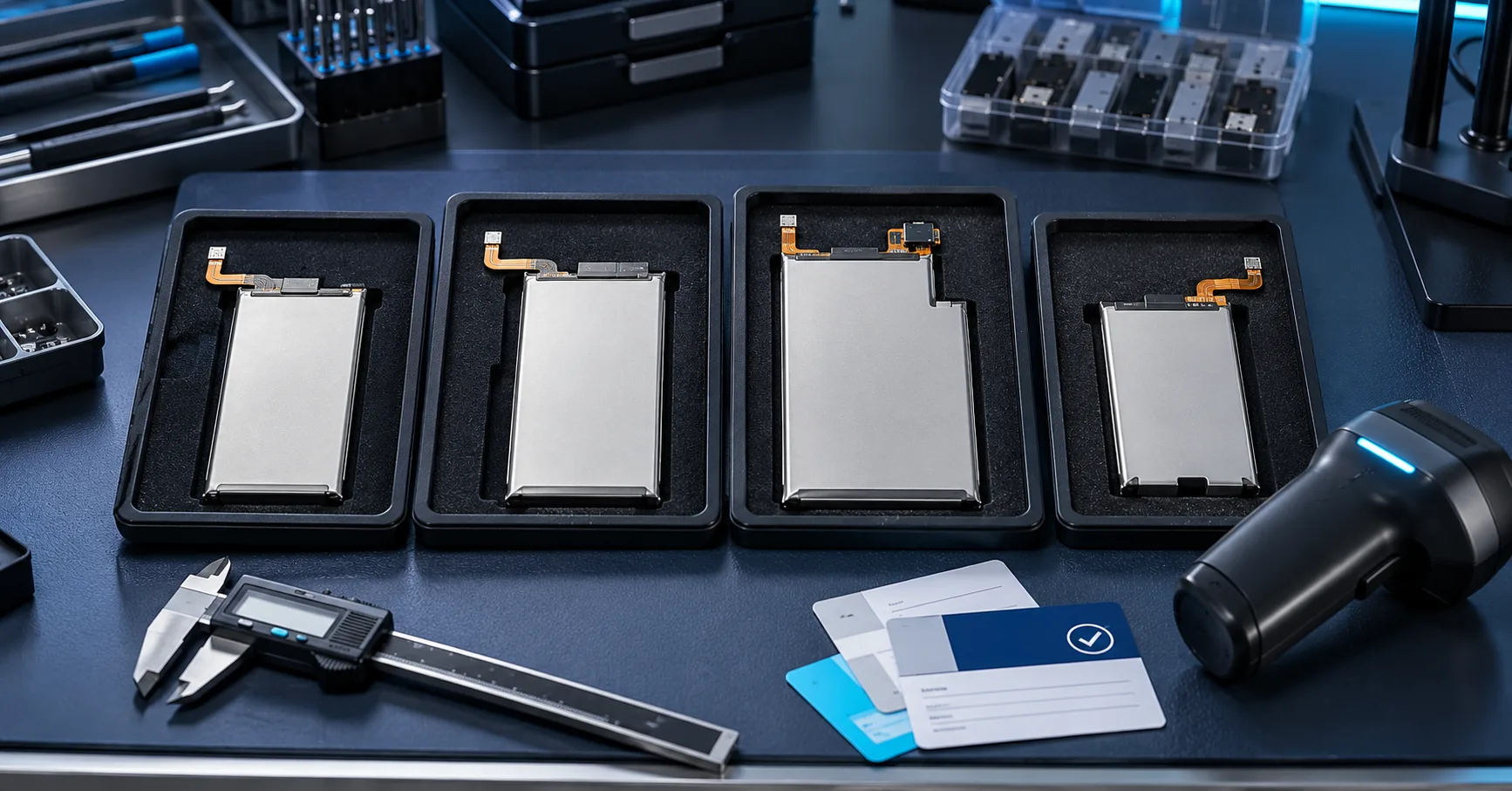
Next, define the finished pack rather than buying from a title or photo. The controlled specification should include:
- buyer SKU, supplier model code and intended device lane;
- overall length, width and thickness with the measurement method;
- cell orientation, pouch edges, insulation and adhesive layout;
- flex length, exit direction, bend position and connector orientation;
- nominal voltage, labeled capacity and applicable energy value;
- protection-board configuration and required sensing behavior;
- label artwork, barcode, lot code and packaging revision;
- sample test method, acceptance limits and change-notification rules.
Capacity, cycle life, certification, warranty, MOQ and lead time are configuration-dependent. Capacity claims must be verified for the exact battery and test method. Certification availability must be confirmed for the specific model and target market. MOQ depends on model and customization scope; lead time depends on model, order quantity and customization; warranty depends on the product and agreement.
Use Official Repair Data as a Boundary, Not a Marketing Claim
Official manuals provide unusually useful evidence for sourcing because they show that each model has its own battery reference and assembly procedure. The Google Pixel 8 Repair Manual lists battery G949-00574-01 and states, For your safety, we don't recommend reinstalling the battery after removal.
This is a repair-safety instruction, not proof that any commercially offered replacement is approved.
The Google Pixel 8 Pro Repair Manual lists G949-00705-01 and begins with the guidance that Google recommends that you seek professional assistance for all device repairs.
For B2B programs, that supports trained handling, documented fixtures and controlled installation rather than informal fit checks.
Google's Pixel 8a manual identifies G949-01097-00 and a dedicated battery adhesive. It also illustrates controlled alignment and warns technicians not to compress nearby flex circuits. These details explain why a pixel 8a battery replacement needs its own mechanical drawing and installation trial even though its capacity is close to that of the base Pixel 8.
Approve Samples in Four Evidence Stages
1. Confirm identity and documentation
Compare the quotation, drawing, sample label, packaging and invoice reference. Record the supplier code, buyer SKU, production or sample lot and all claimed capacities. Treat any copied service number as a cross-reference until the physical assembly and installed behavior are verified. If the supplier cannot connect a sample to a controlled revision, stop before functional testing.
2. Inspect physical fit without forcing the assembly
Measure the sample using the same method defined in the specification. Inspect pouch flatness, edge seals, wrapping, insulation, connector contacts, flex path and adhesive position. Install only in a known compatible device. The pack should sit flat, route naturally and allow reassembly without pressure on the cell or nearby components. Unusual connector force or a housing that will not close is a stop condition.
3. Screen electrical and installed behavior
Record open-circuit voltage and compare variation across samples under consistent conditions. Perform controlled charge and discharge tests using documented equipment, currents, temperature, endpoints and rest periods. Printed mAh is a claim; it is not an incoming result. ESCCharge's capacity-testing guide explains the evidence discipline even though acceptance limits must be defined for the actual Pixel battery.
Installed-device checks should cover power-on, charging recognition, percentage progression, restart behavior, standby observation and controlled load behavior. A google pixel 8 pro battery replacement sample must be evaluated in the Pro device lane; a pass in the base model or a bench fixture cannot substitute for that evidence. Record any software messages without promising a particular system status.
4. Approve a pilot lot before normal purchasing
Sample approval proves only the tested samples. A pilot lot checks whether the supplier can repeat the approved construction, label, packaging and distribution. Select units across cartons or identifiable production lots, then compare dimensions, labels, voltage distribution, capacity evidence and installed results with the signed reference. ESCCharge's mobile phone battery incoming-inspection guide provides a practical receiving structure.
Define Stop Conditions Before Testing Starts
A test plan is incomplete without clear stop conditions. Isolate a sample if it is swollen, leaking, unusually hot, physically damaged, contaminated or electrically abnormal. Do not bend, puncture or force a pouch cell to make it fit. Google's repair manuals instruct technicians to discharge the device before disassembly and keep sharp objects away from the battery; procurement teams should translate those precautions into workshop training and incident handling.
Stop the approval process when identity records conflict, connector alignment requires force, the flex is compressed, the enclosure cannot close normally, or results exceed agreed limits. One abnormal sample may be a unit issue; repeated or clustered abnormalities can indicate a lot, design or process issue. Define in advance who can release, hold, sort, rework or reject material.
Control Mixed-SKU Warehousing and Repeat Orders
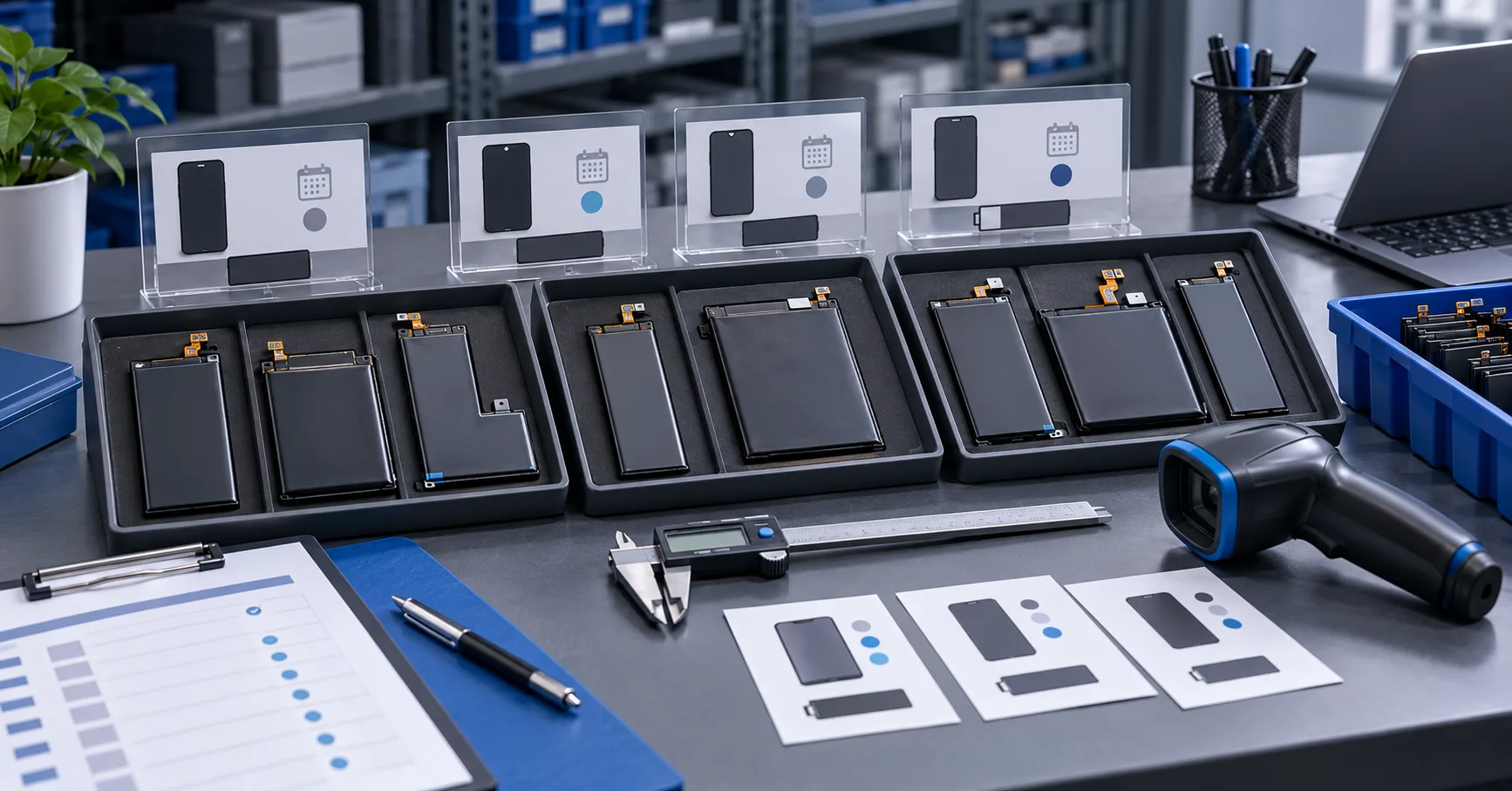
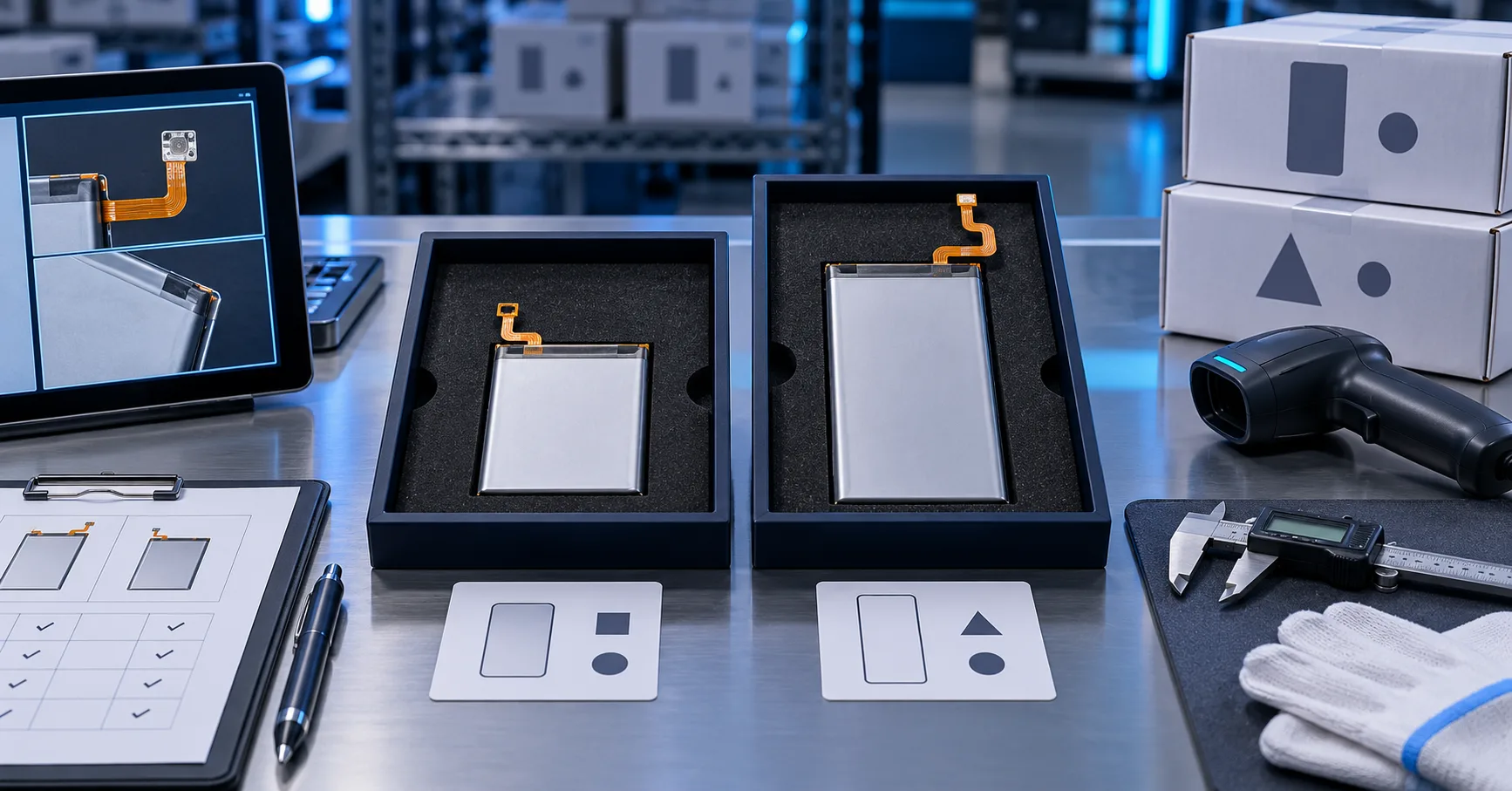
Pixel 8, Pixel 8 Pro and Pixel 8a names look similar in order systems, which creates a picking risk. Use a distinct buyer SKU, barcode and bin location for each. Put the full model name on the inner box and carton, then verify scan behavior before receiving the first shipment. Avoid relying on color alone because packaging colors are harder to control across printing, lighting and staff practices.
Production approval should lock the cell, protection board, flex, connector, insulation, adhesive, label, manufacturing site, key process and test method. Require notification before a controlled element changes. Decide whether the change needs document review, new samples, installed testing, transport-document review or full reapproval.
Track returns by device lane, battery SKU, supplier lot, technician, installation date, symptom and time in service. Do not combine all Pixel 8-series claims into one percentage. Model-level data helps distinguish a design issue from installation damage, a device fault or an isolated lot. The battery warranty-claims workflow shows how to turn field reports into traceable supplier evidence.
Prepare an RFQ That Produces Comparable Offers
A useful RFQ should ask suppliers to respond to the same controlled fields. Send separate rows for Pixel 8, Pixel 8 Pro and Pixel 8a and request:
- supported device identity and proposed battery cross-reference;
- finished-pack drawing, dimensions and flex/connector details;
- nominal voltage, labeled capacity and capacity test method;
- protection and sensing configuration;
- sample quantity, pilot-lot plan and change-control process;
- label, barcode, neutral or private-label packaging options;
- model-specific transport and compliance documents available for review;
- MOQ, lead time and warranty terms for the exact configuration.
Compare qualified cost, not only unit price. Include sample work, incoming inspection, installation yield, technician troubleshooting, sorting, returns, stock aging and claim handling. A cheaper pack that creates mixed-SKU errors or inconsistent fit can cost more after labor and warranty effects are counted.
Frequently Asked Questions
Can Pixel 8, Pixel 8 Pro and Pixel 8a use the same battery?
No. Official capacity and repair-part references differ, and the physical assemblies require separate verification. Keep three controlled SKUs unless complete model-specific evidence proves an approved mapping.
Does matching the Google repair part number prove compatibility?
No. It is a useful identity reference, but a third-party label can be copied or incomplete. Verify dimensions, flex, connector, protection configuration, installed behavior and lot traceability.
Should the replacement capacity equal Google's typical device capacity?
Treat Google's figure as an official device reference, not the supplier's test result. The replacement label and measured capacity need their own exact-model evidence, method and acceptance criteria.
How many samples should a buyer test?
There is no universal quantity. Base the plan on order size, product history, supplier performance, model risk, test cost and the consequence of failure. Sample across identifiable lots or cartons rather than taking every unit from one location.
What information should be included in a repeat order?
Reference the approved buyer SKU, supplier revision, label artwork, packaging version, acceptance criteria and change-notification requirement. Do not place a repeat order from a product name alone.
Request a Pixel 8 Series Sampling Plan
For a controlled Pixel 8 battery replacement program, send ESCCharge your target models, market, expected quantity, required packaging, available reference devices and acceptance tests. ESCCharge can review the requested configuration and propose a model-specific sampling path. Actual compatibility, capacity, compliance documents, MOQ, lead time and warranty must be confirmed for the selected battery and agreement.
External Source References
- Google — Pixel phone hardware tech specs — Pixel 8, Pixel 8 Pro and Pixel 8a capacity references.
- Google — Pixel 8 Repair Manual v2.0 — 2023.
- Google — Pixel 8 Pro Repair Manual v2.0 — 2023.
- Google — Pixel 8a Repair Manual — 2024.