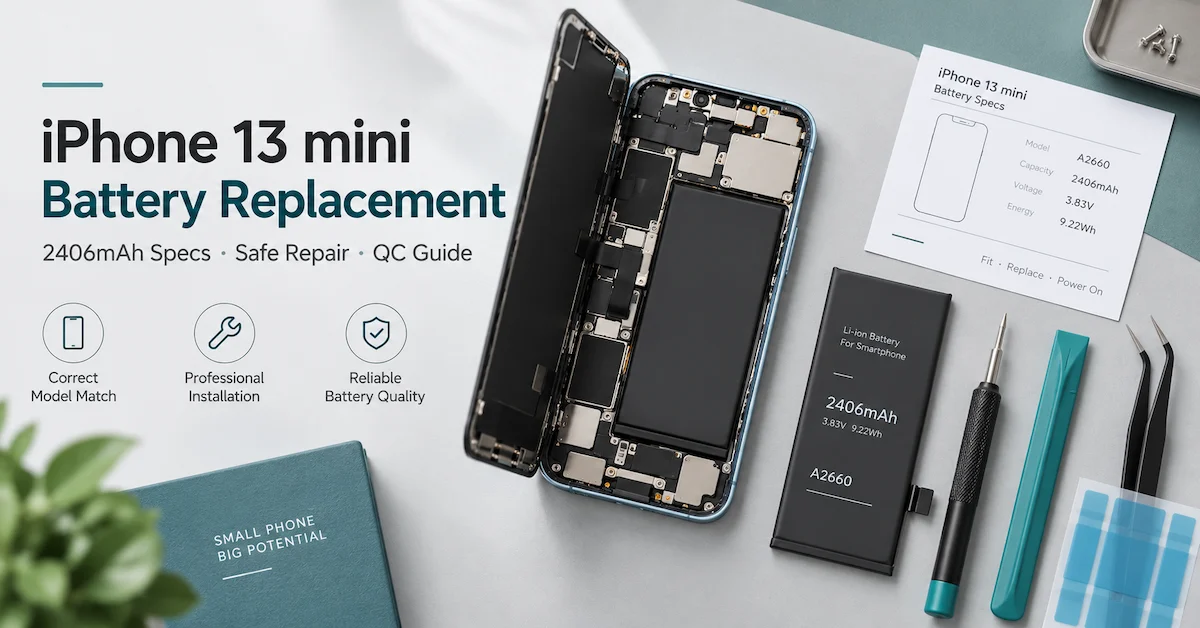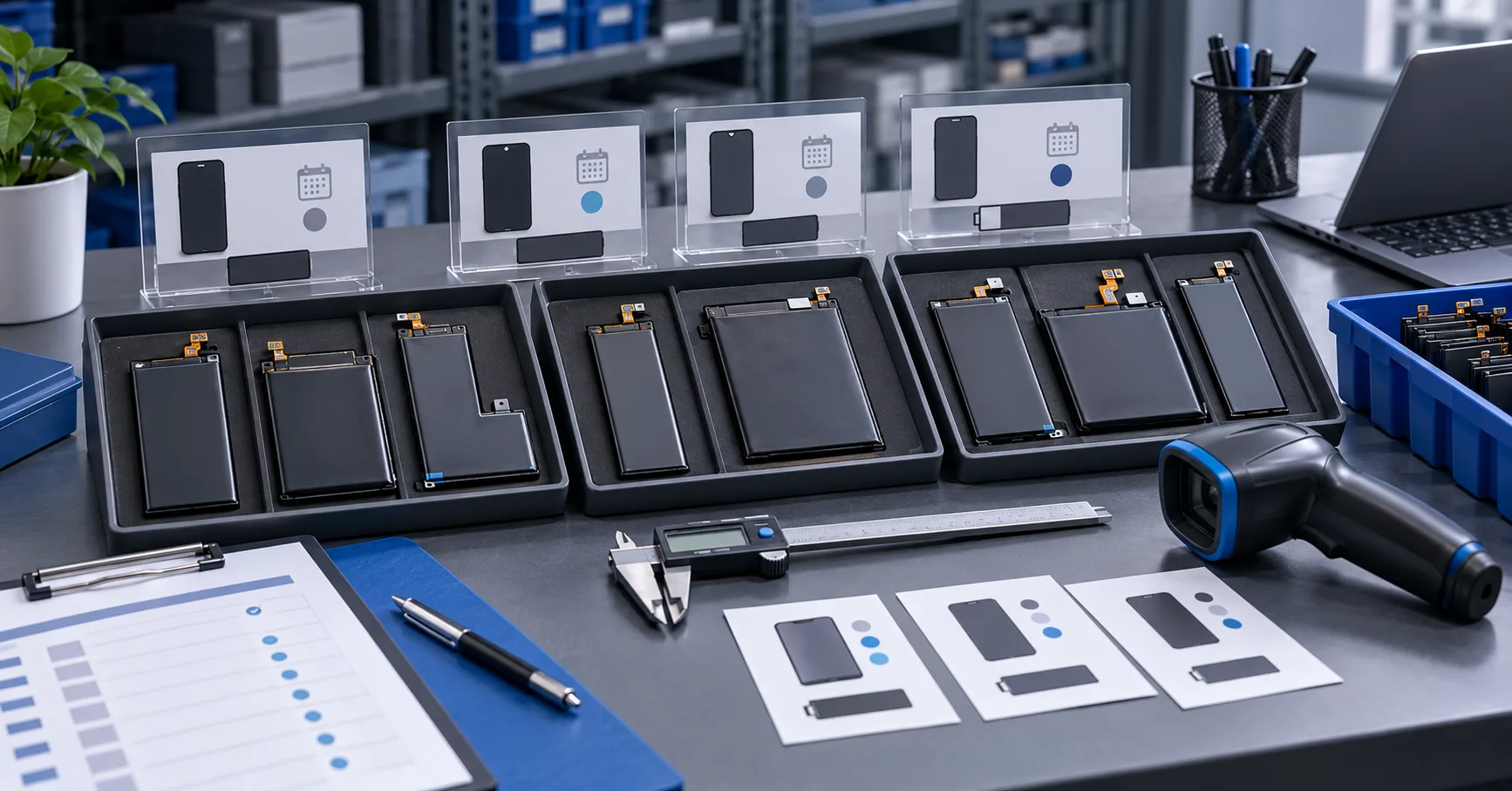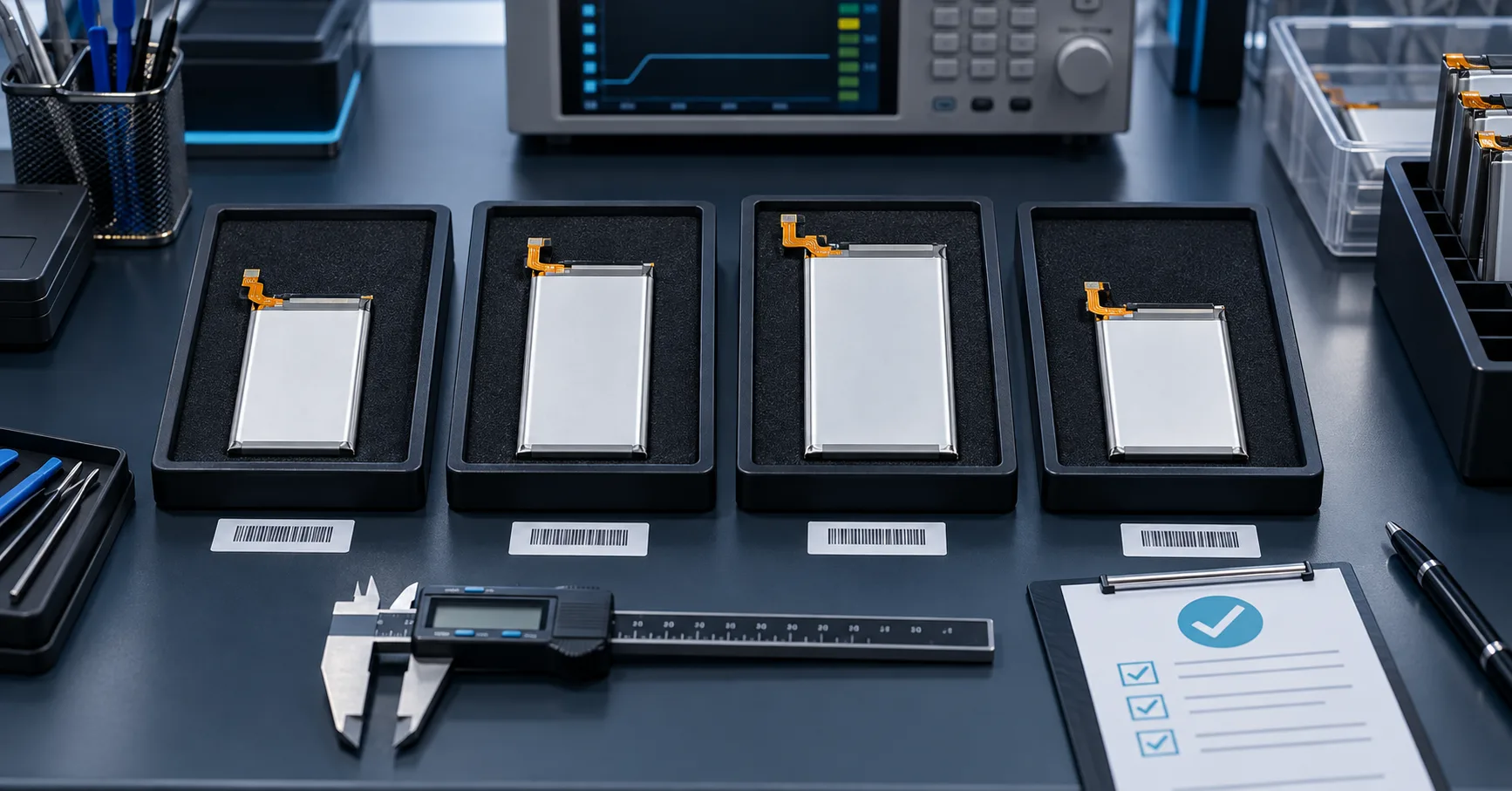

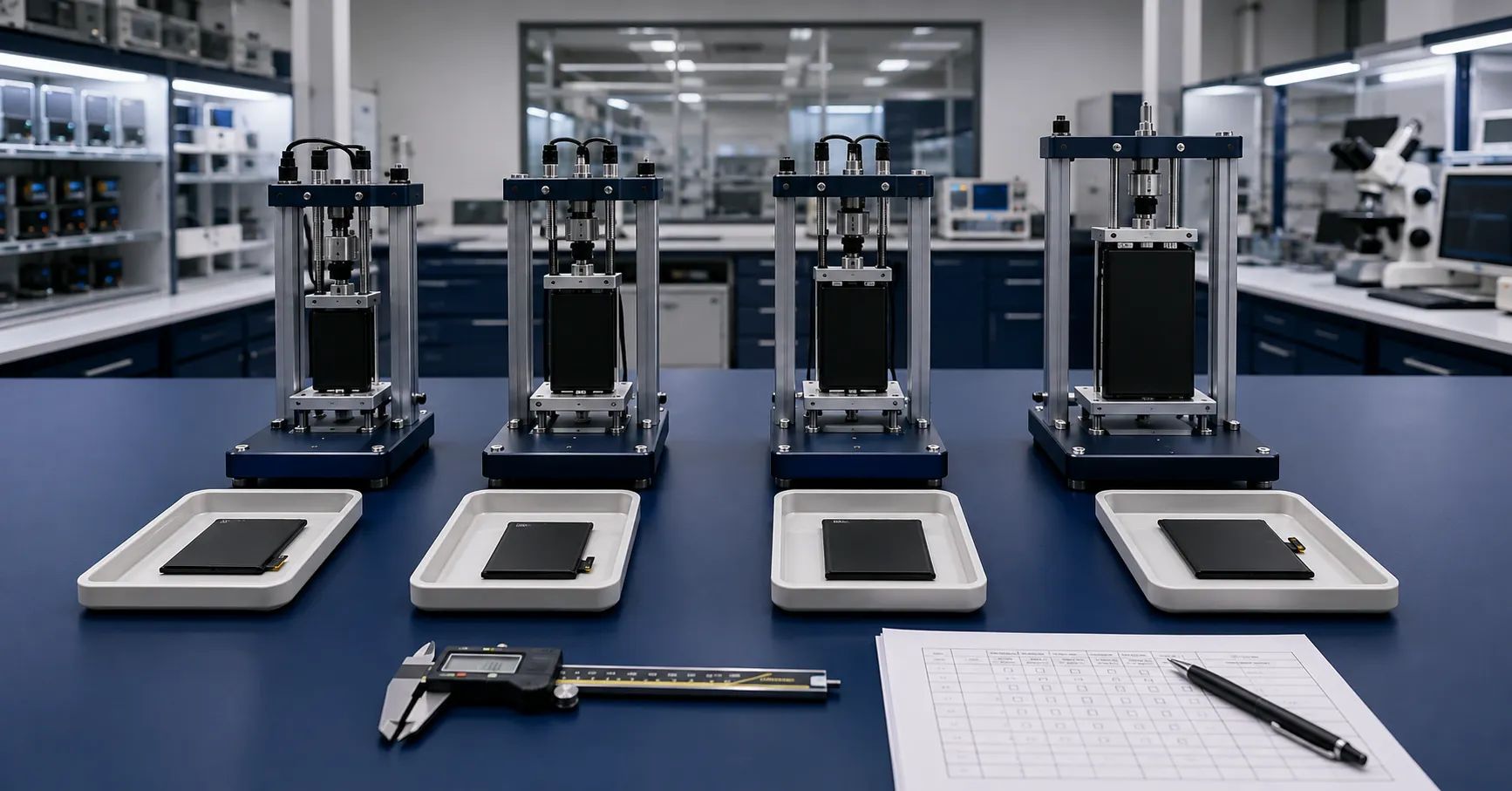
The iPhone 12 family should be treated as four separate battery approval projects: iPhone 12 mini, iPhone 12, iPhone 12 Pro and iPhone 12 Pro Max. A series-level product name does not prove physical, electrical or repair-workflow compatibility. Before a bulk order, buyers should connect every sample to an exact test device, supplier revision and documented result.
This guide focuses on sample validation rather than supplier selection or a consumer repair tutorial. An iPhone 12 replacement battery should be released only after the intended model mapping, installation method, charging behavior, controlled capacity result, system observations and lot traceability meet the buyer's written acceptance criteria.
Confirm the Exact Device Before Requesting Samples
Apple's iPhone model identification guide lists the iPhone 12 family and its regional model numbers. Procurement teams should record the model number rather than relying only on appearance, screen size or a seller's carton label.
The RFQ should separate all four models. For each one, request a battery drawing, supplier SKU, label revision, connector and flex details, target capacity statement, sample lot code, adhesive information and any conditions attached to compatibility. Capacity claims must be verified for the specific sample and test method; they should not be inferred from a product name.
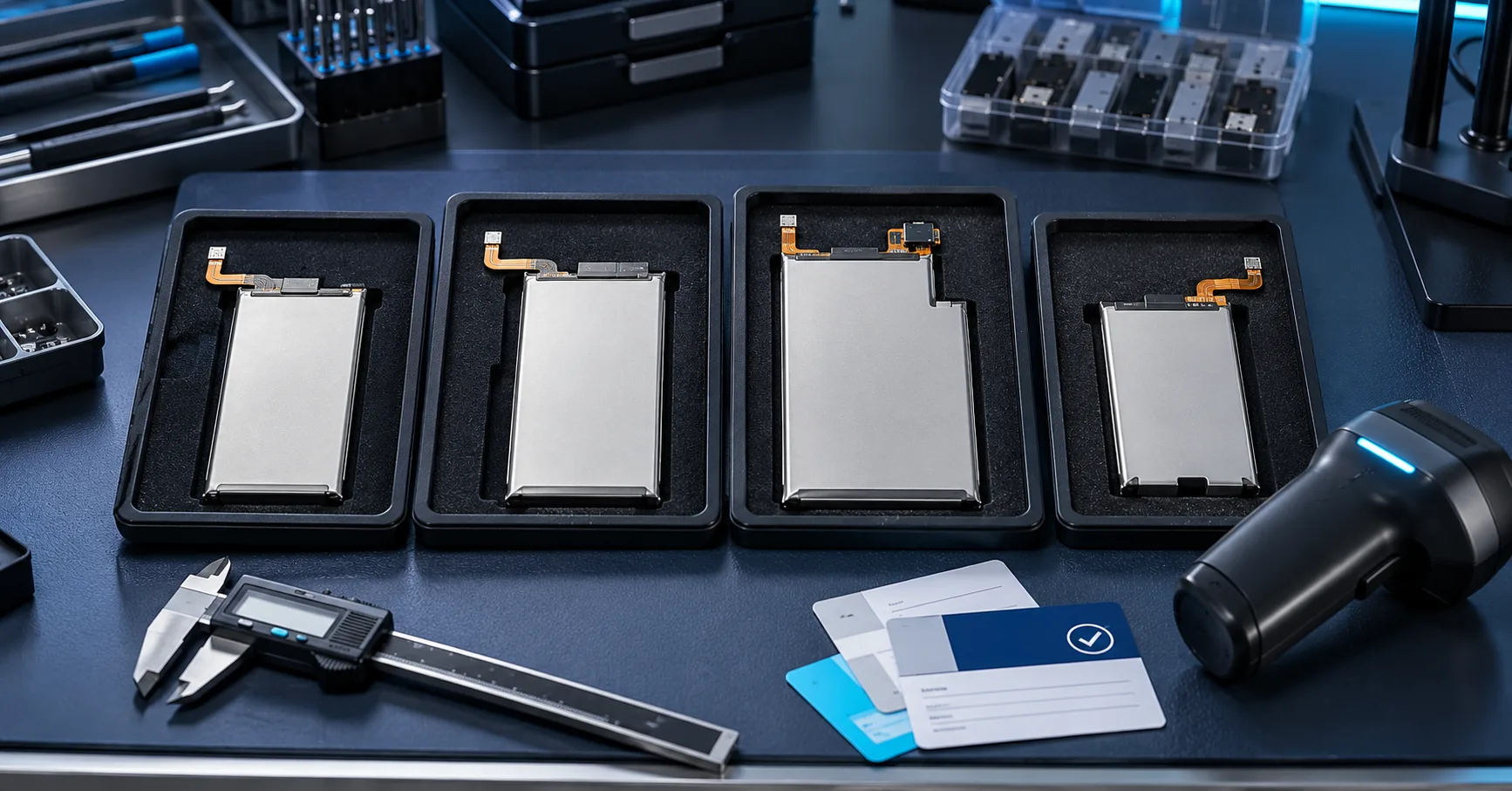
Build a Four-Model Test Matrix
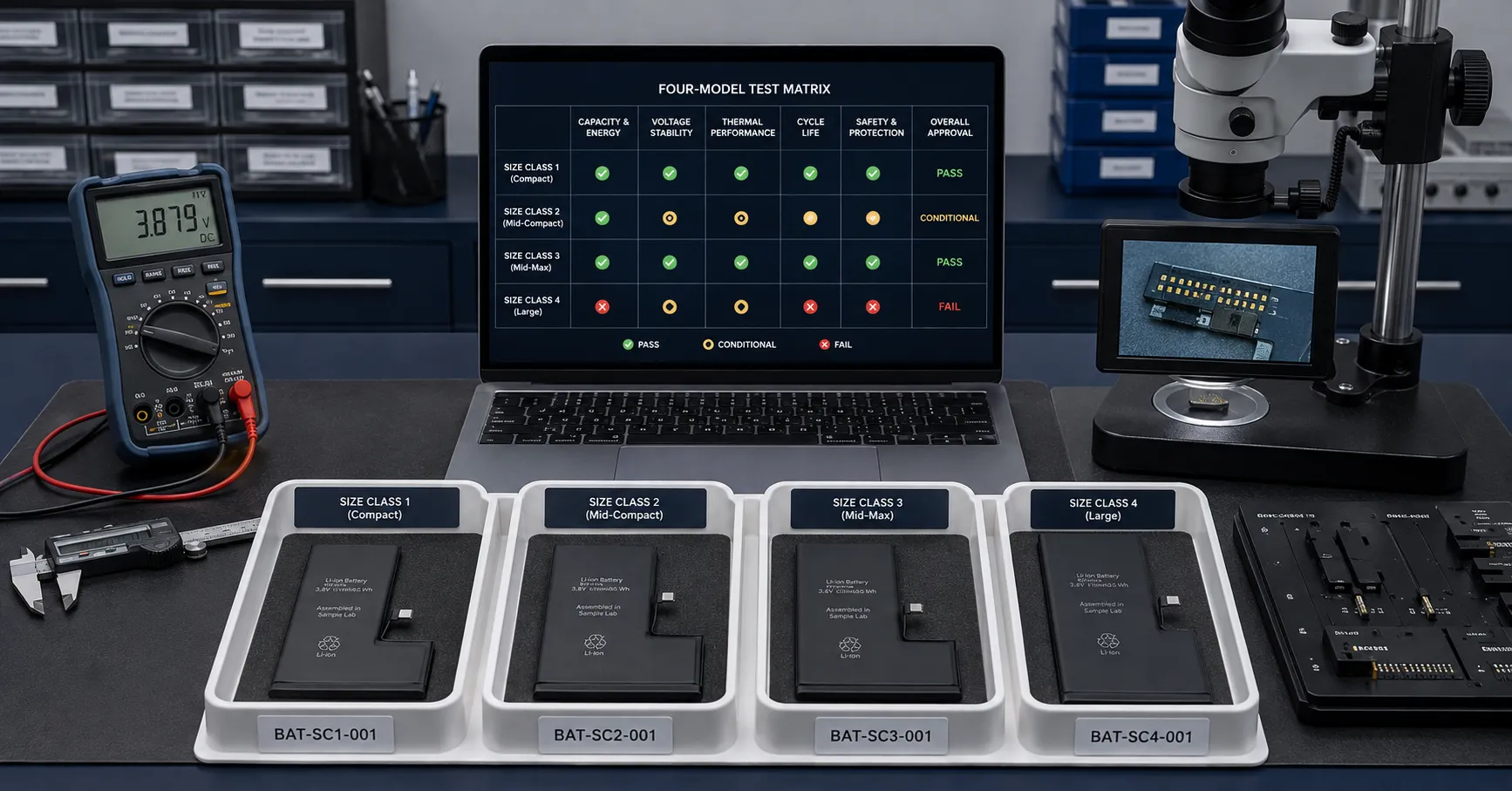
| Matrix row | Required device evidence | Battery evidence | Decision |
|---|---|---|---|
| 12 mini | Exact model number, test-device ID and iOS version | Dedicated SKU, drawing and sample lot | Approve independently |
| 12 | Exact model number, region and repair history | Dedicated SKU, flex and connector record | Do not infer from 12 Pro |
| 12 Pro | Exact model number and baseline functions | Dedicated SKU and installation record | Do not infer from similar external size |
| 12 Pro Max | Exact model number and representative device | Dedicated SKU, dimensions and test record | Separate approval |
If the supplier claims one construction supports more than one model, require the drawing and representative-device evidence that supports that claim. The approval record should state the exact covered combinations and exclusions.
Inspect the Battery Before Installation
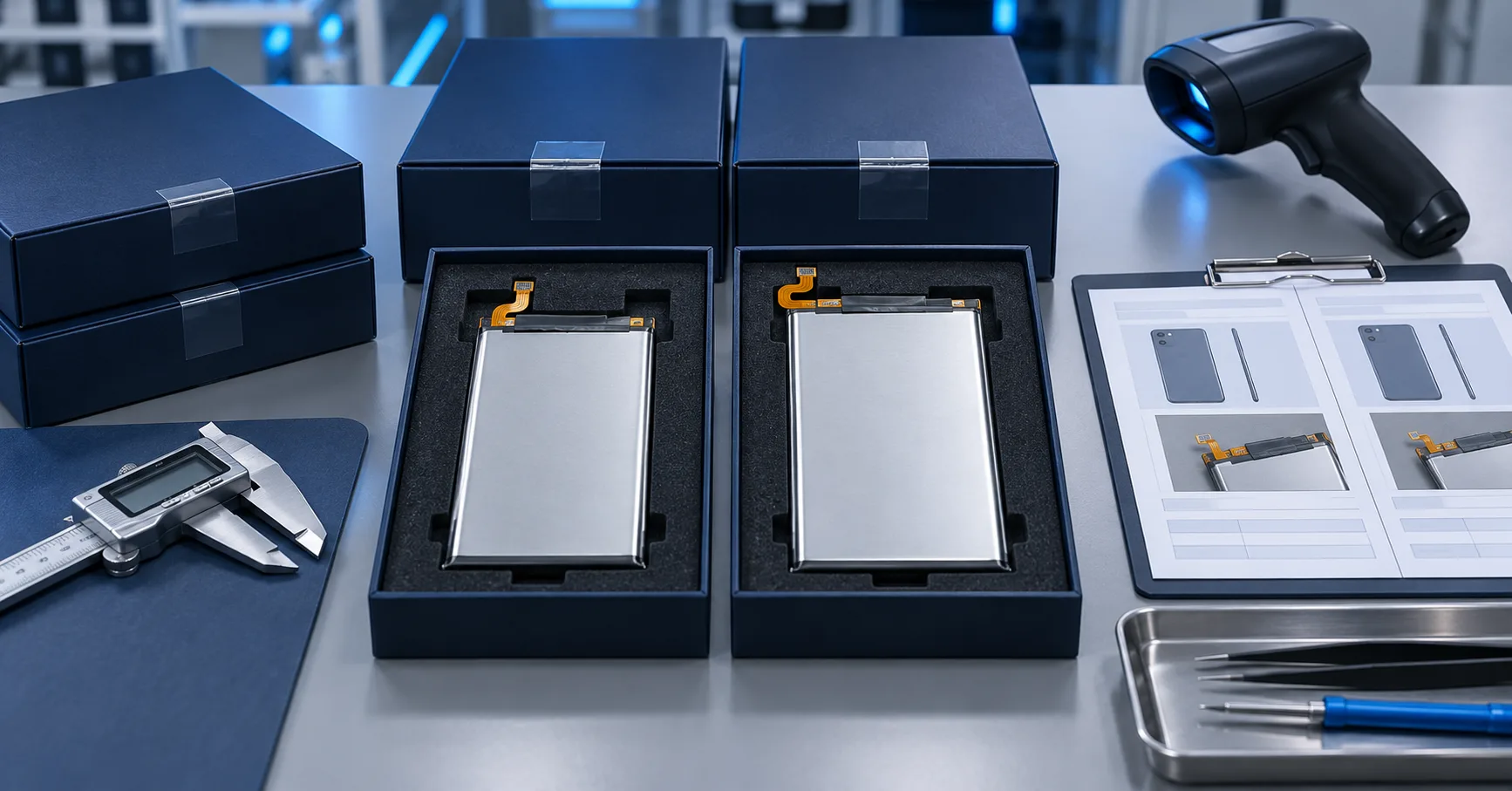
Start with packaging and traceability. Confirm that the outer carton, inner pack and battery label use the expected SKU and lot identity. Inspect for deformation, puncture, contamination, flex damage, connector damage or inconsistent labels. Measure length, width and thickness using a defined method, then compare them with the approved drawing and retained reference sample.
Record incoming open-circuit voltage after a controlled rest period. A single voltage value does not prove capacity or health, but it helps identify samples that require quarantine or further investigation. Do not energize or install visibly damaged or swollen samples.
Control Installation and Mechanical Fit
Use trained technicians, documented tools and representative devices. Photograph the connector alignment, flex routing and final seating. The sample should not require forced bending, compression or repositioning that creates strain. Check edge clearance, adhesive coverage and reassembly before closing the device.
A successful boot is not a complete fit assessment. Observe whether the battery remains stable during handling, whether connectors stay seated and whether the display or enclosure shows pressure after reassembly. Record any unusual installation force or rework because it can become a repeat-order or warranty risk.
Run Electrical and Runtime Validation Under Fixed Conditions
Define the charger, cable, ambient conditions, starting state of charge, device settings, network state, test workload and end point before comparing samples. Measure results consistently. ESC's capacity-testing guide for iPhone batteries explains why a stated capacity should be checked with a controlled method rather than accepted from the label.
The test plan should cover:
- stable device boot and idle behavior;
- charging initiation and progression;
- controlled discharge capacity using the approved method;
- short runtime comparison against a defined reference;
- temperature observations at consistent checkpoints;
- unexpected shutdown, restart or charging interruption;
- basic post-installation device functions.
Use enough samples to detect obvious variation rather than approving a lot from one good unit. The ESC mobile phone battery sampling plan provides a framework for matching sample size and test depth to procurement risk.
Record System Status Without Overclaiming It
Apple states that Parts and Service History is available for battery information on iPhone 12 models and later. Its official service-history guidance explains possible labels and why an Unknown message may appear. Record the actual result, iOS version and repair process used during validation.
Do not describe a third-party replacement as genuine Apple, Apple-authorized or guaranteed to show a particular status. A system message is also not a capacity certificate. System observations, physical fit and performance testing remain separate evidence categories.
Move from Samples to Production Without Losing Control
After approval, freeze the supplier SKU, drawing, label, connector, flex construction, critical dimensions and sample-lot record. Keep a golden sample. Require notification before any change to the cell, protection board, connector, flex, adhesive, label or packaging.
Incoming inspection should verify identity, workmanship, dimensions, voltage distribution and selected functional checks against the approved baseline. When a change or abnormal trend appears, quarantine the affected lot and run targeted revalidation. Buyers can connect this workflow with ESC's battery warranty evidence process so field complaints remain traceable to model and lot.
Design a Repeatable Pilot-Lot Review
After sample approval, use a small controlled pilot lot before normal replenishment when project risk justifies it. The pilot confirms whether production labeling, packaging, workmanship and test distribution resemble the approved sample. It also gives warehouse and repair teams a chance to test scanning, storage, installation records and complaint coding before volume increases.
The iPhone 12 battery compatibility decision should remain tied to the same device list and revision used during approval. Select pilot units from more than one carton position, record their lot identity and repeat the highest-risk checks. Do not choose only units that appear visually ideal.
Create an iPhone 12 battery sample test summary with the purpose, sample selection, equipment, conditions, results, deviations and final decision. If the pilot shows a wider distribution than the original sample, investigate before release even when the average result appears acceptable. A signed deviation must describe the affected SKU, quantity, risk, temporary control and expiry date; it should not become an undocumented permanent specification change.
Common Approval Mistakes
- Approving “iPhone 12 series” without four separate model rows
- Using only one test device or one battery sample
- Treating a successful boot as proof of capacity and runtime
- Ignoring connector strain, adhesive position or enclosure pressure
- Mixing system-message claims with electrical quality claims
- Accepting a production revision without change notification
- Failing to retain photos, data and the golden sample
Frequently Asked Questions
Can iPhone 12 and iPhone 12 Pro approval be combined?
Only when the supplier's controlled specification and representative-device testing support the exact mapping. Similar external dimensions do not justify automatic approval.
How many samples should a buyer test?
The answer depends on order risk, supplier history, model count and test destructiveness. Define the sampling rationale and avoid approving a bulk order from one unit.
Should capacity be tested inside the phone or with laboratory equipment?
Use a method appropriate to the claim and decision. Laboratory discharge testing can support capacity verification, while installed-device testing is needed for fit, charging and runtime behavior. Record conditions for both.
When must the model be revalidated?
Revalidate when a critical material, cell, board, connector, flex, adhesive or construction revision changes, or when incoming or field evidence shows a meaningful abnormal trend.
Summary
The four iPhone 12 models require distinct identification, sample records and approval decisions. Validate documentary identity, mechanical fit, electrical behavior, system observations and production controls before bulk release. Send ESC the exact models, target market, quantity, repair workflow and test requirements to discuss an iPhone 12 sample plan.
External Source References
- Apple — Identify your iPhone model — accessed 2026
- Apple — About iPhone Parts and Service History — updated 2026