
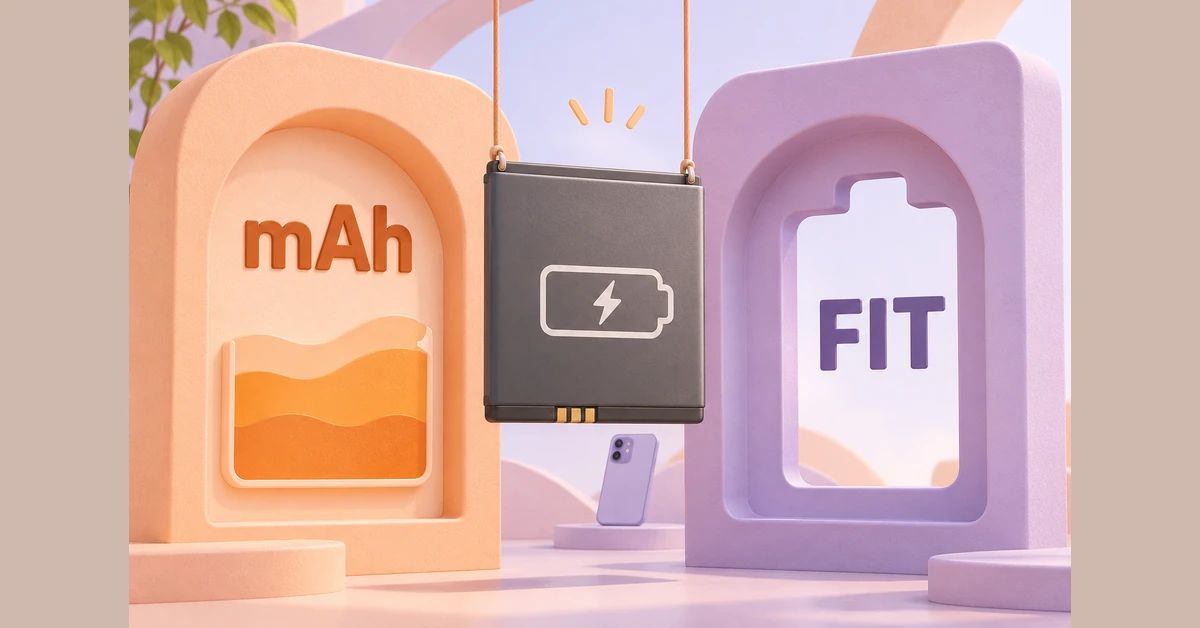
A Pixel 9a battery purchase should begin with two separate questions: what capacity does the replacement declare, and does the complete assembly match the actual device? Google's device specification lists 5,100mAh typical capacity and 5,000mAh minimum capacity. Those reference values help define an enquiry, while sample evidence must establish replacement performance and fit.
For repair chains, refurbishers and wholesalers, approval also needs a recorded device configuration. Charging and runtime observations combine battery condition, software management and workload. A useful purchasing specification separates these variables so customer support can explain the result after installation.
Answer the capacity question before quoting the repair
Google's Pixel hardware specifications state for the 2025 Pixel 9a: “Typical 5100 mAh (Minimum 5000 mAh)”. Keep those definitions attached to the figures. A typical value and a minimum value are different reference points, not conflicting descriptions of the same measurement.
Pixel 9a battery capacity on a supplier quotation needs its own definition. Ask whether the declared number is typical, rated or a guaranteed minimum, then agree the contractual acceptance threshold and test method. Do not automatically assign Google's original-device minimum to an aftermarket product without an agreed specification.
The two official figures differ by 100mAh, or 2% of 5,000mAh. That arithmetic describes the reference gap. It does not predict a 2% runtime change between replacement packs or establish that one supplier's product is better.
Record nominal voltage and watt-hours where declared. Check their consistency with the capacity figure, and resolve differences between label, drawing, quotation and report. A part with incomplete electrical information should remain under technical review rather than being approved through its product title.
Battery size can mean capacity or physical dimensions
A Pixel 9a battery size enquiry may be asking about mAh, the pack's external dimensions or whether it fits the phone. Clarify the intended meaning before comparing products. A capacity value describes charge quantity; it does not describe length, width, thickness or connector location.
Google lists the handset's dimensions as 154.7 × 73.3 × 8.9mm. Those are phone dimensions, not replacement-battery dimensions. They cannot be used as a pack drawing or as proof that a larger-capacity assembly fits inside the device.
| Buyer question | Evidence required | Approval decision |
|---|---|---|
| How much capacity is declared? | Definition, tolerance and sample-specific discharge report | Accept against the agreed electrical requirement |
| What are the pack dimensions? | Assembly drawing and physical sample measurements | Check clearance and installed closure |
| Does it match this handset? | Exact device identity, original pack evidence and connector details | Approve the specific application |
| Will the repair meet the service promise? | Installed charging and workload records | Release the completed device under defined criteria |
Keep Pixel 9a, Pixel 9 and other similarly named devices on separate application records. A common chipset, similar capacity or shared supplier is not a basis for cross-model battery substitution.
Use the supplier reference as a matching lead
A Google Pixel 9a battery enquiry should include the handset's full identity, original battery-label photograph and connector-area evidence collected by a qualified technician. Preserve the actual markings rather than rewriting them to match a search result.
If a supplier uses a reference such as G526Q in its offer, ask what that reference identifies and how it links to the proposed assembly. Request the drawing, label, revision and application evidence. Keep the supplier's code separate from the buyer's warehouse SKU and the original pack marking.
Compare the complete assembly for dimensions, cable exit, connector orientation, insulation and installation requirements. Confirm electrical assignment and sensing details from reliable technical evidence. Mechanical connection alone does not establish electrical suitability.
Have qualified technicians confirm that the pack seats correctly and the enclosure closes without pressure or improvised modification. Preserve the installation-material scope: a bare assembly, battery with adhesive and complete kit are different order lines.
Record software-managed behavior in the acceptance plan
Google's Pixel battery guidance explains that Battery Health Assistance adjusts maximum battery voltage in stages from 200 through 1,000 charge cycles. It states: “You can’t customize or turn off Battery health assistance settings on Pixel 9a.”
For the purchasing record, preserve the installed software build, displayed battery information where available, test date and device identity. Treat software-managed runtime and charging as part of the tested configuration. Do not base approval on disabling a protective function or promise that a replacement will bypass the management behavior.
A fresh pack does not, by itself, prove that every displayed health estimate or history field will behave in a particular way. Verify the actual repair outcome with the applicable service procedure rather than guaranteeing a reset from the replacement's label.
When a buyer reports lower runtime, investigate both the measured pack evidence and the installed conditions. This is an acceptance-control question for this model; it does not require turning the article into a general explanation of every Pixel battery setting.
What the original media test can and cannot establish
In his Tom's Guide Pixel 9a review, updated April 29, 2025, John Velasco reported an average 13 hours and 8 minutes in the publication's battery benchmark. The same review recorded 47% charge after 30 minutes in its test.
Those are useful original review observations with a named source and date. They describe the reviewed handset and methodology, not an ESCCharge sample or a guaranteed result for a refurbished phone. A charging percentage also does not directly measure the pack's discharge capacity.
Use the report to identify questions for the repair agreement: which workload matters, which charger will be used, what starting charge state applies and what result is acceptable? Record your own controlled setup before comparing it with a published number.
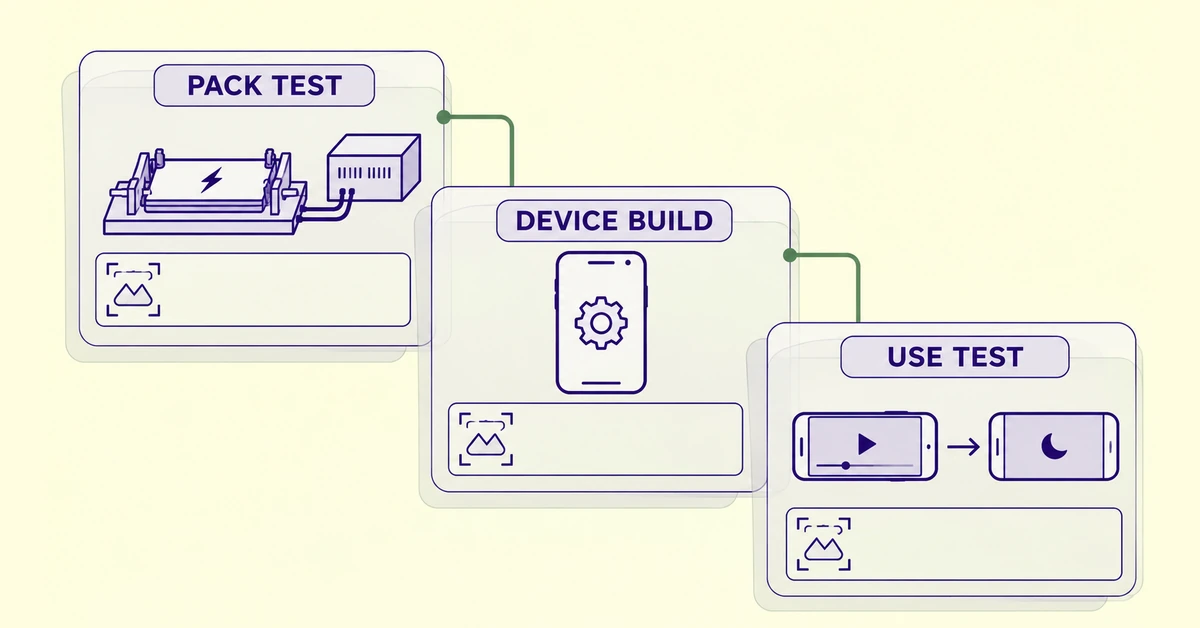
Build two tests around one traceable sample
Measure the battery under agreed electrical conditions
Identify every sample and define charge termination, discharge current, cutoff voltage, ambient temperature and rest periods. Use suitable equipment and a documented connection method. Compare results only when the procedures align, and keep individual readings alongside the summary.
A favorable voltage reading or startup result is insufficient evidence of usable capacity. Similarly, USB input energy includes handset consumption and conversion losses. Keep it as contextual charging evidence rather than automatically converting it into a direct mAh result.
Validate the installed phone under a repeatable workload
Choose a workload relevant to the buyer, such as a fixed local-video segment followed by an idle interval. Record brightness, refresh-rate setting, connectivity, software build and background activity. Preserve the start and end conditions so later samples can be compared meaningfully.
Test wired charging with a known compatible charger and cable. Google's hardware table also lists Qi-certified wireless charging, so include a separate wireless check when it forms part of the service promise. Do not transfer another Pixel model's accessory requirements to this device.
If charging is unexpectedly slow, check temperature, port condition, accessory setup and device state before assigning fault to the pack. Investigate abnormal heating, swelling, leakage or damage through the site's qualified isolation process rather than continuing a routine runtime test.
Use ESCCharge's incoming battery-inspection guide for the surrounding receiving process. Link its disposition record to the sample identity and installed test.
Move from sample approval to a controlled first order
A Pixel 9a replacement battery should enter bulk purchasing with a frozen assembly revision, approved label, capacity definition and application scope. Agree notification and review when the cell, protection circuit, connector, cable or manufacturing source changes.
Define the inspection lot before shipment. Select samples across relevant production lots and packaging groups instead of relying on a supplier's demonstration unit. ESCCharge's battery sampling-plan guide provides the general framework; the 9a specification supplies the model-specific criteria.
Separate the pack's release decision from the completed repair's release decision. A lot may satisfy its agreed electrical checks while an individual handset still requires port repair or a device investigation. The records should make that difference visible to purchasing and customer support.
For warranty review, request device identity, pack lot, complaint, software build, charging accessories and the technician's observations. Classify wrong-part selection, installation damage, measured capacity failure and unrelated handset faults separately. This makes corrective action more useful than an unexplained aggregate return percentage.
FAQ for Pixel 9a procurement
Is 5,000mAh inconsistent with the 5,100mAh figure?
Google distinguishes minimum and typical capacity. Establish the replacement supplier's declaration and test basis before judging a result against either number.
Can a larger-capacity pack be accepted from its label?
Require verified capacity, electrical suitability and installed fit. A higher label number cannot resolve missing dimensions, connector evidence or a forced enclosure closure.
Will replacement reset the software's battery information?
Do not guarantee that outcome without a validated procedure and device result. Record what is displayed before and after the repair and follow the applicable service guidance.
What should accompany an initial RFQ?
Provide exact device details, original pack photographs, quantities, target market, capacity definition, kit contents and the required test evidence. List any unverified regional application separately.
Request a specification you can approve
Submit those details through ESCCharge's mobile phone replacement-battery enquiry channel. Ask for confirmation of Pixel 9a model availability, proposed assembly details and sampling scope before committing to a bulk order.
Confirm packaging, model-specific documents, commercial terms, delivery arrangements and warranty handling for the actual project. Retain the approved pack specification and installed-device evidence together so repeat orders follow the same requirements.
External Source References