
Start With the Complete A51 Handset Code
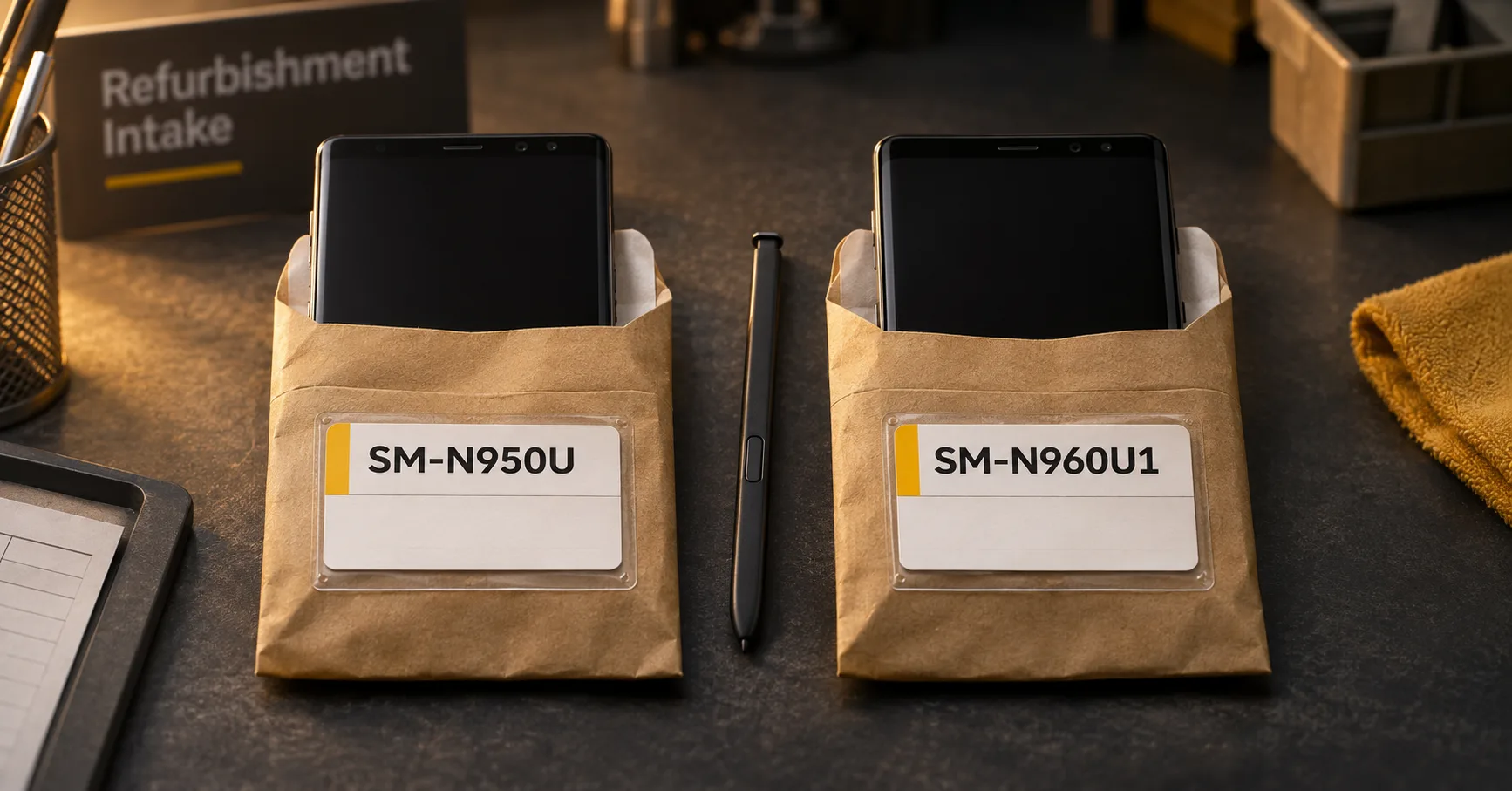
A Samsung Galaxy A51 battery replacement order should identify the full handset code, the finished battery reference and the approved assembly revision. Galaxy A51 includes 4G and 5G device branches, with additional regional and carrier variants. Record the complete model before comparing quotations or issuing stock to a repair bench.
For wholesalers and repair chains, a useful order line connects a device application with an evaluated assembly. That connection must survive the quotation, sample approval, bulk shipment and repair work order. Staff should be able to retrieve the same approved model list at each stage.
Compare Samsung’s 4G and 5G References
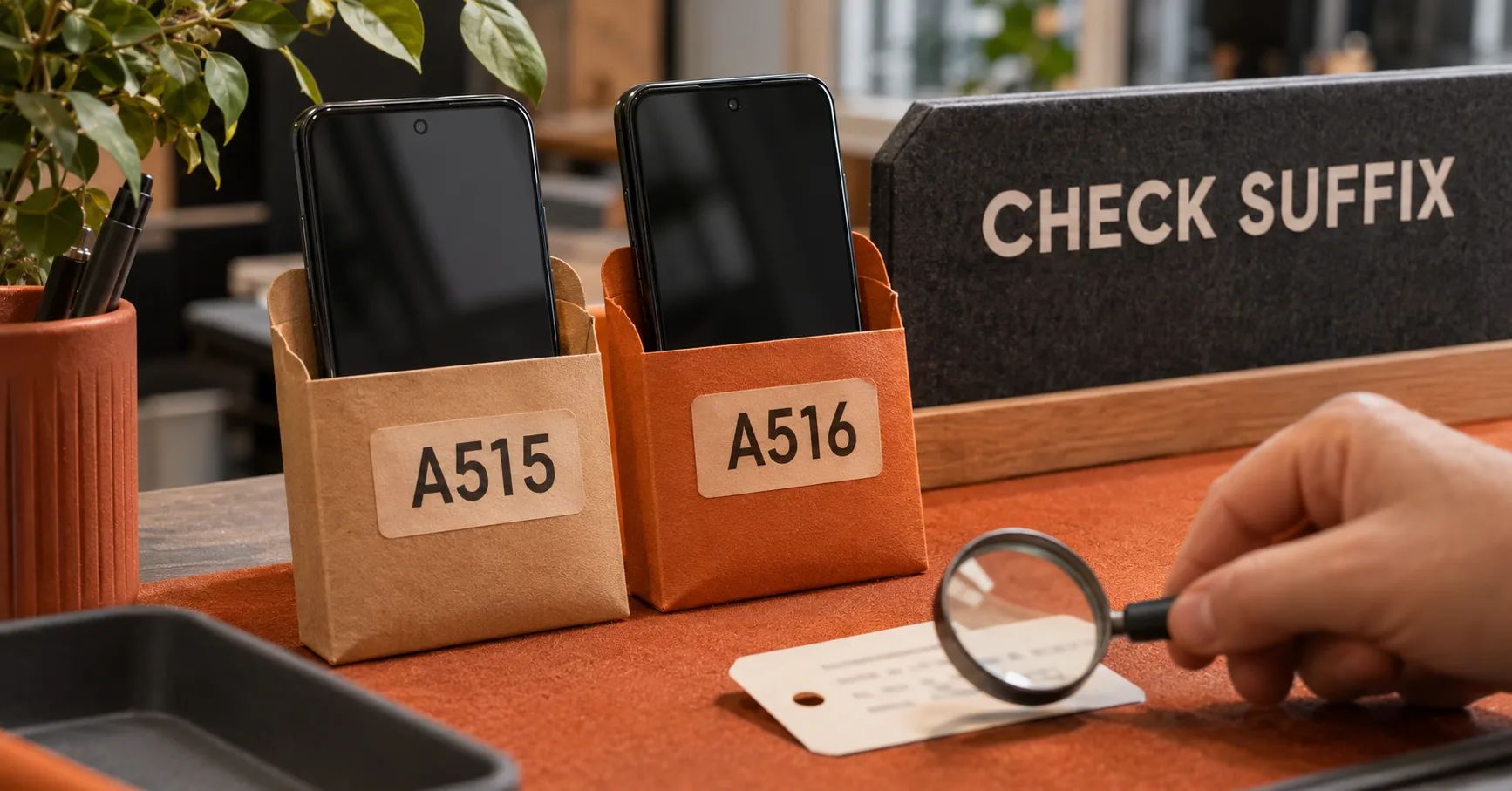
Samsung lists A515F at 4,000 mAh and A516B at 4,500 mAh in its A-series battery capacity guide. The two examples establish different original device specifications. Use the model suffix as part of the device identity when building the application list. Samsung Support — Galaxy A-series battery capacities.
| Device application | Official example | Original typical capacity | Buyer record |
|---|---|---|---|
| Galaxy A51 4G | SM-A515F | 4,000 mAh | Full handset code and separate assembly approval |
| Galaxy A51 5G | SM-A516B | 4,500 mAh | Full handset code and separate assembly approval |
Samsung’s original A51 announcement describes its battery as 4,000 mAh (typical)
. The accompanying footnote says Rated (minimum) capacity is less.
Retain that distinction when preparing supplier comparison fields. Ask which capacity definition the replacement offer uses and which method supports the declaration. Samsung Global Newsroom — Original Galaxy A51 announcement.
For the A516B example, Samsung specifies a 4,500 mAh typical battery and 15W fast charging. These are device references for that model. Use a separate sample record to establish what the selected replacement actually delivers under the agreed conditions. Samsung Business — Galaxy A51 5G SM-A516B specifications.
Resolve Regional Restrictions Before Comparing Prices
A supplier description may specify a carrier exclusion or a limited suffix list. Put that restriction in the quotation review and ask the supplier to return the complete supported application list in writing. Where your intake includes a variant outside the list, request its own evidence and keep it pending until reviewed.
For example, Samsung maintains a separate support record for the US unlocked A515U1. A buyer servicing that device should identify it explicitly in the inquiry. A sample evaluated on an A515F gives evidence for the device tested. Extend approval to another variant only after engineering reviews the relevant configuration and required testing. Samsung Business — Galaxy A51 SM-A515U1 support.
Ask the supplier to explain any restriction using drawings, assembly details or its validation records. Capacity and a marketing family name are insufficient to explain a specific fit limitation. Purchasing needs a clear application decision it can pass to receiving. Capture the answer against the supplier’s part number and revision.
Build a Purchase Row for Every Approved Application

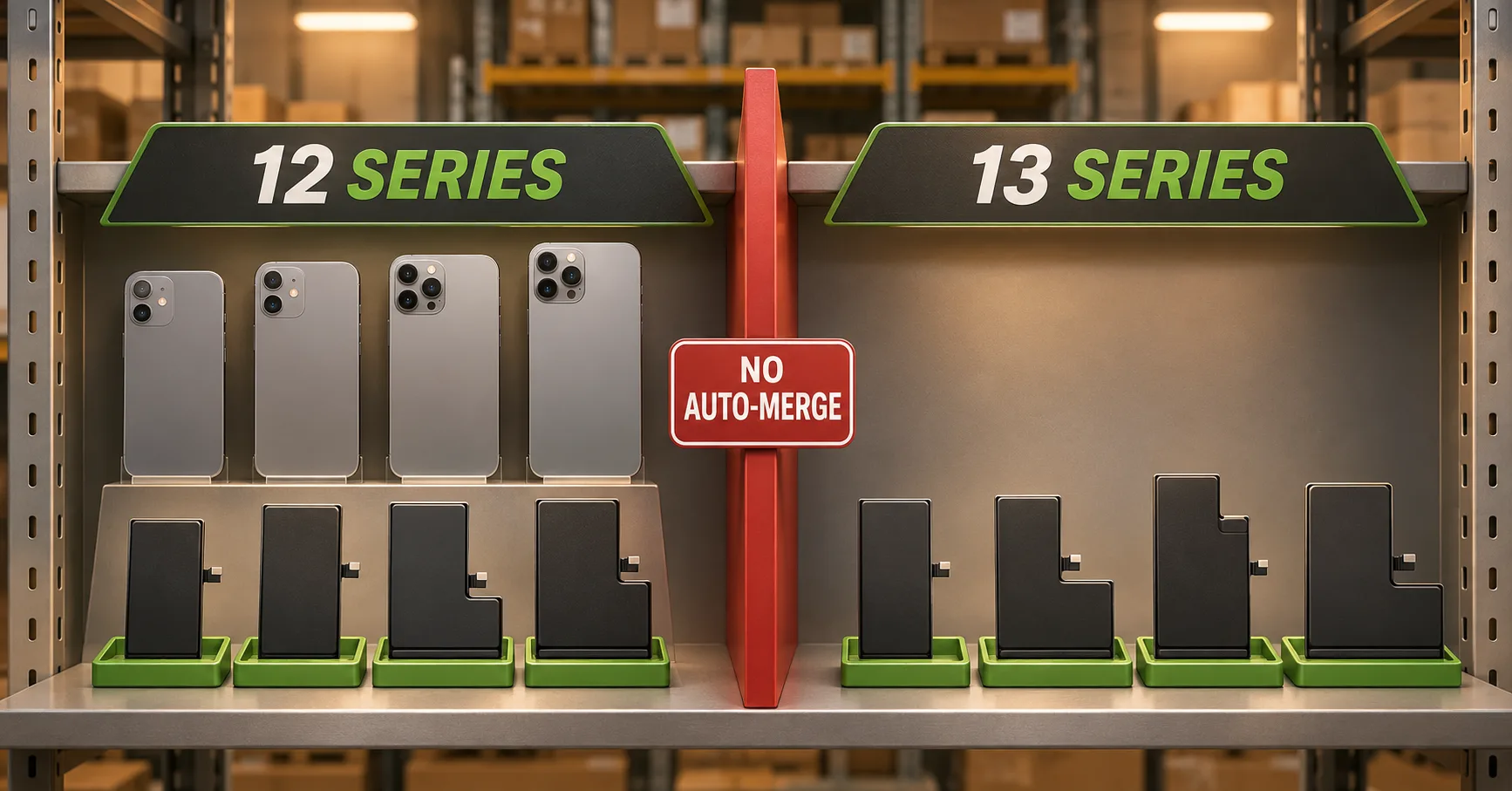
Keep the handset model, your internal SKU and the supplier reference in separate fields. Link them through the approval record. This battery model matching process lets a supplier offer one reference across several devices while keeping the evidence for each device visible.
| Field | What the buyer requests |
|---|---|
| Application | Full handset code, region or carrier context and approval status |
| Finished pack | Supplier reference, revision, photos and controlled dimensions |
| Electrical declaration | Nominal voltage, capacity definition, energy and applicable test method |
| Package contents | Assembly, adhesive, insulation and other included items |
| Traceability | Unit label, lot code, date-code meaning and carton breakdown |
Use the same fields for every bidder. Request a list of exceptions when an offer differs from your sheet. Have the supplier identify substitutions before shipment and retain its written response with the sample approval. The broader supplier review can follow ESCCharge’s Samsung procurement framework. ESCCharge Samsung replacement battery sourcing guide.
Check the Finished Assembly and Package Scope
Review the replacement battery assembly as supplied. Obtain a drawing or controlled sample showing the outline, thickness, flex routing, connector orientation, insulation and adhesive arrangement. Ask qualified engineering staff to review the electrical and sensing configuration against the intended device.
Record where dimensions are measured and photograph the approved sample. At the repair bench, a trained technician should document seating, routing, connection and enclosure closure under the appropriate procedure. Hold any sample showing interference or unexpected stress for engineering review.
Count the consumables needed for one complete repair. A battery-only quote and a package with adhesive can produce different total costs. Define whether adhesive arrives pre-applied or separately packed and identify enclosure consumables independently. Evaluate the packed sample in the format intended for production delivery.
Evaluate Charging and Runtime Under Recorded Conditions
Use a known-good handset of the intended variant for the installed evaluation. Record its model, software version, starting charge level, adapter, cable and environment. Observe startup, charging progress, reported charge and stability under representative use.
When comparing samples, keep display brightness, network state, workload and test duration consistent. A 4G device and a 5G device may operate under different workloads and radio conditions. Evaluate each within its own controlled test group and record the configuration before interpreting differences.
Request separate bench capacity evidence tied to the sample reference. Confirm the discharge method, temperature, endpoint and whether the result represents charge capacity or energy. Relate installed runtime observations to that evidence while preserving the conditions of each test.
Sample Mixed Orders by Assembly and Lot
Retain a Signed Application Record
A Galaxy A51 5G battery sample should carry an approval record listing the handset variants actually evaluated. Record the tested unit identifiers, drawing revision, capacity declaration, installed results and the person authorizing the application. Make photographs of the label and electrical interface accessible to receiving staff. Keep any pending variant clearly marked until its evaluation is complete.
For A51 battery compatibility decisions, distinguish a supplier’s proposed application list from the buyer’s released list. Purchasing may request several variants in one inquiry while engineering has approved only some of them. Use the released list when placing the production order, and ask the supplier to acknowledge that scope.
Review Changes Before They Reach the Bench
Require a change notice when the supplier proposes a different cell, protection component, flex, connector, adhesive or label format. Ask for the affected references, reason for the change, implementation date and first lot using the revision. Engineering can then define the checks needed to extend approval. Update the receiving comparison record before the changed shipment arrives.
A packaging-only change may need a different review from an electrical-interface change. Record the review and its rationale so a later buyer can understand why the revision was accepted. Retain the previous record for tracing stock already installed in customer devices.
Receive the First Production Shipment
Ask for a packing list broken down by device application, assembly revision and supplier lot. Reconcile carton and unit labels against the purchase order before selecting samples. Keep revision differences visible even when two cartons carry the same commercial model name.
Suppose a shipment contains 40 units for an approved A515 application and two A516 lots of 30 units each. Treat them as three receiving groups under the agreed plan. Record which group supplied each test unit. A passing result releases the group represented by that sample under the acceptance agreement.
If the second A516 lot has a different flex revision, hold that group while engineering reviews the change. Keep released stock available under its existing record. The warehouse release must show quantity, application, revision, lot and authorization. Adapt the sample selection and inspection criteria to the specific packs being purchased. ESCCharge battery sampling plan.
Reorder From Actual Repairs and Released Stock
Forecast demand using completed repairs by approved application. Track incoming devices separately because diagnosis may identify a charging-port, display or other repair before a battery order becomes appropriate. Add warranty replacements and engineering samples as distinct requirements.
For an illustrative network using twelve approved A515 packs and eight approved A516 packs per month, two months of coverage gives base demand of twenty-four and sixteen. Add buffers of four and three to reach targets of twenty-eight and nineteen. With ten and seven released packs in stock, the gaps are eighteen and twelve before confirmed inbound stock.
Set any buffer using your own demand variation and service target. Keep held stock outside the available balance. Review pack dates, storage records and expected sell-through when a supplier minimum would create excessive coverage. Confirm whether the date code represents the cell, assembly or packaging. ESCCharge battery storage guide.
Trace Repeat Complaints to the Configuration Installed
Link each issued unit to its repair work order. Retain the handset code, pack revision, lot, installation date and acceptance observations. A later complaint should describe the symptom, charging setup or workload and any change since the repair.
Compare returns with the number installed from each relevant lot. Investigate whether the symptom follows a pack, a device or an accessory under controlled checks. If evidence identifies an affected group, hold that inventory and send the supplier a concise record of the tested configuration and findings.
Prepare an RFQ That Supports a Usable Quote
Send quantities by full model code, target market, approved assembly requirements and desired package contents. Ask for the proposed revision, sample evidence, available lot dates and documentation associated with that configuration. Request explicit confirmation of model exclusions and change-notification arrangements.
Compare landed spend with complete accepted repair sets. Include separately sourced consumables and receiving work. Confirm MOQ, sample charges, lead time and warranty terms for each model and packaging option. This gives purchasing a basis for choosing a smaller first order or negotiating staged replenishment.
Frequently Asked Questions
Do A515 and A516 use a common approved pack?
Keep separate application approvals and order the assembly evaluated for each exact handset. Require evidence for every device included in a supplier’s compatibility claim.
Can a regional suffix be omitted from an order?
Include the suffix so the supplier can identify exclusions and confirm the application. Resolve any shortened or ambiguous model description before releasing the order.
Does 4,500 mAh establish compatibility with every A51 5G?
Capacity is one declared field. Approval also covers physical dimensions, electrical interface, assembly construction and installed behaviour for the intended handset.
What if the production lot differs from the sample?
Hold the affected revision, request a change record and have engineering decide which document, bench and installed checks to repeat before release.
Send ESCCharge your complete A51 handset codes, quantities and packaging requirements to discuss application-specific samples and a bulk quotation. Confirm actual availability and order terms for the proposed assemblies.
External Source References