
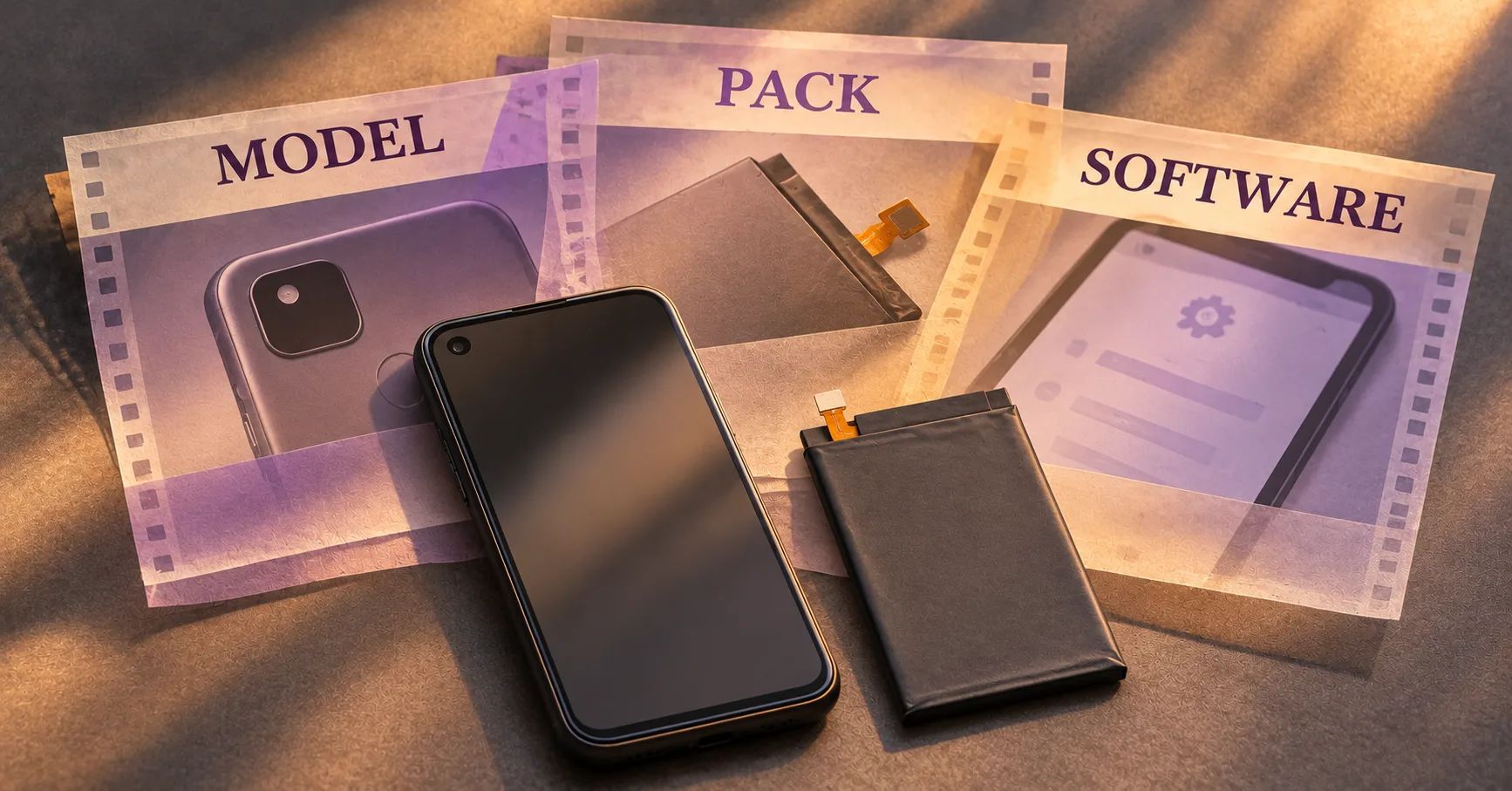
For bulk Pixel 4a battery replacement, confirm the exact device first, approve the proposed battery assembly, and record the software configuration used for testing. A replacement pack's physical fit and measured capacity are separate from the runtime and charging behavior of the installed phone. Both records matter when a repair business promises a completed result to its customer.
This distinction is particularly useful for repair chains, refurbishers and parts wholesalers handling mixed-condition Pixel 4a stock. The model has a documented battery-management history, and older articles about compensation can now give buyers an outdated impression of the service options available.
The news background has changed since January 2025
In its January 7, 2025 report on the unexpected Pixel 4a battery update, Ars Technica's Kevin Purdy described a forthcoming update and the assistance options then offered to impacted owners. The article is useful historical context, but its original service offers should not become a current repair quotation.
Google's current Pixel 4a Battery Performance Program page states: “This program ended on January 8th, 2026.” It says the January 2025 Android 13 update reduced available capacity and affected charging on some devices, while other Pixel models, including Pixel 4a 5G, were outside that update's impact.
The current official wording should govern customer communications about that program. As checked on November 19, 2026, the original free-replacement and compensation options have ended. For an individual safety concern, use Google's support route rather than treating a parts purchase as a program claim.
For procurement, the consequence is a clearer scope of work. Quote the actual replacement service and its acceptance conditions. Keep historical news, current official assistance terms and the seller's own repair agreement distinguishable in the record.
Why the software record belongs in a battery order
The UK Office for Product Safety and Standards published Product Safety Report 2509-0316 on November 14, 2025. It identifies an overheating-related fire risk and explains that Google's January 2025 firmware action reduced risk through lower battery capacity and charging speed. The report classifies the measure as a “Modification programme.”
This gives the software context a safety purpose. A supplier evaluation should not depend on removing protective management or returning a phone to an earlier software configuration to obtain a better-looking runtime result. Use the supported configuration and record what was tested.
The report identifies an affected manufacturing period from 2020 through May 2021. A date is a screening clue, not a substitute for identifying an individual device's status. Retain any relevant manufacturer notifications with the device record and escalate unresolved concerns before normal acceptance testing.
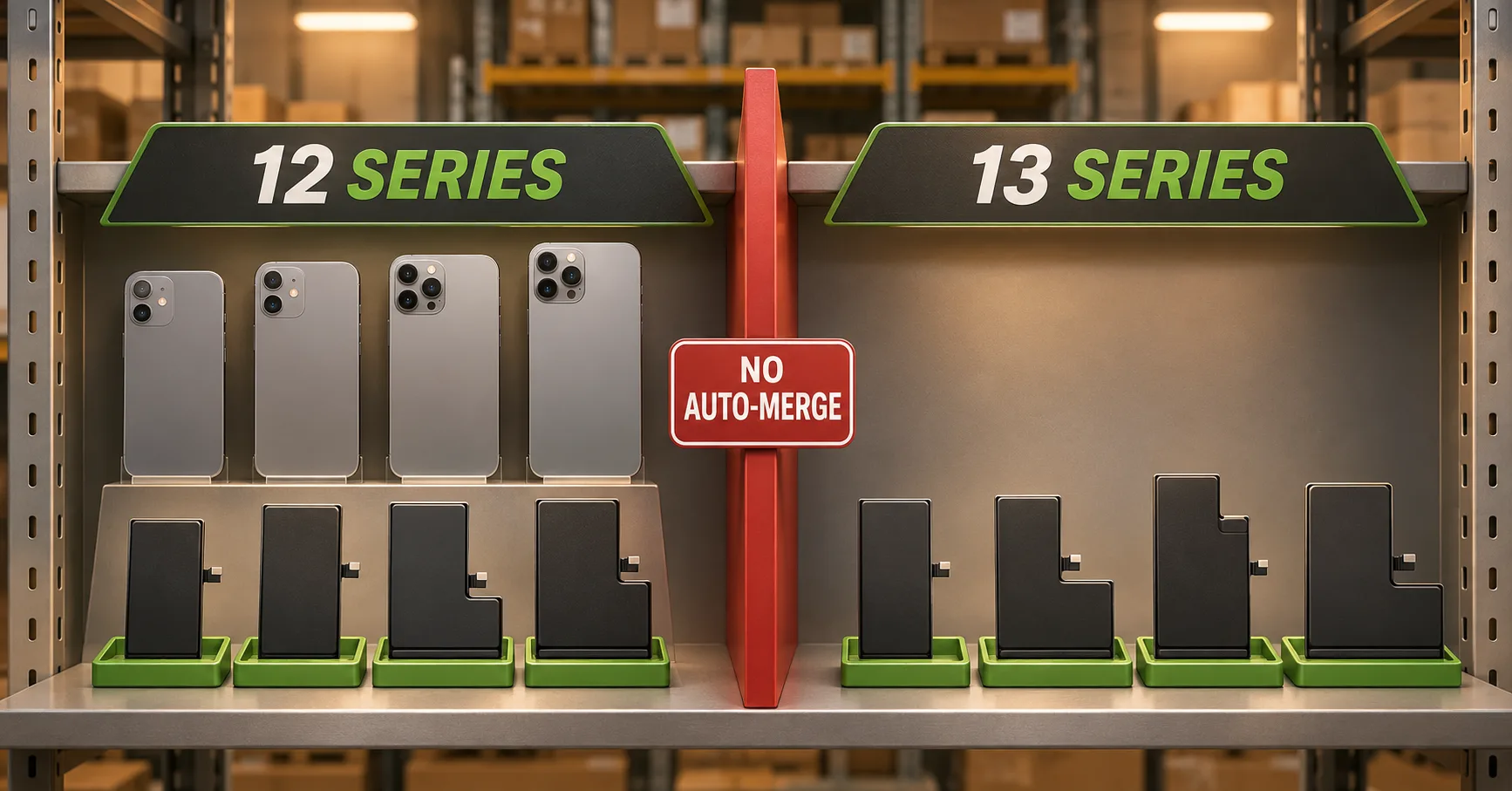
Keep Pixel 4a and Pixel 4a 5G on separate approval paths
A Google Pixel 4a battery replacement request should include the model recorded by the handset, an original battery-label photograph and a connector-area photograph taken by a qualified technician. Preserve the full device and assembly identifiers instead of reducing everything to “4a battery.”
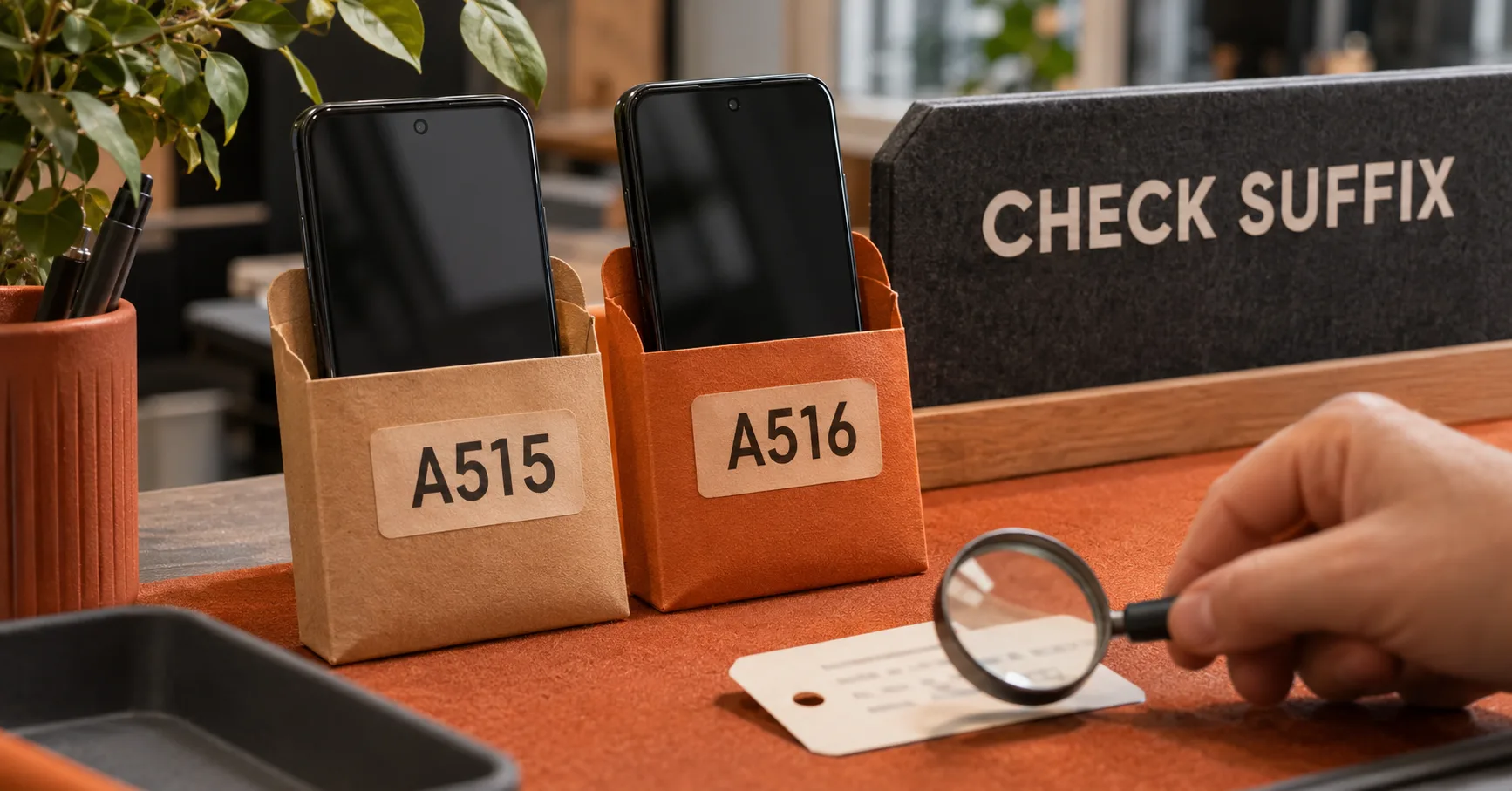
Set up separate enquiry lines for Pixel 4a and Pixel 4a 5G. A search result can point to a nearby model, and a catalogue title can omit the distinction. Neither is a reason to accept a shared assembly without model-specific evidence.
Ask the supplier to reconcile every proposed part reference with its drawing, label and application list. Treat a catalogue part number as a matching lead until the actual sample and intended handset agree. Keep supplier SKU, manufacturer marking and the buyer's internal stock code in separate fields.
If a supplier lists multiple applications, require a result for each requested one. A successful fit in one device cannot close another application's approval item. This also prevents warehouse staff from authorizing substitutions through an overly broad product alias.
Keep bench capacity and installed runtime in separate records
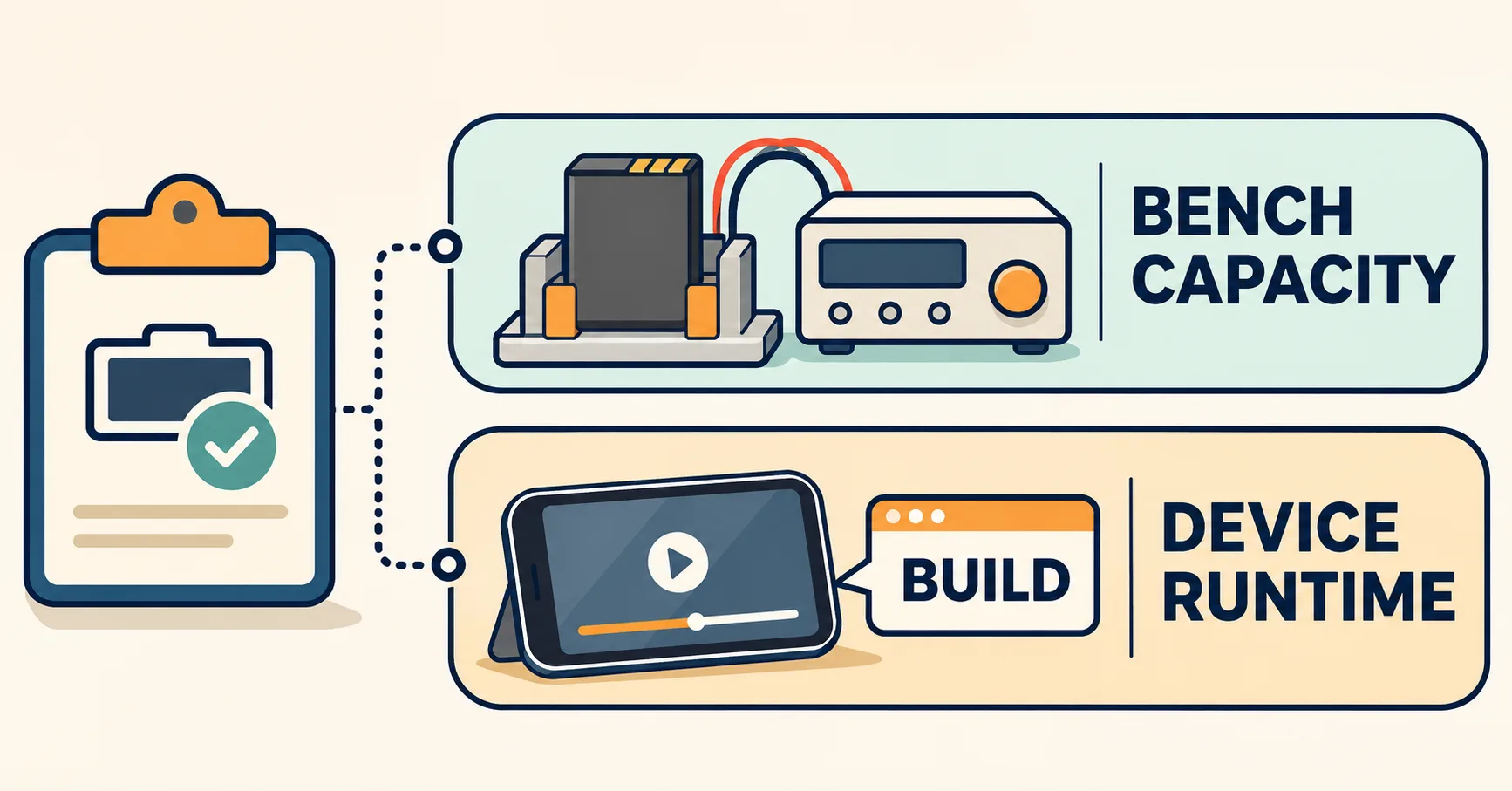
A Pixel 4a battery label declares a pack specification. A bench discharge test measures the tested sample under defined electrical conditions. An installed runtime test evaluates a handset, pack, software build and workload together. These results should remain linked but should not be substituted for one another.
| Evidence record | Conditions to preserve | Decision supported |
|---|---|---|
| Pack identity and fit | Revision, dimensions, connector, cable routing and enclosure closure | Whether the proposed assembly matches the application |
| Bench capacity | Charge termination, discharge current, cutoff voltage, temperature and sample ID | Whether the tested pack meets the agreed capacity definition |
| Installed runtime | Device ID, software build, settings, workload and network condition | Whether the installed configuration meets the repair requirement |
| Charging behavior | Charger, cable, starting charge state, temperature and observed progression | Whether charging behavior is acceptable under the agreed setup |
Require the quotation to identify whether its capacity value is typical, rated or a guaranteed minimum. Avoid comparing two test reports until the methods are aligned. Keep individual results visible so an average cannot hide a weak sample.
Charging energy read at the USB input is also different from a direct battery-capacity measurement. The handset consumes power and the conversion path has losses. Use input readings as contextual evidence, with the method stated, rather than automatically translating them into a battery mAh claim.
Build a repeatable sample acceptance test
Record the starting device condition
Log the model, installed build, existing symptoms, repair history and visible condition before work. Separate charging-port faults, screen damage, abnormal heating and obvious pack damage from a simple runtime complaint. A swollen or damaged unit needs qualified assessment and the site's isolation process before routine testing.
Where the starting device can be tested safely, retain a short baseline under controlled settings. A baseline helps explain a change, but the worn original battery should not be the only standard for accepting a new sample.
Inspect the assembly before evaluating runtime
Check thickness, connector seating, cable routing, insulation and adhesive scope. Confirm that the enclosure closes without pressure on the pack. Do not modify a pack, force the connector or compress the battery to make a proposed part fit.
Define whether the order contains a bare assembly, battery with adhesive or a repair kit. Price those scopes consistently. A missing installation item can delay a repair even when the battery itself meets the agreed electrical specification.
Run the agreed workload on the recorded build
Choose a workload relevant to the buyer, such as local video playback followed by a defined idle interval. Fix brightness, volume, connectivity and app settings. Record the starting and ending state of charge, elapsed time and abnormal observations without treating a percentage display as a laboratory capacity measurement.
When results differ, check device condition and test setup before attributing the difference to the supplier. Use a known-good reference where practical. ESCCharge's incoming battery-inspection guide provides the broader receiving framework around these model-specific checks.
Release mixed refurbishment stock by evidence status
A proposed Pixel 4a replacement battery should enter the purchasing system with its approved revision and application scope. Link the supplier lot to the sample report and the device records used for installed testing. Require review when the cell, protection circuit, connector or cable changes.
In a mixed fleet, distinguish devices with complete acceptance records, units awaiting investigation and units with unresolved safety concerns. Avoid releasing every handset because one sample passed. Select samples across the relevant lots and device configurations under a documented plan.
For example, a batch of 80 phones might contain 50 with complete identification and test records, 20 awaiting device-history review and 10 with unresolved faults. This hypothetical allocation permits a decision on each group; it does not establish a real defect rate or justify treating the other 30 as approved.
Use ESCCharge's battery sampling-plan guide to define lot identity, sample selection and escalation. Add the software-build field to the application records. A passed pack sample and a released refurbishment lot are separate approval events.
FAQ for repair and wholesale buyers
Can customers still claim the original free-replacement option?
The cited Google page records the program's January 8, 2026 end date. Check current official support for individual cases and avoid repeating the original offers from launch coverage.
Will an aftermarket pack restore the phone's original runtime?
That outcome needs evidence for the exact pack and installed configuration. Agree a measurable workload requirement instead of promising original runtime from a capacity label.
Can a 4a 5G battery be substituted?
Maintain a separate application and check its specification. Similar names and nearby search results do not demonstrate interchangeability.
What should accompany a Google Pixel 4a battery enquiry?
Provide the exact device identity, original assembly photographs, software build, symptoms, quantity, destination market and installation-kit scope. Include the requested test criteria and any unresolved device concerns.
Prepare an RFQ around the result you need to approve
Send those details through ESCCharge's mobile phone replacement-battery enquiry channel. Request confirmation of Pixel 4a model availability, the proposed specification and the sampling evidence before committing to a bulk order.
Confirm packaging, model-specific documents, delivery arrangements and warranty terms for the actual project. Record the approved part and installed test configuration together so purchasing, repair teams and customer support can explain the same result.
External Source References