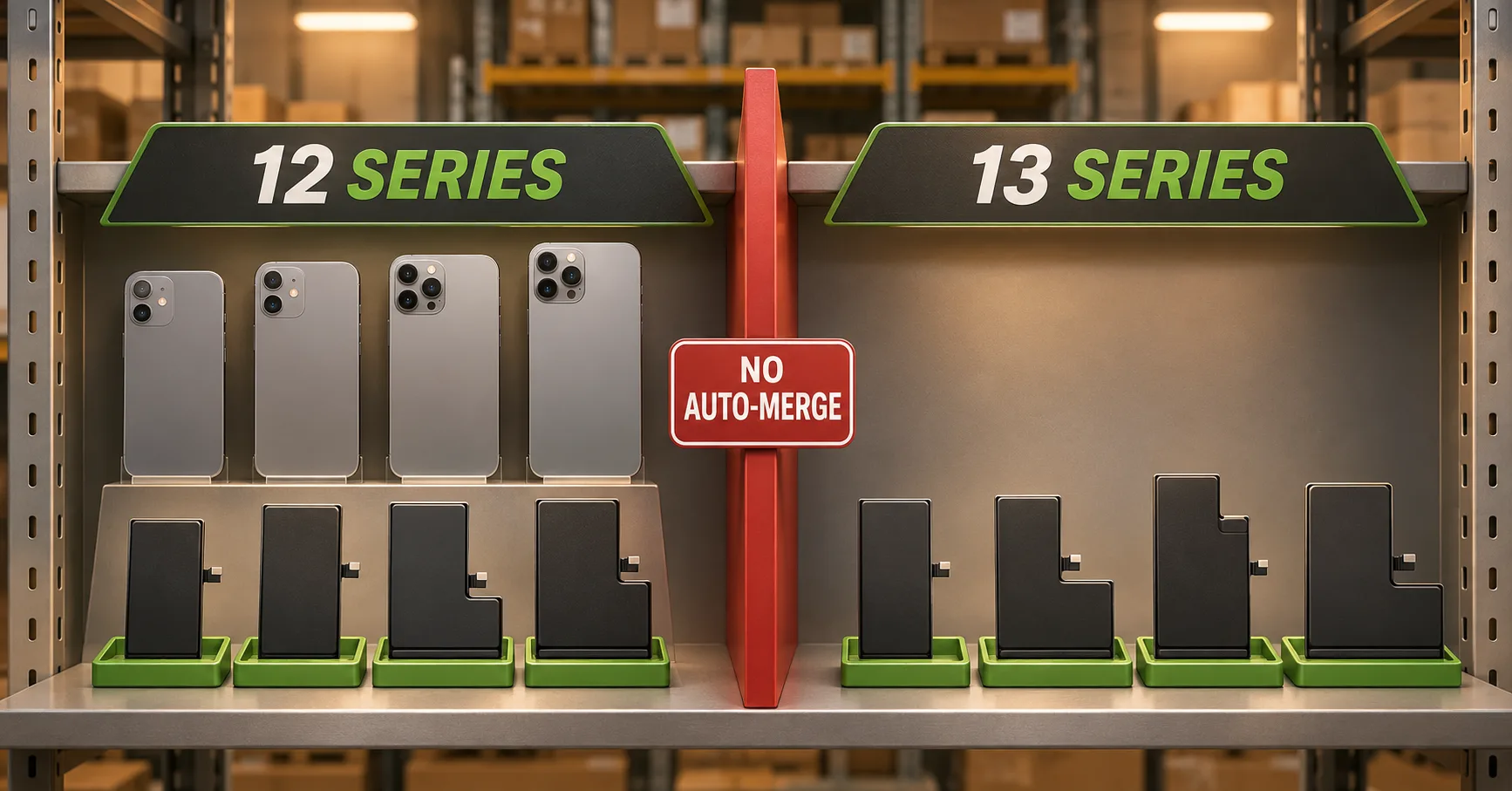

Approve Every Device Before Combining Stock
A Samsung Galaxy A31 battery replacement order can become part of a shared stock program when the same finished assembly has documented approval for each intended handset. Start with the complete device code, supplier battery reference and assembly revision. Record the applications separately before deciding whether the warehouse can issue one SKU across several models.
For repair chains and wholesalers, consolidation can reduce fragmented inventory and simplify replenishment. It also concentrates demand and quality exposure in one assembly. The approval record therefore needs to explain which devices are covered, what was evaluated and which revision was accepted.
This guide focuses on the A31, A32 4G and A22 4G purchasing decision. Use the broader supplier review for company qualification and commercial evaluation, then add the application evidence required for this specific group. ESCCharge Samsung replacement battery sourcing guide.
Identify the 4G Applications and Their Boundaries
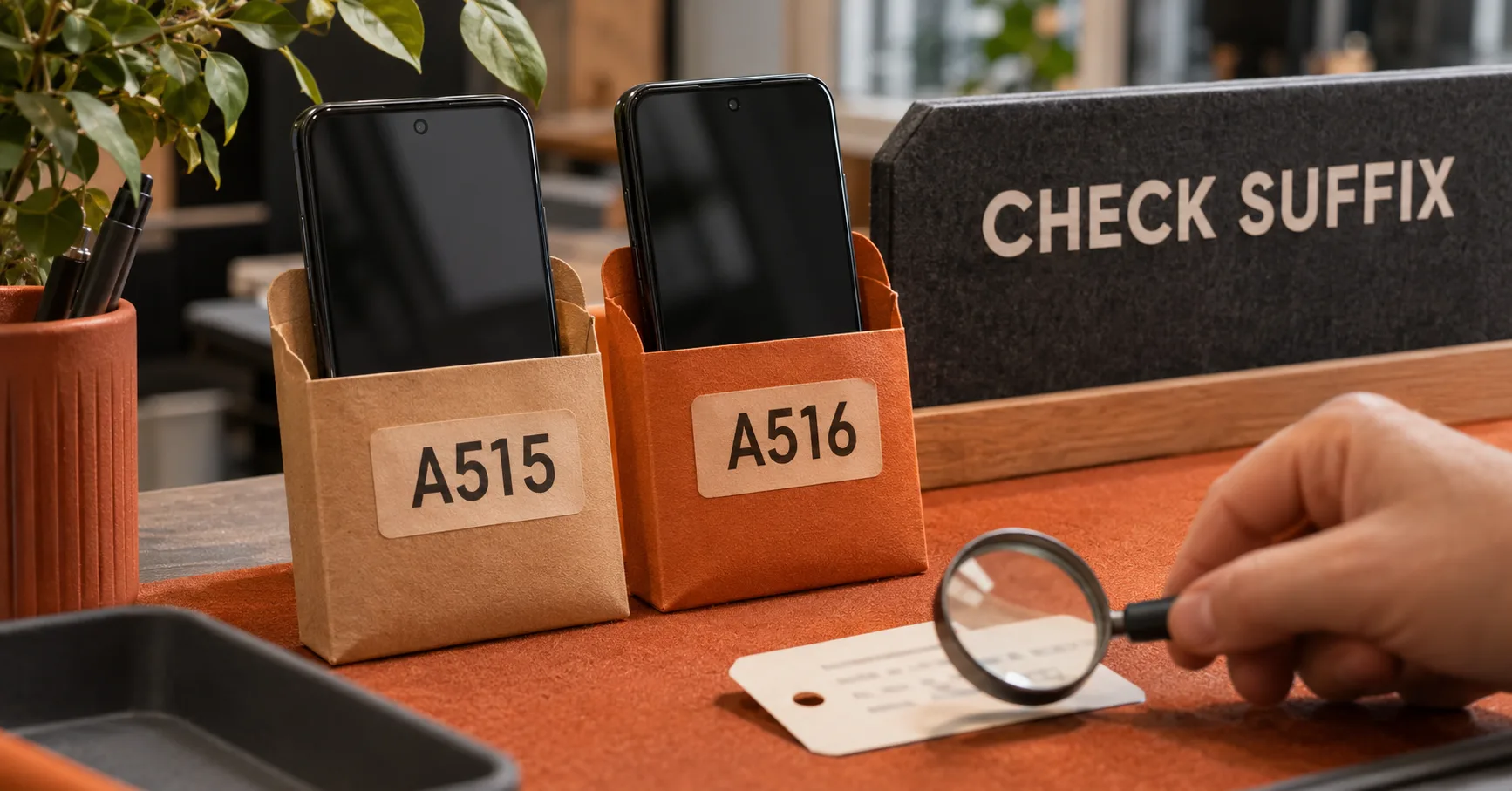
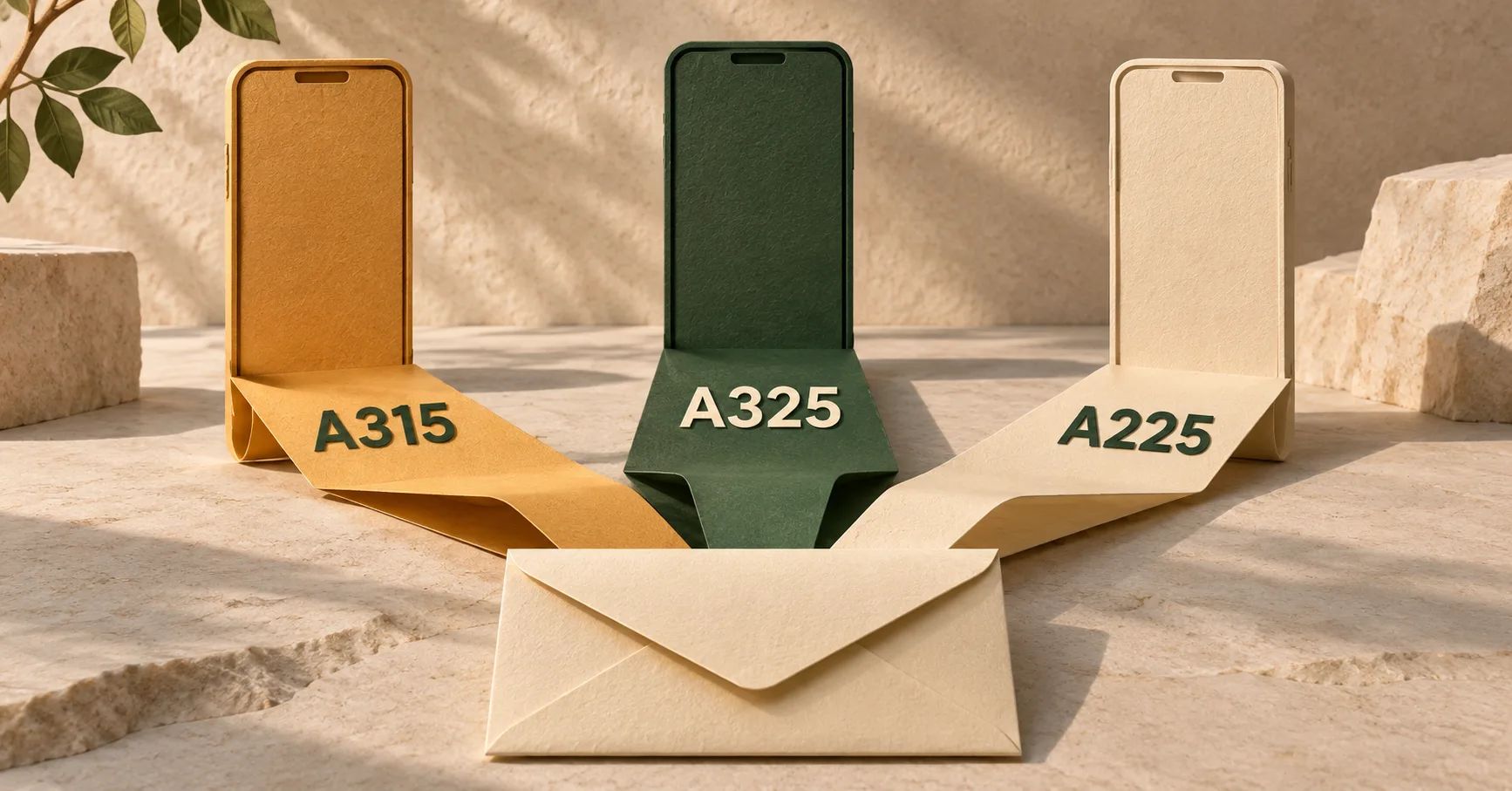
Build the proposed application list from complete handset codes. The A315 prefix identifies the A31 branch in this purchasing scope. A325 and A225 refer to the A32 4G and A22 4G branches respectively. Capture regional suffixes from the actual devices and ask the supplier to confirm each one.
Samsung’s A-series capacity guide lists A315G and A325F at 5,000 mAh. Its A22 product page identifies an A225F device with the same typical capacity. These references establish original device values for those examples. Keep the proposed replacement assembly and its measured evidence in separate fields. Samsung Support — Galaxy A-series battery capacities and Samsung Business — Galaxy A22 SM-A225F specifications.
| Application under review | Example device code | Evidence to obtain |
|---|---|---|
| Galaxy A31 | SM-A315G | Exact suffix coverage and finished assembly approval |
| Galaxy A32 4G | SM-A325F | Independent fit and installed-device record |
| Galaxy A22 4G | SM-A225F | Independent fit and installed-device record |
A326 and A226 belong to the corresponding 5G branches. Samsung publishes separate A32 5G and A22 5G product records, also showing 5,000 mAh typical capacity. Give those devices their own application review if they appear in the repair queue. Equal capacity alone leaves geometry, interface and installed performance unresolved. Samsung Business — Galaxy A32 5G support and Samsung Business — Galaxy A22 5G specifications.
Keep Capacity Definitions in the Quote
Samsung’s A32 4G page describes a 5,000mAh (typical)
battery and 15W of Adaptive Fast Charging
. Use these as original device references. Ask the supplier to state the replacement’s declared minimum or typical capacity, nominal voltage and energy, with the test method supporting each measured claim. Samsung Business — Galaxy A32 SM-A325F specifications.
A Galaxy A32 4G battery offer should identify its finished reference and revision alongside those declarations. Apply the same requirement to a Galaxy A22 4G battery offer. If the supplier proposes the same reference, compare whether both quotes describe the same finished build, package and acceptance method.
When one bidder uses mAh and another uses Wh, request the nominal voltage for the complete assembly. Multiply amp-hours by volts to reconcile declared energy. Use a separate agreed discharge test for measured acceptance and retain the sample identity, equipment, temperature and endpoint with the result.
Separate Supplier Claims From Released Applications

Maintain two lists during sampling. The supplier’s proposed list records the devices it claims to support. The buyer’s released list records the applications actually accepted after review. Warehouse and production orders should use the released list.
For example, the supplier may propose three applications while the buyer has evaluated only A315G and A325F. Release those two after the evidence is accepted and keep A225F pending. Record who can extend the scope and what evaluation is required before doing so.
A shared battery SKU should point to one controlled finished assembly revision and its current released applications. Keep the individual device records available even after stock is consolidated. This lets a future quality investigation identify which applications were evaluated and which lots were installed.
Review Geometry, Interface and Delivery Scope
Request a controlled drawing or retained sample showing the finished outline, thickness, flex routing, connector orientation and insulation. Define measurement points so receiving can repeat the comparison. Have qualified engineering staff review the electrical and sensing configuration for the intended devices.
Photograph both faces, the label and the electrical interface of the approved sample. Match the supplier’s part reference and revision to the drawing. If the supplier uses a battery code in a catalog, retain that code as a reference while documenting the actual finished configuration offered.
Specify adhesive separately for each handset procedure. A common battery assembly may still require different enclosure consumables or packaging. Record whether battery adhesive is pre-applied or supplied loose and count the items needed for one complete repair. Request the production package as part of sample approval.
Evaluate the Same Revision in Every Intended Handset
Have a trained technician evaluate physical seating, routing, contact engagement and closure using the applicable repair procedure. Record the full handset code and sample identifier. Hold unexpected interference, pressure or routing differences for engineering review.
Record startup, charge progress, reported charge and stable operation under a representative workload. Use a known-good device of each intended variant and document the software, adapter, cable, initial charge and environment. Compare runtime within each device model under consistent display, radio and workload settings.
Keep installed results alongside the bench capacity record. A complete battery application approval should link these observations to the assembly revision, package configuration and device. Establish acceptance criteria before testing and retain the reviewer’s decision.
Release Production Lots Against the Approved Build
Ask for the carton breakdown by reference, revision and supplier lot. Reconcile unit labels with the purchase order before drawing samples. Keep separate lots identifiable when several applications share the same assembly.
Suppose the first order contains two lots of sixty and forty units. Select samples within each group under the agreed plan and retain each sample’s source. If the second lot has a different connector or flex revision, hold that group while engineering reviews it. Record accepted quantity, held quantity, reason and release authorization.
Adapt the receiving process to the selected assembly and its approved tests. The sample selection, inspection criteria and response to failures should be agreed before shipment. ESCCharge mobile phone battery sampling plan.
Combine Demand Only Within the Released Scope
Use completed repair demand by exact device application when calculating replenishment. Consider a hypothetical monthly requirement of ten A31 repairs, fourteen A32 4G repairs and six A22 4G repairs. If all three are approved for the same revision, their combined base demand is thirty assemblies per month.
Two months of coverage gives sixty units before adding the agreed buffer. If A22 approval is still pending, the released applications account for twenty-four units per month, or forty-eight across two months. Keep the pending demand visible for planning while purchasing orders against the current approval.
Subtract released stock and confirmed inbound units, then account for warranty replacements and test samples. Request traceable dates and available storage records when the minimum order would create slow-moving stock. Keep held or overdue inventory outside the available balance. ESCCharge battery warehouse storage guide.
Review Changes Across All Shared Applications
Require notice before changes to the cell, protection components, flex, connector, adhesive, insulation or labeling. Request the affected references, reason, implementation date and first changed lot. Engineering should identify the tests needed for each released application.
A change accepted on A31 may still need evaluation on the other devices. Keep the previous revision’s approvals traceable to existing stock and installations. Update warehouse records only after the new revision’s released scope is documented.
For returns, link the complaint to handset code, battery revision, lot and installation date. Compare the number of reports with the units installed from the relevant group. Investigate whether the symptom follows the assembly, device or charging setup and record the evidence supporting any inventory hold.
Ask Suppliers for a Comparable RFQ Response
Keep a Revision History That Purchasing Can Follow
Record the previous revision, changed features, affected applications and review decision in one change history. Include the final lot supplied under the previous build and the first lot under the replacement build. This lets a buyer place a repeat order without relying on an old product photograph.
For instance, a revised assembly may have completed evaluation on A315G and A325F while A225F testing remains open. Show that reduced scope explicitly in the purchasing record. Keep older released stock available only for its documented applications and retain its own lot identity.
Allocate Common Stock Without Losing Device Demand
When one approved assembly serves three repair programs, track reservations by handset even though physical stock is pooled. A project reservation for A31 reduces the units available for other jobs. Include those reservations when confirming an A32 or A22 completion schedule.
Review the forecast when a device application is added, suspended or removed. Adjust the common reorder point and any model-specific consumables together. That prevents a revised application list from leaving purchasing with an outdated demand total or the warehouse with incomplete repair sets.
Send the Complete Application List With the Inquiry
Send the full device list, quantity by application, assembly requirements and package contents. Request the proposed part reference, revision, electrical declarations, sample evidence, available lot dates and written exceptions. Ask which regional variants remain outside the proposed scope.
Compare landed cost for accepted, usable repair output. Include separate consumables, receiving work and any additional kitting. Confirm MOQ, sample charges, delivery and warranty terms for the specific configuration. Keep the agreed response with the sample and production records.
Frequently Asked Questions
Can A31, A32 4G and A22 4G use one stock item?
Consolidate only when the same finished revision has approved evidence for every intended device. Retain separate application records after consolidation.
Does a 5,000mAh label extend approval to the 5G models?
Review A326 and A226 as their own applications. Capacity leaves physical fit, interface and installed behaviour to be verified.
Should adhesive be shared when the battery is shared?
Specify consumables by the handset’s approved repair process. A shared assembly does not establish the required enclosure adhesive for every model.
What happens when only one application passes evaluation?
Release the accepted application and keep the others pending. Restrict warehouse issuance to the documented released scope.
Send ESCCharge your full A315, A325 and A225 device codes, quantities and required packaging to discuss samples and a model-specific quote. Confirm actual availability and approval evidence for the proposed assemblies.
External Source References