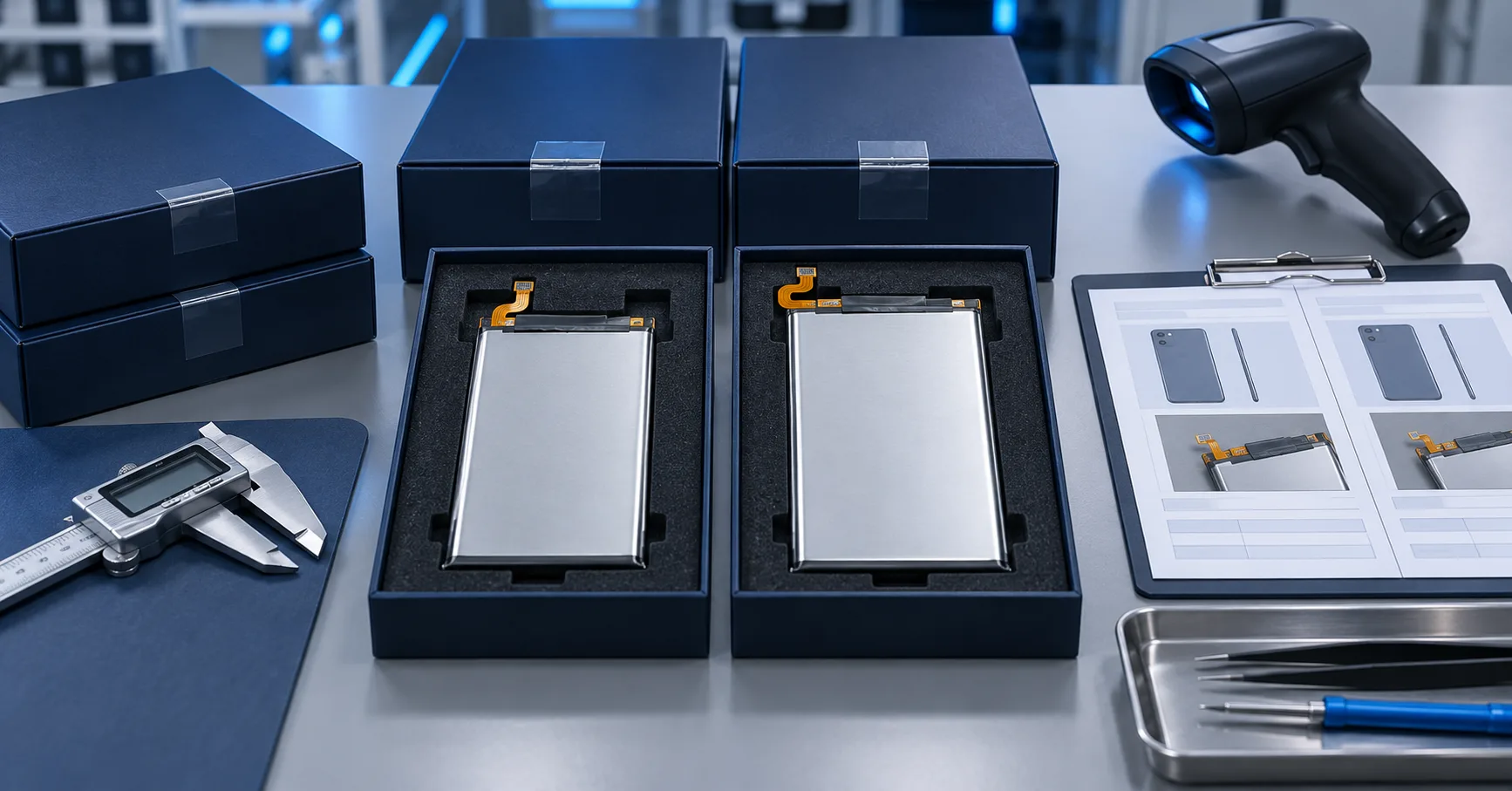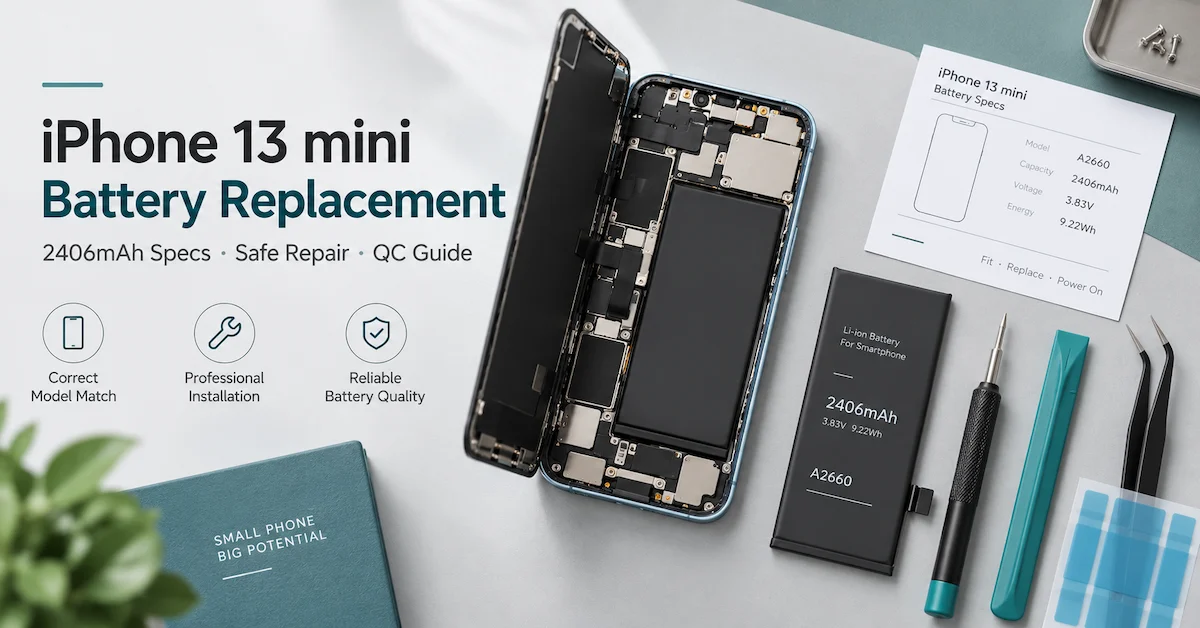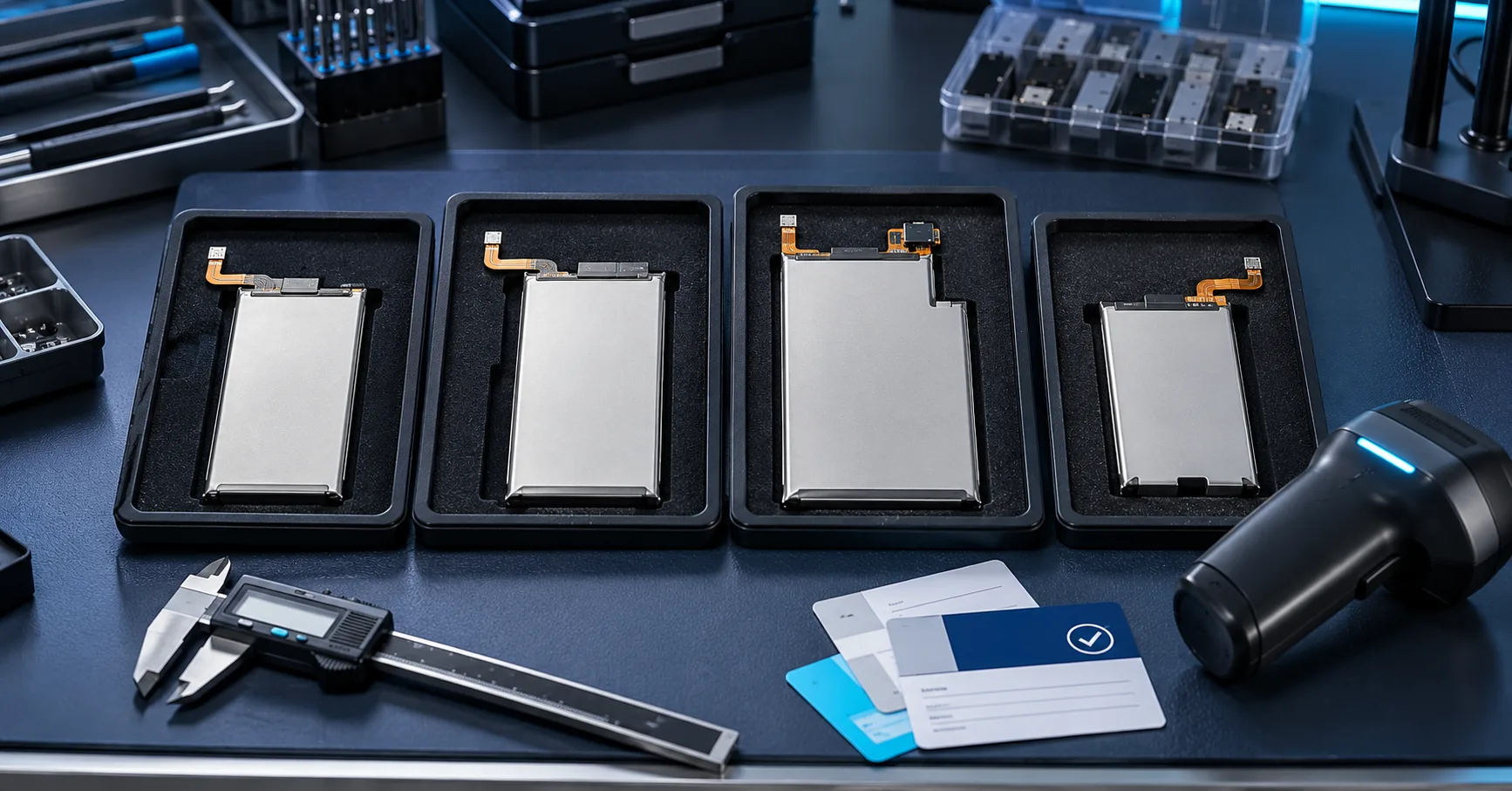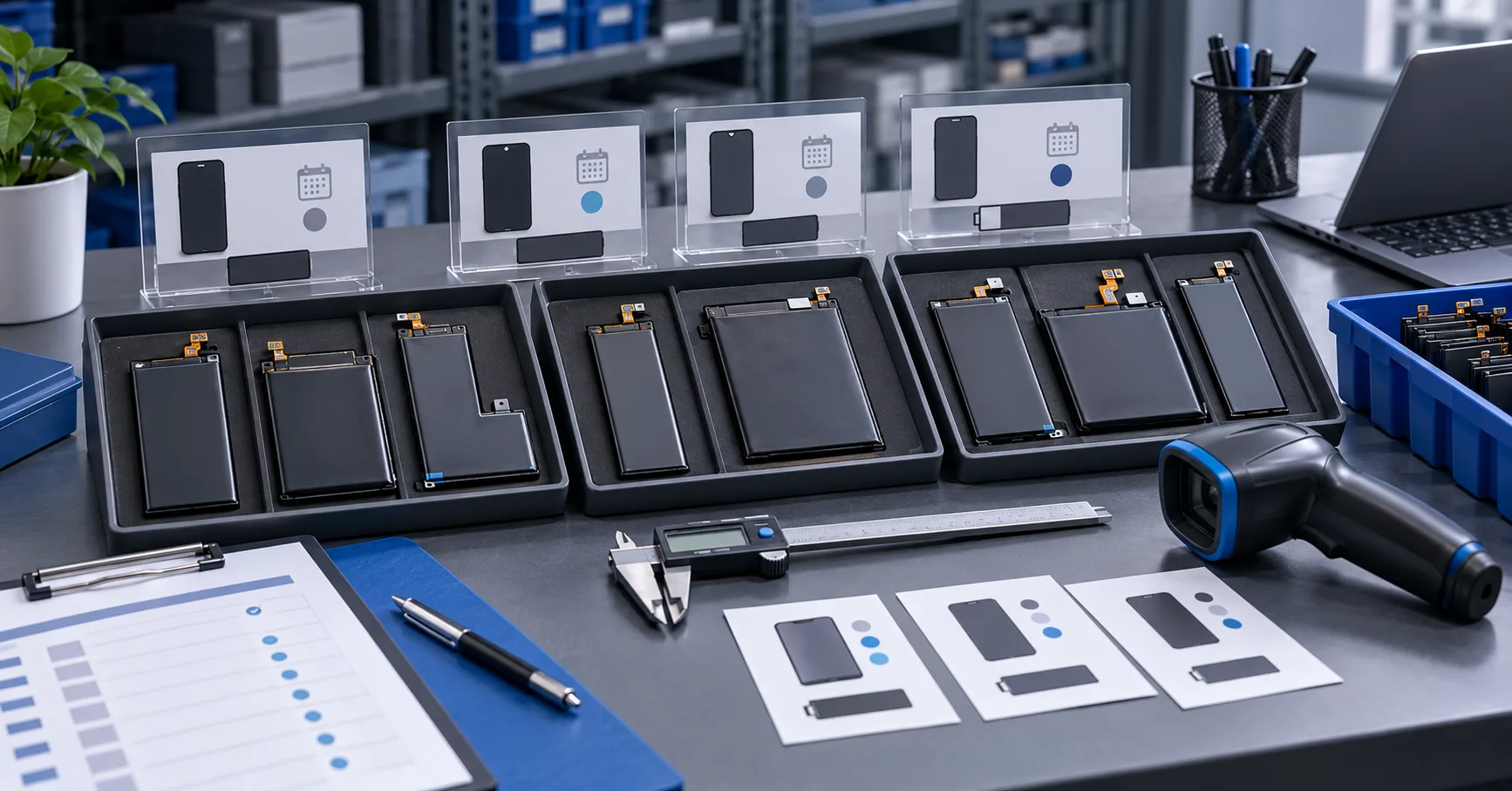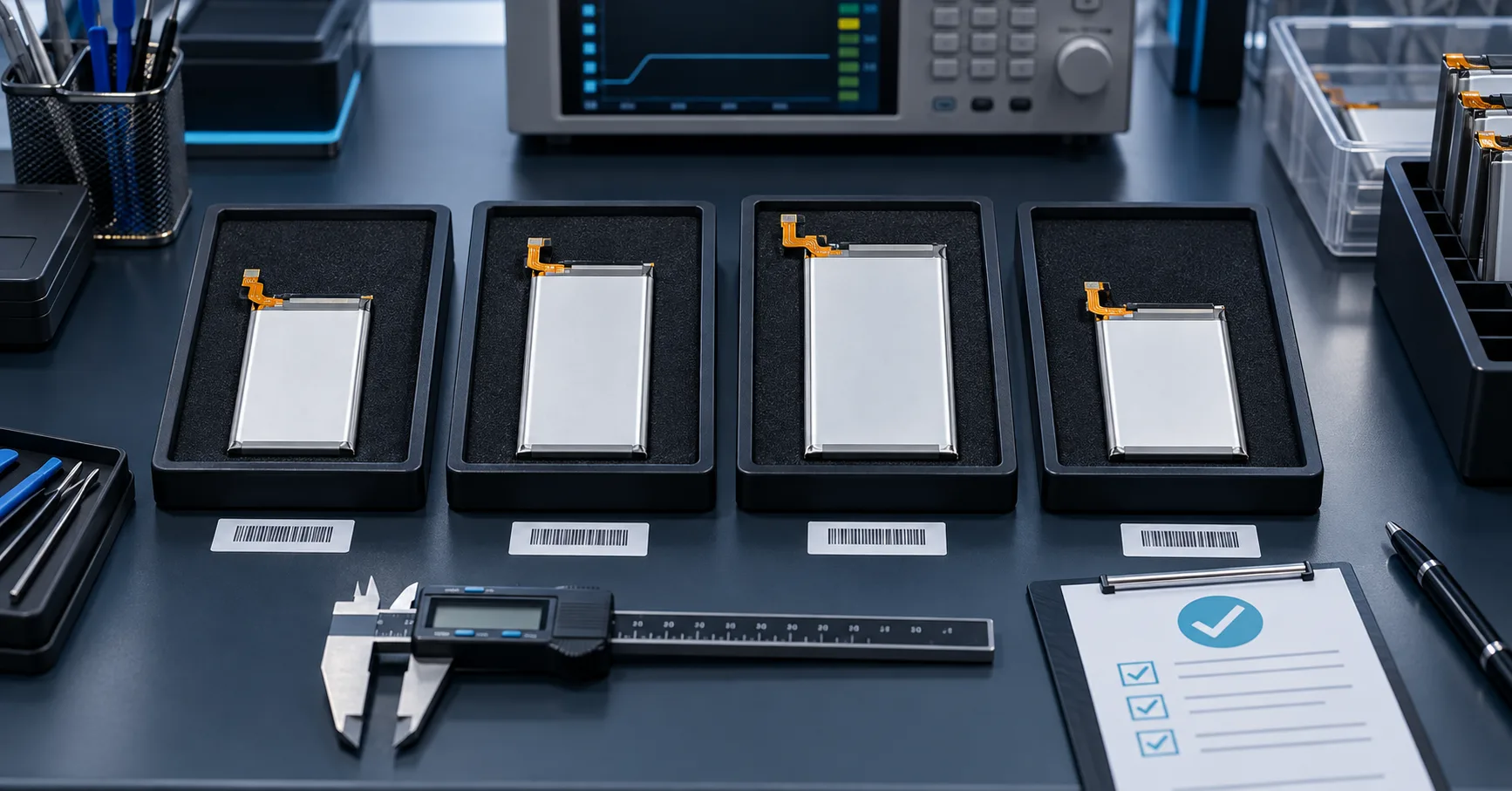


An iPhone 13 battery range should be planned as four controlled SKUs or SKU families: iPhone 13 mini, iPhone 13, iPhone 13 Pro and iPhone 13 Pro Max. The commercial question is not simply whether a supplier lists all four. Buyers need to decide which models their channel actually repairs, how much stock each model deserves and what evidence is required before replenishment.
This article does not repeat ESC's existing supplier-selection guide. It focuses on iPhone 13 battery SKU planning: model separation, demand tiers, sample approval, inventory rotation and repeat-order consistency.
Segment the Four Models Before Forecasting
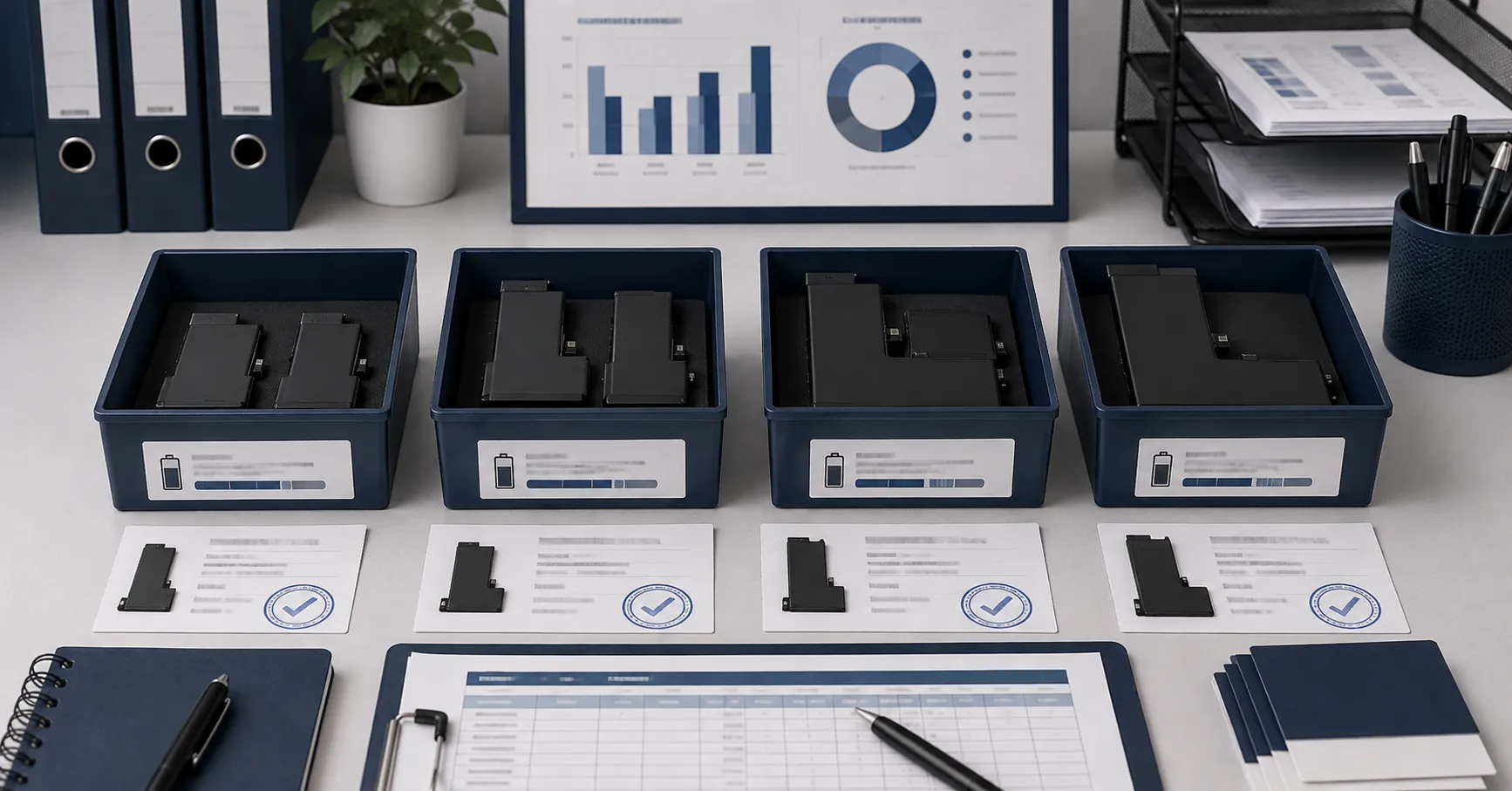
Apple's model identification resource lists the iPhone 13, 13 mini, 13 Pro and 13 Pro Max separately, including regional model numbers. A distributor should preserve that separation in product codes, purchase orders, warehouse locations and sales records.
| Planning field | Question | Control action |
|---|---|---|
| Model identity | Which exact devices appear in repair orders? | Record model number and sales name |
| Channel demand | Which models move in each country or customer group? | Forecast by channel, not global average |
| Compatibility evidence | Has the supplier revision passed on representative devices? | Link every SKU to an approval record |
| Stock age | How long has each lot remained in storage? | Use lot-based rotation and periodic review |
| Reorder point | How much demand and lead-time variability must be covered? | Set a model-specific trigger |
| Warranty signal | Which model and lot creates complaints? | Track returns by SKU and batch |
Use Repair Demand, Not Search Volume Alone
Keyword demand can reveal market interest, but it is not a purchase forecast. Search data mixes consumers, technicians, price shoppers and informational queries. Build the inventory plan from actual quotations, repair tickets, customer lists, regional installed base, sell-through and warranty history.
Create three demand tiers. Tier A contains fast-moving models that justify routine replenishment and deeper safety stock. Tier B contains steady but smaller models ordered on a controlled cycle. Tier C contains slow or uncertain models purchased in limited quantities or against confirmed demand. Review the tier monthly or quarterly according to business volume.
Define a Unique SKU and Evidence Package
Each stocked model should have a unique internal SKU linked to the supplier SKU, approved drawing, label revision, sample lot, device list and test report. Do not use a carton description such as “13 series battery” as the warehouse identifier.
The evidence package should contain:
- exact supported device names and model numbers;
- battery drawing and critical dimensions;
- connector, flex and adhesive arrangement;
- sample-lot identity and photographs;
- incoming voltage and workmanship records;
- controlled capacity, charging and runtime results;
- post-installation functional and system observations;
- approval status, conditions and approver;
- change history and retained-sample location.
For the broader supplier-commercial assessment, link this process to ESC's existing iPhone 13 replacement battery supplier guide. Keeping the two intentions separate prevents a new inventory article from competing with the supplier-selection page.
Approve Samples Before Setting Reorder Levels
An attractive price or strong forecast should not accelerate an unapproved item into stock. Run representative-device testing before assigning a normal reorder point. Check identity, dimensions, fit, connector alignment, charging, controlled discharge, short runtime, temperature observations and basic device functions.
Use ESC's battery sampling-plan framework to define coverage across models and lots. Capacity claims should be validated with a specified method; the iPhone capacity-testing guide provides a separate technical workflow.
Apple explains that iPhone 12 models and later can show battery information in Parts and Service History. The current Apple service-history guidance describes possible states. Record the result under the tested iOS version and repair method, but do not market a third-party battery as genuine Apple or guarantee a particular label.
Set Reorder Points with Model-Level Inputs
A practical reorder calculation uses expected demand during replenishment plus a risk buffer. The input values should be visible and periodically reviewed:
- average sell-through or installation demand by model;
- variation between periods;
- confirmed supplier lead time for the selected SKU;
- minimum commercial quantity for that project;
- current approved stock and open purchase orders;
- stock reserved for key accounts;
- acceptable ageing exposure.
Do not publish a universal MOQ or lead time. Both depend on model, customization and order quantity. A buyer may deliberately carry less of a slow model even if a supplier offers a lower unit price at higher volume, because ageing and tied-up cash can outweigh the price difference.
Control Storage Age and Rotation
Battery inventory needs lot identity, receipt date, storage location and periodic condition review. Apply first-expiring or first-in-first-out logic according to the buyer's validated storage policy. Avoid mixing lots in unmarked bins. Quarantine damaged packaging, deformation, corrosion, leakage, abnormal voltage distribution or uncertain identity.
For warehouse operations, use ESC's mobile phone battery storage SOP. Storage limits and review intervals should follow the supplier's approved specification and the buyer's risk assessment rather than an invented universal schedule.
Measure Portfolio Quality, Not Just Unit Sales
A successful portfolio has high compatibility confidence and controlled after-sales cost, not merely high shipment volume. Review these metrics by model and lot:
- sell-through and days of inventory;
- stock-outs and emergency purchases;
- installation rejection rate;
- capacity or runtime failure rate under the defined method;
- system-status complaints separated from performance complaints;
- warranty rate and repeat failure;
- supplier revision changes;
- gross margin after returns and slow-stock provisions.
If one lot creates an abnormal pattern, stop replenishment, preserve samples and connect field evidence to the ESC warranty-claims workflow.
Run a Quarterly Assortment Review
A quarterly review keeps the portfolio aligned with real repairs rather than last year's assumptions. For every model, compare opening stock, receipts, sell-through, reserved units, ageing, returns, gross margin after claims and forecast accuracy. Discuss large deviations with sales, purchasing, warehouse, quality and after-sales teams together.
The iPhone 13 battery inventory review should end with an explicit action: expand, maintain, reduce, buy only against orders, investigate quality or retire the supplier revision. A low-volume item can remain strategically important for a key repair chain, while a high-volume item may deserve reduction if returns or price pressure destroy its contribution.
When a SKU is retired, preserve its approval and lot records for warranty traceability. Separate remaining stock by lot, define the final sales or service policy and prevent purchasing from reopening an obsolete code without a new review. When demand transfers to another model, do not assume the same safety-stock ratio or sample plan; recalculate it using the new model's evidence.
Frequently Asked Questions
Should all four iPhone 13 models receive equal inventory?
No. Allocate stock according to verified channel demand, replenishment risk and approved supply, while maintaining separate compatibility records.
Can iPhone 13 and 13 Pro use one warehouse SKU?
Only when the supplier specification and representative-device evidence support the exact mapping. The warehouse should never infer interchangeability from a similar model name.
How should a new supplier revision be handled?
Quarantine it from approved stock, compare documents and construction, run risk-based revalidation and update the approval record before release.
What information belongs in an RFQ?
List exact models, market, forecast by SKU, required sample coverage, tests, packaging, labels, traceability, expected quantity and repeat-order plan.
Summary
A controlled iPhone 13 portfolio separates four models, links every SKU to evidence and uses channel demand rather than search volume as its forecast. Model-level reorder points, lot rotation and warranty feedback keep the range commercially useful. Send ESC your model list, target market, forecast, packaging needs and validation plan to discuss a project-specific quotation and sampling approach.
External Source References
- Apple — Identify your iPhone model — accessed 2026
- Apple — About iPhone Parts and Service History — updated 2026