
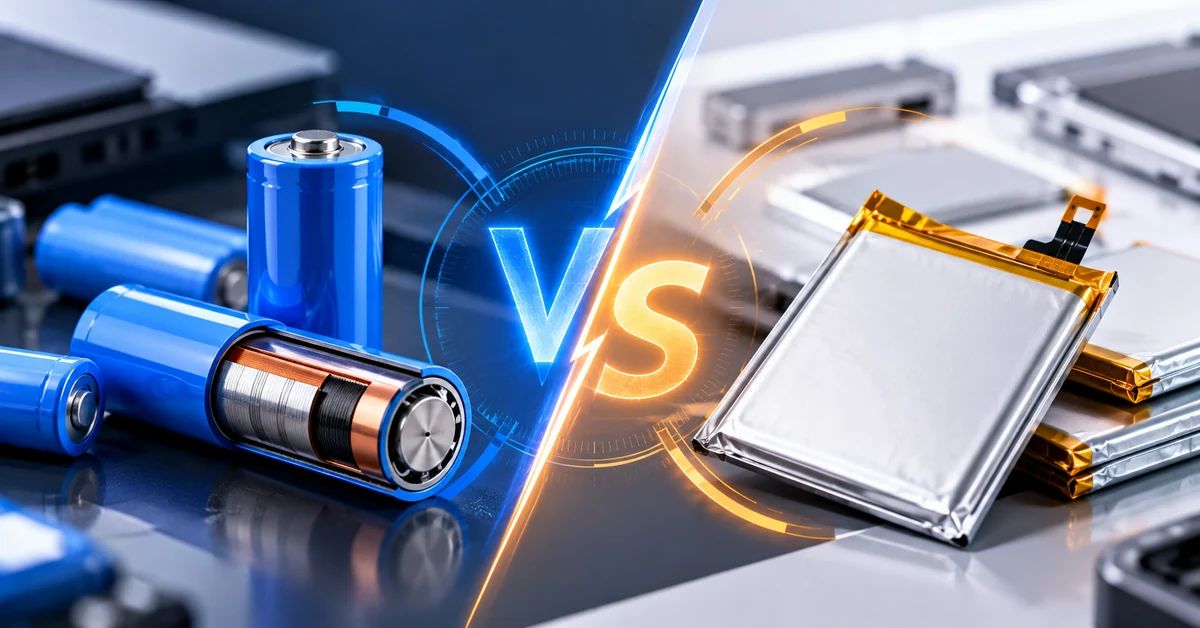
The answer to lithium ion battery vs LiPo is not that one label can replace the other. Lithium-polymer products are generally part of the rechargeable lithium-ion family, while the word “LiPo” is also used commercially for many pouch-format cells. Neither term, by itself, establishes the correct voltage limits, dimensions, connector, protection electronics, or compatibility with a particular phone or tablet.
For repair chains and refurbishers, the commercial risk is a wrong-part substitution: a supplier quotes a “LiPo equivalent” for a battery specified as “Li-ion,” or a purchasing team merges two records because the capacities look similar. An incompatible component can delay production, damage a device, complicate warranty claims, and make affected inventory difficult to identify.
This guide provides a controlled purchasing method rather than another generic chemistry ranking. Buyers will learn how to verify a proposed substitute, build an auditable SKU record, separate complete batteries from bare cells, and ask suppliers for evidence before releasing an order. ESC supplies aftermarket mobile phone replacement batteries and batteries for other portable devices; each proposed part still requires model-specific qualification.
1. Why the Li-ion and LiPo Labels Are Not Substitution Approvals
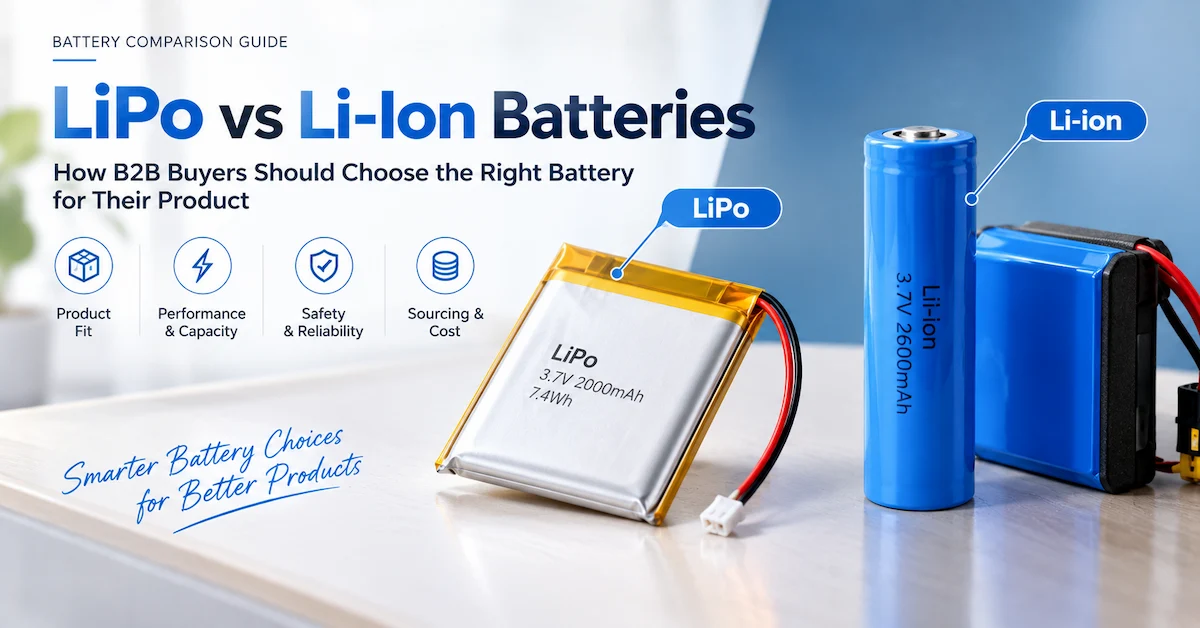
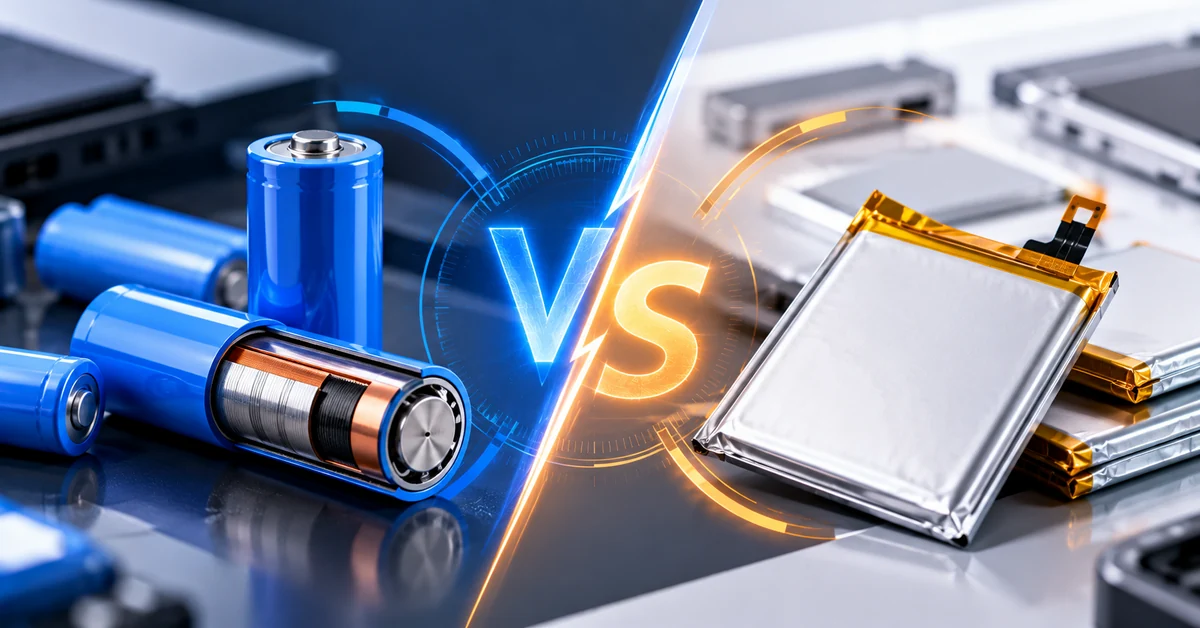
“Li-ion” is a broad rechargeable electrochemical family. “Lithium-polymer” may describe the electrolyte construction, but in everyday purchasing it often refers to a cell in flexible laminated pouch packaging. A pouch is a physical enclosure, not proof of one exclusive electrolyte or cathode formulation.
Lighting Global's technical overview and Battery University's lithium-polymer discussion both explain this terminology problem. Modern products marketed as LiPo can share important electrochemical characteristics with other lithium-ion cells. The label does not tell a buyer that two products have identical charging limits, discharge performance, cycle life, or safety characteristics.
Practical rule: do not approve a replacement because its listing says “same chemistry,” “LiPo upgrade,” or “equivalent Li-ion.” Approve the exact finished-battery configuration for the device and repair process.
2. Who Needs a Formal Compatibility Gate?
Repair chains need identical approval rules across branches so a local technician does not substitute an unqualified battery when a preferred SKU is out of stock.
Refurbishment factories need repeatable receiving inspection and installation records. A wrong battery can increase rework and lower first-pass yield across an entire production lot.
Wholesale distributors need accurate catalog mapping and separate stock records for battery variants that look alike. They also need a process for approving supplier-requested substitutions.
Private-label brands must ensure that a revised internal pack still matches their printed specifications, safety information, and warranty commitments.
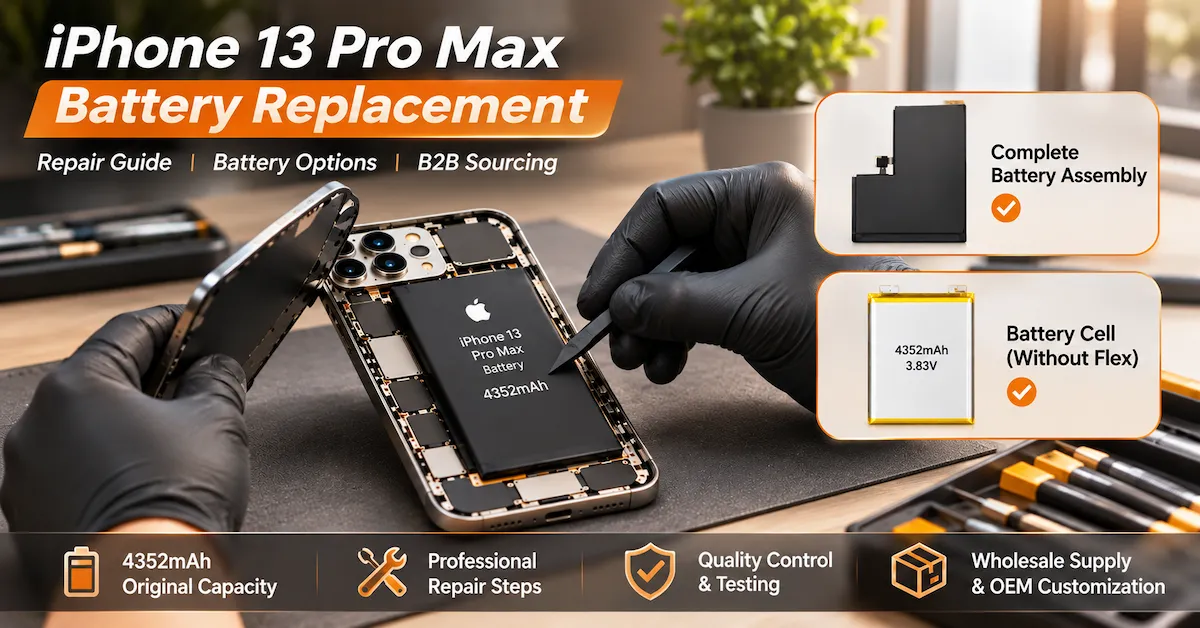
Cell-only products serve a narrower audience. ESC's iPhone battery cells without flex are intended for qualified professional repair workflows; they are not complete ready-to-install replacement batteries. A general repair shop without the appropriate skills and controls should not treat one as an interchangeable substitute.
3. Identify Every Battery at Four Separate Levels
The most effective way to prevent errors is to record four different layers instead of using one broad “battery type” field.
| Identification layer | Required buyer question | Why it matters |
|---|---|---|
| Rechargeable battery family | Is this a lithium-ion rechargeable product or something else? | Establishes the correct basic technology and transport review |
| Cell specification | Which approved cell designation, electrode/electrolyte system and electrical limits apply? | Distinguishes products hidden behind the same marketing label |
| Cell format | Is it pouch, cylindrical, rigid prismatic or another design? | Determines packaging, clearance, restraint and handling |
| Finished assembly | Which flex, connector, polarity, electronics, insulation and mechanical arrangement are supplied? | Determines whether the actual part can serve the target device |
Keep these fields in both the purchasing specification and the inventory master. A part number that describes the cell alone must not be silently assigned to a complete replacement assembly.
For a broad description of the underlying formats, ESC already publishes a LiPo and Li-ion battery selection guide. This article addresses the next step: controlling real substitutions in an aftermarket repair supply chain.
4. Build a Device-Specific Technical Approval Sheet
A buyer cannot compare batteries reliably when one quote gives only mAh and another supplies a complete drawing. Request the same fields for every proposed product and tie them to a dated specification revision.
| Approval field | What must be documented | Example of a stop condition |
|---|---|---|
| Device compatibility | Exact device model and applicable original part reference | Only a broad brand or series is named |
| Nominal voltage and charging limits | Published voltage and approved charge profile | Proposed limits differ from host requirements |
| Capacity and energy | Rated mAh/Ah, nominal Wh, test conditions | Claims cannot be compared on a consistent basis |
| Dimensions and tolerances | Length, width, thickness, shape, clearance | Interference, enclosure pressure or incorrect fit |
| Connection | Connector type, pinout, polarity, flex routing | Any unverified electrical or mechanical mismatch |
| Monitoring and protection | Supplied board, sensing and protection functions | Required electronics are missing or undocumented |
| Operating limits | Temperature and load conditions relevant to use | Proposed product is outside its qualified range |
| Identity and traceability | SKU, revision, cell/assembly lot and label | Material cannot be associated with approved evidence |
Capacity is not a compatibility test. Two cells rated at 3,000mAh may use different nominal voltages, charge ceilings, dimensions, connectors or protection architecture. Even two packs with the same calculated watt-hours can be incompatible.
Energy is approximately Wh = nominal volts × Ah. Use this only for comparing stated energy; it does not establish electrical interchangeability or measured runtime. Ask for the capacity test current, cutoff, temperature and sample definition instead of accepting a prominent mAh figure alone.
5. Separate the Cell From the Complete Replacement Battery
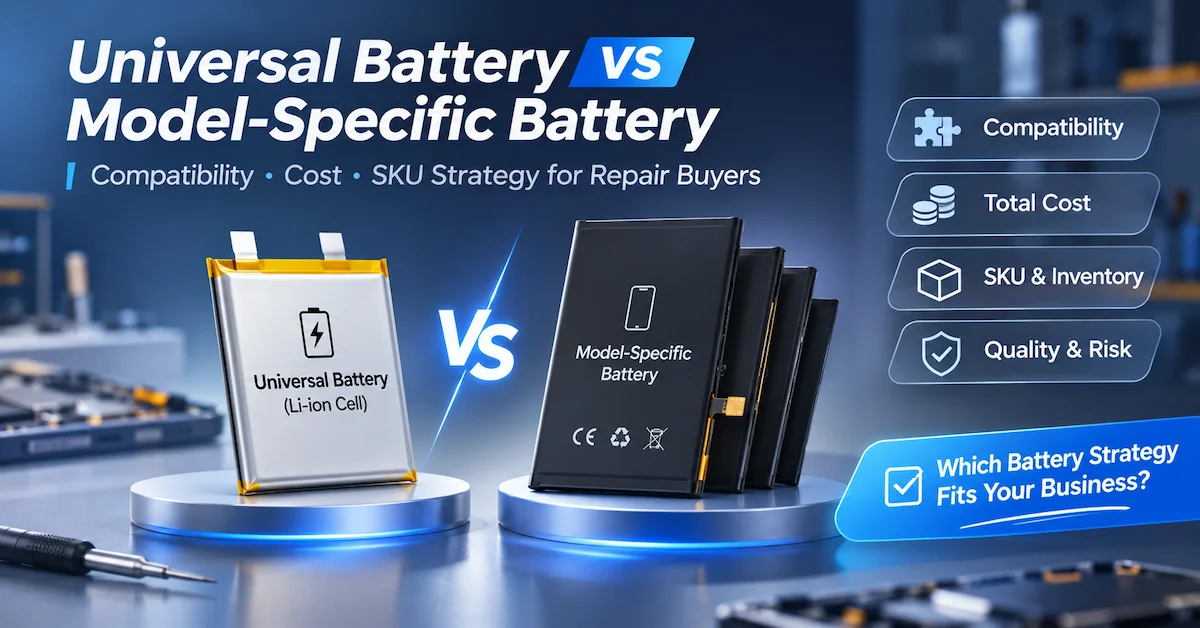
A finished smartphone battery can incorporate a pouch cell, welded connections, insulation, flex assembly, protection or monitoring electronics, and a device-specific connector. The exact construction depends on the product. The cell's chemistry name does not describe these other components.
This is particularly important when a supplier proposes a cheaper bare-cell alternative to a complete replacement battery. The quote might omit the electronics, connection hardware, assembly work, or validation that your normal repair process requires.
For complete original-capacity iPhone batteries, assess the finished assembly. For a cell-only purchase, assess the cell and the separate professional assembly workflow, including which components remain the responsibility of the buyer.
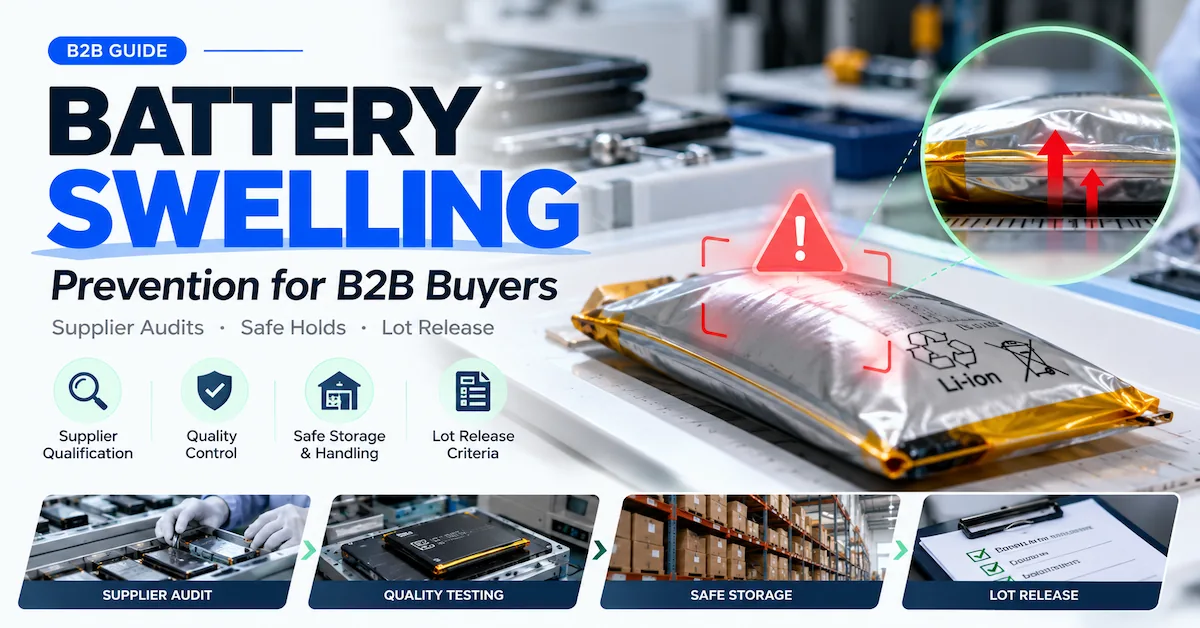
Mechanical fit is a release gate. Check not only nominal thickness but dimensional tolerances, adhesive placement, flex clearance and the condition of the device enclosure. Never force a pouch into a tight compartment or press an expanded battery back into shape. Visibly swollen, hot, leaking or damaged batteries must leave routine testing and follow a trained-personnel safety procedure.
6. A Six-Step Review for Proposed Battery Substitutions
Step 1 — Trigger a formal request. Require a substitution request whenever a supplier changes the battery model, cell, flex, protection electronics, connector, physical design or another controlled characteristic. A changed marketing name is not the only trigger.
Step 2 — Establish why the change is proposed. Record whether the cause is stock shortage, discontinued parts, revised manufacturing, alternate sourcing, improved specifications or a corrective action. This helps the buyer decide how urgently to qualify the new proposal.
Step 3 — Compare against the approved baseline. Use the technical sheet above. A favorable difference in one dimension—such as higher stated capacity—does not offset an unverified change in voltage, protection or mechanical fit.
Step 4 — Verify samples safely. Qualified staff should inspect intact samples, confirm dimensions and connections, and perform approved electrical and functional tests under controlled conditions. Do not conduct exploratory electrical testing on visibly damaged or swollen batteries.
Step 5 — Run a limited device-level pilot. Confirm correct installation and normal operation on representative target devices. Record charging behavior, unexpected shutdowns, relevant battery-information behavior and any rework. Distinguish component failures from pre-existing device defects.
Step 6 — Approve or reject by revision. The purchasing, engineering and quality owners should document which exact configuration is approved, any restrictions, and how incoming lots will be checked. Keep the previous SKU distinguishable; do not overwrite its history.
A substituted battery is approved only for the defined device and revision scope. It is not automatically approved for related phones, tablets or different software conditions.
7. Practical Comparison: Which “Equivalent” Offers Require Requalification?
The following examples are purchasing scenarios, not claims about actual ESC model equivalence.
| Supplier proposal | Can buyers treat it as a drop-in replacement? | Required decision |
|---|---|---|
| Same marketed “LiPo” label, different connector | No | Reject until exact compatibility is established |
| Same mAh, different voltage or charging limit | No | Engineering review; do not substitute by capacity |
| Same cell, but finished battery becomes cell-only | No | Separate product and professional process qualification |
| Same part reference, revised protection electronics | Not automatically | Change review and targeted device testing |
| Same approved configuration, cosmetic carton redesign | Possibly | Check label, traceability and agreed change rules |
| Pouch product replaced by cylindrical or rigid format | Not automatically | New packaging, device-fit and system qualification |
The key difference in lithium ion battery vs LiPo purchasing is not which term sounds more advanced. It is whether the actual pack is documented and approved for the target product.
8. Supplier Quality, Lot Release and Documentation
Supplier quality should be evaluated at the product level. ESC describes capacity, voltage, internal-resistance, aging and finished-product checks within its battery business. Buyers should request the relevant method and records for the quoted model rather than treat a general claim as proof of every unit's performance.
An effective supplier audit asks whether the company controls incoming materials, outgoing configuration, inspection equipment, product changes and defective-lot investigations. ESC's phone battery quality-control guide is useful background for distinguishing cell-only and finished-battery inspection responsibilities.
Incoming release should verify the order's model, version, packaging, lot identity and agreed inspection results. An unidentified carton or unauthorized alternate SKU should remain on hold. A safety concern requires a separate safety hold—not an ordinary commercial return.
IATA's 2026 battery guidance treats rechargeable lithium-ion batteries within regulated transport classifications; a product marketed as LiPo is not automatically outside those requirements. Buyers should verify the actual battery, shipment configuration and required documentation with qualified dangerous-goods personnel. UN38.3 transport test information is not a universal product safety certificate, and damaged or safety-defective cells cannot simply be sent by standard air courier.
9. Supply Continuity, MOQ and Lead-Time Planning
Repair businesses often need mixed-model inventory and stable replenishment. ESC's company profile describes support for wholesalers, repair chains, refurbishers and mixed-model purchases.
Nevertheless, an available substitute should not bypass technical approval because an order is urgent. Manage three independent dates: sample delivery, qualification completion and production shipment. Standard stock, customized labels and a newly approved battery configuration may have different lead times and minimum quantities.
Ask for a written confirmation of the exact SKU, forecast quantity, availability, approved specification version and change-notification procedure. A good supply plan maintains visibility into both procurement risk and compatibility risk.
10. Calculate the Cost of a Wrong-Part Substitution
A lower price per battery does not always reduce the cost per successful repair.
Total substitution cost = purchase price + incoming inspection + pilot testing + installation/rework + returns + inventory correction + warranty handling.
For example, a cheaper replacement may require additional technician time, generate failed first-pass inspections, or force relabeling of inventory. The buyer should measure actual results over a defined observation period rather than assume a particular chemistry label produces higher or lower returns.
Useful metrics include unauthorized-substitution incidents, wrong-SKU receipts, first-pass repair yield, confirmed battery-related claims, and average time to resolve a supplier deviation. Track by device model, pack revision and production lot. That evidence makes future supplier negotiations more meaningful.
11. OEM and Private-Label Battery Controls
Private-label purchasing adds an important identity layer: the customer-facing label must still match the actual internal battery configuration.
A branded carton should identify the appropriate compatible device, electrical rating, product reference, warnings and traceability information as required by the project and destination market. Printed “LiPo” or “Li-ion” text must not substitute for the full technical record.
ESC publishes OEM label, packaging and mixed-model supply options in its replacement battery range. Battery-specific customizations, quantities and available documents should be confirmed in the quotation. Broader charging-product customization is a separate service scope and should not be confused with universal cell-chemistry customization.
Establish signed sample and artwork approvals. If a component revision changes, determine whether its label, manual, shipping documents or customer claims must change before the next lot is released.
12. RFQ Checklist: Turn an Ambiguous Label Into a Purchasing Decision
When sourcing across smartphones, tablets and wearables, an RFQ should attach the exact device models and existing battery references. Include the complete-assembly requirement, proposed format, electrical and mechanical limits, connector and flex details, inspection plan, destination market, pilot quantity, annual forecast, packaging and warranty requirements.
Also ask the supplier directly: What does “LiPo” mean for this quoted SKU, and what changed from the previously approved battery? Request evidence identifying the version and the checks needed to approve it.
For model coverage, explore ESC's tablet and laptop batteries and wearable and audio device batteries alongside its smartphone range. The correct supplier response should map each model to its own compatible battery—not one interchangeable “lithium” category.
Request a model-specific quotation: send your existing SKU list, target devices, intended quantities and required technical evidence through the ESC contact page. Ask for samples and written confirmation before substituting any battery in a production repair program.
13. Frequently Asked Questions
1. Is LiPo a different chemistry from lithium-ion?
LiPo generally falls within the rechargeable lithium-ion family. Commercial terminology can emphasize polymer-containing electrolyte or pouch construction. The labels alone do not identify the exact cell materials or charge limits. Check the manufacturer's specification.
2. Can I replace a Li-ion phone battery with a LiPo battery of the same capacity?
Not on that basis alone. Capacity is only one parameter. The substitute must match the required device, voltage limits, connector, polarity, geometry, electronics and approved operating conditions. Qualified device-level verification is necessary.
3. Does a soft pouch mean the battery is always LiPo?
No. Pouch describes an enclosure. The term LiPo is often used for pouch products, but the cell chemistry and electrolyte description require manufacturer evidence. Do not infer them from appearance.
4. Is LiPo safer than a rigid lithium-ion battery?
No universal safety ranking follows from these names. Safety depends on cell design, construction, protection, charging, mechanical integration, manufacturing quality and handling. Both require appropriate controls; damaged or swollen batteries must not be used or charged.
5. Which battery type lasts longer in refurbished phones?
Neither label proves longer life. Compare qualified cycle-life evidence, capacity retention, test temperature, charge/discharge conditions and finished-pack reliability for the exact products. Field performance also depends on device use and installation conditions.
6. Why is a bare cell not interchangeable with a finished battery?
A bare cell may omit the flex, protection or monitoring electronics, connection hardware and assembly steps supplied with a complete battery. Only properly equipped professionals should evaluate a cell-only workflow and its additional responsibilities.
7. What is the most important field in a replacement battery SKU audit?
There is no single sufficient field. The audit must connect the exact device and battery reference to electrical limits, physical fit, connector/electronics configuration, approved revision and traceable lot. A correct model name with the wrong flex is still a mismatch.
8. Do LiPo batteries follow different international shipping rules?
A LiPo marketing label does not create an automatic exemption from lithium-ion transport requirements. Classification depends on the actual battery and whether it is shipped alone, packed with equipment or contained in equipment, together with mode and destination rules.
9. Can OEM packaging hide a cell or pack revision?
It should not. Private-label packaging must remain linked to the approved internal configuration. Suppliers and brand owners should agree on change notices, artwork revision, SKU identification and lot traceability so the finished label remains accurate.
10. What information should I send ESC to request samples?
Provide device and battery part numbers, target markets, whether you need a complete pack or a cell-only product, quantity, known voltage and connector requirements, and any existing approved sample or specification. Ask ESC to confirm the exact compatible SKU and available validation records.
Conclusion
The correct conclusion to lithium ion battery vs LiPo is not that one commercial label is universally superior. In repair and refurbishment purchasing, the important question is whether the proposed battery is an approved, traceable and electrically and mechanically compatible replacement for a defined device.
Separate chemistry, cell format and finished-assembly identity. Then check voltage limits, capacity method, connector, protection electronics, dimensions, safe handling and lot records before approving any substitution. This prevents an attractive marketing description from turning into production rework or unsupported customer promises.
ESC's replacement battery catalog provides starting points for smartphones, tablets, laptops and portable electronics. For a mixed-model wholesale program, contact ESC with your target-device list and technical requirements to discuss product identification, samples, documentation and order-specific terms.