
What Should Buyers Expect From an OEM Electronics Manufacturer in China?
An overseas buyer searching this keyword usually has a specific commercial problem.
They may already have a brand but need a factory.
They may have an existing product line but want better customization.
They may be adding replacement batteries, fast-charging power banks or private-label electronics without building their own manufacturing operation.
Whatever the situation, price is only one part of the decision.
A useful OEM supplier should be able to answer practical questions before an order is placed:
- What products does the factory actually specialize in?
- Can it support samples before mass production?
- What is the MOQ per SKU?
- Can different models be combined?
- What parts of the product can be customized?
- How is quality checked?
- Can labels, barcodes and packaging be controlled by SKU?
- Which documents are available for the exact product?
- How are repeat orders kept consistent?
- What happens if a batch has quality claims?
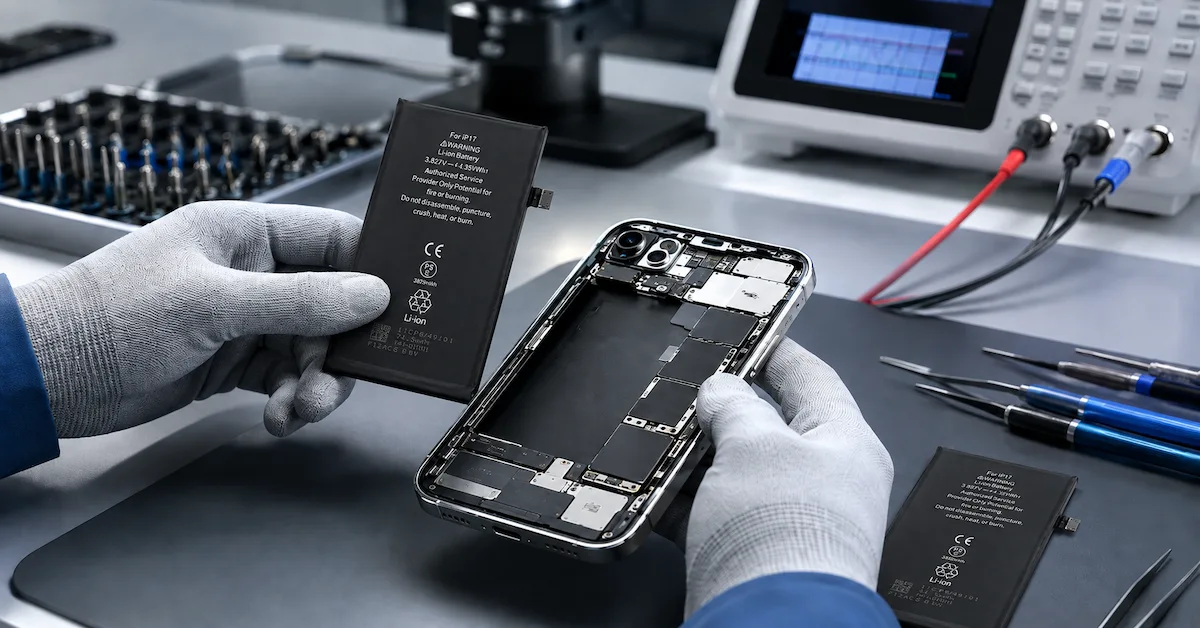
For ESC, the relevant manufacturing scope is replacement batteries and fast-charging products rather than every type of electronics.
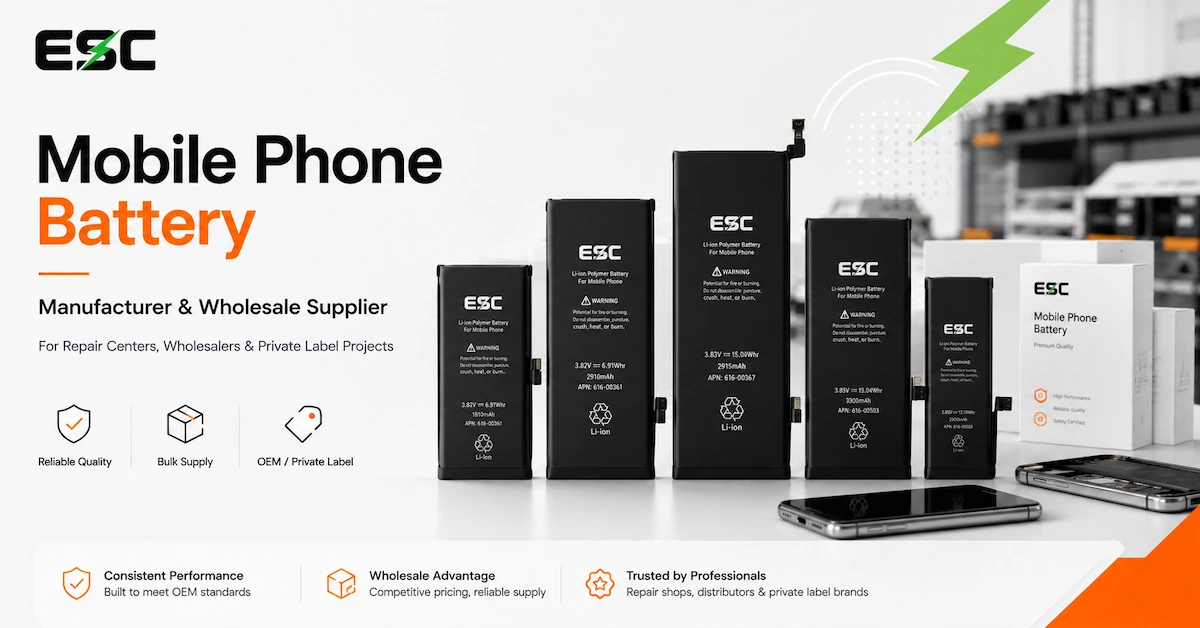
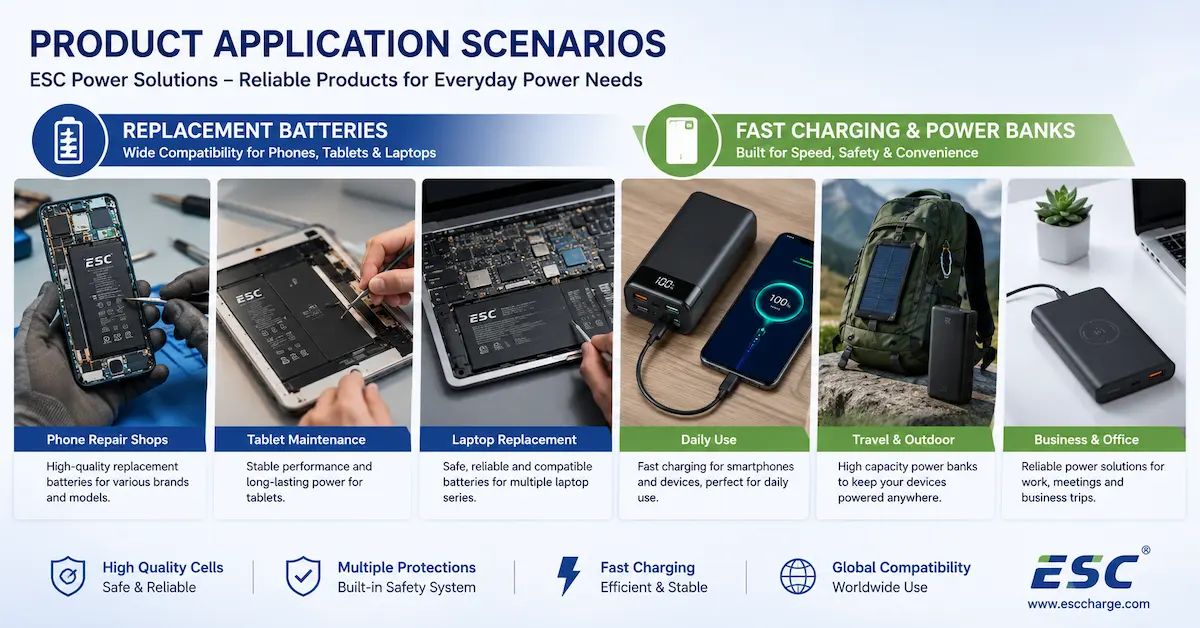
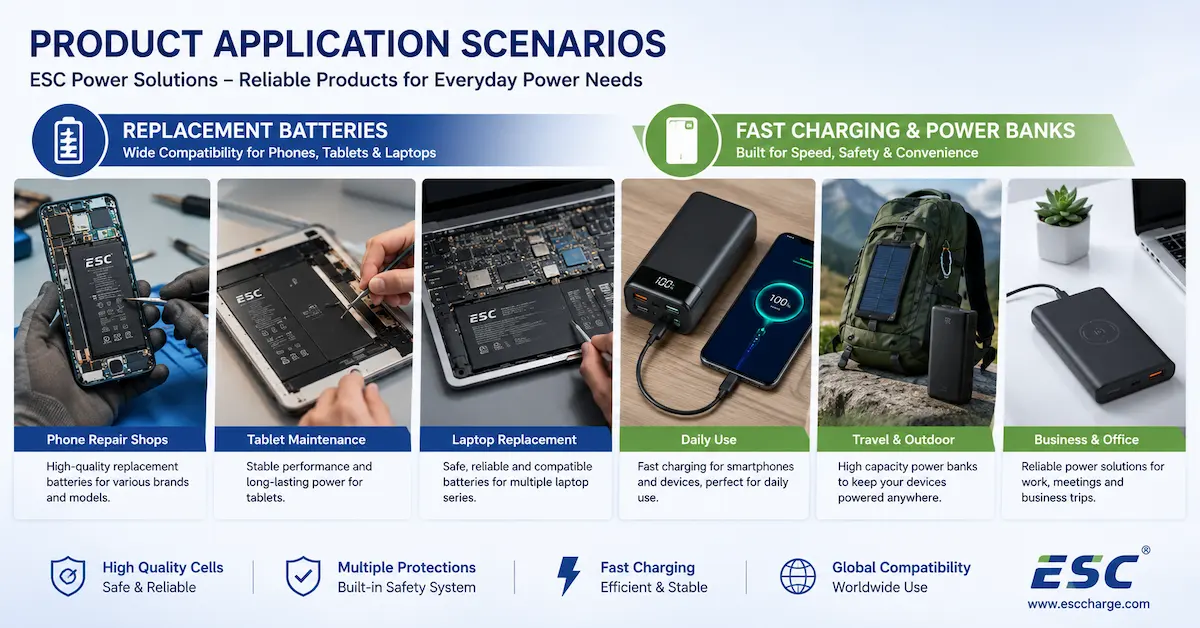
ESC currently focuses on replacement batteries for smartphones, tablets and laptops, together with fast-charging and wireless power bank products. The company states that it supports more than 3,000 battery models, flexible MOQ, mixed-model purchasing and OEM/ODM customization.
That specialization is important.
A supplier that understands your category deeply is often more useful than a factory that claims it can manufacture almost anything.
Is ESC the Right Type of OEM Electronics Manufacturer for Your Project?
Not every buyer searching this keyword needs the same type of factory.
ESC Is a Better Fit If You Need
- replacement phone batteries;
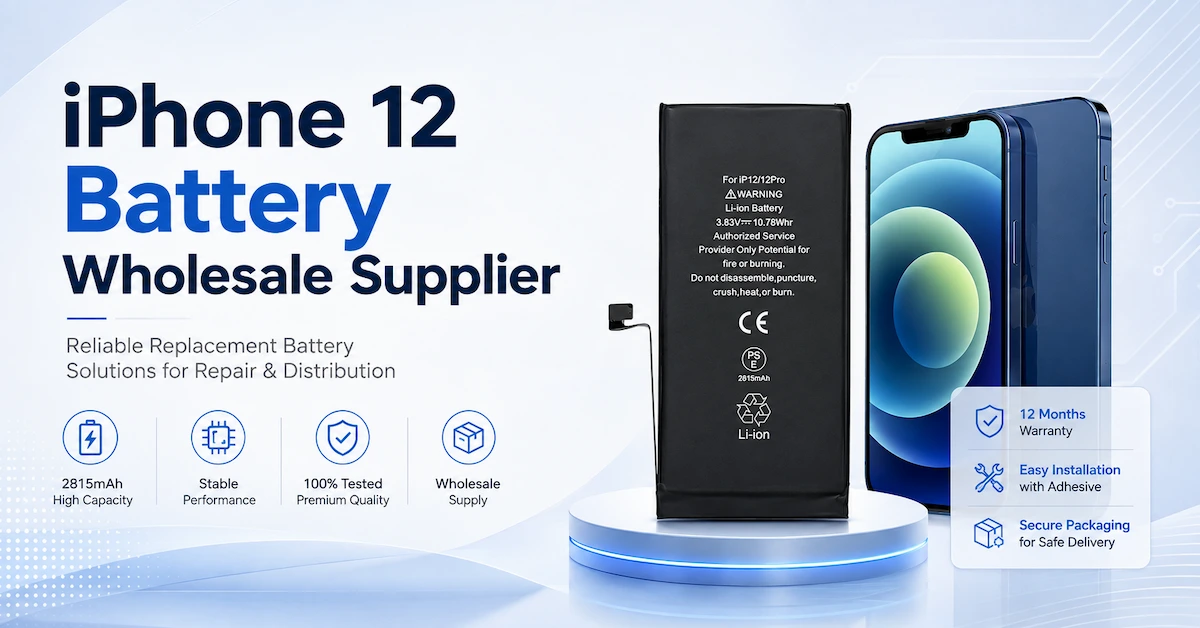
- iPhone replacement batteries;
- Android replacement batteries;
- tablet or laptop batteries;
- private-label battery products;
- fast-charging power banks;
- wireless power banks;
- SKD power bank programs;
- branded packaging;
- custom labels and barcodes;
- mixed-model wholesale programs.
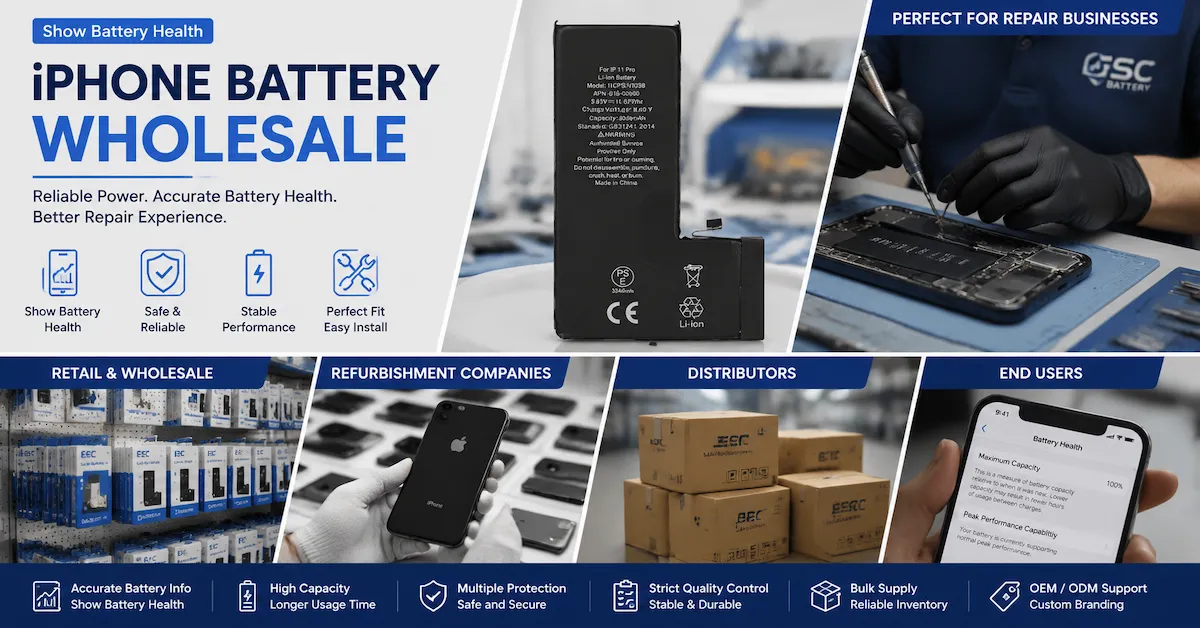
ESC states that its current B2B customers include wholesalers, private-label brands, refurbishers, repair chains, premium e-commerce sellers and retailers.
ESC May Not Be the Right Fit If You Need
If your project is an unrelated industrial control board, medical monitor, automotive ECU or highly specialized IoT PCBA with no connection to batteries or charging products, ESC's current published product scope may not be the right match.
That distinction matters.
A buyer should not choose an OEM supplier because the website uses the word “OEM.” The supplier's proven product scope should match the product you actually want to sell.
Why Product Specialization Matters More Than a Generic “One-Stop Factory” Claim
“Fully customized.”
“One-stop solution.”
“Everything is possible.”
These phrases appear on many factory websites, but they tell a procurement manager very little.
A more useful supplier conversation starts with specific questions.
For a phone battery project:
- Which models are available?
- What capacity options are offered?
- What battery structure is supplied?
- Are mixed-model orders possible?
- Can the exact SKU receive a custom label?
- Can barcode data be different for each model?
- How is batch consistency checked?
For a power bank project:
- What charging protocols are supported?
- What output power is required?
- What cell configuration is used?
- Is thermal performance validated?
- Is the housing public mold or private mold?
- Does the buyer need finished goods or SKD?
ESC describes its fast-charging product work as covering private-mold design, protocol compatibility, power distribution and thermal-performance testing. It also offers SKD power bank support that can include PCBA, charging modules, battery cells, housings, displays and other components.
These details are far more useful than a generic factory introduction.
Who Usually Works With a China OEM Electronics Supplier?
Private-Label Brands
A brand may already know what it wants to sell but does not want to operate manufacturing internally.
Typical requirements include:
- product branding;
- custom labels;
- retail packaging;
- barcodes;
- market-specific product information;
- repeat production.
Mobile Parts Wholesalers
Wholesalers often need dozens or hundreds of SKUs rather than one product.
Their concern is not just MOQ.
They need:
- mixed-model ordering;
- clear SKU identification;
- predictable replenishment;
- warehouse-friendly packaging;
- low claim rates.
Repair Chains
Repair chains care about the technician experience.
A battery that saves a few cents but creates additional return visits is rarely the cheaper option.
Refurbishment Companies
Refurbishers may consume large quantities across changing model mixes.
They normally value:
- capacity consistency;
- stable fitment;
- batch traceability;
- flexible model quantities.
Charging-Product Brands
Power bank brands may need more product-development support than a straightforward replacement battery project.
Their priorities may include:
- charging protocol compatibility;
- housing design;
- power distribution;
- thermal performance;
- private-mold differentiation.
OEM vs Private Label vs ODM: Which Model Do You Actually Need?
These terms are often mixed together in sourcing conversations.
| Model | Typical Buyer Requirement | Level of Customization | Best For |
|---|---|---|---|
| Standard Wholesale | Existing factory product | Low | Distributors testing demand |
| Private Label | Existing product under buyer brand | Medium | New brands and wholesalers |
| OEM | Product made to agreed buyer requirements | Medium to High | Established B2B brands |
| ODM | Supplier contributes product/design development | High | Brands needing development support |
| SKD | Components supplied for local assembly | Project dependent | Regional assembly programs |
A buyer asking for only a custom logo probably does not need a full engineering-heavy ODM project.
Likewise, a buyer wanting a new housing, charging architecture or structural design should not expect private-label pricing.
Defining the cooperation model early prevents quotation confusion.
What Information Should You Send Before Asking for a Price?
One of the fastest ways to receive a poor quotation is to send:
“Need OEM electronics. Best price?”
A factory cannot accurately quote a project that has not been defined.
A better first RFQ includes:
| RFQ Item | Information to Send |
|---|---|
| Product | Phone battery / power bank / charging product |
| Models | Exact SKU or device list |
| Quantity | Quantity per SKU |
| Total Volume | Trial order + estimated repeat volume |
| Specification | Capacity / power / voltage / protocol |
| Branding | Logo and label requirements |
| Barcode | EAN / UPC / internal SKU requirements |
| Packaging | Neutral / private label / custom |
| Target Market | Country or sales region |
| Samples | Number required |
| Documents | Market or shipping requirements |
| Delivery | Target date |
This does something important.
It changes the conversation from:
“How cheap can you make it?”
to:
“Can you manufacture this project correctly?”
That is a much better starting point for an OEM relationship.
How Does a Phone Battery OEM Project Usually Start?
A battery project should not begin with printing boxes.
It should begin with the battery.
Step 1: Model List
The buyer defines which device models are required.
For example:
- iPhone models;
- Samsung models;
- Xiaomi models;
- OPPO models;
- Vivo models.
ESC's mobile phone battery category currently covers major smartphone brands and is positioned for repair centers, refurbishers, wholesalers, distributors and private-label buyers.
Step 2: Product Specification
For every SKU, confirm:
- compatible model;
- battery reference;
- rated capacity;
- nominal voltage;
- flex configuration;
- connector;
- product type.
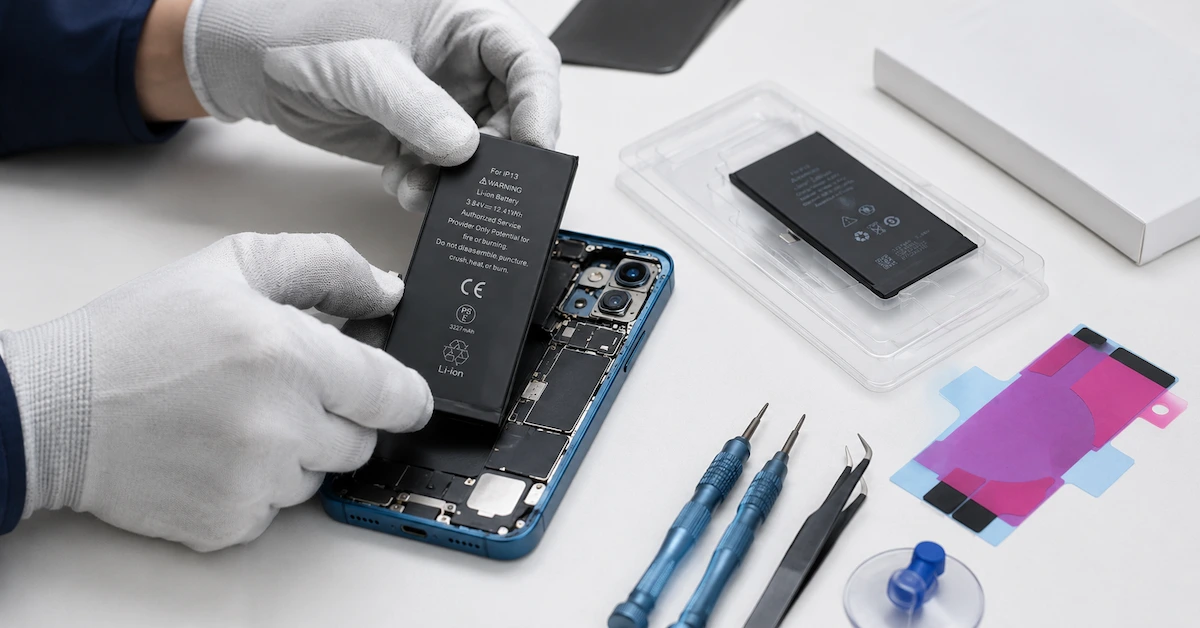
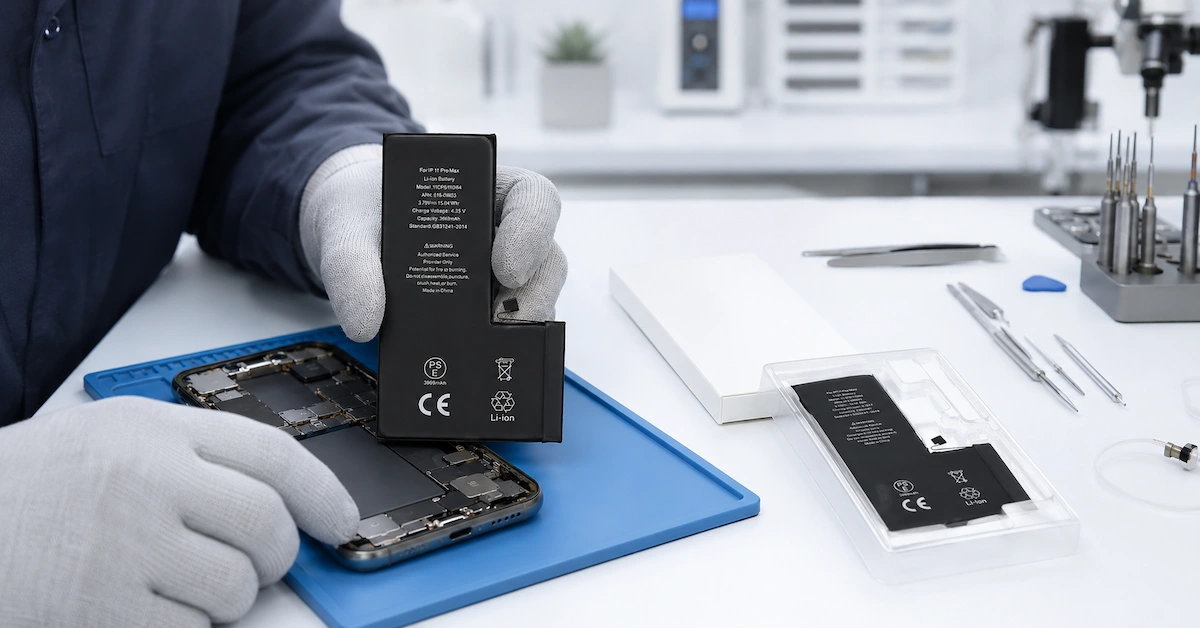
Step 3: Sample Testing
Do not approve a model based only on a product photo.
Test:
- fitment;
- voltage;
- capacity;
- internal resistance;
- charging;
- discharge;
- device installation;
- flex and connector quality.
Step 4: OEM Artwork
Only after the product is accepted should final labels and packaging be confirmed.
Step 5: Trial Order
A smaller first production order gives the buyer real data on:
- installation;
- sell-through;
- customer feedback;
- return rate.
Step 6: Repeat Order
Once the SKU is proven, increase volume rather than treating the first order as a permanent purchasing forecast.
Why Barcode Packaging Matters More Than Many New Brands Expect
When a brand carries three products, warehouse management is simple.
When it carries 100 battery SKUs, it is not.
A similar black battery package can represent:
- a different phone model;
- a different capacity;
- a different connector;
- a different production batch;
- a different market.
This is where custom barcode phone battery packaging becomes commercially useful.
A barcode can help connect the physical product to:
- internal SKU;
- device compatibility;
- warehouse location;
- purchasing record;
- batch data;
- sales channel;
- warranty record.
For wholesalers, this is not a cosmetic feature.
It is part of inventory control.
ESC's existing phone battery OEM content lists barcode labels as one of the available private-label packaging options, together with retail boxes, instruction materials, warranty cards and shipping cartons.
What Should Private Label Phone Battery Packaging Include?
Good private label phone battery packaging should answer the questions a warehouse worker, reseller or technician will actually have.
At minimum, consider:
- brand name;
- compatible phone model;
- product SKU;
- capacity;
- barcode;
- warranty information;
- handling information;
- batch or traceability reference where applicable.
The purpose is clarity.
If two battery boxes look almost identical and the model number is printed in 6-point text at the bottom, someone will eventually pick the wrong one.
Packaging should reduce that risk.
How Do You Choose an OEM Phone Battery Packaging Supplier?
When comparing an OEM phone battery packaging supplier, do not separate the box from the battery project.
The supplier needs to coordinate:
battery SKU → label → barcode → retail box → inner packing → carton marking
If those elements are managed separately, mismatches are easier to create.
Ask:
- Who verifies the barcode before printing?
- Is the barcode linked to a specific SKU?
- Can artwork be approved digitally before production?
- Can multiple battery models use a common branded packaging system?
- Are carton labels different for each SKU?
- Can small-volume SKUs use a flexible packaging solution?
This is especially important for mixed-model orders.
What Does Phone Battery Custom Label OEM Actually Involve?
A phone battery custom label OEM project may sound simple, but the label can contain several pieces of commercial and technical information.
Possible fields include:
- buyer brand;
- device reference;
- capacity;
- voltage;
- warnings;
- product code;
- barcode;
- production information;
- traceability code.
ESC's current battery pages show examples of custom labels, barcode labels, warranty cards and export-carton markings as available OEM options.
The practical rule is simple:
Approve the battery specification before approving the label.
A beautifully printed label does not correct the wrong model or inaccurate specification.
When Does Wholesale Phone Battery With Barcode Make Sense?
A wholesale phone battery with barcode program is especially useful for:
- regional distributors;
- repair-parts wholesalers;
- chain repair businesses;
- e-commerce sellers;
- private-label brands.
The benefit becomes larger as SKU count grows.
A distributor might use one numbering system:
BAT-IP13-3227
for its own warehouse while also adding an EAN or UPC barcode required by the retail channel.
That allows the same product to work in both internal inventory and external sales systems.
Before production, confirm:
- barcode type;
- number source;
- printing size;
- placement;
- scan readability;
- SKU mapping.
Do not leave barcode information until the final packing day.
How Does ESC Handle Battery Quality Control?
OEM packaging should come after product quality, not before it.
ESC states that its battery quality-control process includes:
- incoming material inspection;
- cell grading;
- capacity testing;
- BMS inspection;
- charging and discharging tests;
- aging tests;
- final shipment inspection.
These steps are relevant because a replacement battery can fail in several different ways.
Capacity Risk
The printed capacity does not automatically prove measured capacity.
Internal Resistance Variation
Large variation can indicate inconsistent cell batches.
BMS or Protection Issues
Battery electronics need to function correctly together with the cell.
Mechanical Problems
Flex position, connector quality and dimensions influence installation.
Early Failure
Aging inspection helps identify some problems before shipment.
A B2B buyer should convert factory QC statements into its own acceptance requirements.
Ask for the exact test criteria applicable to your SKU.
Sample Quality Is Not Batch Quality
This deserves its own section because it causes many sourcing problems.
A factory sends three excellent samples.
The buyer orders 2,000 pieces.
The assumption is:
“The production order will be exactly the same.”
That assumption should be verified, not trusted blindly.
A better purchasing process is:
sample approval → written specification → pilot batch → incoming inspection → repeat-order comparison
Keep the approved sample data.
For example:
| Check | Sample | Production Batch |
|---|---|---|
| Capacity | Record result | Compare sample group |
| Voltage | Record | Compare |
| Internal Resistance | Record | Compare |
| Dimensions | Approve | Recheck |
| Flex / Connector | Approve | Recheck |
| Label | Approve artwork | Confirm |
| Barcode | Scan test | Random scan |
| Packaging | Approve | Confirm |
This gives both buyer and supplier a common reference if a dispute appears later.
Flexible MOQ vs Large MOQ: Which Is Better?
Neither is automatically better.
A mature distributor purchasing 20,000 pieces of one fast-moving model should negotiate volume economics.
A new brand entering a market should protect cash.
ESC states that it supports flexible MOQs and mixed-model orders, which is particularly relevant for wholesalers and growing private-label brands carrying many battery models.
Low or Flexible MOQ Is Useful When
- launching a new brand;
- entering a new country;
- testing unfamiliar SKUs;
- adding Android models;
- changing packaging;
- qualifying a new supplier.
Higher Volume Is Useful When
- demand is proven;
- forecasts are reliable;
- the product specification is stable;
- the buyer wants lower unit cost;
- packaging consumption is predictable.
The best MOQ is not the smallest number a factory will accept.
It is the quantity that matches the buyer's level of certainty.
How Should Buyers Compare Two OEM Electronics Manufacturers in China?
A structured scorecard is more useful than comparing PDFs with different formats.
| Factor | Suggested Weight |
|---|---|
| Product Specialization | 15% |
| Sample Results | 15% |
| Quality Control | 20% |
| MOQ / SKU Flexibility | 10% |
| OEM Customization | 10% |
| Packaging / Barcode Control | 10% |
| Lead Time | 5% |
| Documentation | 5% |
| Claim Handling | 5% |
| Communication | 5% |
Why put QC above price?
Because the cheapest quote can become the most expensive supplier after:
- returns;
- technician rework;
- warranty replacement;
- customer support;
- repacking;
- lost sales.
Professional buyers should look at:
Total Procurement Cost = Product + QC + Rework + Claims + Logistics + Inventory Risk
That figure is much closer to the real cost of the supplier relationship.
What OEM Customization Is Worth Paying For?
Customization only has value if it solves a business problem.
Brand Label
Useful for brand recognition.
Barcode
Useful for SKU control and warehouse systems.
Shared Packaging Platform
Useful for reducing packaging inventory across many models.
Model-Specific Packaging
Useful once sales volume justifies it.
Warranty Card
Useful for standardizing claims.
Custom Product Specification
Useful when the target market genuinely needs a different specification.
Avoid customization simply because the factory can do it.
Every additional custom item creates another point that must be approved, purchased and controlled.
What About Fast-Charging and Power Bank OEM Projects?
An OEM project can require a different development process when the product contains charging electronics.
Compared with straightforward private-label battery packaging, buyers may need to define:
- input power;
- output power;
- USB-C configuration;
- charging protocol;
- wireless charging;
- port allocation;
- thermal limits;
- battery-cell configuration;
- display;
- housing;
- cable;
- packaging.
ESC states that its power bank development covers mainstream fast-charging protocols, intelligent power distribution and thermal-performance testing. It also supports product appearance, structural development and private-mold projects.
For SKD programs, the scope may include PCBA solutions, charging modules, cells, housings, displays and cables.
That is a different sourcing conversation from simply printing a logo on a finished battery.
What Should Buyers Confirm About Compliance and Shipping?
Compliance should be discussed by product and destination.
ESC states that individual iPhone battery models have CE certification, with RoHS, FCC, MSDS and UN38.3 documentation available for applicable products.
For lithium batteries, transport requirements deserve particular attention.
The UNECE Manual of Tests and Criteria includes subsection 38.3 covering lithium cells and batteries.
The practical purchasing lesson is:
Do not ask:
“Do you have UN38.3?”
Ask:
“Please confirm which UN38.3 documentation applies to these exact SKUs and this shipment.”
A document from one product should not automatically be assumed to cover another product.
The same principle applies to other market and transport documents.
How Long Should an OEM Project Take?
There is no useful universal lead time.
A standard product with a custom sticker is different from:
- a new retail box;
- a multi-SKU barcode project;
- a custom power bank;
- a private-mold product.
ESC currently states that standard replacement battery orders can normally be completed within seven days, depending on model availability, quantity and customization.
For an OEM project, ask for three separate schedules:
Sample Lead Time
When will the sample ship?
Production Lead Time
When will the approved goods be completed?
Transport Lead Time
When will the goods reach the target market?
Combining all three into “delivery time” creates unnecessary misunderstandings.
What Should You Ask Before Paying a Deposit?
A good supplier discussion should reach clear answers on these points:
- What exact product configuration are we buying?
- What is the MOQ per SKU?
- Can models be combined?
- What sample tests should we complete?
- What is the factory QC process?
- What OEM changes are included in the quotation?
- Who provides the barcode numbers?
- How will SKU and barcode accuracy be checked?
- Which documents apply to the exact products?
- What is the production lead time?
- What does the warranty cover?
- How are quality claims handled?
If the answers remain vague, a cheap quotation is not yet a good quotation.
Why Consider ESC for a Specialized OEM Electronics Project?
ESC is better understood as a specialized B2B supplier for replacement batteries and fast-charging products rather than a generic factory for every electronics category.
Its current published capabilities include:
- replacement batteries for smartphones, tablets and laptops;
- more than 3,000 battery models;
- flexible MOQ;
- mixed-model orders;
- battery QC including cell grading, capacity, BMS and aging checks;
- logo and packaging customization;
- private-label support;
- fast-charging power banks;
- private-mold product development;
- SKD power bank solutions.
For a buyer in these categories, that specialization can simplify sourcing.
Instead of qualifying one battery supplier, another packaging company, another charging-product vendor and a separate component partner, the buyer can first determine how much of the program can be consolidated.
The correct next step is still not:
“Send cheapest price.”
It is:
“Here is our product list, quantity, target market, specification and branding requirement. Please confirm what you can manufacture and quote.”
That is the type of inquiry that moves faster toward a real project.
FAQ About OEM Electronics Manufacturers in China
What does an OEM electronics manufacturer in China do?
An OEM electronics manufacturer produces products according to agreed buyer requirements. Depending on the supplier, the scope may include existing-product customization, private labeling, packaging, product development, testing and mass production.
The exact service scope should always be confirmed.
Is ESC a general electronics OEM factory?
ESC's current published focus is replacement batteries and fast-charging products. Buyers with phone battery, tablet/laptop battery, power bank or related charging projects are more aligned with its existing product scope.
Can ESC support private-label phone batteries?
Yes. ESC publishes OEM/ODM support for labels, packaging and private-label battery projects, subject to the exact model and order requirements.
Can I order custom barcode phone battery packaging?
Barcode labels are included among the customization options shown in ESC's current battery OEM content and product pages. Buyers should provide or confirm barcode and SKU requirements during artwork approval.
What should private label phone battery packaging include?
Useful information includes the brand, compatible model, capacity, SKU, barcode and applicable warranty or handling information.
The final content should match the actual product specification and destination requirements.
Can I order wholesale phone battery with barcode for multiple models?
ESC supports mixed-model battery purchasing, and its battery pages show barcode/SKU customization options. Final minimum quantities should be confirmed based on the model list and packaging project.
What should I test before approving an OEM battery?
Test several samples for capacity, voltage, internal resistance, charging, discharge, physical fitment, flex/connector quality and device installation.
Do not approve mass production from product photos alone.
Does ESC support low MOQ OEM orders?
ESC states that flexible MOQ and mixed-model orders are available for wholesalers, repair chains, refurbishers and private-label brands. Exact MOQ depends on the model and customization.
How do I compare OEM electronics manufacturers in China?
Compare product specialization, sample results, QC, MOQ, customization, packaging control, lead time, documentation, warranty and communication.
Do not use unit price as the only comparison factor.
What should I send to get an accurate OEM quote?
Prepare:
product type + exact models + quantity per SKU + specification + target market + logo + barcode + packaging + sample + documentation + delivery requirements
That gives the supplier enough information to prepare a project-specific quotation.
Conclusion: Choose an OEM Electronics Manufacturer China Partner That Fits Your Product
Finding an OEM partner is not difficult.
Finding one that matches your actual product, quality expectations and commercial model takes more work.
For replacement batteries and fast-charging products, buyers should evaluate:
product specialization + sample validation + batch QC + flexible MOQ + mixed-model supply + private labeling + barcode packaging + delivery + documentation + after-sales handling
A buyer launching ten battery models needs a different supply strategy from a company ordering 20,000 pieces of one SKU.
A private-label battery project needs a different workflow from a new fast-charging power bank development.
The supplier should understand those differences.
ESC's current product scope is built around replacement batteries, fast-charging products, OEM/private-label customization and flexible B2B supply.
If your project fits that scope, prepare your model list, quantity per SKU, target market, packaging format and barcode requirements before requesting a quotation.
That gives both sides enough information to discuss a real manufacturing program rather than exchanging another generic price list.
CTA: Send ESC your product list and OEM requirements to request a project-specific quotation, sample plan and packaging proposal.