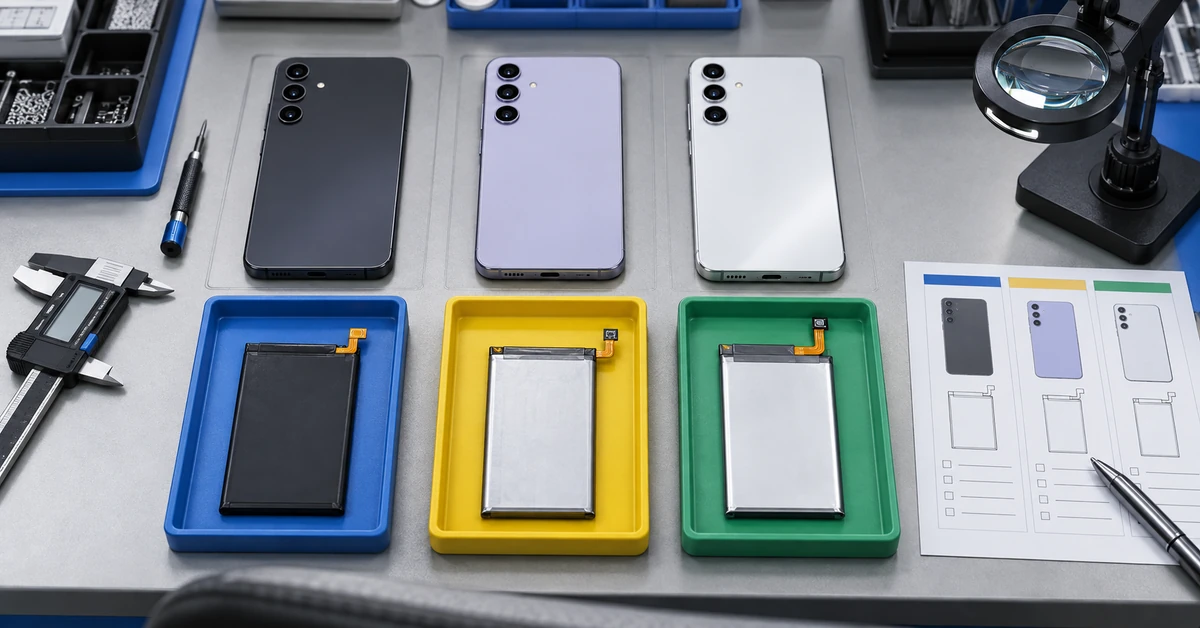

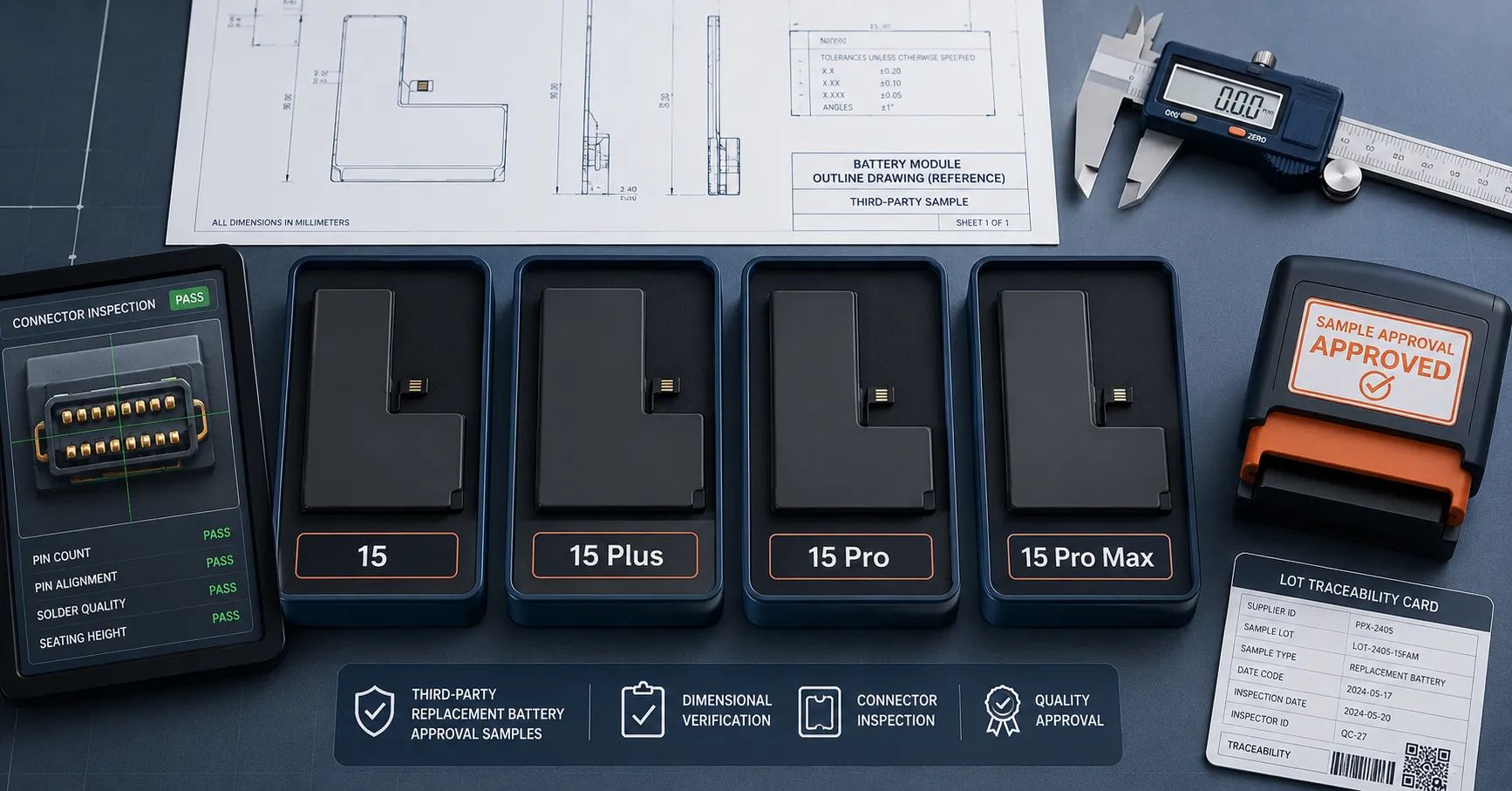
Every iPhone 15 series replacement battery should be approved against one exact device model and one controlled battery revision. iPhone 15, iPhone 15 Plus, iPhone 15 Pro and iPhone 15 Pro Max are separate procurement SKUs. Similar family names, appearance or connector location do not establish interchangeability.
For repair chains, refurbishers, wholesalers and private-label buyers, compatibility means more than powering on. The approved sample must match the device identity, drawing, dimensions, flex and connector interface, insulation and installation envelope. It must also complete the buyer's defined charging, runtime, system-observation and safety checks. The supplier should then reproduce that exact configuration through pilot and production lots.
Separate the Four Models Before Quotation
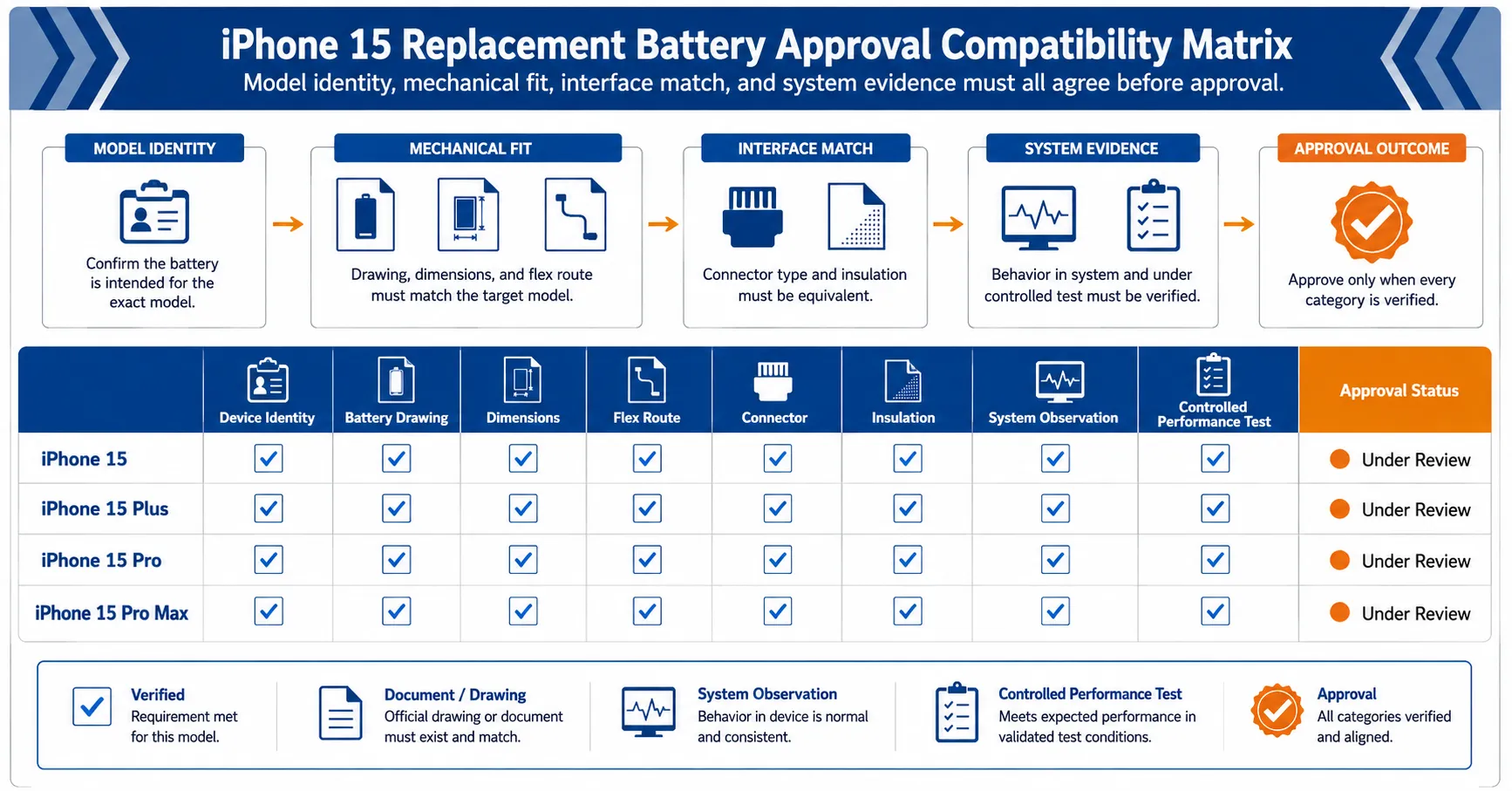
| Device family entry | Required buyer evidence | Control rule |
|---|---|---|
| iPhone 15 | Exact device identifier, battery SKU, drawing revision and validated sample record | Do not substitute the Plus or either Pro-family assembly |
| iPhone 15 Plus | Separate dimensions, flex route, connector position, fit and functional evidence | Do not infer approval from the base model |
| iPhone 15 Pro | Pro-model device identity, assembly revision and full approval record | Do not group with iPhone 15 by screen-size assumptions |
| iPhone 15 Pro Max | Dedicated SKU, drawing, sample, device test and production reference | A Pro Max query does not approve another 15-series battery |
Record the phone's commercial model name, model identifier and other identifiers permitted by the service workflow. Photograph or scan the received battery label and packaging. Map the device, battery SKU, cell or assembly revision, supplier lot and approval report in one controlled record. Avoid a warehouse description such as “15 series battery,” because it hides four different release decisions.
Verify Battery Identity Before Measuring Performance
Identity screening prevents a wrong part from producing misleading test results. Check the supplier part number, intended device model, drawing revision, production lot, label version and packaging unit. If a distributor changes the private-label code, retain a cross-reference to the manufacturer's traceable assembly code.
An iPhone 15 replacement battery supplied by a third party must not be described as Apple genuine, Apple-authorized or an original Apple part. Commercial documents and listings should state the actual product identity. Compatibility must be confirmed by device model and battery specification.
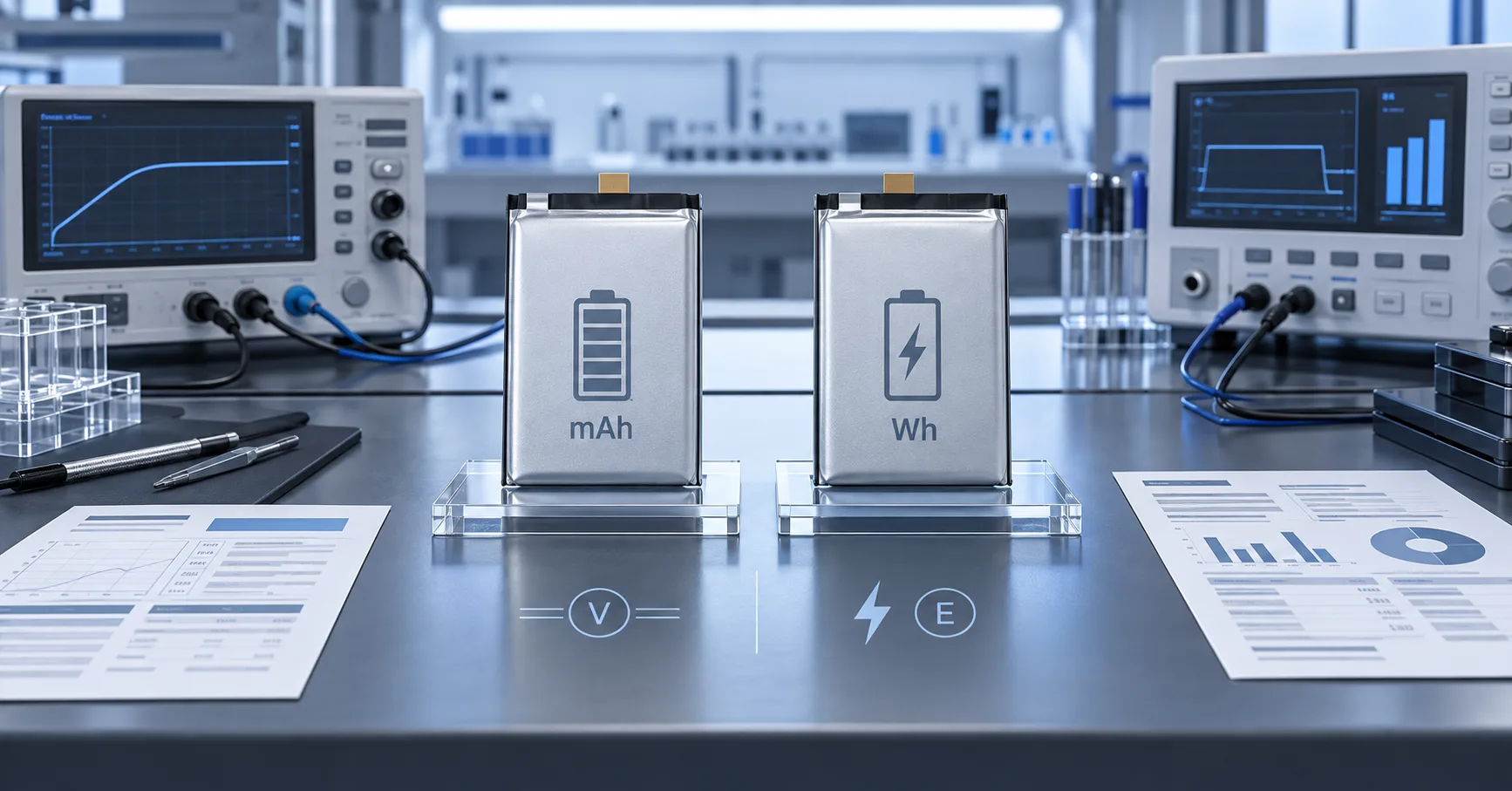
Do not treat printed capacity as identity. Two assemblies can show the same nominal capacity category while differing in dimensions, protection electronics, flex geometry, connector or data behavior. Capacity claims require verification for the specific model and test method; they do not replace fit and interface approval.
Control Dimensions, Flex Routing and Connector Fit
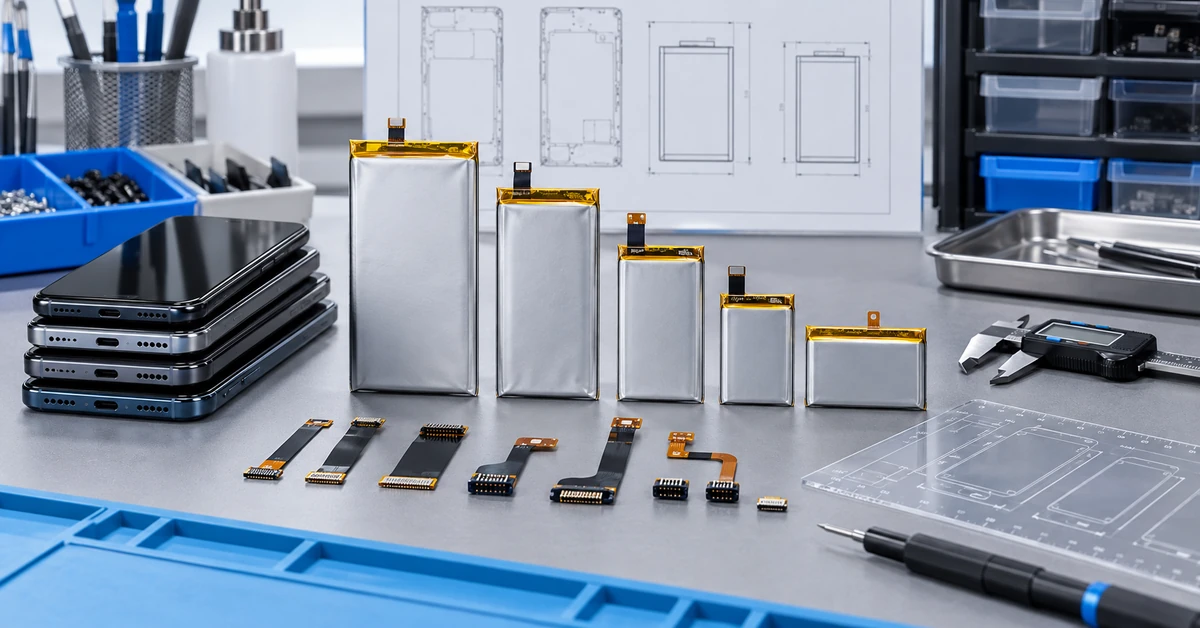
Approve the supplier drawing before approving a physical sample. The drawing should define the battery envelope and the inspection points needed by the buyer, including relevant thickness zones, tab or flex location, connector position, cable path, insulation, adhesive area and allowable tolerances. Use calibrated equipment and a written method; do not compress a live pouch to force a dimension.
The installed stack matters. A battery can fit an open enclosure yet create pressure, pinching or connector strain after the device is closed. Inspect flex routing, bend areas, connector alignment, retention, insulation coverage and clearance from nearby parts under an approved service procedure. A connector that mates physically can still have the wrong electrical assignment or mechanical height.
The published mobile phone battery incoming-inspection guide provides the wider receiving framework. For iPhone 15 battery compatibility, maintain model-specific gauges, drawings or approved references so that one model's acceptance result is not copied to the other three.
Define What a Replacement Kit Includes
The keyword iphone 15 pro max battery replacement kit can describe very different commercial packages. In a B2B RFQ, list every included item instead of assuming a standard kit. The battery assembly, adhesive, packaging, labels, tools, instructions and other accessories should each be identified by scope and revision.
| Kit element | Approval question | Common sourcing risk |
|---|---|---|
| Battery assembly | Does it match the approved Pro Max model and revision? | A generic family label hides the actual SKU |
| Adhesive or installation consumable | Is its identity, shape, storage and application scope controlled? | An unapproved consumable changes fit or rework conditions |
| Tools | Are they required by the buyer's professional workflow and separately inspected? | Low-value tools are included without suitability evidence |
| Instructions | Are they written for the intended trained audience, language and market? | Consumer-style steps imply unsupported or unsafe self-repair |
| Packaging and label | Do they preserve identity, protection and traceability? | Accessories move or damage the battery during distribution |
A battery-only SKU may be preferable for repair networks that already control professional tools and approved consumables. A bundled kit may help a distribution program only when every component has a purpose, specification and replenishment plan. Do not allow the kit name to broaden the battery compatibility claim.
Plan Installation Through Qualified Service Procedures
This sourcing guide does not provide disassembly or installation instructions. Apple states that Self Service Repair is intended for people experienced with the complexities of electronic-device repair and directs users to the repair manual for the exact model and repair. The official Apple Self Service Repair overview illustrates why model-specific procedures, tools and post-repair steps belong in a controlled service system.
Before testing, screen the battery and phone for swelling, leakage evidence, torn insulation, damaged flex, connector damage, abnormal heat or odor. Unsafe items should enter the approved isolation and escalation process. Do not energize, bend, press, puncture or repeatedly reinstall an unsafe assembly.
Record the trained operator, workstation, procedure revision, device baseline and any other parts changed during the service. This allows a later failure to be separated into battery, installation, device or inconclusive categories. A single successful power-on is only an early checkpoint.
Separate System Messages From Electrical Performance
System behavior is part of acceptance evidence, but it must be described precisely. Apple explains that Parts and Service History can show different messages depending on the part and repair context. Its Parts and Service History guidance describes Genuine, Used, Unknown and Finish Repair states for applicable repairs.
Those Apple-defined labels must not be promised for an ESCCharge third-party battery. Record the exact device model, software version, message, location in Settings and observation date. Do not convert “the phone works” into a claim that battery health reporting, calibration, parts history or future software behavior is guaranteed.
Apple's iPhone parts-support page lists iPhone 15, 15 Plus, 15 Pro and 15 Pro Max separately in its used-parts support table. This supports model-level recordkeeping; it does not establish compatibility or Apple status for third-party replacement batteries.
Use the published iPhone battery calibration guide to distinguish reporting observations from measured capacity and physical battery quality. Resetting, cycling or waiting for a percentage change cannot correct the wrong battery shape, connector, flex or protection design.
Build a Controlled Functional Test Matrix
Define the sample test before receiving batteries. Use validated devices for each of the four models and preserve their baseline condition. Match software, charging source, cable, workload, network state, ambient condition and observation period where relevant. Compare the candidate with an approved compatible reference rather than relying on memory.
- Power-on and stable idle behavior under the approved procedure.
- Charging initiation, progression and any system-imposed limits or messages.
- Representative workload and runtime observations under defined conditions.
- Percentage progression, restart or shutdown events and recovery conditions.
- Temperature behavior measured by the approved method.
- Physical fit after the complete professional assembly and inspection process.
- Post-service system messages recorded without unsupported promises.
If capacity is an acceptance characteristic, follow a defined method. The iPhone battery capacity-testing guide explains why current, cutoff, temperature, rest and equipment affect the result. Do not publish a capacity or runtime claim without model-specific evidence.
Approve Samples in Stages
A strong iPhone 15 battery sample approval process separates exploratory samples from the production reference. Do not let an unrecorded engineering unit become the purchasing standard.
- Document review: confirm exact model scope, drawings, bill of materials, test plan, packaging and requested evidence.
- Identity and safety screen: verify labels, lot, dimensions, physical condition, flex, connector and insulation before installation.
- Model-specific fit: use the correct controlled phone and qualified service procedure for each SKU.
- Functional validation: complete charging, load, runtime, temperature and system-observation checks.
- Approval record: freeze the battery revision, reference samples, photos, results, deviations and approvers.
- Pilot confirmation: check that production assembly and packaging reproduce the approved sample.
- Lot release: use defined sampling, acceptance and escalation rules for bulk deliveries.
The mobile phone battery sampling-plan guide helps convert the approved reference into a lot-control plan. One passing sample cannot establish production consistency, and one failed unit cannot establish a defect rate without a defined population and selection method.
Prevent Mix-Ups During Production and Distribution
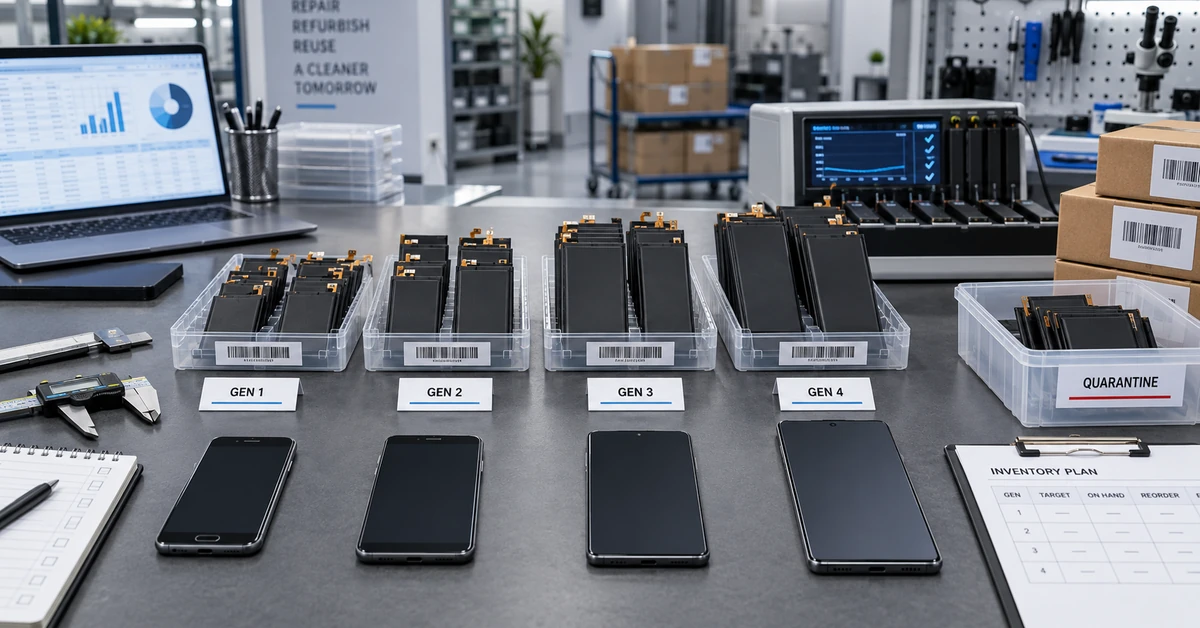
Four related SKUs create picking and labeling risk. Use distinct internal codes, barcode rules, carton identification, visual references and controlled storage locations. Verify that private-label artwork does not hide the manufacturer code or lot link needed for traceability.
Require change notification for the cell, protection circuit, flex, connector, insulation, adhesive, label, packaging and relevant assembly process. A change that appears minor can affect thickness, routing, electrical behavior or system observations. Define when a changed configuration requires document review, partial revalidation or full sample approval.
During incoming inspection, compare production units with the approved record rather than an uncontrolled sales sample. Trend results by model and lot. Keep iPhone 15 Pro Max complaints separate from base-model or Plus complaints until evidence supports a shared cause.
Route Warranty Evidence by Model and Revision
For any claim, retain the device identity, battery SKU and lot, repair date, operator or location, software version, observed symptom, charging conditions and comparison result. Separate battery defects from installation, device faults, customer damage and cases that cannot be reproduced.
The published mobile phone battery warranty-claims guide provides a wider disposition framework. Warranty depends on the specific product and agreement. A goodwill replacement should be recorded separately from a confirmed technical root cause.
Frequently Asked Questions
Are all iPhone 15 series batteries interchangeable?
No. Treat iPhone 15, 15 Plus, 15 Pro and 15 Pro Max as separate model-level approvals unless authoritative, verified documentation establishes otherwise for the exact assemblies.
Does a successful power-on prove compatibility?
No. Approval also requires fit, connector and flex integrity, charging, representative use, system observations and comparison with the agreed specification.
Should wholesalers buy an iPhone 15 Pro Max kit or battery only?
Choose according to the channel's controlled service workflow. List every kit component and approve it separately; do not assume bundled tools or adhesives improve the battery itself.
Can a supplier guarantee a particular Parts and Service History message?
Do not accept that promise for a third-party battery without authoritative model- and software-specific evidence. Record the actual observed message and keep electrical performance as a separate result.
How many samples should be approved?
The quantity depends on risk, lot structure, test destructiveness, buyer requirements and the sampling plan. Include all four intended models; do not use one model as the reference for the family.
Send a Model-Level RFQ
A useful RFQ identifies the required iPhone 15 family models, separate SKU quantities, battery drawings, capacity options to be verified, kit scope, packaging, target market, test plan, sample quantity, system-observation requirements, change-control terms and warranty process.
For an ESCCharge project discussion, send the exact iPhone 15 models, expected order mix, sample plan, packaging or kit scope, target market and required system observations. Compatibility and specifications must be confirmed for each model. Capacity, certification availability, MOQ, lead time and warranty depend on the selected product, test method, customization and agreement.
External Source References
- Apple Support — Self Service Repair — accessed September 4, 2026.
- Apple Support — About iPhone Parts and Service History — May 26, 2026.
- Apple Support — Parts Support for iPhone — accessed September 4, 2026.