
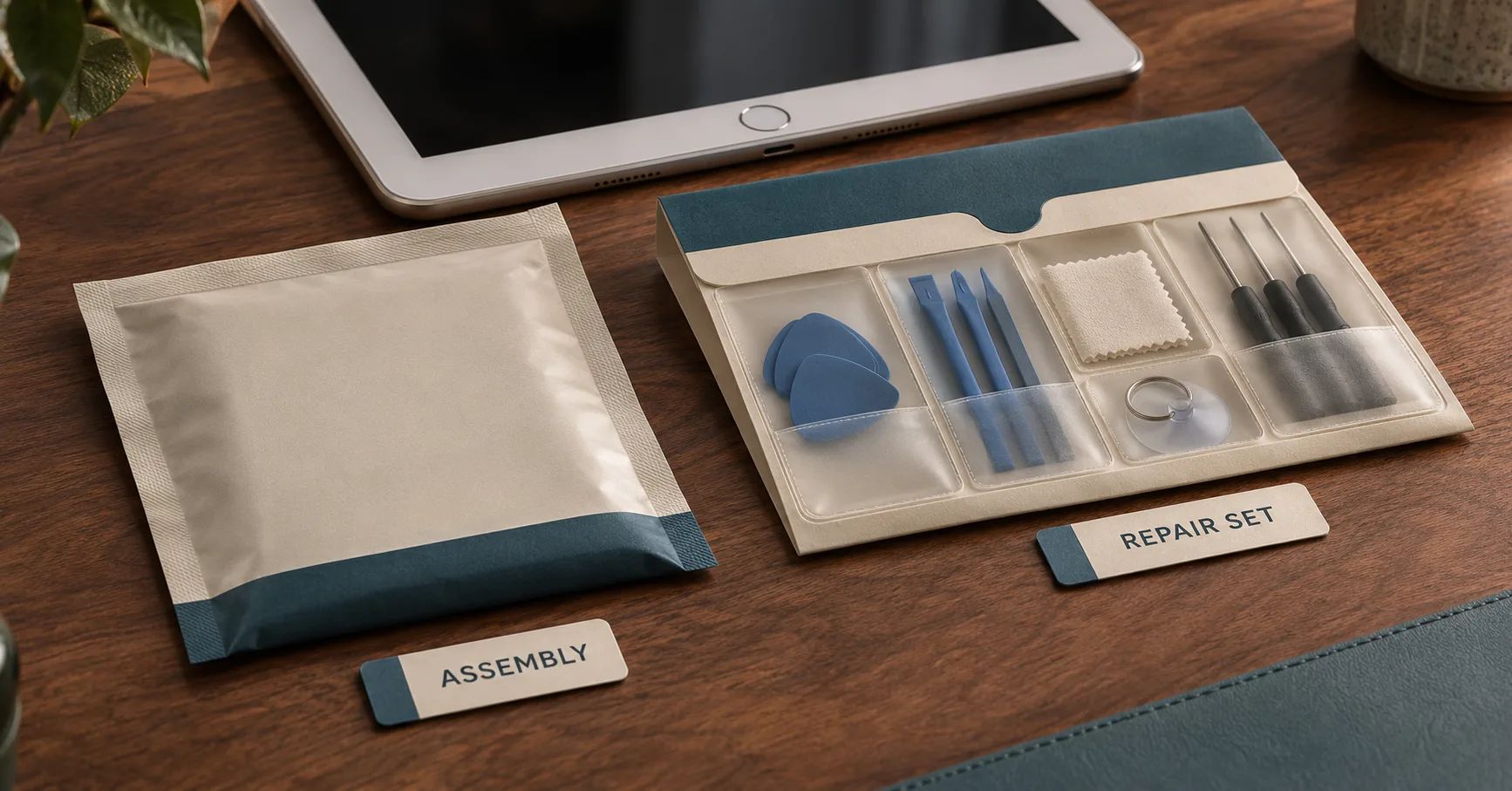
Define the Device and the Delivered Repair Unit
An iPad Pro 10.5 battery replacement order should connect the tablet’s complete model code with an approved finished assembly and a defined package. Purchasing needs these three fields to compare offers fairly. Receiving needs the same information to decide how many usable repair sets a shipment provides.
For repair chains and refurbishers, the quoted unit may be a battery alone, a battery with adhesive or a sealed repair kit. Specify which format the workshop requires and list every included consumable. Keep the unit of purchase consistent from inquiry through carton reconciliation.
Map A1701, A1709 and A1852 Before Quoting
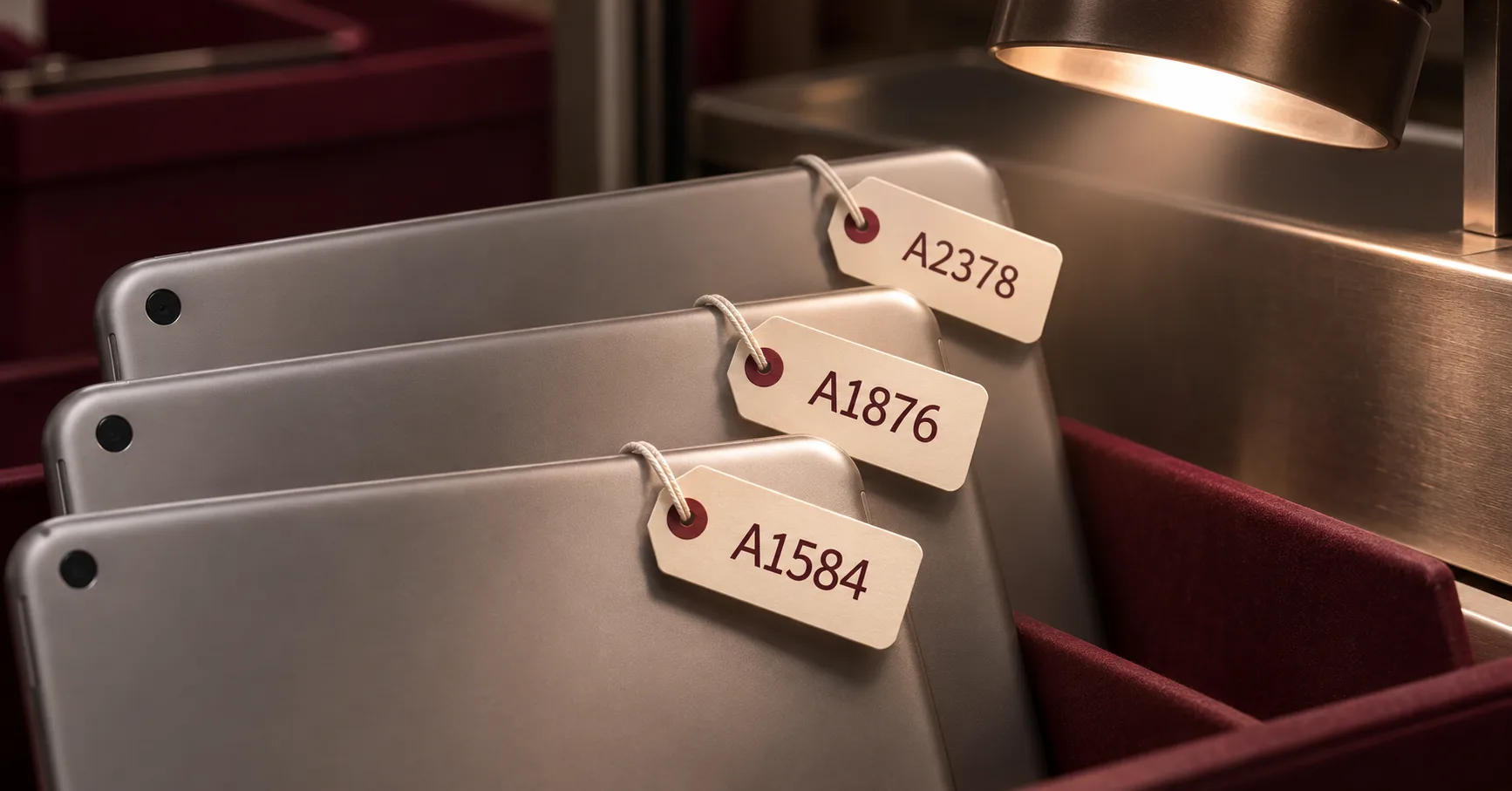
Apple identifies the 10.5-inch iPad Pro as a 2017 model. Its device guide lists A1701 for Wi-Fi, A1709 for Wi-Fi plus cellular and A1852 for the mainland China cellular version. Apple identifies the field as Model number (on the back cover)
. Capture that code during intake and retain it on the repair record. Apple Support — Identify your iPad model.
| Device code | Apple application | Buyer requirement |
|---|---|---|
| A1701 | iPad Pro 10.5 Wi-Fi | Approved assembly reference and revision |
| A1709 | iPad Pro 10.5 Wi-Fi plus cellular | Application evidence for the intended variant |
| A1852 | iPad Pro 10.5 cellular, mainland China | Application evidence and explicit supplier confirmation |
Ask the supplier to return the exact applications supported by the proposed part. An A1701 replacement battery sample evaluated in one device supports that recorded application. Extend the released scope after engineering has reviewed the evidence for additional variants.
If the rear housing was replaced or the intake description conflicts with device information, resolve the identity before issuing stock. Keep the battery’s own part reference in a separate field from the tablet model code.
Use the Original 30.4 Wh Reference Correctly
Apple’s technical specification lists a 30.4 Wh built-in rechargeable lithium-polymer battery and a Lightning charging connection. Use those device references when asking suppliers for their declared replacement specifications. Apple’s battery notes also state that actual results will vary
. Apple Support — iPad Pro 10.5 technical specifications.
Request nominal voltage, declared capacity, energy and the definition of each value. If a quote uses mAh, convert amp-hours to Wh using the stated nominal voltage. A hypothetical 8,000 mAh at 3.8 V equals 30.4 Wh. Keep that calculation attached to its assumptions and request separate test results for measured acceptance.
For a measurement, record the sample reference, equipment, temperature, discharge method and endpoint. Use the same agreed method when comparing suppliers. Device runtime should have its own workload and software record so the repair team can interpret the installed result.
Review the Finished Pack Before Approving Price
Define the iPad Pro battery assembly using a controlled drawing or retained sample. Review outline, thickness, contact arrangement, insulation and adhesive format. Record measurement locations and photograph the finished configuration, including its label.
Have qualified engineering staff review the electrical interface and protection configuration for the intended device. Give receiving a reference it can compare with production stock. A supplier’s commercial product name should point to a specific approved build and revision.
Ask what the buyer must do before installation. If the offer requires additional assembly or adaptation, review the process and responsibilities before ordering. Confirm the final supplied scope in writing and include it in the quotation comparison. ESCCharge tablet and laptop battery range.
Write a Bill of Materials for the Repair Package
List tablet repair kit contents by reference and quantity. Identify the finished battery, any battery adhesive, enclosure consumables and insulation required by the workshop procedure. State whether components are pre-applied, separately packed or issued from central workshop stock.
| Package element | Specification to agree | Receiving evidence |
|---|---|---|
| Finished battery | Part reference, revision and approved applications | Matching label, construction and lot |
| Battery adhesive | Application, quantity and supply format | Correct pattern, intact liners and accepted count |
| Enclosure consumables | Required references and quantities per job | Correct device application and package contents |
| Unit packaging | Protection, identification and contents label | Approved presentation and readable traceability |
Keep reusable workshop tools separate from per-repair consumables in the cost calculation. A retail package may require tools in every unit, while a repair facility may allocate tools per bench. Ask the bidder to quote the format the operation will actually use.
Count Complete Repair Sets at Receiving
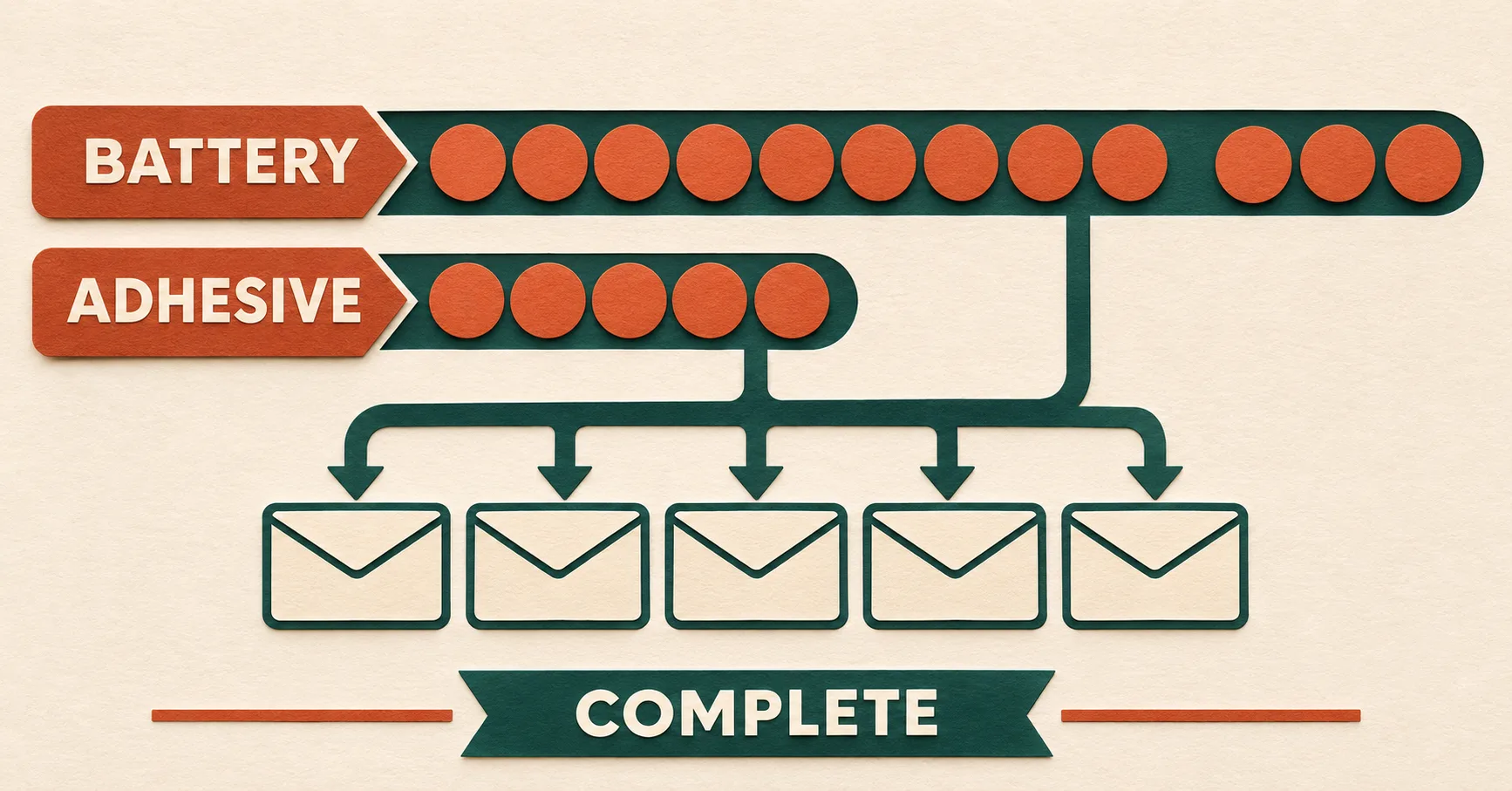
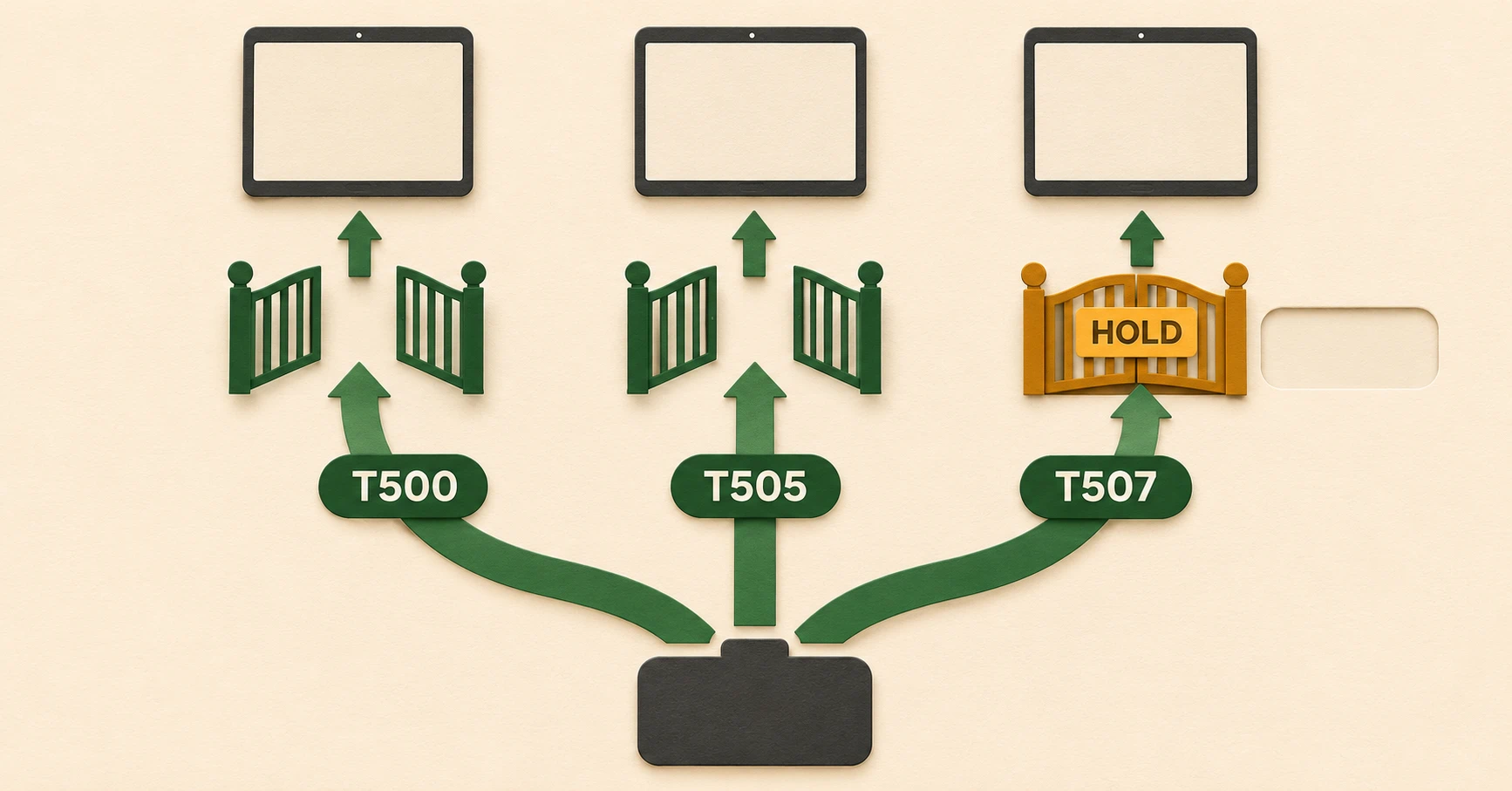
Suppose an illustrative shipment provides 100 accepted batteries, 94 accepted battery adhesive sets and 90 accepted enclosure consumable sets. If each repair requires one of each, the workshop can release ninety complete sets. Record the ten remaining batteries and four remaining battery adhesive sets by their own lots.
If a top-up supplies ten accepted enclosure sets, four additional complete kits can be issued using the remaining adhesive sets. Six batteries and six enclosure sets remain available pending matching adhesive. Reconcile that residual inventory and any supplier credit before closing the shortage.
Use the complete-set count when assessing immediate fulfillment. Compare the eventual program cost after resolving shortages, credits and leftover components. Record the kit revision and component lots when parts from separate shipments are packed together.
Approve Samples in the Intended Repair Workflow
Have a trained technician evaluate the sample using the applicable procedure and a known-good tablet of the intended model. Record seating, contact alignment, clearance and closure. Hold unexpected interference or stress for engineering review.
Document startup, charging progress, reported charge and stability under a representative workload. Record the device model, software, starting charge, Lightning cable, adapter and environment. Use consistent display and network settings for runtime comparisons within the same model.
Retain the packed sample record, assembly drawing revision and test observations together. The approval should identify the exact device applications and delivery format accepted. Agree any open issues before committing to the first production shipment.
Inspect Bulk Stock by Revision and Lot
For bulk battery inspection, ask for carton quantities broken down by supplier reference, revision and lot. Reconcile unit labels and packing records before sampling. Select samples within each defined group and keep the results associated with that group.
If a shipment contains two production dates or revisions, preserve their separation until reviewed. A passing result from one group supports that group’s release under the sampling agreement. Keep held units unavailable for repair allocation and record the accepted quantity and release authorization.
Request advance notice for changes to cells, contacts, protection parts, insulation, adhesive or packaging. Ask engineering to define the document, bench or installed checks needed for the revised build. Update receiving references before the changed lot arrives. ESCCharge battery sampling framework.
Manage Stock Age and Repair Demand Together
Give Receiving a Practical Decision Record
Before the first shipment, agree who can release a lot and what evidence they need. The record should link the purchase order, assembly revision, package bill of materials and sampled unit identifiers. Include accepted and held quantities, the reason for any hold and the follow-up owner.
For a package discrepancy, purchasing may be able to resolve a missing consumable while quality keeps the affected sets on hold. For a changed electrical interface, engineering should determine the required evaluation. Record the decision against the affected group so warehouse staff can continue issuing stock already cleared under an existing approval.
Compare the Cost of Released Output
Separate the invoice total from the cost of the repairs the shipment can currently support. Record sorting, reinspection, replacement consumables and any kitting labour when those activities are required. Keep recoverable supplier credits visible until confirmed.
If two offers have different minimum quantities, calculate their months of coverage from your own demand. Consider whether the extra components can be used within the agreed review interval. A lower unit quote can still require more cash committed to slow-moving stock, so show quantity, coverage and complete-set output together in the purchasing comparison.
Set Reorder Quantities for Batteries and Consumables
Use completed battery jobs and confirmed projects to forecast demand. Keep diagnostic intake separate because some devices need other repairs before battery replacement can proceed. Include warranty replacements and evaluation samples as additional requirements.
For example, a network using sixteen packs per month with two months of coverage and a six-unit buffer has an illustrative target of thirty-eight. If released stock is twelve and confirmed inbound stock is eight, the gap is eighteen. Apply the same calculation to required consumables so the battery order does not create incomplete kits.
Ask for traceable pack dates and available storage records before accepting slow-moving lots. Confirm what the date code represents and agree a review interval with engineering. Keep lot identity through stock rotation and exclude held or overdue stock from the available balance. ESCCharge battery storage guide.
Resolve Supplier Exceptions Before Reordering
Send each bidder the same application list and package bill of materials. Request the proposed reference, revision, declared electrical values, test evidence, lot dates and written exceptions. Clarify any missing consumable or unsupported device variant before approving the quote.
Link later returns to the installed lot and repair work order. Record the device, acceptance results, complaint and setup used to reproduce it. Compare return counts with units installed from the relevant lot. Share the configuration and findings with the supplier when an investigation is needed.
Confirm MOQ, sample charges, lead time and warranty conditions for the selected model and packaging. Evaluate the landed cost of complete accepted sets and any extra receiving work. Retain the agreed terms with the purchase order.
Frequently Asked Questions
Which A-numbers identify iPad Pro 10.5?
Apple lists A1701, A1709 and A1852. Confirm the exact variant and retain its approval against the finished assembly revision.
Does matching 30.4 Wh establish approval?
Energy is one specification field. Approval also covers geometry, electrical interface, construction and installed behaviour under recorded conditions.
How many complete kits can receiving release?
Calculate the accepted quantity available for every component required by one kit. The component supporting the fewest complete sets determines the release count.
What if the top-up uses another revision?
Review its approval status before combining stock. Keep its lot traceable and reconcile it with the shortage after inspection and any required engineering review.
Send ESCCharge your A1701, A1709 or A1852 quantities and required kit contents to discuss application-specific samples and a bulk quote. Confirm availability, documentation and terms for the proposed configuration.
External Source References