
Build the Order Around the Full SM-Code
A Galaxy Tab A battery replacement order should identify the tablet’s full model code, the approved finished battery reference and the contents supplied for one repair. The Tab A name covers multiple generations and sizes. A model code gives the supplier a defined application and gives receiving staff a configuration to check.
Repair chains, refurbishment facilities and wholesalers should carry the same identifiers through the inquiry, sample record, production order and work order. When a customer requests a “Tab A 10.1 battery,” confirm the device before assigning a stock item. Keep the release scope accessible to warehouse staff.
Find the Device Identity at Intake
Samsung directs users to Settings and then About tablet
to find device identifiers. Capture the model code in the intake record and retain a photo or verified device record where appropriate. If a replaced rear cover creates conflicting information, have the repair team resolve it before parts are allocated. Samsung Support — Find a phone or tablet model number.
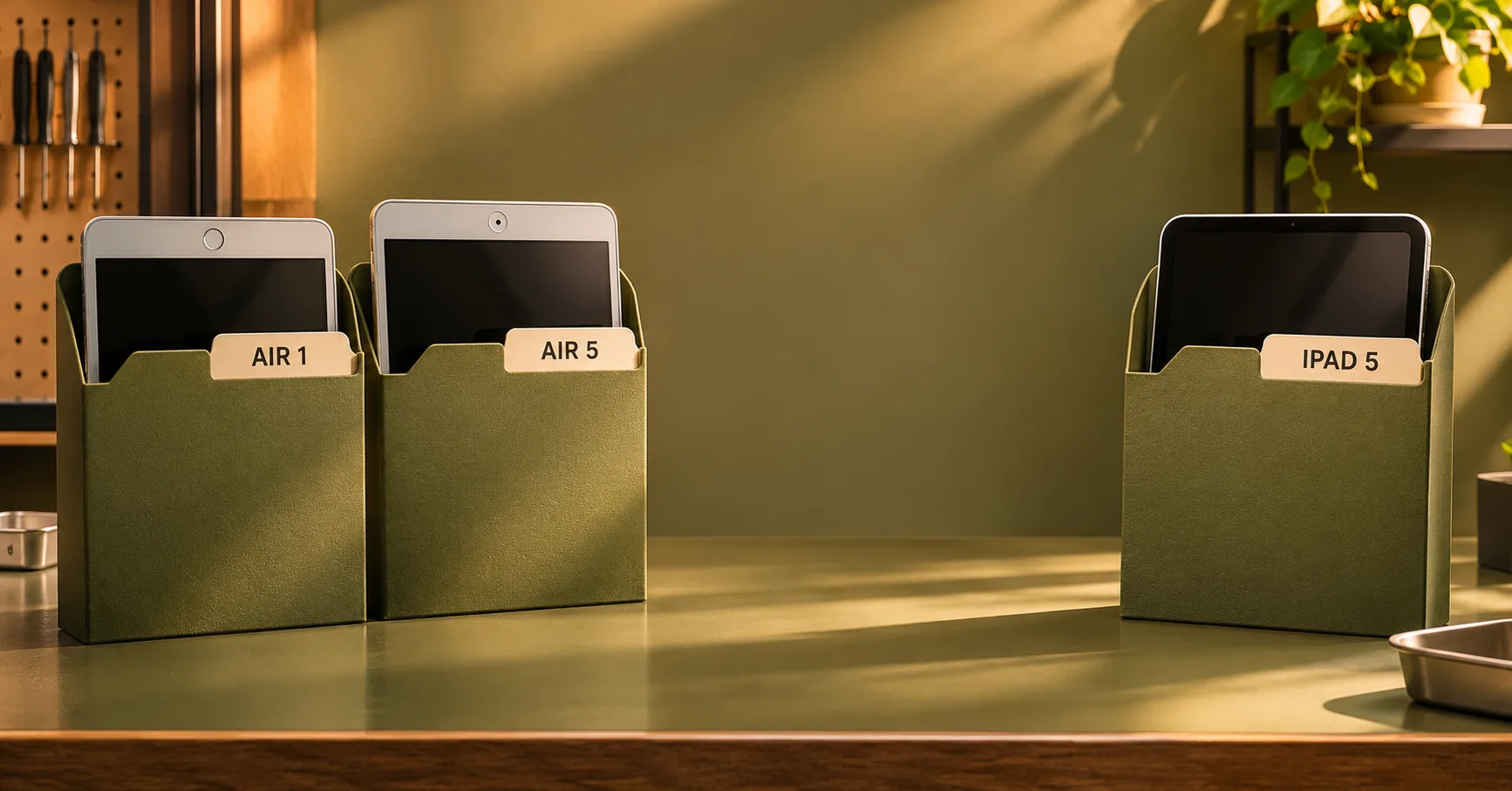
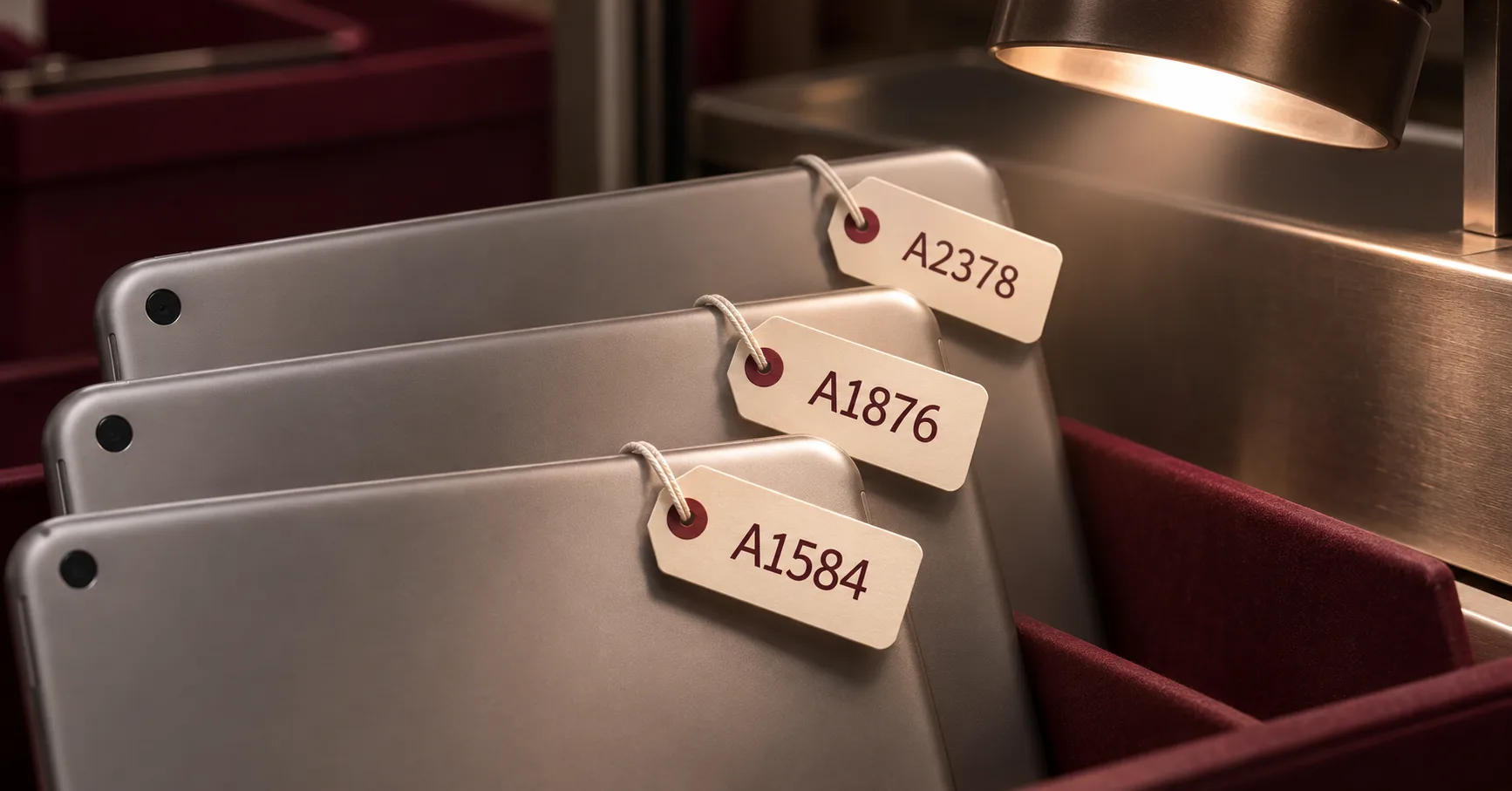
Use the SM-code together with the commercial name, screen size and generation. Record the regional or cellular variant exactly as shown. Ask the supplier to return the supported application list in writing, including any exceptions. The finished battery’s part number belongs in a separate field.
Compare Two 10.1-Inch Generations
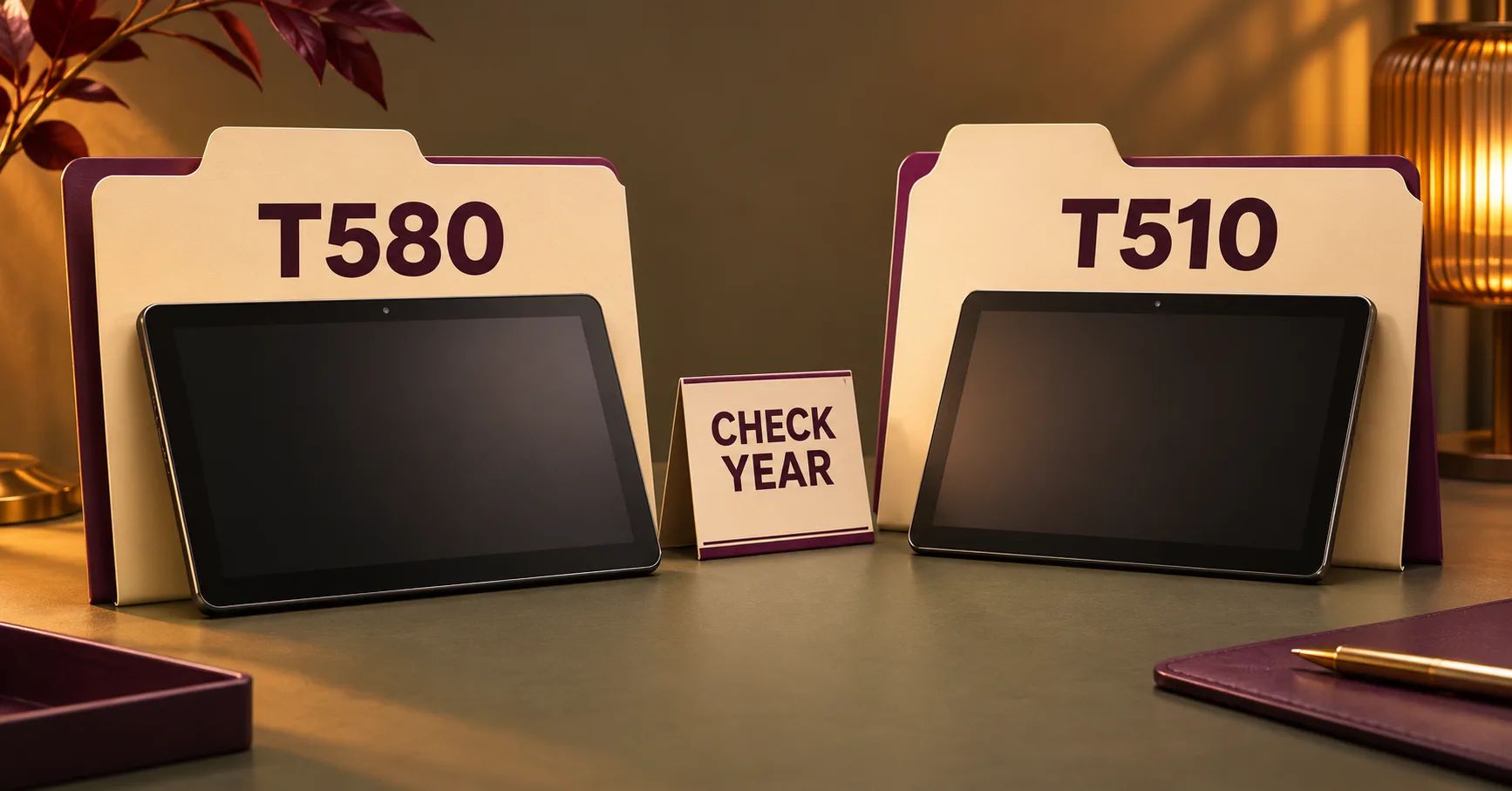
Samsung’s official records identify the SM-T580 Tab A 10.1 and the SM-T510 Tab A 10.1 (2019) as separate devices. The T580 page lists a 7,300 mAh battery, while the T510 page lists 6,150 mAh. Those original specifications show why screen size needs a model code alongside it in purchasing records. Samsung Business — Galaxy Tab A SM-T580 and Samsung Business — Galaxy Tab A 2019 SM-T510.
| Original device reference | Example code | Samsung battery listing | Purchase requirement |
|---|---|---|---|
| Tab A 10.1, 2016 generation | SM-T580 | 7,300 mAh | Separate assembly and application record |
| Tab A 10.1, 2019 generation | SM-T510 | 6,150 mAh | Separate assembly and application record |
For the T510, Samsung’s capacity note describes a Typical value tested under third-party laboratory condition.
Preserve the definition when comparing supplier declarations. Request the replacement’s nominal voltage, capacity definition and energy, then specify a measurement method for sampled acceptance.
A Galaxy Tab A replacement battery should be approved against the intended device rather than selected from its printed mAh value alone. Physical construction, interface and installed behaviour need their own evidence. Keep other Tab A generations and Tab A7 applications in their own model records.
Turn the Supplier Listing Into a Controlled Specification
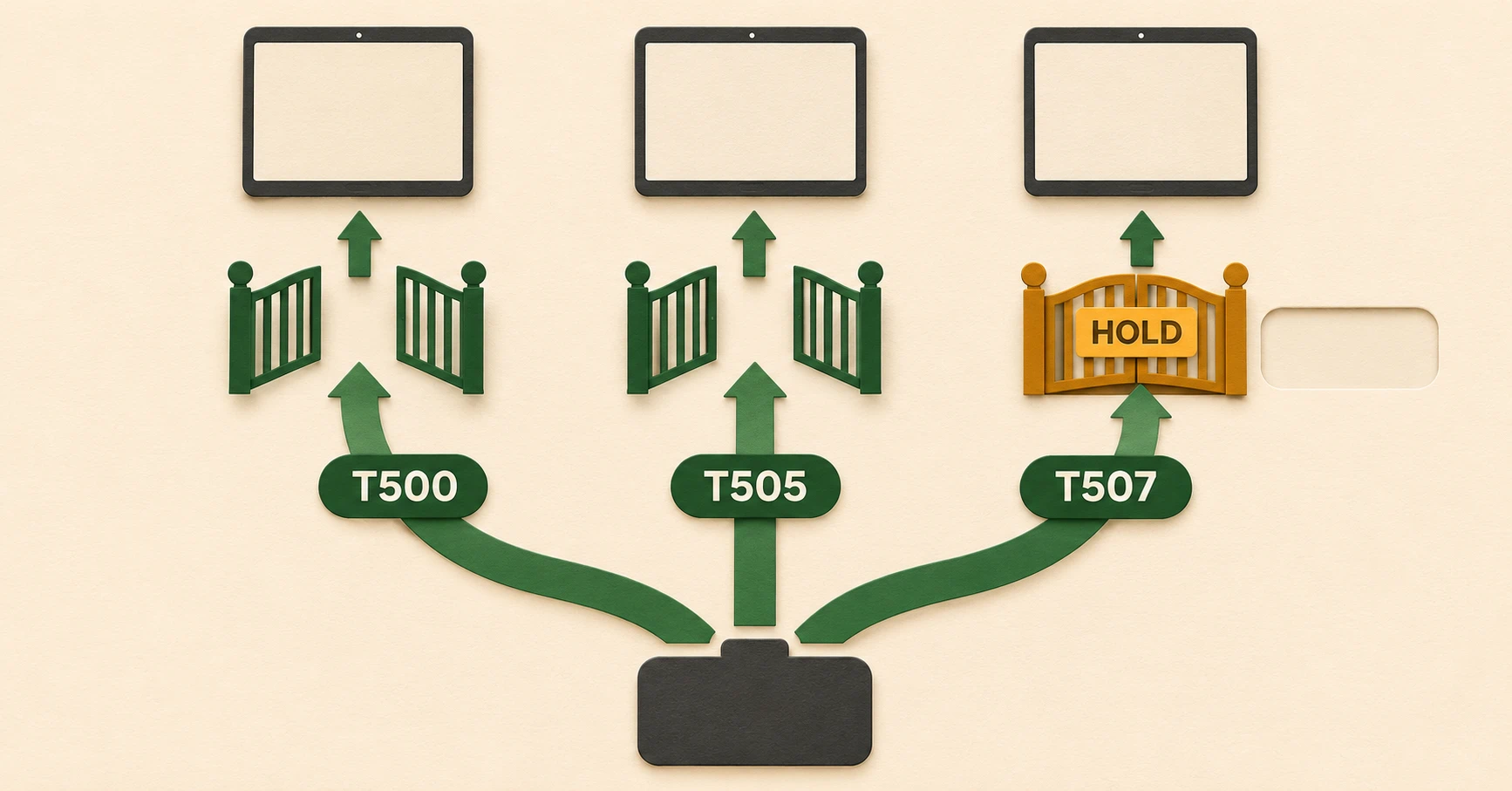
Use Samsung tablet model matching to create one application row per device code. Include your internal SKU, supplier reference, assembly revision, drawing revision and approval status. A supplier may offer one part across several devices. Request evidence for every application you intend to release.
Obtain a drawing or retained sample showing the finished outline, thickness, flex or lead routing, connector orientation and insulation. Define the measurement points and retain photographs of the label and electrical interface. Qualified engineering staff should review the electrical and sensing configuration.
If a supplier’s proposed scope includes devices your team has not evaluated, keep those applications pending. Place the production order against the released list and ask the supplier to acknowledge it. Use the selected tablet configuration when discussing the quotation. ESCCharge tablet and laptop battery range.
Separate the Battery From the Per-Repair Kit
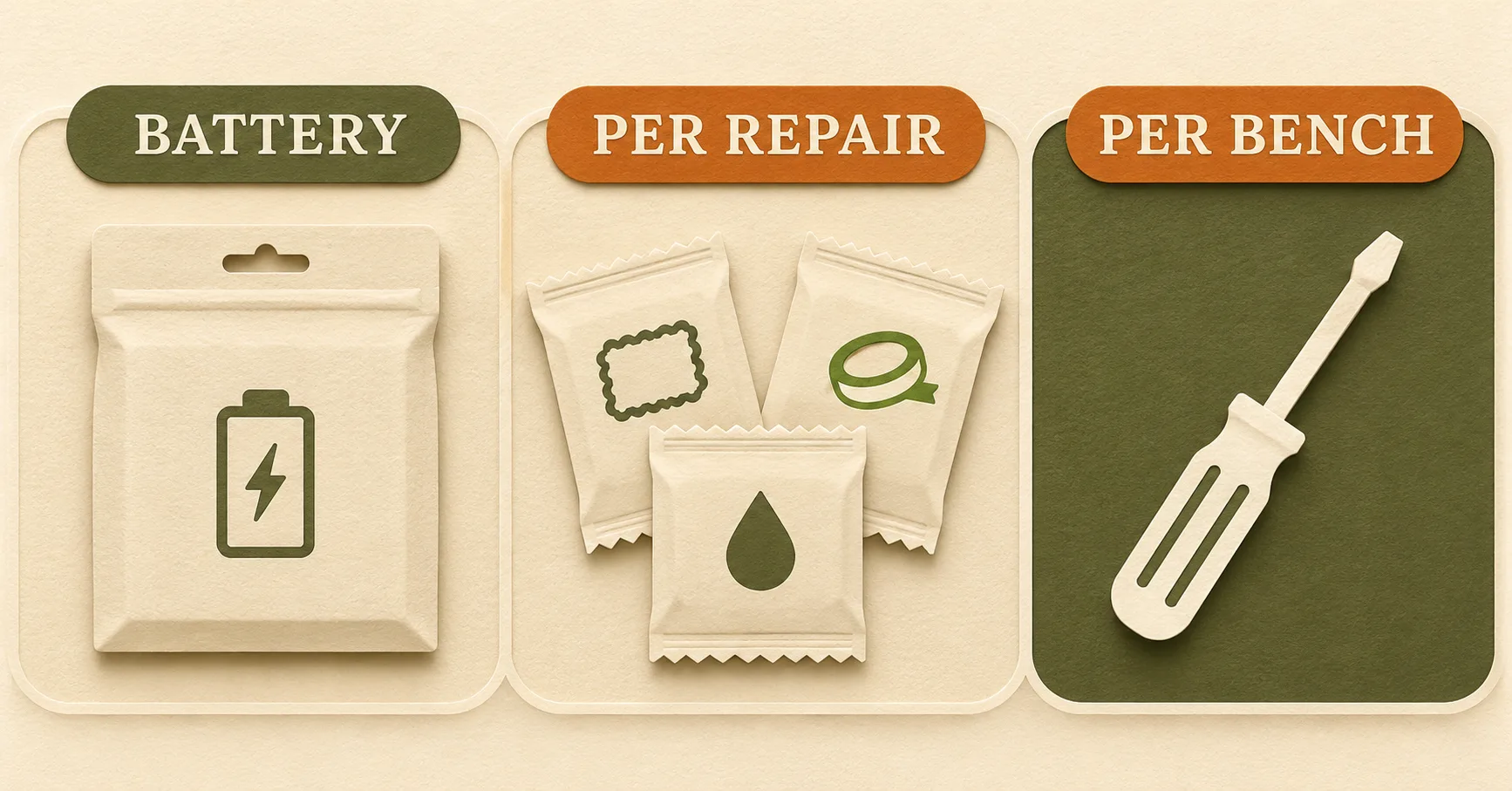
A tablet battery kit needs a bill of materials tied to the device and workshop procedure. Identify the finished assembly, required adhesives, insulation and enclosure consumables. State whether each item arrives pre-applied, separately packed or issued from workshop stock.
| Item | Basis of supply | Receiving record |
|---|---|---|
| Finished battery | One approved assembly per repair | Reference, revision and lot |
| Required consumables | Quantity per repair under the approved procedure | Correct application, format and accepted count |
| Reusable tools | Per bench or per retail kit, as agreed | Separate quantity and cost allocation |
| Unit packaging | Defined protection and identification | Approved packed sample and label |
A central repair facility can keep consumables and tools at each workbench. A distributor may require every per-repair component in one sealed package. Ask bidders to quote the intended delivery format so price comparisons reflect usable output.
Count the Complete Sets the Shipment Can Support
Suppose an illustrative shipment provides 120 accepted batteries, 112 accepted battery adhesive sets and 108 accepted enclosure consumable sets. If one of each is required, receiving can release 108 complete repair sets. Retain the remaining twelve batteries and four battery adhesive sets under their own lot records.
If twelve accepted enclosure sets arrive in a top-up, four more complete sets can be issued with the remaining adhesive. Eight batteries and eight enclosure sets remain pending matching adhesive. Reconcile residual stock and any supplier credit before closing the shortage.
Use these counts to understand immediate fulfilment and cash committed to the shipment. For the final program cost, include accepted top-ups, remaining component value, sorting or kitting work and confirmed credits. Apply the calculation separately to each kit revision and model application.
Approve the Sample in the Intended Tablet
A battery assembly approval should link the finished revision to a known-good device of the intended model. Have a trained technician evaluate seating, connection, routing and closure under the applicable repair procedure. Hold unexpected interference or stress for engineering review.
Record startup, charging progress, reported charge and stability under a representative workload. Document the device model, software, starting charge, adapter, cable and environment. Use a known-good charging setup appropriate to the device and record accessory checks if charging is intermittent.
Compare runtime within the same tablet model using consistent display, network and workload settings. Retain a separate bench capacity record with the sample ID, equipment, method, temperature and endpoint. Agree acceptance criteria before testing so both buyer and supplier understand the release decision.
Release Production Stock by Revision and Lot
Request the packing list by supplier reference, revision and lot. Reconcile carton and unit labels with the order before drawing samples. When several lots share a carton, keep their identities visible and sample within the agreed groups.
For example, an eighty-unit order may contain fifty units from one lot and thirty from another. Record which group supplies each sample. A passing result supports the group represented under the sampling agreement. Hold unexplained changes in leads, connectors, insulation or labeling until reviewed.
Give the warehouse the accepted quantity, held quantity, application list and release authorization. Keep held units unavailable for picking. Adapt the sampling structure to the tablet assembly and its inspection criteria. ESCCharge battery sampling framework.
Plan Demand by Device and Complete Repair Set
Use completed battery jobs and confirmed projects to forecast demand. Keep incoming-device counts separate because diagnosis may identify other work. Include warranty replacements and engineering samples as additional requirements.
Consider hypothetical monthly demand of twelve approved T580 repairs and eighteen T510 repairs. Two months of coverage gives base requirements of twenty-four and thirty-six assemblies. Add the program’s justified buffer, then subtract released stock and confirmed inbound units for each application.
Forecast consumables alongside batteries. A surplus of T580 assemblies cannot resolve a T510 shortage without approved application evidence. Request traceable pack dates and available storage records when minimum quantities create long coverage. Confirm what each date code represents and agree the review interval with engineering. ESCCharge battery storage guide.
Control Repeat Orders and Supplier Changes
Require notice before changes to the cell, interface, protection components, insulation, adhesive or packaging. Ask for the reason, affected references, first changed lot and implementation date. Engineering should define which document, bench and installed evaluations are needed.
Retain previous approvals for tracing installed units and remaining stock. Update the receiving reference before the changed shipment arrives. When a new revision supports only part of the original application list, show that scope clearly in purchasing and warehouse records.
Link returns to the device code, battery revision, lot and repair work order. Capture the symptom and test setup, compare reports with installed quantities and record the evidence behind any inventory hold.
Compare Quotes and Close Receiving Exceptions
Ask Every Bidder to Return the Same Fields
Send one specification sheet containing the full model list, assembly requirements, per-repair contents and packaging format. Ask suppliers to return the proposed part reference, revision, electrical declarations, sample charges and quantity breaks. Require written exceptions for omitted consumables, substitutions or unsupported regional variants.
Compare landed spend for complete accepted repair sets. Include separately sourced consumables, sorting, reinspection and kitting work when relevant. Keep reusable tool costs on their own line. Record the quantity and months of coverage associated with each price break so purchasing can assess the cash committed to slower stock.
Make the Receiving Decision Usable by the Warehouse
The release record should identify the order, device application, assembly revision, lot and accepted quantity. Show any held quantity and reason separately, with the person responsible for resolving it. A buyer may resolve a missing consumable while engineering reviews a changed electrical interface.
Before closing the receiving record, reconcile complete sets, residual components, pending replacements and agreed credits. Retain the original shipment and top-up lot identities when components are combined. This allows a later return to be traced to the exact parts issued for the repair.
Frequently Asked Questions
Is “Tab A 10.1” enough to order a battery?
Request the full SM-code and generation. T580 and T510 are examples with different original battery specifications and their own approval records.
Can one supplier reference cover several tablets?
Release a shared reference after the same finished revision has documented evidence for each intended device. Keep pending applications outside the released list.
Should every battery order include tools?
Define tools according to the delivery model. Workshops may allocate them per bench, while retail kits may require a tool set in each package.
What should a bulk quote include?
Request the application list, assembly revision, electrical declarations, bill of materials, lot information, sample evidence and commercial terms.
Send ESCCharge your complete Tab A SM-codes, quantities and required repair-set contents to discuss samples and a bulk quotation. Confirm availability, documentation, MOQ, delivery and warranty terms for the proposed configuration.
External Source References