
Identify the 2019 Standard iPad Before Ordering
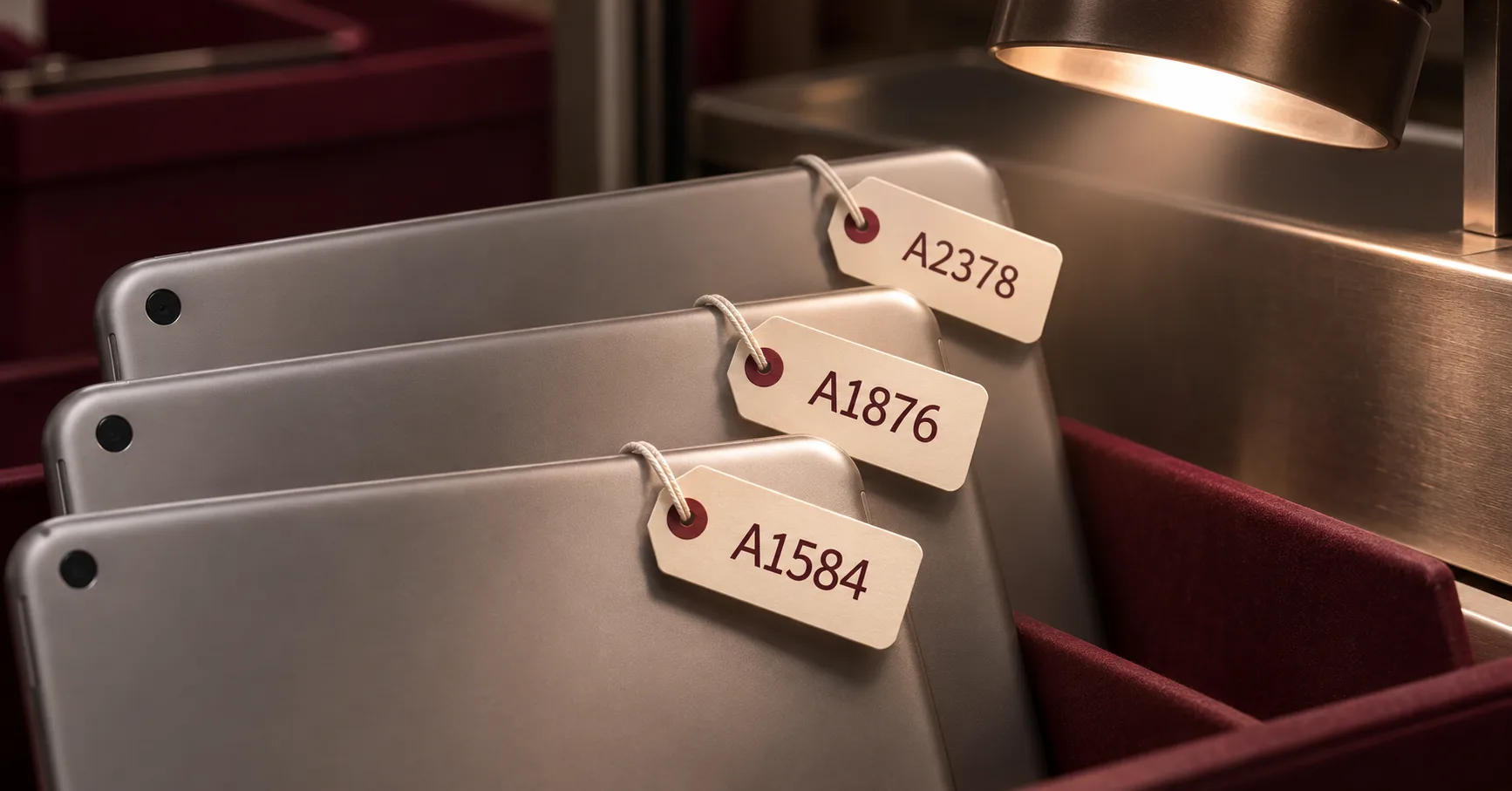
An iPad 7th generation battery replacement order should name the standard 2019 iPad, its full A-number and the approved finished battery reference. Those fields give the supplier a specific application and give receiving staff a configuration to verify. For a mixed refurbishment program, keep the same identifiers on the repair work order and warehouse pick record.
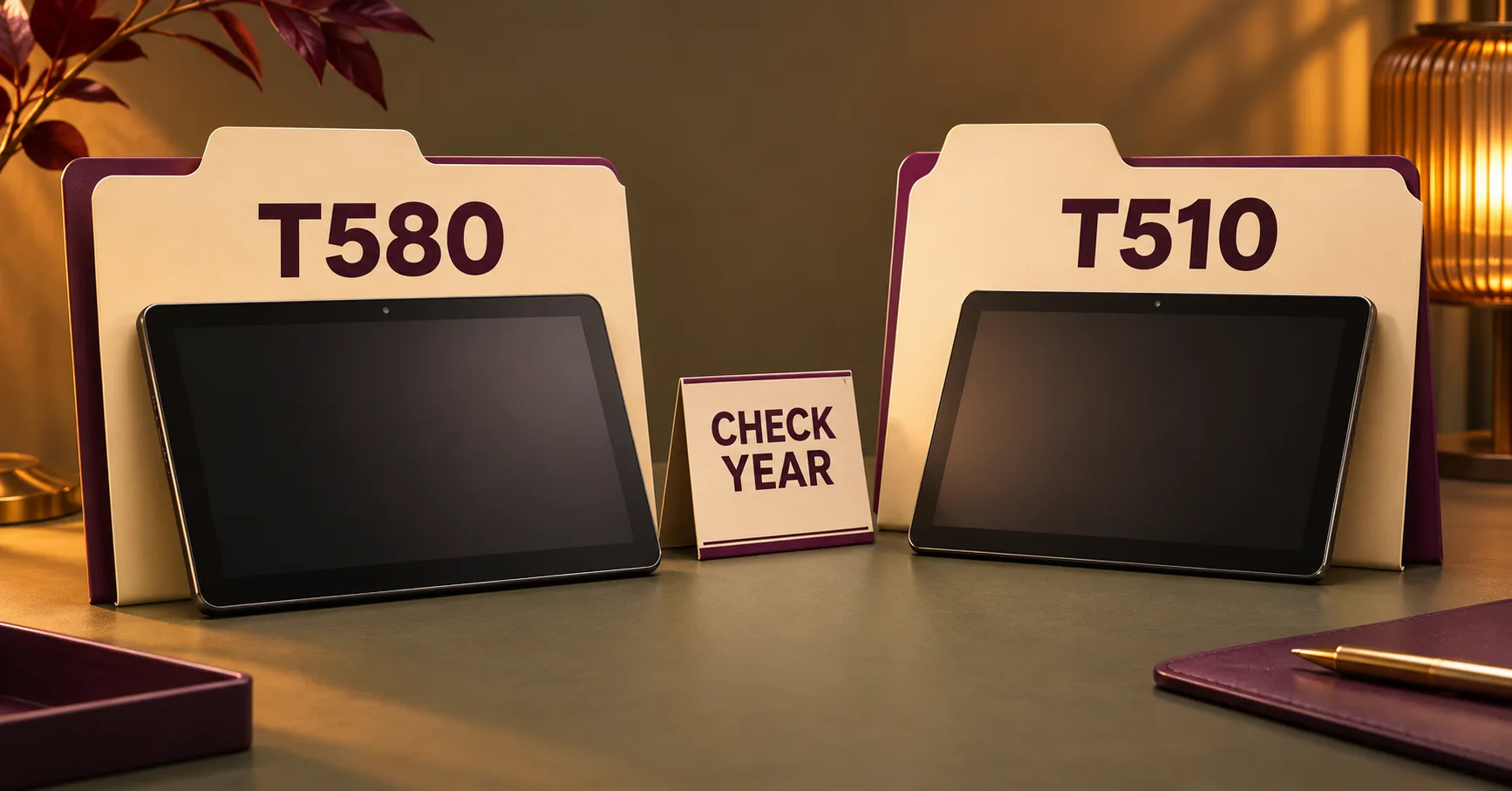
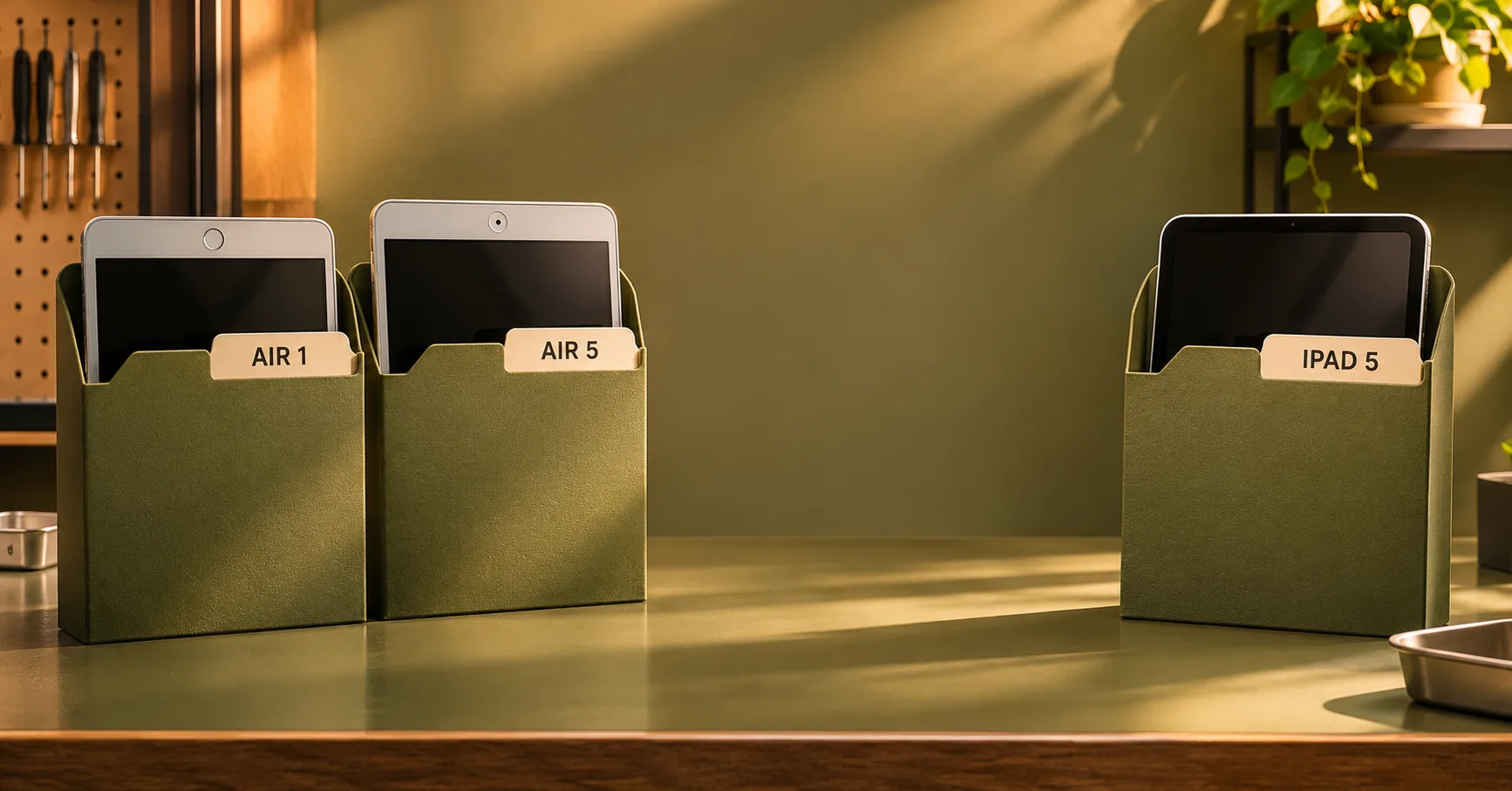
A generation number by itself can lead a search or catalog lookup into a different iPad family. Confirm the standard iPad product name, release year and device code together before requesting a quote. The approval should follow the actual tablet in the repair queue.
Build the Application List From Apple’s Model Guide
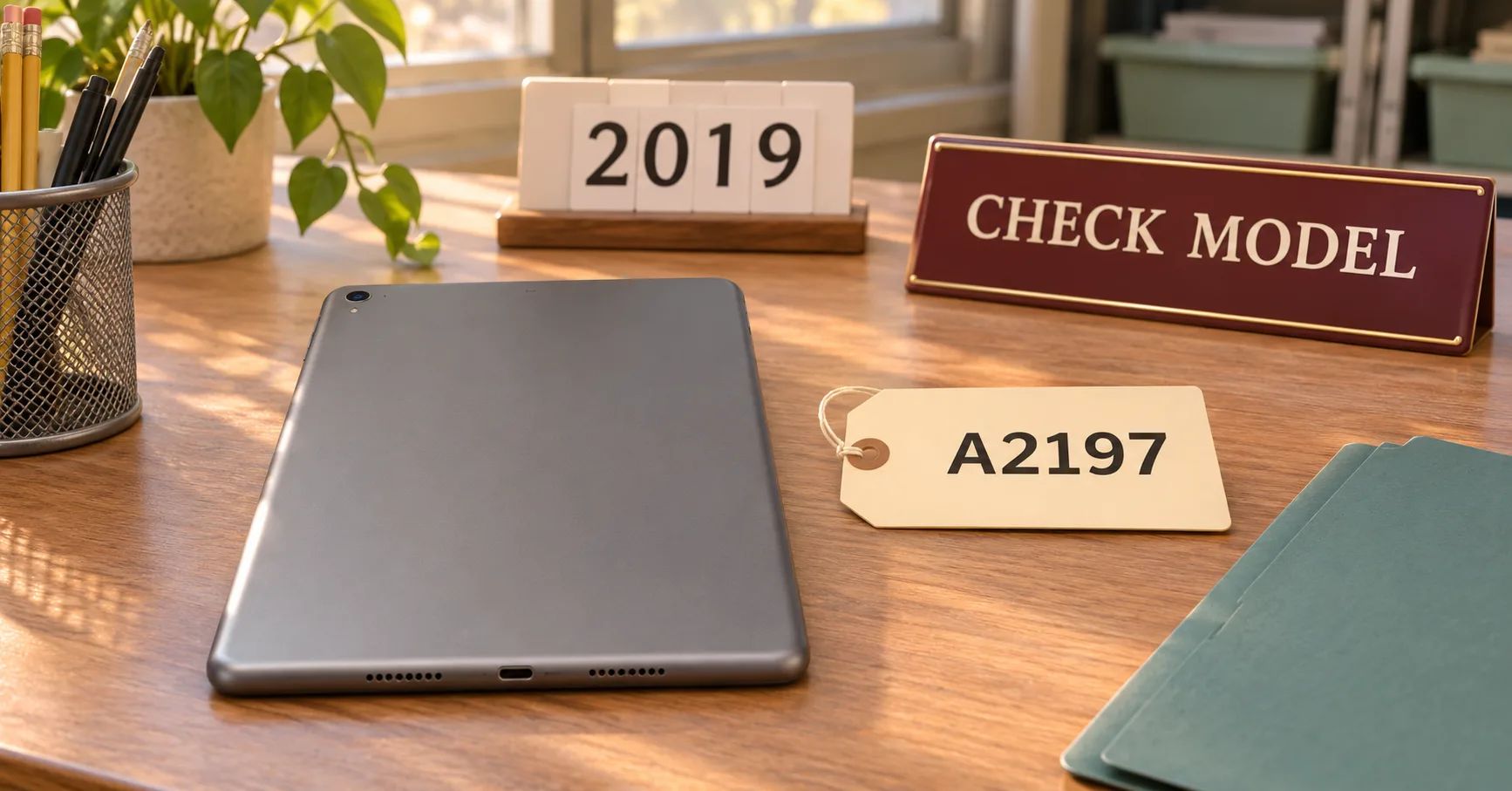
Apple identifies A2197 as the Wi-Fi seventh-generation iPad and A2198 or A2200 as its cellular variants. Its model guide lists the year as 2019. Capture the field Apple calls Model number (on the back cover)
and resolve any conflict with the intake record before assigning parts. Apple Support — Identify your iPad model.
| Device application | Model code | Purchase record |
|---|---|---|
| iPad seventh generation Wi-Fi | A2197 | Approved supplier assembly and revision |
| iPad seventh generation cellular | A2198 | Confirmed application and installed sample evidence |
| iPad seventh generation cellular | A2200 | Confirmed application and installed sample evidence |
The device code describes the tablet. Keep the battery manufacturer’s reference in a separate field. A supplier may propose one finished assembly across several applications. Record the evidence for each application you intend to service and make the released list available to purchasing.
For an iPad 7th gen battery replacement inquiry from a customer, request a clear device identifier before issuing a parts recommendation. A replaced rear housing may require further checking by the repair team. Resolve ambiguous records at intake so the warehouse can pick against confirmed applications.
Use the Original Specification to Review Quotes
Apple’s seventh-generation technical specification lists a 10.2-inch display, a Lightning connector and a built-in 32.4 Wh rechargeable lithium-polymer battery. The battery figure provides an original device reference for supplier discussions. Request the declared voltage, capacity and energy of the exact replacement offered. Apple Support — iPad seventh generation technical specifications.
Apple also cautions that actual results will vary
for battery claims. Define the repair program’s own reproducible test conditions and acceptance criteria. Record the display settings, network state, software version and workload with each installed runtime observation.
When a quote uses mAh, ask for nominal voltage to reconcile it with Wh. Multiply amp-hours by volts to calculate declared energy. A hypothetical 8,000 mAh pack at 3.8 V represents 30.4 Wh. Retain the voltage assumption beside the calculation and request separate capacity measurements under an agreed test method.
Describe the Complete Assembly
An A2197 replacement battery should have a controlled finished-part reference and revision. Obtain a drawing or approved sample showing outline, thickness, contact arrangement, insulation and adhesive scope. Record measurement points so repeat checks use the same basis.
Have qualified engineering staff review the electrical interface and protection configuration for the intended device. Capture sample labels and photographs of the finished build. Keep these records accessible to receiving staff, who need to compare production units with the configuration approved during sampling.
If a supplier changes the cell or other construction details while retaining a commercial product name, request a revision record. Identify the first affected lot and decide which checks must be repeated. Purchasing should reference the approved revision on the order acknowledgment.
Define the Delivered Repair Set
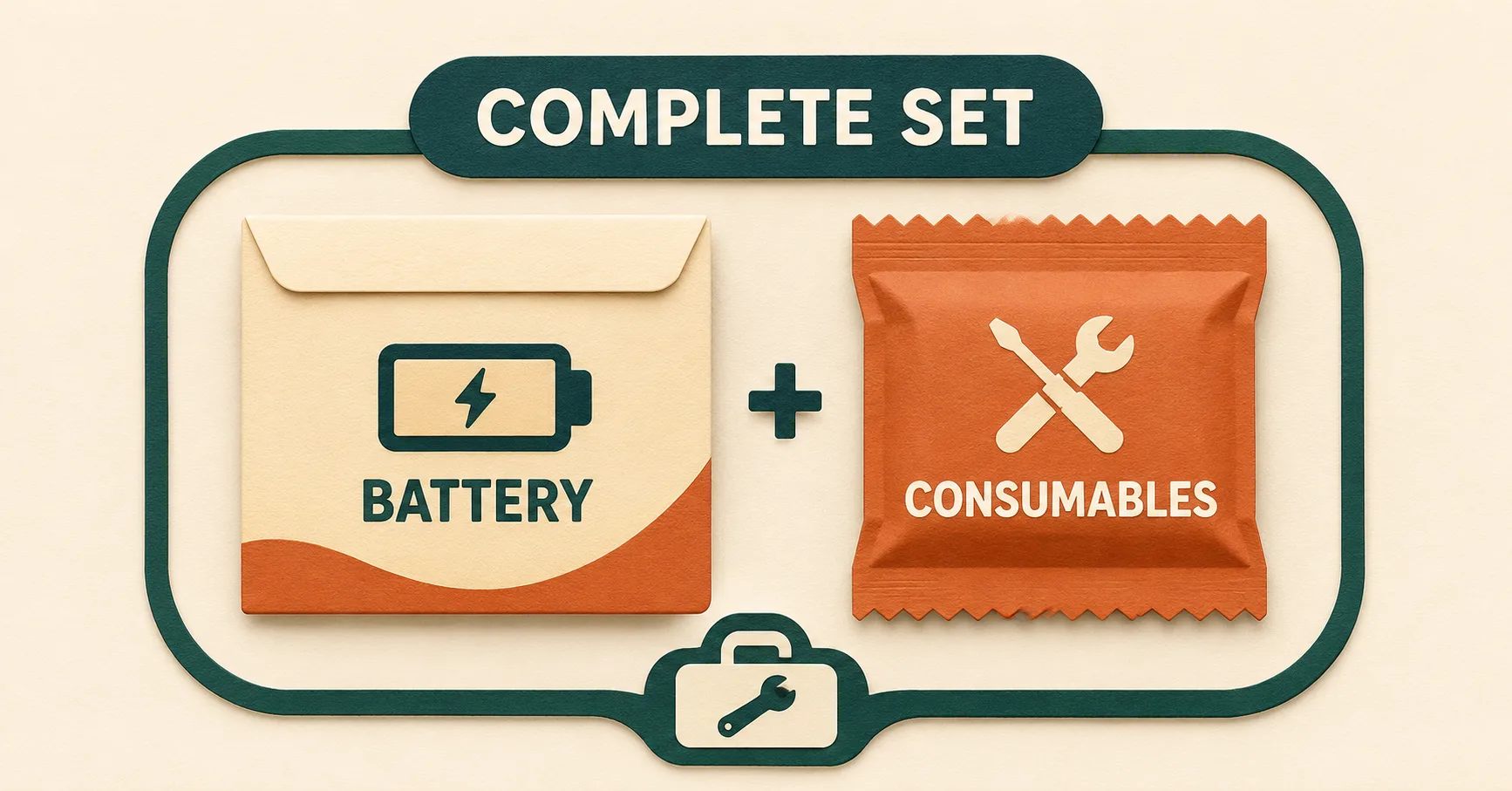
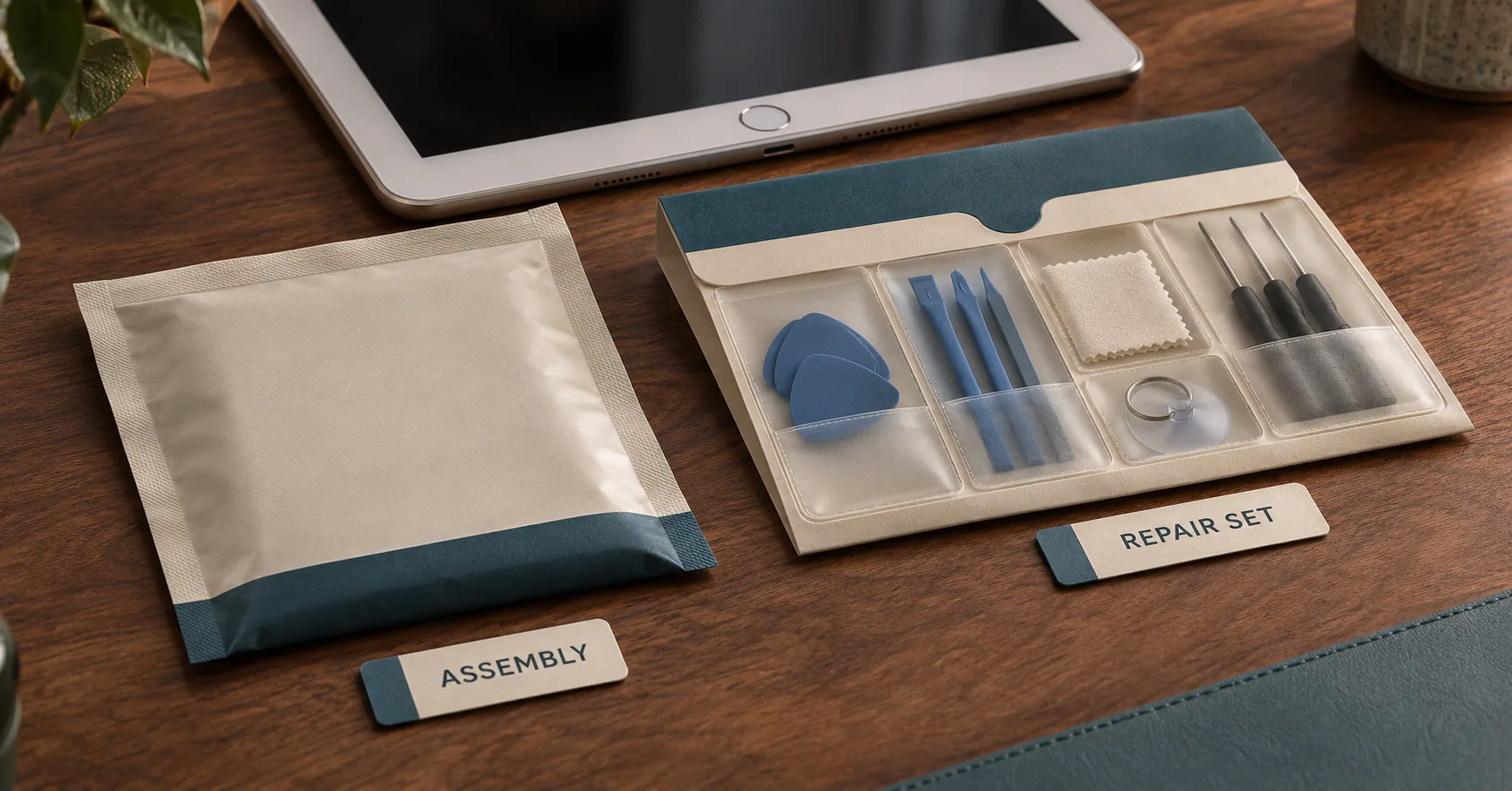
Specify whether the quote covers an iPad battery assembly alone or a complete repair set. List battery adhesive, enclosure consumables and insulation individually where required by the approved workshop procedure. Record quantities and whether each item arrives pre-applied or separately packed.
A repair center may buy batteries in bulk and issue consumables from central stock. A distributor may require sealed sets with every per-repair item included. Request the actual packed sample, photograph its contents and retain the packaging revision. Compare prices against the delivery format your operation will use.
For an illustrative shipment of eighty batteries and seventy-four accepted adhesive sets, the workshop can issue seventy-four complete sets if each job requires one of each. Keep the remaining six batteries traceable while purchasing resolves the shortage. Add any other required consumable to the same complete-set calculation.
Approve the Sample in the Intended Tablet
Have a trained technician evaluate the assembly using the applicable repair procedure and a known-good tablet of the intended model. Record seating, contact alignment, clearance and closure. Hold unexpected interference or mechanical stress for engineering review before approving the application.
Document startup, charging progress, reported charge and stable operation under a representative workload. Record the tablet’s software, starting state of charge, adapter, cable and environment. Use a controlled Lightning charging setup and retain the same setup details for comparison with later lots.
Ask for a separate bench capacity record identifying sample, equipment, discharge method, temperature and endpoint. Installed observations and bench results support different parts of the approval. Agree the criteria before testing and retain a signed application record linking the results to the finished revision.
Organize Bulk Receiving by Revision and Lot
Retain a Sample Acceptance Record
The sample report should let another technician reproduce the evaluation. Include the device code, battery reference and revision, photographs, test setup and individual results. Keep any unexplained behaviour open until reviewed. When the team signs off, state exactly which applications and package configuration the approval covers.
| Acceptance item | Record to retain |
|---|---|
| Physical installation | Photos and observations for seating, alignment and closure |
| Charging | Adapter, cable, starting charge, environment and observed progress |
| Runtime | Workload, display and network settings, duration and result |
| Bench measurement | Sample ID, method, equipment, temperature and endpoint |
Preserve the approved sample or its controlled record for receiving comparison. If a later sample changes an electrical or mechanical feature, identify the new revision and review which parts of the earlier approval still apply.
Set Purchasing Milestones for a Repair Project
For a scheduled refurbishment project, place the sample decision ahead of the bulk-order commitment. Confirm the number of devices that have passed intake diagnosis, then agree the assembly and package contents. Allocate time for receiving checks before promising a repair completion date.
Keep purchasing informed when diagnosis changes the job count. If ten devices require another major repair before battery work can proceed, record that demand separately from ready-to-repair units. A clear project status helps the buyer choose between immediate replenishment and a later release without losing the original forecast.
Inspect Each Production Group Before Release
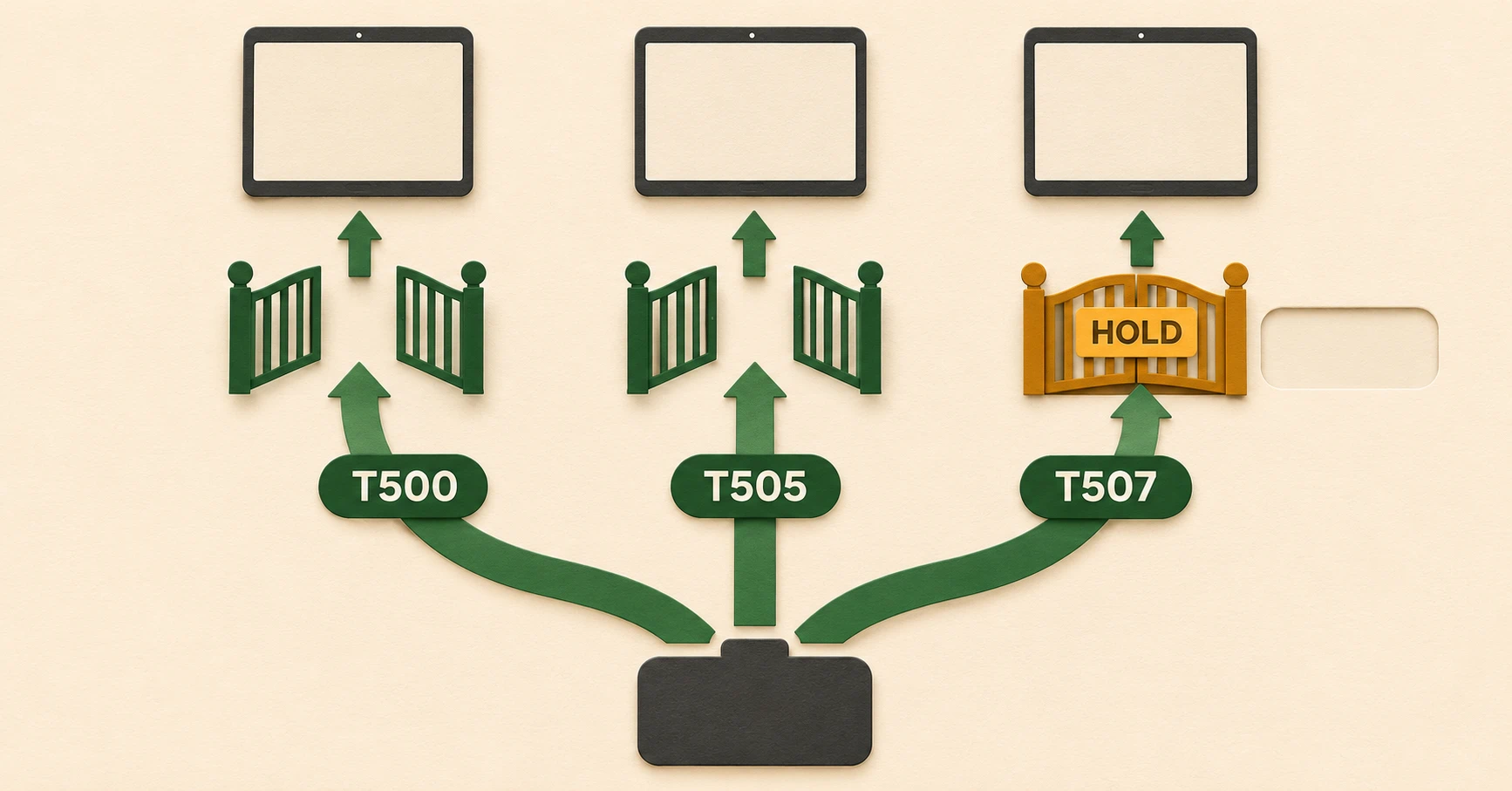
Request a packing list showing the supplier reference, revision, lot and quantity. Reconcile carton and unit labels before drawing samples. If a shipment combines two lots or revisions, keep the groups separate until their own evidence supports release.
For example, a shipment of sixty units may contain forty from one lot and twenty from another. Select samples within each group under the agreed plan. Record the source group for every tested unit. A sample result should support the disposition of the group it represents.
Give the warehouse a release record showing the approved applications, accepted quantity, held quantity and authorization. Keep held inventory unavailable for picking. Adapt the sampling structure and inspection limits to the tablet pack being purchased. ESCCharge battery sampling plan.
Plan Replenishment From Completed Battery Jobs
For tablet battery procurement, use completed battery repairs and confirmed upcoming projects to forecast demand. Track incoming tablets separately because diagnosis may identify other work. Account for warranty replacements and engineering samples as additional quantities.
Suppose a refurbishment network completes thirty battery jobs per month. With two months of coverage and a ten-unit buffer, its illustrative target is seventy units. If released stock is twenty-five and a confirmed incoming order contains fifteen approved units, the purchasing gap is thirty. Add receiving time and demand variation when setting the real coverage policy.
Request traceable assembly dates and available storage records for slow-moving inventory. Confirm what the date code represents. Agree a review interval with engineering and retain lot identity through warehouse rotation. Exclude held, superseded or overdue stock from available quantities. ESCCharge battery storage guide.
Control Supplier Exceptions and Substitutions
Send one specification sheet to every bidder. Ask each supplier to return the proposed reference, revision, supported applications, declared electrical values, package contents and any exceptions. Resolve an ambiguous generation label or omitted consumable before placing the production order.
A top-up shipment should carry its own lot record and be reconciled with the original shortage. If it uses another revision, obtain the appropriate approval before combining the stock. Close the shortage after accepted quantities and any supplier credits are recorded.
Confirm sample charges, MOQ, delivery terms and warranty conditions for the chosen configuration. Compare landed spend with complete accepted repair sets, including separately purchased consumables and receiving work. Use the selected tablet application when discussing availability. ESCCharge tablet and laptop battery range.
Keep Return Evidence Linked to the Installed Lot
Record the issued battery lot on the repair work order alongside the device code, installation date and acceptance observations. For a later complaint, capture the symptom and the charging setup or workload used to reproduce it.
Compare returns with the number installed from the relevant lot. Investigate whether the symptom follows the assembly, device or accessory under controlled checks. Where findings identify an affected group, hold the relevant inventory and send the supplier the configuration, observations and lot identifiers for review.
Frequently Asked Questions
Which model codes belong to the standard seventh-generation iPad?
Apple lists A2197 for Wi-Fi and A2198 or A2200 for cellular variants. Include the complete device code in the inquiry and approval record.
Can a supplier’s shared-generation listing be accepted?
Request the exact supported devices and retain an approval for each application you plan to service. Evaluate the finished revision and update the released list after review.
Does matching 32.4 Wh complete sample approval?
Energy is one specification field. Approval also includes assembly identity, physical fit, electrical requirements and installed results under recorded conditions.
What should the first bulk order include?
Specify the approved revision, application list, package contents, lot traceability and receiving criteria. Confirm the actual commercial terms with the supplier.
Send ESCCharge your A2197, A2198 or A2200 quantities and required package contents to discuss application-specific samples and a bulk quote. Confirm availability, documentation and terms for the proposed assembly.
External Source References