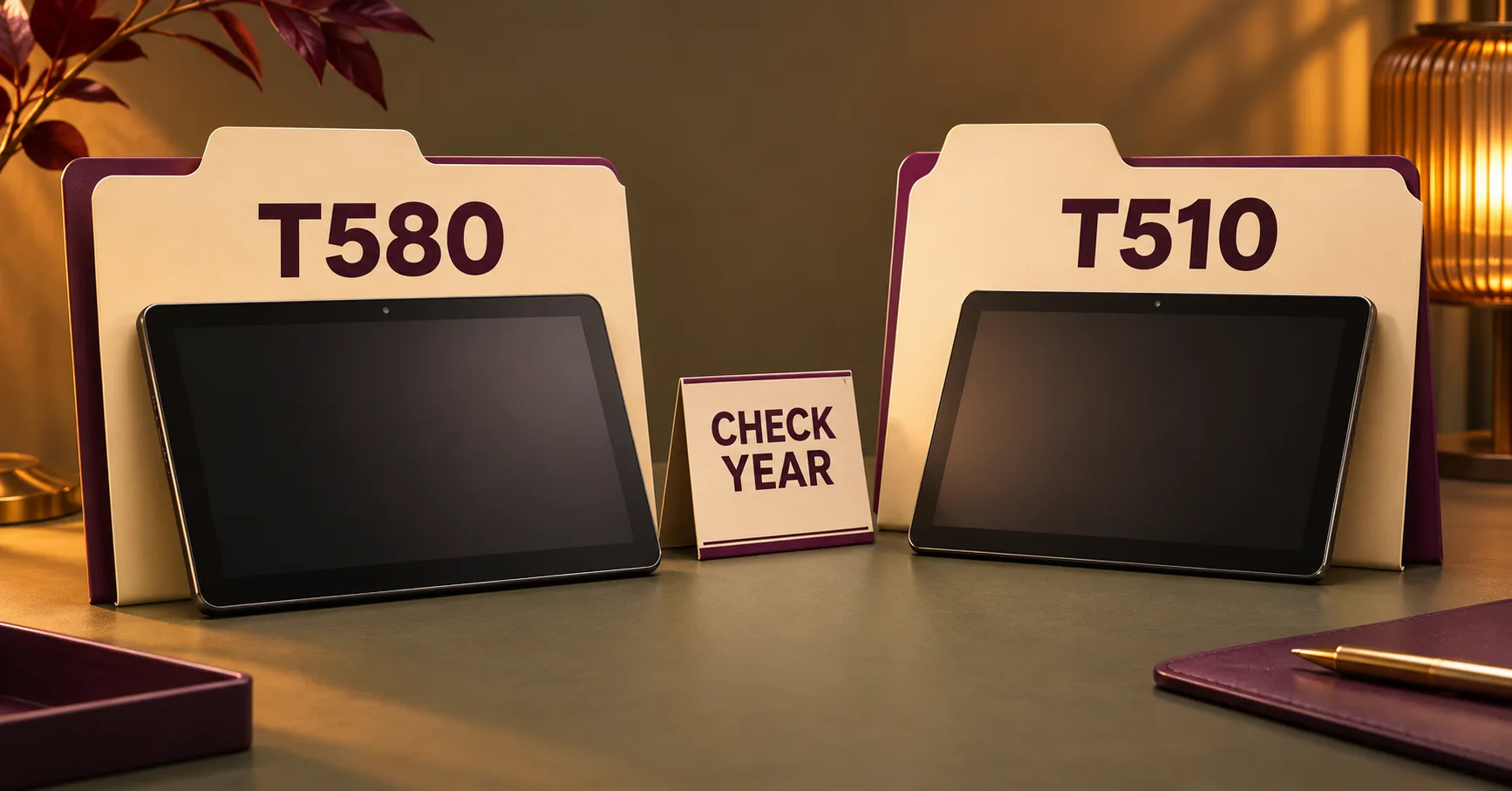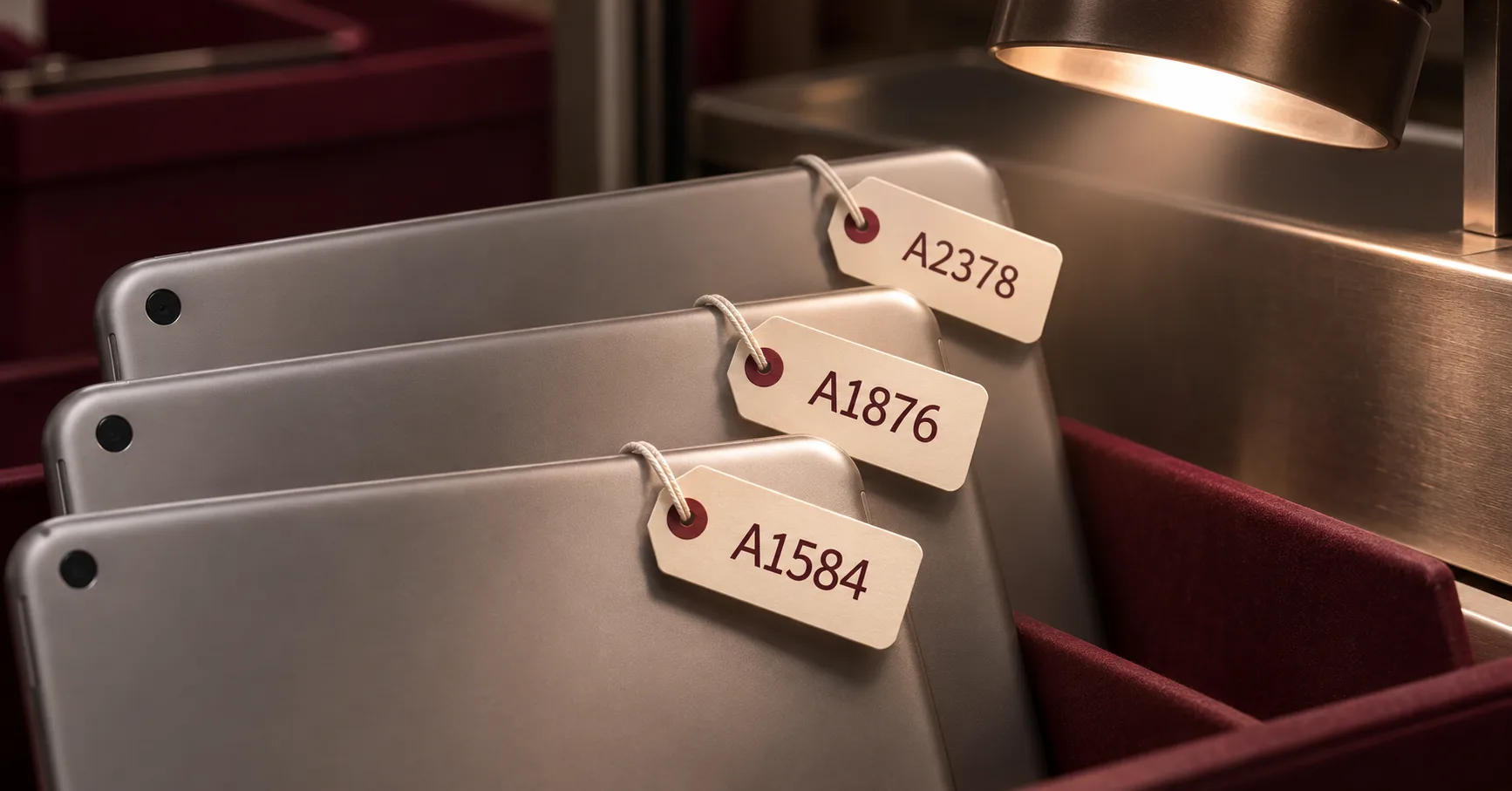

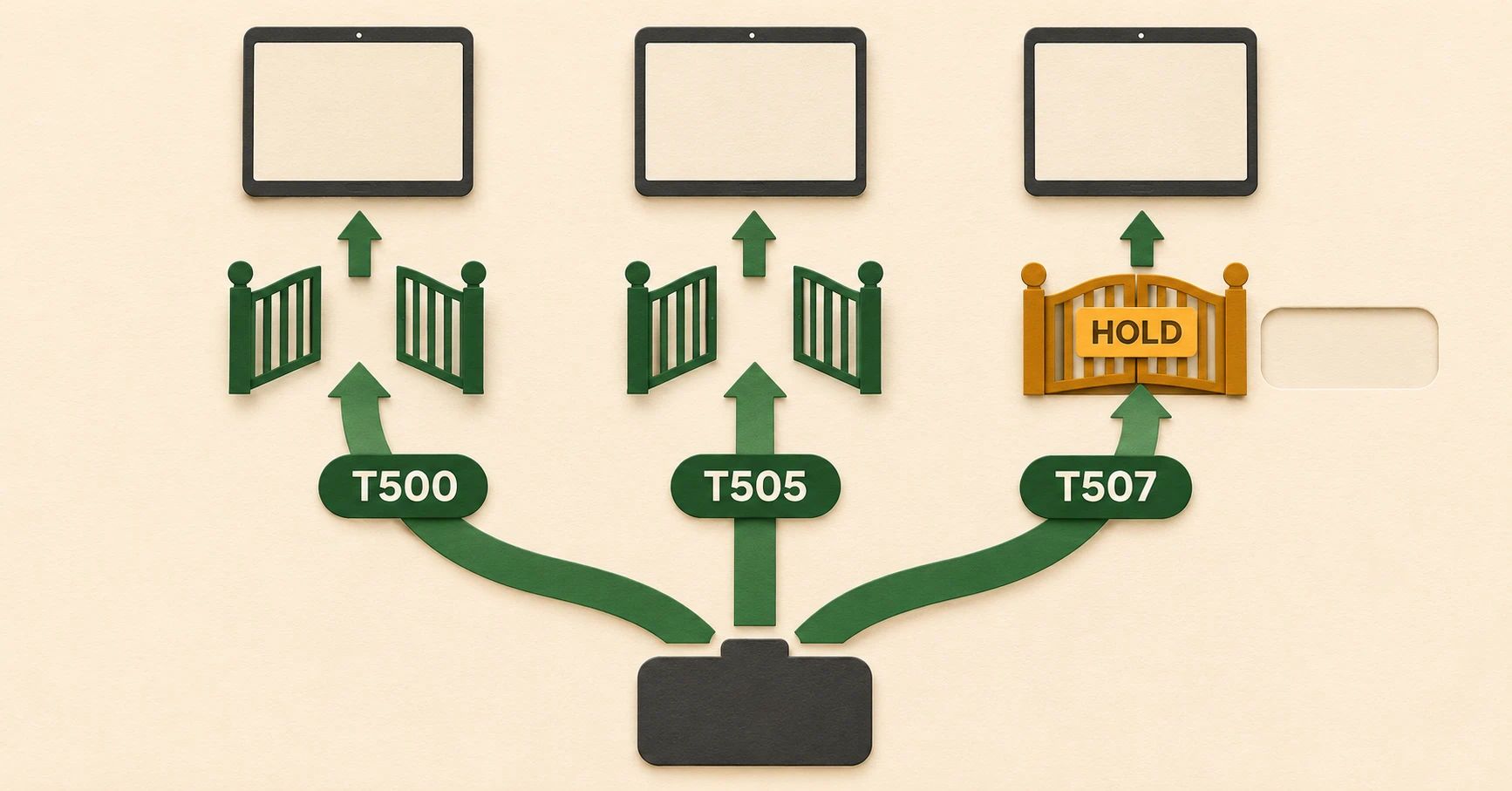
For bulk Galaxy Tab A7 battery replacement, approve the battery assembly against each exact device model before combining applications into one stock item. A listing that groups T500, T505 and T507 is a useful sourcing lead, but purchasing approval still needs a documented model match, electrical specification, physical fit and device test. Treat the Galaxy Tab A7 Lite as a separate product family.
This guide focuses on the 10.4-inch Galaxy Tab A7 purchasing decision for repair chains, refurbishers and parts wholesalers. The practical objective is to create one controlled assembly specification with an explicit application list, so purchasing, technicians and warehouse staff work from the same evidence.
Build the application list before requesting a price
Start with the full model code recorded from each tablet, then collect a photograph of the original battery label and connector area through a qualified technician. Preserve the device suffix where available. A shortened marketing name such as “A7 battery” leaves too much room for a receiving or picking error.
Samsung's Galaxy Tab A family datasheet identifies the A7 Wi-Fi configuration with SM-T500 part numbers and a 10.4-inch display. Its table labels that configuration “Galaxy Tab A7 (Wi-Fi).” Samsung's SM-T505 product specification identifies the 10.4-inch LTE model. These references establish device identities; they do not certify a third-party replacement assembly.
| Application requested | Evidence available | Purchasing action |
|---|---|---|
| T500 | Official SM-T500 Wi-Fi device reference | Record original assembly details and test a proposed sample in the actual device. |
| T505 | Official SM-T505 LTE device reference | Maintain a separate device-test record, including the intended connected workload. |
| T507 | Proposed supplier application requiring additional verification | Keep approval pending until exact device identity, original assembly evidence and sample results are available. |
| A7 Lite / SM-T220 | Separate official 8.7-inch device specification | Exclude from the A7 10.4-inch application list and quote separately. |
When requesting a Samsung T500 battery, attach the evidence behind the application rather than relying on the search phrase. Apply the same discipline to every additional code. A purchasing system should distinguish requested, sampled and approved applications so an untested model cannot silently become a sales claim.
Read 7,040mAh and 6,820mAh correctly
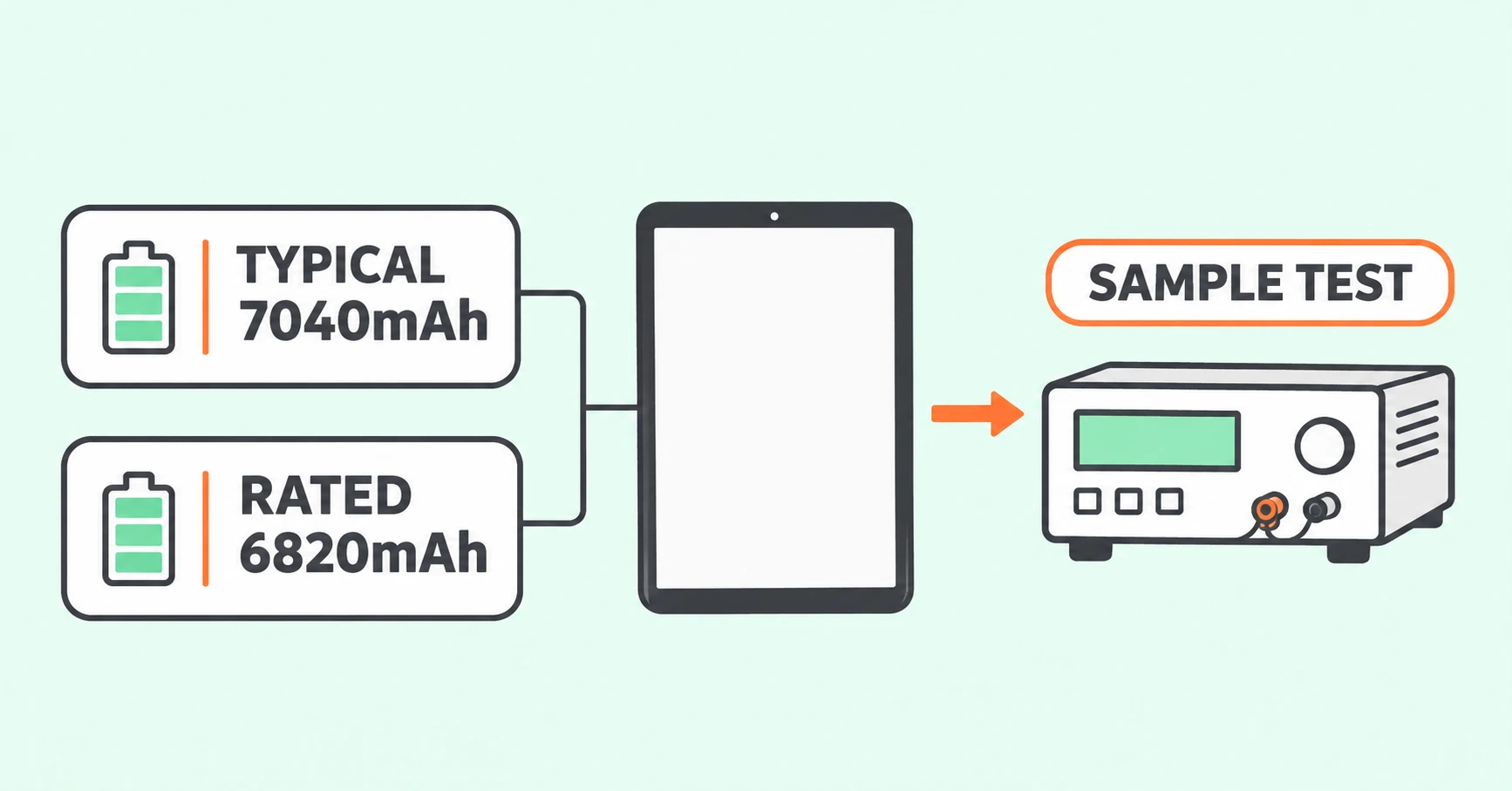
Samsung's SM-T505 page gives a typical battery capacity of 7,040mAh and states: “Rated capacity is 6,820mAh.” The same source explains that the typical value is based on third-party laboratory conditions. Keep those definitions attached to the numbers when preparing an RFQ or comparing a replacement specification.
A Tab A7 7040mAh battery search can identify the desired device family, but the number alone cannot establish sample quality. Ask the supplier to state the replacement's declared capacity, whether that declaration is typical or rated, its nominal voltage and the test method used to support it. Set a measurable acceptance requirement before samples arrive.
Compare capacity results only when charge termination, discharge current, cutoff voltage, ambient temperature and rest periods are aligned. Record the instrument and sample identity. Device charging time and tablet runtime answer different questions from a controlled discharge-capacity test, so retain separate reports.
Where energy in watt-hours is provided, check that it is consistent with the declared voltage and ampere-hour value. Do not copy a voltage from a similar tablet to complete missing paperwork. An unexplained difference between labels, a quotation and the test report should remain an open technical question.
Separate the A7 Lite before it reaches the warehouse
The Samsung Galaxy Tab A7 Lite Wi-Fi datasheet lists SM-T220 part numbers, an 8.7-inch screen and 5,100mAh battery capacity. These official differences provide a useful receiving-screen check when a mixed tablet shipment contains both A7 names.
Use full device codes on the purchase order and warehouse location labels. Keep a reference image attached to each internal SKU, and prevent a broad “A7” alias from authorizing a substitute. Screen size is a quick screening clue; final approval still depends on the exact assembly and device.
If an incoming order description contains only “A7/A7 Lite compatible,” hold the line for clarification. Ask for a separate application matrix and assembly drawing. Resolving the ambiguity before distribution avoids passing an unsupported compatibility claim into repair-center instructions or online listings.
Approve the assembly at three connected levels
Physical fit and cable routing
Compare the sample with the removed assembly for length, width, thickness, cable exit, connector position and insulation coverage. Inspect the installation path for cable tension, folding and pressure points. Qualified technicians should confirm closure without forcing the enclosure or compressing the battery.
Record photos of the fitted assembly and connector orientation. A unit that powers the tablet while the case remains open has not completed the mechanical review. Avoid bending or modifying a pack to make it fit; escalate the mismatch to the supplier.
Electrical and sensing behavior
Require a confirmed connector pinout, polarity, specified voltage range and temperature-sensing arrangement. Similar-looking connectors do not establish electrical equivalence. Check charging, discharge operation, displayed charge behavior and restart after an agreed low-charge endpoint under a controlled procedure.
If reviewing a Samsung T505 battery for an LTE fleet, use the fleet's relevant connected workload as part of device validation. Network activity, display settings and application use can change energy consumption; a runtime difference alone does not identify a defective pack.
Application evidence for each model
A Samsung T507 battery proposal should carry its own evidence package. Request the exact device record, original part markings and sample installation results before adding it to the approved list. Until that information is available, a T500 pass cannot close the T507 approval item.
Document approval against the sample revision and tested device configuration. If two applications eventually share one assembly, retain both device records under the shared stock code. This preserves the commercial benefit of common inventory while keeping the technical basis visible.
Use a workload comparison that technicians can reproduce
Prepare a fixed test script reflecting the project: for example, a defined video-call segment, local content playback and an idle interval. Agree the duration and pass criteria with the buyer before testing. Use the same brightness, volume, software configuration and accessory setup for comparable runs.
For an LTE test, document the network condition and connection mode. If the fleet operates on Wi-Fi, record that workload separately. Avoid claiming a fixed replacement runtime from a manufacturer's marketing estimate or from one unusually favorable test session.
Include a known-good device or assembly reference when diagnosing an unexpected result. A worn charging port, damaged cable, background software task or abnormal tablet condition can affect a test. Log the investigation before attributing every failure to battery capacity.
Stop testing units with swelling, leakage, physical damage or abnormal heating and move them through the site's qualified quarantine process. A normal boot should never override a visible safety concern.
Connect sample approval to repeat orders
The approved sample should become a controlled reference for replenishment. Record supplier assembly code, revision, declared electrical values, label layout, connector photos and the approved device list. Ask for advance notification of changes to the cell, protection circuit, cable, connector or manufacturing source.
Define the inspection lot and sample-selection method before shipment. The process described in ESCCharge's battery sampling-plan guide can help organize lot identity and escalation, with tablet-specific tests and acceptance criteria agreed separately. A sample pass provides evidence about the tested units; lot release requires the agreed receiving checks.
For illustration, suppose a buyer allocates 60 units to T500 repairs and 40 to T505 repairs. If T505 approval is still pending, only the T500 allocation can proceed under its approved record. The remaining 40 units stay restricted until the relevant application passes, even if all 100 packs carry the same proposed assembly code. This is a purchasing-control example, not observed field data.
Keep lot identifiers through receiving, repair and returns. Use the stock-condition controls in ESCCharge's battery storage guide, adapted to the supplier's tablet-pack requirements. Separate quarantined units from saleable inventory and review stored stock before dispatch.
FAQ for bulk A7 battery purchasing
Can T500, T505 and T507 use one warehouse SKU?
A shared SKU is reasonable only after the exact assembly has documented approval for each intended application. Preserve separate model-level evidence and revision history beneath that stock code.
Does a 6,820mAh label automatically contradict 7,040mAh?
Samsung distinguishes rated and typical capacity on the referenced device page. Establish which definition the replacement supplier uses, then compare against the agreed test specification.
Is A7 Lite included in the same order line?
Specify it separately. The official SM-T220 reference identifies a different screen size and capacity. A shared marketing-name fragment is insufficient for assembly approval.
What should a first RFQ include?
Provide full tablet codes, original battery photographs, quantities by application, destination market, package requirements and the required inspection evidence. Identify any unverified model as pending rather than presenting it as approved.
Turn the application matrix into an actionable RFQ
Send ESCCharge your T500, T505 and proposed T507 device details, original assembly markings, quantities and repair-channel requirements. Start from the tablet and laptop replacement-battery range and request confirmation of the proposed assembly, available evidence and sampling scope.
Confirm model availability, commercial terms, packaging, transport documents and delivery arrangements for the actual project. Approve the application matrix and sample revision before releasing the bulk purchase order.
External Source References