
The EU energy label for smartphones presents several product-level indicators in one consumer-facing format. Those indicators should not be treated as interchangeable battery specifications. Endurance per cycle, energy efficiency, battery durability and repairability are produced from different requirements and evidence.
A reliable EU smartphone battery label review connects every published value to the exact finished smartphone, software version, test method, report and product database record. Replacement-battery buyers must also distinguish evidence for the original marketed device from evidence for an aftermarket pack.
This checklist is intended for smartphone brands, importers, authorised representatives, distributors, compliance teams and battery suppliers. Legal scope and conformity decisions should be approved by qualified EU professionals using the latest consolidated legislation.
Separate the Energy Label From Battery Product Claims
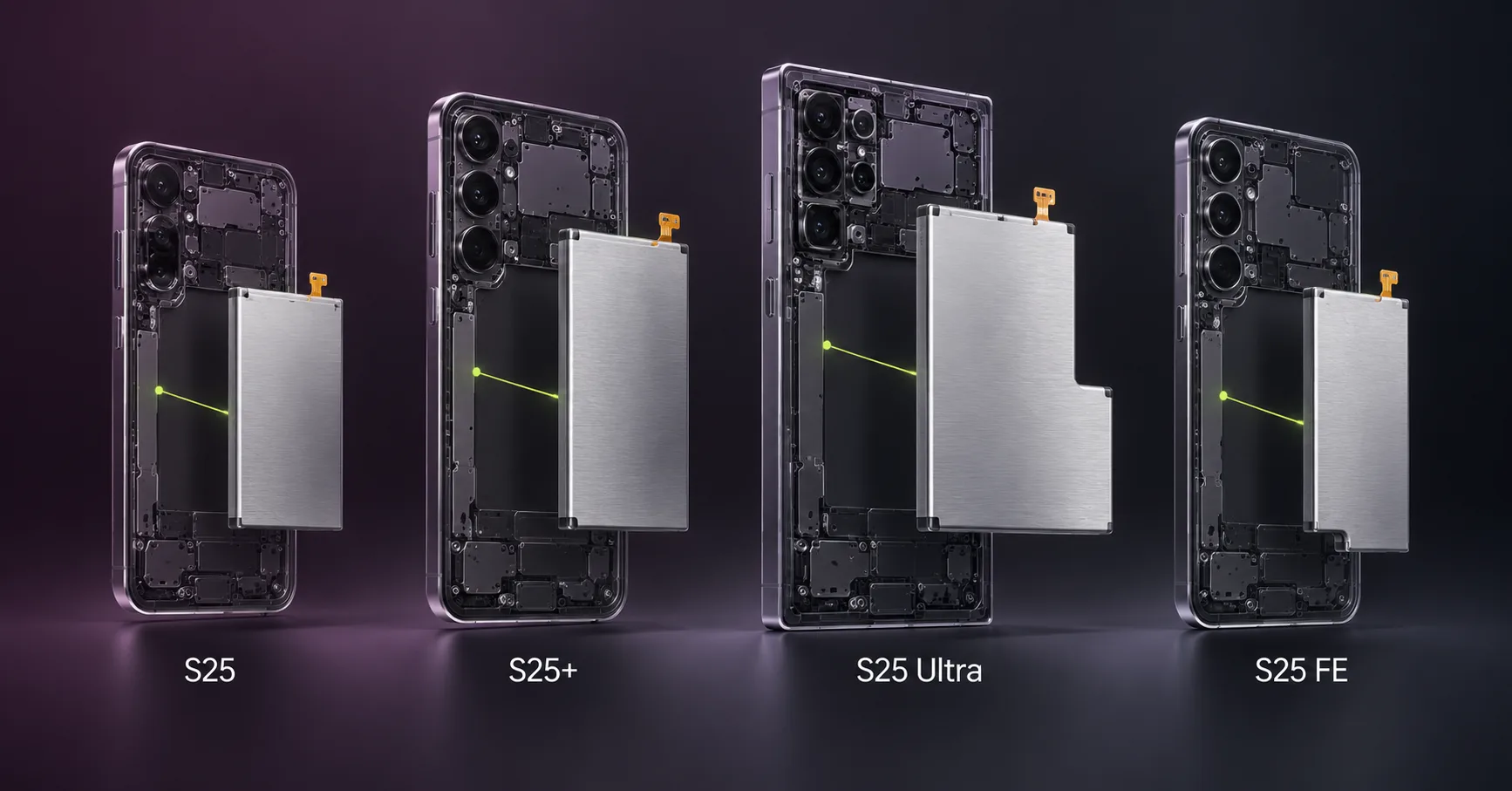
The label describes the finished smartphone placed on the EU market. Its endurance result includes the display, processor, modem, software, settings and battery. It does not certify every replacement battery that can physically fit the device.
A supplier may use the finished-device result to understand the target system, but cannot automatically print the same endurance or cycle claim on an untested pack. The replacement product needs its own specification, capacity evidence, compatibility validation and applicable battery-law review.
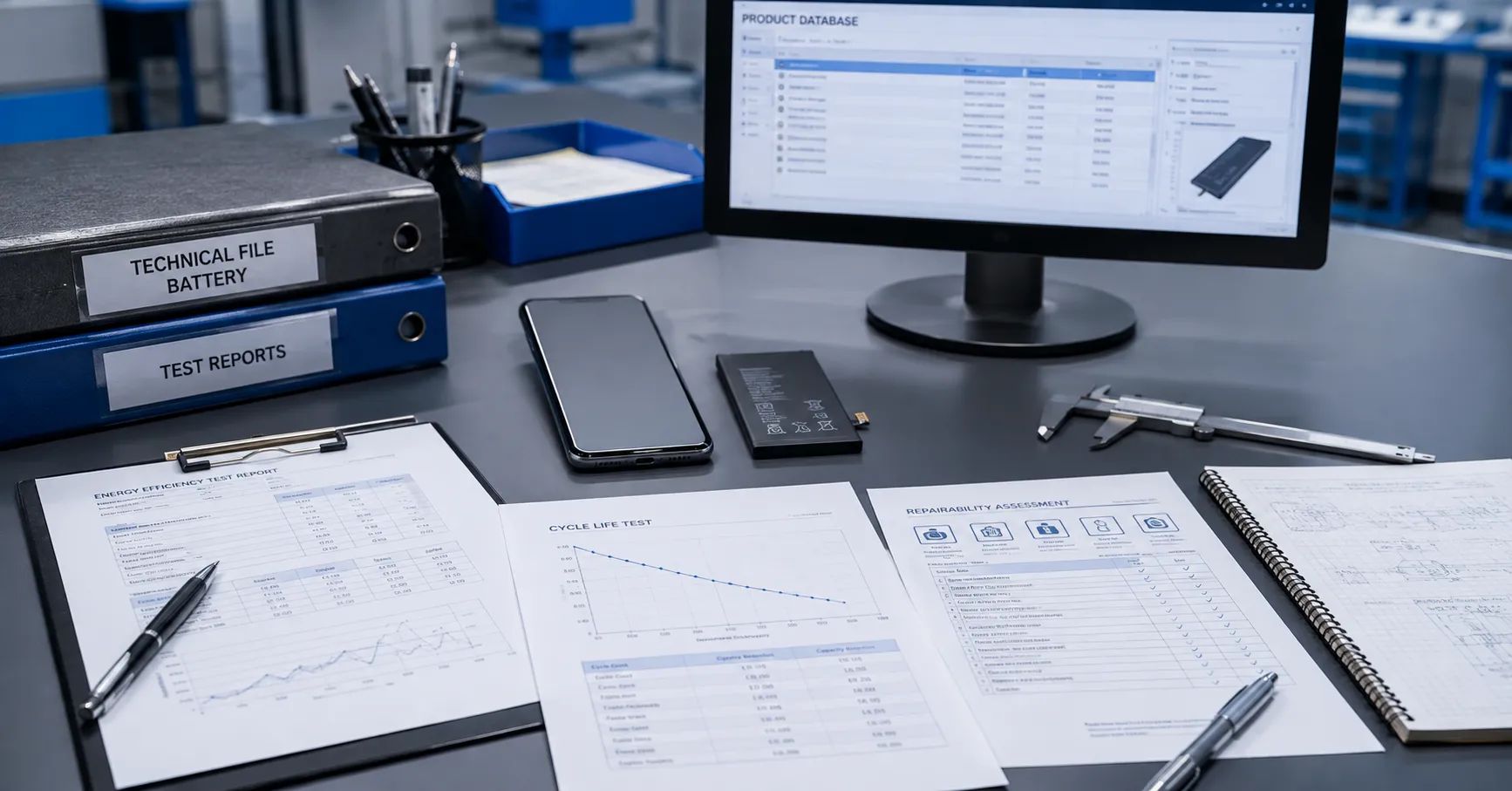
Maintain two linked files: the finished-smartphone conformity file and the replacement-battery technical file. Linking them preserves traceability without confusing their scope.
Identify the Responsible Product and Economic Operator
Record the brand, full model identifier, regional variant, hardware revision, software build used for testing, placement date and responsible manufacturer, importer or authorised representative.
Check whether a visually similar model uses a different battery, display, modem or software configuration. Do not reuse one label across variants unless the conformity assessment supports the grouping.
Freeze the identifier used on packaging, documentation, the label and the relevant EU product database entry. Alias names need a controlled cross-reference.
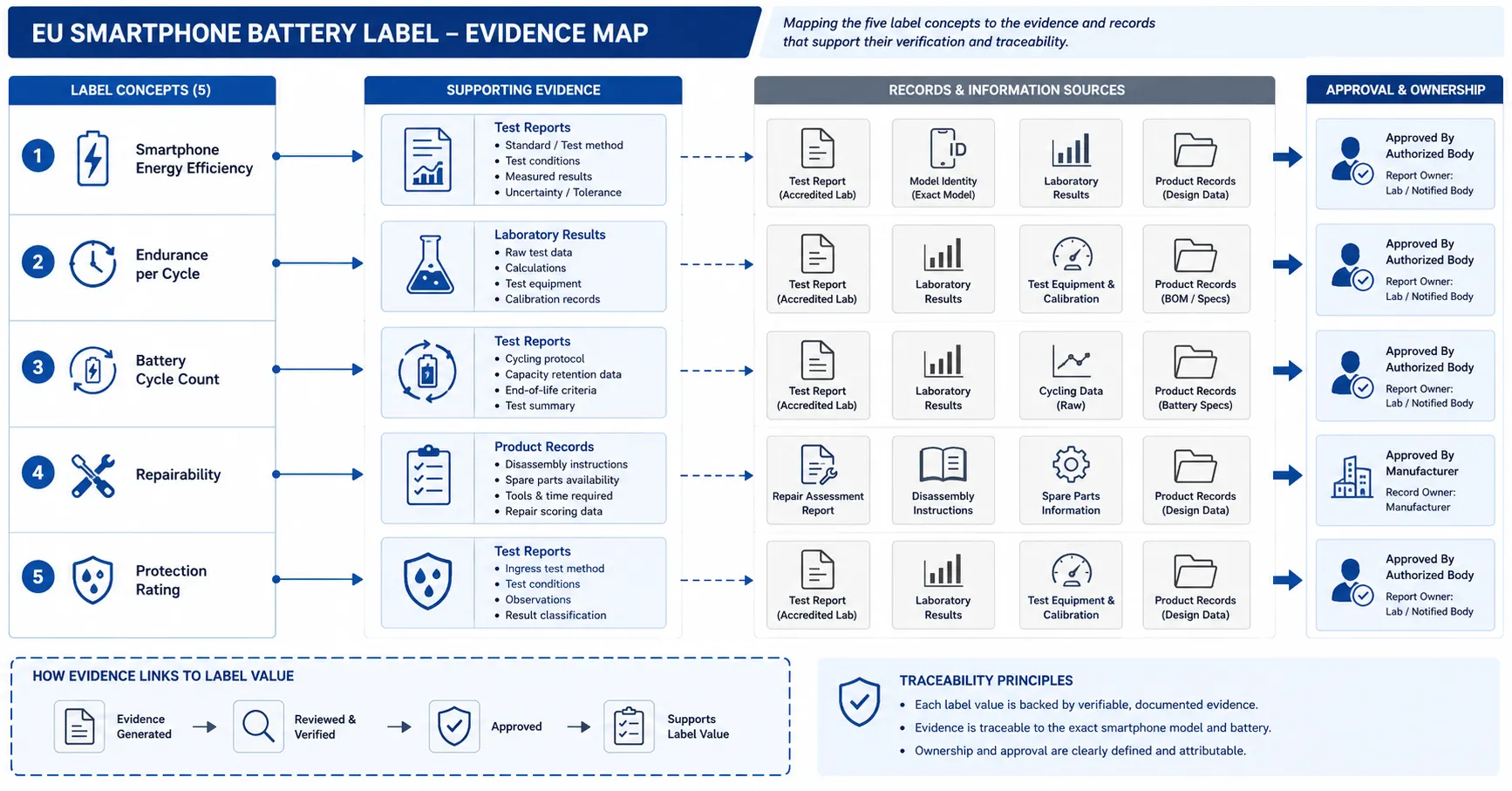
Map Every Label Value to Evidence
| Label area | Evidence | Control question |
|---|---|---|
| Energy efficiency | Prescribed energy and endurance test data | Does the report match the marketed model? |
| Endurance per cycle | Finished-device test, settings and software | Can the result be reproduced? |
| Battery durability | Cycle protocol and retained-capacity result | Are conditions and end point documented? |
| Repairability | Scoring inputs, parts and repair information | Are the inputs current and auditable? |
| Protection rating | Applicable test report | Does it cover the sold configuration? |
| Database record | Registration and uploaded documents | Does public data match approved artwork? |
Verify Endurance Per Cycle
Endurance per cycle is a complete-device result. Preserve the prescribed configuration, brightness, connectivity, applications, network assumptions, temperature, starting charge and termination criteria.
Record raw timestamps and energy data rather than only the rounded label value. If a software update changes power behavior, assess whether retesting or technical-file review is required.
Do not compare the label value directly with a casual video loop or customer screen-on time. Different workloads and networks produce different results.
Review Battery Cycle Durability
Regulation (EU) 2023/1670 includes smartphone battery durability requirements. The EUR-Lex summary describes at least 800 charge and discharge cycles while retaining at least 80% of initial capacity under the prescribed conditions.
This is not permission to claim that every replacement pack will provide 800 consumer days or identical field life. Verify the complete protocol, charge rate, discharge rate, temperature, voltage limits, rest time, capacity measurement and sample selection.
Retain intermediate capacity, resistance, temperature and dimensional data. A final passing average can conceal abnormal individual samples.
Distinguish Initial Capacity From Remaining Capacity
Rated capacity, measured initial capacity and retained capacity after cycling are different values. State which baseline is used and how it is measured.
A replacement battery with a higher printed mAh value does not automatically improve the label endurance of the marketed phone. Usable energy, voltage curve, cutoff, software estimation, resistance and temperature also influence performance.
Use ESC’s battery capacity testing guide for general method controls, then apply the legally prescribed method where conformity data is required.
Audit the Repairability Score Inputs
The repairability score is broader than battery removal. Inputs can involve documentation, disassembly, spare-parts availability, delivery time, software and pricing.
Keep evidence for battery access, required tools, fasteners, adhesives, replacement instructions and functional restoration. For foldable devices, include hinge and display-related parts where applicable.
If a product change alters adhesive, enclosure, fasteners or software completion, review the score instead of assuming the original result remains valid.
Check Spare-Parts Availability
The smartphone ecodesign framework includes long-term availability of critical spare parts. Maintain the end-of-market date, support end date, ordering process, professional-repairer controls and delivery records.
A public list that names a battery but cannot deliver the correct regional revision is not an effective inventory system. Link each part number to device and hardware compatibility.
Storage planning must address lithium-ion aging. Use controlled state of charge, environment, periodic inspection and replenishment rather than relying only on a large final stock.
Review Battery Replacement and Software Access
European Commission guidance explains that software can support communication and safety but should not impede replacement with a compatible battery. Professional repairers should receive non-discriminatory access to necessary software or firmware under the applicable conditions.
Document eligibility, access steps, cost, supported models, completion results and errors. A warning message should be evaluated by its practical effect, not only its wording.
Do not promise that every third-party pack will display the same status as an original component. Report observed behavior by device, software build and repair method.
Control Artwork and QR Readability
Use only the approved label template, dimensions, colors, values and model identity. Do not redraw the official format from memory or from an online screenshot.
Verify that scaling and printing preserve readability, especially the QR code. Test production packaging rather than only the design file.
Set artwork permissions so unapproved values cannot be changed by marketing, distributors or packaging suppliers.
Align the Product Database Record
Compare the database entry, technical file, test reports, packaging and public product page. Model names, values and responsible-party information should agree.
Use a release checklist and two-person approval before publication. Archive superseded records rather than overwriting the evidence trail.
If a correction is necessary, document the affected lots, channels, decision owner and communication.
Audit Supplier Evidence
Request original reports or controlled copies, laboratory identity, dates, sample identity and methods. A spreadsheet without sample traceability is insufficient for a regulated claim.
Check whether the battery supplied for production matches the tested cell, protection board, connector, flex and capacity. Require notification before critical changes.
Incoming inspection should connect every shipment with approved specifications and retained samples. ESC’s incoming inspection guide provides a general batch-control framework.
Prevent Common Claim Errors
- Applying a finished-phone label to a loose replacement battery.
- Describing endurance per cycle as guaranteed consumer screen time.
- Publishing cycle numbers without test conditions.
- Using rated mAh as evidence of label performance.
- Ignoring software and regional variants.
- Failing to review repairability after a design change.
- Keeping inconsistent database, packaging and website values.
- Using an unreadable or incorrect QR code.
Design a Report-Traceability Review
Create an evidence index that connects every label field with the laboratory report, report page, tested sample, software build, calculation workbook and approver. Record report amendments and laboratory clarifications instead of replacing the original file.
Check that the sample identifiers in photographs, raw data and final report agree. If the laboratory used an engineering sample, document why it represents production and what confirmation testing was completed.
Protect calculation cells and use a second-person review for rounding and class boundaries. A correct laboratory value can still become an incorrect label through transcription, unit conversion or rounding.
Verify Production Against the Tested Configuration
Inspect pilot and mass-production devices against the configuration used for conformity evidence. Review battery cell and pack, display, processor or board revision, modem, charging control and installed software.
Not every component change alters label performance, but every relevant change requires documented assessment. Define who decides whether engineering review, partial regression or full retesting is necessary.
Use incoming inspection and production audits to prevent an approved battery from being replaced silently with a different capacity, voltage curve, resistance distribution or protection design.
Prepare a Market-Surveillance Package
Keep a controlled package containing model identity, declaration information, label artwork, database evidence, test reports, calculations, repairability inputs, spare-parts process and change history. Assign an owner and retrieval time.
When an authority questions a value, respond with the evidence chain rather than a marketing explanation. Record requests, supplied documents, corrections and affected products.
Test the internal retrieval process periodically. Evidence that exists but cannot be associated quickly with the exact model creates avoidable enforcement and customer risk.
Review Distributor and Marketplace Listings
Distributors and online marketplaces may copy specifications into their own templates. Compare their public endurance, cycle and repairability statements with the approved record.
Prohibit partners from converting an energy class into an unsupported “best battery” claim or applying the finished-phone result to replacement packs. Provide controlled product data and revision notices.
Archive screenshots of significant listings and corrective communications. Repeated inaccuracies should trigger stronger catalogue governance.
Manage Software and Firmware Changes
Include this assessment in the formal EU phone energy label verification record so the relationship between software and approved values remains visible.
Software can change background activity, charging, performance and energy management. Maintain a release-impact assessment that identifies whether the update affects test conditions or published values.
Run a risk-based regression set after material updates: charging, standby, prescribed endurance segments, temperature and critical repair functions. Expand testing if results shift beyond the approved review threshold.
State the tested build in the technical file even if consumers receive later versions. Do not imply that a historical report measured software that did not yet exist.
Create a Release Checklist
- Confirm scope and economic operator.
- Freeze the marketed model identity.
- Verify each test report and sample.
- Recalculate approved label values.
- Review battery durability evidence.
- Audit repairability inputs.
- Confirm spare-parts and software processes.
- Approve artwork and QR readability.
- Match the database and public information.
- Freeze records and change control.
Frequently Asked Questions
Does the label certify a replacement battery?
No. It describes the finished smartphone configuration assessed under the applicable rules.
Does 800 cycles mean 800 days?
No. A test cycle is defined by the prescribed method and does not equal one calendar day of consumer use.
Can a higher-capacity pack improve the label?
Not without finished-device reassessment. Fit, voltage, software, safety, heat and conformity must also be considered.
When should label evidence be reviewed?
Review after material hardware, battery, software, repair-process or regulatory changes.
Who approves the final values?
The responsible economic operator should use its conformity process and qualified EU advice.
Keep Every Published Value Traceable
A compliant EU smartphone battery label process treats the label as the final output of controlled testing, product identity, repairability evidence and database alignment—not as a marketing estimate.
Send ESC your target models, battery specifications, EU markets and evidence requirements. ESC can support model-level samples and batch records. Legal scope and label approval remain with the responsible economic operator.
External Source References
- European Commission — New EU Rules for Durable and Repairable Smartphones
- European Union — Summary of Regulation EU 2023/1670
- European Commission — Battery Removability and Replaceability Guidelines