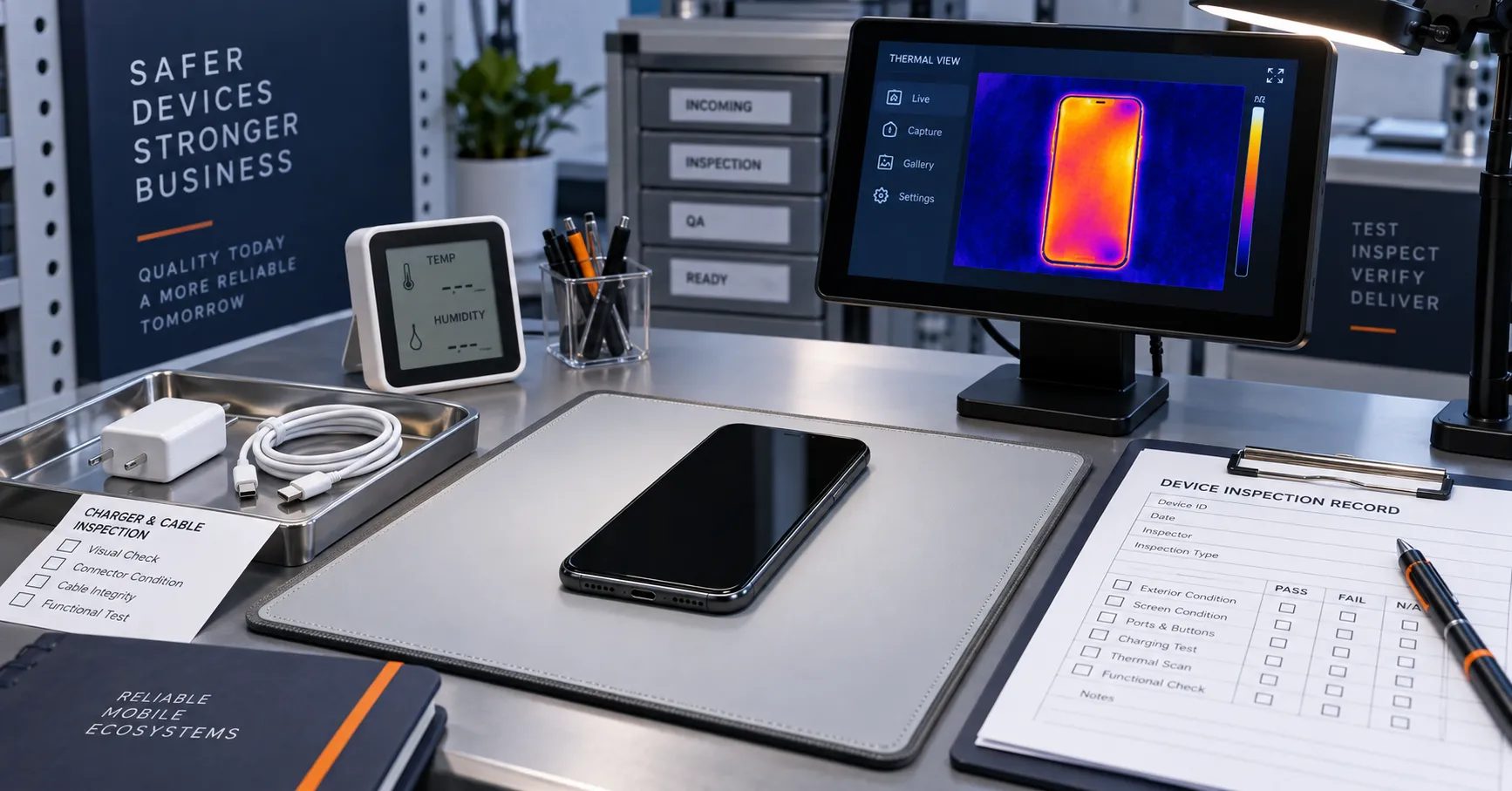

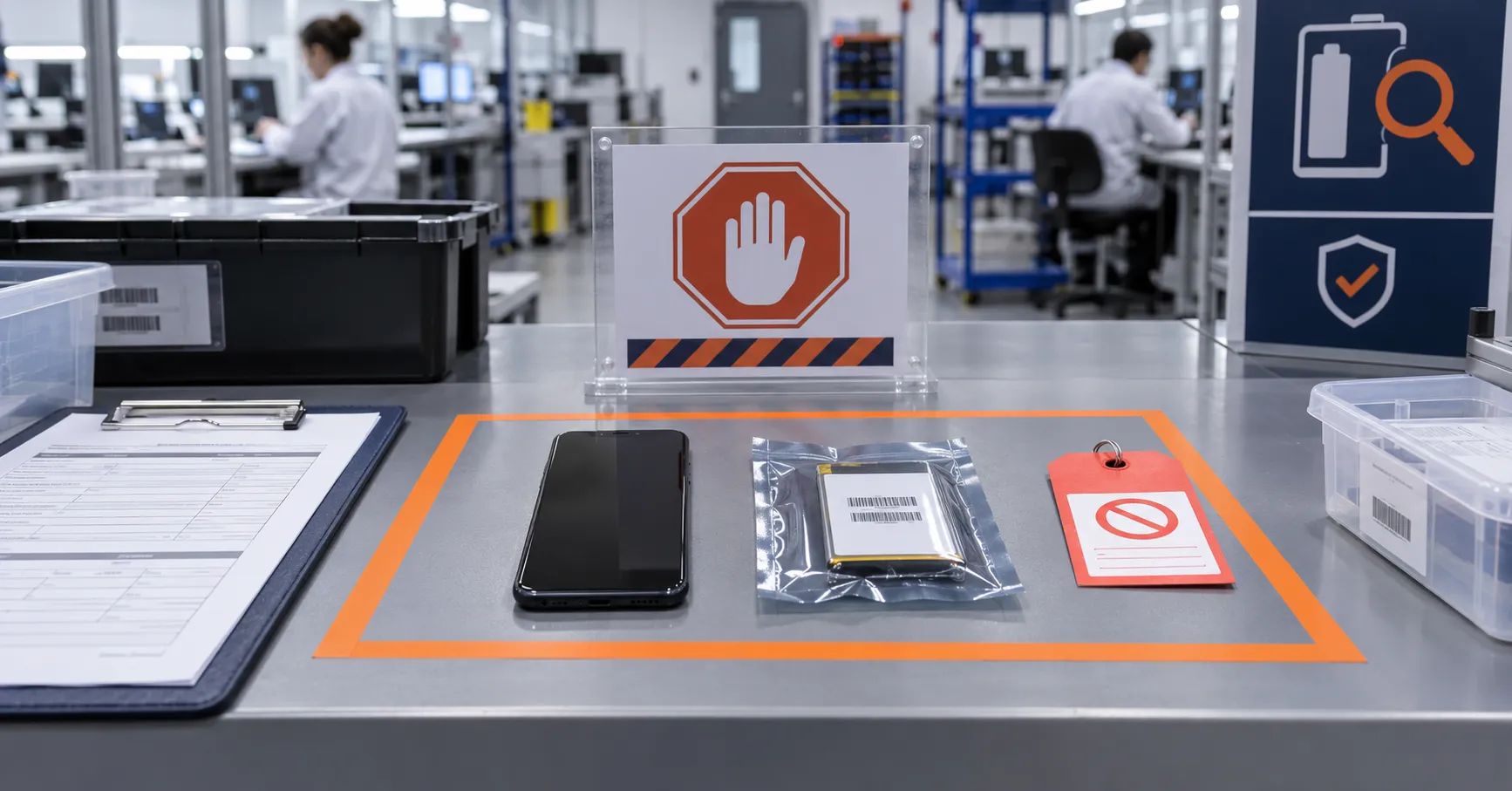
Quick answer: suspected phone battery leakage should trigger an immediate stop-work decision. Do not charge, power-cycle, install, open, press, wipe, smell closely, electrically test or return the item through a normal parcel process. Restrict access, preserve observations without contact, identify the SKU and lot, and hand the case to trained safety, environmental and dangerous-goods personnel under the manufacturer’s instructions and local rules.
For a B2B buyer, the objective is not to prove the chemistry at the workbench. It is to protect people, prevent suspect inventory from re-entering sale, preserve evidence and determine whether the event is isolated or signals wider exposure. A strong record also gives the supplier enough information to contain the right production and shipment scope.
What Counts as a Suspected Phone Battery Leakage Event?
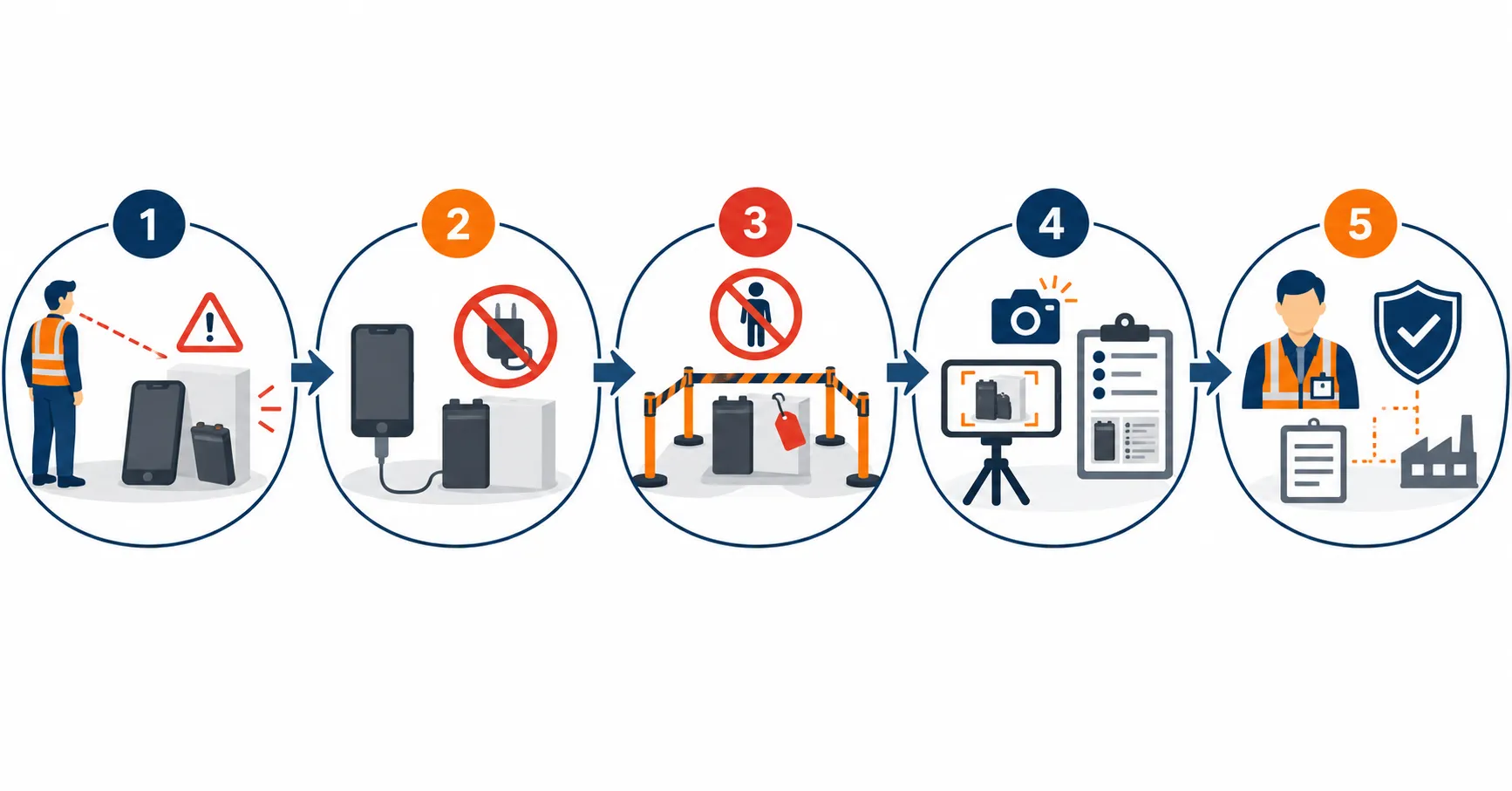
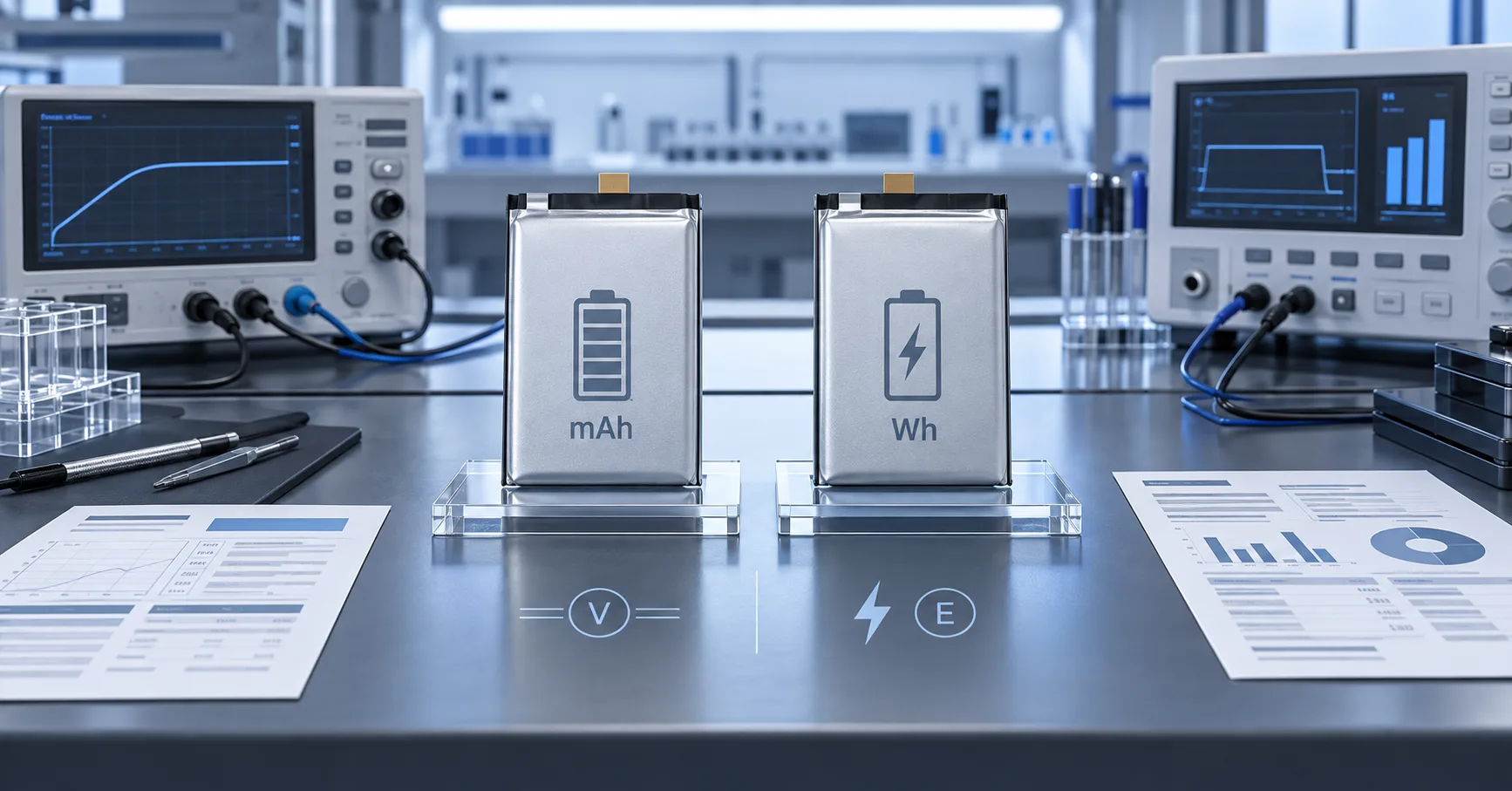
File Name: phone-battery-leakage-evidence-and-quarantine-flow.webp
Caption: A no-contact evidence and quarantine workflow for suspected battery leakage.
Upload Status: Pending
Treat leakage as a suspected condition whenever staff observe unexplained liquid, wetness, crystallized residue, corrosion, staining or an unusual odor near a battery, pack seam, flex area, connector or device cavity. Heat, hissing, venting, smoke, swelling, discoloration or damaged insulation raises the urgency. OSHA’s workplace lithium-battery bulletin lists leaking, rising temperature, hissing, bulging, cracking and smoking among signs that require a lithium-powered device or battery to be removed from service and addressed through a trained safety program.
Observation is not chemical identification. Adhesive, cleaning fluid, device liquid ingress, flux residue, corrosion from another source and contamination introduced during repair can resemble a phone battery leaking. Staff should record what they see and where they see it, but should not touch, sniff closely, sample or attempt to identify the material. A battery can also be hazardous without visible liquid.
| Observed condition | What it may indicate | Immediate business status | What not to conclude |
|---|---|---|---|
| Wetness or residue near a cell seam | Possible leakage, external contamination or prior liquid ingress | Stop work; restrict access; escalate | Do not identify the substance by appearance |
| Bulge or lifted screen without residue | Possible swelling or mechanical pressure | Stop use and follow the damaged-battery procedure | Swelling alone does not prove visible leakage |
| Corroded connector or device cavity | Possible moisture, contamination or chemical exposure | Hold the device and associated battery | Do not assign the source before investigation |
| Heat, hissing, venting or smoke | Active escalation or potential thermal event | Activate the site emergency plan and keep people away | Do not continue photography or move closer for evidence |
For mechanism and prevention questions about pouch expansion, use the separate iPhone battery swelling guide. This page begins when leakage is suspected and the business needs an incident-control and supplier-investigation path.
Use a Stop-Work and Escalation Rule, Not a DIY Cleanup Procedure
Apple’s iPhone safety guidance advises users to discontinue use when an iPhone or its battery is suspected to be damaged and states that battery service should be performed by trained technicians. That principle is especially important for an iPhone battery leakage complaint: a working display or remaining charge does not make the condition suitable for further testing.
First-line staff should have authority to stop use, stop charging, prevent sale or installation, restrict access and notify the designated safety lead. If heat, smoke, fire, venting, rapid change or a strong abnormal odor is present, evidence collection becomes secondary. Follow the site emergency action plan, manufacturer guidance and local emergency instructions. Do not improvise extinguishing, neutralization, absorption, cleanup or disposal methods from a generic internet article.
The article intentionally does not provide electrolyte-contact first aid or cleanup steps. Battery formulations, leaked materials, exposure routes and local requirements vary. The responsible team should use the exact product or cell safety data supplied by the manufacturer, workplace exposure procedures, and qualified medical or emergency advice. Staff should never be told that ordinary gloves or a familiar cleaner automatically make the task safe.
Quarantine Is a Controlled Status and Area
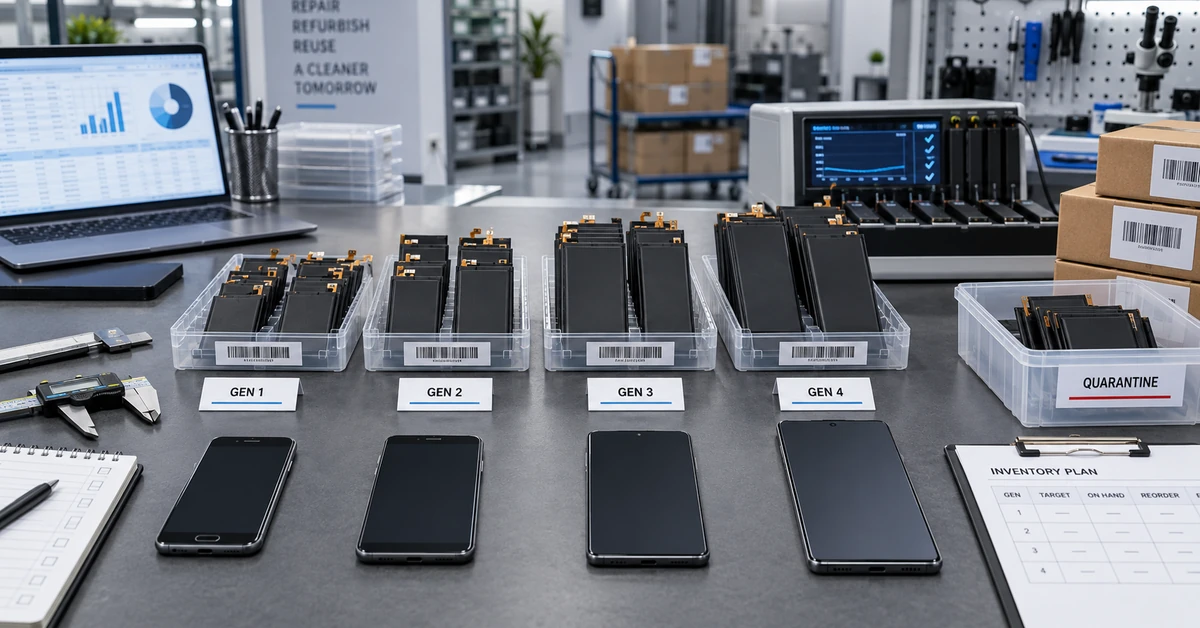
“Move it to quarantine” can be unsafe if it encourages an untrained person to pick up an unstable device. In this guide, quarantine means a controlled status: stop access, prevent charging and handling, identify the location, assign responsibility, and let trained personnel decide whether and how the item can be physically transferred.
A practical control record should include:
- Incident ID, date, time and exact location
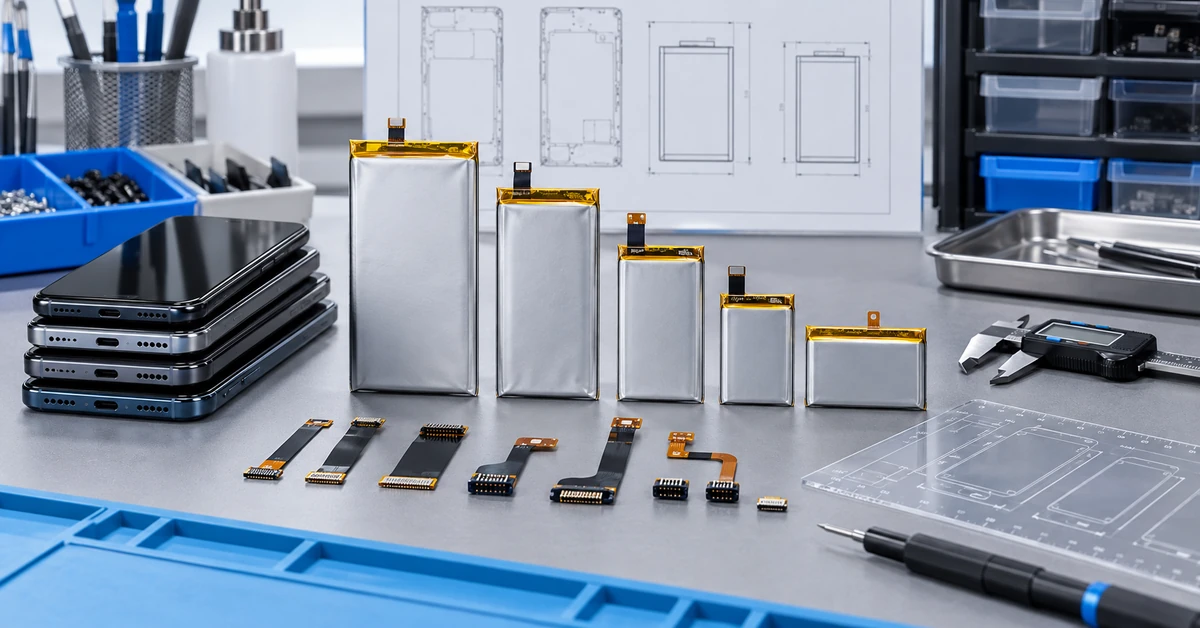
- Device model, buyer SKU, supplier SKU and battery reference
- Lot, carton, purchase order and shipment identifiers
- Status when found: packaged, stored, being installed, in test, installed, returned or in transit
- Observed signs and whether they were stable, changing or escalating
- Nearby stock, combustible materials or occupied work areas
- Person who stopped the work and person who accepted escalation
- Access controls and time of each status change
Do not return the item to the normal quality-hold shelf. ESC’s mobile phone battery storage SOP explains routine stock zoning and traceability; a suspected leakage event requires the site’s damaged-battery and hazardous-material escalation rules on top of those warehouse controls.
Preserve Evidence Without Touching or Manipulating the Battery
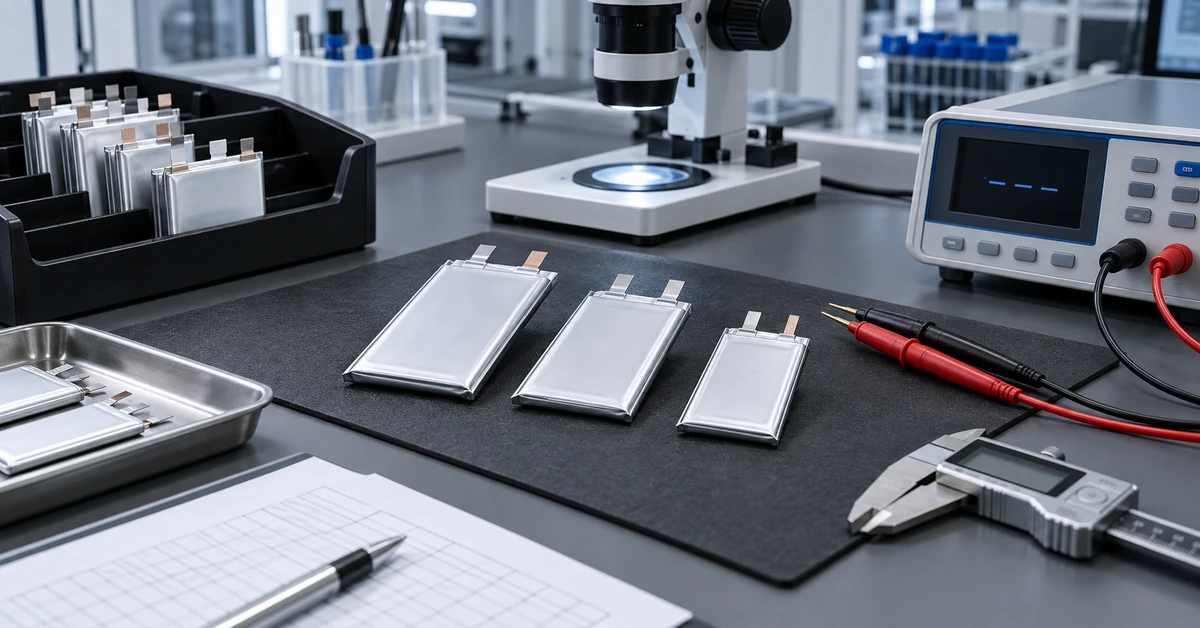
The safest useful evidence is often created before anyone disturbs the scene. From a safe location, and only while conditions are stable, capture wide and close photographs using zoom rather than physical manipulation. Include the device or package position, visible residue location, labels that can be read without moving the item, nearby carton identity and any screen-lift or deformation visible from the existing angle.
Record facts, not diagnoses. “Clear liquid observed below the lower-right pack edge at 10:32” is stronger than “electrolyte leaked because the seal failed.” Note whether the device was connected to power, but do not reconnect or operate it. Preserve relevant CCTV, receiving photographs, installation records, workstation ID and customer-return packaging if doing so does not create additional exposure.
The following evidence should remain prohibited for first-line staff:
- Opening a phone or pack to obtain a better photograph
- Peeling insulation, lifting labels or exposing a pouch seam
- Wiping, swabbing or collecting the suspected material
- Pressing, bending or measuring a compromised pouch
- Charging, discharging, resistance testing or power cycling
- Deliberately smelling the device or bringing it close to the face
- Sending the item back before dangerous-goods review
For ordinary non-safety complaints, the mobile phone battery warranty workflow provides a broader evidence structure. Leakage cases override routine reproduction testing: a physically compromised battery should not be energized to strengthen a claim.
Define the Potentially Affected Scope Before Releasing Stock
One event does not automatically prove that an entire production lot is defective, but it is enough to stop release of inventory that cannot yet be separated from the event. Start with the narrowest defensible scope and expand it when traceability is weak or common exposure is plausible.
| Scope question | Evidence to compare | Possible control decision |
|---|---|---|
| Is identity confirmed? | Battery label, device model, packaging, purchase order and supplier code | Hold all units whose identity cannot be separated reliably |
| Is the issue linked to one carton or lot? | Lot labels, carton map, receiving photos and picking records | Hold the identified lot and adjacent mixed stock pending review |
| Is there a common handling event? | Impact, compression, moisture, heat, storage and workstation history | Hold all units exposed to that event, even across more than one lot |
| Are there repeat complaints? | Incident codes, dates, models, regions and symptom wording | Escalate from unit containment to shipment or program review |
| Can unaffected stock be distinguished? | Readable lot control and documented segregation | Release only through an authorized, recorded quality decision |
Do not use a normal appearance check to clear nearby units if the root cause could involve shared materials, sealing, contamination, transport damage or storage exposure. Conversely, do not label every unit defective without evidence. Document “held pending scope determination” until the supplier and buyer quality teams agree on the next evidence step.
Build a Battery Leakage Supplier Investigation
A battery leakage supplier investigation should begin with containment, not argument. Send the supplier the incident ID, confirmed product identity, lot and shipment data, non-contact photographs, timeline, quantity received, quantity installed or sold, quantity remaining, complaint history and the buyer’s current hold scope. Clearly mark uncertain facts as unknown.
Ask the supplier for a written response covering:
- Immediate containment: which models, lots, dates, materials, work centers or shipments should be placed on hold?
- Traceability: which cell, pouch, sealing, electrolyte, protection, insulation and assembly records correspond to the affected unit?
- Production review: were there deviations, rework, alarms, maintenance events, yield changes or inspection anomalies?
- Change control: did any approved material, sub-supplier, process, equipment, parameter, packaging or transport condition change?
- Comparison evidence: are retained samples and unaffected lots available for analysis under a qualified plan?
- Root-cause status: what is confirmed, what remains a hypothesis, and what evidence would discriminate among causes?
- Corrective and preventive action: what action, owner, due date and effectiveness check will apply?
- Commercial disposition: how will held inventory, downstream claims and any authorized sample analysis be managed under the agreement?
A useful supplier response should distinguish cell or seal failure from installation puncture, device liquid ingress, external contamination, logistics damage and storage exposure. It should not convert “no similar complaint found” into proof that the event did not occur. If the sample cannot legally or safely be transported, the parties may need qualified local examination, remote evidence review or an authorized dangerous-goods solution rather than an ordinary return.
Do Not Ship a Suspect Battery as a Normal Return
Transport classification is a separate safety and compliance decision. PHMSA’s damaged, defective or recalled battery guidance identifies batteries that have leaked or vented as examples requiring assessment and states that these batteries present greater potential for short circuit, heat release or fire. Its lithium-battery transport guidance also explains that damaged, defective or recalled lithium batteries are forbidden from air transport under applicable U.S. hazardous-material rules.
Do not infer a universal shipping method from those U.S. references. Rules differ by jurisdiction, mode, carrier, battery condition and whether the battery is contained in equipment. Before any movement or return, obtain a written determination from trained dangerous-goods personnel and the accepting carrier or authorized waste/recycling contractor. The decision must cover classification, packaging, documentation, mode, route, emergency information and final consignee acceptance. Never ask a customer or branch to conceal the condition or describe it as a normal used battery.
The U.S. EPA guidance for used lithium-ion batteries also warns that damaged batteries can create fire hazards and advises contacting the battery or device manufacturer for specific handling information. Disposal and recycling must follow the applicable local program; a leaking lithium-ion phone battery should not enter ordinary trash or routine mixed recycling.
Close the Case With Evidence, Not Only a Credit Note
A refund or replacement may resolve the immediate commercial claim, but it does not close a safety investigation. Closure should record the final affected scope, disposition authority, root-cause confidence, corrective actions, effectiveness evidence and any update to incoming inspection, storage, installation training, packaging or supplier change control.
Incoming quality teams can use the separate mobile phone battery IQC guide to strengthen identity, lot and condition records. For leakage risk, add clear stop-work criteria and make sure inspectors understand that normal electrical sampling ends when physical compromise is suspected.
Trend incidents by model, supplier lot, carton, date, facility, technician stage and observed condition. Use rates only when the denominator is reliable—for example, units received, installed or sold for the same defined population. Avoid mixing unverified customer descriptions with confirmed inspection outcomes. A rising or repeated signal should trigger a documented review even when each individual claim has already received a commercial remedy.
Frequently Asked Questions
Is every clear or sticky residue battery electrolyte?
No. Adhesive, cleaning products, moisture, device liquid ingress, corrosion products and other contamination can appear near a battery. Treat the event cautiously, preserve observations and let qualified personnel determine what analysis is appropriate. Do not identify a substance by touching or smelling it.
Is phone battery leakage the same as swelling?
No. Swelling describes expansion, usually visible as a bulge or screen lift. Leakage describes suspected material escaping from a cell or pack. They can occur together or separately, and both justify stopping use when battery damage is suspected.
Should an iPhone battery leakage claim be tested in another phone?
No. A suspected physically compromised battery should not be installed, charged or energized for claim reproduction. Preserve the identity and incident record, then use trained safety and engineering review to decide the next step.
Does one leaking battery require recalling the whole shipment?
Not automatically. It requires containment of the defensible potentially affected scope while identity, common materials, production history, logistics exposure and repeat signals are reviewed. A recall or wider market action is a formal decision that depends on evidence and applicable obligations.
What should a buyer require before releasing held stock?
Require an authorized written decision supported by traceability, scope analysis, supplier findings, any qualified examination results, corrective actions and defined release criteria. Do not release stock merely because no second complaint has arrived.
Turn a Leakage Event Into a Better Supplier Control
A disciplined response protects workers and produces better purchasing evidence. The essential sequence is simple: stop work, restrict access, preserve non-contact facts, trace the potential exposure, escalate transport and disposal decisions to qualified personnel, and require a supplier response that separates confirmed evidence from hypotheses.
For supplier review with ESCCharge, send the battery model, buyer and supplier SKU, lot and shipment references, quantity exposure, non-contact incident photos, timeline, storage and installation stage, and the corrective-action format your quality team requires. Do not ship the suspect battery until trained dangerous-goods personnel and an authorized receiver approve the route.
External Source References
- Apple — Important safety information for iPhone — accessed 2026
- Occupational Safety and Health Administration — Preventing Fire and/or Explosion Injury from Small and Wearable Lithium Battery Powered Devices — 2019
- Pipeline and Hazardous Materials Safety Administration — Understanding the Risks of Damaged, Defective, or Recalled Lithium Batteries — 2023
- Pipeline and Hazardous Materials Safety Administration — Transporting Lithium Batteries — accessed 2026
- U.S. Environmental Protection Agency — Used Lithium-Ion Batteries — accessed 2026