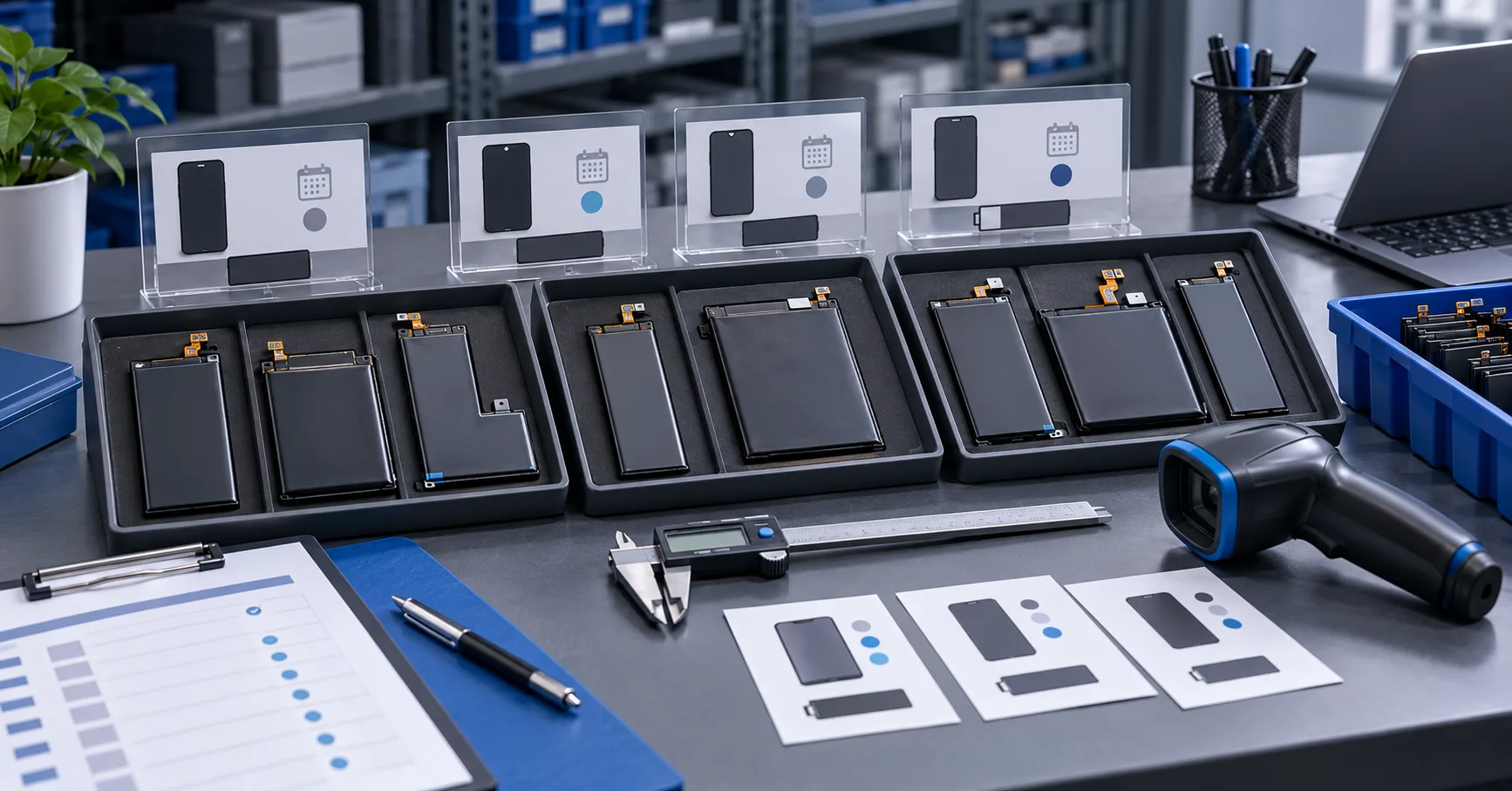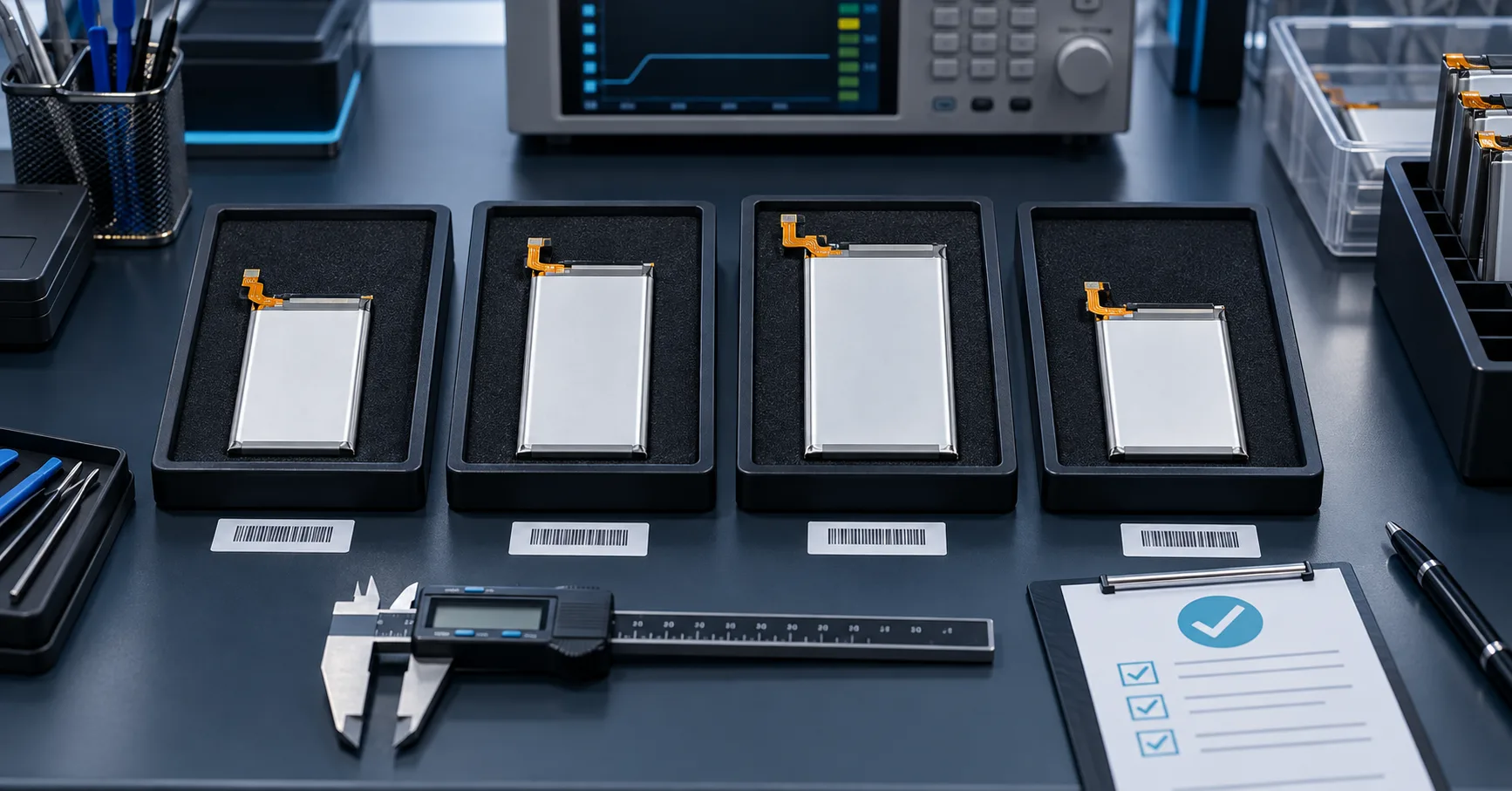

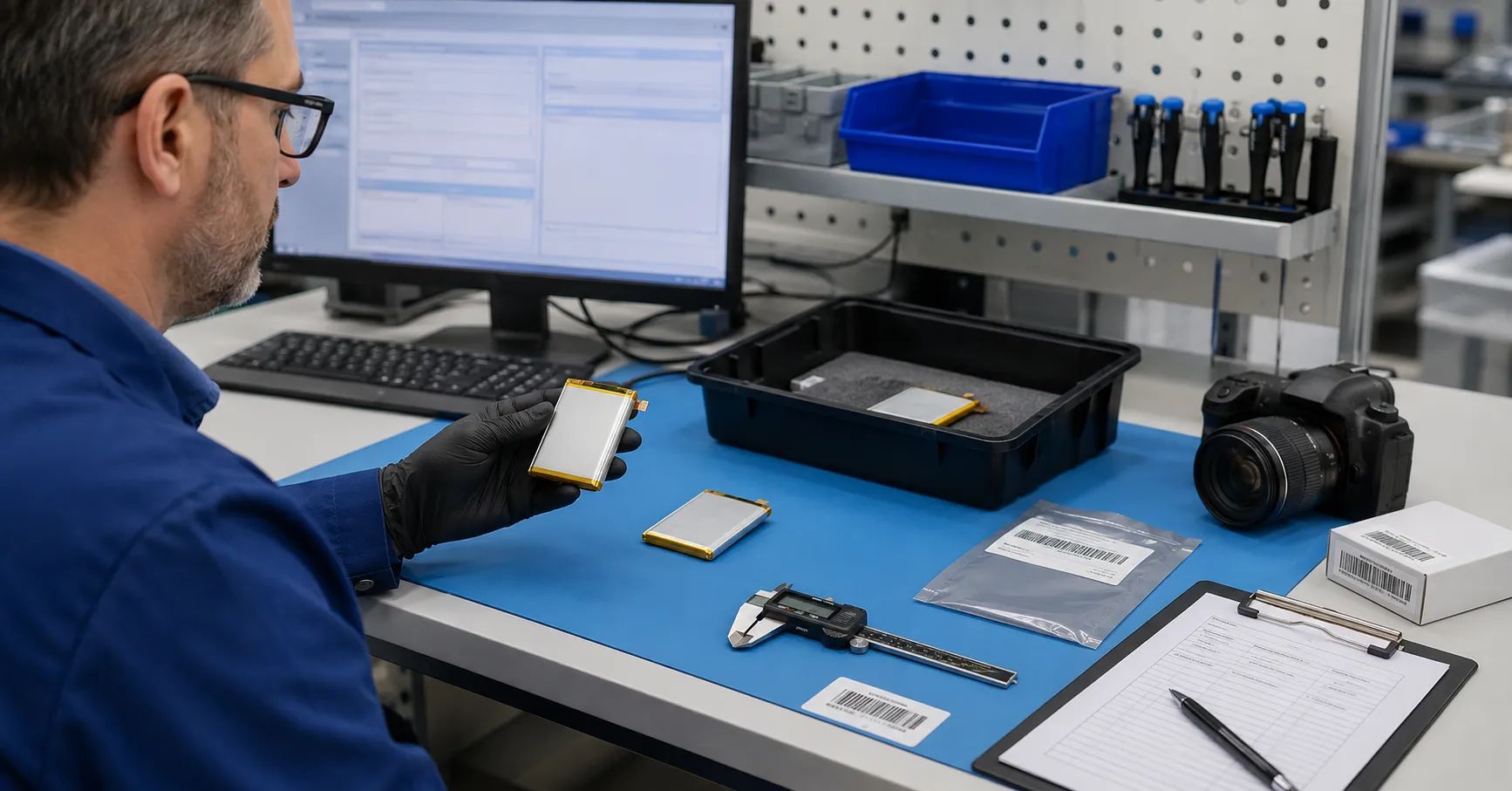
Mobile phone battery swelling is more than an appearance complaint. In a repair or wholesale supply chain, one swollen pack may indicate isolated physical damage, an installation problem, unsuitable storage, device-related heat, charging abuse, an aged cell, or a wider batch issue. Treating every case as proof of a manufacturing defect is unreliable. Dismissing every case as customer misuse is equally dangerous.
B2B buyers need a controlled method that protects people first, preserves evidence, links the affected unit to its production lot, and distinguishes an individual incident from a recurring pattern. The investigation should lead to a documented commercial decision and, when necessary, corrective action by the buyer, repair network, logistics provider, or supplier.
This guide is written for mobile-parts wholesalers, repair chains, refurbishment facilities, distributors, e-commerce sellers, and private-label battery buyers. It does not replace the battery manufacturer’s safety instructions, local workplace requirements, transport regulations, or professional emergency procedures.
What Battery Swelling Means
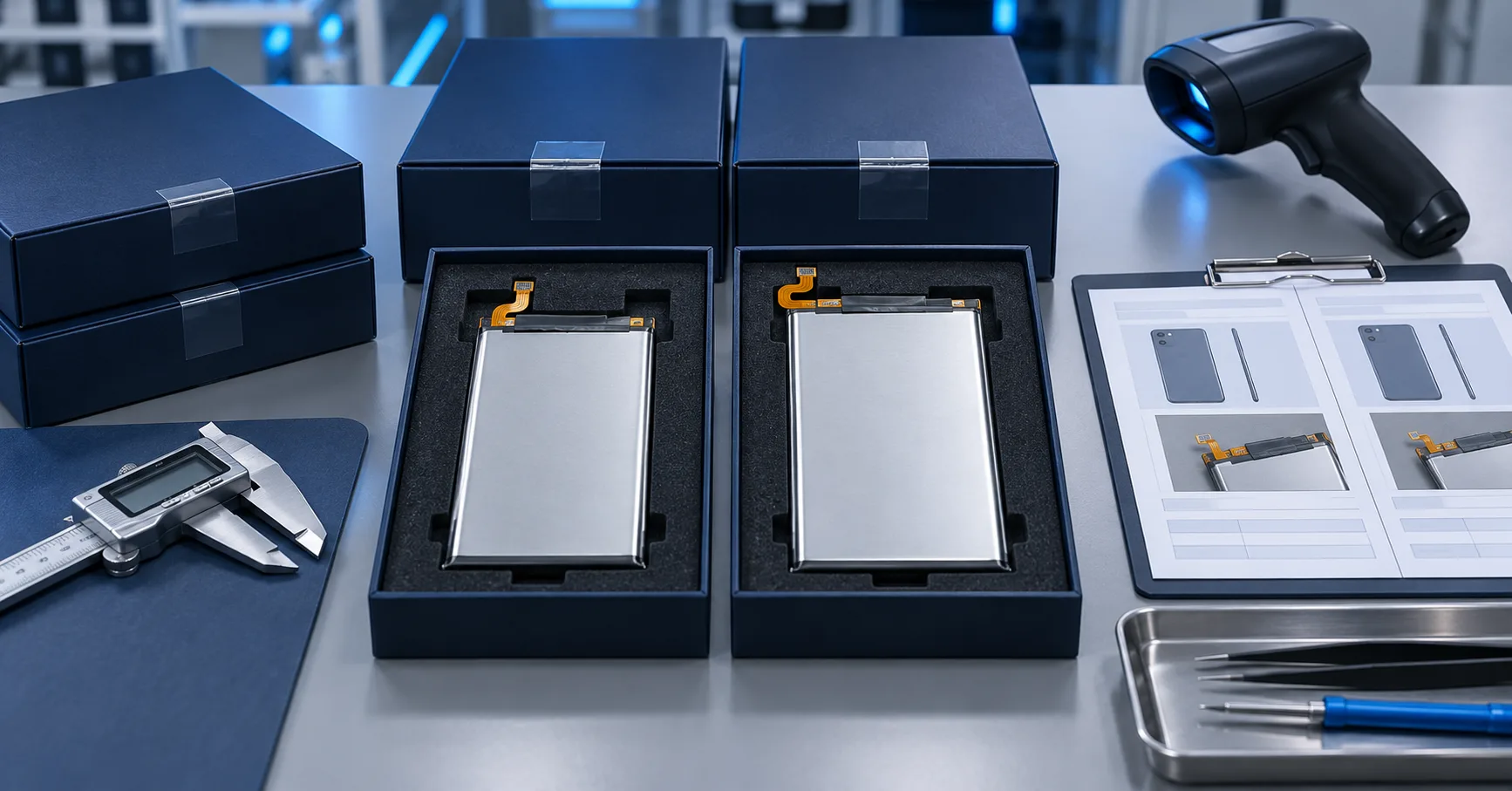
A lithium-ion or lithium-polymer pouch cell can increase in thickness when gas accumulates inside its sealed structure. The visible result may be a soft rise in the pouch, a battery that no longer lies flat, pressure against the phone display or rear cover, or a device enclosure that begins to separate.
The appearance is a symptom, not a complete diagnosis. A swollen battery should not be interpreted from photographs alone as definitive proof of one specific chemical or manufacturing mechanism. Root-cause analysis may require product history, traceability, inspection, controlled testing, production records, and specialist technical review.
Aging, elevated temperature, internal defects, mechanical damage, charging outside intended conditions, contamination, unsuitable storage, or interaction with a damaged device may contribute to unsafe battery behavior. Several factors can also act together.
Apple’s important safety information for iPhone states that a phone or its battery may be damaged by dropping, burning, puncturing, crushing, or liquid exposure. Apple advises discontinuing use when battery or device damage is suspected because it may cause overheating or injury.
Samsung likewise provides official Galaxy battery care and maintenance guidance. Brand guidance applies to the relevant branded devices and should not be presented as a universal specification for every aftermarket battery. It does, however, reinforce the importance of correct charging, suitable temperature conditions, qualified service, and prompt attention to abnormal battery behavior.
Recognize the Warning Signs
Swelling may first appear as a battery or device condition rather than an explicit customer complaint. Repair and warehouse personnel should be trained to identify signs such as:
-
a battery pouch that no longer lies flat;
-
an increase in thickness compared with an approved sample;
-
a raised or separated phone display;
-
a rear cover lifting without an obvious external cause;
-
pressure marks inside the enclosure;
-
unusual odor, leakage, hissing, or rising temperature;
-
charging instability accompanied by physical deformation;
-
packaging distorted by the battery inside;
-
a returned device that rocks on a flat surface;
-
adhesive or insulation displaced by internal pressure.
Not every separated screen proves that the battery is swollen. A damaged frame, poor adhesive preparation, incorrect reassembly, impact, or a previously bent enclosure may produce a similar external appearance. The phone should be evaluated safely before the visible symptom is assigned to the battery.
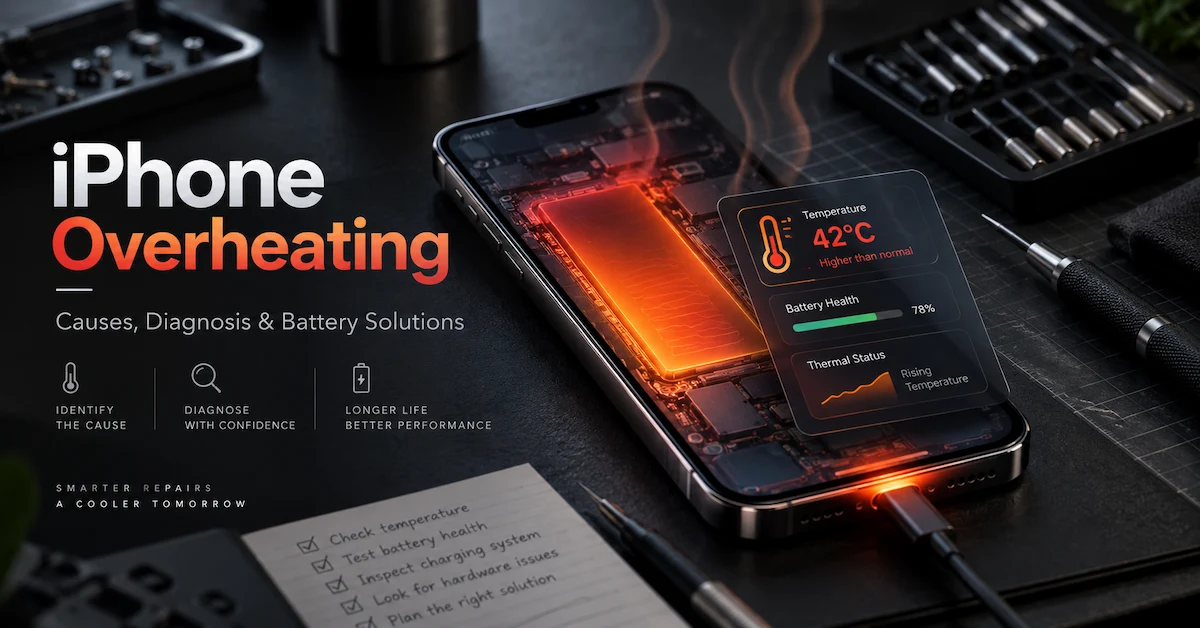
The US Occupational Safety and Health Administration identifies bulging, cracking, leaking, hissing, rising temperature, and smoking among warning signs of damaged or failing lithium-powered products in its workplace lithium-battery safety bulletin. The guidance recommends removing abnormal products from service and training workers in appropriate recognition and response.
Put Safety Before Warranty Responsibility
A visibly swollen battery is not an ordinary return. Do not continue using or charging the phone simply to collect more runtime data. Do not press the battery flat, puncture the pouch, bend it, peel it open, place heavy objects on it, or attempt an improvised repair.
Move people away if the battery is hot, leaking, smoking, hissing, or rapidly changing shape. Follow the manufacturer’s instructions and the facility’s emergency action plan. Only trained personnel should handle the incident using procedures appropriate to the condition and local requirements.
The commercial question—who is responsible—must wait until the immediate risk is controlled. Safety isolation does not automatically prove that the supplier caused the problem, and it does not remove the supplier’s obligation to investigate credible evidence.
Damaged batteries should not be placed in ordinary household waste or mixed municipal recycling. The US Environmental Protection Agency’s lithium-ion battery fact sheet recommends suitable battery or electronics recycling channels and notes that damaged batteries require specific handling information. Businesses must confirm applicable local disposal, transport, and recycling requirements.
Contain the Suspect Lot Before Searching for a Cause
When a credible swelling complaint is received, identify the battery SKU and lot immediately. Check whether the same lot remains in the warehouse, has been distributed to other customers, or is currently being installed.
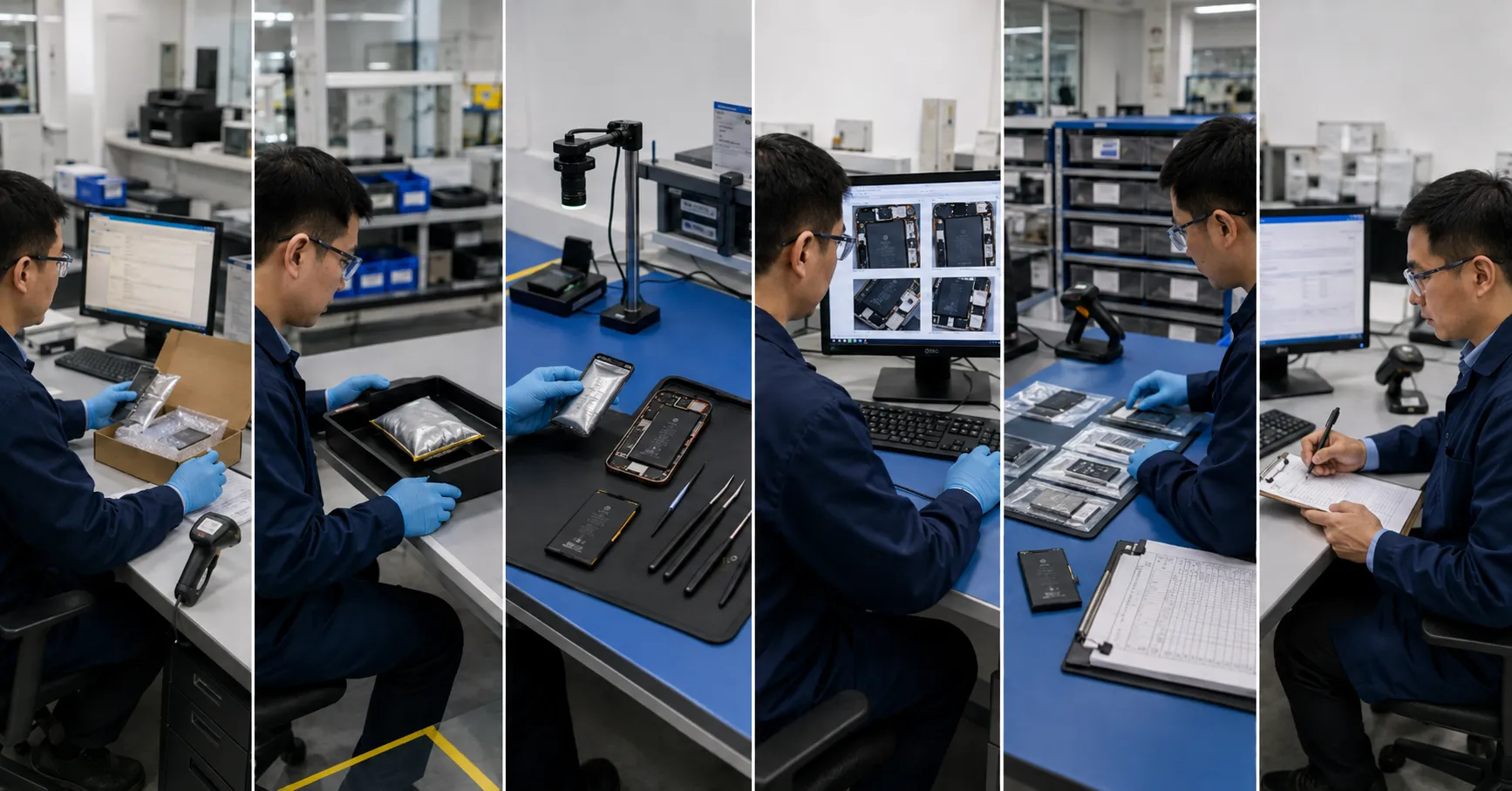
A sensible initial containment process includes:
-
Stop automatic release of the suspect stock.
-
Place remaining units in a clearly identified hold location.
-
Preserve original cartons, labels, and receiving records.
-
Identify customers and work orders that received the lot.
-
Check whether similar complaints exist under different descriptions.
-
Inform quality, purchasing, sales, and warehouse teams.
-
Define who can authorize release, return, rework, or disposal.
-
Escalate immediately when heat, leakage, smoke, fire, or rapid deformation is involved.
Containment should be proportionate. Do not quietly block every product from the same supplier without evidence, but do not continue normal sales merely because only one formal claim has reached the quality department.
A customer may describe the same condition as “screen lifted,” “back cover opened,” “battery became thick,” “phone body separated,” or “battery pushed the display.” Complaint coding should consolidate related symptoms so that a pattern is not hidden by inconsistent language.
Build a Complete Investigation Record
A useful swollen phone battery investigation connects the physical product with its commercial and technical history. The record should contain enough information for another qualified reviewer to understand what happened without relying on verbal explanations.
Customer and Transaction Evidence
Record:
-
customer company and contact;
-
purchase order or invoice;
-
delivery date;
-
quantity purchased;
-
quantity installed;
-
quantity reported;
-
date of installation;
-
date the symptom was first observed;
-
sales channel and destination market;
-
warranty status under the agreed terms.
Installed quantity matters. Three reports from 30 installations represent a different signal from three reports among 10,000 installed batteries.
Phone Identification
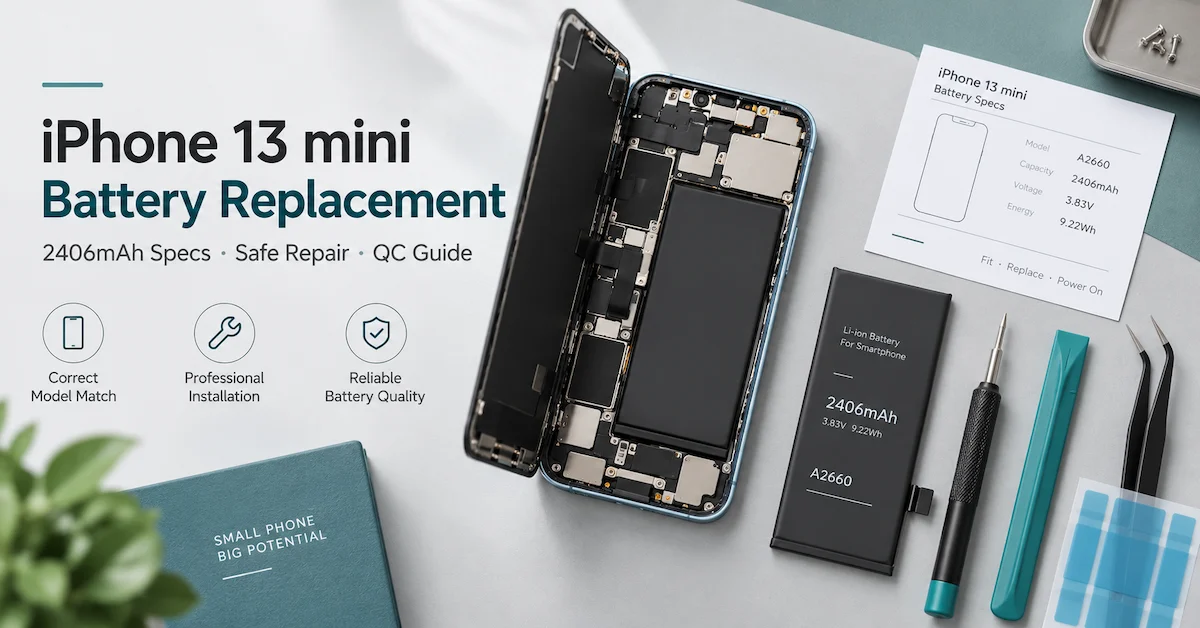
Record the phone brand, exact model, model number, hardware or regional variant when relevant, software version if it may affect charging observations, and the device’s repair history.
Do not accept “battery for iPhone,” “Samsung battery,” or “Android phone battery” as sufficient identity. Different devices may use similar-looking packs with different connectors, flex positions, rated values, thickness, control electronics, or available internal space.
Battery Identity
Capture clear photographs of:
-
the complete battery;
-
the battery label;
-
model or part number;
-
supplier SKU;
-
rated voltage and capacity;
-
production or lot code;
-
barcode or traceability mark;
-
connector and flex;
-
original inner and outer packaging;
-
any quality-inspection label.
If the battery label was removed during installation, preserve the packaging barcode and work-order scan. A loose silver pouch with no traceable identity may be impossible to connect reliably to a supplier shipment.
Physical Evidence
Photograph the phone before disassembly, if safe, showing display or rear-cover separation. Use a scale or approved measurement method when documenting thickness, but do not compress the pack to obtain a reading.
Also document scratches, dents, punctures, bent corners, torn insulation, connector damage, adhesive position, residue, liquid indicators, frame deformation, and signs of earlier repair.
Images should show the complete context as well as close details. A tightly cropped photograph of one raised edge may hide housing damage or incorrect assembly.
Symptom and Use History
Ask factual questions:
-
Was the phone still operating when the swelling was noticed?
-
Was it charging at the time?
-
Did the user report unusual heat or odor?
-
Which charger and cable were used?
-
Was the device exposed to high temperature, water, impact, or crushing?
-
Was it left unused for a long period?
-
Did the display or back cover separate gradually or suddenly?
-
Was the battery already difficult to fit during installation?
-
Did fast drain, shutdown, or charging instability occur first?
-
Was the device used commercially in a hot vehicle, kiosk, gaming, navigation, or continuous-charge application?
These answers do not automatically determine responsibility. They guide the investigation.
Distinguish Cell, Pack, Installation, Device, and Handling Factors
A credible analysis considers multiple cause categories rather than selecting the preferred commercial explanation.
Cell and Manufacturing Factors
Possible areas for supplier review include cell-material consistency, moisture control, sealing integrity, formation and aging processes, contamination control, tab welding, electrolyte quantity, storage before pack assembly, and production-lot variation.
B2B buyers normally cannot verify these factors from an external photograph. The supplier may need production records, retained samples, in-process data, and cell-level investigation.
One good pre-order sample cannot prove that every mass-production lot is equivalent. Supplier approval should therefore include change control and repeatable batch inspection.
Protection and Pack-Assembly Factors
The battery pack may include a protection circuit, temperature-related elements, insulation, connector, flex, and adhesive arrangement. Buyers should verify that electrical protection, component selection, welding, cable routing, insulation, and assembly match the approved design.
A protection circuit is an important safety layer, but it cannot make every form of mechanical damage, unsuitable charging, heat exposure, or internal defect harmless. Avoid marketing claims suggesting that one board feature makes swelling impossible.
Compatibility and Fit
Incorrect dimensions, excess thickness, wrong cable routing, poor connector alignment, or unsuitable adhesive can create mechanical stress inside a phone.
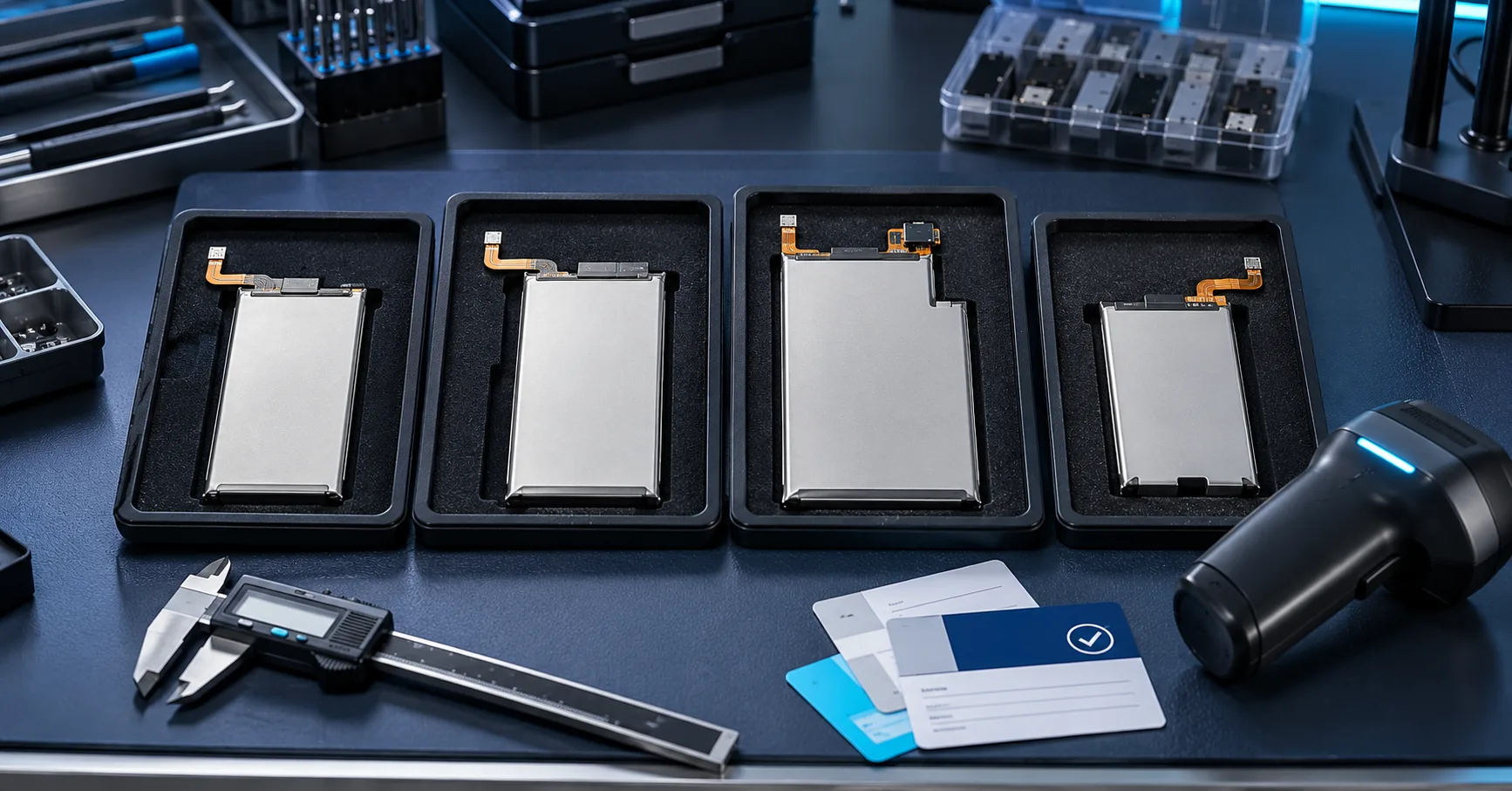
Before mass purchasing, compare the battery with the exact target device rather than only the commercial model name. The mobile phone battery incoming inspection guide can support identity, appearance, dimensional, electrical, and sample-installation checks when a shipment arrives.
A compatible aftermarket battery should be described accurately. Do not market it as an original or authorized brand battery unless that status is genuine and documented.
Installation Factors
Technicians can damage thin pouch cells by bending, folding, pressing with hard tools, trapping debris, using incorrect screws, routing flex cables improperly, or applying adhesive unevenly.
The installation work instruction should define:
-
approved tools;
-
safe lifting and removal methods;
-
connector handling;
-
adhesive type, position, and thickness;
-
cable routing;
-
enclosure inspection;
-
pre-installation battery inspection;
-
post-installation functional checks;
-
conditions requiring the job to stop.
Repeated technician-related incidents may still require supplier action if packaging or instructions make safe handling unnecessarily difficult.
Phone and Charging-System Factors
A repaired phone may have a damaged charging port, board fault, corrosion, abnormal current draw, unsuitable charger, modified charging circuit, or heat-producing application. A new battery cannot correct those conditions.
Where safe and technically appropriate, use an approved diagnostic sequence to determine whether the symptom follows the battery or remains with the phone. Do not install a known-good battery into a device suspected of causing unsafe charging without first controlling that risk.
Logistics and Storage Factors
Physical impact, crushing, vibration, unsuitable stacking, uncontrolled heat, and improper warehouse practices may affect a battery after it leaves the factory.
Review the full chain:
-
supplier finished-goods storage;
-
export packaging;
-
freight consolidation;
-
customs inspection;
-
importer warehouse;
-
local distribution;
-
repair-shop storage;
-
technician workbench;
-
end-user environment.
The existing mobile phone battery storage SOP helps buyers structure receiving status, physical protection, stock rotation, periodic review, and exception handling.
Compare the Complaint with the Batch
A single returned unit should be compared with more than one convenient sample. Review available stock from the same lot, retained samples, earlier approved samples, and—when relevant—adjacent lots.
Depending on the approved plan, checks may include:
-
packaging and label consistency;
-
battery appearance and flatness;
-
dimensions and thickness;
-
open-circuit voltage;
-
internal resistance;
-
connector and flex condition;
-
insulation;
-
capacity under a defined method;
-
charge and discharge behavior;
-
temperature observations;
-
protection-related checks;
-
installation fit in an approved device.
Acceptance limits must come from the product specification and verified test plan. Do not invent one universal thickness, voltage, internal resistance, storage duration, cycle count, or failure-rate threshold for all phone batteries.
Record the equipment, method, operator, test date, raw results, sample identity, and disposition. “Samples passed” is not sufficient when a buyer and supplier later need to reconstruct the decision.
Use Trend Data, Not Isolated Opinions
Track swelling-related cases by:
-
supplier;
-
cell source where disclosed;
-
battery SKU;
-
phone model and variant;
-
production lot;
-
receiving batch;
-
customer;
-
technician or repair location;
-
installation date;
-
complaint date;
-
symptom;
-
storage duration;
-
diagnostic result;
-
root-cause category;
-
final remedy.
Useful indicators include complaint rate per installed quantity, time to symptom, concentration by lot, recurrence by phone model, percentage linked to visible physical damage, and recurrence after corrective action.
A low overall rate can hide a serious cluster in one lot. Conversely, several reports from one repair location may point to an installation method or local storage condition rather than a production-wide defect.
Safety severity must influence escalation. One rapidly heating or leaking unit may justify immediate action even when the complaint percentage is small.
Require Corrective and Preventive Action
When evidence supports a supplier-related issue, request a structured corrective-action response rather than a general promise to “improve quality.”
The response should identify:
-
immediate containment;
-
affected product and lot scope;
-
investigation team;
-
verified root cause or current technical hypothesis;
-
supporting production and test evidence;
-
correction for affected stock;
-
preventive process change;
-
responsible owner;
-
completion date;
-
effectiveness verification;
-
rules for releasing held inventory;
-
communication to affected customers where necessary.
Potential actions might involve material controls, process parameters, sealing inspection, aging review, pack assembly, insulation, packaging, handling instructions, supplier change notification, or additional batch testing. The correct action depends on verified evidence.
Replacing claimed units is a commercial remedy. It is not, by itself, proof that the cause has been removed.
Strengthen Procurement Before the Next Order
A buyer can reduce future risk by improving the purchasing specification and approval process.
Request:
-
exact battery and phone compatibility;
-
cell and pack specifications;
-
protection-function requirements;
-
dimensional tolerances;
-
approved label content;
-
lot and date traceability;
-
incoming inspection criteria;
-
sample and pilot-lot validation;
-
packaging protection;
-
storage and handling instructions;
-
available safety and transport documentation;
-
material and process change control;
-
complaint response time;
-
retained-sample policy;
-
batch investigation support.
The mobile phone battery manufacturer guide explains how B2B buyers can evaluate model coverage, quality control, documentation, packaging, and supply consistency beyond unit price.
For private-label projects, warning labels and warranty terms must be accurate. Avoid absolute claims such as “never swells,” “zero swelling,” or “100% safe.” A responsible supplier can describe controls, tests, specifications, and evidence, but should not promise that no battery can ever fail under any condition.
Frequently Asked Questions
Can a swollen phone battery still be used temporarily?
No. Remove the device from normal use and charging, avoid unnecessary handling, and follow the manufacturer’s and facility’s safety procedures. A visibly abnormal battery should not remain in service while a warranty decision is pending.
Does swelling always prove a factory defect?
No. It confirms an abnormal physical condition but not one universal cause. Manufacturing, aging, heat, mechanical damage, installation, storage, charging, device condition, and multiple interacting factors may require investigation.
Should a repair shop remove the battery immediately?
Only trained personnel should perform battery service using appropriate procedures. If the device is hot, leaking, hissing, smoking, or rapidly deforming, follow the emergency plan rather than attempting routine disassembly.
Can a buyer test a swollen battery to prove the claim?
Do not continue ordinary charging, discharging, pressing, puncturing, or improvised testing of a visibly swollen unit. Preserve evidence and follow an approved safety and investigation process.
How can a wholesaler identify a batch problem?
Connect each complaint to the battery SKU, production lot, receiving batch, customer, installation date, phone model, symptom, and disposition. Compare the rate and failure pattern with installed quantity and retained or warehouse samples.
What evidence should be sent to the supplier?
Provide the purchase reference, battery label and lot, phone model, installation record, photographs, symptom timeline, use and charging history, affected quantity, installed quantity, relevant measurements, and the location of remaining stock.
Are aftermarket batteries covered by the phone brand’s warranty?
Do not assume so. Brand service terms, local consumer rights, the repair provider’s warranty, and the aftermarket supplier’s commercial warranty may be different. Buyers should communicate product status and coverage accurately.
Build a Safer, Evidence-Based Supply Chain
The right response to mobile phone battery swelling is neither panic nor denial. It is controlled isolation, reliable traceability, disciplined investigation, fair responsibility assessment, and verified corrective action.
For B2B buyers, the commercial objective is not simply to replace one claimed battery. It is to determine whether remaining inventory can be released, whether other customers are affected, whether technicians need revised instructions, and whether the supplier has prevented recurrence.
ESC supports repair chains, wholesalers, refurbishment facilities, distributors, e-commerce sellers, and private-label customers with compatible mobile phone battery supply, model confirmation, sample review, packaging coordination, inspection planning, and batch-based quality discussions. Buyers can provide target models, order forecasts, market requirements, current complaint evidence, and expected warranty terms to begin a structured project review.
External Source References
-
Apple Support — Important Safety Information for iPhone — accessed 2026
-
Apple Support — Safety Certifications for iPhone and iPhone Batteries — 2025
-
Samsung Support — Galaxy Battery Care and Maintenance — accessed 2026
-
US Occupational Safety and Health Administration — Preventing Fire and Explosion Injury from Small Lithium Battery Powered Devices — 2019
-
US Environmental Protection Agency — Know the Facts: Lithium-Ion Batteries — 2023
-