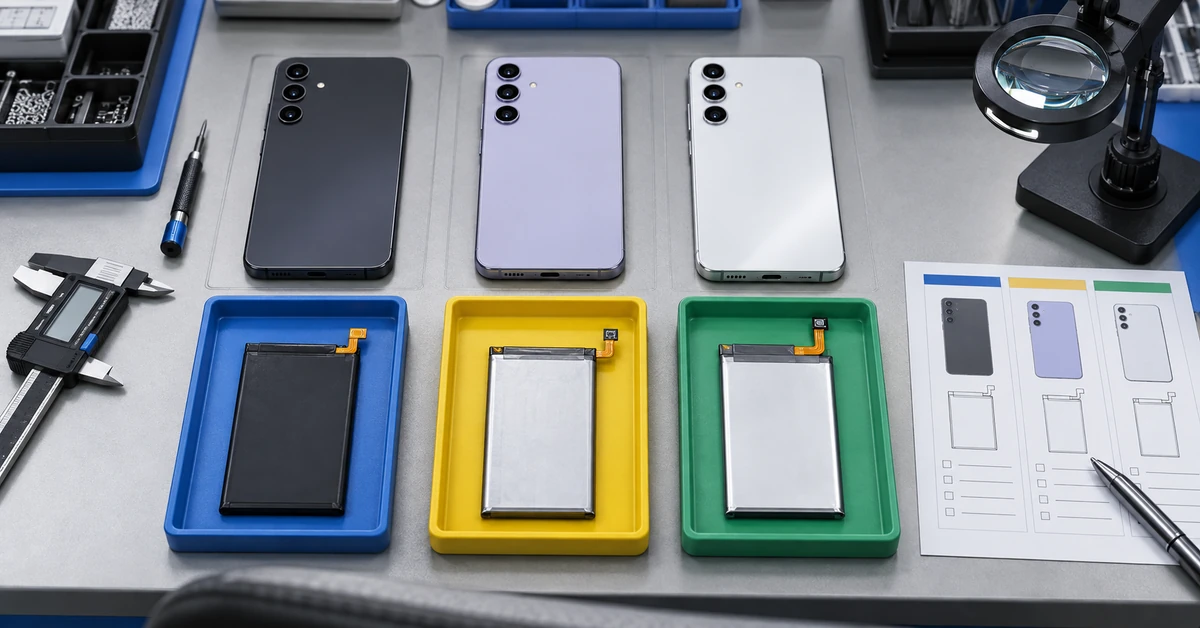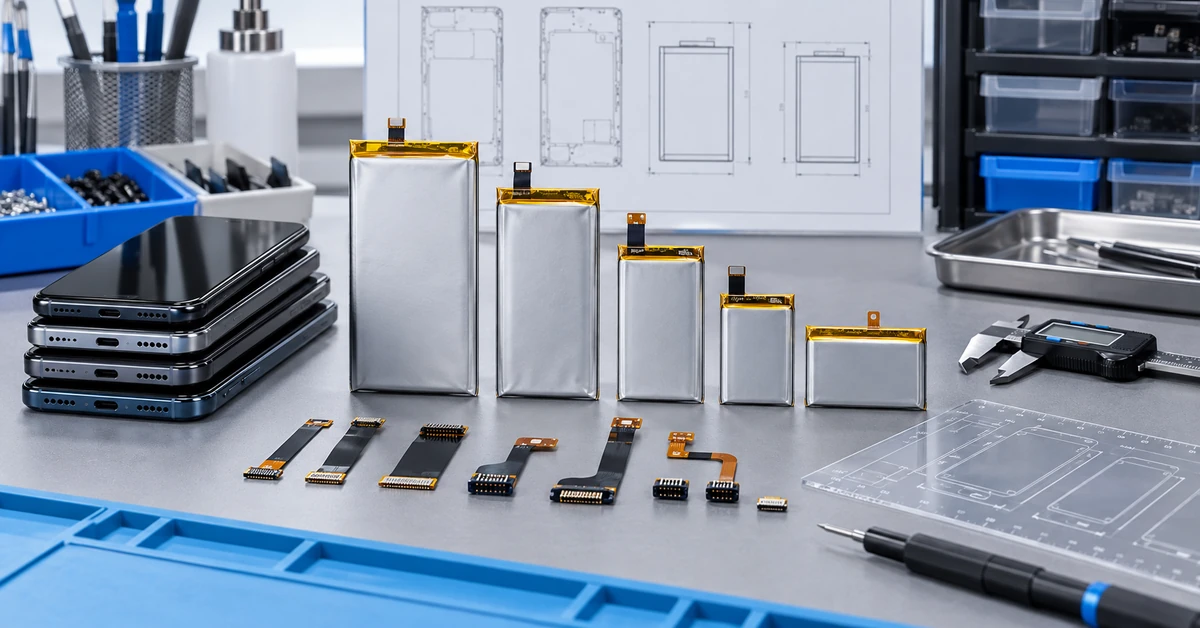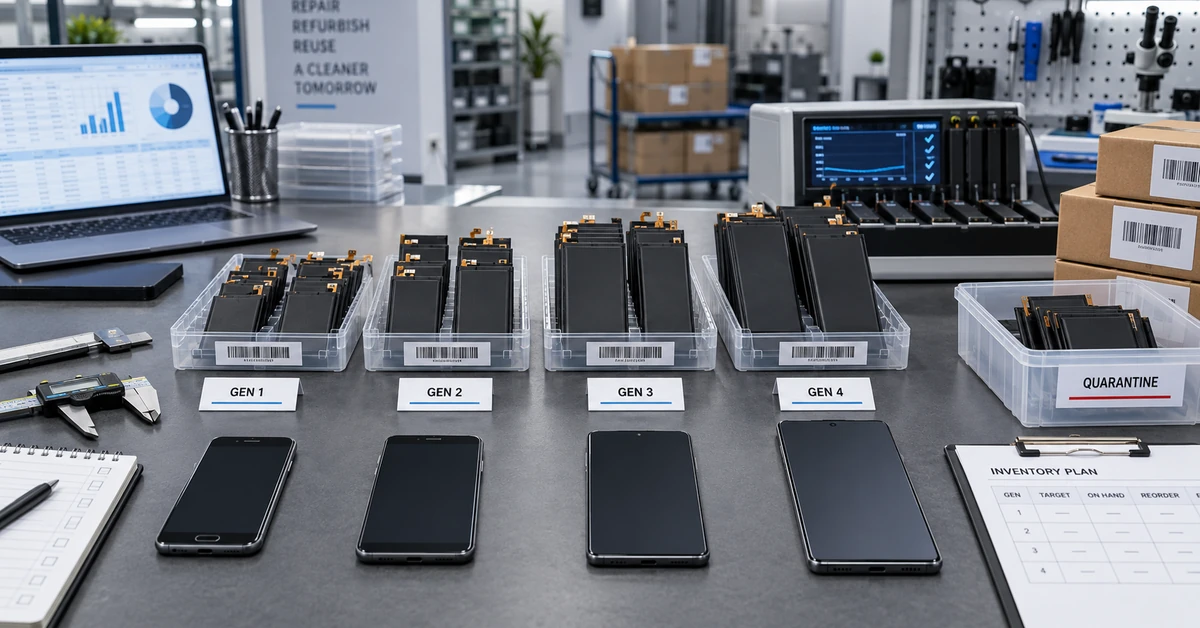

Lithium ion battery overcharge protection is a risk-control system, not permission to charge outside the approved specification. A reliable replacement-battery program coordinates the cell limits, protection circuit, charger, host device, temperature sensing, mechanical design and production controls. No single layer should be used to justify intentional abuse.
For B2B buyers, the correct validation question is not merely “does this battery have a protection board?” The buyer should confirm what conditions are monitored, which component acts, how the offered battery matches the target device, what evidence applies to the exact revision, and whether production lots remain consistent with the approved sample.
Protection Is a Layered System
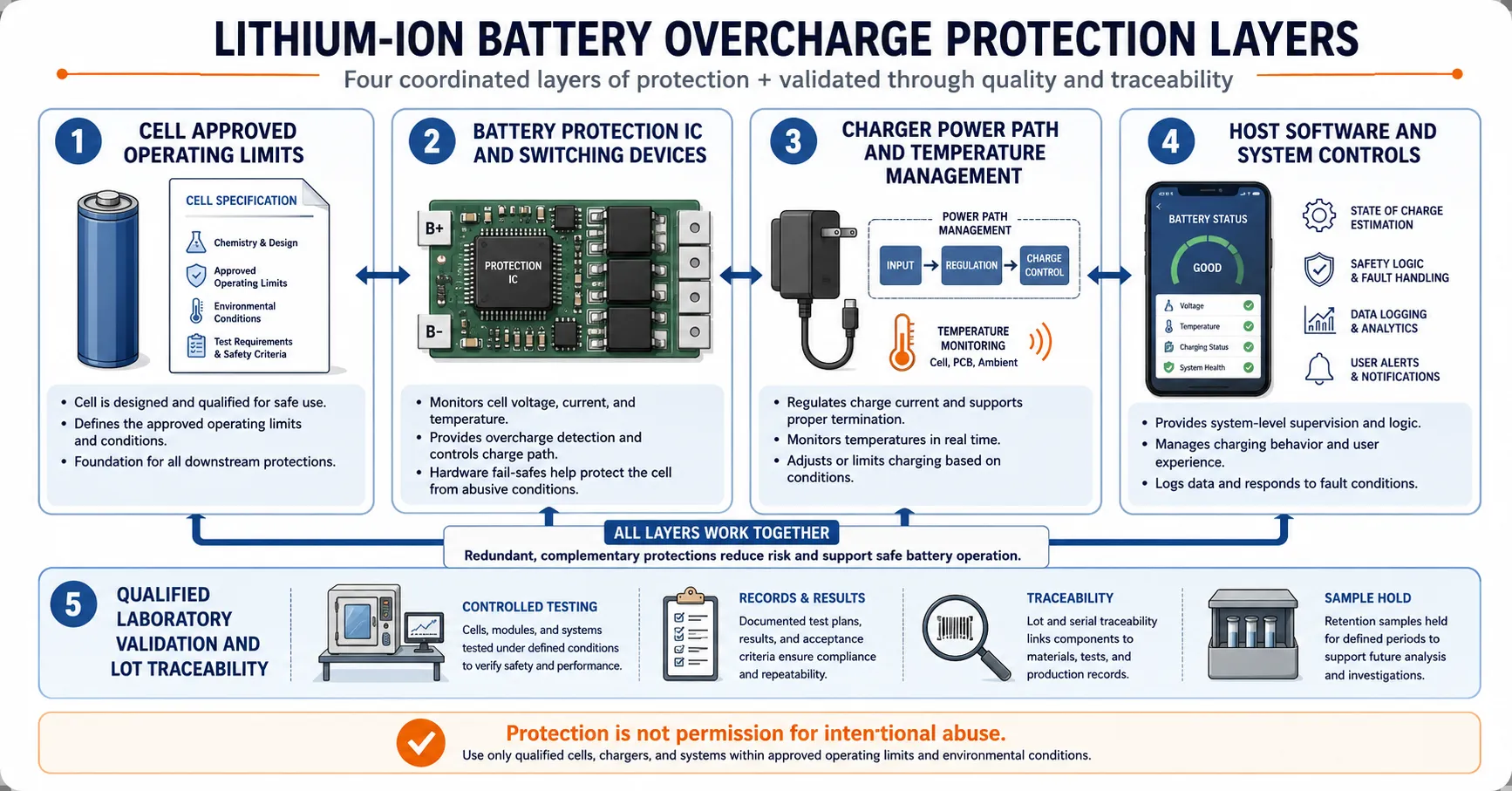
| Layer | Primary responsibility | Buyer evidence | Incorrect assumption |
|---|---|---|---|
| Cell | Operate within the cell maker's approved electrical, thermal and mechanical conditions | Cell designation, specification, revision and traceability | All lithium-ion cells use identical limits |
| Battery protection circuit | Monitor defined fault conditions and control charge or discharge paths | Schematic scope, protection IC, switching components, settings and test record | The presence of a PCB proves correct protection |
| Charger and power path | Apply the approved charge profile and manage input, current, voltage and temperature | Device-level functional and abnormal-condition evidence | The pack protector should regulate normal charging |
| Host device and software | Coordinate charging states, thermal response, load management and user reporting | Model- and software-specific validation | A battery alone controls every device behavior |
| Manufacturing and QC | Keep component, assembly and settings consistent with the approved design | Revision control, sample approval, lot records and change notification | One passing prototype approves future lots |
Texas Instruments describes protection architectures that use monitoring devices and switching elements to disconnect charge or discharge paths when specified adverse conditions are detected. Its battery-protection MOSFET overview illustrates why sensing and the current-interruption path must work together. The exact circuit and settings remain application-specific.
Overcharge Protection Is Not a Normal Charge Controller
The normal charger should keep the battery inside its approved charge profile. Pack protection is a separate safety layer intended to respond when conditions cross its defined fault criteria. Designing routine operation to depend on the protector repeatedly interrupting charge is not equivalent to proper charging control.
A buyer evaluating lithium ion battery overcharge risk should request both sets of evidence: the normal charging specification and the independent protection behavior. The charge controller, protection IC, field-effect transistors, temperature input and cell specification must be compatible as one system.
The U.S. Consumer Product Safety Commission's overview of lithium-ion battery safety requirements emphasizes maintaining cells within manufacturer specifications and using appropriate charge, over-charge, over-discharge and short-circuit protection. The document supports layered diligence; it does not support deliberately defeating a protection feature.
What Over-Discharge Means for a Buyer
Over-discharge occurs when a battery is driven beyond its approved lower operating condition. The immediate symptom may be device shutdown or a pack protection state, but the purchasing concern is broader: extended low-voltage exposure can affect recoverability, usable performance and confidence in the returned unit.
Over discharging battery samples should never become a routine way to demonstrate runtime. A controlled capacity test ends at the model-specific discharge cutoff defined by the approved method. Continuing beyond that point does not create a more demanding capacity test; it creates an abnormal condition that requires a separate safety assessment.
Do not automatically return an abnormally depleted battery to service because its terminal voltage later rises or a charger appears to recognize it. The recovery decision should consider the cell specification, time in the abnormal condition, physical state, temperature history, protection response and an approved supplier disposition procedure.
Ask Which Faults the Protection Circuit Actually Covers
“Protection board included” is too vague for an RFQ. Ask the supplier to identify the functions implemented for the offered SKU, which may include cell overvoltage, cell undervoltage, charge overcurrent, discharge overcurrent, short circuit and applicable temperature monitoring. Do not assume every design includes every function.
Analog Devices' ADP5360 battery-management data sheet provides one example of a device combining charging, fuel gauging and independent overcharge and over-discharge protection. It demonstrates that these functions can be integrated, but its specific limits must not be copied into an unrelated phone battery design.
For the proposed battery, request the protection IC part identification, circuit revision, approved settings, switching-device specifications, temperature-sensing scope, connector and flex drawing, and the test report that links those items to the sample. Redacted evidence may be necessary for confidentiality, but the buyer still needs enough revision control to know what was approved.
Do Not Publish Universal Protection Thresholds
Protection thresholds depend on cell chemistry, cell specification, charger architecture, detection accuracy, delay time, recovery logic, temperature, component tolerance and system requirements. A threshold from an example IC data sheet is evidence for that device configuration only.
This rule applies to trip points, release points, delay times, test currents and temperature criteria. It also applies to the question can you overcharge lithium ion battery: an abnormal input or failed control layer can create an overcharge condition, so a compliant design uses coordinated controls rather than assuming the battery is impossible to overcharge.
The blog should therefore explain the decision framework while the controlled specification retains the numbers. Before publication or product approval, a technical owner must confirm the values for the exact SKU and target device.
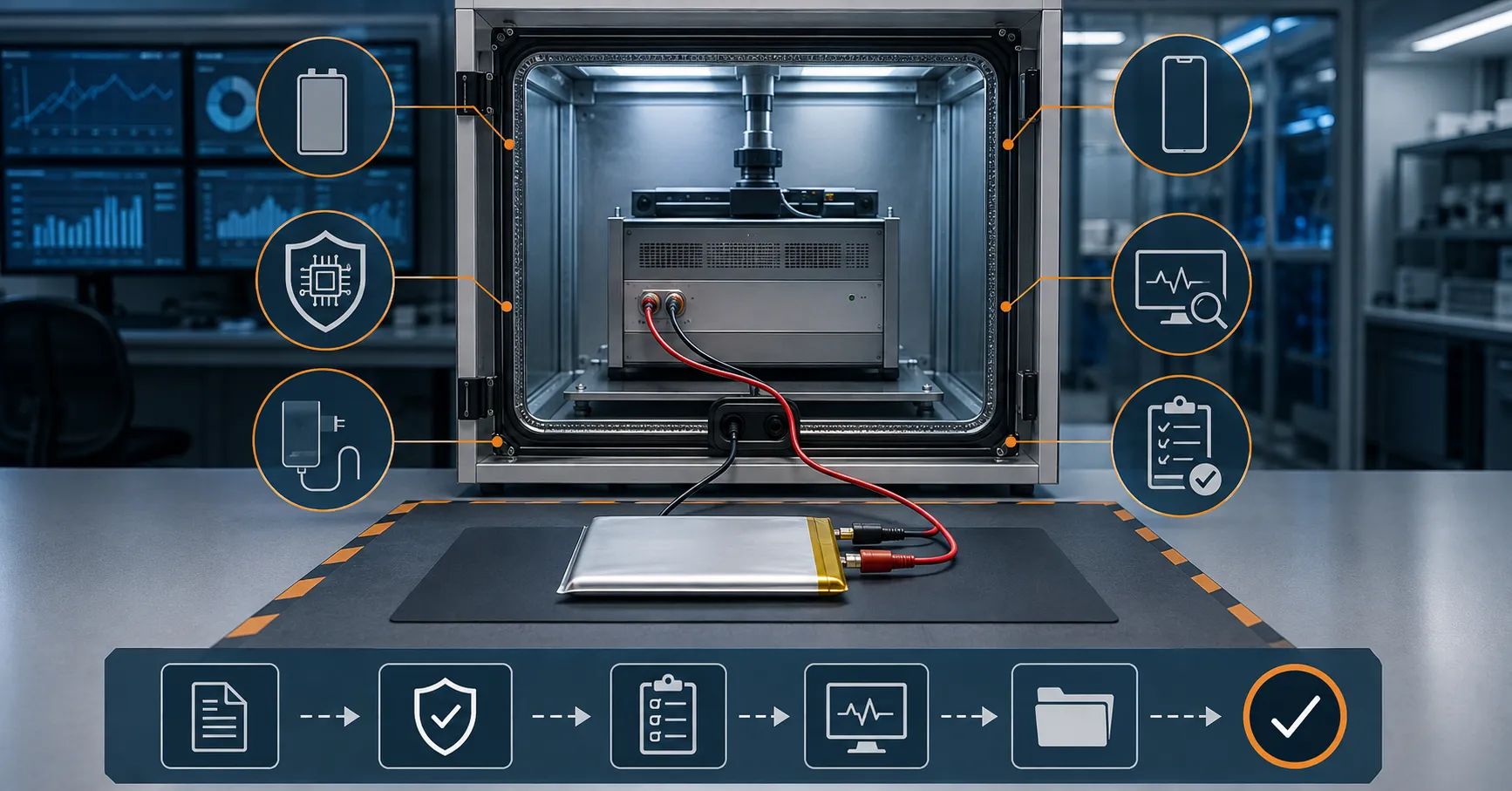
Use Qualified Laboratories for Abnormal-Condition Testing
Overcharge, forced discharge, short-circuit and protection-fault tests can create heat, venting, fire, toxic emissions and damaged test equipment. They must not be performed as improvised bench demonstrations, repair-shop experiments or customer-facing DIY checks.
Testing should be conducted by qualified personnel under an approved standard or engineering protocol, with a documented risk assessment, suitable containment, remote monitoring, calibrated equipment, emergency response arrangements and hazardous-sample disposition. The procedure should define stop conditions without publishing operational abuse instructions in marketing content.
CPSC technical staff states that lithium-ion battery safety requires diligence from producer to user and highlights appropriate integral protection for replaceable-cell applications. This supports a controlled engineering approach rather than a “try until it trips” test culture.
Build a Safe Evidence Plan
| Evidence stage | What to confirm | Release implication |
|---|---|---|
| Document review | Cell, protection, charger, connector, temperature and device requirements align | Blocks sample testing if identities or limits conflict |
| Normal functional test | Approved charging, discharge, temperature and shutdown behavior | Required before abnormal-condition evidence is considered |
| Qualified protection test | Specified fault detection, actuation, recovery and post-test disposition | Performed only under an approved safe protocol |
| Installation validation | Fit, insulation, flex routing, connector and device behavior | Confirms the finished SKU rather than the cell alone |
| Pilot-lot comparison | Production-representative components and results match the approved design | Supports controlled production release |
| Ongoing lot control | Identity, workmanship, traceability and selected functional evidence remain stable | Detects drift without repeating hazardous abuse tests on every lot |
The routine incoming plan should focus on safe, non-destructive evidence appropriate to the lot. Use the published mobile phone battery incoming-inspection guide for identity, pouch, dimensions, connector and electrical screening. Abnormal-condition testing belongs in a separately controlled qualification program.
Approve Samples, Pilot Lots and Production Lots Separately
An engineering sample may demonstrate that a design concept can work, but it does not establish production consistency. The buyer should freeze the cell, protection IC, switching devices, passive components, flex, connector, insulation, software or parameter revision, and applicable process controls.
Next, compare a production-representative pilot lot with the approved reference. Confirm that test reports identify the same bill of materials and configuration. Finally, define routine incoming checks, periodic verification and supplier change notification.
The mobile phone battery sampling-plan guide helps separate engineering approval, pilot confirmation and production-lot acceptance. Protection evidence should follow that lifecycle instead of relying on a single supplier presentation.
Control Changes That Can Affect Protection
Changes to the cell, protection IC, FETs, resistors, temperature sensor, flex layout, insulation, connector, charger assumptions or firmware can change protection behavior. Even a substitute described as “equivalent” requires documented review when it affects detection accuracy, delay, heat, current capability or recovery logic.
Require notification before implementation, updated drawings and component records, risk review, defined revalidation and a new reference sample when needed. Keep lot traceability so complaints can be mapped to the exact construction.
Use Returns and Warranty Data Without Unsafe Reproduction
Returned batteries may be swollen, hot, mechanically damaged, deeply discharged or electrically unstable. Quarantine them by condition and do not charge an unsafe unit merely to recreate a complaint. Begin with non-invasive evidence: device identity, battery and lot, customer timeline, charger and cable, software state, installation history, external condition and available diagnostic records.
The published battery swelling investigation guide provides a related containment framework. This protection page remains focused on design responsibility and validation evidence rather than repeating the full incident workflow.
Create a Supplier Verification Checklist
- Exact cell and finished-battery identifiers are documented.
- Cell operating limits and the normal charge profile are aligned.
- Protection functions and component revisions are identified.
- Detection, actuation, delay and recovery criteria are controlled in technical documents.
- Temperature monitoring and mechanical integration are defined.
- Test reports apply to the offered revision and target configuration.
- Abnormal-condition tests were performed by qualified personnel under an approved protocol.
- Post-test inspection and sample disposition are recorded.
- Engineering samples, pilot lots and production lots are separately approved.
- Supplier changes require notification and risk-based revalidation.
- Routine incoming inspection avoids destructive or hazardous improvisation.
- Warranty escalation links field evidence to lot and revision records.
Frequently Asked Questions
Can you overcharge a lithium-ion battery?
Yes, an abnormal charger, control failure, incompatible design or defeated protection can create an overcharge condition. A properly designed system uses coordinated cell specifications, charge management and independent protection to reduce that risk.
Does a protection board make intentional overcharging safe?
No. Protection is a fault-response layer, not authorization to operate outside the approved charge specification or repeatedly force the circuit to trip.
Can an over-discharged phone battery be recovered?
Recovery depends on the specific cell, depth and duration of the condition, temperature history, physical state and approved manufacturer procedure. Do not assume that voltage recovery proves safe or acceptable performance.
Should every incoming lot undergo overcharge testing?
Not as an improvised routine test. Qualification and periodic verification should follow an approved, risk-based plan in a suitable laboratory. Routine lot checks normally use safe identity, workmanship, traceability and functional controls.
Which protection threshold should a buyer require?
The threshold must be derived from the exact cell, protection components, tolerances, charger and device requirements. Do not copy a generic number from another battery or a component example.
What evidence should be included in an RFQ?
Provide the device and battery identities, cell and charging specifications, protection functions, connector and flex requirements, temperature conditions, target market, sample plan, change-control needs and required test documentation.
Validate the System, Not the Safety Claim
The correct B2B response to lithium ion battery overcharge and over-discharge risk is a traceable validation system. Buyers should verify how the cell specification, pack protection, charger, device and manufacturing controls work together, then confirm that production matches the approved design.
A claim such as “multiple protection” has little value without identities, conditions, results and revision control. Protection does not make abuse acceptable, and a successful sample does not eliminate the need for lot consistency and field escalation.
For an ESCCharge sourcing discussion, provide the target device models, battery identifiers, cell and charge specifications, protection requirements, sample quantity, target market and required test documents. Compatibility, specifications, capacity, certification documents, MOQ, lead time and warranty must be confirmed for the selected SKU and agreement.
External Source References
- Texas Instruments — Using MOSFETs to Protect Batteries — 2018
- U.S. Consumer Product Safety Commission — Overview of Battery Safety Requirements — 2024
- Analog Devices — ADP5360 Battery Management PMIC Data Sheet — 2019