
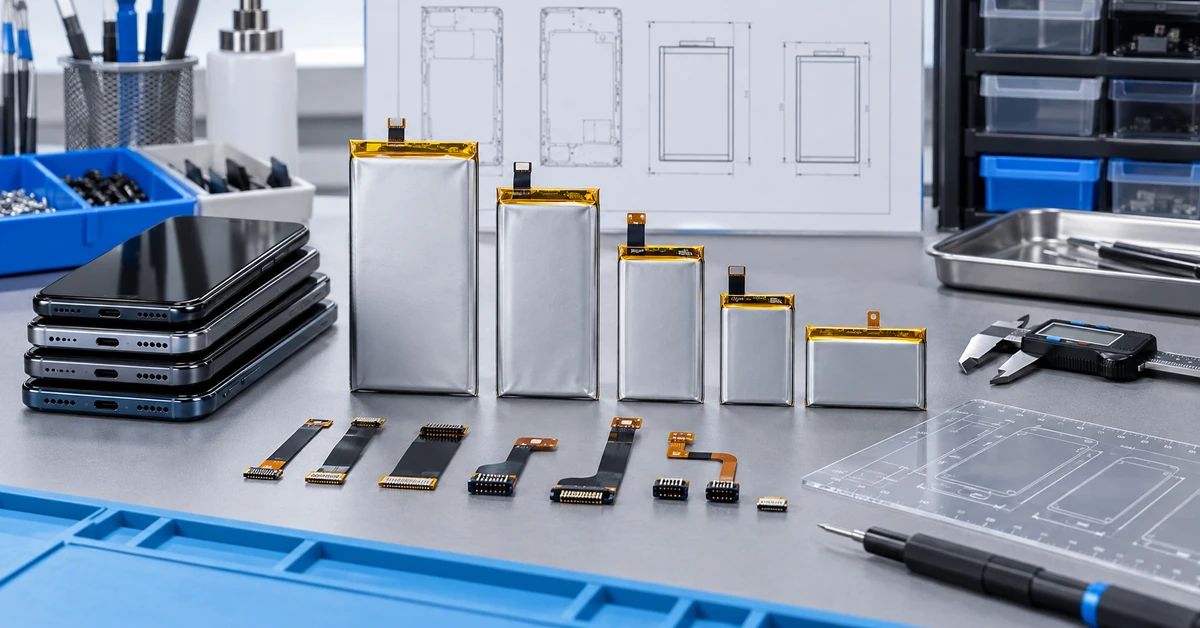
A universal Android battery cell is not a battery that can be installed in every Android phone. In B2B repair supply, “universal” usually describes a family of pouch-cell formats that may be adapted into a model-specific finished assembly. The buyer still has to approve the cell envelope, tabs, polarity, protection circuit, flex cable, connector, insulation, adhesive plan and device behavior.
That distinction changes the sourcing question. The goal is not to find one universal battery for a shelf of unrelated phones. It is to determine whether a defined cell can become part of a safe, repeatable battery assembly for an exact device model, under a controlled conversion and validation process.
What “Universal” Should Mean in a B2B Specification
A competitor listing reviewed for this topic presents an Android universal battery-cell range as twelve numbered options. That can help a technician choose among physical formats, but the public listing does not provide the dimensions, capacity, device mapping or validation evidence needed to approve a production program. A number such as “No. 4” is a catalog identity, not proof of fit.
Use the term universal android battery cell only for a controlled platform or size family. The finished item shipped to a repair branch should have a model-specific identity and approved bill of materials. If a supplier claims broad coverage, ask for the exact supported device codes, the conversion configuration for each device, and the evidence that links every finished SKU to its approved cell and interface.
IATA's 2026 battery guidance distinguishes a “cell” from a “battery,” which consists of one or more cells electrically connected and fitted with devices necessary for use. That terminology is useful for procurement: buying a cell does not automatically transfer approval to the completed replacement battery. The organization adding protection, wiring, insulation or a connector owns critical assembly controls.
Define the Use Case Before Requesting Samples
Universal-format cells may have a role in professional refurbishment, private-label assembly, low-volume legacy support or controlled service programs. They are not a shortcut for consumer DIY substitution. Before quoting, define who will perform the conversion, what equipment and work instructions they use, which component supplies protection and temperature sensing, and who releases the finished assembly.
A useful inquiry identifies the exact phone model, market version when relevant, reference battery code, cavity dimensions, expected quantity, destination, required documents and whether the buyer needs a cell or a completed pack. ESCCharge's mobile phone battery manufacturer guide provides the broader supplier-qualification context; this page focuses specifically on conversion compatibility.
Use Seven Compatibility Gates
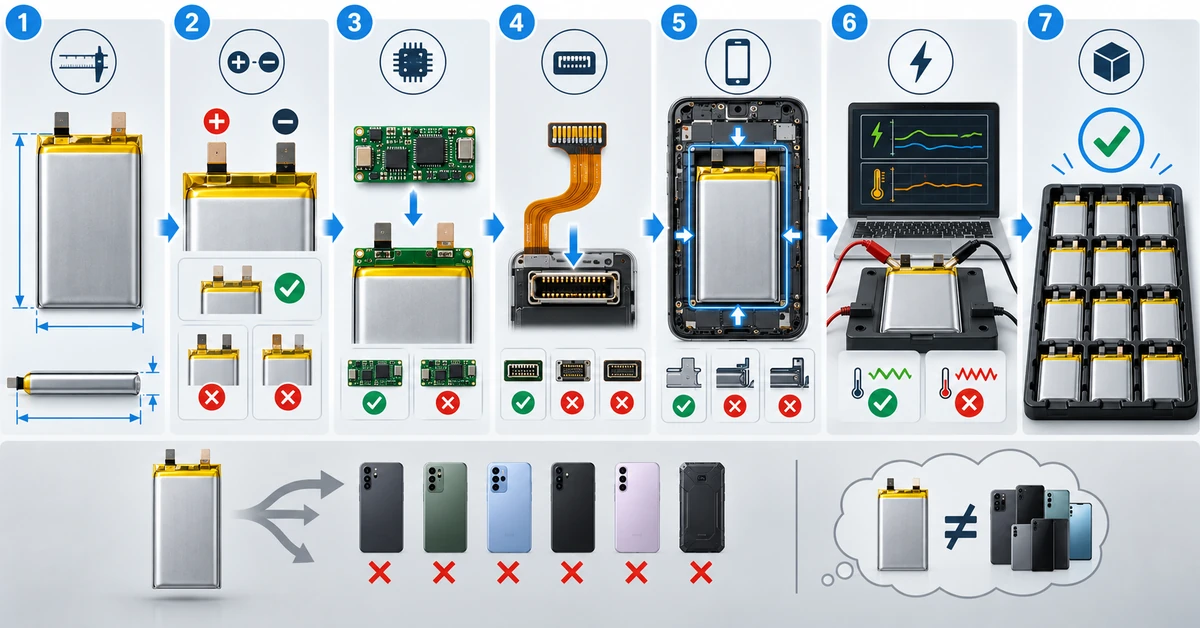
1. Device identity and available cavity
Record the exact device model and reference battery identity. Measure the usable cavity rather than copying only the nominal length and width of an old cell. Account for the frame, covers, adhesive, flex folds, connector seat, insulation and assembly tolerance. Thickness must include the completed stack and planned clearance; a pouch that merely enters the cavity is not automatically acceptable.
2. Cell dimensions and orientation
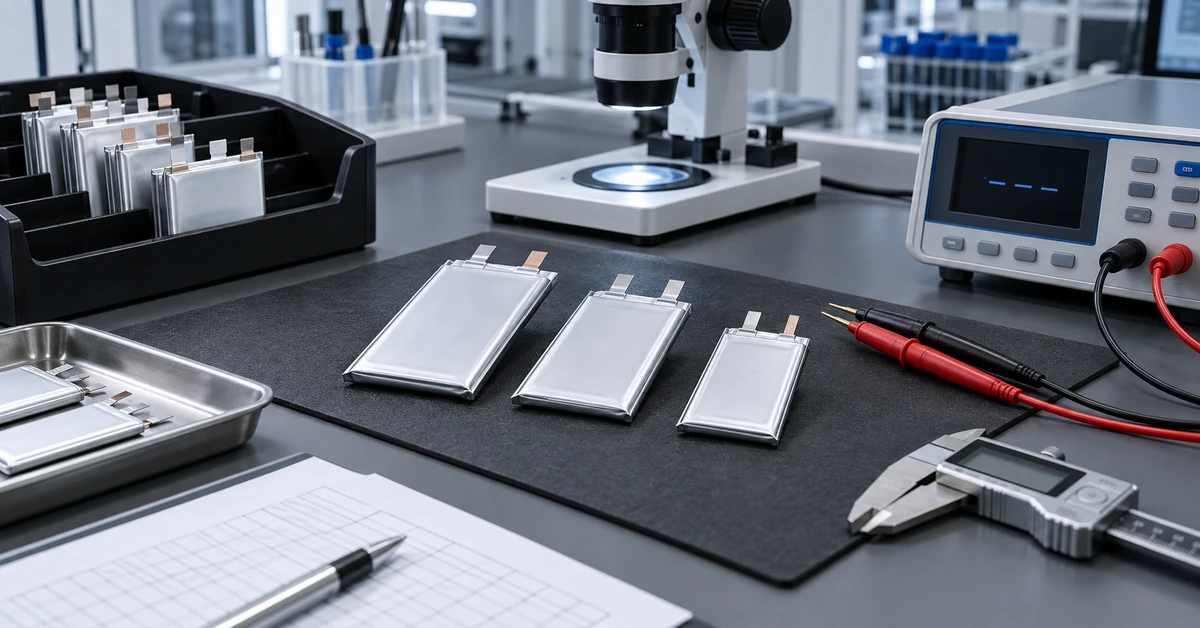
Control length, width, thickness, corner shape, seal area and tab exit. The drawing should state tolerances and measurement conditions. A candidate with similar face dimensions can still interfere with the frame, camera structure or rear cover after insulation and adhesive are added.
3. Electrical design
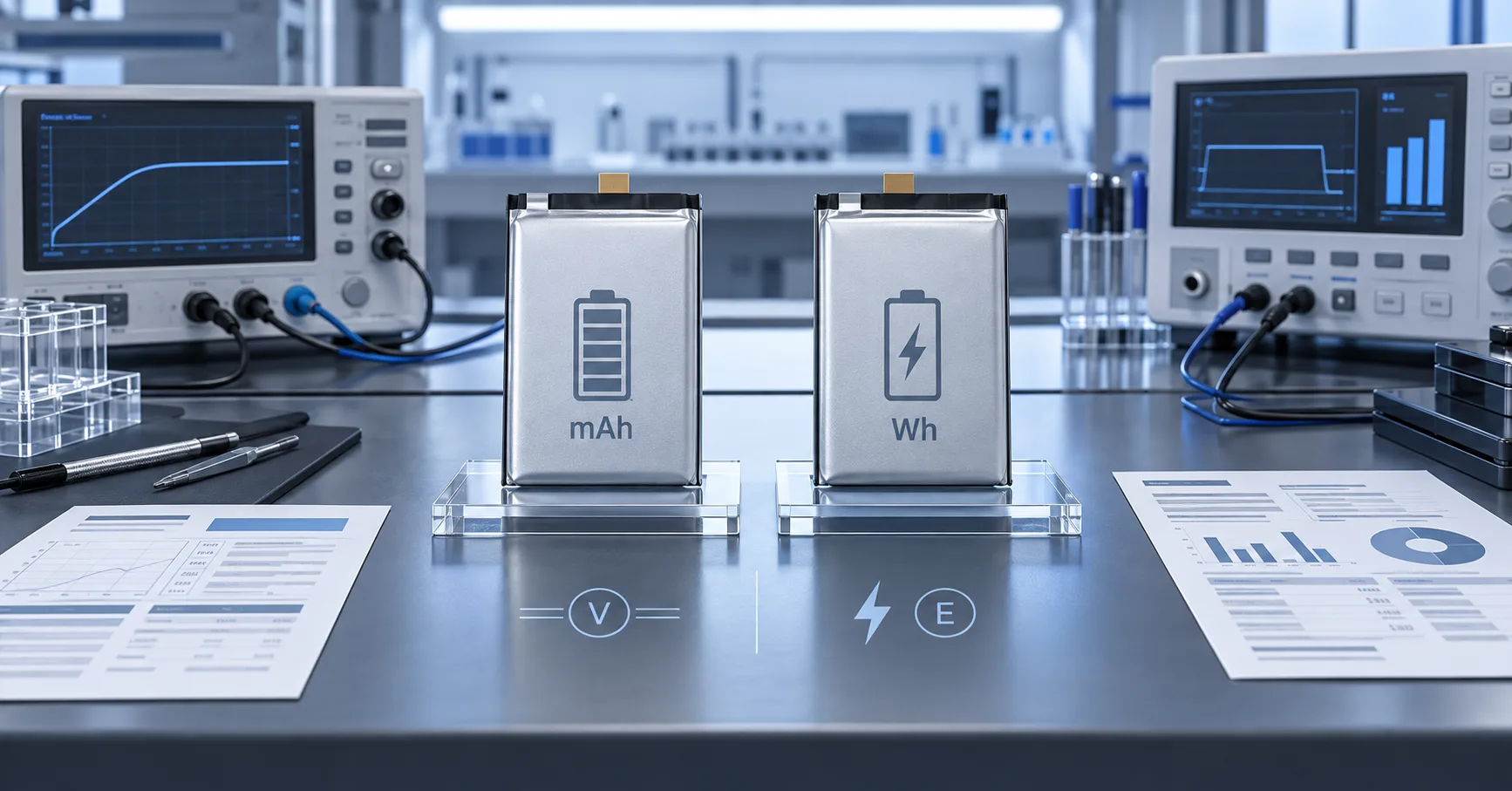
Confirm the approved chemistry, nominal voltage, charge-voltage design, capacity definition and operating limits for the finished application. Do not approve a universal phone battery from a printed mAh value alone. The device charging system, protection design and cell specification must be evaluated together by qualified engineers.
4. Tab position, polarity and joining
Record positive and negative tab material, width, length, spacing, exit orientation and polarity. Define the joining process, insulation barriers and workmanship criteria. Reversing polarity or forcing a tab route is not a minor fit issue. The finished current path should be verified rather than inferred from wire color or visual similarity.
5. Protection board and sensing
Identify which party supplies and validates the protection circuit, temperature sensing and any communication functions. Specify the board revision, component controls and electrical response required by the application. A bare pouch cell cannot be treated as though it already includes every protective function of the original finished assembly.
6. Flex cable and connector mapping
Verify connector geometry, keying, pinout, flex length, fold route, strain relief and clearance. Some device batteries may integrate functions beyond the basic positive and negative path. Samsung, for example, notes in its support material that certain device functions such as NFC can depend on a battery designed for the device. That does not mean every Android battery carries NFC, but it shows why interface content must be checked rather than assumed.
7. Finished-device and production-lot validation
After assembly, verify seating, closure, boot, charging indication, controlled charge and discharge behavior, temperature observations and representative load performance. Then confirm that pilot and production lots match the approved sample. Android battery compatibility is a conclusion supported by the entire chain, not a property established by one dimension.
| Approval layer | Minimum evidence | Typical rejection trigger |
|---|---|---|
| Identity | Exact device, reference battery, supplier cell and assembly revision | Ambiguous phone family or unmapped catalog number |
| Mechanical | Controlled drawings, tolerances, cavity check and completed stack-up | Interference, pressure, poor closure or unsupported flex route |
| Electrical | Cell specification, polarity, voltage design and controlled test results | Unexplained rating, reversed path or out-of-limit behavior |
| Protection and interface | Board revision, sensing, pinout, connector and insulation records | Unknown circuit ownership or undocumented component change |
| Production | Golden sample, work instruction, lot traceability and release record | Lot differs from sample or cannot be contained |
Build a Conversion Matrix, Not a Marketing Compatibility List
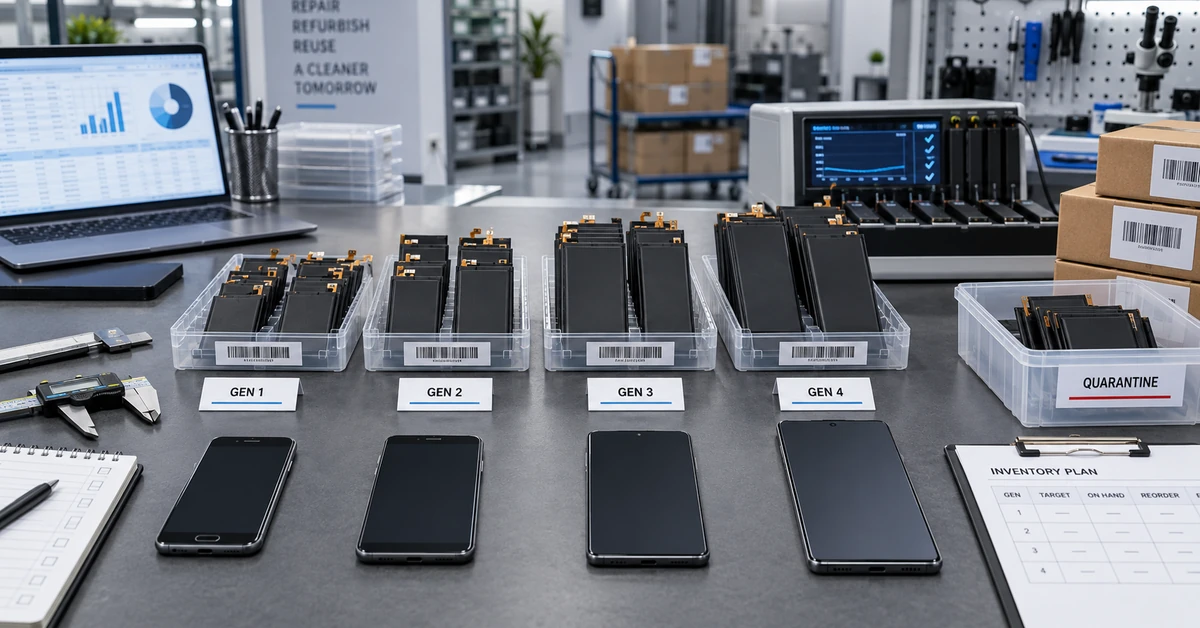
For every approved device, create one controlled matrix row connecting the phone identity to the cell format, protection-board revision, flex and connector assembly, insulation set, adhesive plan, finished SKU and test record. When one component changes, identify which rows require review.
This matrix prevents a common failure: a seller expands a compatibility list because several devices appear to accept the same cell outline. The list grows, but no one records different connector locations, temperature-sensor values, flex routes or cavity pressures. A valid mapping should be narrow enough that a technician can reproduce it and a quality team can trace a complaint back to a lot.
Approve Samples in Four Stages
- Document review: compare the target-device record, controlled cell drawing, electrical specification, protection design, assembly materials, label and available transport evidence.
- Engineering sample: measure the actual components and completed assembly, then perform model-specific functional checks under an approved plan.
- Pilot lot: confirm that trained operators, tooling, insulation, joining and inspection can reproduce the golden sample.
- Production lot: apply receiving and release sampling, maintain cell-to-assembly traceability, and quarantine unexplained deviations.
Use ESCCharge's mobile phone battery sampling-plan guide to set risk-based lot checks. For receiving controls, the mobile phone battery incoming-inspection guide can help connect identity, visual, dimensional and electrical evidence to a disposition decision.
Control the Failure Modes That “Universal” Can Hide
- Mechanical pressure: excessive completed thickness, poor adhesive control or an unsuitable corner profile can load the cell or prevent correct housing closure.
- Tab and polarity error: a visually similar cell may have different polarity, tab spacing or exit orientation.
- Uncontrolled protection conversion: reusing or changing a board without controlled specifications can obscure component, soldering and protection-response differences.
- Connector mismatch: a connector may seat imperfectly, have a different pinout or place stress on the flex.
- Traceability loss: mixing cells, boards or flex assemblies from multiple lots makes containment and root-cause analysis difficult.
- False system assumptions: booting once does not establish runtime, charging, sensing or long-term assembly suitability.
Samsung's battery-safety guidance warns that an incompatible battery can damage a device. This official brand guidance should not be stretched into a claim that every third-party battery is unsafe; it supports the narrower point that suitability must be proven for the intended device.
Any swelling, leakage, puncture, smoke, fumes, severe deformation or uncontrolled heating should trigger the organization's safety and quarantine procedure rather than further fit trials. Record the device, operator, component and lot evidence without improvising a repair on a suspect cell.
Transport Evidence Must Follow the Shipped Configuration
UNECE publishes the UN Manual of Tests and Criteria, including the lithium-battery test framework in subsection 38.3. Buyers should request evidence applicable to the exact cell or battery type and configuration being shipped. A generic statement that “the cell passed UN 38.3” does not by itself establish that a modified finished assembly, packaging method or shipment is correctly documented.
IATA's battery guidance helps explain air-transport classifications and explicitly notes that its document is guidance rather than a substitute for legal requirements. Confirm current modal, carrier, route, packaging, marking and documentation obligations with qualified dangerous-goods personnel. Do not copy another SKU's report simply because the pouch dimensions look similar.
Evaluate Qualified Cost, Not Cell Price Alone
A low unit price can be erased by engineering time, conversion scrap, additional inspection, intermittent connector faults, device rework, warranty handling and inventory fragmentation. Calculate the qualified cost per released finished assembly, including rejected samples and pilot losses.
This is where phone battery cell replacement programs differ from buying a fully validated model-specific pack. Cell platforms may reduce some sourcing complexity, but the buyer or assembler takes on more design, process and evidence responsibility. The business case is strongest when repeated demand and controlled conversion volume justify that work.
Track field issues by cell lot, assembly lot, device model, connector or board revision, installer, symptom and disposition. The mobile phone battery warranty-claims guide explains how to turn individual complaints into a structured lot investigation.
RFQ Checklist for Universal Android Cell Projects
- Exact device names, model codes, market variants and reference battery codes.
- Forecast and order quantity by finished model-specific SKU.
- Maximum cell envelope and completed assembly stack-up.
- Cell chemistry, voltage design, capacity definition and required test method.
- Tab material, geometry, polarity, exit position and approved joining process.
- Protection-board, sensing, flex, connector, pinout, insulation and adhesive requirements.
- Engineering-sample, pilot-lot and production-lot validation plan.
- Cell-lot and assembly-lot traceability plus change-notification rules.
- Required market and transport documents for the exact shipped configuration.
- Packaging, labeling, warranty evidence, destination and delivery expectations.
Frequently Asked Questions
Can one universal cell fit every Android phone?
No. A cell format may support several engineered configurations, but every device mapping needs controlled mechanical, electrical, interface and finished-device evidence.
Is matching length, width and capacity enough?
No. Thickness and clearance, tabs, polarity, voltage design, protection, sensing, flex route, connector, insulation and device behavior also matter.
Can an original protection board simply be transferred?
Do not treat board transfer as universally acceptable. It requires qualified procedures, traceable component identities, defined joining and insulation controls, and validation of the completed assembly. Legal, safety and service constraints may also apply.
What should be approved first?
Start with exact device identity and a controlled compatibility matrix. Then approve documents, engineering samples, a pilot lot and production release in sequence.
Does UN 38.3 evidence prove device compatibility?
No. Transport test evidence and device compatibility answer different questions. Both must apply to the relevant configuration, but neither replaces the other.
Convert a Cell Platform Into a Controlled SKU
The word “universal” should describe sourcing flexibility, not relaxed engineering. Define the target device, verify every compatibility gate, approve the finished construction, preserve traceability and control changes from sample through production. That process turns a generic cell option into a defensible model-specific battery program.
Send ESCCharge the target device codes, reference batteries, cavity or assembly drawings, forecast, destination and required documentation. The team can review the requested cell or finished-battery scope and prepare a sample discussion; compatibility, specification, certification, availability and commercial terms remain subject to project confirmation.