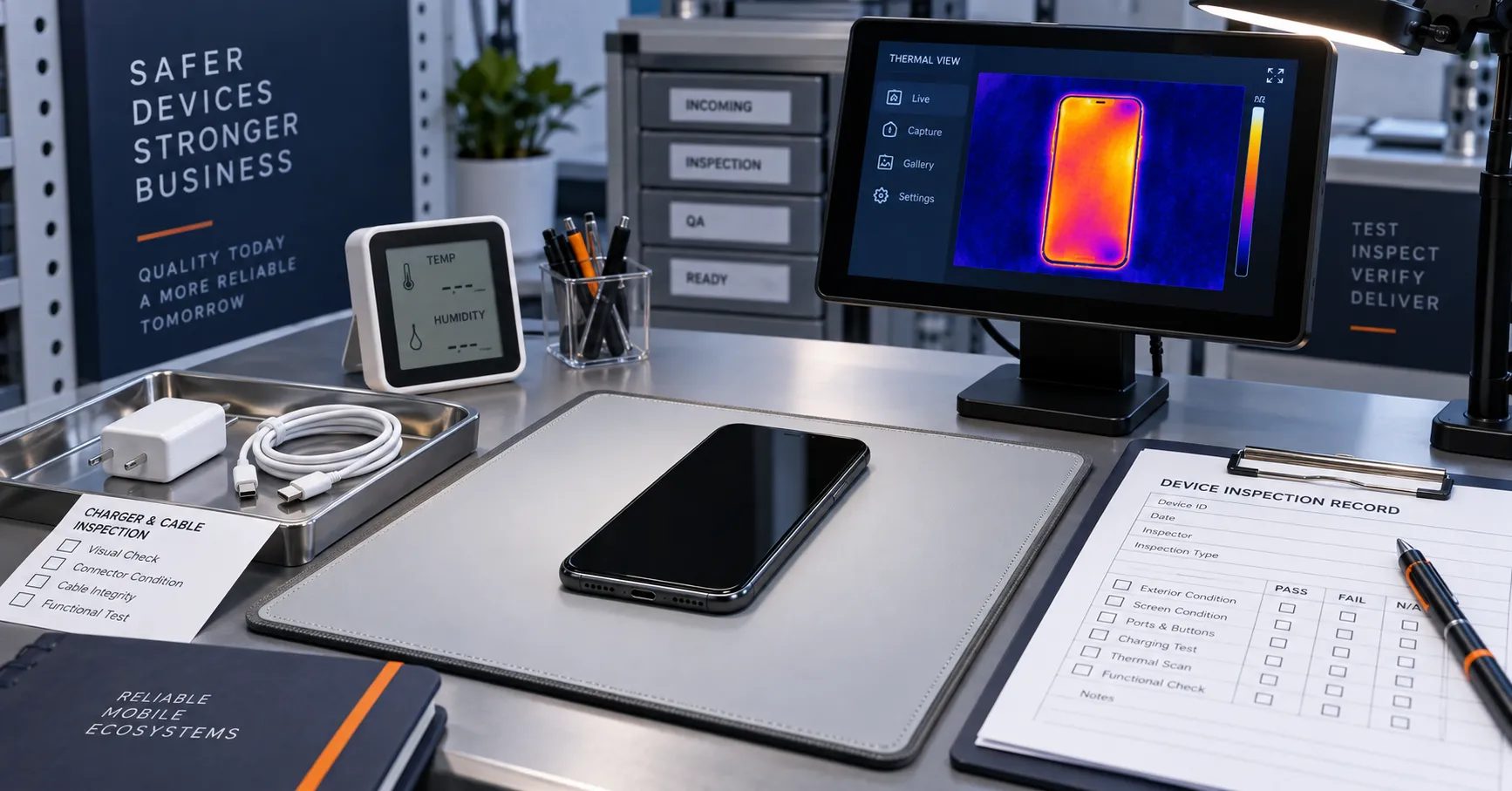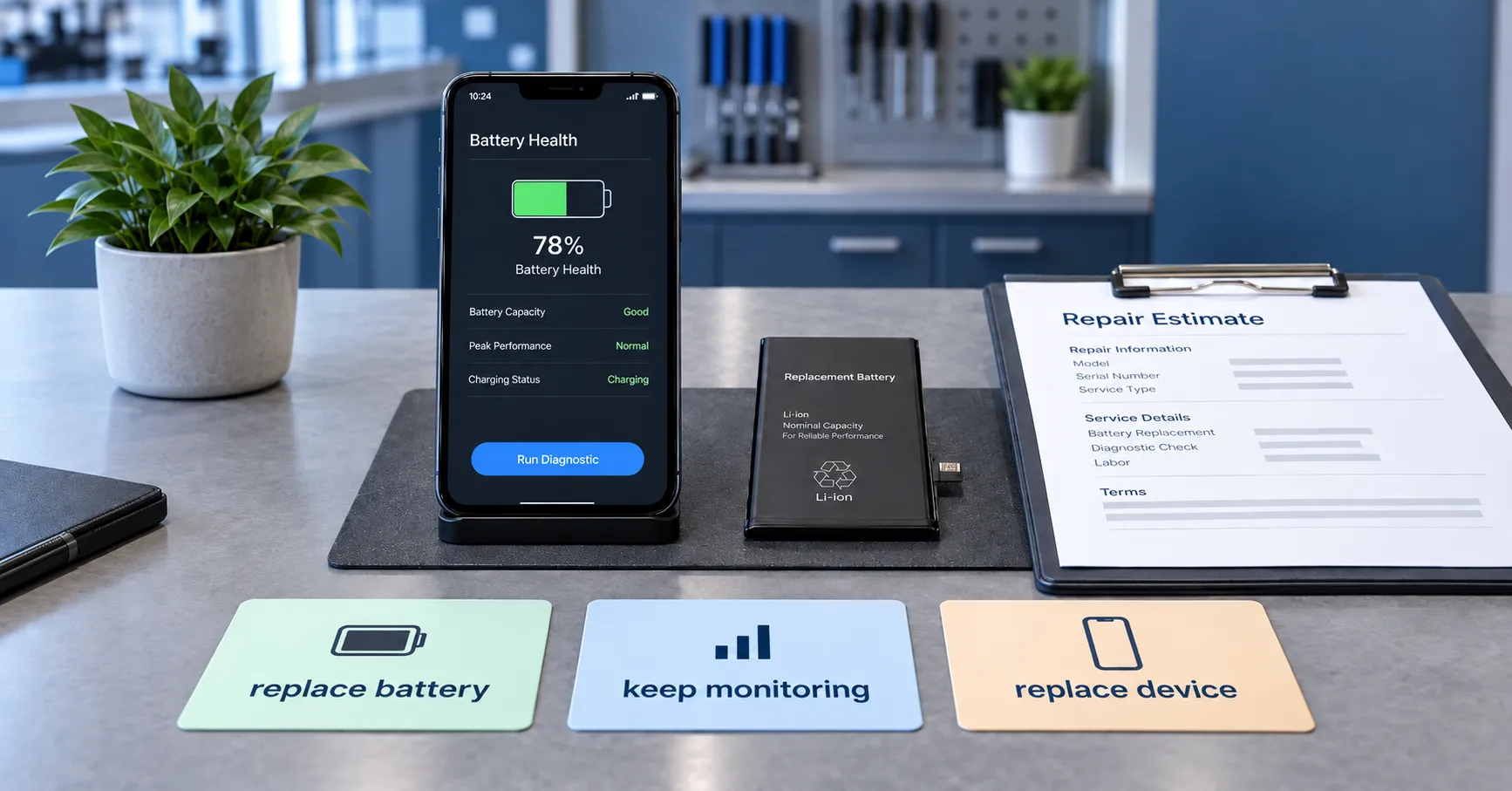

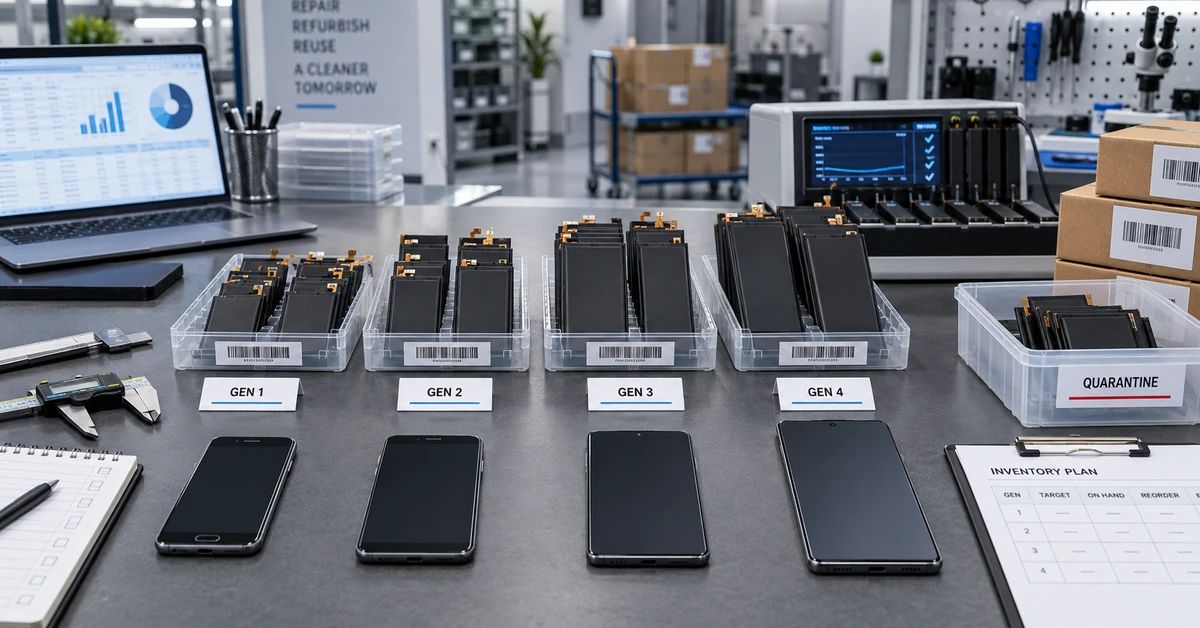
Galaxy S6, S7, S8 and S9 replacement batteries should be managed as a controlled legacy portfolio, not as one interchangeable Samsung S-series product. Each base, Edge or Plus device branch may require a different battery outline, flex position, connector, protection assembly and installation evidence. For B2B buyers, the main decision is which exact SKUs still deserve inventory and how to approve them without accepting aged or mismatched stock.
A samsung galaxy s6 battery replacement can attract meaningful search and repair demand, but that demand does not prove that every S6-family battery should receive the same stock depth. Repair chains, refurbishers and wholesalers need model-level sales data, device identity, sample evidence, storage history and warranty feedback before placing a repeat order.
Why the S6–S9 Range Needs a Portfolio Page
Competitor product pages commonly present the S6, S7 Edge, S8 and S9 as separate purchasable batteries. That is useful for transaction intent, but it leaves the buyer to solve the harder questions: which device variants are still active, whether two similar listings are actually compatible, how old the available stock may be, and whether a small reorder can remain consistent with the approved sample.
Samsung's own historical S-series sequence places Galaxy S6 in 2015, S7 in 2016, S8 in 2017 and S9 in 2018. Age changes the commercial logic. The opportunity is not simply to carry every legacy SKU; it is to preserve reliable supply for models with defensible repair demand while preventing cash, shelf space and warranty exposure from accumulating in slow-moving batteries.
This page owns legacy S6–S9 assortment and inventory decisions. It complements the broader Samsung replacement-battery supplier guide, which addresses general supplier selection rather than the lifecycle of these specific older model families.
Do Not Treat the Series Name as a Compatibility Specification
“Galaxy S7 battery” or “S8 battery” is not a complete purchasing identity. A buyer should capture the device's exact model code, product name, market or carrier variant when relevant, battery identity from an approved reference, and the revision of the finished replacement assembly.
Samsung's device-identification guidance explains that the model number can be found through Settings, the device or its original packaging, and that model numbers distinguish versions within a product family. Its support material gives examples such as SM-G950U for certain S8 devices and SM-G960U for certain S9 devices. The exact code matters because a product name alone may hide regional or carrier branches.
| Portfolio branch | Minimum identity control | Commercial decision |
|---|---|---|
| S6 family | Separate base, Edge and Edge+ records; confirm exact model and approved battery assembly | Retain only SKUs with continuing repair demand and verifiable fresh supply |
| S7 family | Separate base and Edge; do not infer fit from generation name | Use recent sales and warranty evidence to set stock depth |
| S8 family | Separate base and Plus; verify model code, outline, flex and connector | Approve each branch and monitor sell-through |
| S9 family | Separate base and Plus; preserve model and battery revision traceability | Reorder only after stock-age and demand review |
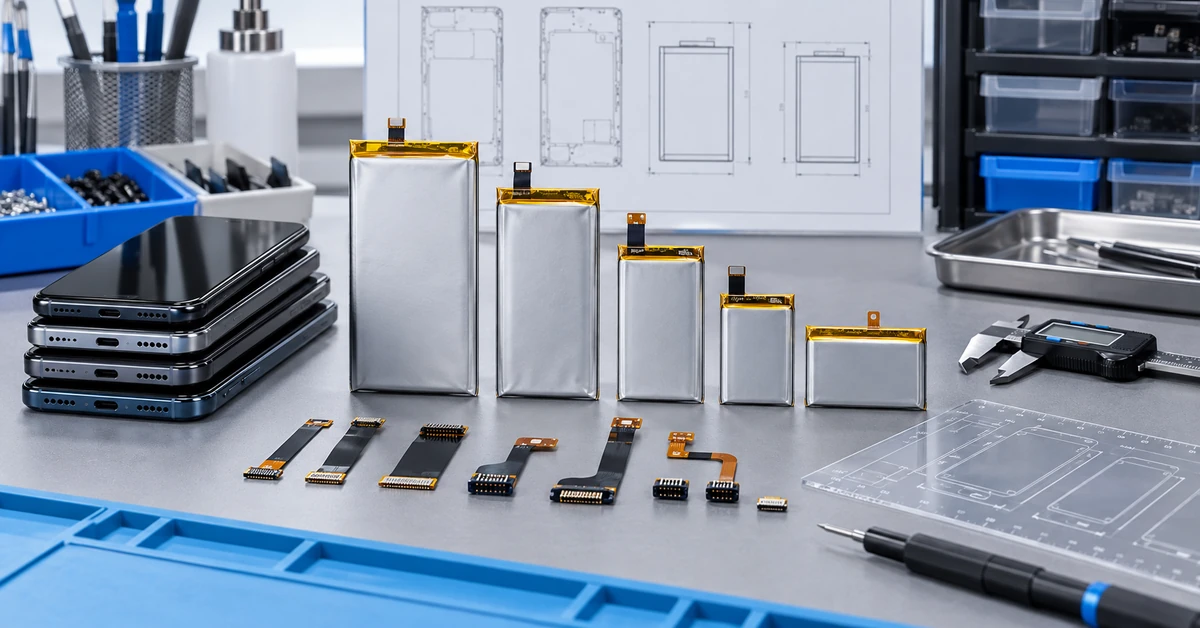
Do not publish a cross-model compatibility claim because two batteries share a nominal capacity or resemble each other in a catalog image. Capacity is only one attribute. Physical envelope, connector location, flex geometry, polarity, protection design, adhesive layout and device behavior also matter.
Build a Model-Level Approval Matrix
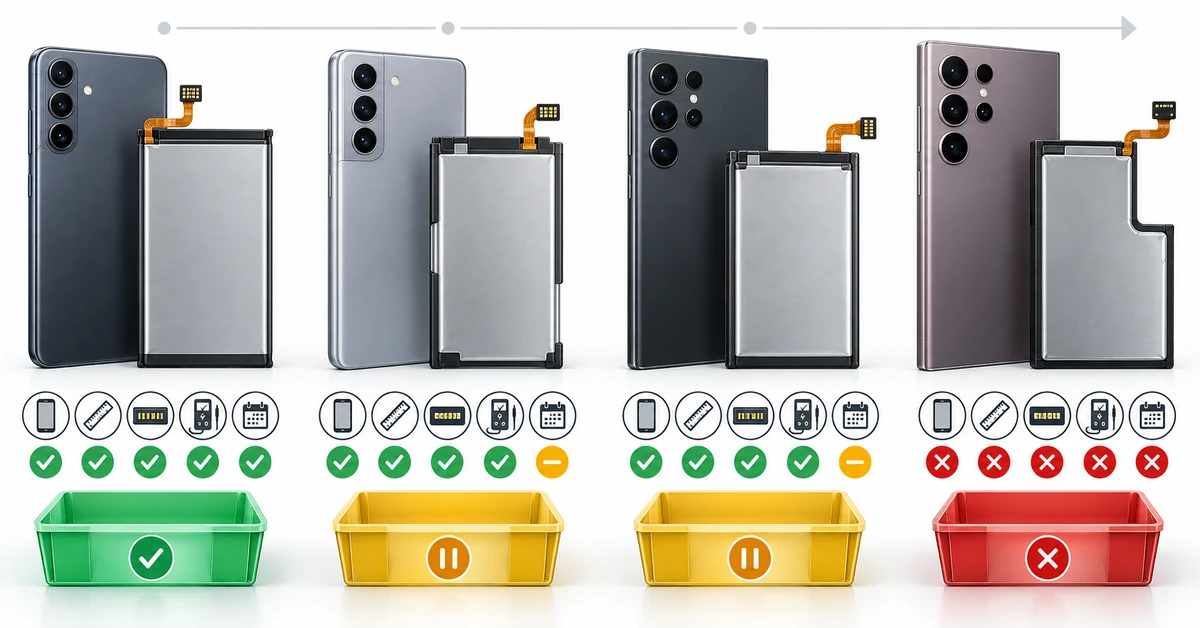
Use one approval row for every saleable finished-battery SKU. A row should connect the device identity to the supplier code, drawing, physical sample, test record, packaging label and production lot. This is more reliable than a catalog that groups several phone names under one photograph.
| Approval field | Evidence required | Reason |
|---|---|---|
| Device identity | Exact model name and model code from the device, packaging or controlled service record | Prevents base, Edge, Plus and market variants from being mixed |
| Battery identity | Controlled supplier SKU, battery marking and revision | Links the delivered item to the approved sample |
| Mechanical fit | Outline, thickness, flex position, connector, fold route and adhesive plan | Reduces installation interference and connector stress |
| Electrical behavior | Polarity, protection response, charging, discharge and representative device-load observations | Confirms the finished assembly rather than a label claim |
| System observation | Boot, charging indication, runtime trend and relevant diagnostic behavior | Records what the exact device and software configuration display |
| Traceability | Cell lot, assembly lot, production date and inspection status | Supports containment and warranty investigation |
A samsung galaxy s8 replacement battery should therefore have its own record rather than inheriting approval from an S8+ sample. The same rule applies to S6-family, S7-family and S9-family branches.
Capacity Is a Checkpoint, Not the Whole Specification
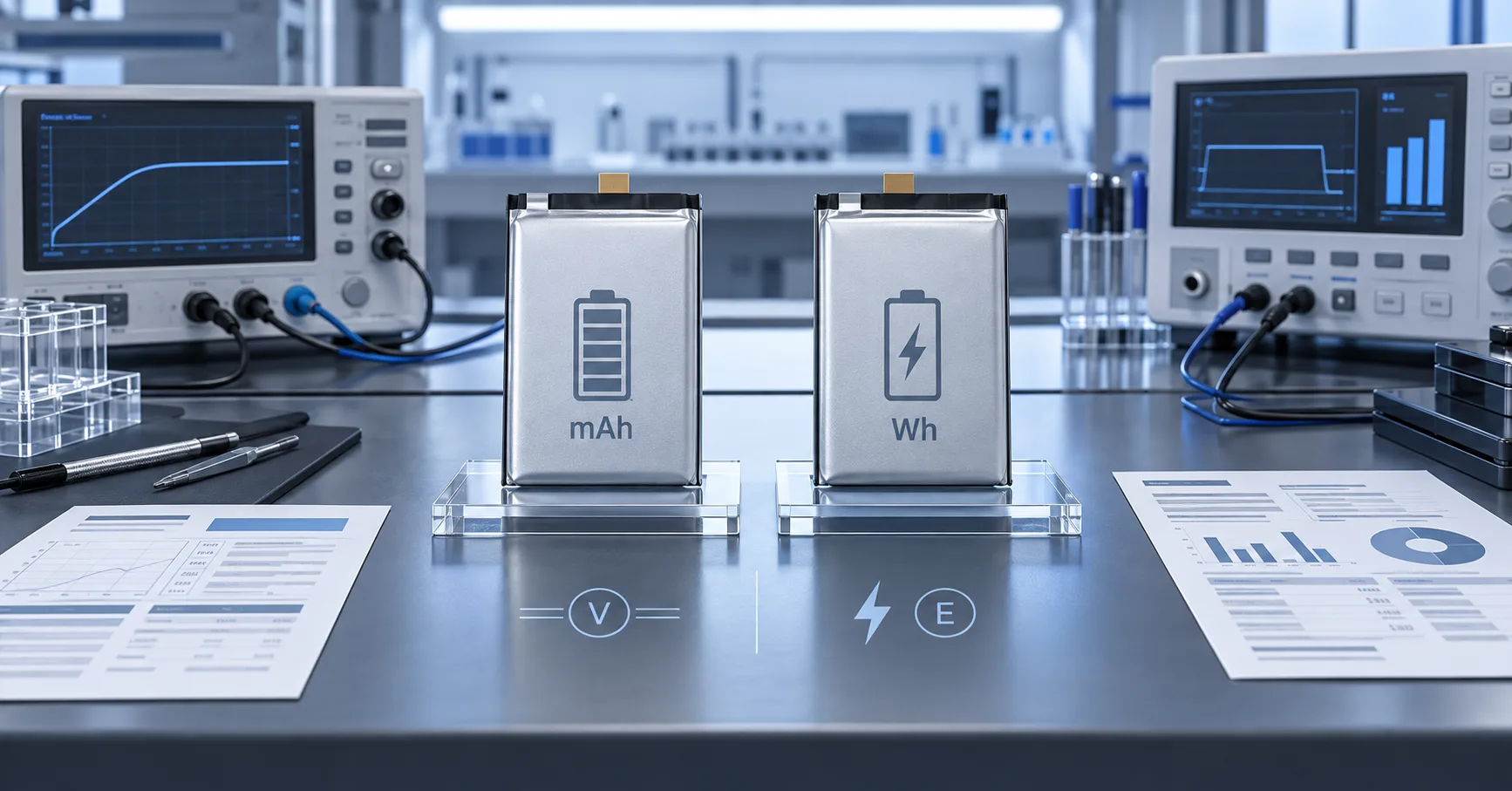
Samsung publishes historical S-series capacity information and device-specific specifications, confirming that capacities and model identities vary across generations and Plus or Edge versions. Buyers may use official data as one reference, but the purchase specification must identify whether a number is rated, typical, declared or measured and must connect it to the exact battery and device model.
Do not accept “high capacity,” “original capacity” or a printed mAh value as proof of usable performance. Ask for the measurement method, charge and discharge conditions, sample count, temperature, cutoff conditions and unit-level results. Compare candidate samples with the approved reference under the same method.
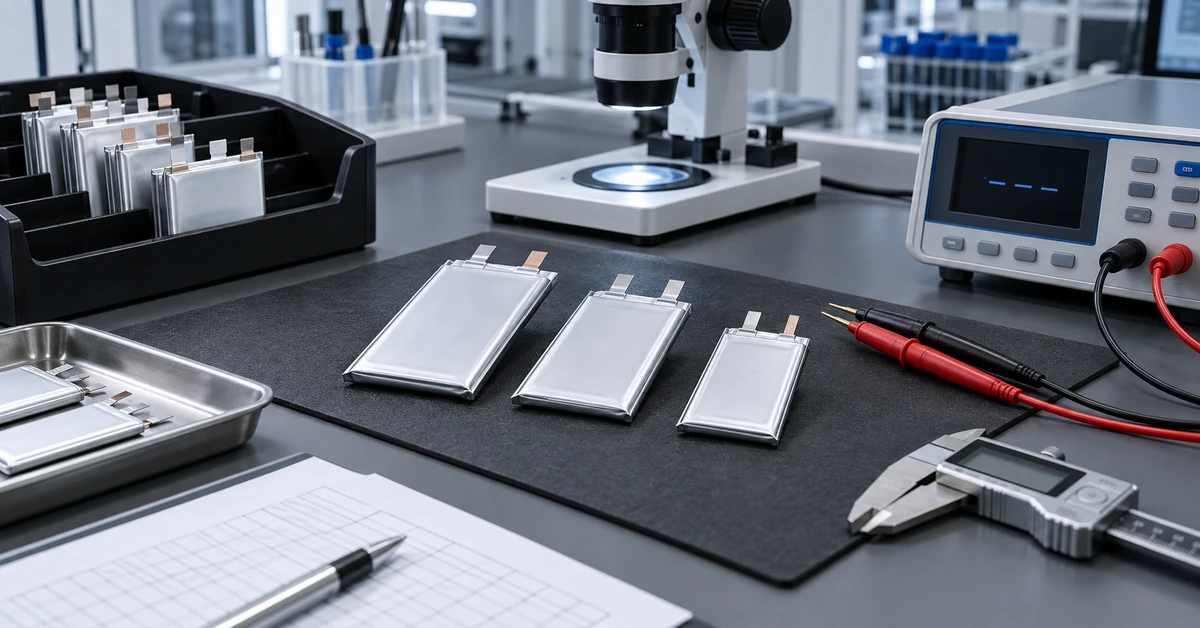
For bulk control, use ESCCharge's mobile phone battery incoming-inspection framework to verify identity, appearance, dimensions and selected electrical characteristics. Incoming checks should enforce the approved model-specific limits; they should not invent a universal limit for every legacy battery.
Control Stock Age Before Increasing Inventory
Legacy demand can be irregular. A distributor may sell a small burst after acquiring a refurbishment project and then see months of low movement. That pattern makes production date, storage history and rotation more important than a low purchase price.
Request production or assembly date information, cell-lot traceability, storage conditions and the supplier's stock-rotation method. On receipt, preserve lot separation and use first-in, first-out or another documented rotation rule suitable for the operation. Do not mix a new lot with older inventory before comparison, because failures will become harder to trace.
Samsung's battery-care guidance states that long periods in a depleted condition and temperature extremes can accelerate deterioration. The guidance is written for Galaxy device care, not as a warehouse specification for third-party replacement batteries, but it reinforces the need for controlled state, temperature and periodic review rather than indefinite storage.
The detailed warehouse controls in the mobile phone battery storage guide can be applied after the buyer defines model-specific disposition rules.
Use Demand Tiers Instead of Stocking Every SKU Equally
Assign each SKU to a commercial tier using recent sell-through, installed-device base in the target market, repair inquiry frequency, margin, supplier replenishment reliability and warranty history.
- Core legacy: repeat demand, predictable sell-through and a validated supply route. Maintain controlled safety stock.
- Project only: order against confirmed refurbishment or repair demand. Avoid speculative inventory.
- Long tail: low but recurring demand. Use small replenishment quantities and frequent stock-age reviews.
- Phase out: no defensible movement, unavailable fresh supply or excessive warranty and handling cost. Stop routine replenishment and manage remaining stock deliberately.
A replacement battery for samsung s7 edge may belong in the core tier for one regional repair network and the project-only tier for another. Search volume is opportunity evidence, not a substitute for the buyer's own sales and claims data.
Approve Samples in Stages
- Document review: confirm device scope, drawing, materials, label content, packaging and available transport evidence for the exact shipped configuration.
- Engineering samples: inspect dimensions, flex and connector alignment, polarity, protection path, charging, representative load and physical assembly.
- Pilot lot: verify that a small production lot matches the approved construction and that packaging prevents model mix-ups.
- Production lot: apply the approved sampling plan, traceability and hold rules before release.
- Repeat order: compare revisions, dates and key results with the golden sample; review any material, factory, tooling or process change.
ESCCharge's mobile phone battery sampling-plan guide explains how to scale inspection by risk. A small order is not automatically low risk if the SKU has been stored for a long time or changed since the last approval.
Separate Quality Claims From Evidence
Competitor listings may use grade labels to communicate commercial positioning. Do not assume that two suppliers use the same definition for words such as original, OEM, premium, high capacity, S grade or A grade. For third-party replacement batteries, request measurable construction and performance evidence and avoid language that implies Samsung authorization or genuine Samsung parts unless independently verified and legally supportable.
The awkward query battery s9 shows why a search phrase cannot become the product specification. Convert the inquiry into an exact device code, base or Plus branch, approved battery identity and test plan before quoting or shipping.
Turn Warranty Data Into a Portfolio Decision
Track claims by device model, supplier SKU, production lot, installation date, symptom and disposition. “Drains fast” is not enough. Separate no-power events, unexpected shutdowns, charging complaints, heat, swelling, connector damage, installation damage and device-related causes.
Quarantine batteries with swelling, leakage, puncture, severe deformation, smoke, fumes, uncontrolled heating or other unsafe conditions. Samsung's battery handling guidance advises that visibly damaged or swollen batteries should not be used or self-repaired; trained organizations should follow their applicable safety, damaged-battery and disposal procedures.
Use the mobile phone battery warranty-claims guide to decide when an individual repair case should become a supplier or lot-level investigation. A rising claim rate may justify holding one lot without retiring an otherwise viable model; repeated low demand plus high qualified cost may support phase-out.
RFQ Checklist for a Legacy Samsung Battery Portfolio
- Exact device names, model codes, market scope and estimated quantity by SKU.
- Battery identity, revision, dimensions, flex, connector and protection-board configuration.
- Declared capacity type and controlled verification method.
- Cell and assembly production dates, lot traceability and storage history.
- Engineering-sample, pilot-lot and production-lot approval requirements.
- Packaging and labeling controls that prevent base, Edge and Plus mix-ups.
- Required transport and market documents for the exact battery configuration.
- Change-notification, warranty evidence and corrective-action expectations.
- Replenishment plan for core, project-only, long-tail and phase-out SKUs.
A legacy samsung battery program becomes manageable when every order connects demand, identity, stock condition and quality evidence. Without that connection, a broad catalog can increase assortment while reducing the percentage of inventory that is safe, current and commercially useful.
Frequently Asked Questions
Can one Galaxy S-series battery fit several generations?
Do not assume so. Verify the exact device code, battery identity, outline, thickness, connector, flex route, polarity, protection assembly and functional behavior. Similar capacity or appearance is insufficient.
Should a wholesaler carry every S6–S9 model?
No. Use local demand, sell-through, margin, supply freshness and claim history. Some SKUs justify safety stock; others should be project-only or phased out.
How should old inventory be evaluated?
Preserve lot identity and review production date, storage record, physical condition and controlled electrical results against an approved specification. Do not relabel or mix old and new lots to simplify inventory.
Does a printed capacity prove the battery is acceptable?
No. Confirm whether the value is rated, typical, declared or measured and review the test method, unit-level results, construction, fit and representative device behavior.
When should a legacy SKU be discontinued?
Consider phase-out when demand no longer supports qualified sourcing and inspection, fresh traceable supply is unavailable, or handling and warranty costs consistently exceed the commercial value. Preserve after-sales obligations for units already sold.
Build a Smaller, Better-Controlled Legacy Portfolio
The best S6–S9 assortment is not necessarily the largest. Separate each model branch, approve the full battery assembly, control stock age, set demand tiers and use warranty evidence to adjust replenishment. This keeps useful legacy repair coverage without turning old-model inventory into an unmanaged liability.
Send ESCCharge your target Galaxy model codes, recent demand by SKU, sample quantity, packaging requirements and destination market. The team can review the requested replacement-battery scope and prepare a model-level sampling discussion; specifications, documentation, availability and commercial terms remain subject to project confirmation.