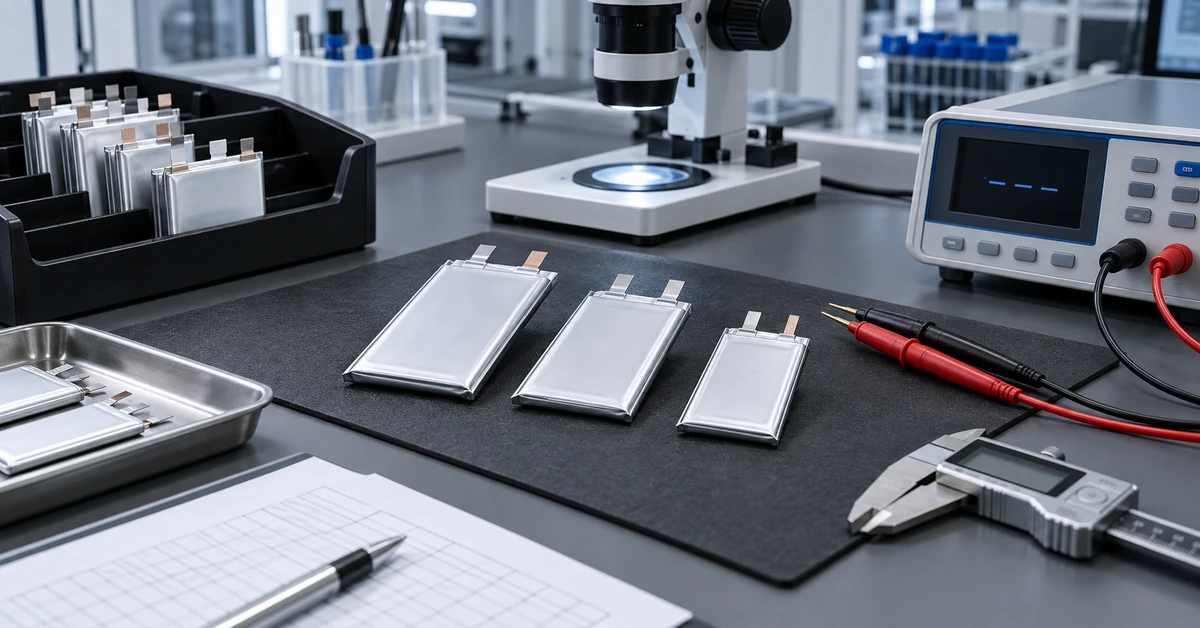

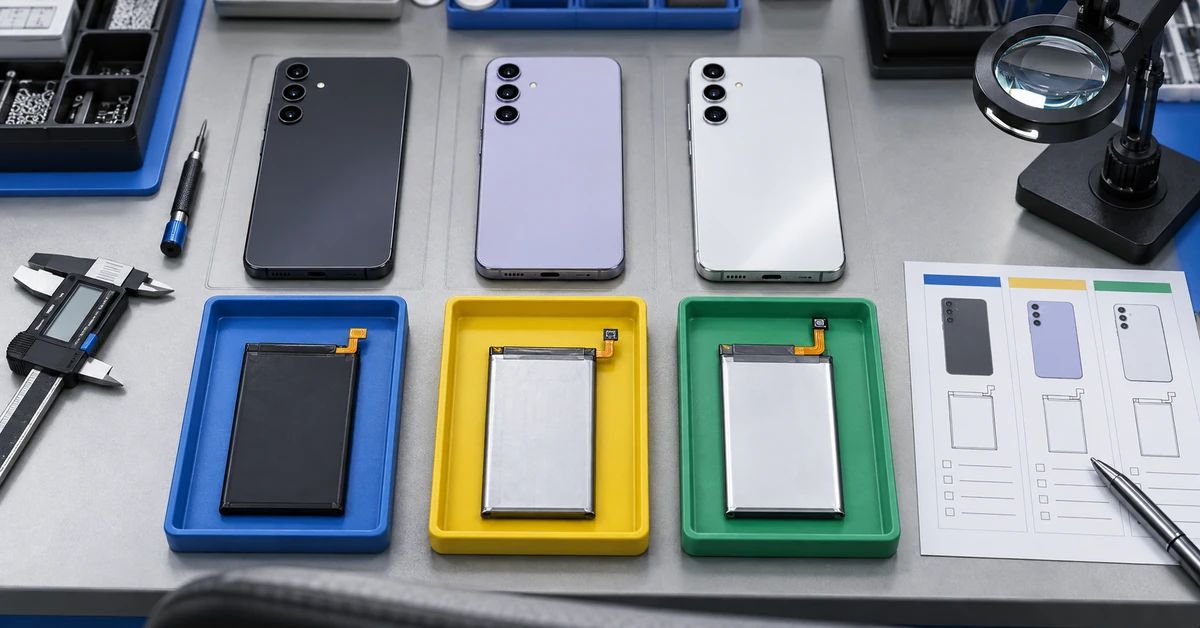
Do not approve one replacement-battery SKU for Galaxy A25, A35 and A55 simply because a supplier groups the three names in a catalog title. Record the exact device model and approved finished-battery configuration for each branch. A shared headline capacity, similar phone silhouette or common product listing is a reason to investigate possible commonality—not evidence that the batteries are interchangeable.
An inquiry for an a25 battery should therefore become a controlled model-level request: which A25 variant is involved, which reference battery is being replaced, what finished assembly is proposed, and what evidence confirms fit and function? The same questions apply when a repair chain adds A35 and A55 to the purchasing program.
Why This Three-Model Cluster Needs Its Own Buying Rule
Galaxy A-series buying is often operationally different from sourcing a single flagship part. A wholesaler may receive mixed-model orders, a refurbishment line may process several devices on the same shift, and a repair network may send batteries to dozens of branches. In that environment, a small labeling error can become a repeated wrong-part installation rather than an isolated purchasing mistake.
The REWA grouped replacement-battery listing names A25/A256, A55/A556 and A35/A356 together. The page demonstrates how one commercial listing can cover several model names; its title alone does not establish one physical pack fitting all three. Procurement teams should request a clear variant selector, product-code map or separate drawings before translating such a listing into internal SKUs.
Samsung identifies the Galaxy A25 5G as an SM-A256-family device. Its A35 and A55 comparison distinguishes SM-A356B and SM-A556B. These are device identities, not battery part numbers. All three may show a 5,000 mAh typical device-capacity figure in Samsung material, but that figure does not specify battery outline, connector, protection board or interchangeability.
Turn the Search Phrase Into an Exact Device Identity
“A25” is incomplete as a purchasing specification. Capture the device name, full model code from the unit or controlled service record, market or carrier variation if relevant, and the reference battery marking where it can be safely and legitimately verified. Samsung's model-identification guidance explains that the model number can be found through Settings and About phone, although menus vary by device and software.
Keep the customer's search language separate from the final line item. A galaxy a25 battery replacement request can enter the sales funnel, but the quotation and packing label should identify the approved device branch and battery assembly revision. “Fits A25/A35/A55” should not be used as a blanket statement unless the exact supported variants and completed battery configuration have been validated.
| Buyer record | Galaxy A25 branch | Galaxy A35 branch | Galaxy A55 branch |
|---|---|---|---|
| Device identity | Record complete SM-A256 variant | Record complete SM-A356 variant | Record complete SM-A556 variant |
| Reference battery | Capture controlled source and marking | Capture controlled source and marking | Capture controlled source and marking |
| Proposed finished SKU | Assign and approve separately | Assign and approve separately | Assign and approve separately |
| Cross-model claim | Do not infer from shared capacity or grouped listing; require configuration-specific evidence | ||
Build a Model-Level Approval Matrix
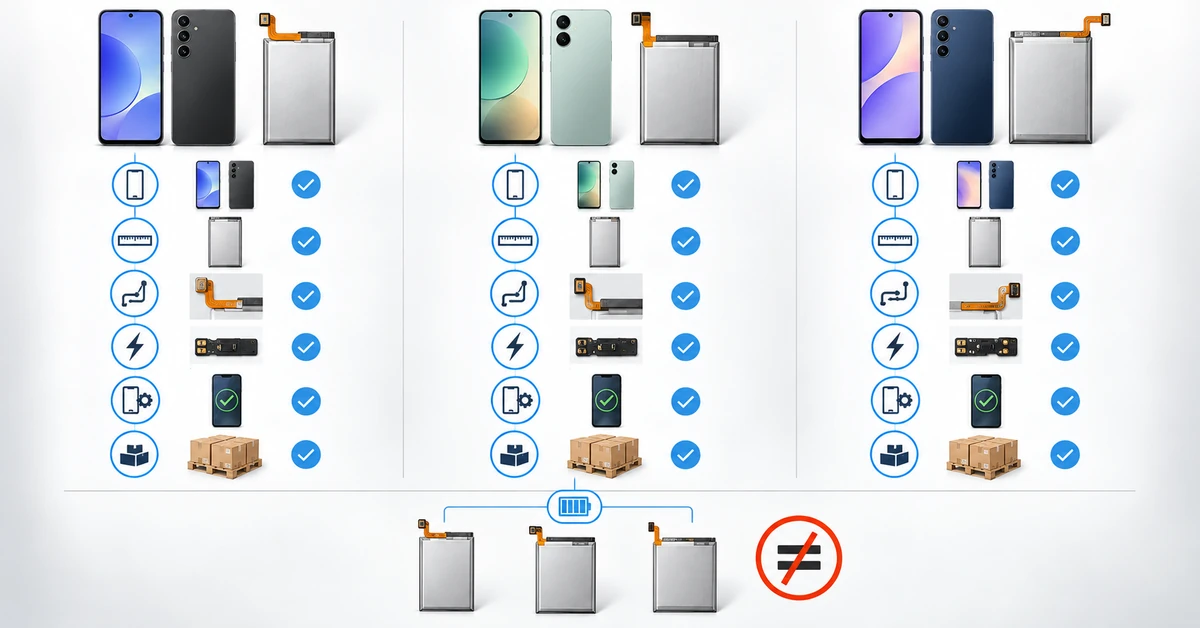
Assign one matrix row to every saleable finished-battery SKU. A row links the target device, supplier product code, engineering drawing, physical reference sample, test report, packaging artwork and production lot. If a supplier proposes that one finished assembly covers more than one device, the matrix should show each approved device separately and the evidence that supports that shared claim.
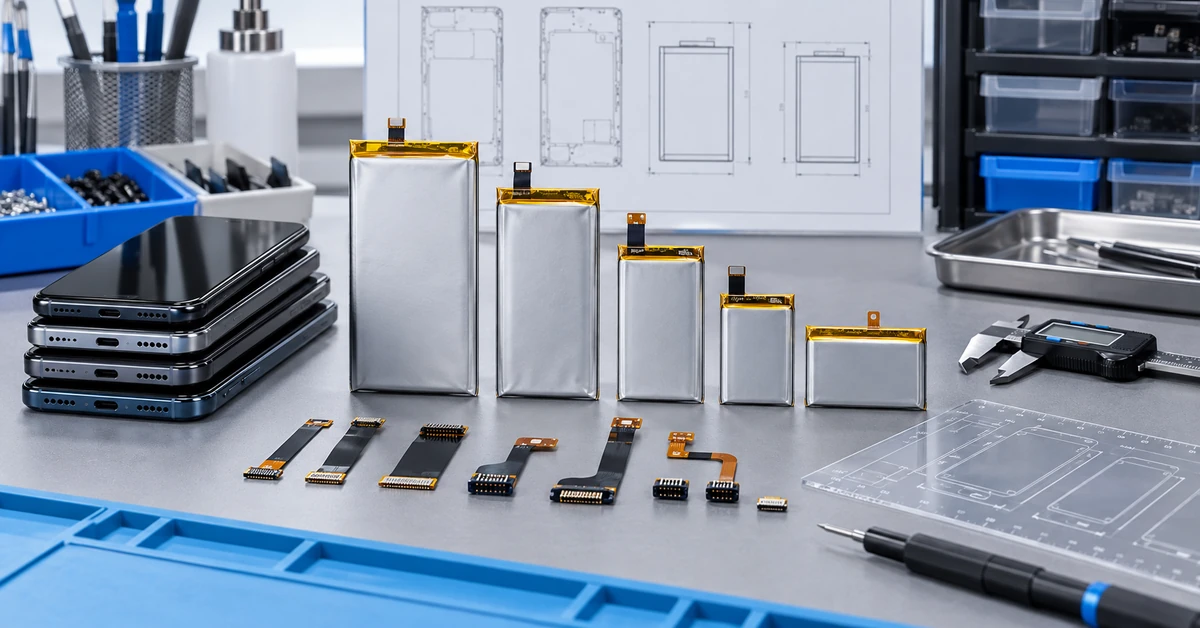
Mechanical fit. Compare length, width, completed thickness, corners, seal and fold areas, insulation, adhesive footprint and the available device cavity. Measure the assembled item, not only the pouch cell. A candidate can appear to fit on an open bench yet place pressure on the housing after closure.
Electrical and protection design. Check specified chemistry, nominal and charge-voltage design, polarity, protection circuitry, sensing and controlled electrical limits for the exact assembly. Do not treat the same printed mAh number as proof of equivalent electrical design. Capacity claims need a defined model and test method.
Interface. Verify flex length and route, connector position, geometry and pin mapping. Inspect how the cable bends during installation and whether strain or interference appears after closure. A visually similar connector can still be an unapproved interface.
Device behavior. On an approved sample device, document seating, boot, charging indication, representative charge and discharge behavior, temperature observations and relevant diagnostics. Record the test phone's model and software state. One successful boot is a screening observation, not full qualification.
The broader Samsung replacement-battery supplier guide addresses general supplier selection. This matrix is narrower: it decides whether the proposed A25, A35 or A55 line item is adequately defined and approved.
Do Not Let a 5,000 mAh Headline Decide the SKU
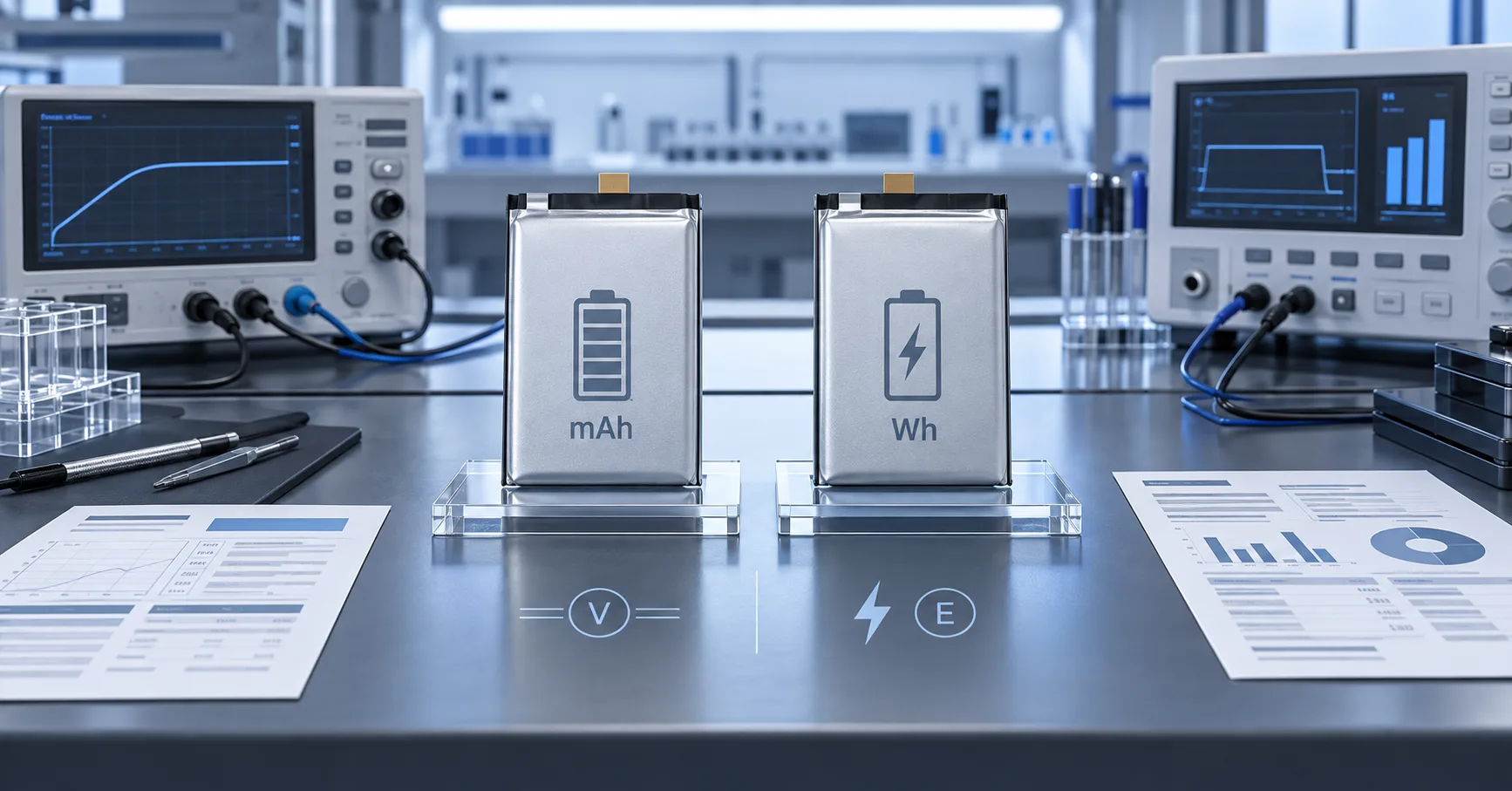
Samsung's published 5,000 mAh figure is a typical device specification for these models, not an ESCCharge replacement-battery test result. It cannot establish that a third-party pack has the same measured capacity, that its label has the same rating convention, or that one pack can be transferred across the three devices.
For each candidate, ask whether capacity is minimum, rated, typical or measured. Request the charge and discharge method, temperature, cutoff, sample count and unit-level results. Compare candidate batteries under one agreed method and preserve the battery identities. Avoid publishing “original capacity” or “high capacity” claims until the precise meaning and supporting evidence have been approved.
Approve Samples Before Building Mixed-Model Stock
- Document gate: receive separate device mappings, finished-assembly drawings, labels, packaging and available transport evidence.
- Engineering gate: compare the actual A25, A35 and A55 samples with their own reference devices; record dimensions, interface and controlled functional observations.
- Pilot gate: check that a small production lot reproduces the approved construction and that staff can distinguish the three variants.
- Production gate: inspect incoming lots against approved limits, preserve traceability and hold unexplained changes.
- Repeat-order gate: confirm product revision, cell and assembly lot, labeling, packaging and key results remain consistent with the approved baseline.
Use the mobile phone battery incoming-inspection guide to structure receiving evidence. The battery sampling-plan guide helps set risk-based lot checks after a specification has been approved. Neither general guide can replace a model-specific drawing or reference sample.
Prevent Model Mix-Ups in the Warehouse and Repair Branch
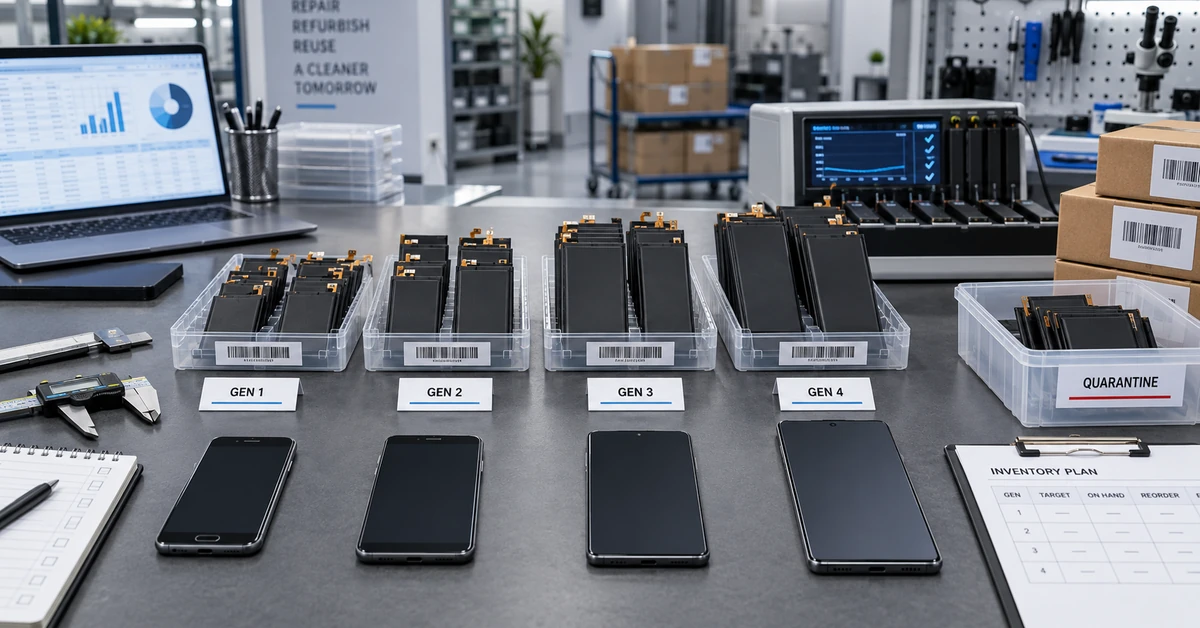
When a purchase order contains all three devices, use distinct finished SKUs and clear human-readable model labels. A barcode should resolve to the same device mapping as the printed label and carton. Keep the sample-approval revision in the master data so a reordered item cannot silently inherit an old approval after a supplier changes the flex, board or cell.
At receiving, inspect a sample from each separate line item rather than one convenient carton from the combined shipment. During picking, prevent near-identical bags from sitting in the same open bin. On the repair bench, require a model-code confirmation before the battery is removed from its labeled packaging. These operational controls are inexpensive compared with tracing a mixed lot after distribution.
A galaxy a35 replacement battery and a galaxy a55 replacement battery might share a commercial family in the catalog while remaining distinct in inventory. If engineering later approves a common finished SKU, document the exact device variants, construction and validation evidence; do not merge line items merely to simplify the spreadsheet.
Make Warranty Feedback Model-Specific
Track returns by device code, finished SKU, cell lot, assembly lot, installation site, date and observed symptom. Separate an incorrect model pick from a connector fault, poor fit, charging issue, early capacity complaint or device-side condition. If two models share a supplier component, trace that component without automatically treating all three product lines as affected.
The battery warranty-claims workflow provides a broader evidence and escalation structure. For this cluster, the key extra field is the device-to-battery mapping: without it, a warranty team cannot distinguish a weak lot from a catalog or picking error.
RFQ Checklist for the A25–A55 Program
- Target markets, exact phone model codes and estimated quantity by model.
- Reference battery identification and controlled finished-SKU map.
- Physical drawing, completed stack-up, flex route, connector and insulation details.
- Cell, protection, sensing, polarity and capacity specifications with test methods.
- Engineering-sample and pilot-lot quantities and approval owners.
- Packaging artwork, carton marks, barcode mapping and model-separation controls.
- Cell and assembly lot traceability, change-notification and warranty evidence rules.
- Required market and transport documents for the exact shipped configuration.
The RFQ should request an explicit response for each branch: approved, proposed pending sample, unsupported or not yet assessed. An empty cell in a supplier spreadsheet must not be interpreted as approval. This is the point of a galaxy a series battery compatibility program: commercial coverage must be backed by model-level evidence.
Frequently Asked Questions
Can one battery fit Galaxy A25, A35 and A55?
Do not assume so. A supplier must identify the exact finished battery, supported device variants and validation evidence for each claimed application. A combined listing and equal typical capacity are insufficient.
Are SM-A256, SM-A356 and SM-A556 battery part numbers?
No. They are device-model families in Samsung materials. The purchasing record still needs the relevant reference battery and the supplier's controlled finished-battery code.
Should a wholesaler create three SKUs?
Start with separate approval records and inventory identities. Consolidate only if the same finished assembly has been independently approved for each exact device variant and the operational labeling remains unambiguous.
Does a 5,000 mAh label prove equivalent runtime?
No. Verify the capacity definition and measurement method, then consider device power use, battery condition and installation. A printed figure alone is not a runtime test.
What should trigger requalification?
Review changes in cell, protection board, flex, connector, insulation, factory, process, label claim or supported model list. The scope of retesting depends on the change and the existing approval evidence.
Buy the Mapping, Not Just the Battery
A reliable A25–A55 assortment connects each device to one controlled finished-battery configuration, sample record and production lot. That approach protects repair technicians from ambiguous product titles and gives procurement a defensible basis for mixed-model orders and repeat supply.
Send ESCCharge the target Galaxy model codes, reference batteries, expected volume by SKU, destination market and sample requirements. The team can review a model-level sourcing and validation plan; availability, compatibility, specifications, documentation, MOQ, lead time and warranty terms remain subject to project confirmation.