
If an iPhone shuts off with battery remaining, the percentage on the screen is not enough to identify the failed part. A battery may have charge left but struggle to supply a particular workload. Reporting errors, installation faults, device hardware problems and software restarts can also produce complaints that customers describe as “the battery switched off.”
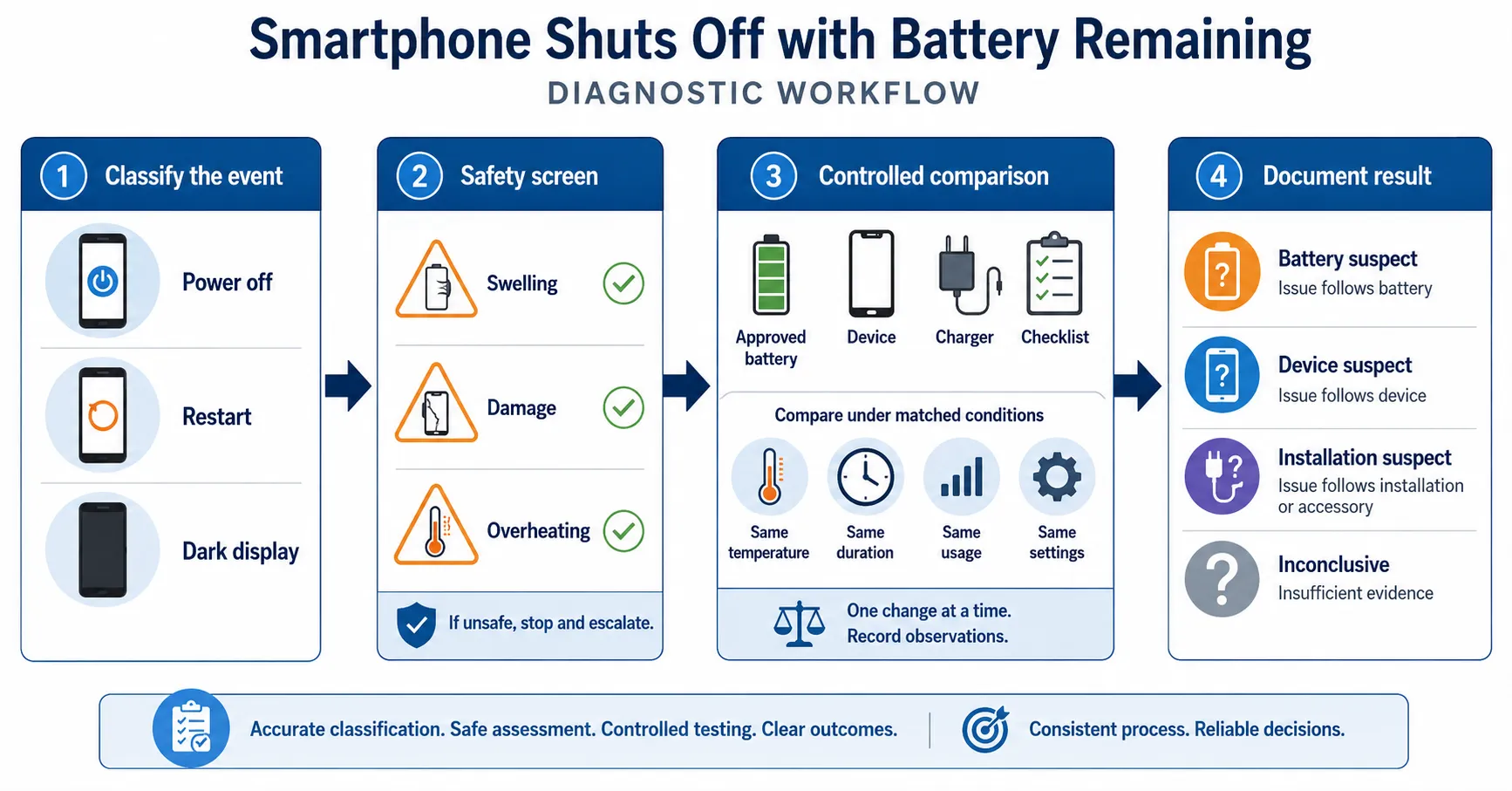
For repair chains, refurbishment facilities and battery wholesalers, the useful outcome is a documented diagnosis and defensible warranty decision. Start by identifying what actually happened, preserve the original evidence, then compare approved battery and device controls under matched conditions. Do not promise that replacement or calibration will resolve every case.
Classify the Event Before Testing the Battery
| Observed event | Record first | Do not assume |
|---|---|---|
| Phone appears to power off and stays off | Last visible percentage, activity, temperature context and restart conditions | The cell has zero remaining capacity |
| Apple logo appears and the phone restarts | Event time, software version, recurrence and available diagnostic records | Every restart is a battery power failure |
| Display goes black but sound or other activity continues | Whether the system remains responsive and whether a temperature warning appeared | A dark screen proves complete shutdown |
| Percentage changes abruptly after restarting | Before-and-after readings and whether external power was connected | The change proves either lost capacity or a calibration fault |
The customer question “why is my iphone shutting off with battery left?” should therefore become an event record, not an automatic battery-return authorization. Ask whether the phone restarted by itself, needed a charger, or simply stopped displaying an image. These differences determine the next diagnostic branch.
Separate Remaining Charge From Peak-Power Capability
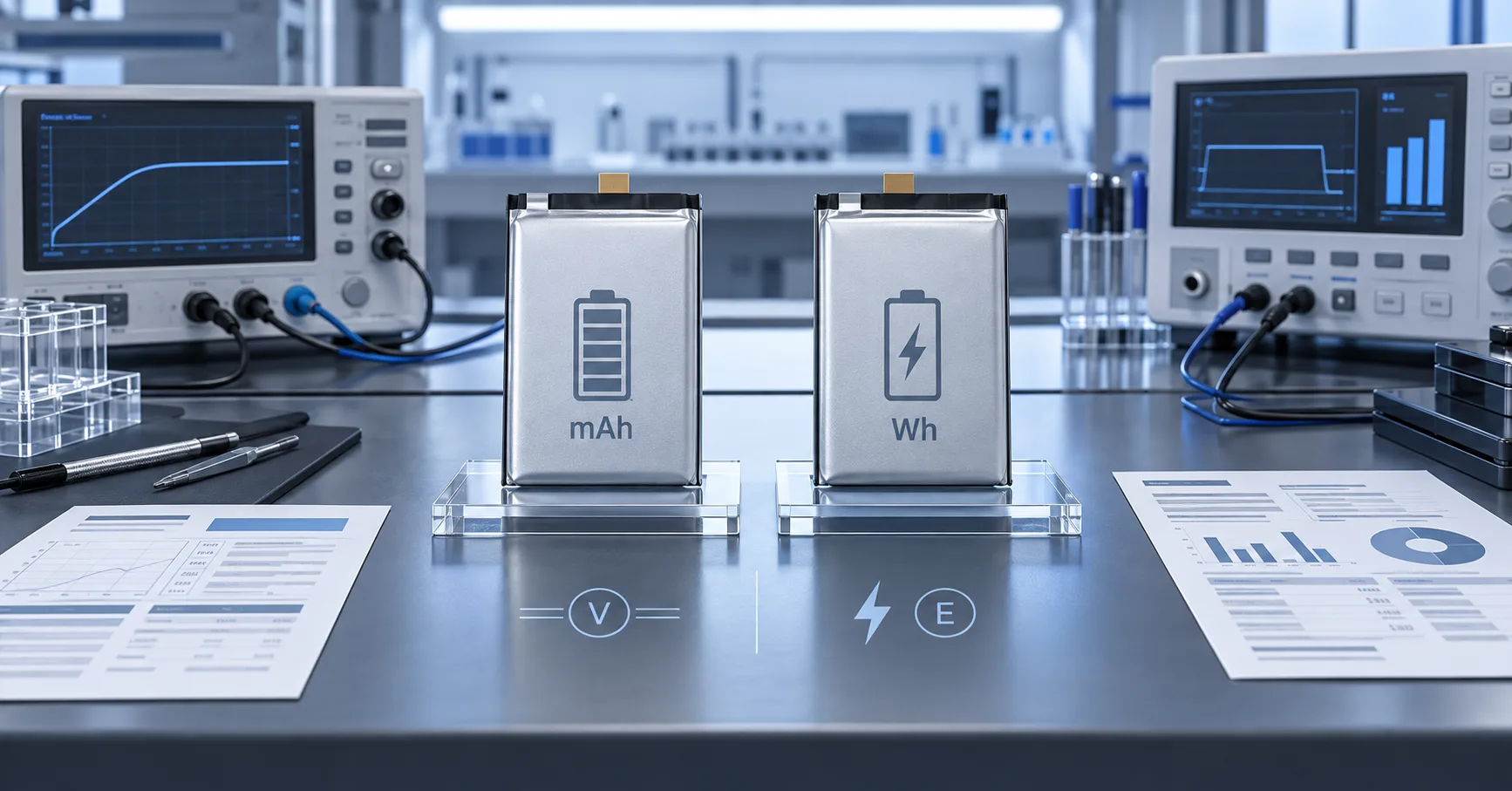
Apple explains that greater battery impedance can produce a larger voltage drop when the device draws power. Chemical aging, low state of charge and cold conditions can increase the likelihood of unexpected shutdown. This supports a key distinction: stored charge and the ability to deliver instantaneous power are related but different. See Apple's iPhone battery and performance explanation.
For procurement teams, this means a capacity result and a load-related complaint need separate review. A pack may satisfy one test condition while failing another. Conversely, a shutdown under a demanding workload does not by itself prove a defective battery, because the device, installation and operating conditions remain part of the circuit.
Do not publish one percentage at which all phones should shut down, or one resistance value that decides every claim. Acceptance limits must belong to the exact battery, device configuration and approved measurement method.
Capture the Intake Evidence Before Changing Anything
Record the device model, battery SKU and lot, repair date, software version and reported event time. Obtain customer permission for any diagnostic access and retain only the information necessary for the repair. Battery screenshots and logs can reveal personal usage; redact unrelated details before sharing evidence with a supplier.
- Last displayed charge percentage and whether it was observed or remembered.
- Activity immediately before the event, including camera, calls, navigation or idle use.
- Charging state, charger and cable, where relevant.
- Ambient conditions, temperature warning and unusual heat.
- Whether the symptom existed before replacement or began afterward.
- Drop, liquid exposure, prior board work or repeated connector handling.
- Restart behavior and whether the complaint is repeatable.
Preserve that baseline before changing software, resetting settings or replacing parts. A change that removes the symptom may help the customer, but it can also erase the conditions needed to understand the original complaint. Backups and authorization should precede any operation that could affect customer data.
Stop Early When Physical Condition Is Unsafe
Swelling, leakage evidence, damaged pouch seals, abnormal heating, odor or a damaged connector should divert the unit into the approved safety and isolation procedure. Do not charge, compress, flex or repeatedly restart an unsafe battery to make the complaint reproducible.
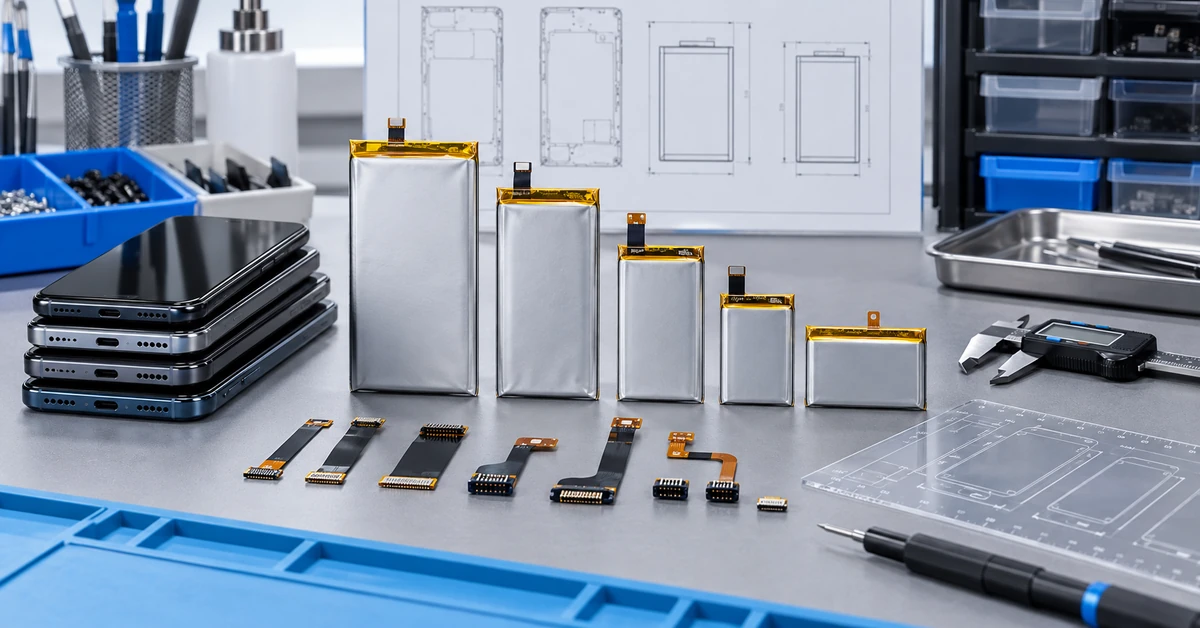
For safe units, trained personnel can assess model identity, insulation, connector condition, flex routing and fit using approved service procedures. The mobile phone battery incoming-inspection guide provides the broader receiving framework. Do not press on a live assembly or manipulate a powered connector as a diagnostic shortcut.
Build a Controlled Workload Comparison
An iPhone shutdown under load should be investigated with normal, representative activities inside approved operating conditions, not by forcing excessive current or repeatedly driving the battery to shutdown. Define the observation period, starting condition, workload, network state, display settings and stop criteria before testing.
Use the same software and app configuration where practical. Allow devices to reach a comparable temperature and record recent charging or use. When starting from displayed percentage, acknowledge that this is an estimate rather than proof that two batteries contain identical charge.
| Comparison | Purpose | Interpretation limit |
|---|---|---|
| Suspect device during idle and representative activity | Identify workload association | An association does not isolate the faulty component |
| Suspect device with an approved known-good compatible battery | Check whether the symptom changes with the assembly | Reinstallation may also change contact quality |
| Safe suspect battery in an approved known-good compatible device, when permitted | Check whether the symptom follows the battery | Use only after safety screening and within an authorized service procedure |
| Reference battery and reference device | Confirm that the test setup itself behaves normally | A failed reference invalidates comparison results |
Record every configuration and result. “Known-good” should mean validated for the actual model and test, not merely new or taken from another carton. If safe cross-testing is not possible, retain an inconclusive diagnosis rather than substituting confidence for evidence.
Interpret Temperature and Reporting Separately
Apple notes that very cold conditions can temporarily shorten battery life and turn a device off. Its temperature guidance also explains that a hot device can dim or black out the display and reduce functions. These behaviors can resemble other faults at intake. See Apple's temperature-management guidance.
A controlled workshop observation should document the customer's environment and compare it with approved use conditions. Do not use a freezer, direct heater or improvised thermal exposure to reproduce a complaint. Specialist environmental testing requires a separate approved plan.
Record available battery-health and peak-performance information, but do not use a displayed health number as the sole warranty gate. A reporting discrepancy deserves its own investigation. Repeated full discharge or a settings reset cannot establish that power delivery, connector integrity or cell capacity has been repaired.
Check Installation and Device-Level Alternatives
If an iPhone shuts off after battery replacement, the timing justifies checking the replacement process, but does not prove that the replacement cell is defective. Review battery identity, connector seating, flex damage, insulation, enclosure pressure and any other work performed at the same visit.
Only trained personnel should inspect internal connections under the model-specific service procedure. A diagnostic change after reseating may implicate contact or assembly conditions, but it should not be reported as proof that the battery chemistry was responsible.
When the symptom remains with the same device across validated compatible batteries, escalate the device for qualified hardware and software diagnosis. Available restart or diagnostic logs may guide that review; one log entry is not a universal battery-fault signature. This article does not prescribe board repair or automatic software erasure.
Use Capacity and Electrical Tests to Answer Specific Questions
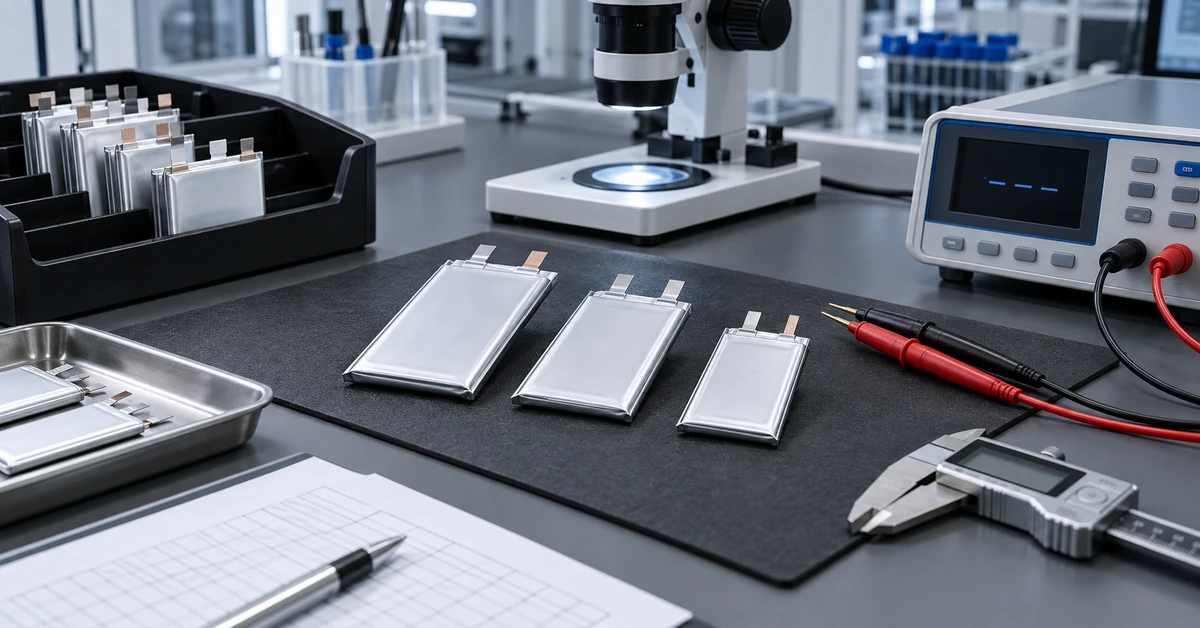
A controlled capacity test answers how much charge or energy the sample delivers under a defined method. It does not alone explain an intermittent interruption. Likewise, an unloaded voltage reading does not capture every transient event, and resistance measurements cannot be compared without matching method and conditions.
Use the iPhone battery capacity-testing guide when the complaint includes insufficient delivered capacity. Any electrical logging on an installed battery should use appropriate equipment and qualified personnel; routine staff should not improvise probe access around a live phone connector.
Keep measured results, device-reported values and customer observations in separate fields. Label estimates as estimates. A warranty report becomes more useful when readers can distinguish a measured failure from a plausible explanation.
Translate Findings Into Warranty Dispositions
- Battery assembly suspected: repeatable evidence follows the safe battery across compatible controls, while reference combinations pass. Review against the agreed battery specification and supplier process.
- Installation suspected: documented connector, flex or fit evidence explains the event. Assign corrective work and verify the finished repair.
- Device fault suspected: the symptom remains device-specific with validated compatible batteries. Route for device-level diagnosis.
- Condition-dependent behavior: evidence is associated with environmental or operating conditions. Explain the documented limitations without assuming misuse.
- Not reproduced or inconclusive: retain the complaint and test history. Define further observation rather than declaring “no fault” or approving an unsupported root cause.
A commercial goodwill replacement can be appropriate under an agreement, but record it separately from a confirmed technical defect. Warranty depends on the specific product and agreement; this framework does not override customer rights or the parties' contractual responsibilities.
Escalate Repeated Cases by Lot and Repair Process
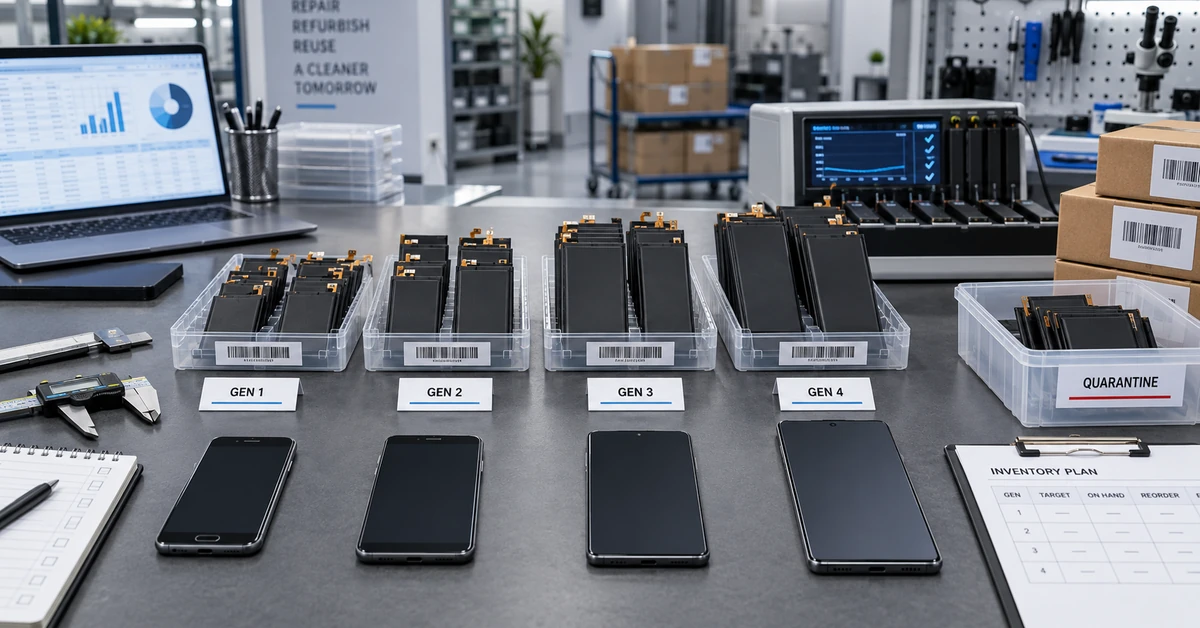
For an iPhone unexpected shutdown cluster, compare cases by device model, battery lot, cell or flex revision, installation team, software version and exposure period. Report both the number of complaints and the relevant installed population. Several reports without that denominator cannot establish a defect rate.
If a repeated abnormality or safety concern emerges, hold the affected scope while quality teams investigate. Do not automatically quarantine unrelated models, but do not hide a pattern by averaging it into the entire catalog. The battery sampling-plan guide helps define lot boundaries and escalation evidence.
Frequently Asked Questions
Does remaining percentage mean the battery still has usable power?
It indicates an estimated charge state, not a guarantee of power delivery for every workload. Check event conditions and controlled comparison results rather than treating the displayed number as a pass certificate.
Does starting again on a charger prove a bad battery?
No. External power changes the operating condition. It is useful evidence, but does not independently separate a battery problem from the device's power path, reporting or connections.
Should technicians calibrate before accepting a warranty claim?
Not as an automatic gate. Preserve the baseline, classify the event and investigate safely. Calibration terminology and reporting checks are different from validating capacity or fixing an intermittent connection.
Can a new replacement battery still be involved?
Yes, but “new” and “faulty” are not diagnoses. Verify the exact assembly, compatibility, installation and behavior against an approved reference before attributing responsibility.
What if the shutdown cannot be reproduced?
Record the tested conditions and limitations. Request a clearer event timeline or arrange proportionate follow-up under the service agreement. An intermittent complaint may remain unresolved after a workshop test.
Approve the Evidence Before Approving the Claim
A sound investigation separates abrupt shutdown from fast discharge, reporting differences and display behavior. It then uses safe inspection, matched controls and traceable results to narrow the cause. This gives repair teams and suppliers a shared basis for correction without promising that every battery replacement will solve every shutdown.
For an ESCCharge replacement-battery discussion, provide the device models, battery SKU and lot, event history, installation record, controlled comparison results and required sample plan. Compatibility and specifications must be confirmed for the selected model. Capacity claims require model-specific test evidence; MOQ, lead time and warranty depend on the product, customization and agreement.
External Source References
- Apple Support — iPhone Battery and Performance — accessed September 3, 2026.
- Apple Support — If Your iPhone or iPad Gets Too Hot or Too Cold — May 14, 2026.