
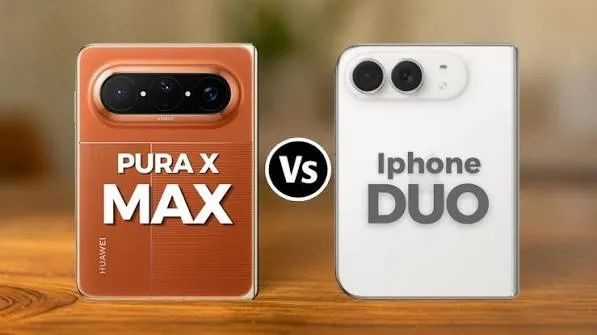
The direct answer: the useful iPhone Duo vs HUAWEI Pura X Max battery comparison is not a contest between one runtime claim and one mAh number. Apple identifies a dual-battery system and publishes device video-playback figures. Huawei publishes a 5300 mAh battery figure plus wired and wireless charging ratings. These are different evidence types. A B2B replacement decision still requires the exact battery assembly, mechanical envelope, connector, flex, electrical behavior, installation process and production-lot controls for each model.
This distinction matters to repair chains, refurbishers, parts distributors and private-label buyers. A technically plausible listing can still be unusable if it borrows specifications from the original device without proving the replacement assembly. Treat official device information as the starting boundary for an RFQ, not as proof that a third-party pack is compatible, equivalent or available.
Start With Verified Official Facts
Apple's official iPhone Duo overview describes its first foldable iPhone as using a dual-battery system. The page states up to 31 hours of video playback with the inner display and up to 44 hours with the outer display. Those values describe whole-device runtime under Apple's conditions; they are not a published replacement-pack capacity or acceptance limit.
“Dual-battery system. All-day power.” — Apple, iPhone Duo overview
Huawei's official HUAWEI Pura X Max page identifies a 5300 mAh battery, 66 W wired charging and 50 W wireless charging. It also describes a wide-format foldable with a 7.7-inch inner display and 5.4-inch outer display. These facts define the device platform, but the page does not provide a third-party replacement drawing, connector pinout or aftermarket compatibility approval.
“5300 mAh 大容量电池.” — Huawei Consumer, HUAWEI Pura X Max product page
Huawei describes the original device battery as a silicon-anode battery. Do not transfer that material claim to an ESCCharge candidate unless the exact cell construction is documented. Likewise, Apple's dual-battery statement does not reveal the layout, individual cell ratings, matching limits or service assembly.
Why the Published Numbers Are Not Directly Comparable
| Published field | iPhone Duo | HUAWEI Pura X Max | Procurement meaning |
|---|---|---|---|
| Battery information | Dual-battery system | 5300 mAh device battery | Architecture and capacity are different evidence categories. |
| Runtime information | Up to 31 hours inner-display video; up to 44 hours outer-display video | No matching Apple-method result used here | Do not infer a runtime winner. |
| Charging information | Model-specific Apple conditions apply | 66 W wired and 50 W wireless | Device input is not a replacement-pack promise. |
| Replacement evidence | Not established by the product page | Not established by the product page | Require samples and device-level approval. |
| Catalog control | Dedicated iPhone Duo branch | Dedicated Pura X Max branch | Never create a shared foldable-battery SKU. |
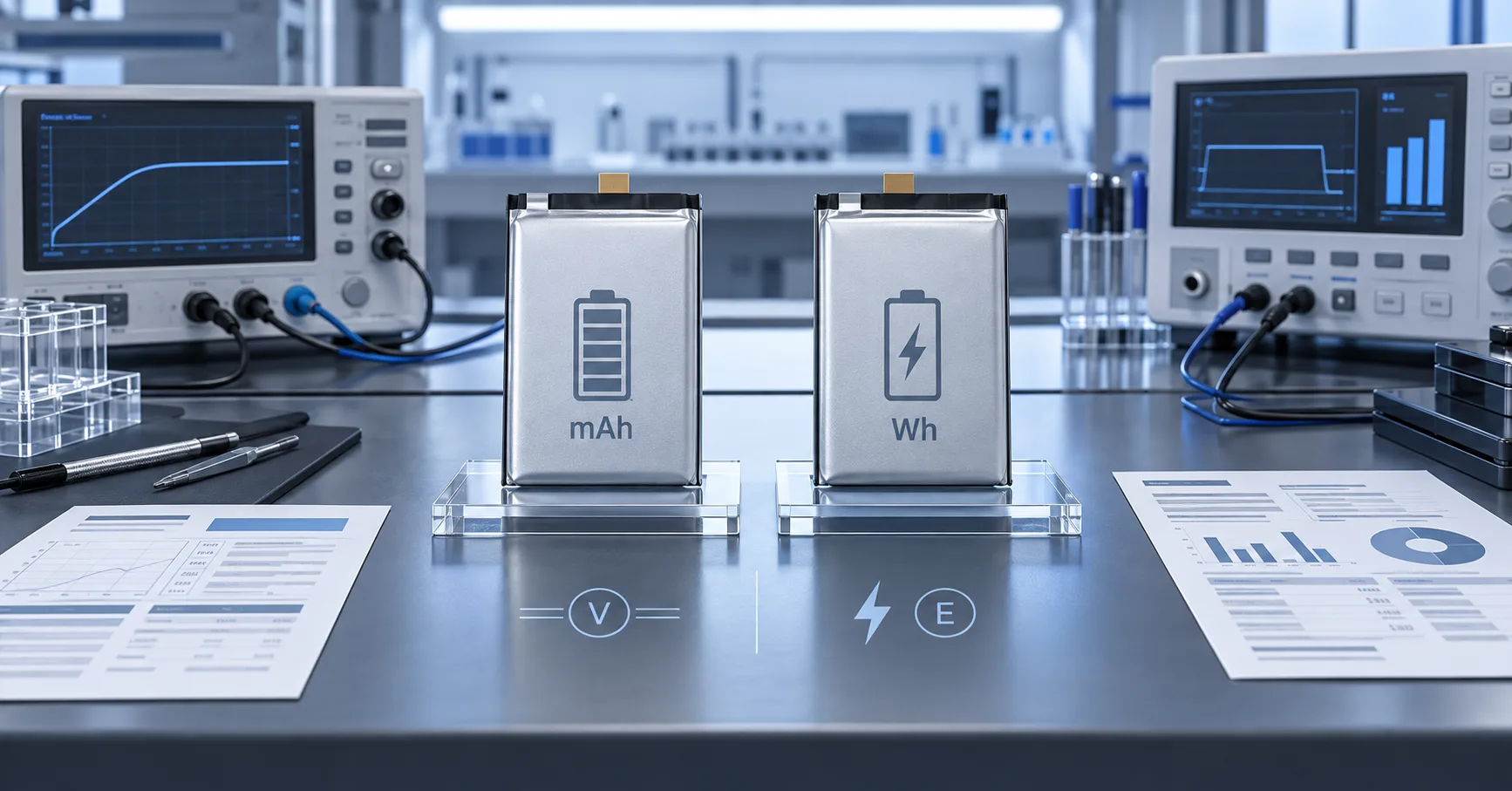
mAh measures electric charge, not complete-device endurance. Runtime also depends on voltage behavior, display state, chipset load, radios, thermal management, software, background activity and cutoff strategy. Apple's inner-versus-outer figures demonstrate that one device can produce different results depending on use state.
A sound foldable phone battery comparison normalizes evidence before drawing conclusions. If a supplier presents capacity, ask whether it is typical, rated, minimum, labeled or measured. For runtime, request device state, workload, brightness, radios, temperature, software and cutoff. If conditions differ, keep the results in separate columns.
Architecture Changes the Replacement Risk
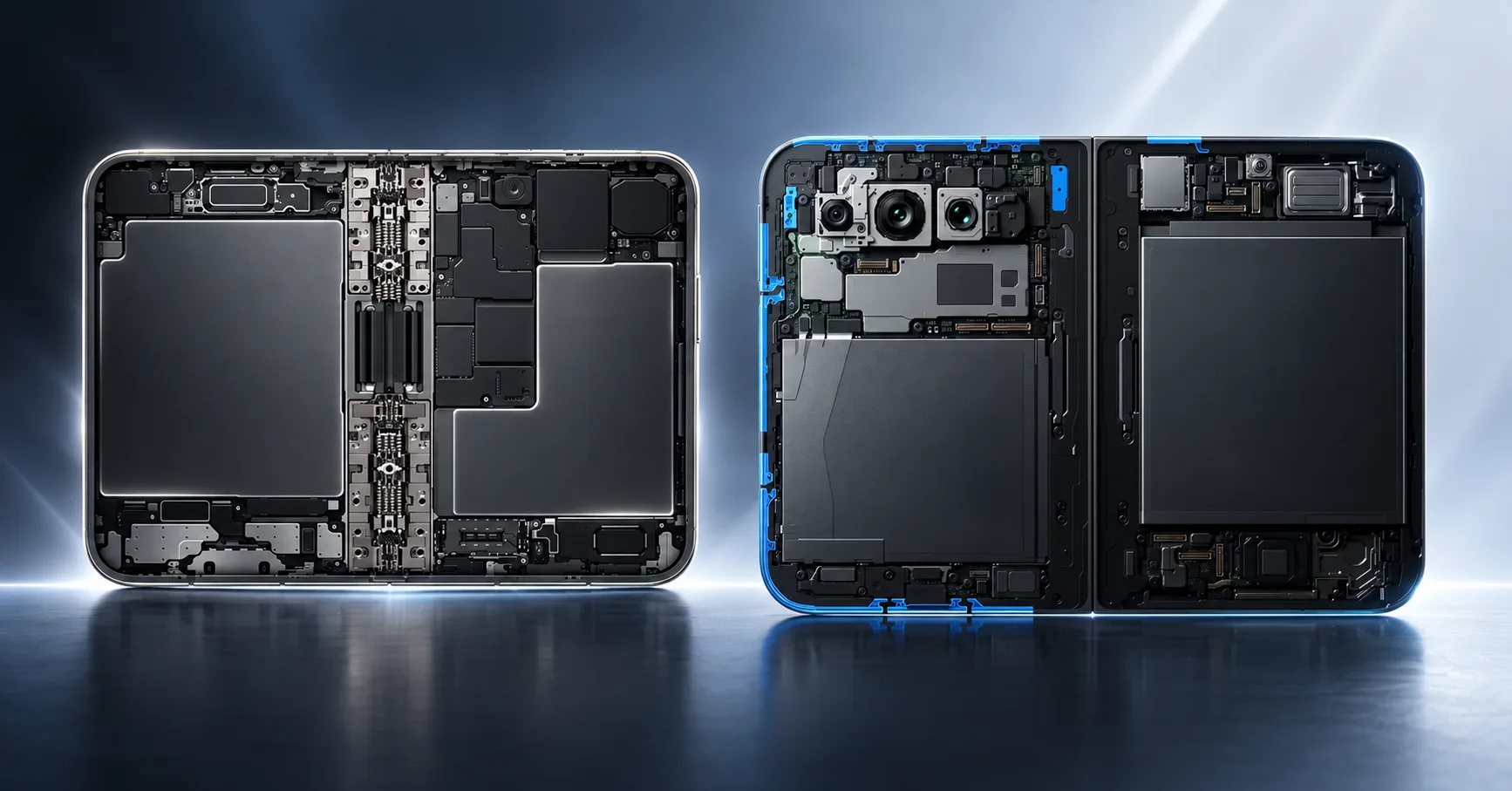
Two foldable phones may occupy the same premium market while creating different service risks. A dual-battery system may involve two cell locations, multiple flex paths, matched electrical behavior and a defined joining or protection structure. A large published device capacity may still be delivered through an assembly whose internal service construction is not disclosed. Buyers must verify the finished replacement configuration rather than infer it from marketing language.
Cell Pairing and Electrical Balance
For an iPhone Duo replacement battery, request evidence showing how supplied cells or subassemblies are identified and controlled together. Do not invent a universal imbalance limit. Criteria must come from the approved design, test method and engineering review. Record results at the assembly level and, where the approved procedure permits, at the relevant subassembly level.
Mechanical Envelope
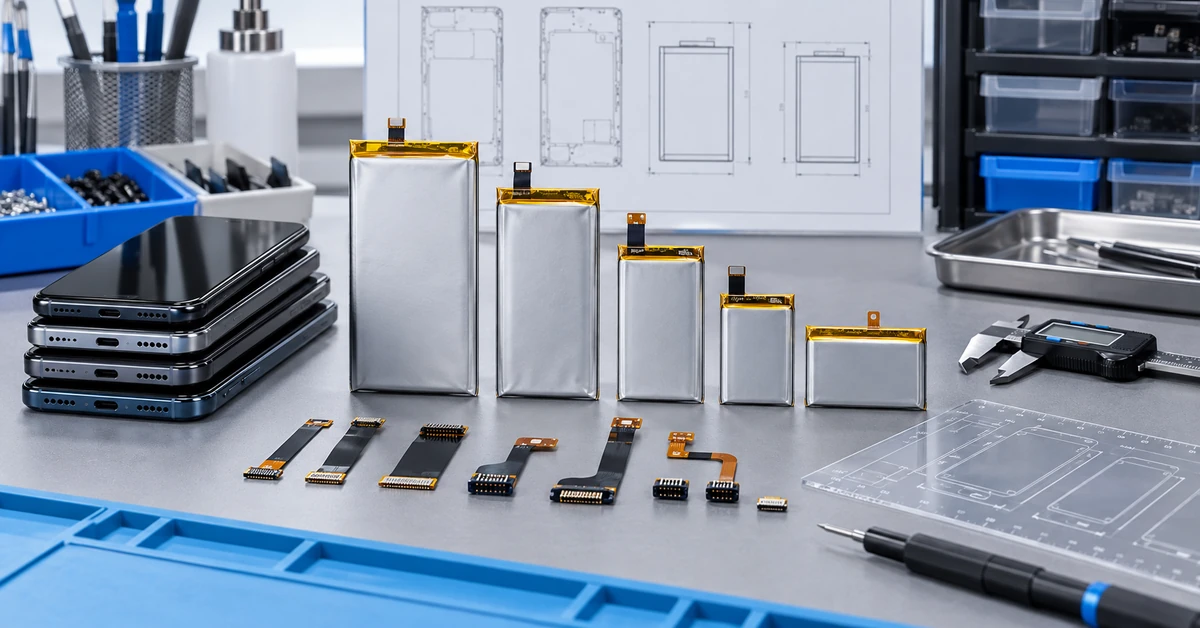
Foldable devices concentrate batteries, displays, hinges, boards and thermal components inside thin spaces. Measure length, width and thickness at agreed datum points, but also inspect local steps, edge radii, tab exits, flex bends, connector height, insulation, adhesive zones and clearance from moving structures. A housing that closes is not proof that the battery is free from localized pressure.
Capacity and Material Claims
A candidate HUAWEI Pura X Max replacement battery should not automatically inherit the original device's 5300 mAh or silicon-anode wording. The supplier must define the candidate configuration and evidence. For any capacity claim, request the definition, test temperature, charge procedure, discharge current, cutoff voltage, sample count and unit-level results.
Build Separate Evidence Packages for Each Model
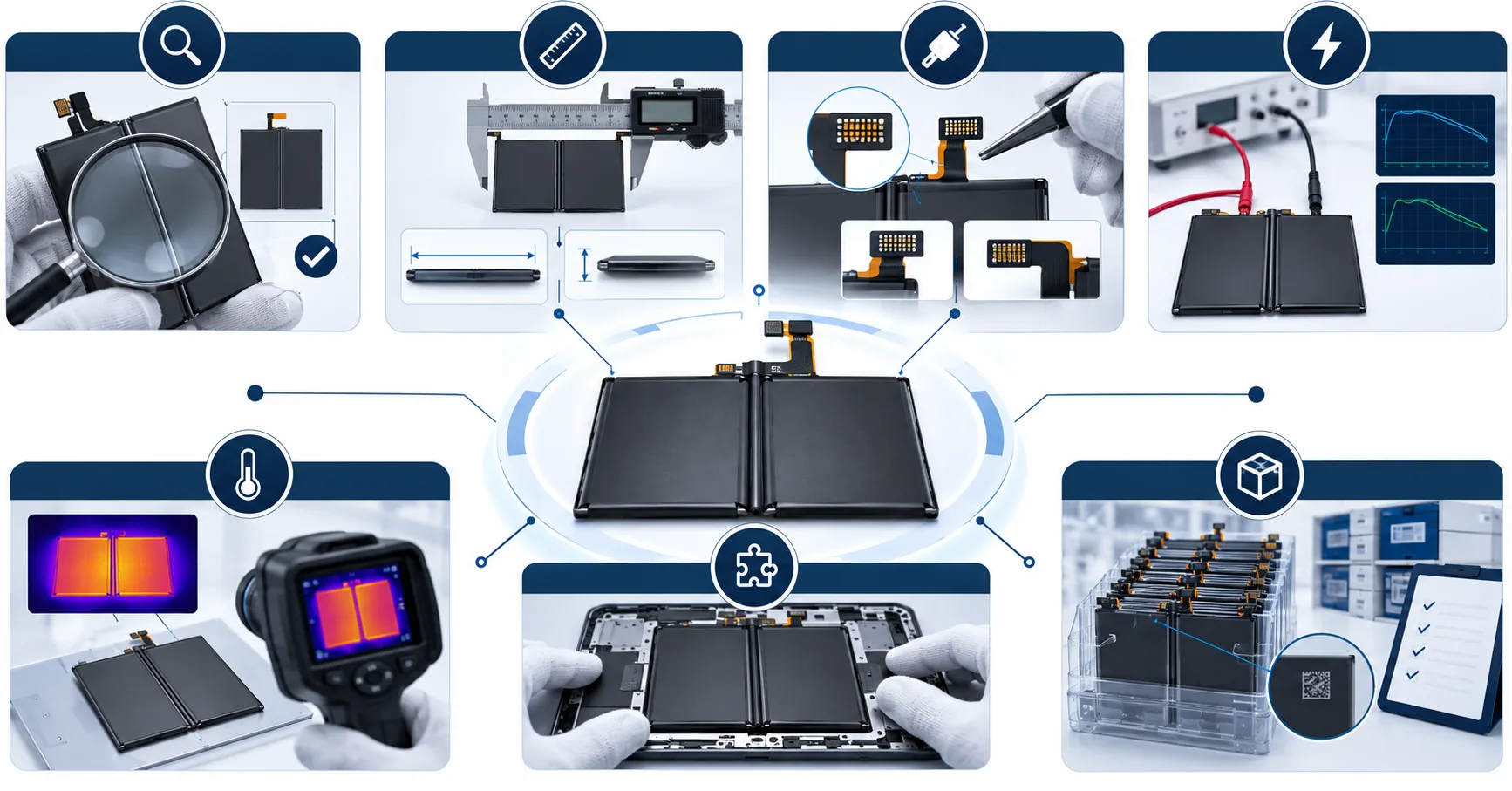
Effective foldable battery validation begins with a model-specific evidence file. Use consistent category headings for both devices, but never combine their measurements or approval decisions.
- Device identity: record the full model, market version, software build and test-device condition.
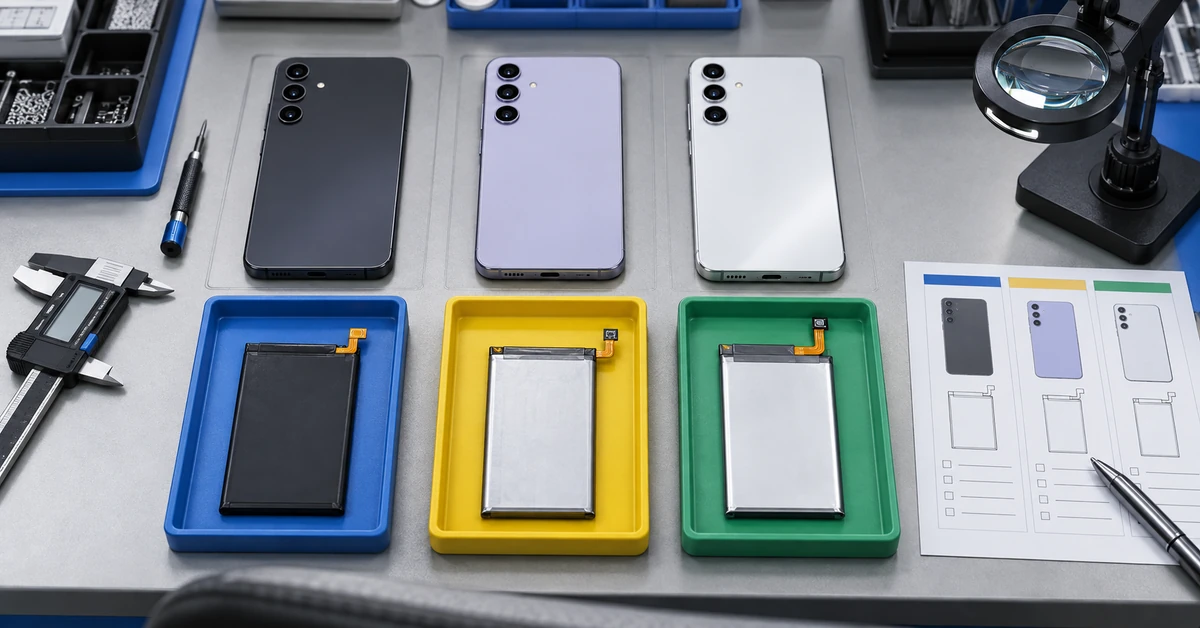
- Reference assembly: preserve photos, printed references, connector orientation, flex routing, adhesive layout and controlled measurements.
- Candidate identity: connect supplier code, buyer SKU, revision, lot, cell source and finished assembly to one sample ID.
- Mechanical verification: compare dimensional points, local thickness, connector alignment, cable routing and closure without forced pressure.
- Electrical verification: record voltage, protection behavior, charge and discharge observations, temperature and model-specific communication behavior.
- Repair verification: document opening, removal, cleaning, placement, connection, closure and post-repair checks.
- Approval decision: release, conditionally approve, hold or reject with evidence and reviewer attached.
The mobile phone battery incoming-inspection guide provides a broader framework for identity, geometry and batch checks. For foldables, increase attention to local thickness, flex routing and installation pressure because small differences can affect expensive adjacent assemblies.
Use a Staged Sample Approval Process
Stage 1: Non-Energized Screening
Begin with identity, appearance and dimensional comparison. Do not install a sample with deformation, leakage, damaged insulation, unexplained thickness, incorrect connector keying or unsupported labeling. This gate protects devices and prevents electrical results from distracting the team from an obvious fit failure.
Stage 2: Controlled Installation
Use a documented, known-condition device. Record opening history, housing condition and previous repairs. Confirm that the assembly sits flat, the flex follows the intended route, the connector mates naturally and the housing closes without unusual force. One successful installation is evidence for that sample, not proof for a production lot.
Stage 3: Functional and Thermal Observation
Observe startup, charging, percentage behavior, standby and representative workloads under defined conditions. Include folded and unfolded states when display configuration changes load or heat distribution. Record ambient temperature, charger, cable, software, workload and measurement location. Stop and isolate any sample showing deformation, leakage, odor, unstable voltage, abnormal heat or mechanical pressure.
For Apple repair teams, the iPhone calibration and reset validation guide helps separate real battery behavior from assumptions about percentage display or software reset. A booting device is only one checkpoint.
Stage 4: Pilot and Lot Approval
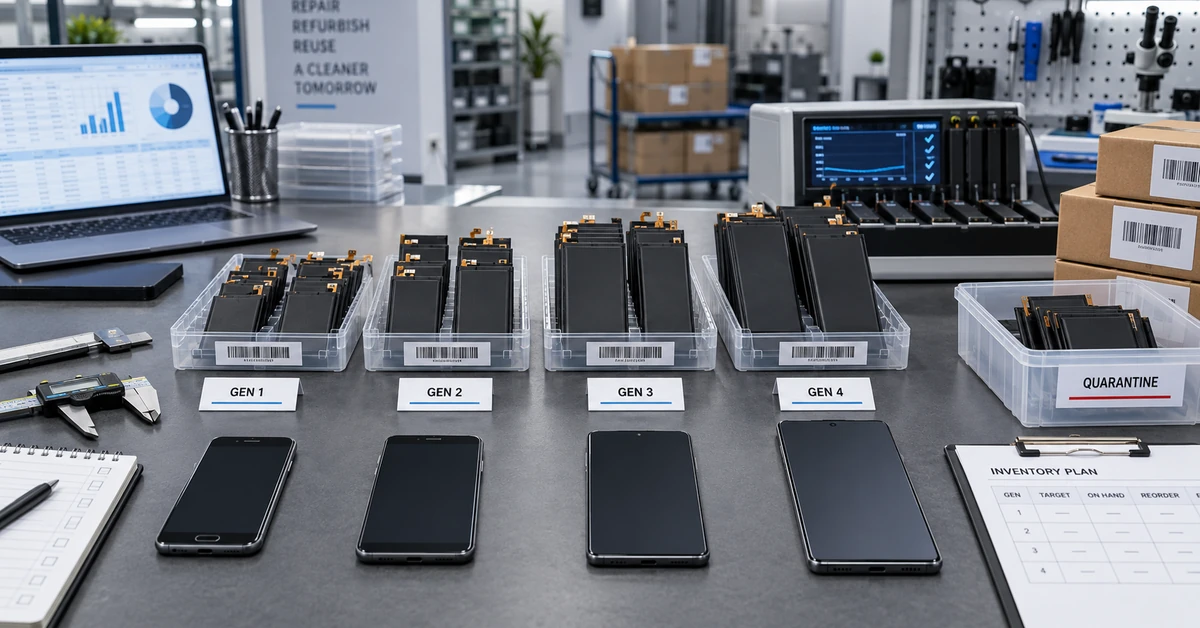
Move from approved engineering samples to a pilot built from the intended production configuration. Link cell, protection components, connector, flex, adhesives, insulation, labels and packaging to the approved revision. The mobile phone battery sampling-plan guide explains how order size, product history and risk should influence inspection depth.
Control Charging Claims Carefully
Huawei states 66 W wired and 50 W wireless charging for Pura X Max, with conditions and compatible accessories attached. Those values describe the device charging system. They do not prove that an aftermarket pack accepts identical stress, maintains equivalent temperature or reaches the same charge time.
“66 W 有线超级快充,50 W 无线超级快充.” — Huawei Consumer, Pura X Max charging disclosure
Use the approved device, charger and cable combination during validation. Record peak behavior only within a time-based charge and thermal profile. Avoid advertising “supports 66 W” for a replacement battery unless the completed assembly has been evaluated in the target device and the wording approved. Device input power and cell charge rate are related but not interchangeable claims.
Turn the Comparison Into an RFQ
- exact device model and target market;
- reference assembly identification available to the buyer;
- finished assembly drawing and controlled dimensional points;
- cell arrangement, connector, flex, protection and adhesive configuration;
- capacity terminology, label claim and test method;
- sample quantity, device-level plan and approval owner;
- traceability, packaging identity and target-market documents;
- change-notification rules for cells, boards, flexes, connectors and labels;
- pilot-lot and repeat-order acceptance plan.
Buyers developing an Apple range can use the iPhone battery supplier guide for wider qualification. Teams managing multiple models can consult the phone battery wholesale sourcing guide. Neither resource replaces model-specific approval for these foldables.
Frequently Asked Questions
Is 5300 mAh larger than the iPhone Duo battery?
No defensible conclusion can be drawn from the cited data. Huawei publishes 5300 mAh, while Apple provides runtime figures and a dual-battery description rather than a directly comparable mAh figure.
Does a dual-battery design require two replacement SKUs?
Not necessarily. SKU structure depends on how the verified service assembly is supplied and installed. Follow the approved completed assembly.
Can a battery from another Huawei foldable be reused?
Do not assume compatibility. Matching capacity, brand family or general shape is insufficient. Require exact identity, geometry, connector, flex, protection behavior and device testing.
Does this article confirm ESCCharge availability?
No. It defines a sourcing and validation process. Availability, specifications, documentation, commercial terms and compatibility require project confirmation.
Which test should come first?
Start with model identity and non-energized mechanical inspection. If the sample fails those checks, stop before installation or charge testing.
Make the Decision From Model-Level Evidence
The correct iPhone Duo vs HUAWEI Pura X Max battery decision is not which headline appears stronger. It is whether each replacement assembly has verified identity, controlled fit, repeatable electrical behavior, an acceptable installation process, traceable lot and approved claim set. Keep the evidence packages and SKUs separate.
Send ESCCharge the exact device variant, reference information, target market, expected order quantity and required validation documents. The team can then review whether a candidate sampling plan is possible. No original-brand authorization, compatibility or supply promise should be inferred before confirmation.
External Source References
- Apple — iPhone Duo overview — 2026.
- Apple — iPhone Duo Technical Specifications — 2026.
- Huawei Consumer — HUAWEI Pura X Max product page — 2026.