
What Are the Most Common Samsung Note 8 Screen Problems?
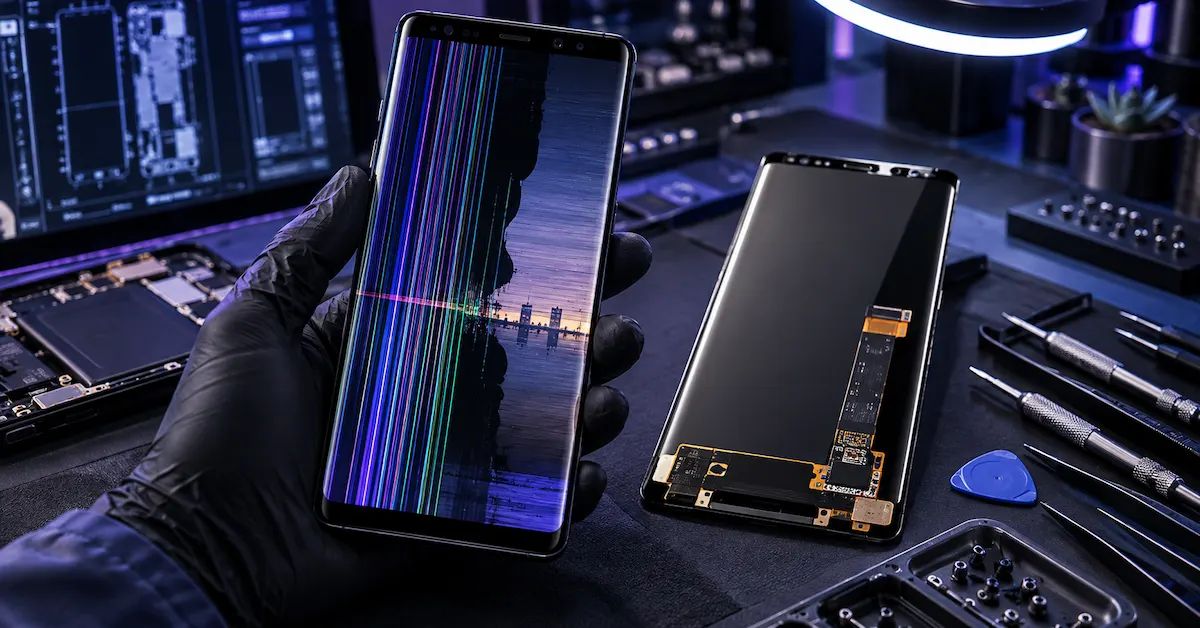
A Samsung Note 8 screen problem can appear in different ways, and the visible symptom does not always identify the failed component immediately. A black screen, broken glass, unresponsive touch, flickering display, abnormal colors or intermittent operation can come from different causes, including physical damage, display-module failure, connection issues, previous repair quality or device-level problems.
For repair businesses, the first step should be diagnosis rather than immediate replacement. A screen replacement may solve a damaged display assembly, but it will not solve every problem related to power, motherboard communication, software or internal connectors.
Professional repair teams should record:
- Exact device model and variant
- Visible damage condition
- Whether the phone powers on
- Whether touch responds
- Whether external display output or vibration occurs
- Whether the problem appeared before or after previous repair
- Whether liquid or impact damage exists
This approach helps repair shops avoid unnecessary parts replacement and improves warranty evaluation accuracy.
ESC focuses on professional replacement-part supply for repair businesses through its mobile phone repair solutions, helping buyers evaluate replacement components based on device compatibility and application requirements.
Identify the Symptom Before Choosing a Samsung Note 8 Replacement Screen
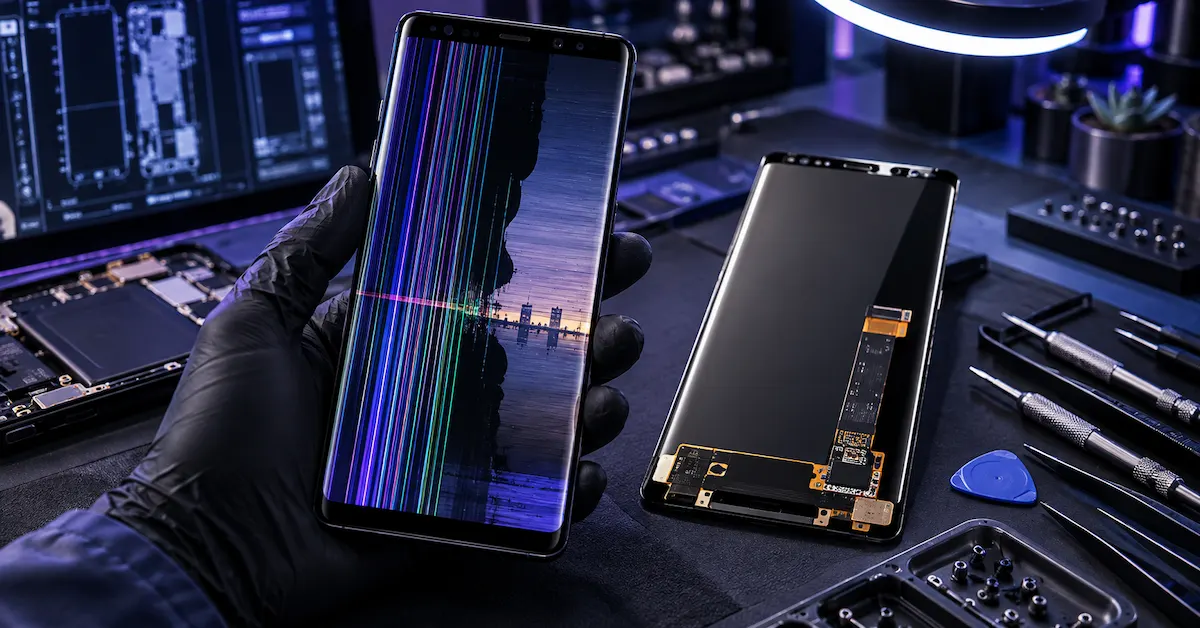
Different Samsung Note 8 screen symptoms require different troubleshooting approaches. A cracked display, for example, may only require a replacement screen assembly, while a device with no image but no visible damage may require additional diagnosis.
| Screen symptom | Possible causes | Recommended first check |
|---|---|---|
| Cracked glass but display works | Outer glass damage | Confirm whether full display replacement is required |
| Black screen | Display failure, connector issue, power problem | Confirm device response and internal connections |
| Touch not working | Digitizer issue, damaged assembly, connector problem | Test touch response and inspect connection |
| Flickering display | Display module issue, connection or software condition | Check behavior under different conditions |
| Lines on screen | Display damage, panel failure | Inspect physical damage and test replacement |
| Wrong colors | Display module or software issue | Compare with known-good reference |
| Screen works intermittently | Loose connection or damaged component | Check assembly quality and connectors |
A structured diagnosis reduces incorrect returns and helps buyers select the correct replacement solution.
Check Whether the Problem Is the Display or Another Phone Component
One of the most common repair mistakes is assuming every screen symptom comes from the screen itself.
Before replacing a Samsung Note 8 display, technicians should verify:
- Does the phone power on?
- Does the device make sounds or vibrations?
- Is the screen completely black or only partially damaged?
- Did the issue happen after a drop or liquid exposure?
- Was the phone previously repaired?
- Does another known-good display behave differently?
A replacement screen should be used as a diagnostic reference only when the repair process and equipment allow safe testing.
For refurbishment businesses handling multiple devices, this distinction is especially important because unnecessary display replacements increase inventory costs and reduce repair efficiency.
Understand Samsung Note 8 Display Replacement Requirements
A professional replacement screen evaluation should consider more than the visible panel.
Important technical factors include:
| Evaluation item | Why it matters |
|---|---|
| Device compatibility | Prevents incorrect model installation |
| Display assembly type | Determines replacement scope |
| Connector design | Ensures proper device connection |
| Touch function | Confirms digitizer performance |
| Brightness performance | Affects user experience |
| Color consistency | Influences perceived quality |
| Frame condition | Impacts installation efficiency |
| Adhesive quality | Influences assembly stability |
| Testing process | Helps identify defective units before installation |
For B2B buyers, replacement screens should be evaluated as complete repair components rather than isolated glass or display panels.
Why Replacement Screen Quality Matters for Repair Businesses
Repair shops often focus on purchase price, but low-quality replacement displays can create additional costs through:
- Customer complaints
- Repeat repairs
- Technician time loss
- Warranty replacements
- Inventory confusion
- Negative reviews
A reliable replacement-part supplier should provide consistent product identification, sample approval and quality control procedures.
ESC’s content framework for replacement-part sourcing emphasizes matching the supplied component with the correct device, maintaining product consistency and reducing avoidable repair problems.
Sample Testing Before Samsung Note 8 Screen Bulk Orders
For repair chains and distributors, sample approval is one of the most important steps before bulk purchasing.
A recommended sample evaluation process includes:
1. Visual Inspection
Check:
- Screen surface condition
- Frame quality
- Connector appearance
- Protective film condition
- Packaging protection
2. Installation Test
Confirm:
- Proper fit
- Connector connection
- Touch response
- Display output
- Physical alignment
3. Functional Test
Evaluate:
- Brightness
- Color
- Touch accuracy
- Sensor compatibility
- Long-term operation
A successful sample should become the reference for future orders. Record the approved product version, supplier model and acceptance criteria.
Common Causes of Samsung Note 8 Screen Repair Failure
Even when a replacement screen appears correct, installation problems can still occur.
Common causes include:
Incorrect Installation
Examples:
- Connector not fully seated
- Damaged flex cable
- Incorrect adhesive placement
- Pressure damage during assembly
Wrong Replacement Part
Similar phone models may use different components. Always confirm:
- Exact model
- Regional variant
- Part number
- Connector type
Poor Replacement Quality
Possible issues:
- Uneven brightness
- Touch sensitivity problems
- Color differences
- Short service life
Original Device Damage
A replacement screen cannot solve:
- Motherboard failure
- Water damage
- Power circuit problems
- Internal connector damage
Correct diagnosis protects both repair quality and customer trust.
How Repair Businesses Can Reduce Samsung Note 8 Screen Returns
Reducing returns requires controlling the process before and after purchasing.
Recommended practices:
| Stage | Recommended action |
|---|---|
| Supplier selection | Review product quality and consistency |
| Sample stage | Test before bulk purchase |
| Receiving | Inspect incoming products |
| Installation | Follow controlled repair procedures |
| Testing | Verify all functions before delivery |
| Warranty | Record repair history and failure reasons |
This process helps separate product defects from installation mistakes and device-related problems.
Compare Buying Options for Samsung Note 8 Screen Repairs
Repair businesses usually choose between different sourcing methods.
| Option | Advantages | Considerations |
|---|---|---|
| Local parts purchase | Fast availability | Higher unit cost |
| Wholesale supplier | Better pricing for volume | Requires supplier evaluation |
| OEM/ODM sourcing | Custom branding and packaging | Requires larger planning process |
| Refurbishment sourcing | Supports repair operations | Needs quality verification |
For distributors and larger repair networks, supplier consistency often becomes more important than the lowest initial price.
How to Choose a Reliable Replacement Screen Supplier
A professional supplier evaluation should include:
Product Information
Confirm:
- Supported models
- Product specifications
- Available quantities
- Packaging method
Quality Control
Ask about:
- Incoming inspection
- Functional testing
- Sample approval
- Defect handling
Supply Capability
Evaluate:
- Stock stability
- Repeat-order consistency
- Communication efficiency
- Technical support
After-Sales Support
Clarify:
- Warranty terms
- Return process
- Problem diagnosis procedure
The goal is not only receiving one working screen but building a stable repair supply chain.
OEM and Private Label Opportunities for Repair Parts Brands
For businesses developing their own repair-part brand, OEM and private-label services can include:
- Product labeling
- Packaging design
- Barcode management
- Brand identification
- Product documentation
Before launching private-label repair components, buyers should confirm the technical specification first. Packaging should represent the approved product rather than create unsupported performance claims.
ESC provides customized solutions for professional buyers through its customized solution service.
How to Prepare a Samsung Note 8 Screen Bulk Purchase Inquiry
A detailed inquiry helps suppliers provide accurate recommendations.
Include:
- Device model
- Required quantity
- Target market
- Repair application
- Packaging requirements
- Quality expectations
- Sample requirements
- Warranty expectations
Avoid sending only:
“Need Samsung Note 8 screen price.”
A complete request allows suppliers to evaluate product scope, availability and commercial requirements more accurately.
Frequently Asked Questions
1. What is the most common Samsung Note 8 screen problem?
Common problems include cracked displays, touch failure, black screens, flickering and display abnormalities. The correct solution depends on diagnosis rather than the symptom alone.
2. Can a Samsung Note 8 screen replacement fix every display issue?
No. Some problems come from connectors, motherboard issues, power systems or previous repair damage. Diagnosis should happen before replacement.
3. How can repair shops test a replacement screen?
Test physical condition, installation fit, display output, touch response, brightness and device functions before completing the repair.
4. Should wholesalers test samples before bulk ordering?
Yes. Sample approval helps confirm product quality, compatibility and supplier consistency before larger inventory investment.
5. Why do replacement screens fail after installation?
Possible reasons include installation mistakes, wrong parts, damaged connectors, poor-quality components or unrelated device problems.
6. Is the cheapest Samsung Note 8 screen supplier the best choice?
Not necessarily. Repair businesses should consider quality consistency, return rates, testing procedures and after-sales support.
7. What information should I provide when sourcing replacement screens?
Provide the exact model, quantity, market, repair application and quality requirements to receive a more accurate quotation.
8. Can replacement screens be customized with private labels?
Some suppliers support packaging and branding customization. The technical product specification should be confirmed before creating branded materials.
9. How can refurbishment companies reduce repair costs?
Standardized diagnosis, supplier qualification, sample testing and controlled repair procedures can reduce unnecessary replacements and warranty issues.
10. What should repair businesses check before choosing a supplier?
Check product compatibility, sample quality, testing procedures, supply stability and after-sales support before establishing long-term cooperation.
Conclusion
Solving a Samsung Note 8 screen problem requires a structured diagnosis process rather than immediately replacing parts. Repair businesses should identify the actual symptom, confirm device condition, verify replacement compatibility, test samples and maintain quality records before bulk purchasing. A reliable repair-part supply chain depends on accurate diagnosis, consistent components and clear supplier communication. For professional repair businesses and distributors, establishing these processes can reduce unnecessary replacements, improve repair success rates and create more reliable customer service. Review ESC’s professional replacement-part solutions and contact ESC with your repair requirements, product needs and sourcing plans.