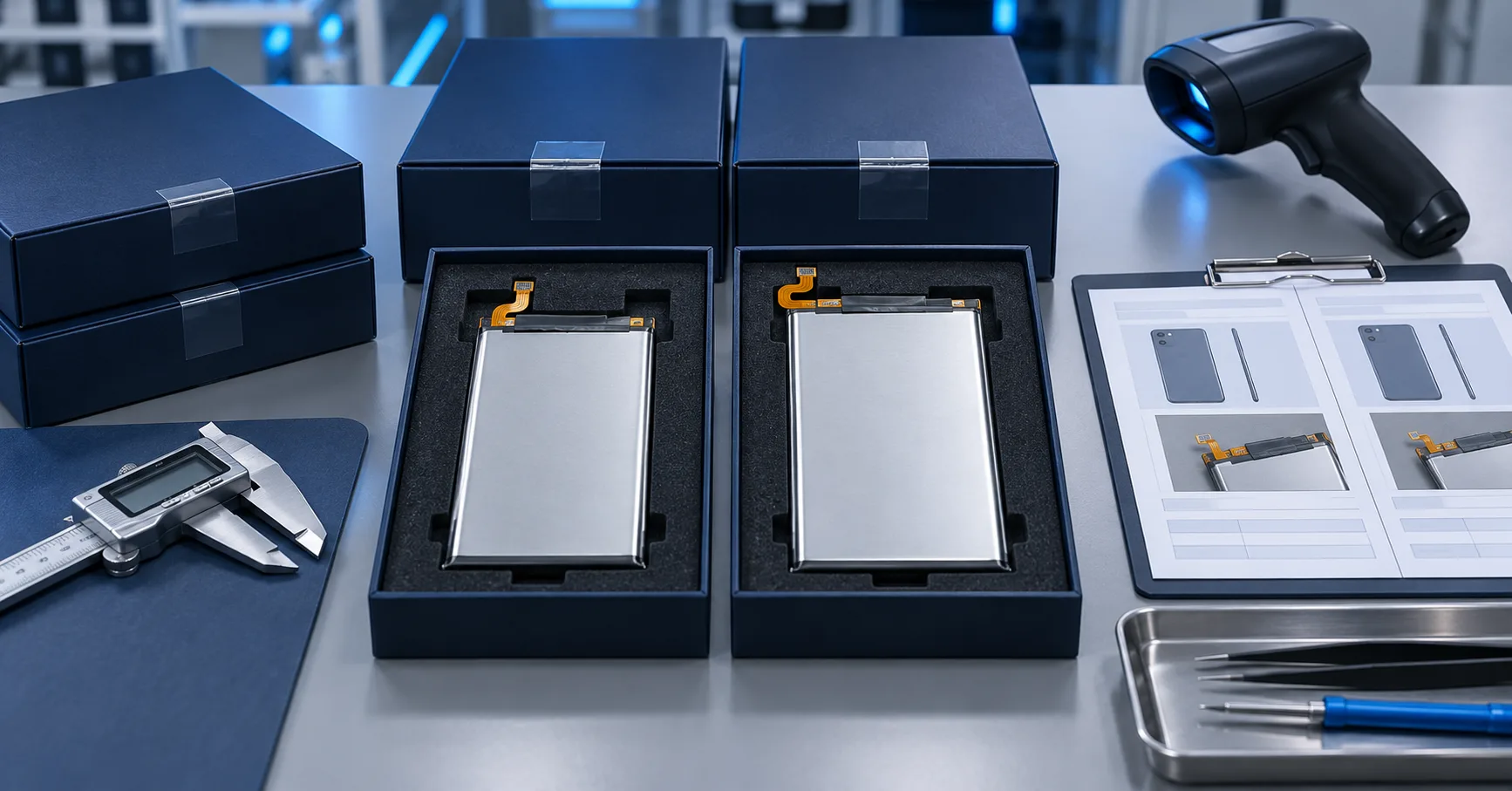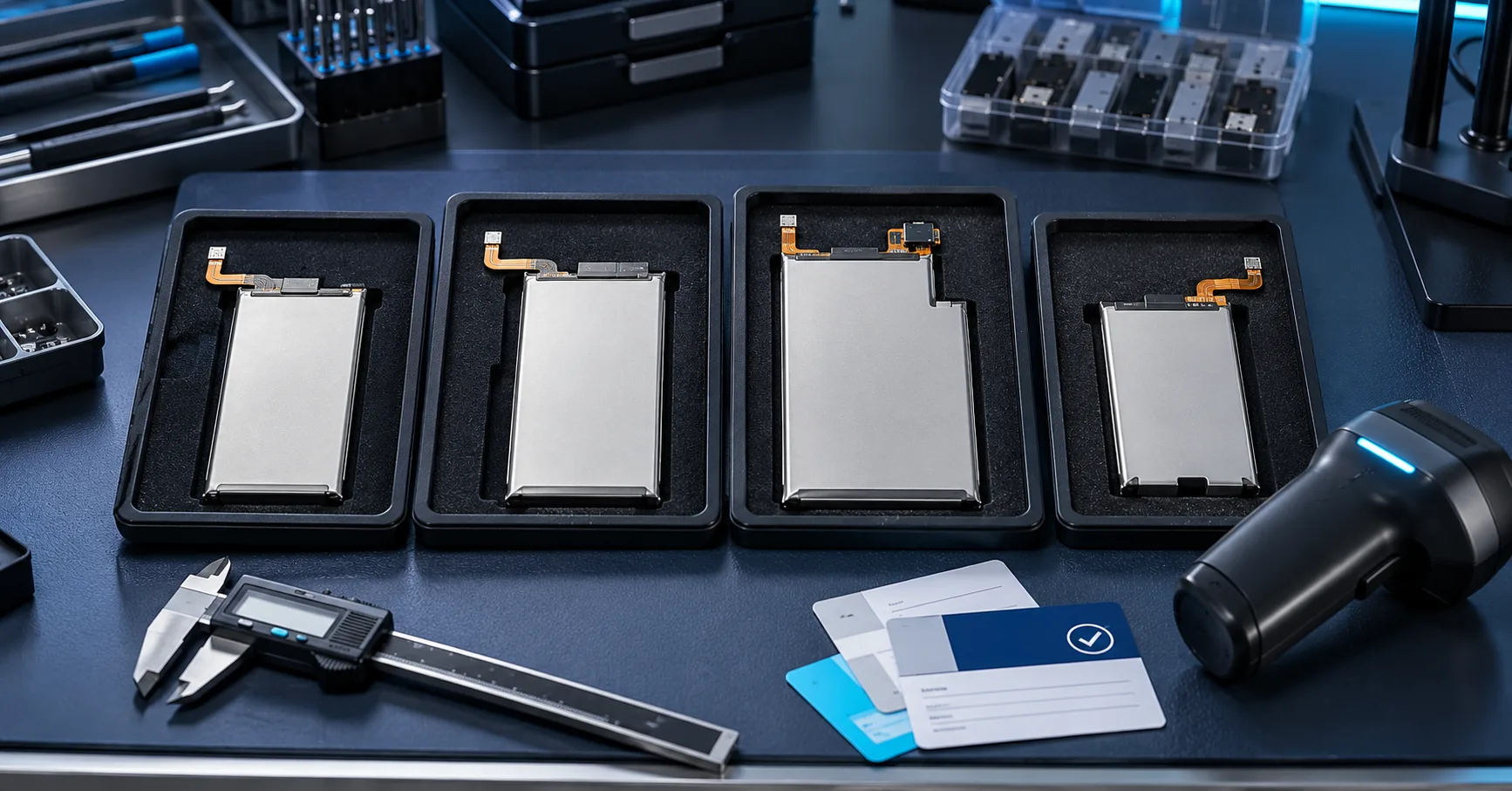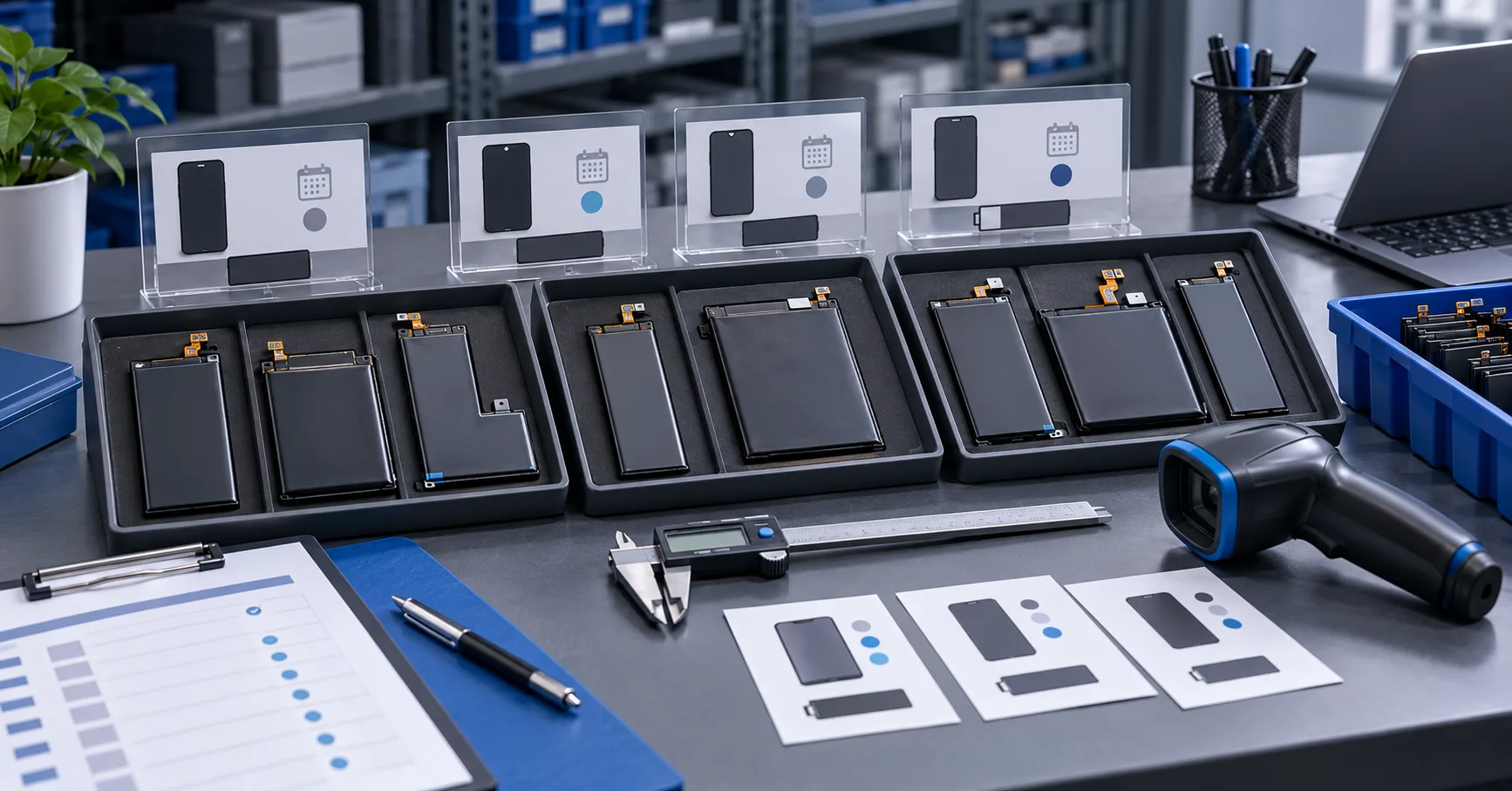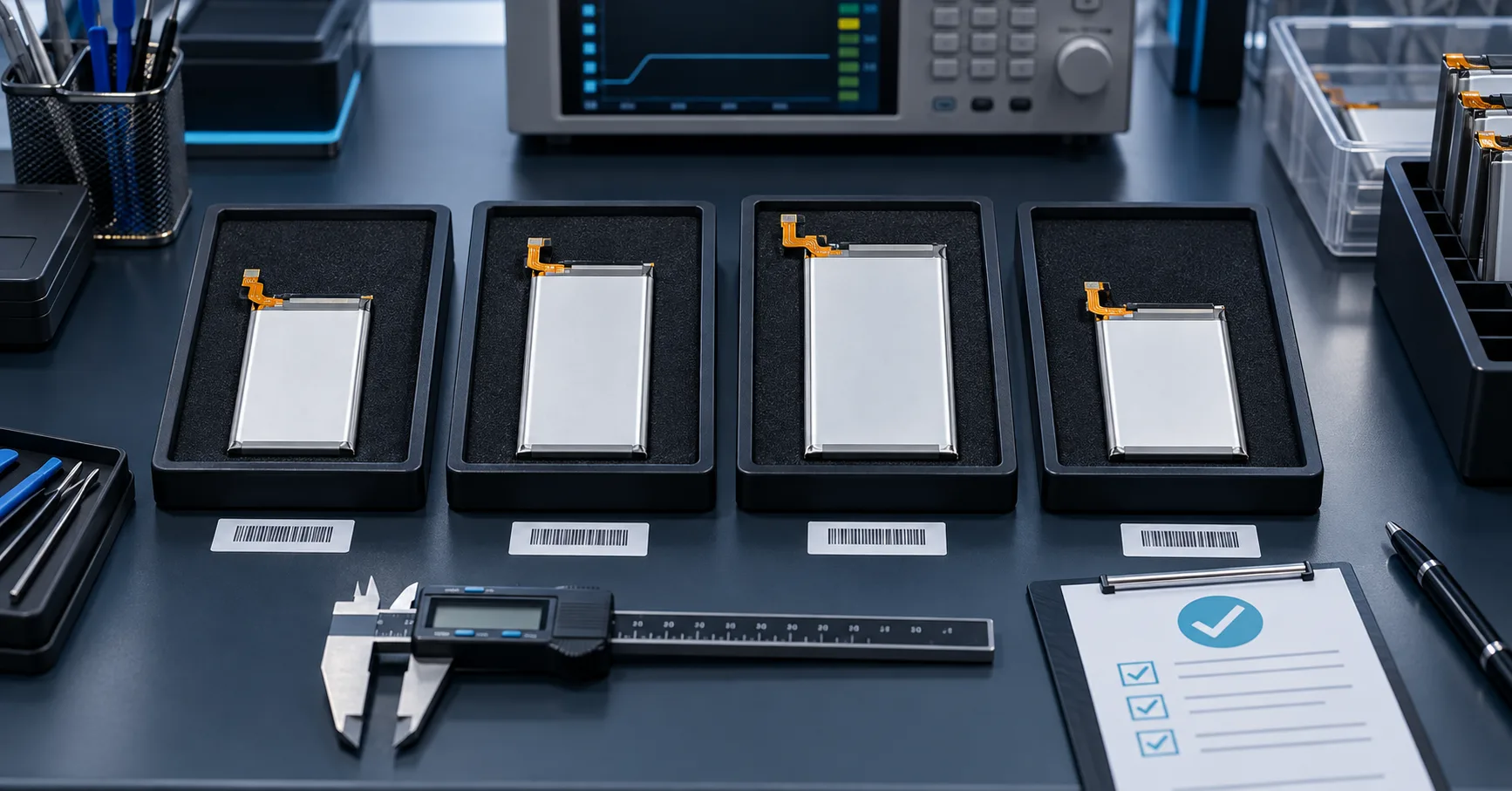

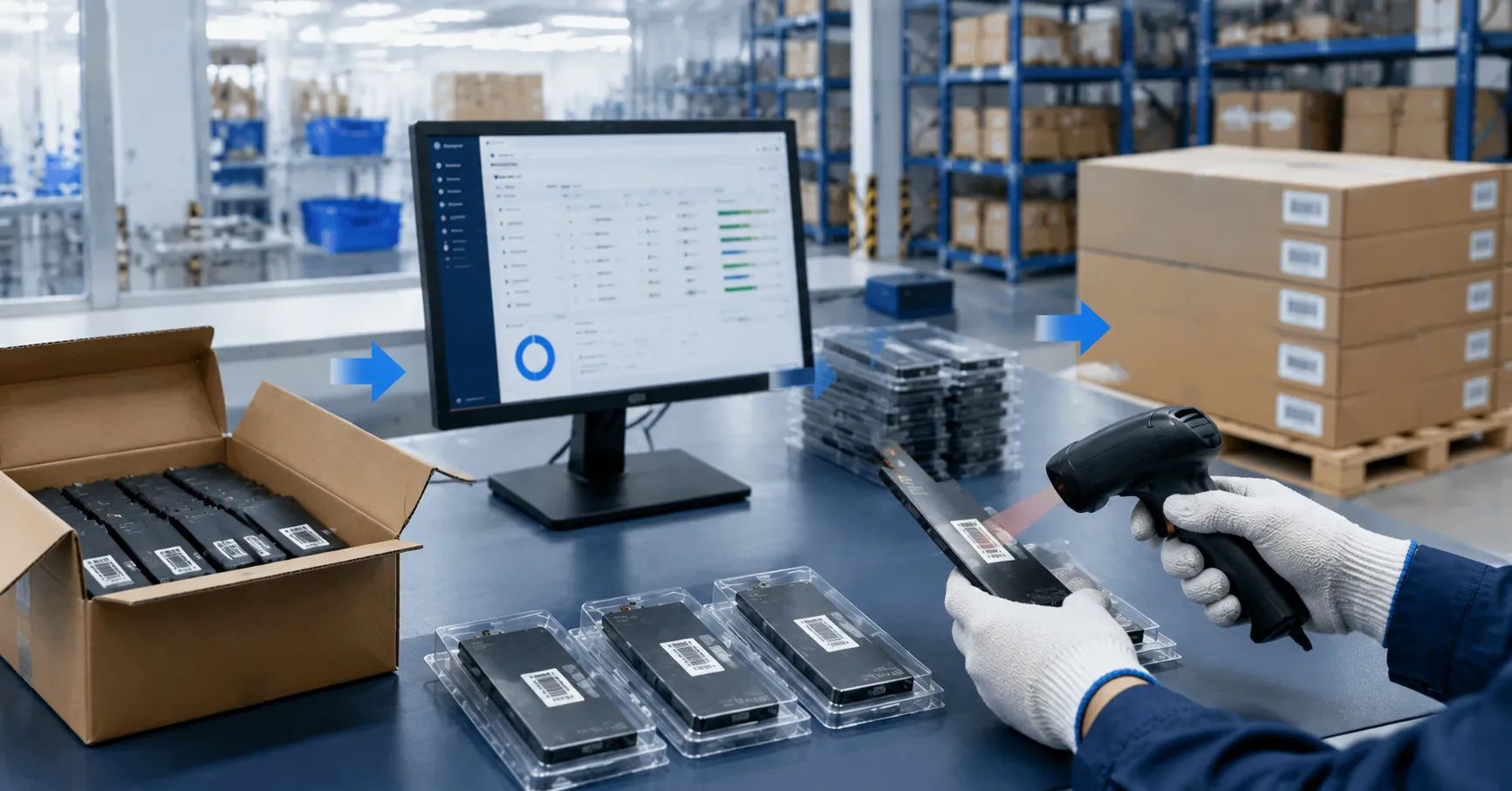
Mobile phone battery batch traceability should connect each received or produced battery lot to its approved model, label revision, inspection evidence, inventory movement, customer shipment and after-sales history. Printing a code on the battery is only the first step. The code becomes useful when a buyer can use it to answer what the product is, where it came from, where it went and what quality records apply.
For private-label brands, wholesalers, repair chains, refurbishers and distributors, this connection helps limit the scope of investigations. Instead of treating every unit of the same model as identical, the business can identify the specific lots linked to a complaint, hold or product change.
Why a Batch Code Alone Does Not Create Traceability
A battery may display a lot number while the warehouse, sales and warranty systems record only the commercial product name. When that happens, the physical code cannot support a reliable investigation.
Common breaks in the chain include:
- The battery label uses a supplier code that does not appear on the purchase order.
- The individual package and carton show different model names.
- Warehouse staff record the SKU but not the received lot.
- Several production lots are mixed in one location without separation.
- Sales documents identify the product but not the shipped batch.
- Warranty claims include photos but omit the battery label.
- A label revision changes without an approved record.
- Inspection reports cannot be connected to the affected inventory.
A useful system must preserve the relationship between identifiers and business events. The buyer does not necessarily need to serialize every battery, but the selected level of detail must support the risks and decisions of the sales channel.
Choose the Required Level of Identification
Traceability can operate at several levels:
| Identification level | What it distinguishes | Typical use | Limitation |
|---|---|---|---|
| Product or SKU level | One product model from another | Catalogs, purchasing and basic inventory | Cannot distinguish different production lots |
| Batch or lot level | Groups of units sharing a controlled lot identifier | Quality investigations, inventory holds and targeted after-sales review | Cannot identify one individual unit within the lot |
| Serial level | Each individual unit | High-value programs or unit-specific service history | Requires more marking, scanning and data management |
The GS1 Global Traceability Standard explains that trade items can be identified at class, batch or lot, and individual-instance levels. It also connects traceability with events such as producing, receiving, packing and shipping.
This does not mean that every replacement battery buyer must adopt every GS1 identifier. It provides a useful framework for deciding the required precision. A distributor may need batch-level control, while a particular premium or contract program may justify serial-level records.
Define What a Battery Lot Represents
A lot identifier should refer to a controlled group. The definition may consider the battery model, approved bill of materials, production period, cell or pack configuration, label revision and other factors established by the responsible quality team.
The buyer and supplier should agree on:
- Who creates the lot identifier
- Which event starts and closes a lot
- Whether relabeling creates a new traceability relationship
- How split quantities retain the original lot reference
- How rework, sorting or replacement is recorded
- How long records are retained
- Which information may be shared between the parties
Do not assume that all products delivered under one purchase order belong to one production lot. Conversely, do not assign new unrelated lot numbers merely because the same shipment is divided between cartons or warehouses.
Create a Controlled Product Master
The product master is the reference that connects commercial descriptions with technical identity. It should prevent informal model names from becoming the only source of truth.
Recommended fields include:
- Buyer SKU
- Supplier SKU
- Replacement battery model
- Intended phone models or controlled compatibility reference
- Nominal voltage and capacity stated in the approved specification
- Connector and flex-cable version
- Battery label revision
- Individual package revision
- Barcode or other data-carrier definition
- Approved specification, drawing and sample references
- Current lifecycle status
Compatibility claims should be maintained through a separate controlled model matrix. A label is not evidence that the battery has been technically validated for every device printed on the package.
Build One Identification Chain Across Every Packaging Level
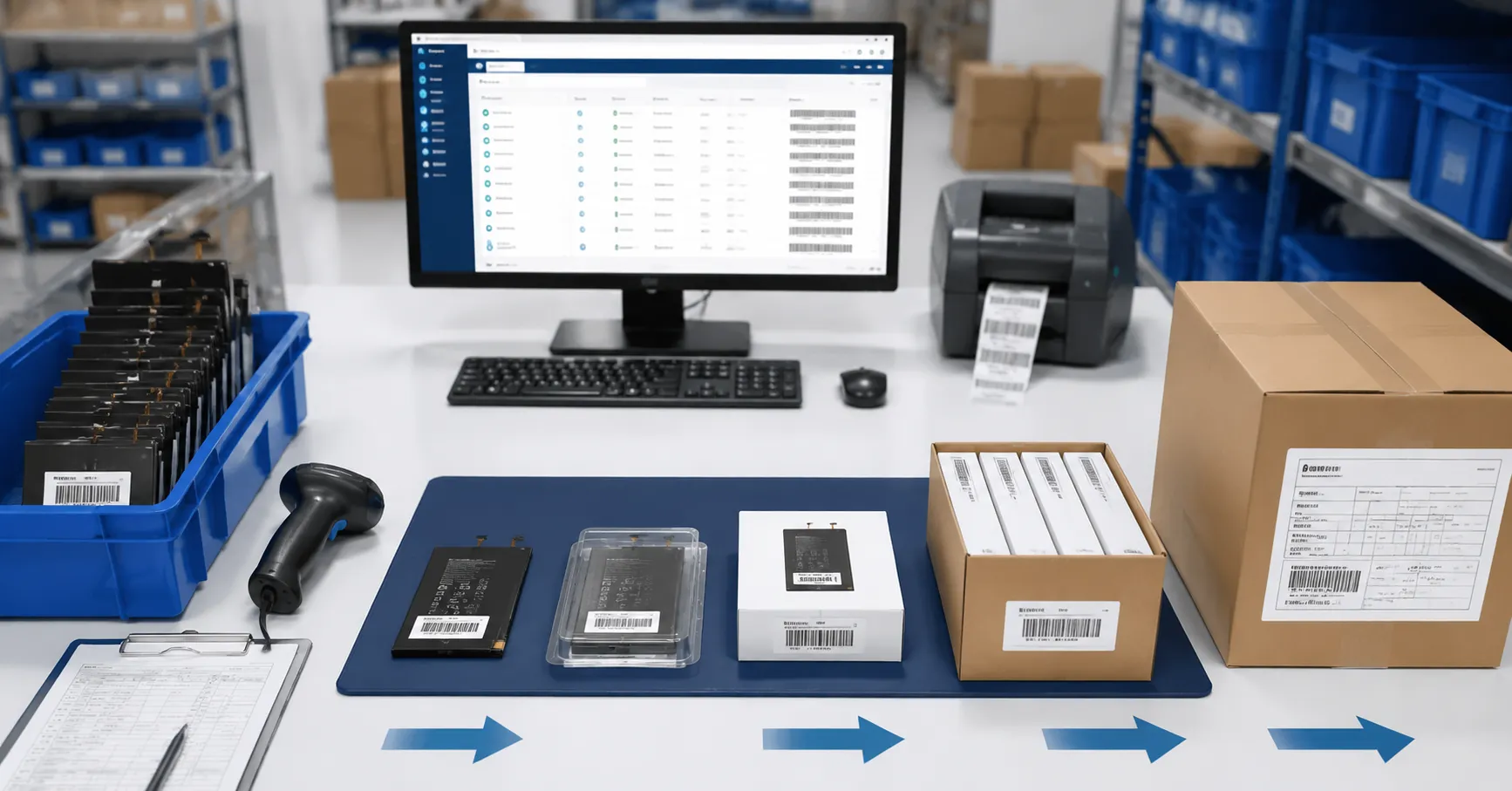
The battery, protective bag, retail package, inner carton and shipping carton serve different purposes, but their identifiers must lead back to the same controlled product and lot.
Check the relationship at each level:
- Battery label: product identity, required ratings, approved warnings and lot or serial information
- Individual packaging: buyer-facing SKU, compatible model reference, barcode and packaging revision
- Inner carton: product SKU, lot, quantity and packing identity
- Shipping carton: purchase order, destination, carton number, quantity and traceable product reference
- Digital record: the same identifiers in purchasing, inspection, inventory and shipment systems
A private-label project should approve labels and packaging before mass production. ESC’s phone battery packaging guide covers branding, packaging structure and artwork planning. The traceability plan should be added to that process rather than treated as an afterthought.
Verify Labels as Data, Not Only as Artwork
Visual approval confirms appearance, but operational verification confirms whether the label works. Before approving production labels, test:
- Text against the approved specification
- Model and SKU consistency
- Barcode content rather than only barcode appearance
- Scanning with the devices and software used by the buyer
- Lot-code location and legibility
- Print durability under expected handling
- Revision identification
- Language and warning requirements confirmed for the target market
Do not print certification marks, regulatory statements or technical ratings merely because they appeared on an older product. Their applicability must be confirmed for the specific model and target market.
Human-readable information remains important even when a barcode or two-dimensional code is used. Warehouse staff and technicians need a controlled fallback when a scanner is unavailable or a label is damaged.
Capture the Lot at Receiving and Inspection
Receiving is the first opportunity for the buyer to preserve or lose the supplier’s traceability. Record the lot before cartons are divided, products are relabeled or units are mixed into existing stock.
The receiving record should connect:
- Supplier and purchase order
- Received date and location
- Buyer and supplier SKUs
- Supplier lot and any buyer-assigned reference
- Quantity received
- Carton or logistics identifiers
- Label and packaging revision
- Inspection status
- Hold, release or rejection decision
ESC’s mobile phone battery incoming-inspection guide provides a broader framework for identity, appearance, dimensional, electrical and functional checks. The inspection result should be attached to the lot record instead of stored as an unrelated report.
Buyers using acceptance sampling can also review the mobile phone battery sampling-plan guide. A sample result applies to the defined inspection lot and method; it should not be copied to unrelated production groups.
Prevent Lot Mixing in the Warehouse
A traceability system fails when different lots are physically mixed but the inventory software shows only one quantity. Warehouse controls should define:
- Whether each storage location may contain more than one lot
- How partial cartons are identified
- How returned goods are separated from saleable stock
- How held inventory is blocked from allocation
- How repacking preserves the original lot relationship
- How stock transfers record both source and destination
- Which stock-rotation rule applies
Phone battery lot tracking should follow the physical product through receiving, storage, picking and shipment. A system quantity that cannot be reconciled with labeled physical inventory is not reliable evidence.
Record Which Customers Received Each Lot
Outbound traceability should connect the shipped product and lot to the customer transaction. Depending on the business model, the record may include:
- Sales order or invoice
- Customer account
- Ship-to location
- Shipment date
- Product SKU and quantity
- Batch or serial identifier
- Carton or parcel reference
- Warehouse picker and verification result
Distributors do not always need to expose internal manufacturing or supplier data to every customer. They do need an internal cross-reference that allows authorized personnel to move backward from a customer shipment to the received lot and forward from a lot to affected shipments.
Connect Warranty Claims to the Original Batch
After-sales records provide valuable evidence only when the returned or reported product can be identified. A claim form should request information appropriate to the channel, such as:
- Buyer or customer reference
- Phone model and repair context
- Battery SKU and clear label photograph
- Lot or serial identifier
- Purchase or installation date where available
- Reported symptom
- Inspection or test evidence
- Quantity affected
- Disposition of the returned product
Do not treat every complaint against the same model as one failure mode. Separate installation problems, device faults, compatibility errors, storage damage, physical damage and verified battery defects.
ESC’s mobile phone battery warranty-claims guide explains how B2B buyers can structure evidence and responsibility during claim handling. Linking that evidence to the lot makes trend analysis more useful.
Use a Traceability Test to Find Broken Links
A written procedure may look complete while the records remain disconnected. Periodically select one finished lot and test both directions.
Backward test
Start with a shipped unit or customer order. Determine whether the team can identify the product revision, received lot, supplier, inspection decision and applicable approval records.
Forward test
Start with a selected lot. Identify the quantity still in stock, quantities on hold, shipments and customers that received it, and associated claims or returns.
Record missing links, conflicting quantities and the time required to retrieve the information. The goal is not merely to find a code; it is to determine whether the organization can make a controlled scope decision using reliable records.
Control Product and Label Changes
Traceability depends on revision control. Require review before changing:
- Battery model or technical specification
- Cell or pack configuration
- Protection circuit
- Connector or flex cable
- Label content or layout
- Barcode data structure
- Individual packaging
- Carton marking
- Approved supplier or manufacturing process where relevant
The quality team should determine whether a change requires only document approval, a new sample, additional testing or a new product identifier. Do not silently overwrite historical records when a revision changes.
Keep the System Proportionate to the Business Risk
A regional wholesaler with mixed-model cartons may not need the same system as a brand selling individually serialized premium batteries. The process should be detailed enough to support inventory control, quality investigation and customer communication without collecting data that nobody maintains or uses.
When selecting the level of control, consider:
- Product and channel risk
- Order and SKU volume
- Number of storage and distribution locations
- Customer traceability expectations
- Claim frequency and investigation cost
- Ability to scan and retain data
- Record-access and confidentiality requirements
FAQ
Is a production date enough for battery traceability?
Usually not by itself. A date may be shared by several models or production groups. It should be connected to a controlled product identifier, lot definition and related records.
Does every phone battery need an individual serial number?
No. Batch-level identification may be sufficient for many wholesale and repair channels. Serial-level control may be appropriate when unit-specific history or a premium program justifies the added complexity.
Can the supplier lot number be used as the buyer’s only identifier?
It can remain part of the system, but the buyer should maintain a reliable cross-reference to its own SKU, purchase order, inspection record, inventory and shipment data.
Should returned batteries go back into normal stock?
Not without an approved evaluation and disposition. Returns should be identified and separated so their history is not lost and their condition is not confused with unused stock.
How often should a traceability test be performed?
The frequency should reflect business risk, customer requirements, process changes and previous results. The organization should define the interval and retain evidence of each test.
Build Traceability Before the First Bulk Shipment
Effective mobile phone battery batch traceability links the approved product, physical label, packaging, receiving record, inspection evidence, warehouse movement, shipment and warranty history. The system should help a buyer define the affected scope accurately rather than turning every complaint into a product-wide assumption.
Review ESC’s mobile phone replacement battery range, then send the required model list, packaging structure, target market and traceability expectations when requesting samples or a bulk quotation. Exact labels, documentation, barcode formats and order terms should be confirmed for the selected models and project.
External Source References
- GS1 — GS1 Global Traceability Standard — current standard