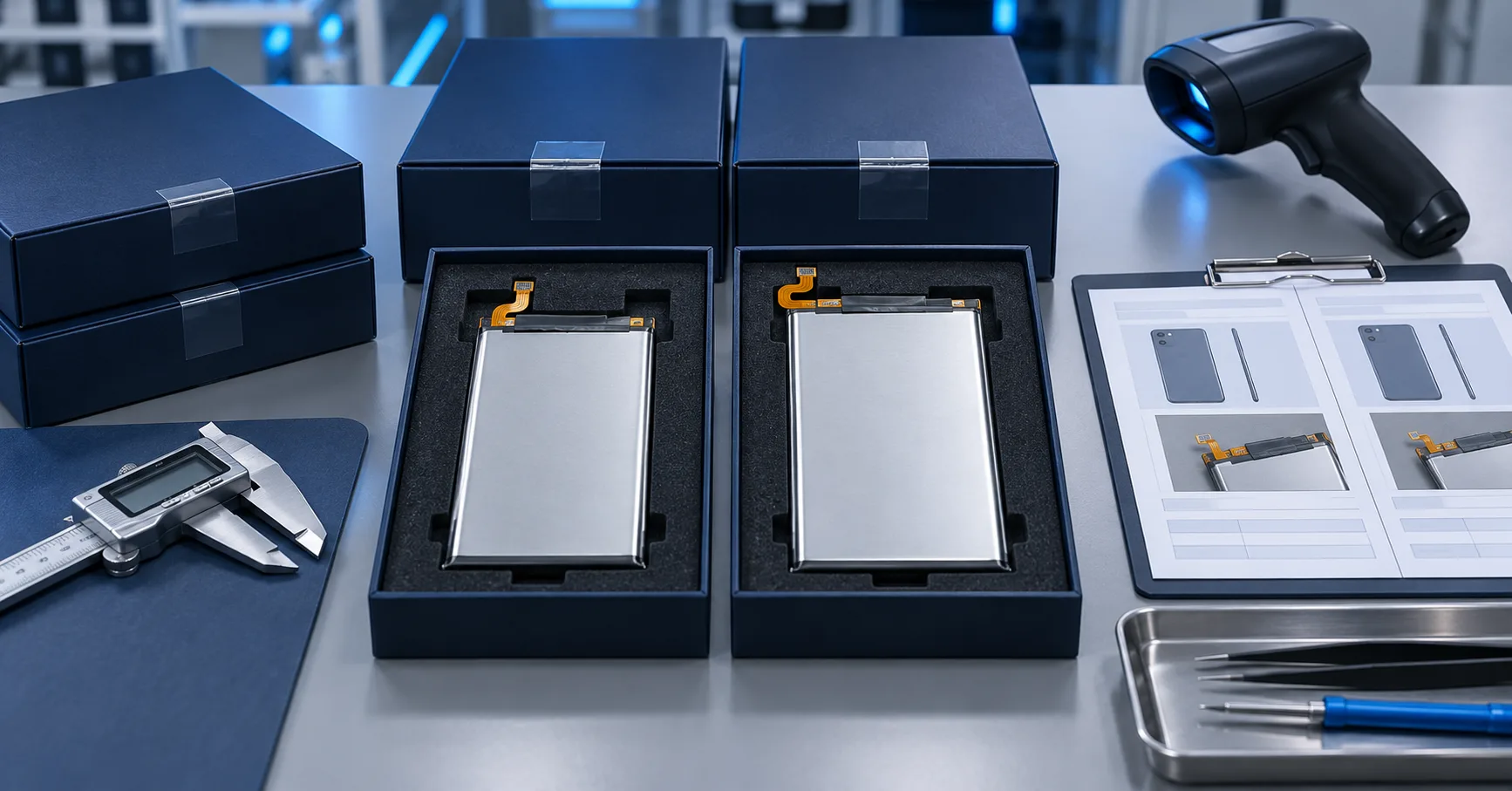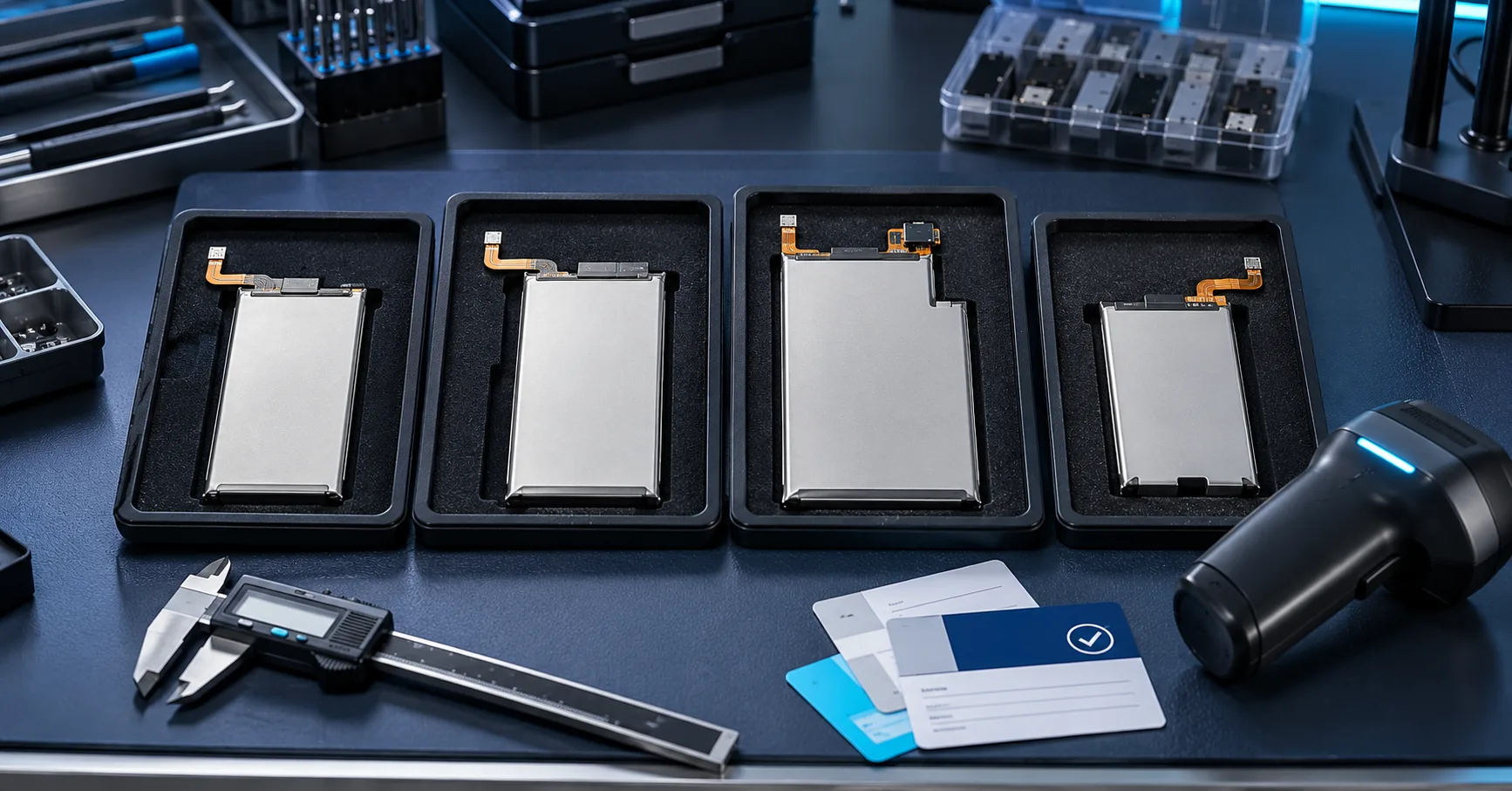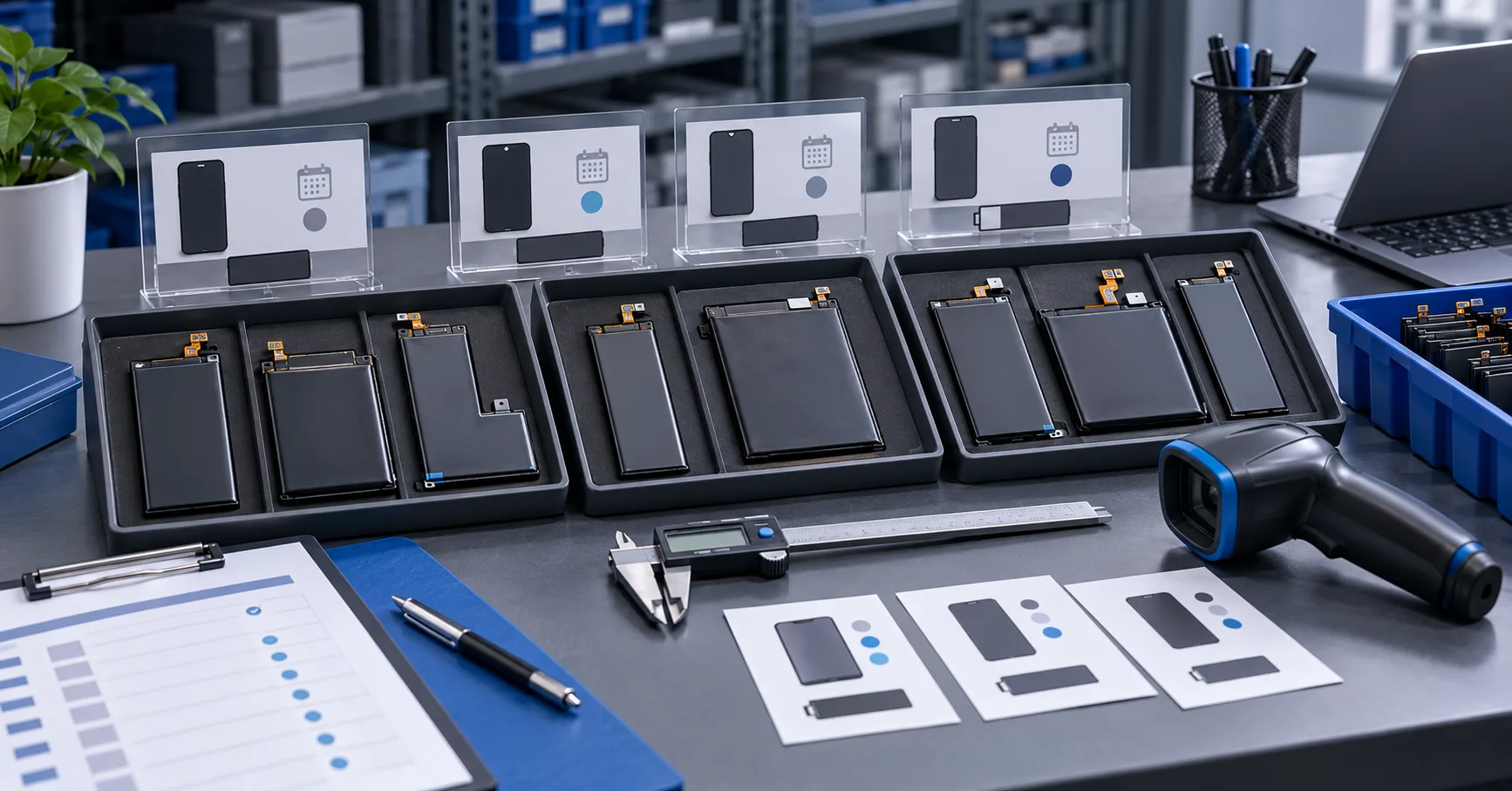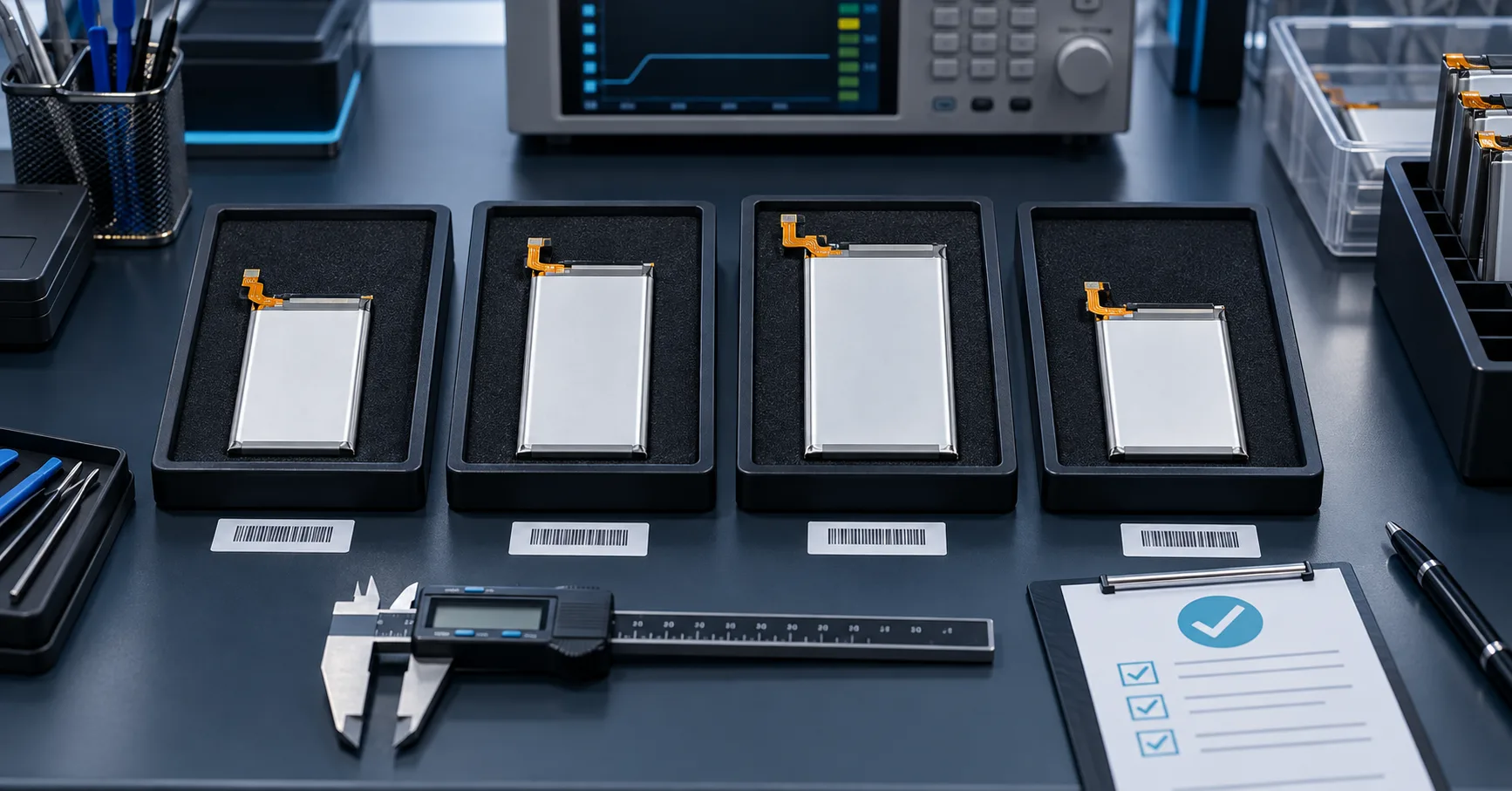

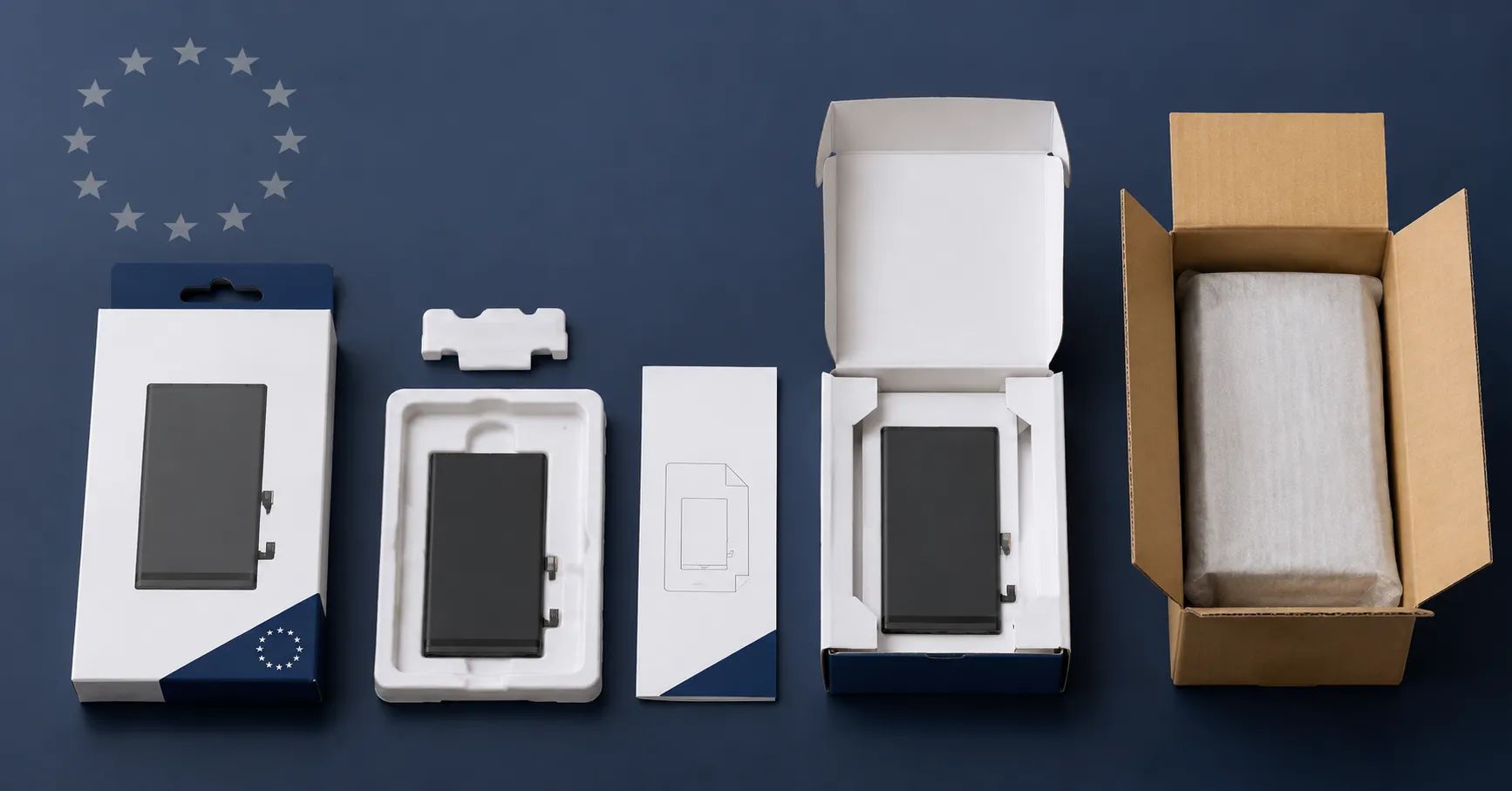
For mobile phone battery exporters, the Packaging and Packaging Waste Regulation (PPWR) changes the conversation from “does this retail box look acceptable?” to “can every packaging decision be explained and evidenced?” Regulation (EU) 2025/40 applies across the EU to packaging made from any material and to packaging waste. It has applied from 12 August 2026, while several detailed obligations, methods and transition points have their own dates. That timing matters: an exporter should not advertise every future target as a current duty, but should build a packaging-control process now.
This EU PPWR mobile phone battery packaging guide is for replacement-battery brands, factories, private-label buyers, EU importers and distributors. It focuses on a common business scenario: a rechargeable battery is sold in a small retail box, protected for transport, then grouped into cartons for a repair chain, wholesaler or online seller. The goal is not to give legal advice or to replace country-specific EPR registration. The goal is to help commercial and quality teams create a reliable evidence trail before goods are placed on the EU market.
Start with the correct compliance boundary
A replacement battery and its packaging are related, but they are not the same regulated object. The battery may have obligations under the EU Batteries Regulation, product-safety rules, chemical restrictions, transport rules and local waste-battery schemes. PPWR concerns the packaging used to contain, protect, handle, deliver and present that product. A compliant UN 38.3 file, for example, does not prove that the carton, tray, pouch or shipping case meets applicable packaging requirements. Conversely, a recyclable carton does not prove that a lithium battery is safe to ship.
Map each layer separately before choosing artwork or materials:
- Sales packaging: the unit box, sleeve, insert, blister or other presentation packaging delivered to the purchaser.
- Grouped packaging: packaging that keeps several sales units together for stock handling or display.
- Transport packaging: outer cartons, dividers, pallets and protective materials used for logistics.
- Battery protection: terminal covers, insulating sleeves, anti-short-circuit arrangements and inner restraints required for the cell or battery’s safe movement.
- Product information: battery identification, warnings, installation guidance and supplier contacts. These may appear on the product, packaging or accompanying documents depending on the applicable rule.
This separation prevents a frequent error: removing a protective component merely because it appears to be “extra packaging.” Some components are necessary to stop terminal contact, puncture, vibration damage or movement in transit. The compliance question is not whether the packaging is visually minimal. It is whether each element has a documented function and whether its material and amount are proportionate to that function.
What PPWR means now—and what still needs a dated plan
PPWR establishes an EU-wide framework covering packaging sustainability, labelling, waste prevention, extended producer responsibility and related documentation. It applies to all packaging, regardless of material. Manufacturers and importers are expected to place only compliant packaging on the market and to maintain the relevant evidence. The regulation also retains transition arrangements in particular areas, so teams should maintain a dated obligations register rather than relying on a single “PPWR compliant” claim.
For replacement phone batteries, three practical points deserve special attention. First, packaging minimisation requirements will require packaging placed on the market from 1 January 2030 to have weight and volume reduced to the minimum necessary to ensure functionality. Second, recycled-content requirements for relevant plastic packaging also contain future dates and specific conditions. Third, harmonised labelling relies on EU-level specifications and timing rules. A small exporter should prepare material data and artwork governance now, but should verify the latest adopted implementing acts before printing a new symbol or QR code across every market.
Article 10 is especially useful as a design discipline. It requires the future minimisation assessment to consider product protection, logistics, safety, required information and legal requirements. For a lithium replacement battery, that provides a sensible business test: prove why the inner tray, insulation, carton dimensions, divider and tamper control exist. If the answer is only “it makes the product look more premium,” the component needs review. If the answer is “it prevents connector damage during mixed-carton transport,” retain test evidence and the design rationale.
Build a packaging bill of materials before you redesign
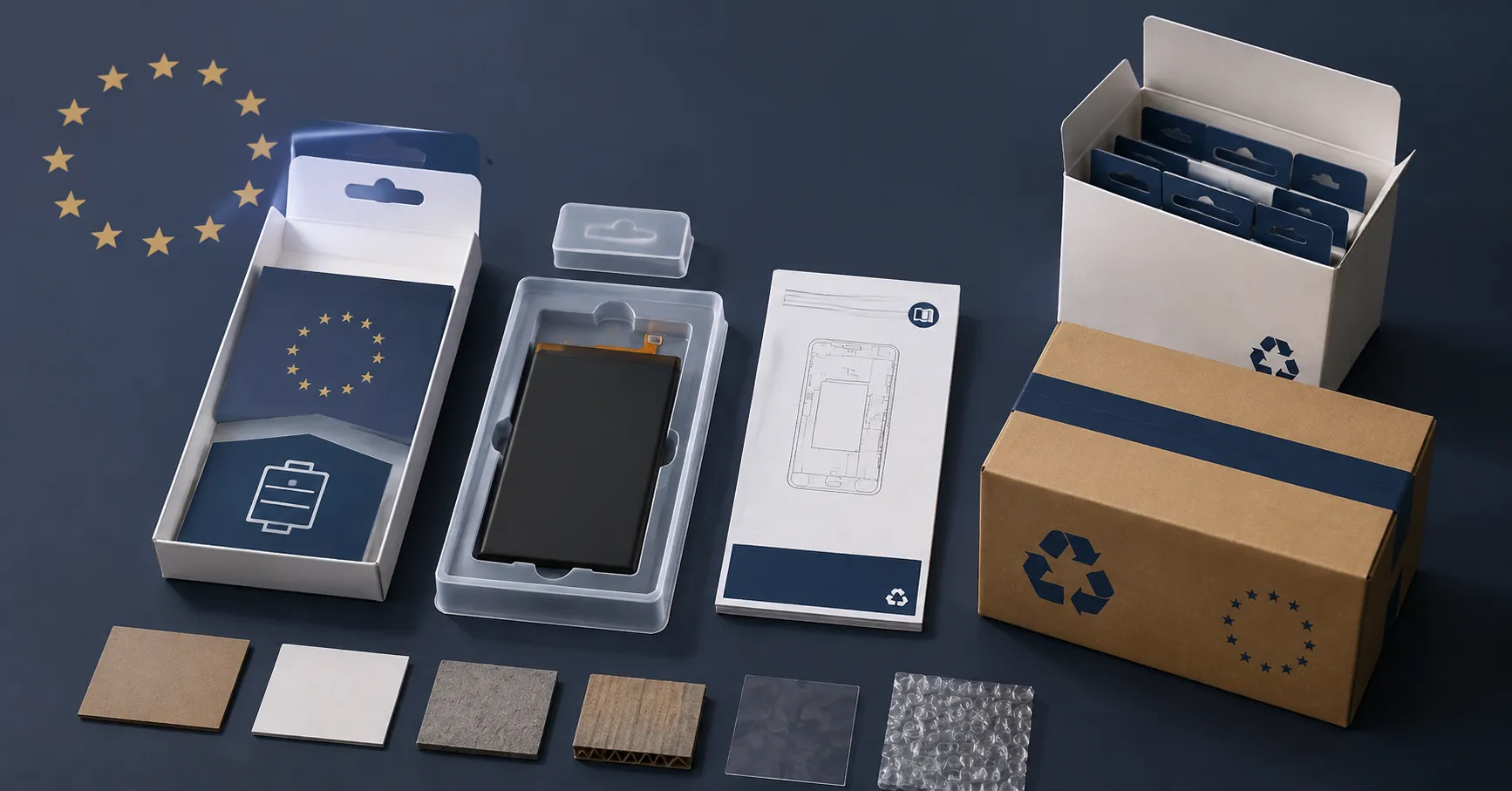
Do not begin with a supplier’s recycled-paper certificate or a new eco logo. Begin with a packaging bill of materials (BOM) for every SKU. A robust BOM assigns an internal part number to every packaging component and records the material, weight, supplier, function, country of manufacture and revision level. It should distinguish a paperboard box from its coating, adhesive label, plastic tray, foam pad, tape, terminal protector, leaflet, shrink film and shipping carton.
For each component, ask five questions:
- What risk or function does this component address?
- Can that function be achieved with less material, a simpler structure or a more recyclable format?
- Does the component interfere with sorting or recycling of the main packaging body?
- Which supplier evidence supports the material description and any environmental claim?
- Who approves changes to the component, artwork or weight?
A phone battery retail box often combines paperboard, ink, adhesive, a plastic inner structure and a small protective insert. “Paper box” is not enough as a material description. A purchaser needs to know whether the tray is integrated, easily separated or likely to cause a recycling issue; whether a coating or laminate changes the recovery route; and whether an apparent simplification would weaken product protection. Record the gross package weight and the weight of each material category at a controlled revision. This makes later evidence collection much easier than trying to reconstruct the design from invoices.
Minimise material without weakening battery protection
Battery sellers face a genuine balancing exercise. A compact package can reduce volume and material use, but a battery with exposed contacts, flexible tabs or a delicate connector still needs protection. Start with a risk assessment built around the actual distribution route. A repair-shop shipment in a reinforced master carton may need a different sales-unit structure from a single e-commerce dispatch that is exposed to sorting belts, drops and returns.
Review the following opportunities with product and logistics teams:
- Replace decorative double walls, false bottoms and oversized empty space where they do not serve protection, information or handling.
- Use one correctly fitted retention method instead of several overlapping inserts.
- Evaluate whether a separable paper-based insert can perform the same function as a multi-material tray.
- Standardise carton footprints across compatible battery families where that does not create a model-matching risk.
- Move non-essential repeat information from a printed insert to a controlled digital document, while preserving legally required information and customer usability.
- Test reduced designs through vibration, compression, drop, opening and return-handling conditions before release.
Document failures as well as successes. If a lighter tray allows the connector to move and causes damage, the test result is evidence that the earlier design function remains necessary. Packaging minimisation is not a reason to eliminate safety controls. In fact, PPWR’s performance criteria expressly recognise safety, hygiene, logistics and product protection as design factors. For batteries, a transparent rationale is more defensible than a marketing-led redesign.
Control labels, claims and online information
Labels can be the fastest way to create avoidable risk. Teams often add “100% recyclable,” “eco-friendly,” recycled-content percentages or country-specific symbols without confirming the basis, destination market or current harmonised specification. PPWR addresses packaging labelling and prohibits labels, marks or inscriptions that are likely to mislead or confuse users where harmonised labelling has been laid down. Environmental claims also require support and, where the regulation sets legal requirements, claims should describe performance beyond the applicable minimum and identify what part of the packaging the claim covers.
Use an artwork approval matrix. It should show each claim, symbol, language, target country, evidence owner, approval date and expiry or review date. This matrix should include sales-box artwork, outer-carton marks, marketplace images and downloadable product sheets. Online information must not contradict the physical pack. If a local distributor adds a recycling statement, treat that as an artwork revision—not as an informal sales edit.
Do not assume that a harmonised material label, recycled-content mark or digital data carrier can be invented from a generic icon library. PPWR provides for implementing acts and detailed specifications. Confirm whether the relevant EU requirements and national measures have entered into application for your precise packaging format and market. Where a battery package is too small for certain information, the regulation may allow information through grouped packaging, accompanying documentation or an appropriate data carrier in specified circumstances. The practical answer depends on the requirement involved, so a local compliance review remains essential.
Prepare technical documentation that a buyer can actually use
EU packaging conformity documentation should be more useful than a one-page supplier declaration. It should let an importer, brand owner or competent authority understand what the package is, why it was designed that way and which evidence supports the decision. PPWR requires technical documentation and an EU declaration of conformity in the manufacturer framework; importers must verify defined elements before placing packaging on the market.
Create one controlled compliance file per packaging family. At minimum, include:
- Packaging BOM with material, weight and supplier data.
- Drawings, photographs and artwork files linked to revision numbers.
- Functional justification for the package volume and weight, including protective and logistics requirements.
- Material declarations and applicable substance information from packaging suppliers.
- Test records for transport, fit, opening, vibration, compression or drop performance where used to support the design.
- Evidence behind any recycled-content, recyclability or environmental statement.
- Supplier-change records and approval history.
- EU declaration of conformity and any required supporting documentation managed by the responsible economic operator.
- Market list showing the EU countries, importer details and applicable EPR or national packaging-registration checks.
Keep battery and packaging evidence in connected folders but do not merge their approval pathways. A transport team may own dangerous-goods instructions. A quality team may own cell traceability. A packaging engineer may own material specifications. The importer or brand owner may own local EPR registration. The compliance file should identify those owners and show how a product release is blocked when a required record is missing.
Check economic-operator and EPR responsibilities early
Responsibilities can change when a distributor sells a product under its own brand, imports a packaged product from outside the EU or changes the package in a way that affects compliance. PPWR assigns duties to manufacturers, importers, distributors and authorised representatives, while extended producer responsibility rules add market-specific registration and reporting considerations. A factory outside the EU should never assume its carton supplier or freight forwarder has automatically resolved the importer’s obligations.
Before accepting a purchase order, agree in writing on who is responsible for each task: packaging specification approval, importer identification, EU declaration, national packaging EPR registration, reporting data, product labelling, translation, market surveillance response and corrective action. Include a change-notification clause. If the packaging supplier changes board grade, coating, adhesive, tray design or weight, the customer must have time to determine whether testing, documentation, artwork or national reporting data need to change.
This is where a practical PPWR exporter checklist becomes valuable. It turns a broad regulation into controlled release gates rather than a last-minute customs question. For every new SKU and each packaging revision, require a signed packaging specification, current evidence folder, destination-market check and responsible-person approval before production.
Integrate dangerous-goods safety with sustainable packaging
Replacement batteries frequently travel through regulated logistics routes. The design must satisfy applicable transport requirements and carrier conditions in addition to PPWR. That can mean protection against short circuits, movement, crushing and accidental activation; appropriate marks and documentation; and a distinction between standalone batteries and batteries packed with or contained in equipment. Never use a packaging-sustainability review to override dangerous-goods instructions.
The better approach is joint design review. Bring the dangerous-goods specialist, packaging engineer, product manager and customer-quality representative to the same release meeting. Ask whether terminal protection can be simplified without exposing contacts, whether the same divider can protect several SKUs, and whether carton-right-sizing changes the stack-compression margin. If a sustainability proposal changes the battery’s movement or insulation, repeat the relevant safety validation. A well-designed package protects the battery, gives repair buyers clear identification and avoids material that has no real function.
A 90-day implementation plan for exporters
Days 1–30: list all EU-bound phone battery SKUs and their packaging layers. Freeze uncontrolled artwork changes. Collect BOMs, material declarations, current box weights, country destinations and responsible importer details. Identify claims that cannot yet be evidenced.
Days 31–60: rank the highest-volume packaging families. Conduct a function-versus-material review with logistics and quality teams. Establish the controlled compliance-file format, artwork matrix and supplier-change process. Ask EU customers which packaging EPR registrations and reporting data they require for their markets.
Days 61–90: test the most promising reduction designs, update specifications and obtain customer approval before production. Train sales staff not to make unsupported recyclability or compliance claims. Set a calendar for checking new Commission acts, national measures, label specifications and customer requirements.
The outcome should be controlled, not cosmetic. Buyers want evidence that the carton protects a battery, the design can be explained, claims are substantiated and material changes cannot quietly enter production. That is a stronger commercial position than an unverified green symbol on a retail box.
FAQ
Does PPWR apply to a replacement battery box made outside the EU?
PPWR applies to packaging placed on the EU market, regardless of where the packaging was manufactured. The responsible economic operators and exact duties depend on the supply arrangement. Confirm the manufacturer, importer and distributor roles for each transaction.
Can a phone battery exporter claim that a package is PPWR compliant today?
Only make a claim that can be substantiated for the package, market and date concerned. PPWR has applied since 12 August 2026, but different requirements, transition arrangements and implementing measures have different timelines. Avoid using a broad claim as a substitute for evidence.
Must all plastic in replacement-battery packaging contain recycled content immediately?
No. PPWR contains future recycled-content dates and conditions for specific packaging categories. Check the detailed scope, applicable date and any implementing methodology before setting a percentage target or publishing a claim.
Can we remove an inner tray to reduce packaging?
Only after verifying that the removal does not compromise safety, product protection, connector integrity, handling or transport compliance. Keep the risk assessment and test results that support the final decision.
Does packaging compliance replace lithium battery shipping compliance?
No. Packaging sustainability and packaging-waste rules are separate from applicable battery, dangerous-goods and carrier requirements. Review them together, but maintain separate evidence and approval controls.
Need an EU-ready replacement-battery packaging review? Send your SKU list, target countries, current box photos, packaging BOM and shipping configuration to ESCCharge. Our team can help you organise a supplier-facing specification and validation checklist for bulk sourcing discussions.
External Source References
- European Parliament and Council — Regulation (EU) 2025/40 on packaging and packaging waste — 2025.
- European Commission — Packaging and Packaging Waste Regulation (PPWR) FAQ — 2026.
- European Commission — EU batteries policy and implementation information — accessed 2026.