
1. Introduction
In an era where our professional workflows and personal connections are dictated by screen time, the "Low Battery" notification has become a universal source of anxiety. While smartphones and laptops have become exponentially more powerful, battery technology has struggled to keep pace with the energy demands of high-resolution screens, 5G connectivity, and AI processing.
This is where the power bank steps in and how to use a power bank. It is no longer just a "nice-to-have" accessory; it is a critical component of the modern mobile ecosystem.
Unlike a wall charger, which acts as a conduit converting AC electricity from the grid to DC for your device in real-time, a power bank acts as a portable reservoir. It stores chemical energy now to be released later. It effectively untethers you from the wall socket, allowing for a seamless transition between the office, the commute, and travel without the risk of digital disconnection. It represents not just power, but autonomy.
2. Power Bank Basics: Anatomy of Portable Energy
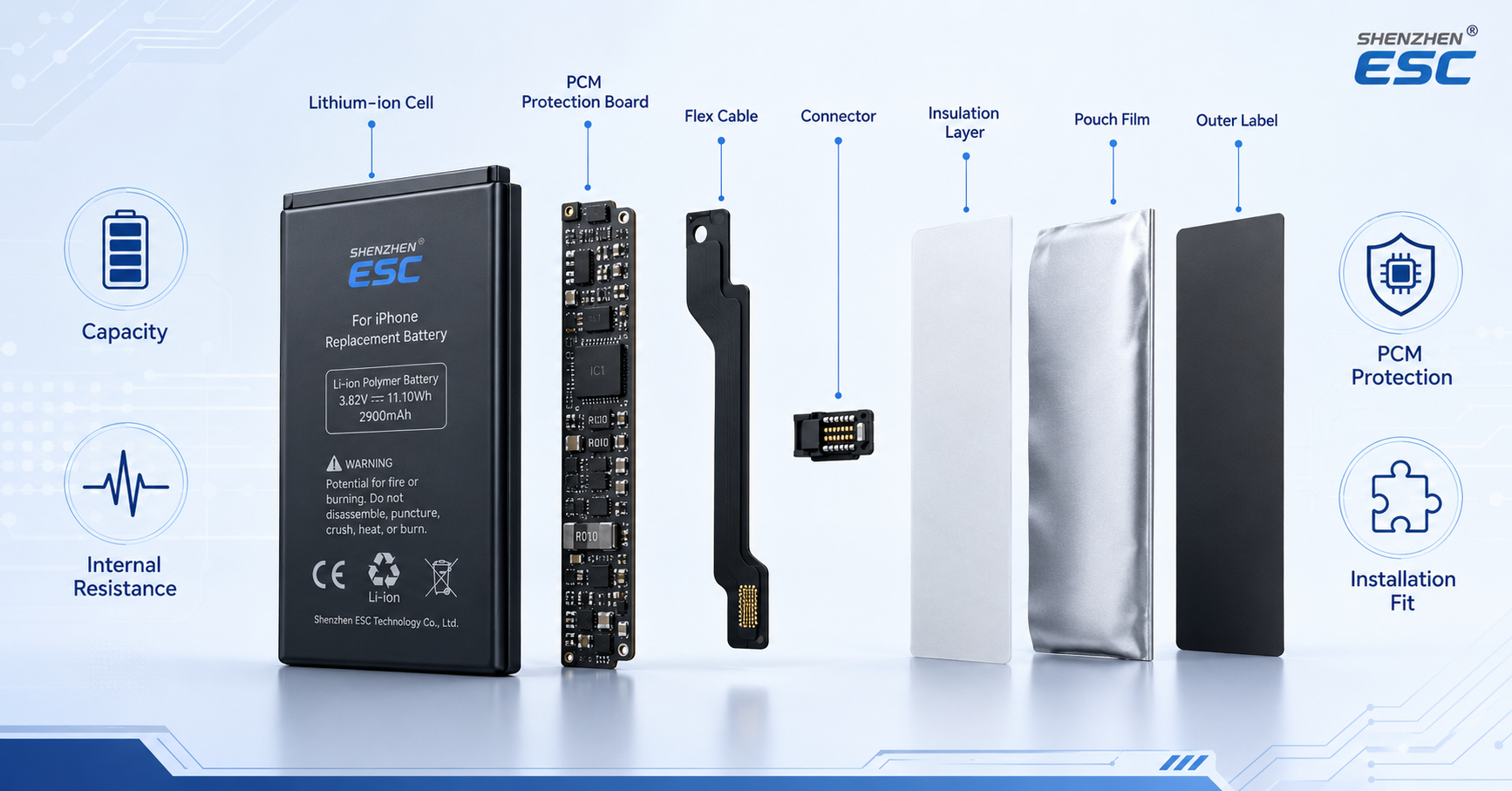
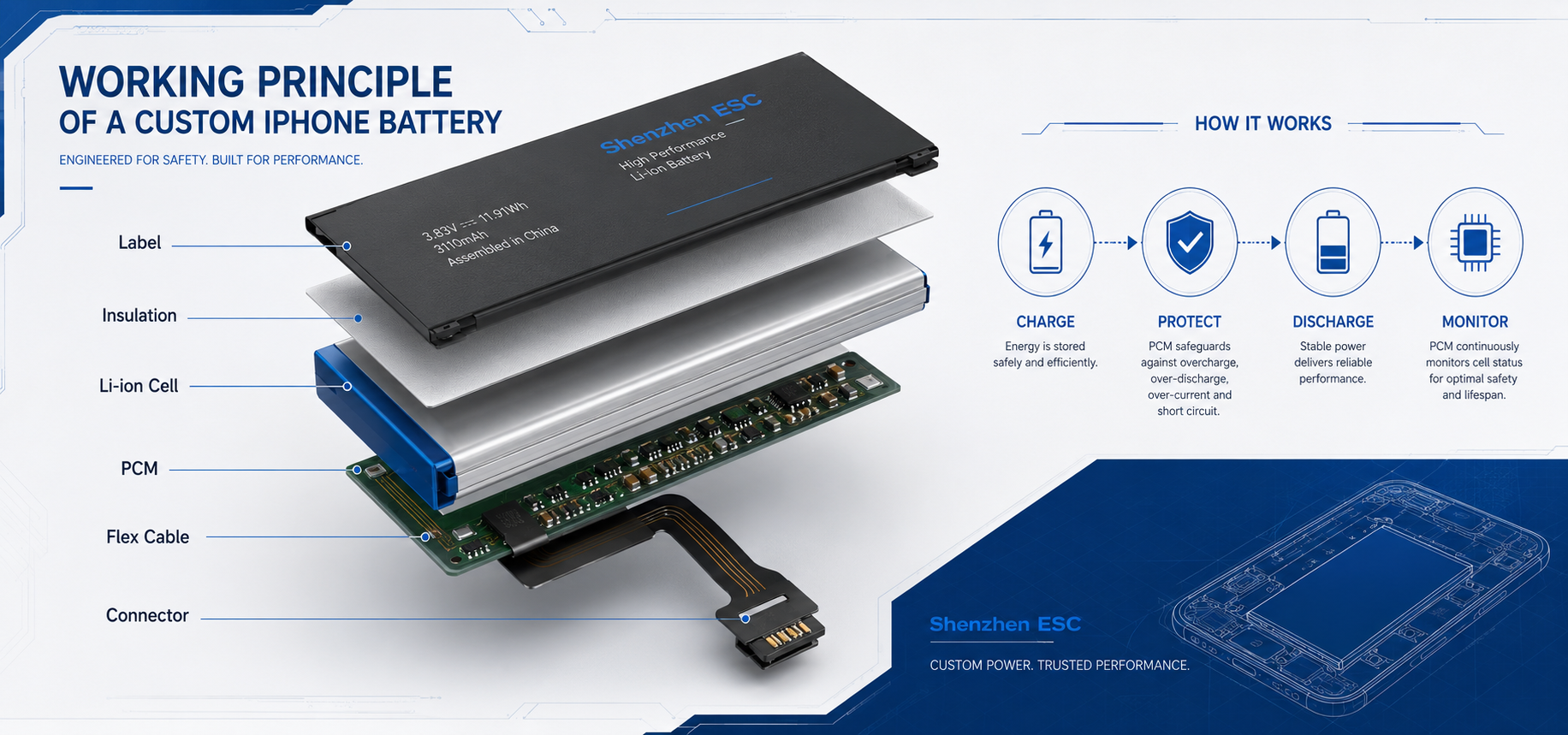
To choose the right tool for the job, you must understand what lies beneath the casing. A power bank is not a single battery; it is a sophisticated system comprised of three critical components.
The Internal Composition
-
The Battery Cells (The Fuel Tank): Most high-quality banks use Lithium-Polymer (Li-Po) or Lithium-Ion (Li-ion) cells. Li-Po is generally preferred in premium models for its ability to be molded into slim shapes and its higher safety profile regarding heat dissipation.
-
The Printed Circuit Board (The Brain): This is the PCB. It regulates voltage, manages current flow, and houses the safety chips that prevent your device from frying during a surge.
-
The Interface (The Gateway): These are your input and output ports (USB-A, USB-C, Lightning) that determine compatibility.
The "mAh" Myth: Capacity vs. Reality
One of the most common questions is: “Why doesn't my 10,000mAh power bank capacity charge my 5,000mAh phone exactly two times?”
The answer lies in voltage conversion.
-
Internal Voltage: The battery cells inside a power bank typically operate at 3.7 Volts.
-
Output Voltage: Your phone requires 5 Volts (or higher for fast charging) to receive power via USB.
The power bank must boost the voltage from 3.7V to 5V. During this conversion, energy is lost as heat (roughly 10-15%). Therefore, the Rated Capacity (what is on the box) is different from the Real Output Capacity. A 10,000mAh bank usually delivers effectively 6,000–6,500mAh to the device.
Wattage and Compatibility
While Capacity (mAh) tells you how long it lasts, Wattage (W) tells you how fast it fills up.
-
Low Wattage (5W-10W): Sufficient for earbuds or older phones.
-
Medium Wattage (18W-25W): Standard fast charging for most smartphones.
-
High Wattage (45W-100W+): Required for laptops, tablets, and gaming consoles.
Key Takeaway for Buyers: When selecting a unit, look for the Output Wattage. If you plug a laptop requiring 65W into a 15W power bank, it will likely drain faster than it charges.
3. Charging Standards and Technology
The connector shape is just the beginning. The "language" the charger speaks to the device is what matters.
The Port Landscape
-
USB-A: The rectangular legacy port. Universal, but usually limited to slower speeds.
-
USB-C: The modern standard. It supports bi-directional power (input and output) and high-speed data.
-
Lightning: Apple’s proprietary connector (pre-iPhone 15).
-
Decoding Fast Charging Protocols
To achieve fast charging, both the power bank and the device must support the same protocol.
Protocol Full Name Primary Use PD Power Delivery The universal standard (USB-C) for iPhones, Google Pixels, and Laptops. Essential for speeds over 18W. QC Quick Charge Developed by Qualcomm; common in many Android devices. PPS Programmable Power Supply An advanced feature of PD that adjusts voltage in real-time to reduce heat and maximize speed.
Watts vs. Amps: The Water Analogy
To understand the physics, imagine electricity as water flowing through a pipe:
-
Voltage (V): The water pressure.
-
Amperage (A): The width of the pipe.
-
Wattage (W): The total volume of water delivered per second ($Volts \times Amps = Watts$).
Factors Affecting Charging Efficiency:
-
Cable Quality: A cheap cable acts like a thin pipe; it restricts the flow (Amps) regardless of how powerful the bank is.
-
Thermal Throttling: If the battery gets too hot, the internal chip will deliberately slow down charging to prevent damage.
-
Background Activity: Charging while gaming consumes power simultaneously, slowing the net increase in battery percentage.
4. Chargers (Wall Adapters) vs. Power Banks
While they serve a similar purpose—providing energy—their utility depends entirely on the environment.
Wall Chargers: The Stationary Powerhouse
Wall chargers convert AC power directly. Because they don't carry heavy battery cells, they are compact and lightweight using GaN (Gallium Nitride) technology. However, they are "environmentally dependent"—useless without a socket.
Power Banks: The Mobile Solution
Power banks are heavier and bulkier due to the chemical storage cells. However, they offer total independence.
The "Bi-Directional" Advantage:
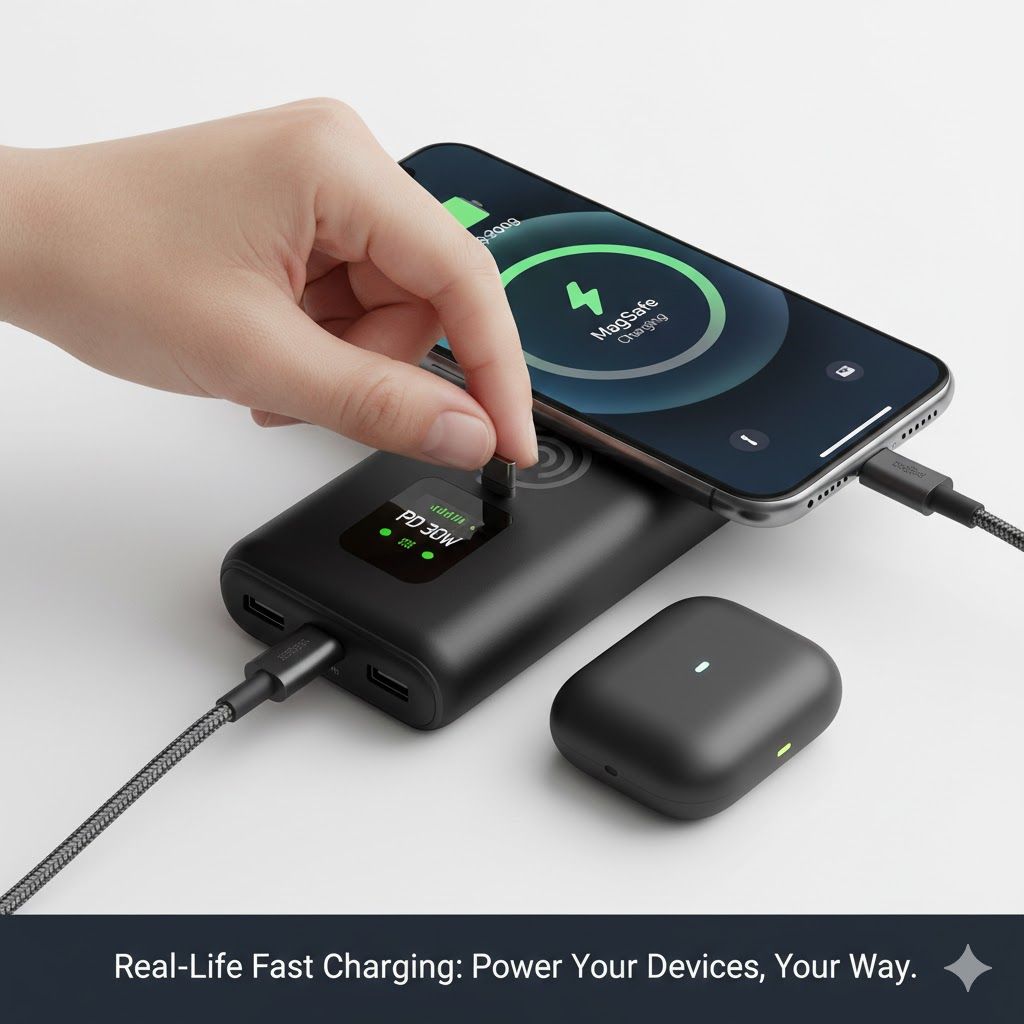
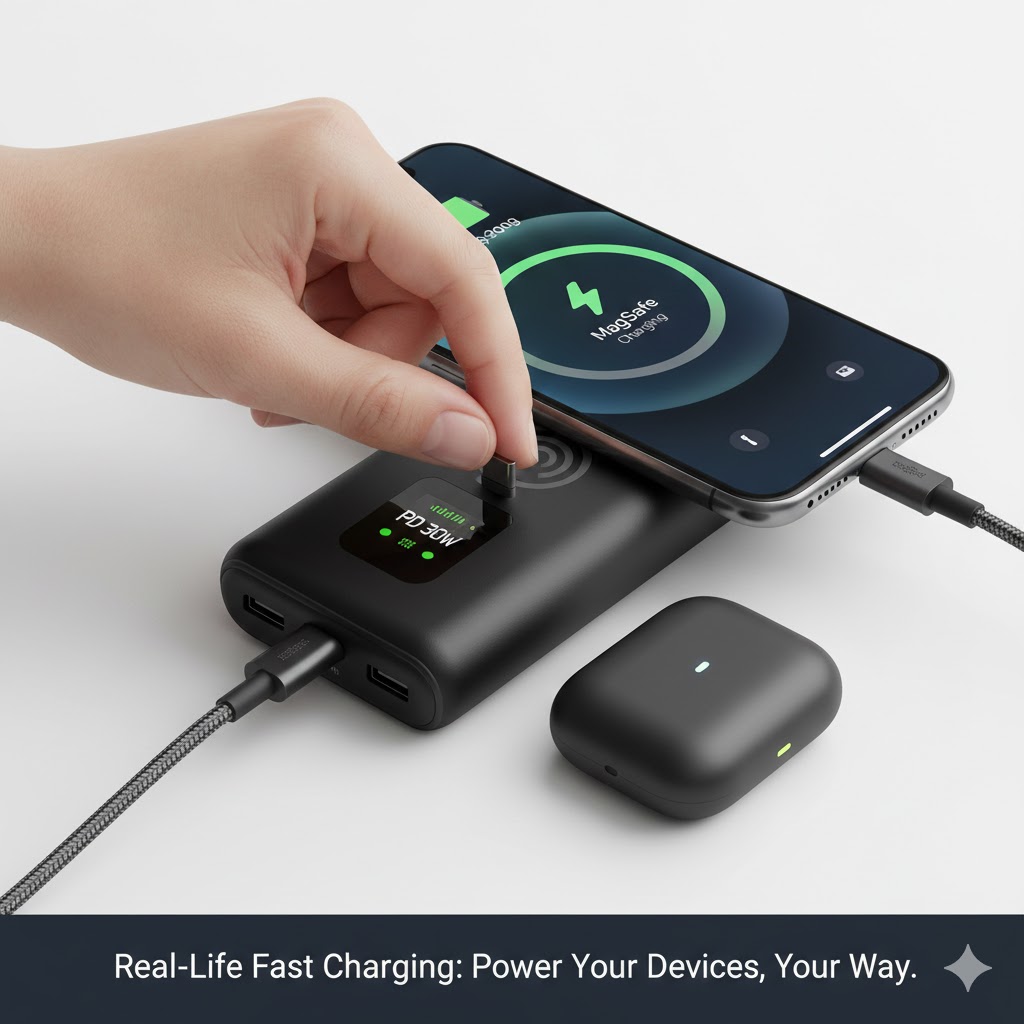
Modern premium power banks feature bi-directional fast charging. This means the USB-C port can output 65W to charge your laptop, but can also input 65W to recharge the power bank itself. Using a high-power wall charger to refill your power bank is crucial; recharging a 20,000mAh bank with an old 5W cube could take over 12 hours, whereas a 65W charger can do it in under 2 hours.
5. What to Consider When Choosing
Selecting a power bank is a balance between portability and power.
1. Capacity vs. Portability
-
5,000mAh: Ultra-light, lipstick size. Good for one partial charge.
-
10,000mAh: The "Goldilocks" size. Fits in a pocket, charges a phone 2-3 times.
-
20,000mAh+: Brick-sized. Heavy, but necessary for laptops or multi-day trips.
2. Multi-Device Requirements
If you travel with a phone, a watch, and earbuds, look for a bank with multiple output ports. However, check the "Total Output" spec. Some banks split the power (e.g., a 20W bank might drop to 10W per port when two devices are plugged in).
3. Safety Standards (Crucial)
Never compromise on safety for price. Poorly manufactured lithium batteries are fire hazards. Ensure your device has:
-
Over-current Protection
-
Temperature Control
-
UN38.3 Certification (Required for taking batteries on airplanes).
Note: A high-quality power bank manages heat effectively and protects the lifespan of your phone’s battery. Cheap, uncertified alternatives can cause voltage spikes that damage your device's motherboard.
6. Practical Tips for Power Bank Longevity
Just like a human body requires care to function optimally, your power bank requires "health maintenance" to extend its lifespan.
-
Avoid the Extremes: Do not leave your power bank in a hot car or freezing cold conditions. Extreme temperatures degrade lithium ion chemistry.
-
** The 20-80 Rule:** Try not to let the power bank drain to 0% frequently, and don't leave it at 100% for months.
-
Storage: If you aren't using it for a long time, store it at 50% charge. This keeps the ions stable.
-
Cable Care: Inspect your cables regularly. A frayed cable can cause short circuits at the port.
7. Conclusion: Making the Right Choice
The "best" power bank isn't the one with the biggest number on the box; it’s the one that fits your specific daily routine.
Tailored Recommendations
-
For the Power User (Laptops & Business):
If your workflow involves a laptop and heavy mobile usage, you need high capacity and high wattage. You need a device that can charge a MacBook and a phone simultaneously.
-
Recommendation: Shenzhen ESC-X019. With 20,000mAh+ capacity and 45W+ fast charging, it handles laptops effortlessly while offering multiple ports for peripherals.
-
-
For the Gamer & Daily Commuter:
If you need to keep your phone alive while gaming or taking calls, you don't want a heavy brick dangling from your device. You need ergonomics.
-
Recommendation: ESC-W017. Small, slim, and perfectly fitted for handheld use, allowing you to play and charge without the bulk.
-
-
For the Traveler (The All-in-One):
If you hate carrying cables and need to charge a smartwatch, phone, and tablet on the go.
-
Recommendation: ESC-X017. Features built-in retractable cables and a dedicated watch charging module. It is the ultimate "grab-and-go" solution.
-
Partner with Shenzhen ESC
Whether you are a consumer looking for safety and speed, or a business seeking OEM/ODM opportunities, Shenzhen ESC provides cutting-edge power solutions. We customize designs to meet specific market needs, ensuring that your power bank is not just a battery, but a premium accessory.
Shenzhen ESC is a leading power bank manufacturer with over 10 years of production experience. Specializing in fast-charging power banks and chargers, we feature an R&D team with listed company expertise and proprietary chip technology. Our high-power products deliver multi-brand fast charging compatibility without overheating.
Certified for quality and safety, our products are exported to dozens of countries worldwide.
Interested in OEM/ODM partnerships? Contact us today!
WhatsApp/WeChat: +86 18576695768
Email: amy@escpowerbank.com
YouTube: https://www.youtube.com/@escpowerbank
We look forward to powering your business!Partner with a leader in fast-charging technology. Powering your business, wherever you go.