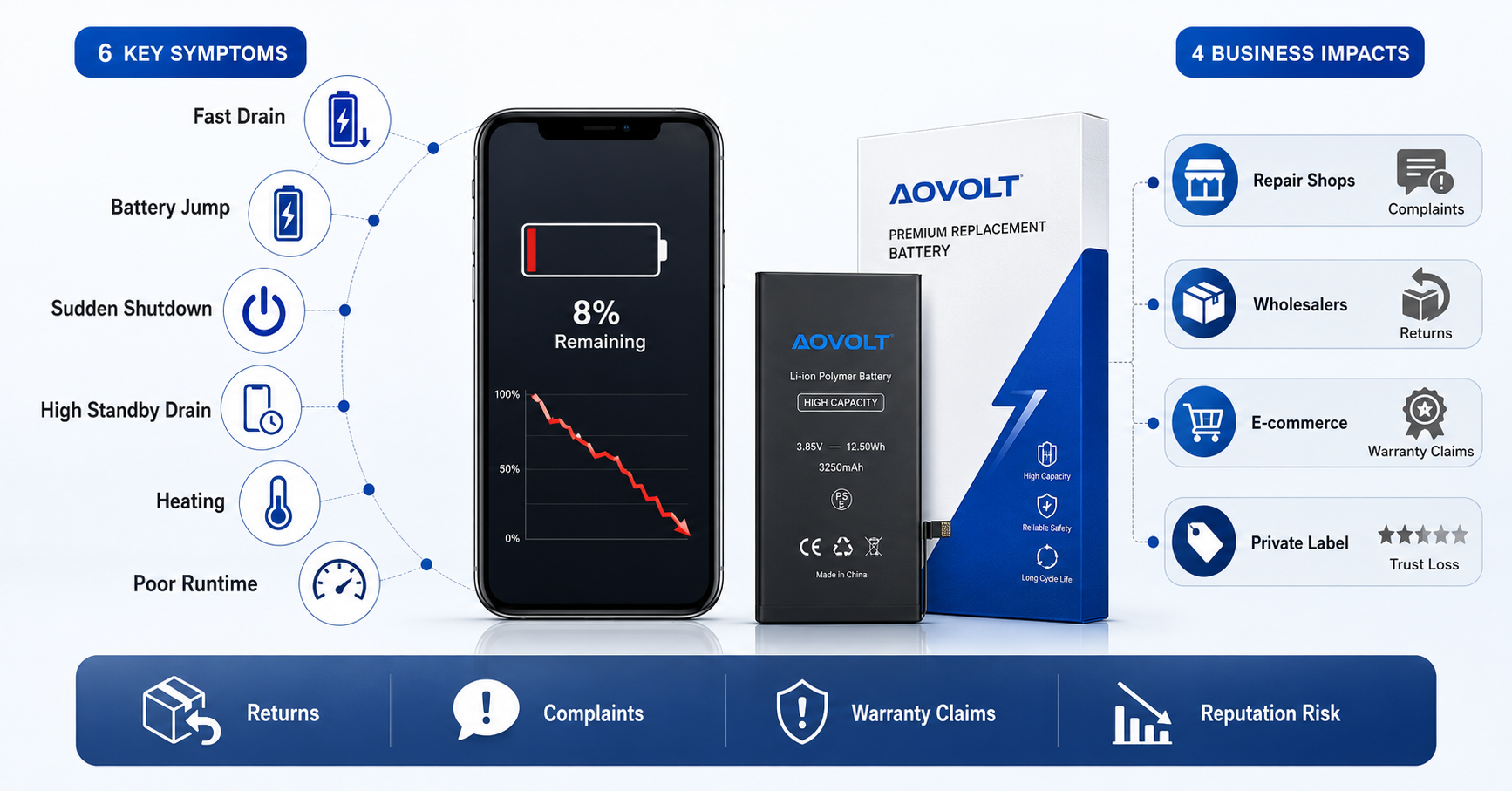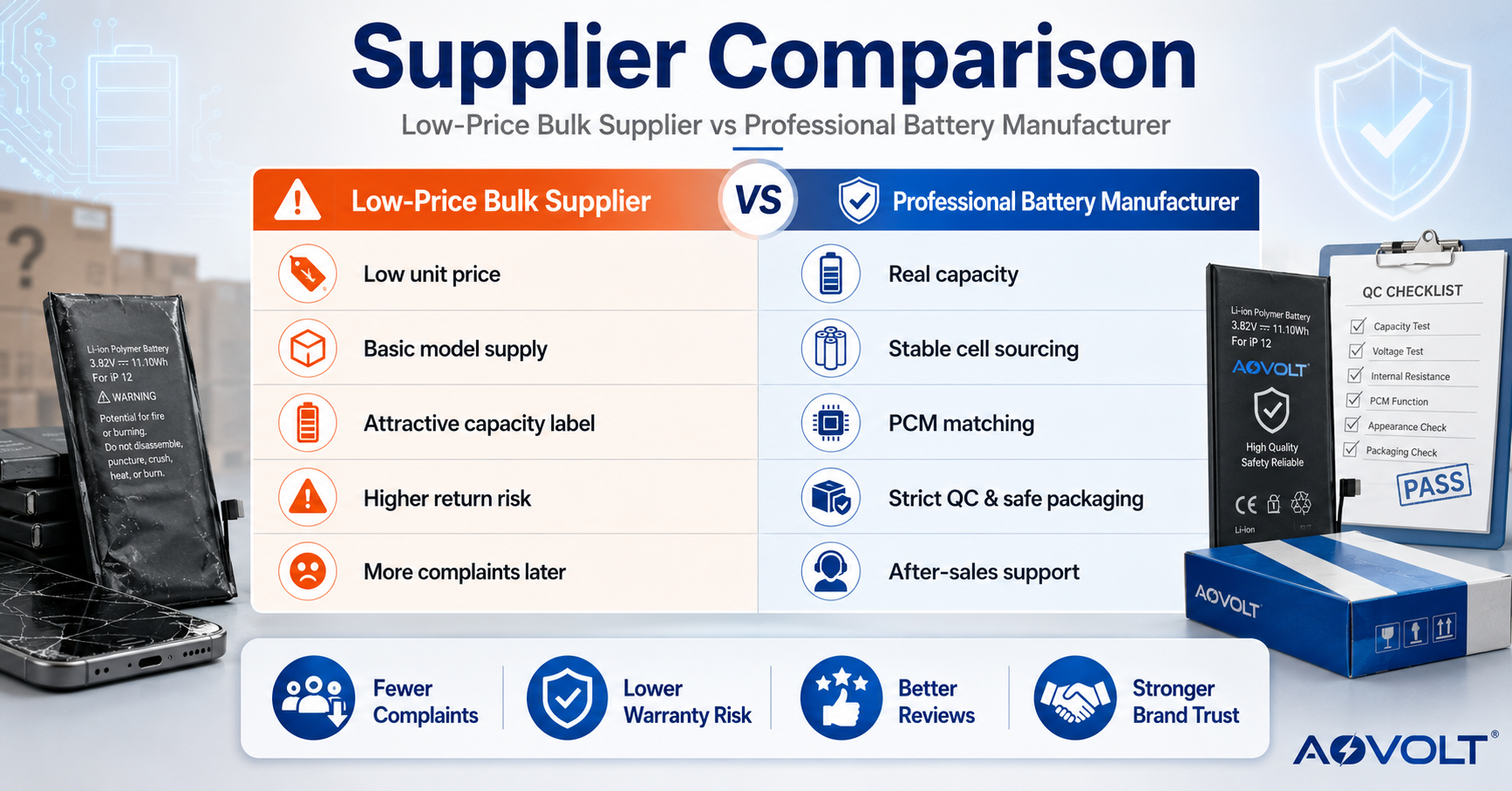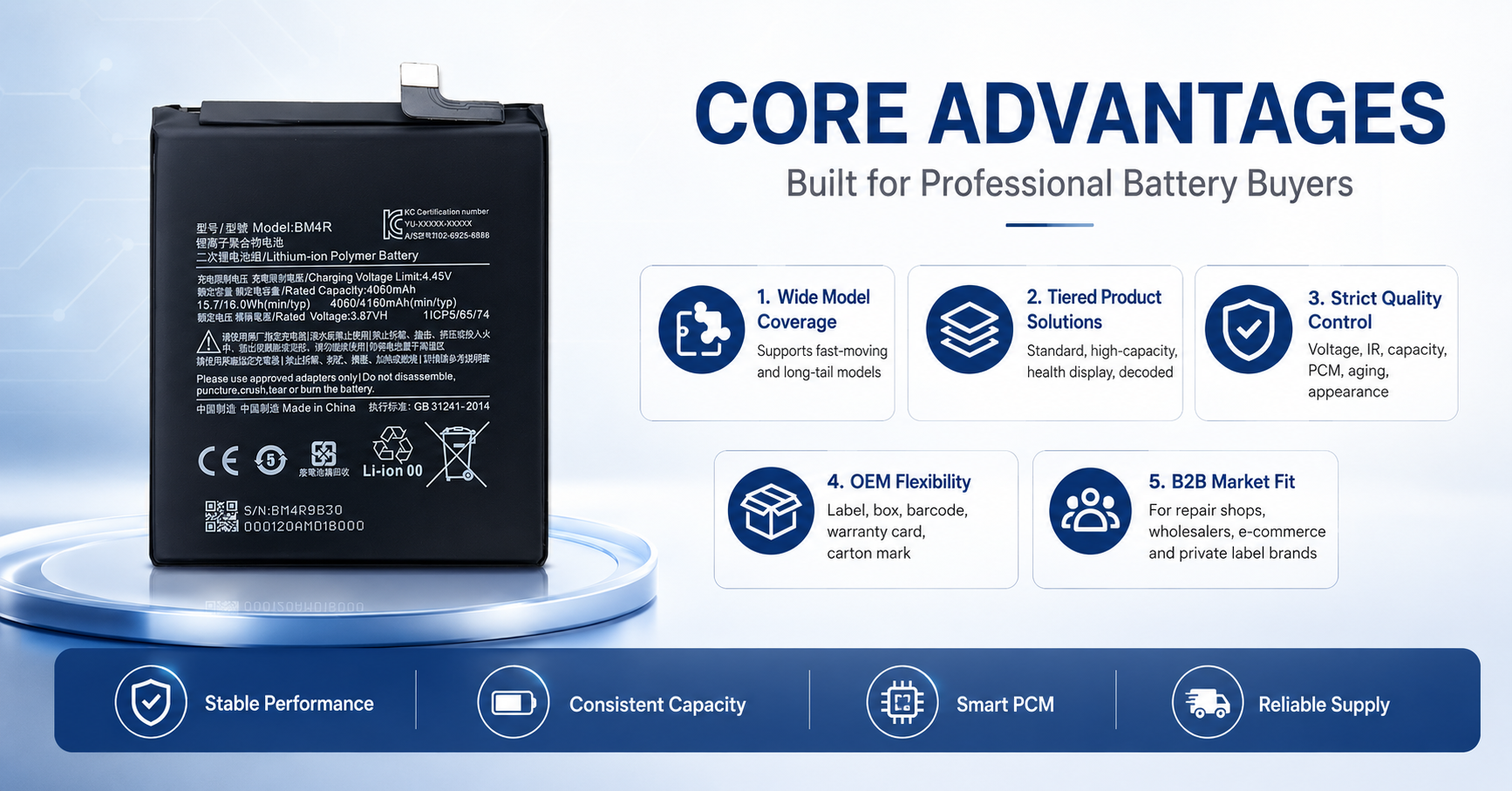

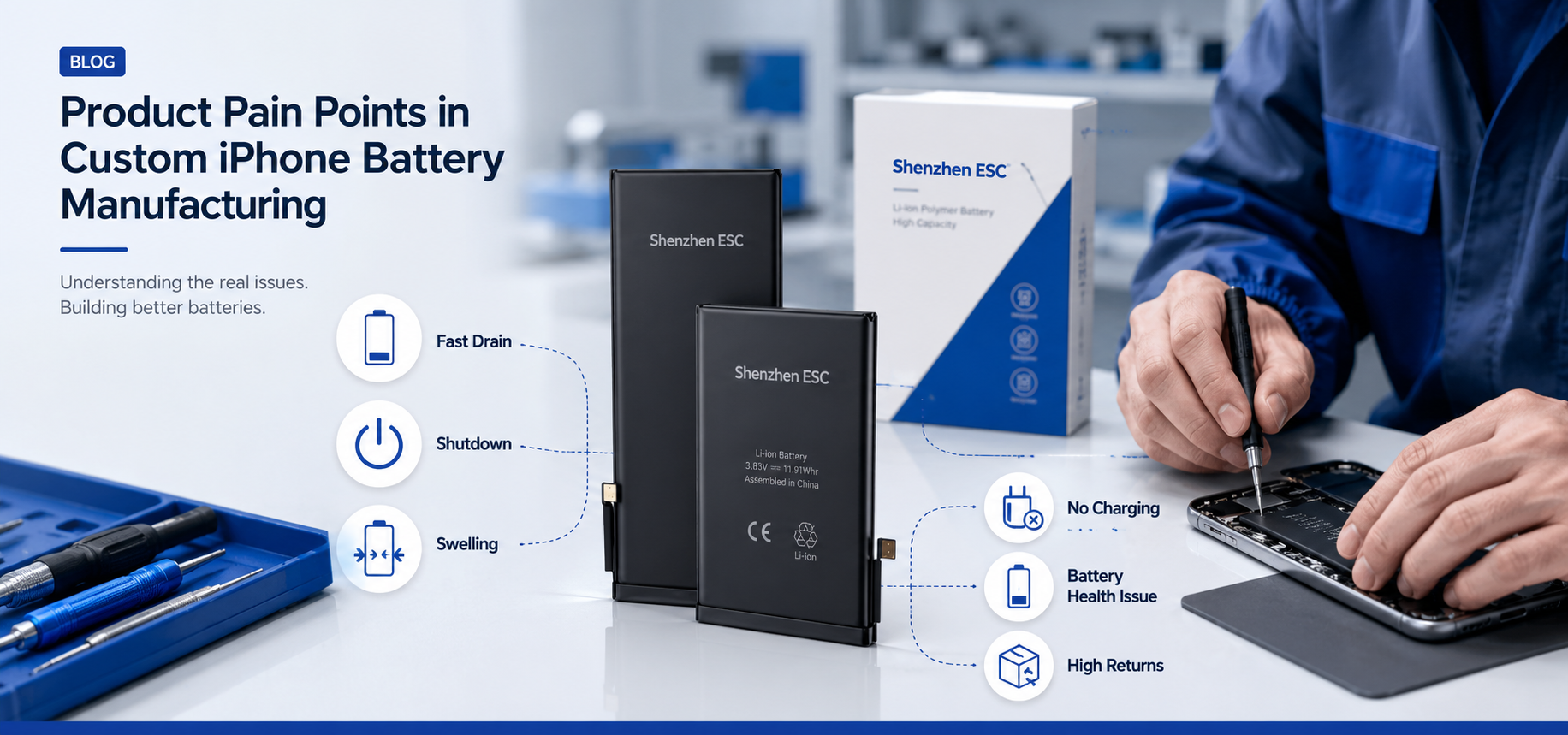
Choosing a custom iPhone battery manufacturer involves more than logo printing or packaging design. Repair shops, wholesalers, private label brands and OEM buyers often face hidden technical challenges that can compromise customer experience, batch consistency and brand reputation. Frequent problems include fast-drain, sudden shutdown, battery swelling, incorrect Battery Health reporting, and connector misalignment. Even when samples seem functional, batch variability in cell capacity, internal resistance, PCM protection calibration, and flex cable design can lead to widespread operational issues. These risks create repeated complaints for repair shops, warranty disputes for wholesalers, and market reputation damage for private label brands.
Battery Structure and Core Principles Affecting Performance
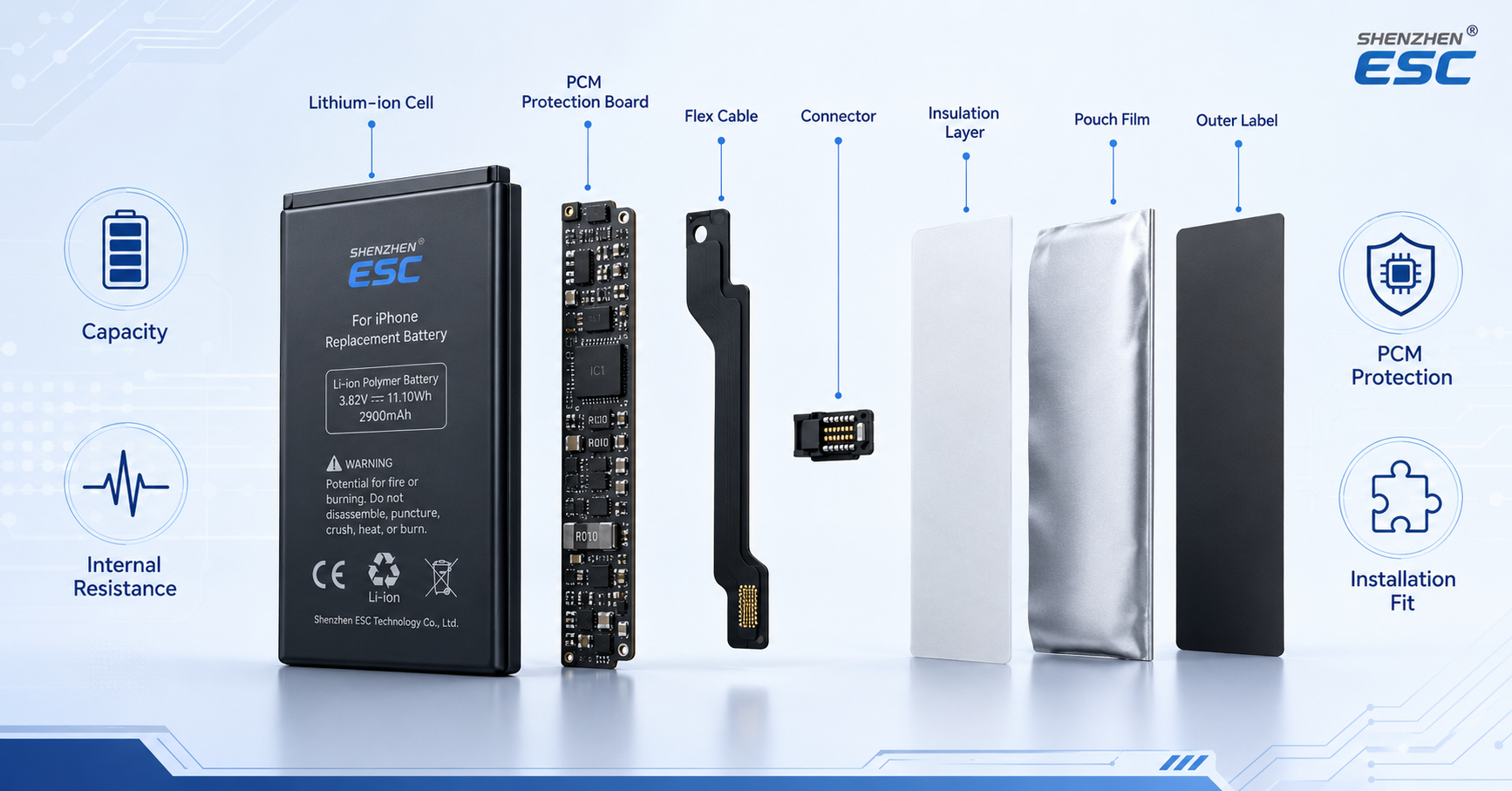
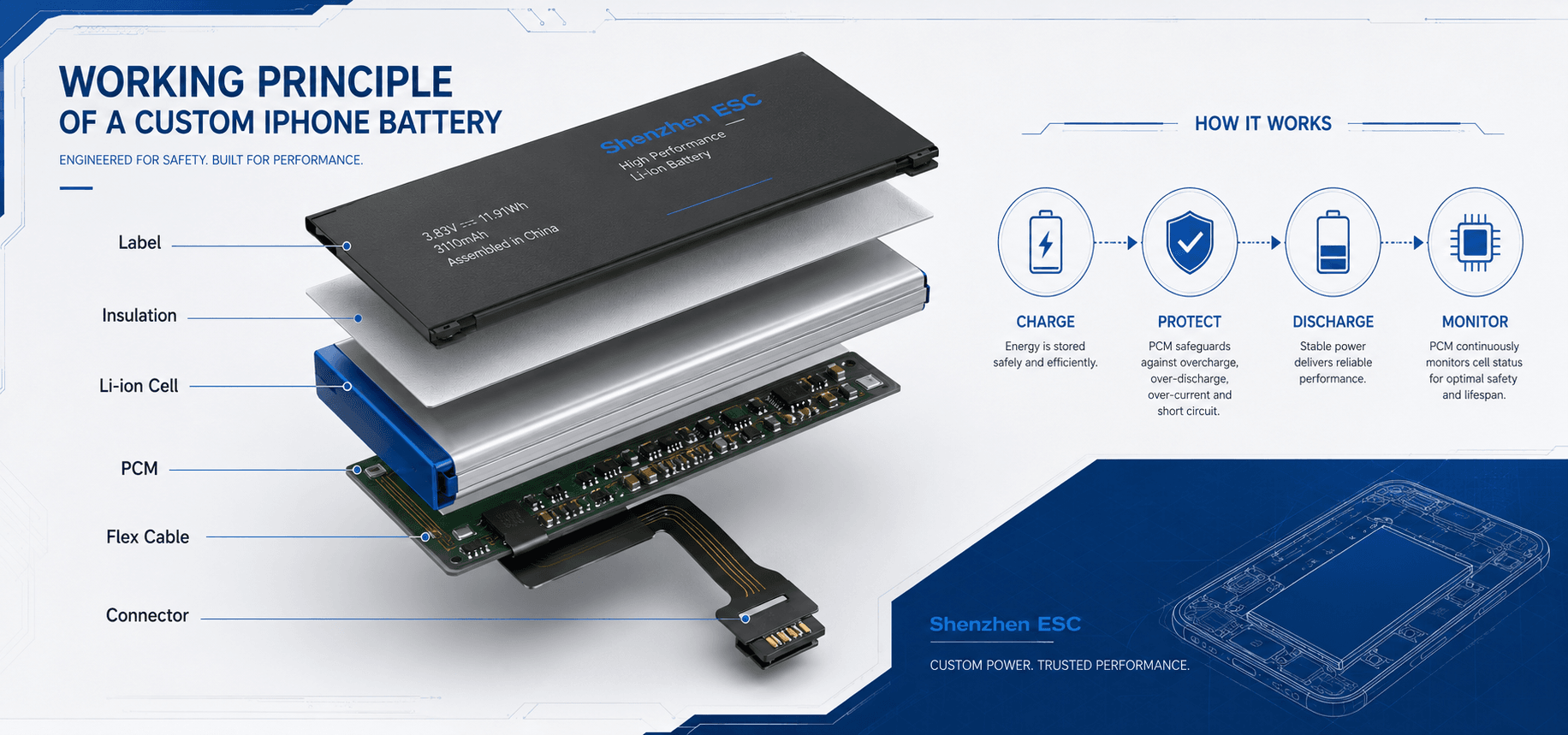
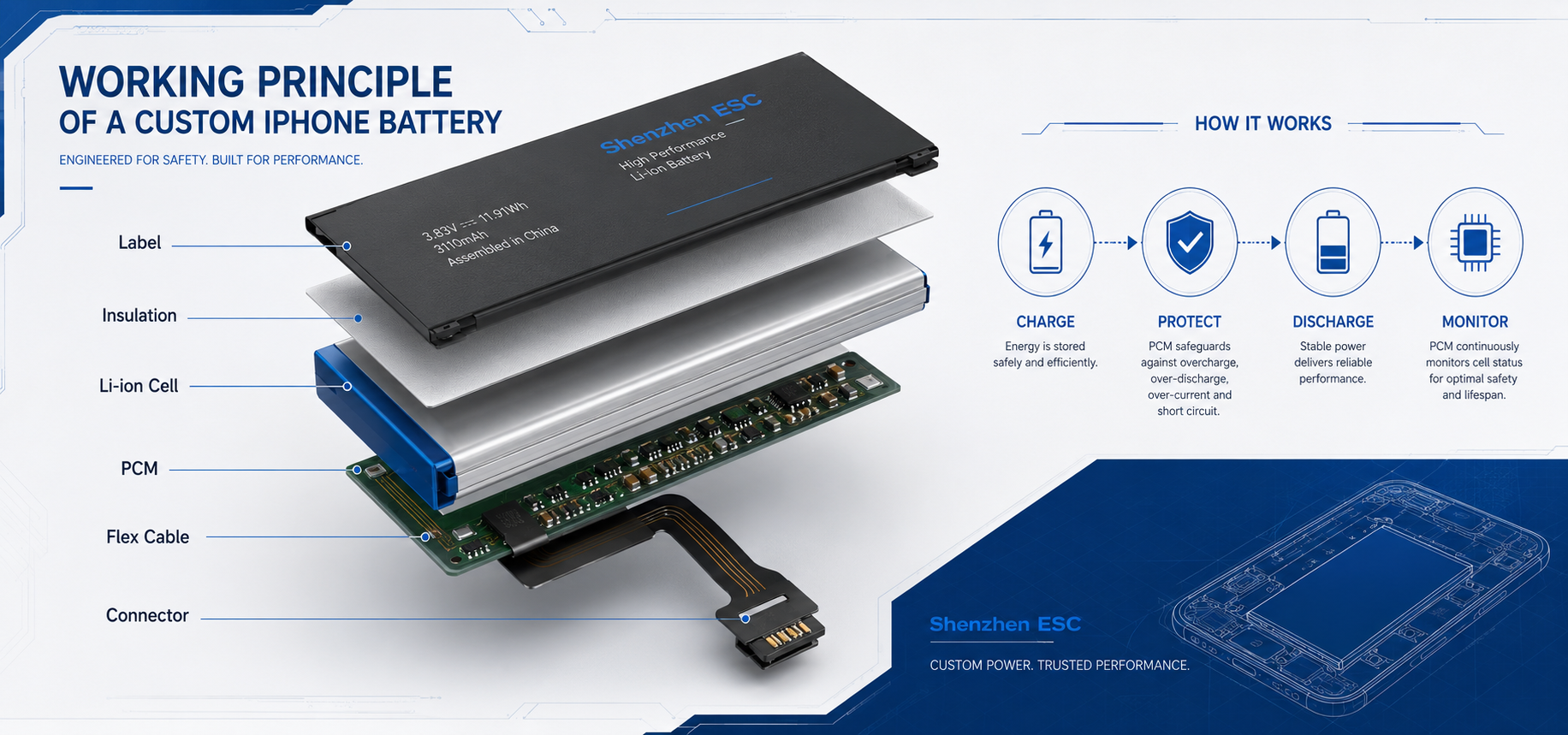
An iPhone replacement battery contains several critical components: lithium-ion cells, protection circuit modules (PCM), flex cables, connectors, adhesive structure, and packaging. Each element influences performance. The cell determines energy storage and discharge stability. PCM boards govern overcharge, over-discharge, over-current, and temperature response. Misalignment of flex cables or connectors can result in installation difficulty or malfunction. Adhesive placement and structural design affect mechanical stress tolerance, swelling, and long-term reliability. Packaging must protect components during shipping and storage. Variations in these technical aspects, even when subtle, can trigger customer-visible performance differences and post-installation issues.
Common OEM vs Custom Challenges
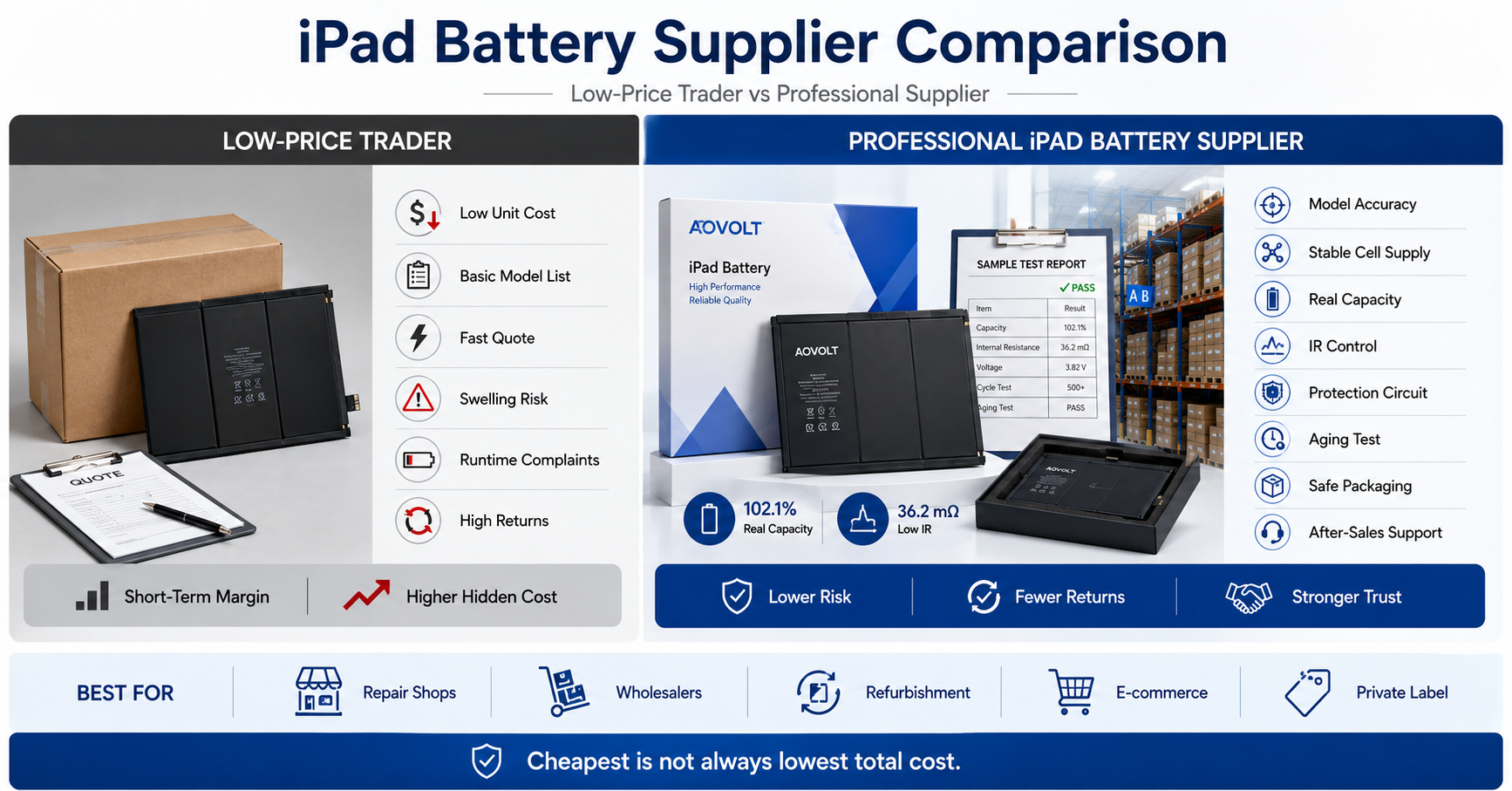
Standard suppliers may offer broad model coverage with minimal batch testing, leading to unpredictable performance. Custom manufacturers promise tailored solutions, but buyers must be aware of potential pitfalls: over-promised capacity, inconsistent PCM tuning, insufficient stress testing, and unclear support for decoded or Battery Health display features. Repair shops and private label brands need to scrutinize each model for installation fit, battery percentage behavior, discharge stability, and compatibility across multiple device iterations. Bulk orders amplify the consequences of these discrepancies, magnifying after-sales risk and impacting business profitability.
Application Scenarios and Buyer Considerations
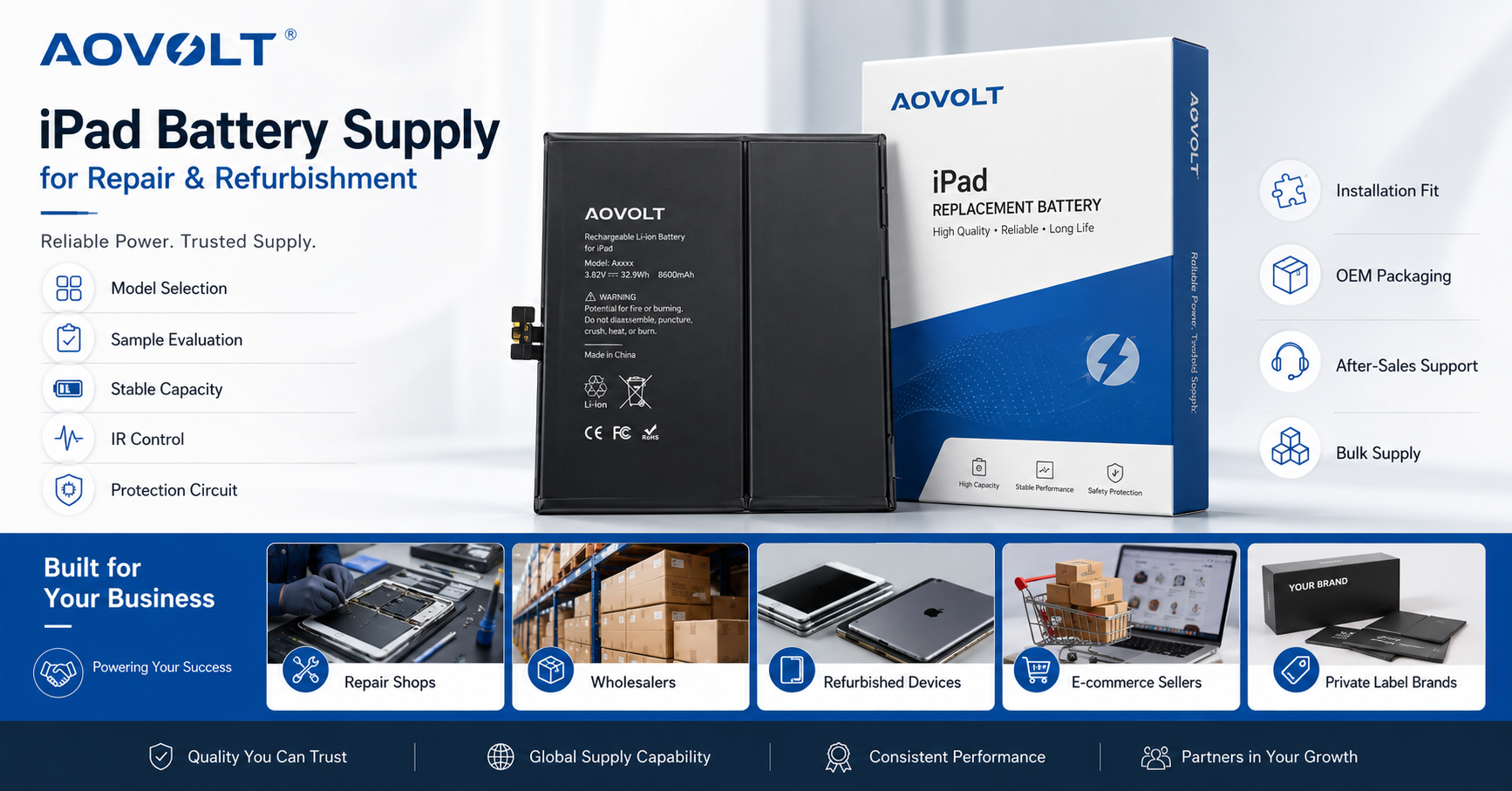
Repair shops require batteries that reduce post-repair complaints and avoid customer-facing warning messages. Wholesalers need consistent batches to avoid warranty disputes. Private label brands prioritize packaging integrity and predictable performance to protect market reputation. OEM buyers must ensure the supplier can support multiple series with clear capacity tiers, optional decoded or Battery Health display features, and technical documentation that enables staff training and quality control.
Selection Cues and Critical Checks
Before selecting a custom iPhone battery manufacturer, buyers should evaluate: cell capacity stability, internal resistance uniformity, PCM protection accuracy, installation fit, flex cable alignment, Battery Health display consistency, decoded solution reliability, batch testing methods, and packaging integrity. Confirming these factors reduces operational risk and safeguards downstream customer satisfaction.
FAQ
Q: What constitutes a custom iPhone battery manufacturer?
A: A manufacturer providing tailored capacity options, PCM configurations, decoded or Battery Health display solutions, OEM or private label packaging, and bulk batch support.
Q: How can OEM buyers detect potential batch issues?
A: Request multiple sample tests, monitor discharge curves, check internal resistance consistency, and inspect installation fit.
Q: Why is PCM protection critical?
A: It governs overcharge, over-discharge, over-current, and temperature response; mismatched PCM can cause rapid discharge, heating, shutdowns, or battery percentage jumps.
Q: Are decoded and Battery Health display solutions necessary for all buyers?
A: Not always. Their value depends on repair professionalism, post-repair customer experience, and brand positioning.
Q: How should private label brands approach customization?
A: Evaluate supplier capability for packaging, labeling, batch control, capacity stability, and optional technical features to protect brand trust.
Conclusion
Selecting a custom iPhone battery manufacturer is a technical and operational challenge. Buyers must consider cell stability, PCM protection, installation precision, decoded and Battery Health display functionality, batch testing, and packaging integrity. Ignoring these elements can lead to fast-drain complaints, warranty disputes, installation failures, and brand reputation damage. Careful evaluation mitigates risks and lays the foundation for stable B2B battery supply lines.