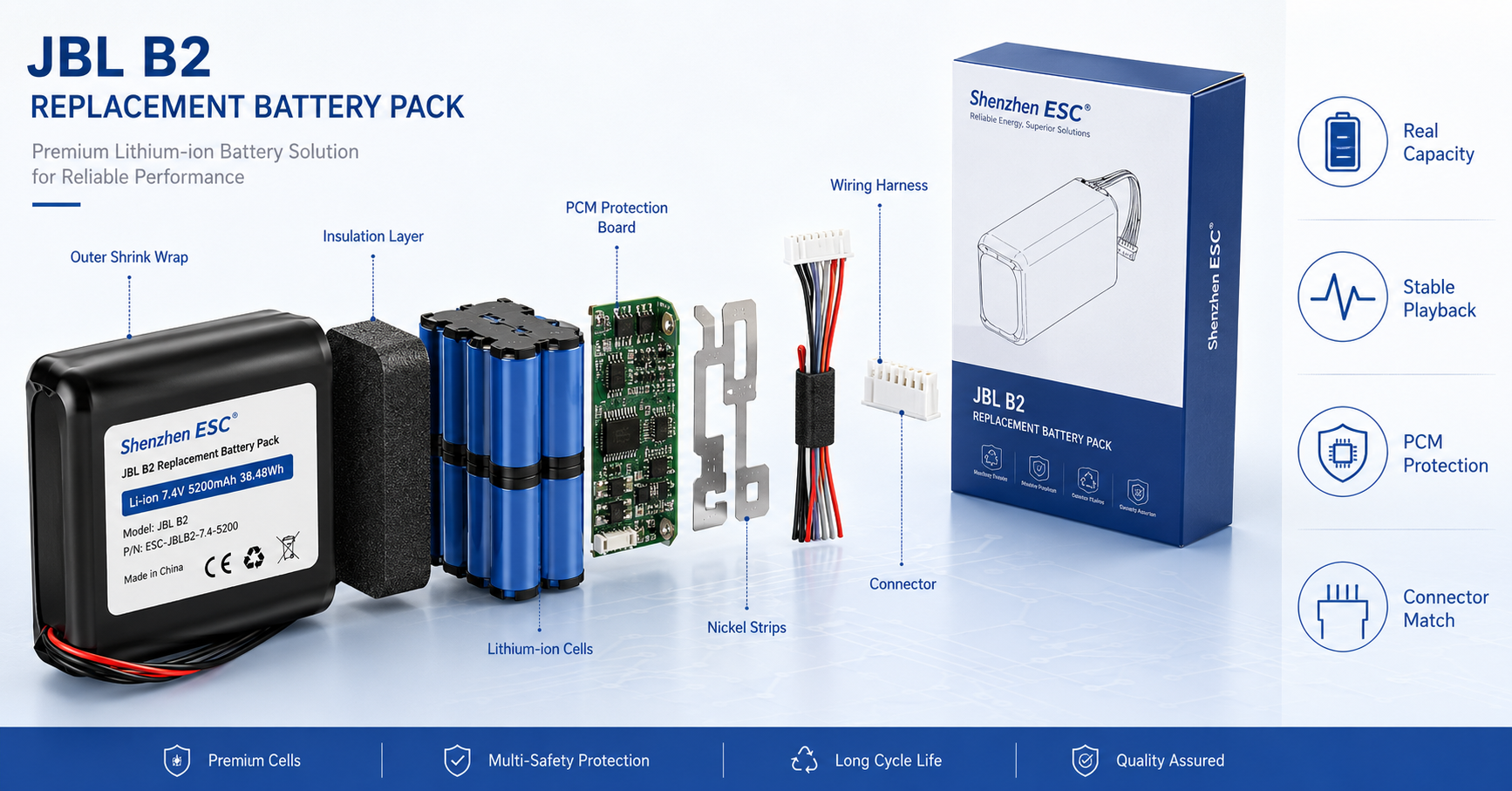

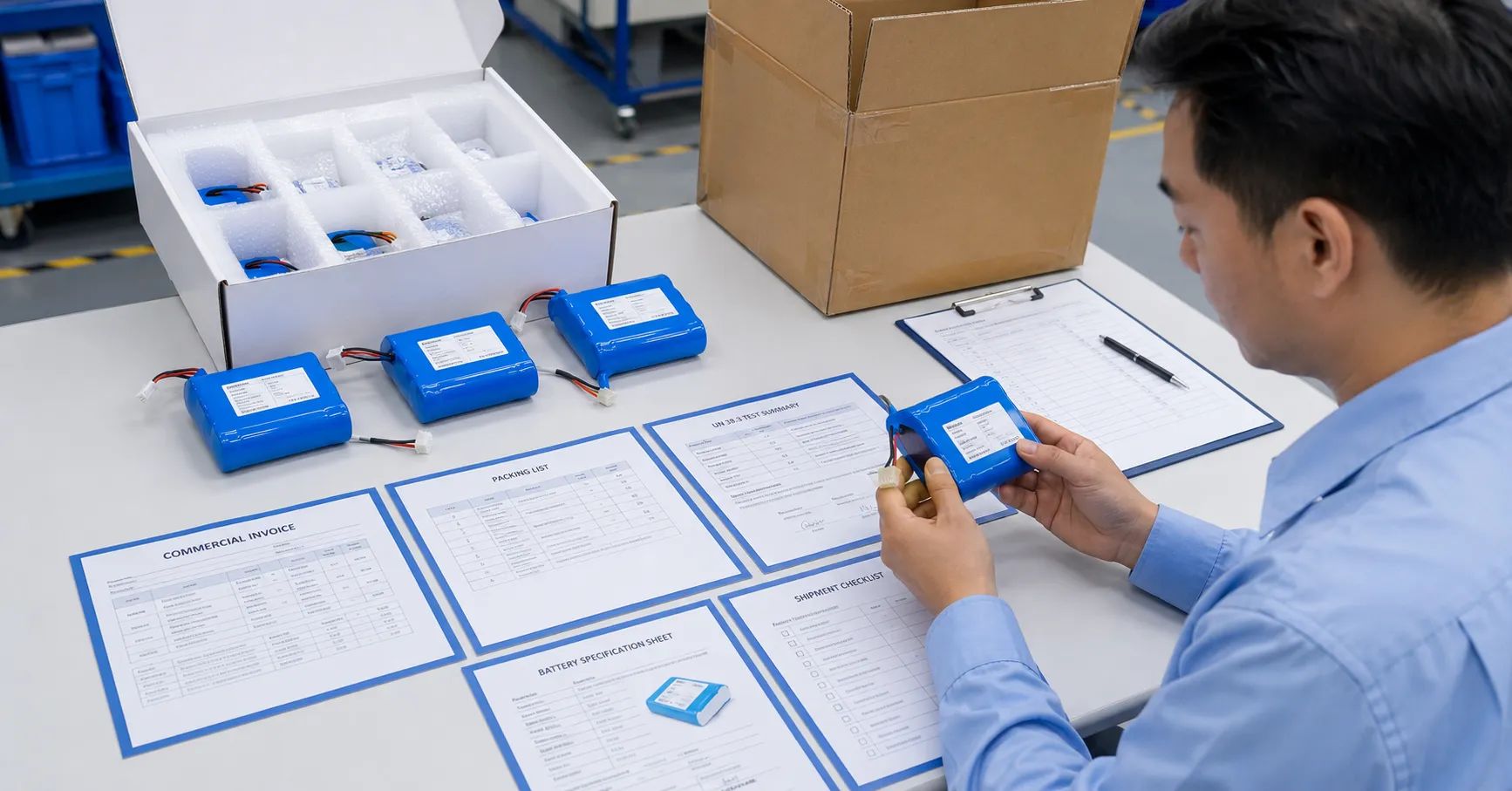
JBL replacement battery shipping documents should prove that the product being shipped matches the battery type, model, configuration, packaging and transport route reviewed by the shipper and carrier. A folder containing certificates is not sufficient when those files cannot be connected to the physical battery and actual consignment.
Importers, wholesalers, repair-parts distributors, refurbishers and private-label buyers should complete the document review before goods are packed for dispatch. Classification, packaging, marking, declaration, account approval and carrier acceptance can differ according to battery chemistry, watt-hour rating, condition, quantity, transport mode, origin, destination and whether batteries are shipped alone or with equipment.
Why Speaker Battery Shipments Need Model-Level Verification
Portable-speaker replacement batteries may look commercially similar while differing in:
- Battery model and intended speaker
- Cell configuration
- Nominal voltage
- Rated capacity and watt-hour rating
- Pack structure and protection circuit
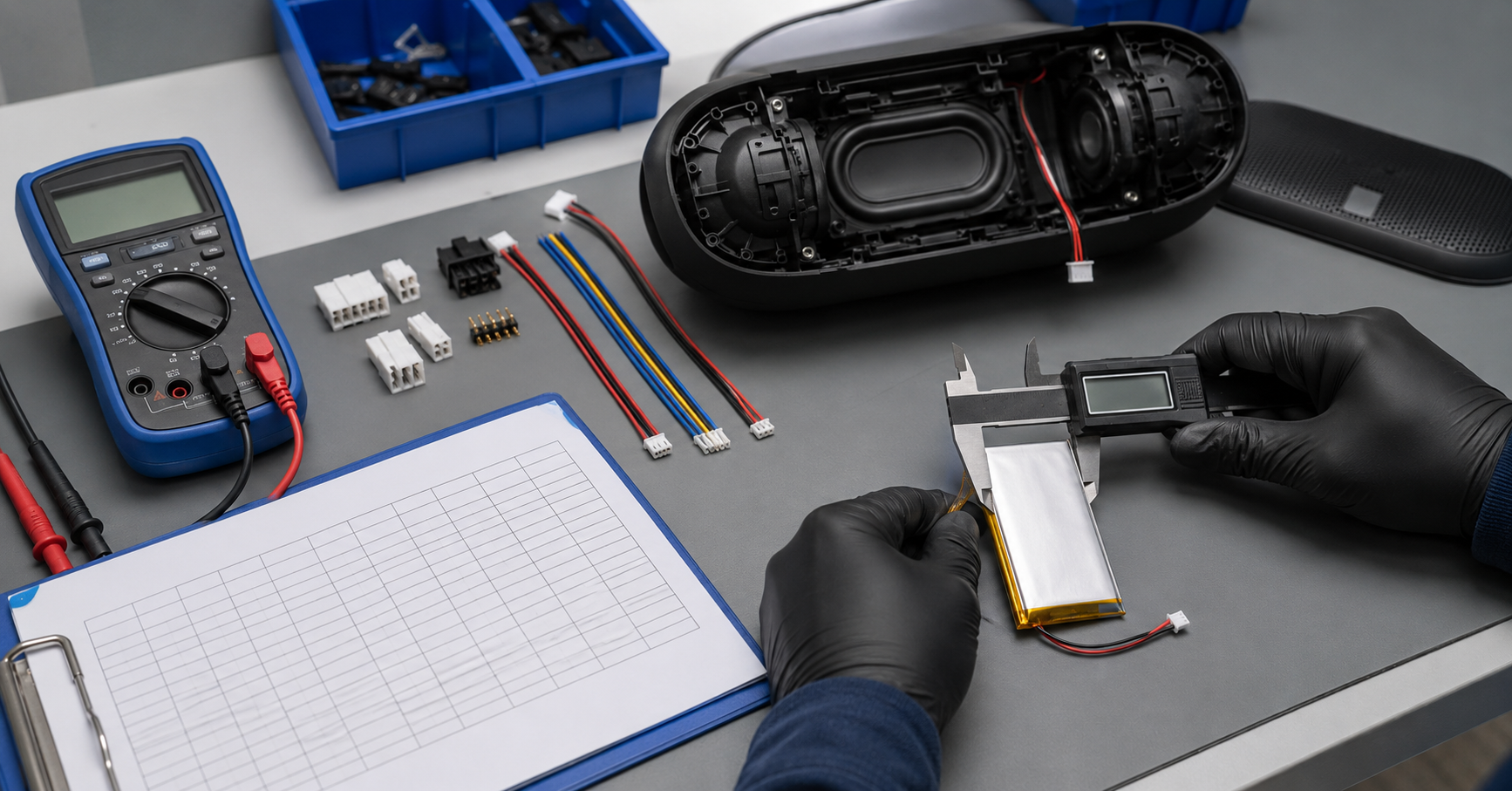
- Connector, polarity and cable length
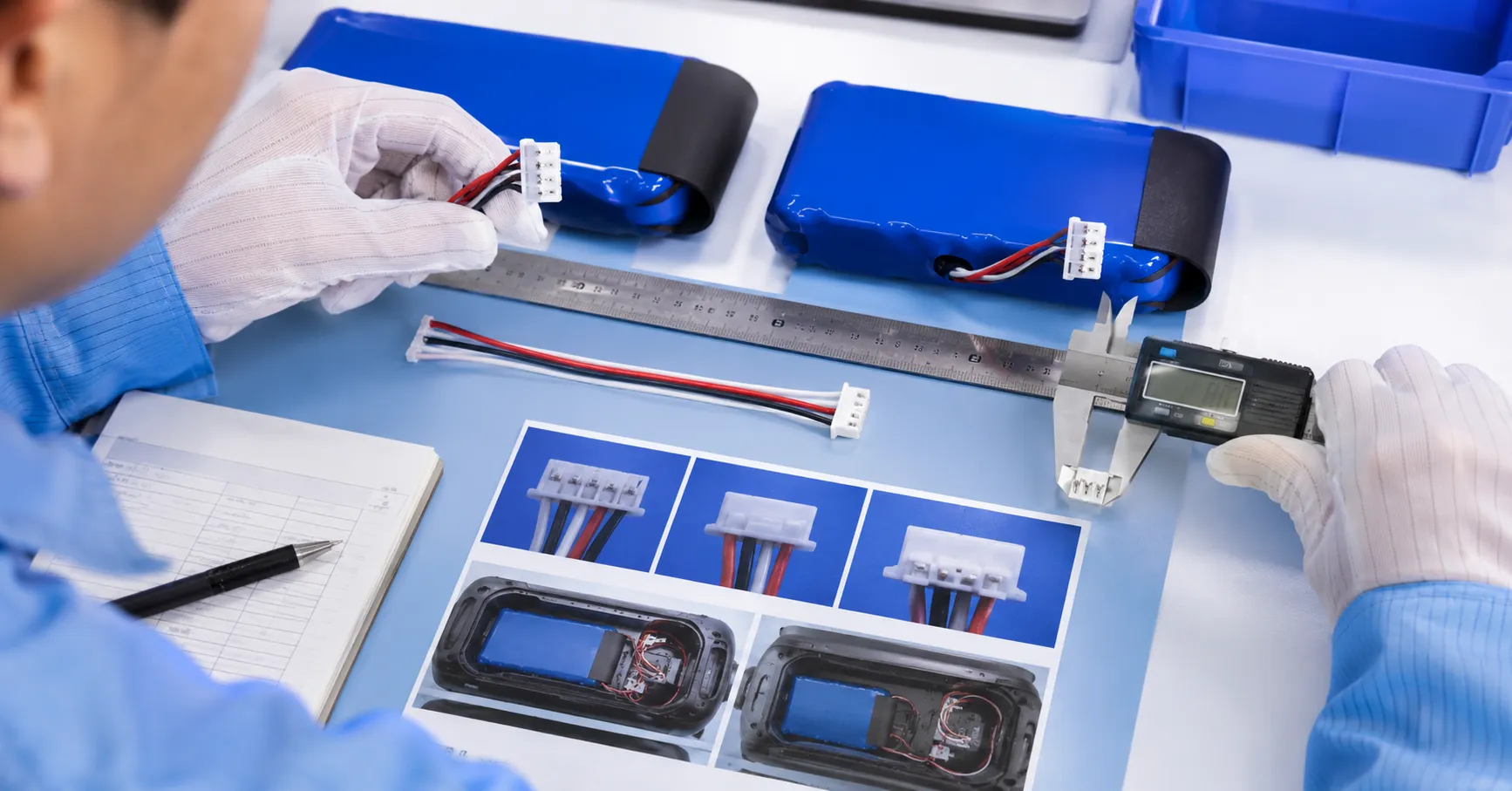
- Physical dimensions
- Manufacturer or production source
- UN 38.3 test evidence
A document for one battery type should not be assumed to cover another battery because both are sold for Bluetooth speakers. ESC’s JBL replacement battery compatibility guide explains how buyers can connect the speaker model, battery reference, voltage, dimensions, connector and cable configuration before sample approval.
Transport review begins with the same identity chain. If the supplied battery differs from the tested battery type, the existing test evidence may require technical review or replacement.
Classify the Actual Shipping Configuration
The logistics team should determine what is physically inside the package. Common configurations include:
- Replacement batteries shipped without speakers
- Batteries packed in the same outer package as compatible equipment
- Batteries installed inside equipment
- Mixed battery models in one consignment
- Samples shipped separately from the bulk order
- Returned, damaged, defective or waste batteries
These configurations are not interchangeable. Standalone lithium-ion replacement batteries and batteries packed with or contained in equipment may use different transport entries, packing instructions and carrier conditions.
The IATA 2026 Lithium Battery Guidance Document explains the distinction between batteries shipped alone, packed with equipment and contained in equipment. The shipper must use the current regulations and confirm the exact classification instead of selecting a UN number from an old invoice.
Do not move a damaged, defective, recalled or waste battery through a routine replacement-parts workflow. Its condition can change whether and how a carrier will accept it.
Start with a Controlled Battery Specification
The transport file should begin with a model-specific product specification. Recommended fields include:
- Battery manufacturer or responsible supplier
- Battery model
- Cell or battery designation
- Chemistry
- Nominal voltage
- Rated capacity
- Watt-hour rating
- Cell configuration
- Physical dimensions and mass
- Connector and cable configuration
- Protection-circuit description
- Compatible speaker references
- Specification revision and approval date
Calculate or verify watt-hours from approved product information rather than copying a value from a different model. If the label, specification and test summary show conflicting identities or ratings, stop the review and resolve the discrepancy before shipment.
For a model-level example, ESC’s JBL Charge 5 replacement battery page shows how a specific replacement product can be connected to its intended repair and wholesale application. Final transport evidence must still match the battery actually supplied.
Verify the UN 38.3 Test Summary
The UN Manual of Tests and Criteria includes the lithium-cell and battery testing provisions in subsection 38.3. The current UNECE Manual of Tests and Criteria publication page should be used to locate the applicable edition and amendments.
PHMSA’s official Lithium Battery Test Summaries resource explains that lithium batteries must undergo the applicable design tests and provides guidance concerning the test-summary requirement.
A test-summary review should check:
- Name of the cell, battery or product manufacturer
- Manufacturer contact information
- Test laboratory information
- Unique test-report identification
- Date of the test report
- Description of the tested cell or battery
- Model numbers or product identifiers
- Applicable test results
- Reference to the applicable test requirements
- Signatory information
The reviewer should compare these details with the battery label, specification, approved sample and shipment. A test summary that exists but identifies a different battery type does not close the document review.
Test Summary vs. Full Test Report
A test summary and a laboratory test report are related but different documents. Buyers should request the document required for the transaction and understand what the carrier, forwarder, customer or authority needs.
Do not rename a specification sheet, SDS or supplier declaration as a UN 38.3 test summary. File names are not proof of document scope.
Understand the Role of the SDS
An SDS can provide information about product hazards, composition categories, handling, storage and emergency measures. It does not automatically establish transport classification, prove UN 38.3 testing or replace shipment-specific declarations.
During review, confirm:
- The SDS identifies the relevant battery or product family.
- The supplier and emergency information are current.
- The document revision is controlled.
- The transport section is consistent with the approved classification.
- The battery information does not conflict with the label or specification.
Whether an SDS is requested can depend on the customer, carrier, forwarder, warehouse or destination. Treat it as one part of the file, not as a universal substitute for every other document.
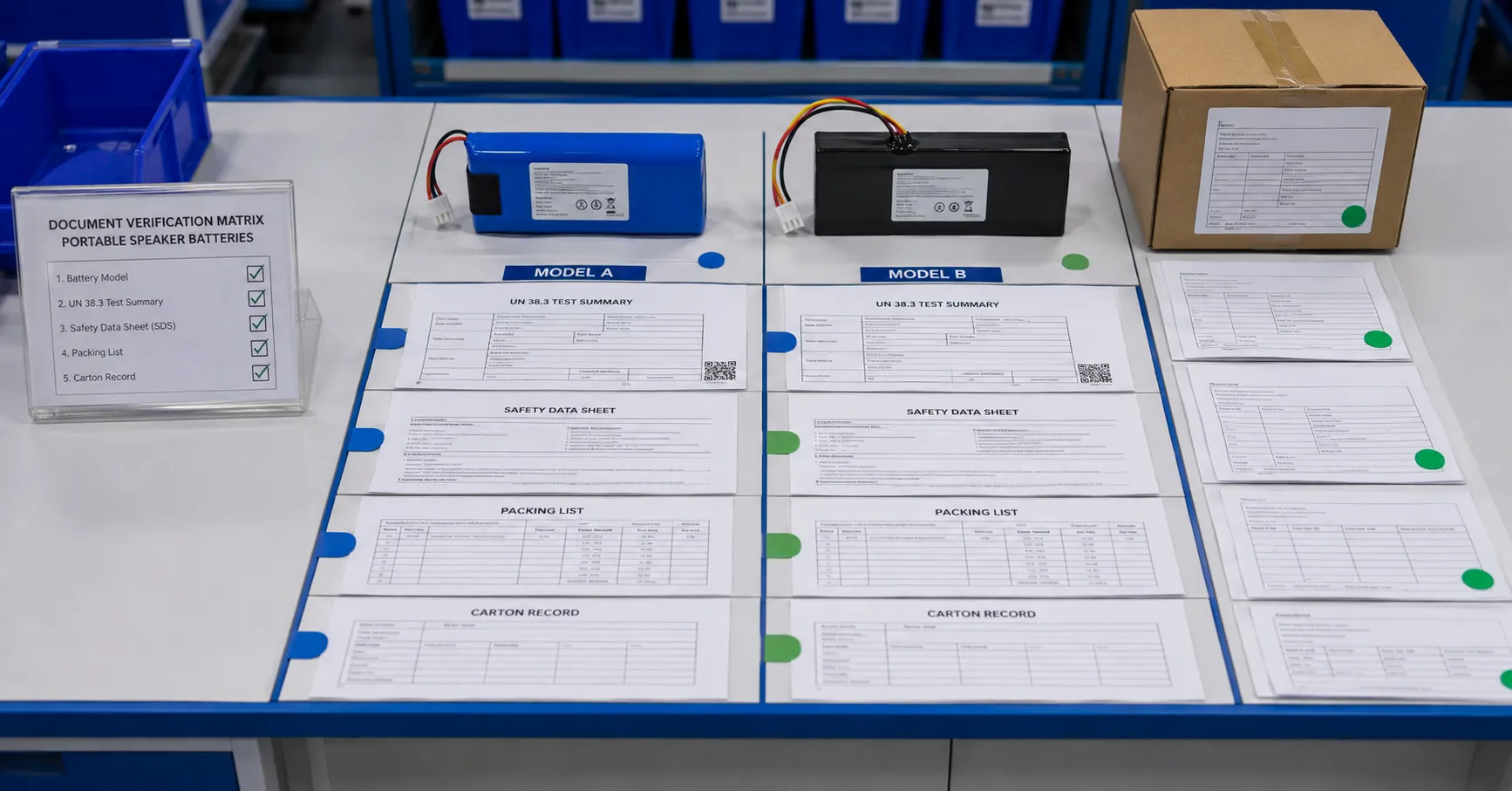
Build a Model-to-Document Verification Matrix
Mixed-model orders create a higher risk of attaching one document set to all batteries. Use a matrix that shows which evidence applies to each model.
| Verification field | Battery model A | Battery model B | Review result |
|---|---|---|---|
| Supplier model | Recorded identity | Recorded identity | Match purchase order |
| Voltage and Wh | Approved values | Approved values | Match labels and specifications |
| UN 38.3 evidence | Report and summary reference | Report and summary reference | Confirm model scope |
| SDS | Revision reference | Revision reference | Check identity and consistency |
| Shipping configuration | Alone, packed with or contained | Alone, packed with or contained | Confirm actual package |
| Package and carton | Approved packing reference | Approved packing reference | Inspect before tender |
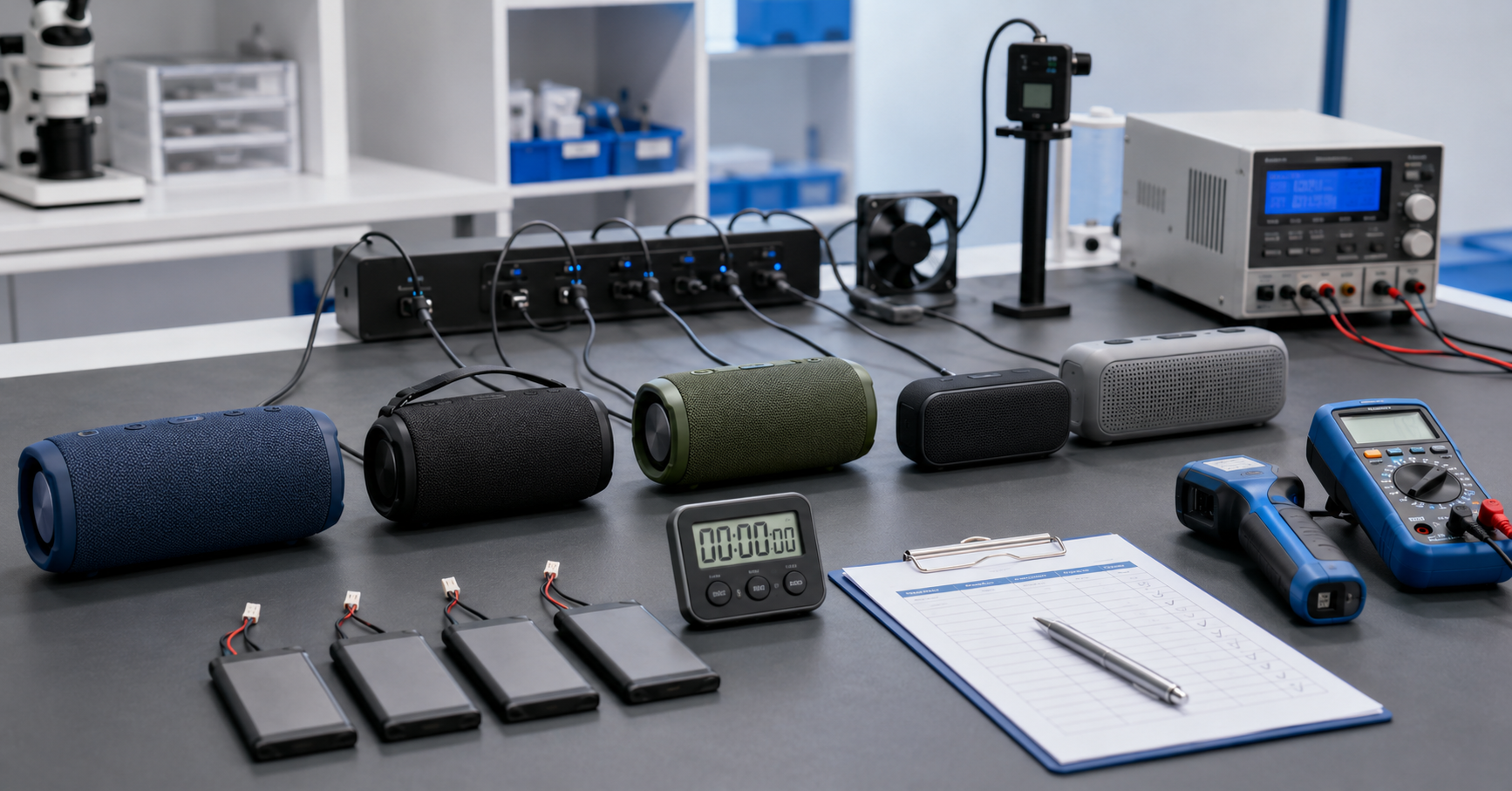
ESC’s JBL battery runtime testing guide covers performance-test records for bulk quality control. Runtime evidence can support product approval, but it does not replace transport testing or shipment documentation.
Check Packaging Evidence Before Dispatch
The physical shipment must match the configuration used during the logistics review. Packaging records may include:
- Approved packing instruction or work instruction
- Individual inner-packaging method
- Terminal and connector protection
- Prevention of movement and accidental activation
- Separation from conductive material
- Strong outer packaging specification
- Quantity and net-weight controls
- Package test evidence where applicable
- Carton photographs
- Required marks and labels
- Final packing-inspection record
Loose connectors, exposed terminals and uncontrolled movement can create short-circuit or damage risks. The packaging should also prevent model mixing and preserve label traceability.
FedEx’s official battery-shipping guidance emphasizes correct identification, classification, packaging, marking, labeling and documentation. It also notes that carrier restrictions and operator variations can apply. Other carriers may use different account-approval and acceptance conditions.
Determine Whether a Dangerous Goods Declaration Is Required
A shipper’s declaration or other dangerous-goods documentation may be required depending on classification, packing instruction, section, quantity, transport mode and carrier conditions. It should be prepared only by appropriately trained and authorized personnel where required.
When applicable, review:
- Shipper and consignee information
- Air waybill or shipment reference
- UN number and proper shipping name
- Hazard class
- Quantity and packaging type
- Applicable packing instruction
- Required handling information
- Signatory, training and date information
Do not copy a previous declaration without confirming the current goods, quantity, route, carrier and regulatory edition.
Keep Commercial and Transport Documents Consistent
Lithium battery shipping paperwork often includes commercial documents as well as dangerous-goods records. The complete file may contain:
- Commercial invoice
- Packing list
- Purchase order
- Product specification
- UN 38.3 test summary
- SDS when requested
- Dangerous-goods declaration when applicable
- Air waybill or transport document
- Carrier approval or booking confirmation
- Packaging and final-inspection records
Model descriptions, quantities, weights and shipment configuration should not contradict each other. A commercial invoice that describes “speaker parts” while the dangerous-goods review identifies standalone batteries creates an avoidable discrepancy.
Buyers can also review ESC’s laptop battery shipping-documents checklist for another replacement-battery document workflow. The exact transport decision must still be made for the current JBL battery models and shipment.
Confirm Carrier and Route Acceptance
Regulatory compliance does not automatically guarantee that a specific carrier, service or route will accept the shipment. Before production finishes, confirm:
- Carrier and service
- Transport mode
- Origin, transit points and destination
- Battery shipping configuration
- Account or dangerous-goods approval
- Quantity and package limits
- Required documents and data submission
- Booking lead time
- Operator variations
- Restrictions on damaged, defective or recalled batteries
Obtain confirmation from the selected carrier or qualified logistics provider. A forwarder’s previous acceptance of another battery does not prove acceptance of the current order.
Audit the File Before Goods Leave the Supplier
Use a pre-dispatch gate with clear responsibilities.
Product team
- Confirms battery model, specification and approved sample
- Confirms that product or material changes were reviewed
Quality team
- Verifies labels, packaging, quantities and shipment condition
- Connects inspection records to the production or shipping lot
Logistics or dangerous-goods team
- Confirms classification and packing requirements
- Reviews documentation, markings, labels and carrier conditions
Buyer or importer
- Confirms destination and customer-document requirements
- Checks that received files match the ordered models
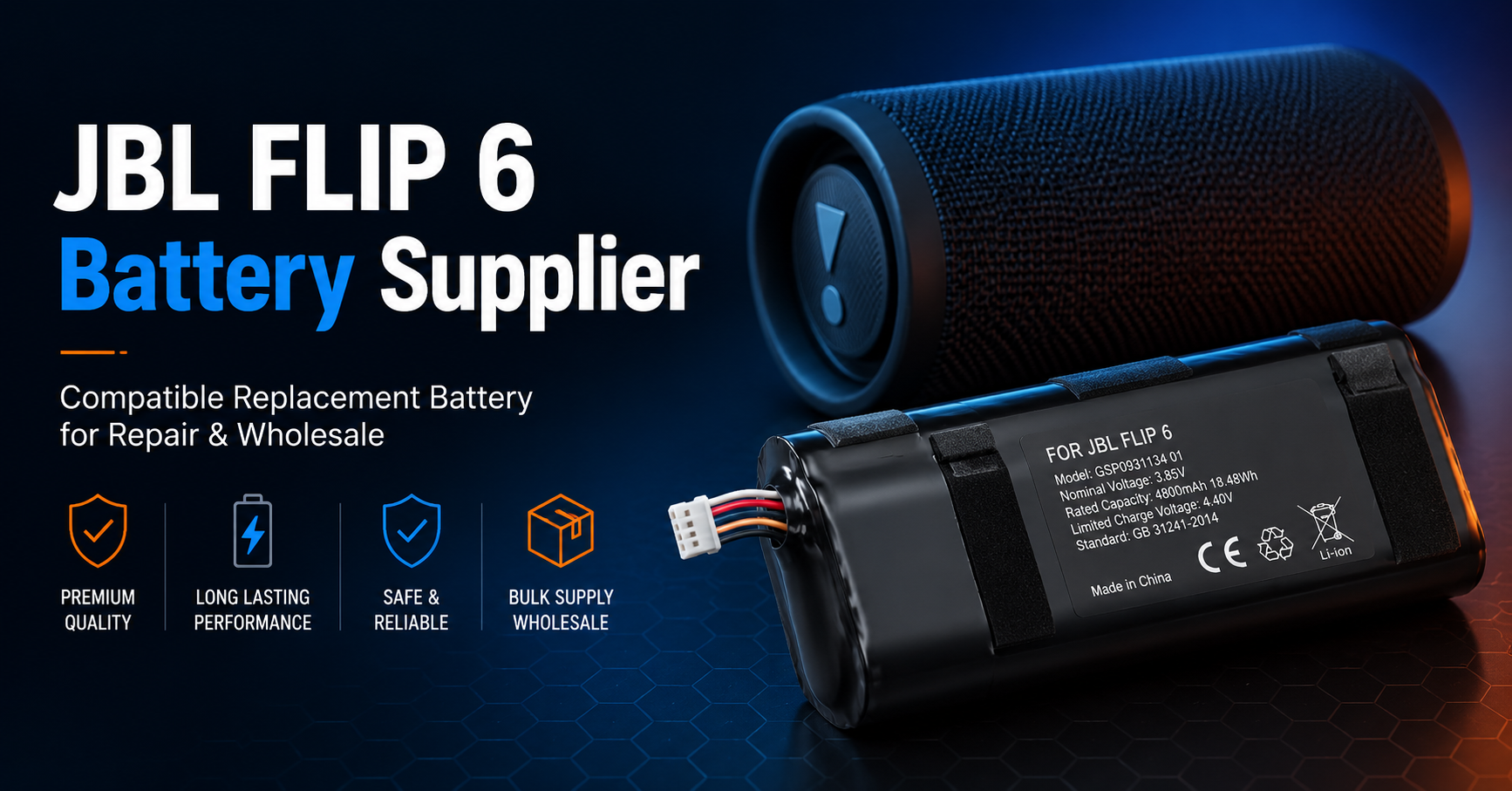
ESC’s JBL battery supplier guide outlines additional model, sample, packaging and wholesale considerations. Buyers sourcing a specific speaker battery can also review the JBL Flip 6 battery sourcing guide as a model-level procurement example.
Common Document Failures
| Failure | Business risk | Required action |
|---|---|---|
| Battery model absent from test evidence | Document scope cannot be confirmed | Obtain matching evidence or technical clarification |
| Label and specification show different Wh values | Classification or declaration may be incorrect | Stop dispatch and resolve the controlled product data |
| Old SDS used for a changed battery | Hazard and transport information may not match | Review the change and obtain the applicable revision |
| Standalone batteries described as accessories | Commercial and transport records conflict | Correct the description and repeat classification review |
| Carrier not consulted | Shipment may be rejected after packing | Confirm route, service and account acceptance early |
| Damaged return enters routine shipping flow | Condition-specific restrictions are missed | Isolate and obtain specialist instructions |
FAQ
Is an SDS the same as a UN 38.3 test summary?
No. They serve different purposes. An SDS does not automatically prove completion of the transport tests or replace the required test-summary information.
Can one UN 38.3 document cover every JBL replacement battery?
Not automatically. The reviewer must confirm that the tested battery type and model scope match each battery being shipped.
Are replacement speaker batteries normally shipped as batteries alone?
They may be when supplied without the speaker, but classification must follow the actual contents, chemistry, configuration and current transport rules. Do not classify from the sales title alone.
Does every shipment require a dangerous-goods declaration?
Requirements depend on the applicable transport rules, packing instruction, section, quantity, configuration, route and carrier. Obtain a shipment-specific decision from qualified personnel.
Can the buyer request the UN 38.3 test summary?
The test-summary requirement is designed to make specified information available. The buyer should request model-matching evidence early enough to review it before booking shipment.
Can defective batteries be returned with normal replacement parts?
Do not assume so. Damaged, defective, recalled, waste or recycling batteries may face different restrictions or prohibitions. Isolate them and obtain condition-specific instructions.
Approve the Product, Documents, Package, and Route Together
Reliable JBL replacement battery shipping documents connect the physical battery to its specification, UN 38.3 evidence, packaging, commercial records, shipment configuration and carrier approval. Missing or mismatched files should be resolved before goods reach the dispatch stage.
Send ESC the speaker models, original battery references, quantities, destination, packaging requirements and intended transport method when requesting a bulk quotation. Use the ESC contact page to discuss samples, model matching and available project documents. Final classification, packing, declaration and carrier acceptance must be confirmed for the actual shipment.
External Source References
- International Air Transport Association — Guidance Document for Lithium Batteries and Sodium Ion Batteries — 2026
- United Nations Economic Commission for Europe — Recommendations on the Transport of Dangerous Goods: Manual of Tests and Criteria
- U.S. Pipeline and Hazardous Materials Safety Administration — Lithium Battery Test Summaries
- FedEx — How to Ship Wet, Dry, and Lithium Batteries