
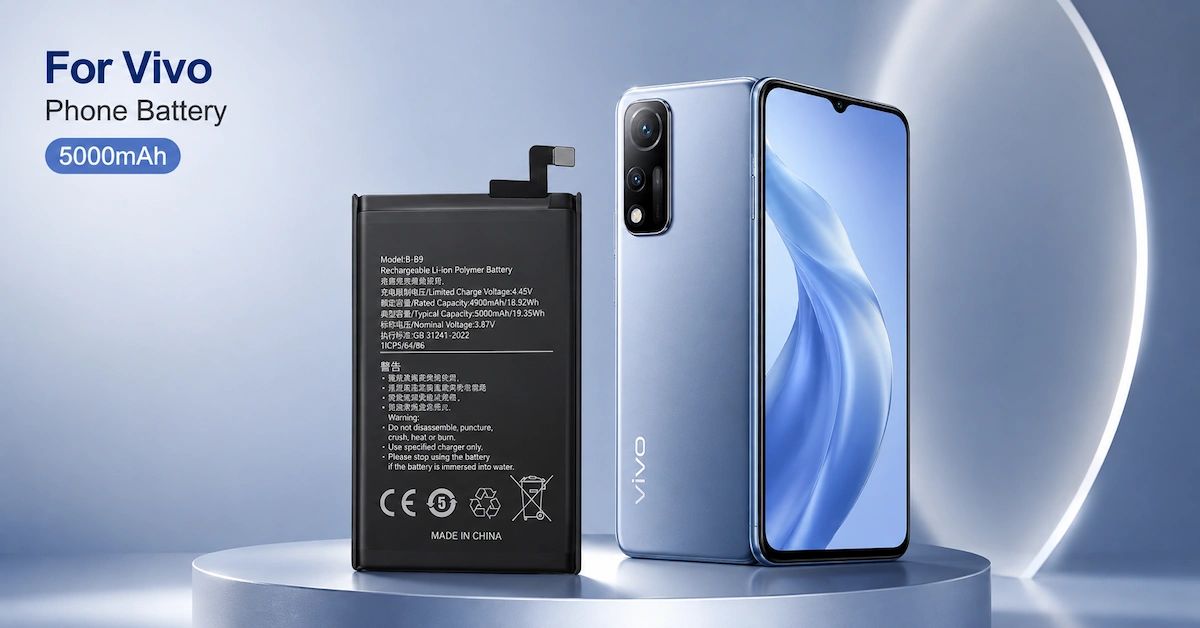
What Should B2B Buyers Look for in a Vivo Battery Supplier?
A reliable Vivo battery supplier should help professional buyers control much more than purchase price.
For repair centers, refurbishment facilities, parts wholesalers, distributors and private-label battery brands, the main sourcing risks usually come from incorrect compatibility, inconsistent electrical performance, weak batch control and unclear after-sales responsibility.
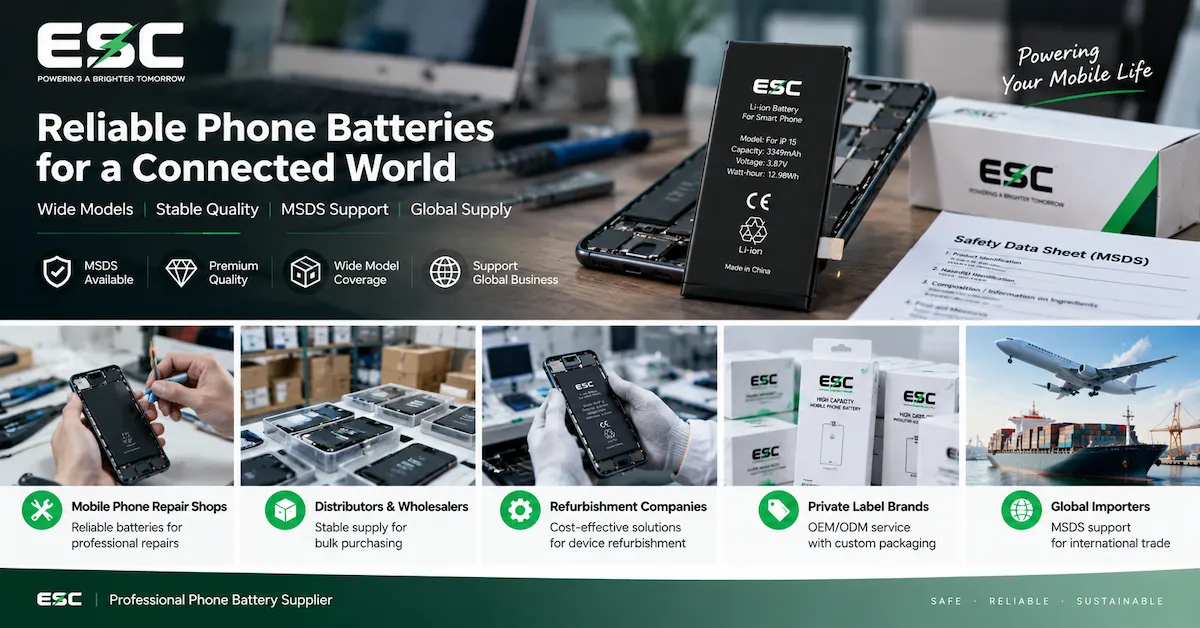
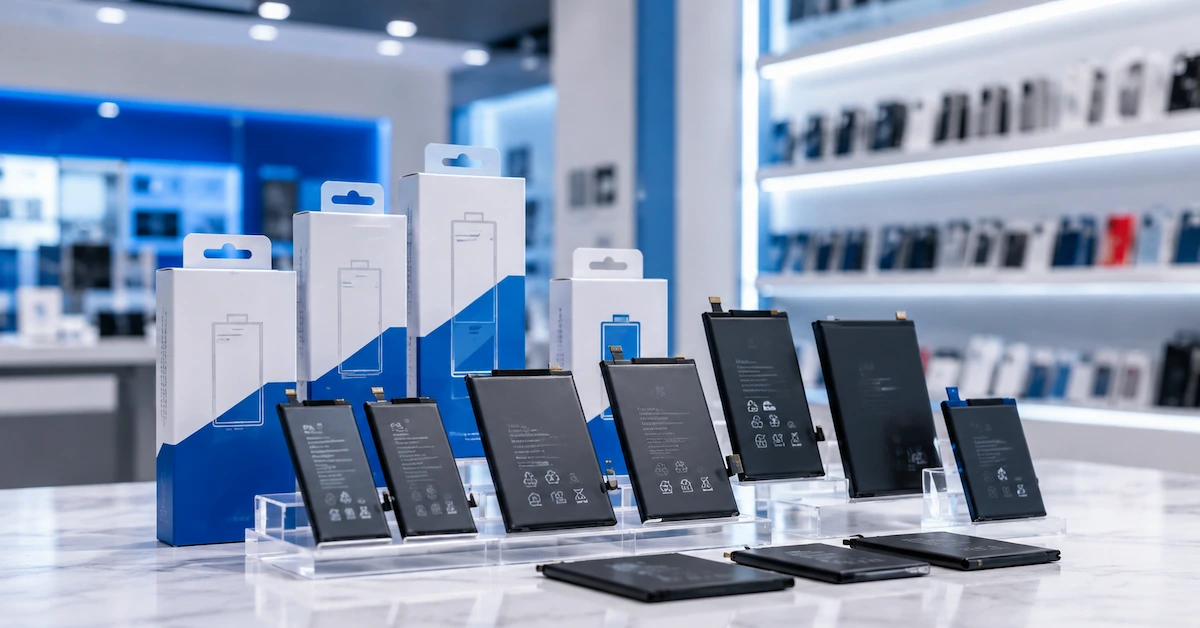
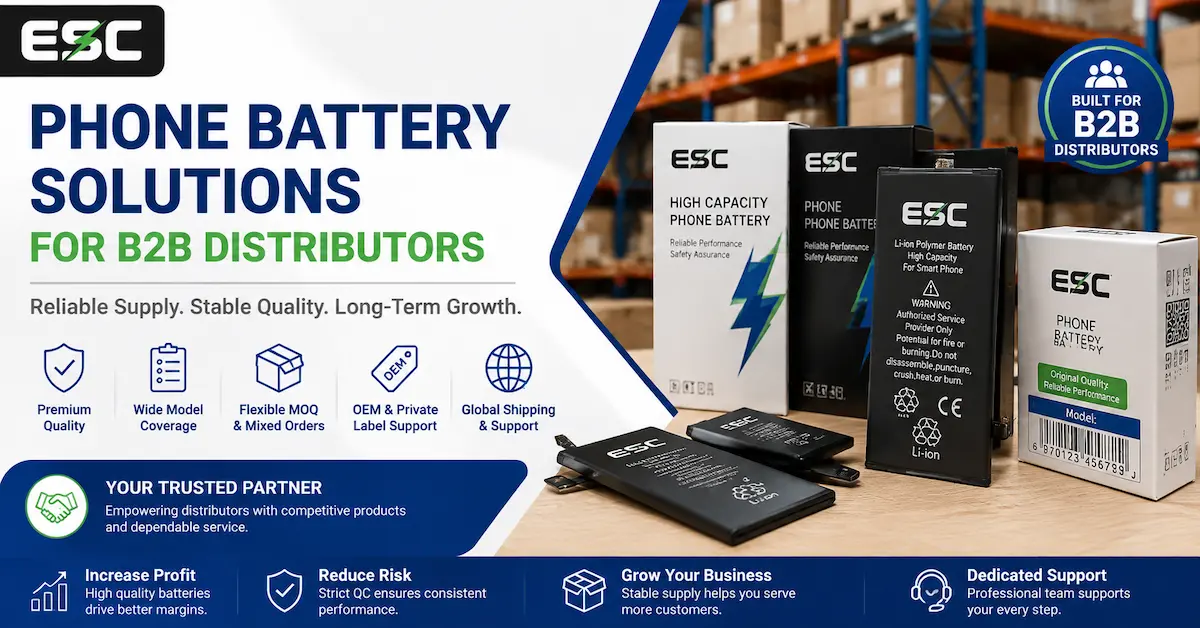
ESC includes Vivo within its mobile phone replacement battery supply range, which is positioned for repair centers, refurbishing companies, wholesalers, distributors and private-label projects.
For a professional buyer, the better purchasing question is therefore not:
“Which Vivo battery is cheapest?”
It is:
“Which supplier can repeatedly deliver the correct Vivo replacement battery with predictable quality across multiple orders?”
That distinction becomes important at scale. One incompatible or unstable battery may cost only a small amount as a component, but the actual loss can also include technician time, customer returns, warranty replacement, reverse logistics and damage to a reseller's reputation.
Vivo's official service-center network provides testing and repair services for its devices, which also reflects the professional nature of smartphone repair and battery servicing.
Which Buyers Typically Source Vivo Replacement Batteries?
A Vivo replacement battery program can serve several different B2B channels. Each buyer type evaluates suppliers differently.
Repair Shops and Repair Chains
Repair shops normally prioritize:
- accurate model matching;
- easy installation;
- connector and flex compatibility;
- stable charging;
- predictable runtime;
- low repeat-repair rates.
A small independent shop may purchase modest quantities across several popular models.
A repair chain, by contrast, may need standardized batteries, clear SKU identification and consistent replenishment across multiple locations.
Smartphone Refurbishers
Refurbishing facilities operate on volume.
Their concern is not whether one sample performs well. They need the 500th or 1,000th unit to behave similarly to the approved sample.
Key purchasing priorities include:
- batch consistency;
- predictable physical fit;
- repeatable capacity;
- stable internal resistance;
- efficient installation;
- low rework rates;
- lot traceability.
A battery that requires an additional few minutes of technician troubleshooting can create significant labor cost when repeated across hundreds of phones.
Mobile Parts Wholesalers and Distributors
Wholesalers face a different challenge: SKU complexity.
They may stock Vivo batteries alongside other smartphone battery brands, so the supplier must support clear model identification and reliable replenishment.
Important factors include:
- model coverage;
- fast-moving SKUs;
- mixed-model purchasing;
- barcode and carton identification;
- stable availability;
- warranty procedures;
- product data accuracy.
E-Commerce Repair-Part Sellers
Online sellers need compatibility information that is easy for customers to understand.
Their biggest risks often include:
- wrong-model orders;
- unclear battery references;
- return requests;
- poor packaging;
- misleading capacity claims;
- negative product reviews.
For this buyer segment, accurate compatibility data is part of the product itself.
Private-Label Battery Brands
Private-label buyers need a supplier capable of supporting both technical and commercial requirements.
Typical needs include:
- customized battery labels;
- retail boxes;
- model identification;
- barcodes;
- warnings;
- warranty information;
- carton markings;
- long-term SKU planning.
Buyers building a broader product line can review ESC's company and service capabilities before discussing a private-label project.
Why Vivo Battery Compatibility Should Be Verified Before Price
Replacement phone batteries should not be selected only from product photographs or shortened phone names.
Two battery packs may look similar while differing in ways that affect installation or operation.
Exact Device Model
Start with the complete Vivo device model.
Phone families often contain multiple generations and regional variants, so the purchasing record should be more precise than a general series name.
Battery Reference
If the original battery includes a battery reference or part code, record it.
A useful B2B product database can follow this structure:
Brand → Device Model → Battery Reference → Voltage → Capacity → Connector → Supplier SKU
This structure improves purchasing accuracy and simplifies repeat orders.
Dimensions
Length, width and thickness affect physical installation.
Even a small difference in thickness may create:
- difficult installation;
- pressure inside the housing;
- poor reassembly;
- technician rework.
Connector and Flex Structure
Buyers should check:
- connector type;
- connector location;
- flex-cable direction;
- flex length;
- routing.
A battery can have approximately the correct dimensions and still be unusable because its connector or flex configuration differs.
Electrical Specification
Voltage and capacity must be appropriate for the intended device.
The physical appearance alone cannot confirm electrical compatibility.
Which Specifications Should Be Included in a Vivo Battery RFQ?
A professional battery quotation request should define the product clearly enough that multiple suppliers can be compared on the same basis.
| Specification | What Buyers Should Confirm | Why It Matters |
|---|---|---|
| Vivo device model | Exact compatible phone | Reduces model errors |
| Battery reference | Original or equivalent code | Improves traceability |
| Rated capacity | mAh | Defines capacity requirement |
| Energy | Wh where applicable | Helps cross-check specification |
| Nominal voltage | Battery voltage | Electrical compatibility |
| Dimensions | Length × width × thickness | Mechanical fit |
| Connector | Type and location | Installation |
| Flex cable | Shape and routing | Fitment accuracy |
| Internal resistance | Representative readings | Batch consistency |
| Protection circuit | Pack protection design | Electrical protection |
| Capacity test | Measured discharge result | Verifies claims |
| Aging test | Finished-product screening | Detects early failures |
| Packaging | Battery and flex protection | Reduces transit damage |
| Lot information | Production identification | Supports claims and QC |
This information is much more useful than requesting only:
“Please send your Vivo battery price.”
Why Actual Battery Capacity Must Be Tested
Capacity is one of the easiest specifications to market and one of the easiest for buyers to misunderstand.
The mAh value printed on a label is a specification claim. Professional buyers should validate performance through representative sample testing.
Useful checks include:
- rated capacity;
- measured discharge capacity;
- voltage;
- watt-hours;
- charging behavior;
- discharge behavior;
- consistency between units.
A battery should not automatically be considered better simply because its label shows a larger capacity number.
For wholesale sourcing, the more important questions are:
Is the stated capacity technically credible?
Do measured samples meet the agreed specification?
Can production batches repeat that result?
This is particularly important for products marketed as high-capacity replacements.
Why Internal Resistance Matters When Comparing Vivo Batteries
Capacity alone does not provide a complete picture of lithium-ion battery behavior.
Internal resistance influences the battery's ability to deliver power and contributes to energy loss and heat generation. Experimental lithium-ion cell research identifies internal resistance as an important performance parameter, while aging studies commonly observe capacity decline together with resistance increase.
For a Vivo battery buyer, the practical lesson is not to search for one universal “perfect resistance number.”
The more useful approach is to compare representative batteries under the same test method, temperature and state-of-charge conditions.
What Should Buyers Compare?
Compare:
- multiple batteries from the sample lot;
- variation between units;
- later production batches against approved samples;
- abnormal outliers.
A supplier that provides one excellent test unit but inconsistent bulk production does not solve the buyer's real problem.
Consistency is the objective.
What Does the Protection Circuit Contribute to Battery Quality?
A smartphone replacement battery should be evaluated as a complete battery pack rather than only as a lithium-ion cell.
Depending on the pack design, the finished product can contain:
battery cell + tabs + protection circuitry + flex cable + connector + insulation + label or pack structure.
The protection circuit supports protection against abnormal electrical conditions such as overcharge, over-discharge, excessive current and short circuit.
That means buyers should inspect more than cell capacity.
Poor assembly around the flex, connector, insulation or protection components can undermine an otherwise acceptable battery cell.
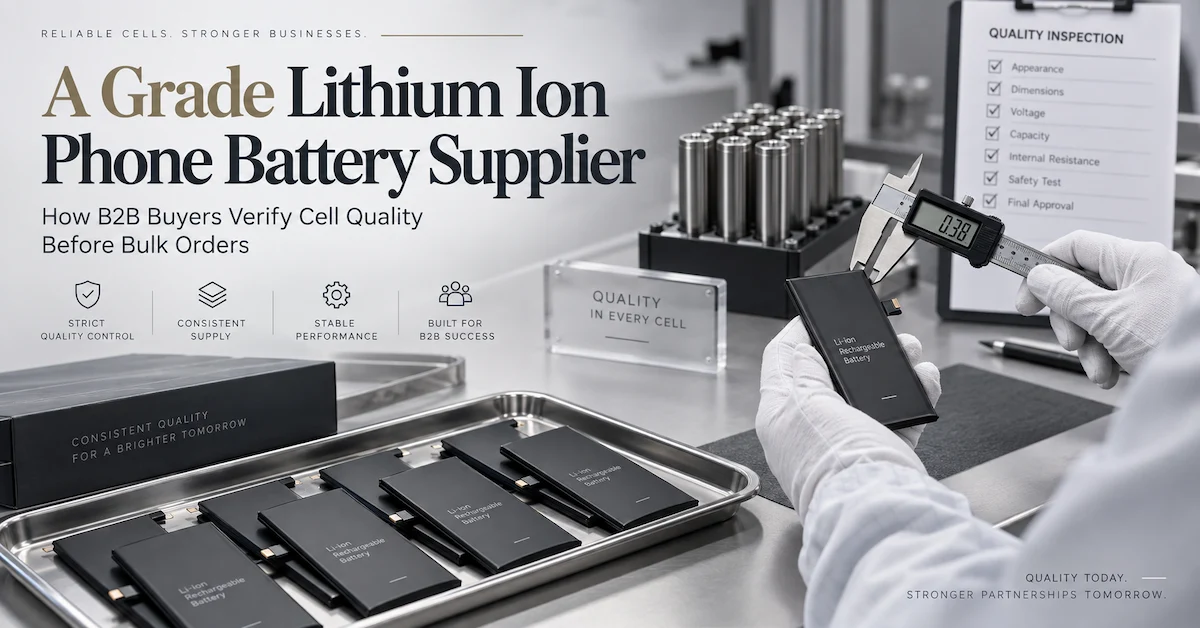
How Should Buyers Test Vivo Battery Samples Before Bulk Ordering?
A structured sample test can expose compatibility and quality problems before they become bulk-order problems.
Step 1: Confirm the Product Identity
Before testing, verify:
- Vivo model;
- battery reference;
- voltage;
- capacity;
- dimensions;
- connector;
- flex configuration.
If the model information is uncertain, resolve it before evaluating electrical performance.
Step 2: Inspect Multiple Samples
Do not inspect only the best-looking battery.
Check several units for:
- deformation;
- swelling;
- damaged flex cables;
- poor insulation;
- connector contamination;
- irregular sealing;
- inconsistent thickness;
- visible workmanship defects.
Step 3: Check Voltage
Measure the batteries using the same test conditions.
The objective is partly to detect abnormal units and partly to understand sample consistency.
Step 4: Measure Internal Resistance
Keep the Method Consistent
Internal-resistance measurements can vary with testing method and conditions.
Do not compare one supplier using one method and another supplier using a different method and treat the numbers as directly equivalent.
Compare the Distribution
For batch sourcing, the spread between units can be more informative than one isolated result.
Step 5: Test Capacity
Use a controlled charge-discharge procedure.
Compare measured capacity with the agreed product specification.
Before bulk ordering, both buyer and supplier should understand what constitutes an acceptable result.
Step 6: Conduct Real-Device Installation Tests
Bench testing cannot determine every compatibility problem.
Install representative samples into appropriate Vivo devices and observe:
- mechanical fitment;
- connector alignment;
- flex routing;
- startup;
- charging;
- battery-level behavior;
- standby performance;
- normal usage.
Vivo's official service network describes testing and repair as part of its customer support, underscoring the value of professional device-level verification during servicing.
Step 7: Observe Temperature
Monitor for unusual heating during charging and normal operation.
An abnormal unit should be investigated rather than averaged into the test result.
Step 8: Keep a Sample Approval Record
Record:
Supplier
Model
Battery reference
Lot
Capacity result
Resistance result
Physical inspection
Installation result
Approval date
This creates a reference for future incoming inspection.
Why Batch Consistency Matters More Than a Perfect Sample
Sample quality and production quality are not the same thing.
Before the first bulk order, buyers should ask how the supplier controls:
- incoming battery cells;
- cell grading;
- capacity consistency;
- electrical components;
- flex assembly;
- connector assembly;
- insulation;
- visual inspection;
- finished-battery testing;
- aging;
- batch identification.
ESC states that its smartphone battery business serves Vivo and other major phone brands and supports strict quality inspection, customized solutions and OEM packaging.
However, buyers should still confirm the exact test procedure and acceptance standard for their specific Vivo battery program rather than assuming every SKU uses identical specifications.
How Does a Cheap Vivo Battery Become Expensive?
Professional purchasing should evaluate total sourcing cost, not only invoice price.
| Risk | Possible Business Cost |
| Wrong compatibility | Technician rework |
| Poor fitment | Installation delays |
| Low actual capacity | Customer complaints |
| Inconsistent batches | Higher inspection workload |
| Early failure | Warranty replacement |
| Poor packaging | Transit damage |
| Wrong SKU labels | Warehouse errors |
| Weak after-sales process | Claim-management cost |
| Private-label failure | Brand reputation loss |
For example, if a cheaper battery creates significantly more repeat repairs, its lower purchase price may disappear quickly.
The actual sourcing equation is closer to:
Unit cost + inspection + technician time + returns + warranty + inventory error + reputation risk
This is why professional repair and wholesale buyers usually benefit from evaluating stability before negotiating purely on price.
How Should Wholesalers Plan Vivo Battery Inventory?
A wholesaler should not necessarily order every available Vivo battery in equal quantities.
A better inventory strategy is based on local repair demand.
A-Class SKUs
High-turnover models.
Recommended approach:
- deeper stock;
- closer replenishment monitoring;
- frequent QC tracking.
B-Class SKUs
Regular but moderate demand.
Recommended approach:
- controlled inventory;
- normal reorder cycle.
C-Class SKUs
Long-tail or declining-demand models.
Recommended approach:
- lower safety stock;
- flexible ordering;
- avoid overstocking.
What Data Should Be Tracked?
Maintain fields such as:
| Data | Use |
| Device model | Product identification |
| Battery reference | Compatibility |
| Supplier SKU | Reordering |
| Monthly sales | Demand planning |
| Current stock | Inventory |
| Lead time | Reorder point |
| Purchase price | Margin |
| Claim rate | Supplier QC |
| Return reason | Problem diagnosis |
Over time, this allows wholesalers to make procurement decisions based on real demand rather than supplier catalogs.
What Should Buyers Include in a Vivo Battery RFQ?
A complete RFQ improves quotation accuracy and reduces repeated communication.
Target Models
Provide exact Vivo phone models and battery references where possible.
Quantity by SKU
For mixed orders, specify quantities for individual models rather than only one total quantity.
Technical Requirements
Include:
- capacity;
- voltage;
- dimensions if required;
- specific QC requirements.
Destination Market
The destination can influence:
- shipping;
- labeling;
- documentation;
- packaging.
Packaging Type
Specify whether you need:
- bulk packaging;
- neutral packaging;
- ESC packaging;
- private-label retail packaging.
OEM Information
Private-label buyers should provide requirements for:
- logo;
- battery label;
- barcode;
- retail box;
- warning information;
- carton marks.
Sample Requirements
List the SKUs that need approval before bulk ordering.
This makes it easier to compare suppliers using equivalent information.
What Should Importers Check Before Shipping Vivo Lithium Batteries?
Lithium batteries are regulated for international transport.
UNECE's Manual of Tests and Criteria, Revision 8, together with Amendment 1, includes subsection 38.3 addressing lithium cells and batteries.
Buyers should therefore verify transport documentation for the actual battery configuration being shipped.
Relevant considerations may include:
- applicable UN 38.3 information;
- battery identification;
- packaging;
- marks or labels;
- carrier requirements;
- route;
- mode of transport;
- destination requirements.
Importers can consult the official UN Manual of Tests and Criteria when reviewing the regulatory framework.
Do not assume that paperwork belonging to one battery automatically covers another model.
What Can OEM Vivo Battery Buyers Customize?
Private-label sourcing should be treated as a product-development and supply program rather than a logo-printing exercise.
Battery Label
Potential elements include:
- brand;
- model;
- battery reference;
- voltage;
- capacity;
- barcode;
- warning information.
Retail Packaging
A retail box may need:
- compatible device information;
- brand identity;
- SKU;
- local-language information;
- warranty information;
- distribution information.
Warehouse Packaging
For mixed Vivo battery orders, clear carton and inner-box identification helps prevent warehouse mistakes.
Product Portfolio
Private-label brands should decide which SKUs deserve launch priority.
A smaller range based on actual repair demand may be easier to manage than an oversized catalog containing many slow-moving products.
ESC's mobile battery business states that OEM packaging and customized battery solutions are available for professional buyers. Buyers can review ESC's company information when assessing broader cooperation capabilities.
What Questions Should You Ask a Vivo Battery Supplier?
Before approving a supplier, ask questions that reveal how the business actually controls sourcing risk.
- Which Vivo models are currently available?
- How do you verify model and battery-reference compatibility?
- What capacity specification applies to each SKU?
- Can buyers test samples before bulk approval?
- How is actual battery capacity measured?
- Is internal resistance checked?
- How are incoming cells graded or inspected?
- What protection circuit is used?
- Which finished-product inspections are performed?
- Is aging performed?
- How are production lots identified?
- Can mixed-model orders be supported?
- What OEM packaging options are available?
- What shipping documentation is available for the exact model?
- How are quality claims handled after delivery?
A professional answer to these questions is more useful than a polished supplier brochure.
Common Vivo Battery Sourcing Mistakes
Buying Only by Unit Price
Price is visible before ordering. Failure cost usually appears afterward.
Using Phone Names Without Battery References
Whenever possible, map the device model to its battery reference and supplier SKU.
Trusting Printed Capacity Without Testing
Treat capacity as a specification that requires verification.
Approving Only One Sample
One battery does not establish batch consistency.
Ignoring Internal Resistance
Capacity is important, but resistance adds useful information about cell behavior and consistency.
Skipping Real-Device Testing
Laboratory measurements cannot prove mechanical fitment.
Ignoring Inventory Data
Wholesalers should stock according to local repair demand instead of buying every SKU equally.
Treating Private Label as Logo Printing
A sustainable OEM battery line also requires product identification, packaging, traceability and warranty planning.
Assuming All Lithium Battery Paperwork Is Interchangeable
Verify transport documentation for the exact product and shipment.
FAQ About Vivo Battery Suppliers
How do I choose a reliable Vivo battery supplier?
Evaluate model compatibility, battery reference, actual capacity, voltage, internal resistance, connector and flex fitment, protection circuitry, sample testing, batch QC, packaging and after-sales procedures.
For B2B buyers, consistent production is usually more important than the lowest initial quotation.
Does ESC supply Vivo replacement batteries?
ESC's current mobile phone battery category states that its replacement-battery range covers Vivo along with iPhone, Samsung, Xiaomi, Huawei, OPPO and other smartphone brands.
Buyers should send their exact model list to contact ESC to confirm current availability and specifications.
Should repair shops test samples before purchasing Vivo batteries in bulk?
Yes.
Sample testing should include physical inspection, voltage, capacity, internal resistance, connector and flex fitment, real-device installation, charging behavior and temperature observation.
Multiple representative samples give more useful information than a single battery.
Why is internal resistance useful when evaluating phone batteries?
Internal resistance influences power capability, efficiency and heat generation, and battery-aging research commonly evaluates resistance together with capacity.
For procurement, its main value is helping buyers compare consistency when batteries are tested under the same conditions.
Does higher capacity always mean a better Vivo replacement battery?
No.
A higher printed mAh figure is not proof of better quality. Buyers should confirm whether the capacity is technically credible and verify actual performance through controlled testing.
Can Vivo replacement batteries be private labeled?
Private-label projects may include customized battery labels, retail packaging, barcodes, model identification and carton markings, depending on the project.
ESC states that OEM packaging is available within its mobile phone battery business.
How can wholesalers reduce Vivo battery return rates?
Use accurate model mapping, verify battery references, approve multiple samples, conduct representative incoming QC, maintain clear SKU data and track return reasons by model and supplier.
This helps identify whether returns originate from compatibility, performance, packaging or customer-selection problems.
What information should I provide when asking for a Vivo battery quotation?
Provide:
- target Vivo models;
- battery references if available;
- quantity per model;
- capacity requirements;
- destination market;
- packaging requirements;
- OEM requirements;
- sample requirements.
A complete RFQ helps the supplier quote more accurately.
Conclusion: Select a Vivo Battery Supplier by Repeatability, Not Price Alone
A professional Vivo battery supplier should help buyers reduce compatibility errors, quality variation and commercial risk throughout the purchasing process.
Repair shops need batteries that technicians can install efficiently.
Refurbishers need repeatable batch performance.
Wholesalers need clear model management and dependable replenishment.
Private-label brands need technical consistency that can support their own reputation.
Before placing a bulk order, verify:
device model
battery reference
voltage
capacity
dimensions
connector
flex structure
internal resistance
protection configuration
real-device fitment
Then evaluate how the supplier manages samples, production QC, aging, packaging, traceability, OEM requirements and after-sales claims.
ESC includes Vivo in its mobile phone replacement battery supply portfolio for professional repair, refurbishment, wholesale, distribution and private-label customers.
If you are sourcing Vivo replacement batteries, send your required models, quantities, destination and packaging requirements through the ESC contact page to confirm current models, sample options and project terms.