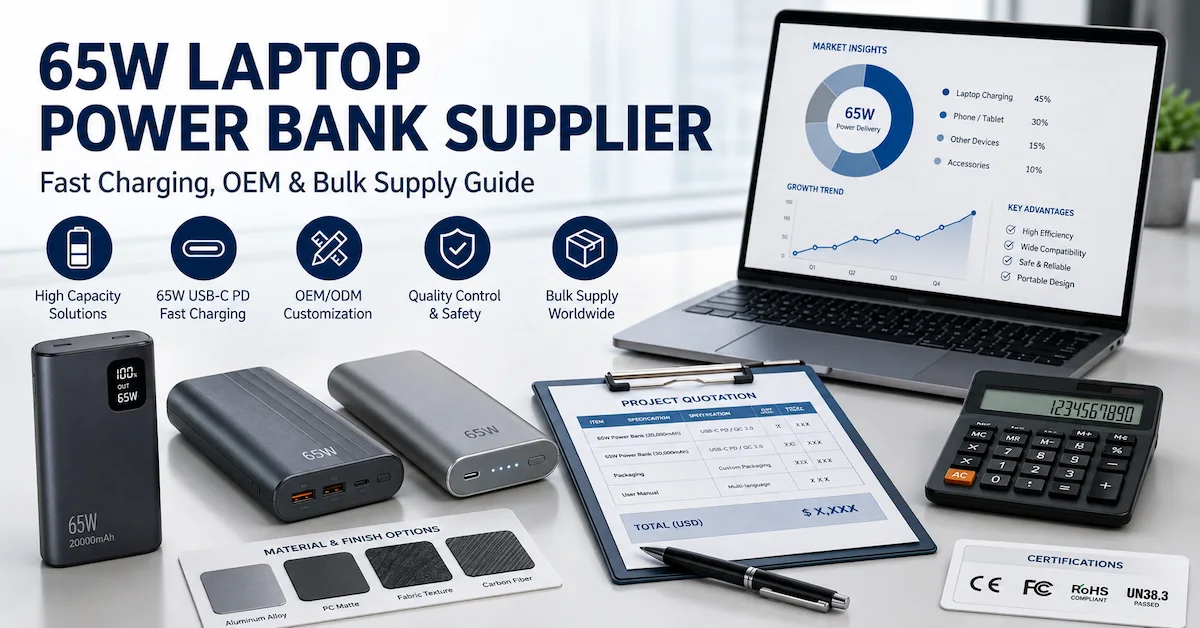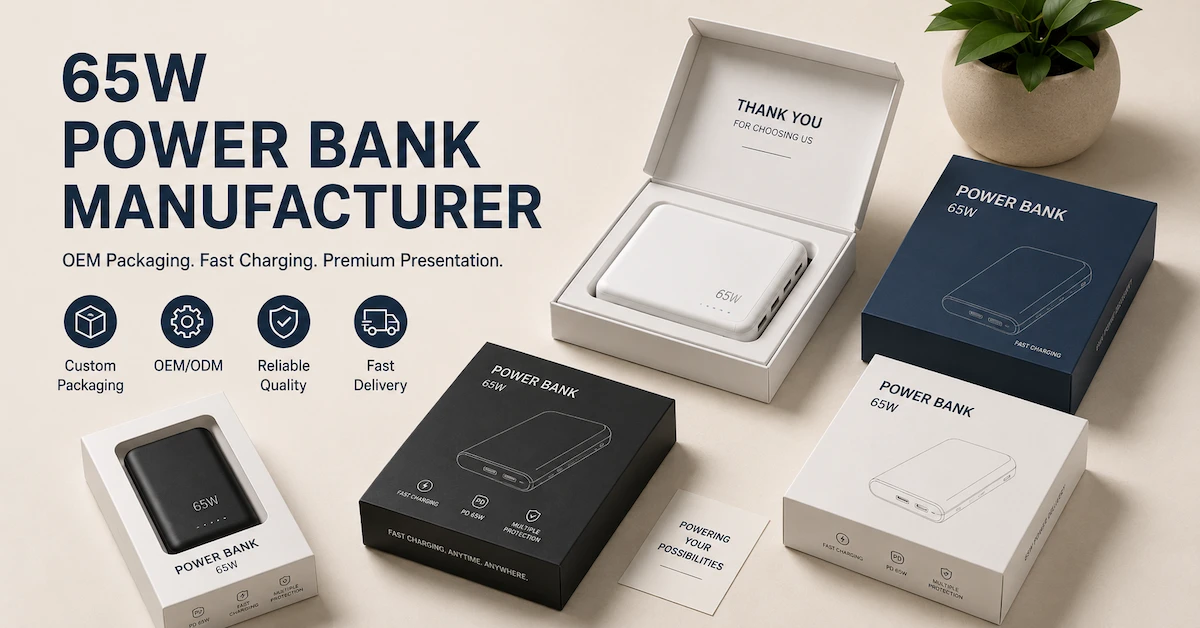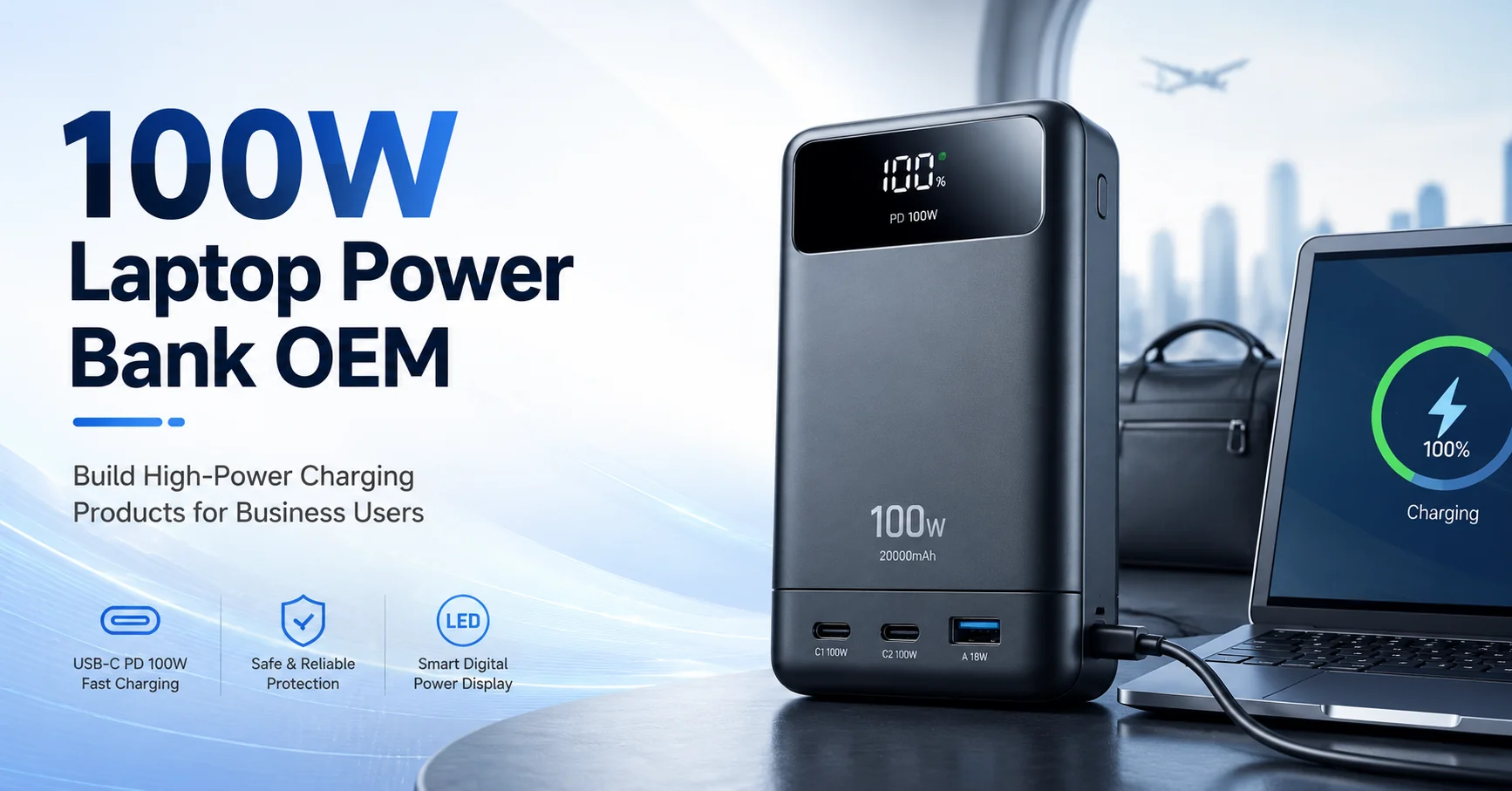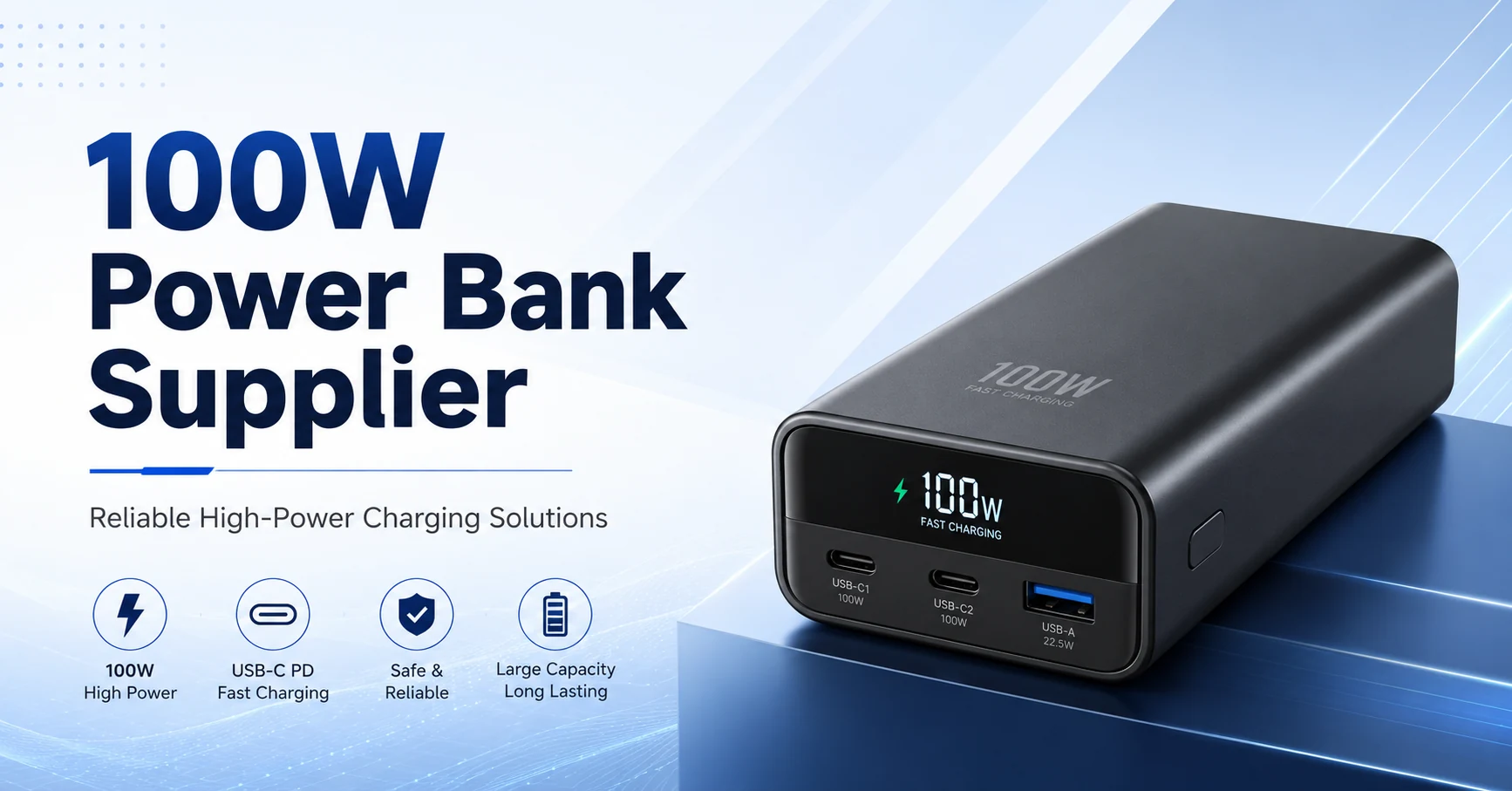

Many buyers request a quotation expecting a simple unit price, but quickly find that pricing varies significantly between suppliers.
The confusion comes from not understanding what goes into a power bank factory quotation. Two products that look similar can have very different internal structures, materials, and production costs.
For importers, distributors, and brand owners, knowing how a power bank factory quotation is calculated is essential for controlling costs and avoiding unexpected issues later.
Before requesting a quote, it’s helpful to review the About Us page to understand the manufacturer’s production capability and OEM experience.
What Determines a Power Bank Factory Quotation
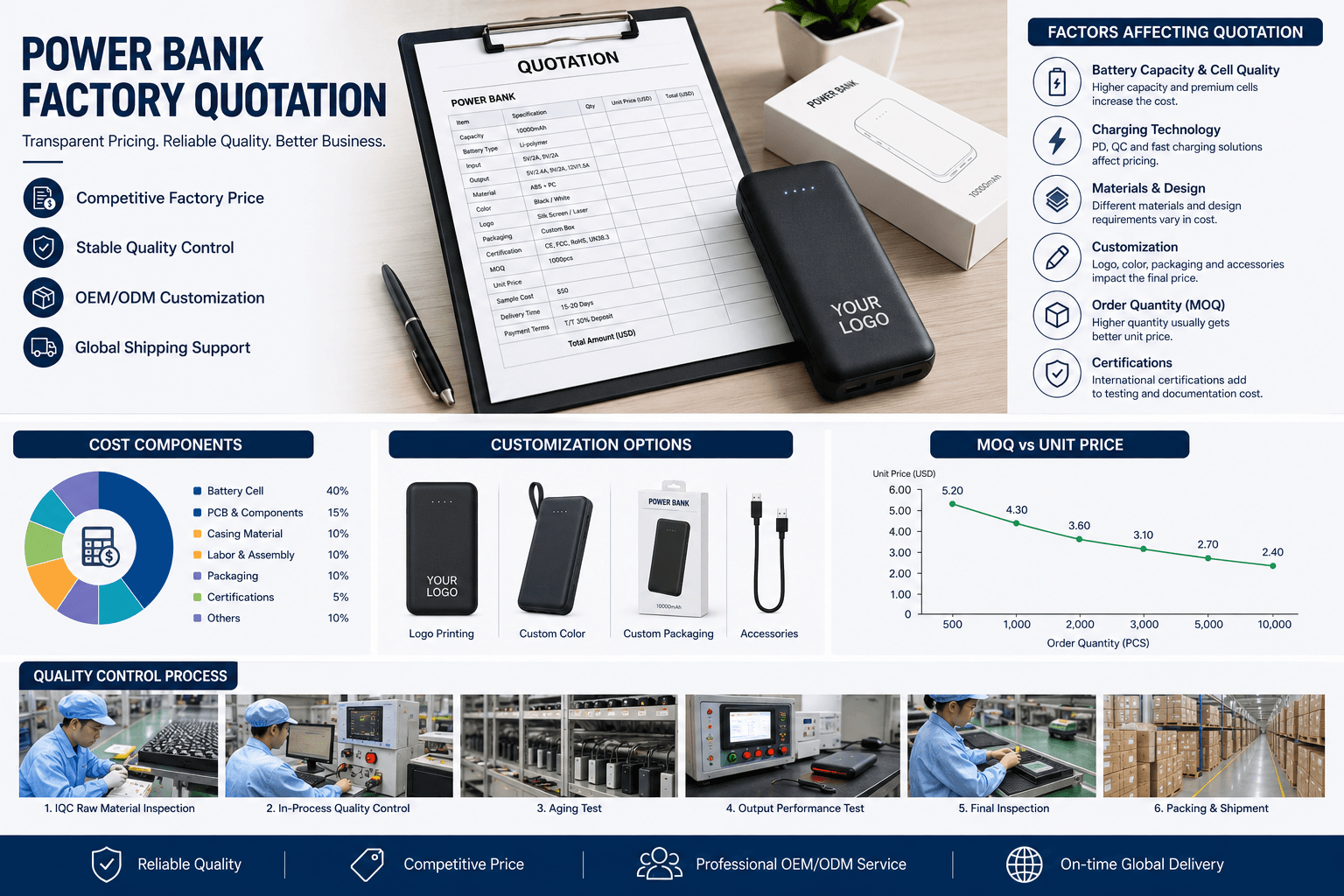
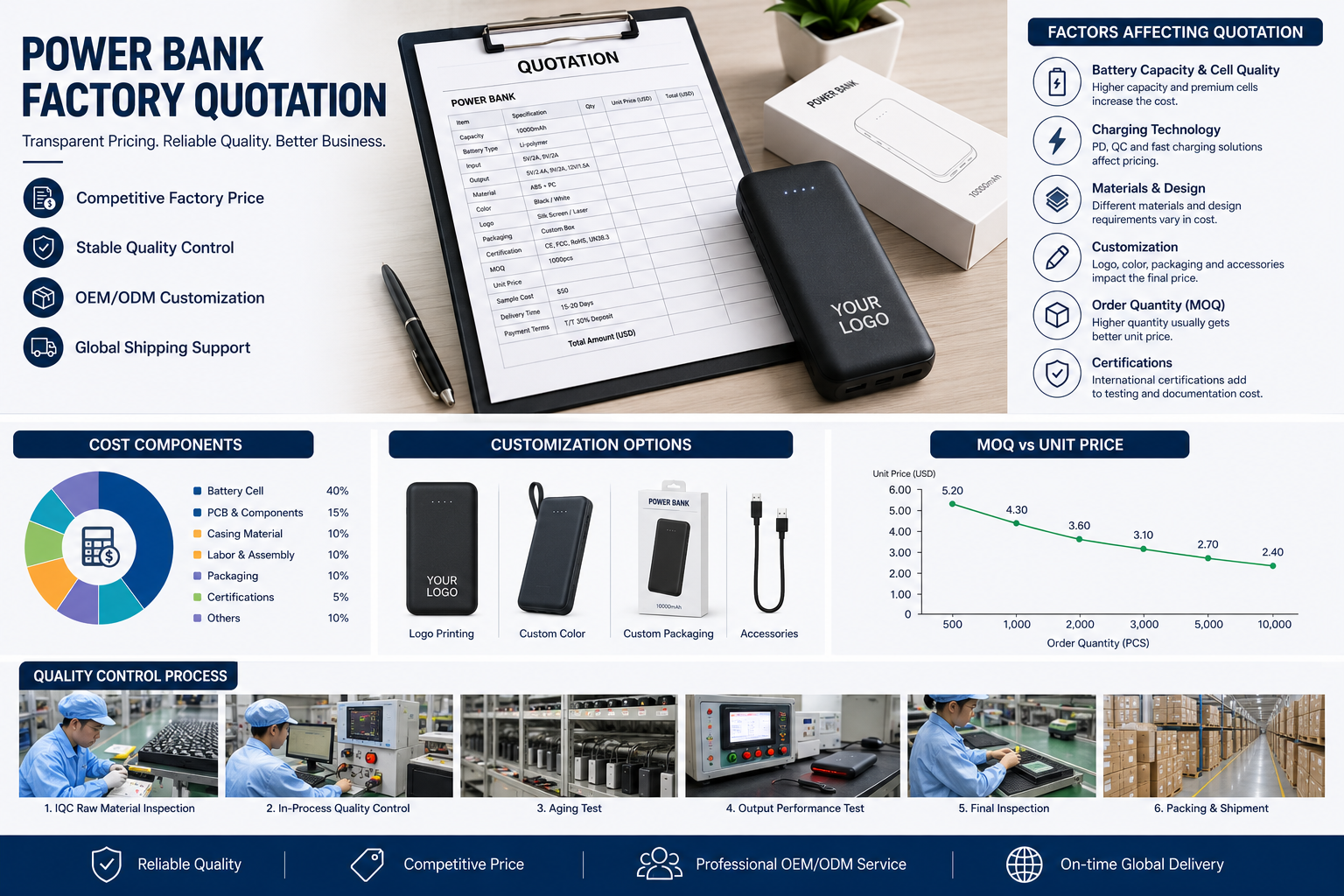
A professional power bank factory quotation is based on multiple cost components, not just materials.
Core Pricing Factors
- battery cell quality and capacity
- PCB and charging technology (PD / QC)
- casing material (plastic, aluminum, etc.)
- packaging and accessories
- labor and assembly process
Each factor directly affects both cost and performance.
Standard vs Custom Products: Pricing Differences
| Factor | Standard Model | Custom OEM Model |
|---|---|---|
| Cost | Lower | Higher |
| Branding | None | Full customization |
| MOQ | Lower | Higher |
| Profit Potential | Limited | Higher |
A power bank factory quotation for OEM products typically includes additional costs for customization and packaging.
MOQ and Its Impact on Pricing
Minimum Order Quantity (MOQ) plays a major role in pricing.
How MOQ Affects Cost
- higher MOQ → lower unit cost
- lower MOQ → higher unit cost
- custom orders → higher MOQ required
Understanding MOQ helps buyers balance cost and inventory risk.
Hidden Costs Buyers Often Overlook
Many buyers focus only on quoted price, but overlook additional costs:
- certification (CE / FCC / UN38.3)
- shipping and logistics
- packaging upgrades
- defect replacement and returns
A transparent power bank factory quotation should clearly include or explain these elements.
How to Get an Accurate Quotation
To receive a precise quote, buyers should provide:
- required capacity and output
- quantity and target price range
- customization needs (logo, packaging)
- target market and certification requirements
To explore available models before requesting pricing, you can check the product page for reference.
Real Buyer Scenarios
Importers
- focus on total landed cost
Distributors
- prioritize stable pricing
Ecommerce Brands
- balance cost and branding
Corporate Buyers
- focus on packaging and presentation
Each scenario requires a tailored power bank factory quotation.
Cost Optimization Strategies
Buyers can reduce costs without sacrificing quality by:
- selecting standard models with minor customization
- optimizing packaging design
- increasing order volume gradually
- choosing the right battery capacity for target users
A professional supplier can guide buyers toward the most cost-effective solution.
Common Mistakes When Requesting Quotations
- asking for price without specifications
- comparing quotes without understanding differences
- choosing the lowest price without quality verification
- ignoring MOQ and production limitations
These mistakes often lead to higher long-term costs.
FAQ
Why do different factories give different quotations?
Because materials, battery quality, and production standards vary.
Can I get a quotation without specifications?
Basic quotes are possible, but accurate pricing requires detailed requirements.
Does customization increase cost?
Yes, branding and packaging typically add to the quotation.
Are certifications included in the price?
Sometimes included, but often quoted separately. For more details, visit the FAQs page
Final Thoughts
A power bank factory quotation is more than just a number—it reflects product quality, customization level, and production capability.
Understanding pricing structure helps buyers make better decisions, reduce risks, and build long-term supplier relationships.
If you are planning to request a quotation or compare suppliers, you can directly contact us to get detailed pricing, OEM options, and professional recommendations.