
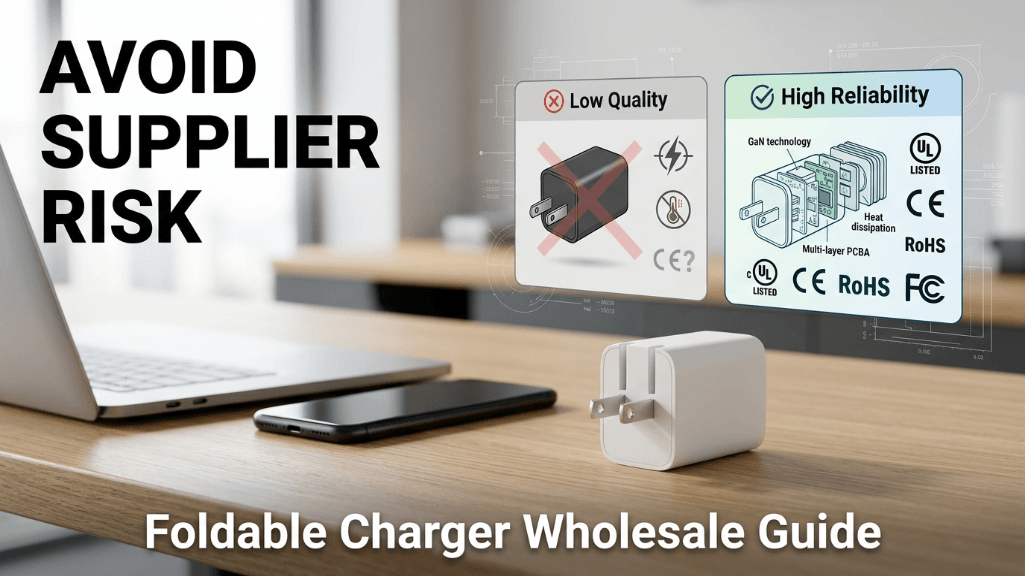
If your first instinct when searching for a Foldable plug wall charger wholesale supplier is still to compare whether a 140W GaN charger costs $12 or $15, then you may already be on the edge of supply chain risk. In the consumer electronics field—especially for power products involving foldable structures (Foldable Plug)—the real cost has never been reflected at the bottom line of the BOM. Instead, it is hidden in the fatigue life of hinge spring contacts, the dynamic impedance control of PCBA layouts, and the compliance costs of global certifications.
Straight to the conclusion: At present, top-tier factories with GaN technology R&D capabilities typically offer factory direct pricing for 65W triple-port foldable chargers in the range of $7.5–$9.8 (based on a 3K–5K MOQ). Solutions priced below this range often compromise on V0 flame-retardant materials or branded electrolytic capacitors. For B2B buyers pursuing long-term brand reputation, the underlying logic of supplier selection should shift from “price-driven” to “engineering validation-driven.”
Why Foldable Plug Chargers Are Dominating the Global Travel Market
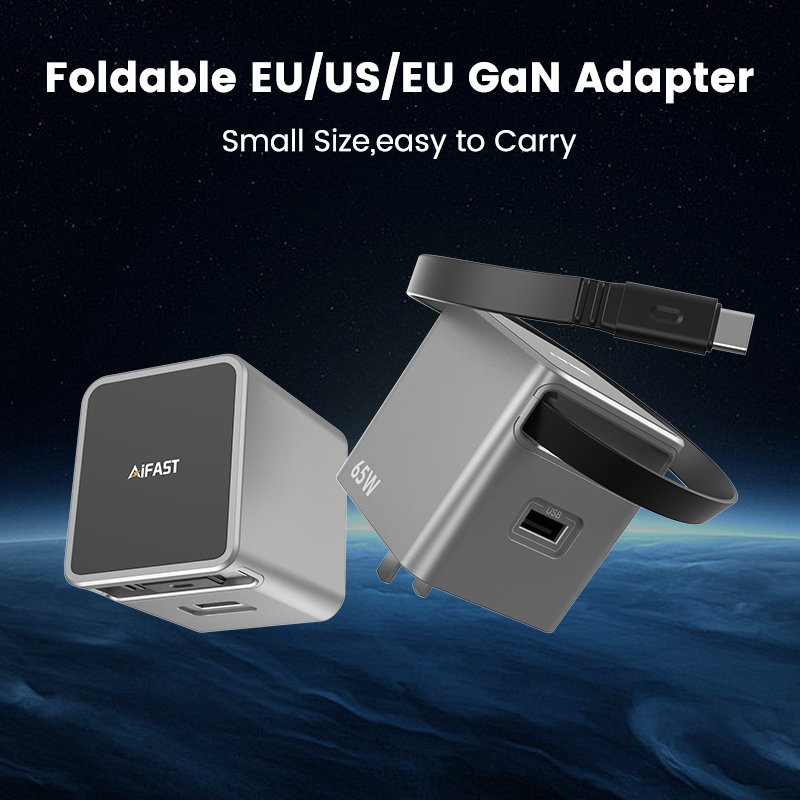
The shift in market demand is not accidental. As mobile work becomes the norm, user focus on compact travel charger bulk purchasing has shifted from pure power competition to space efficiency and device protection.
The Trade-off Between Space Efficiency and Portability
Foldable plugs are not just about reducing volume by 30%. In real-world scenarios, fixed plugs act as potential “destroyers” inside luggage, easily scratching tablet screens or puncturing premium leather goods. The foldable structure solves this pain point, but it also introduces mechanical wear risks. A qualified OEM/ODM charger manufacturer must consider torque degradation of the folding mechanism after 5,000 cycles during the structural design phase.
The Deep Advantages of GaN Technology
The introduction of GaN technology eliminates the need for bulky heat sinks inside chargers. This allows higher energy density circuits to fit into smaller enclosures. However, it introduces another engineering challenge: thermal integration. When the PCB is only a few millimeters away from the casing, the Heat Deflection Temperature (HDT) of the housing material directly determines whether the foldable pins will loosen or fail to reset after prolonged high-power output.
B2B Procurement Must-Read: Core Technical Parameter Comparison Table
Before placing an order, require your supplier to provide real measured technical data across the following dimensions—not just marketing brochures.
| Evaluation Dimension | Entry-Level Charger | High-Performance Foldable GaN Charger (Pro Grade) | Expert Insight |
|---|---|---|---|
| Circuit Architecture | Traditional Silicon PWM | GaN (III/IV) | Determines efficiency and peak temperature rise |
| Fast Charging Protocols | PD 2.0 / QC 3.0 only | PD 3.0 / PPS / UFCS compatible | Affects handshake speed with new MacBook/iPhone |
| Foldable Plug Lifespan | 1,000–2,000 cycles | 5,000+ cycles (reinforced hinge) | Mechanical reliability over long-term use |
| Ripple Noise | <200mV | <100mV (Low Ripple) | Protects battery life and reduces touchscreen issues |
| Housing Material | Standard ABS/PC blend | 94-V0 rated pure PC flame-retardant | Safety baseline under extreme overload |
| Certifications | CE only or none | UL/CE/RoHS certified | Determines cross-border compliance risk |
Core Technical Indicators That Must Be Evaluated in Wholesale Procurement
As an experienced professional, when evaluating a multi-port USB-C wall charger sample, shift your focus away from glossy surface coatings and dig into the following three dimensions:
Mechanical Structure: “Damping Feel” and Lifespan of the Folding Mechanism
Most low-cost suppliers use simple torsion spring structures, which cause plugs to slide out or retract under gravity after just three months of use. High-quality suppliers adopt “dual spring positioning” or cam structures combined with high-strength manganese steel.
During quality control inspection, folding tests must be conducted under high-temperature conditions generated by full-load power, as thermal expansion significantly alters tolerances between plastic and metal components.
Protocol Compatibility: Deep Handshake from PD 3.0 to PPS
Many buyers mistakenly believe that labeling a charger as 65W guarantees compatibility with all laptops. This is a major misconception. A truly professional OEM/ODM charger manufacturer embeds complex Power Data Object (PDO) logic into firmware.
- PD 3.0 fast charging protocol is the baseline.
- PPS (Programmable Power Supply) is essential for flagship Android devices such as Samsung and Google.
If a supplier cannot explain how their charger handles dynamic power allocation when multiple ports are used, the product will likely suffer from frequent disconnections and repeated handshake failures.
Global Compliance: Not Optional, but Lifeline
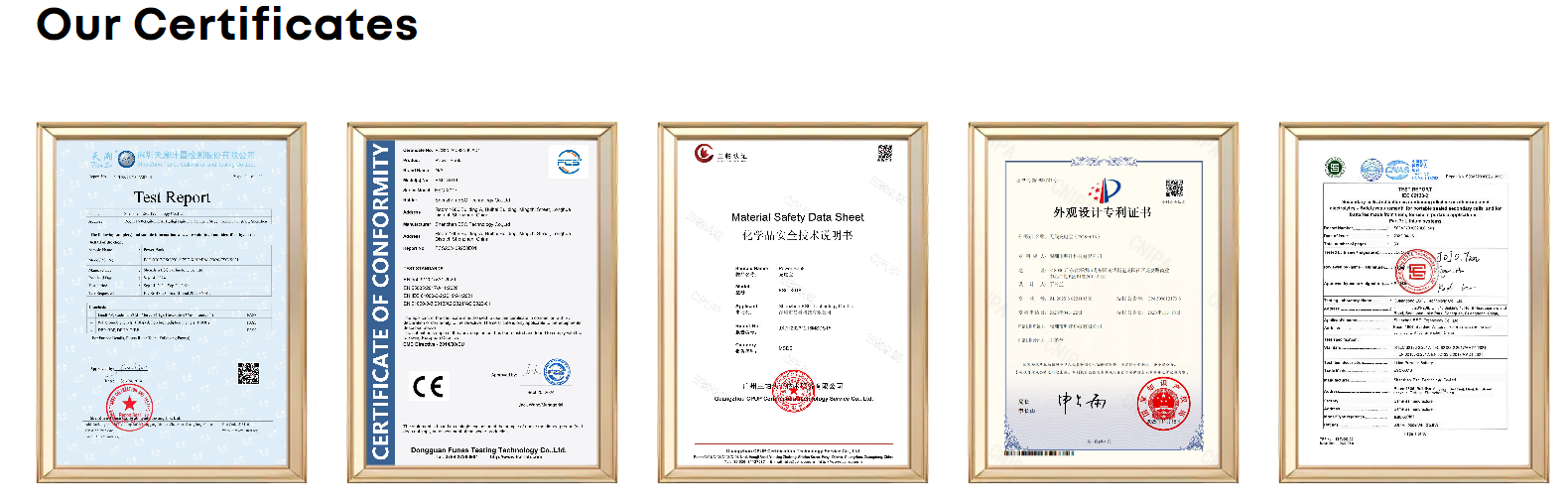
For B2B global trade, UL/CE/RoHS certified power adapters are the minimum requirement. However, experts know that UL certification includes specific physical strength tests for foldable plugs (such as torque and pull tests). If suppliers cannot provide lab reports covering these items, the risk of product recalls in the North American market increases exponentially.
How to Evaluate Supplier Delivery Capability and Responsiveness
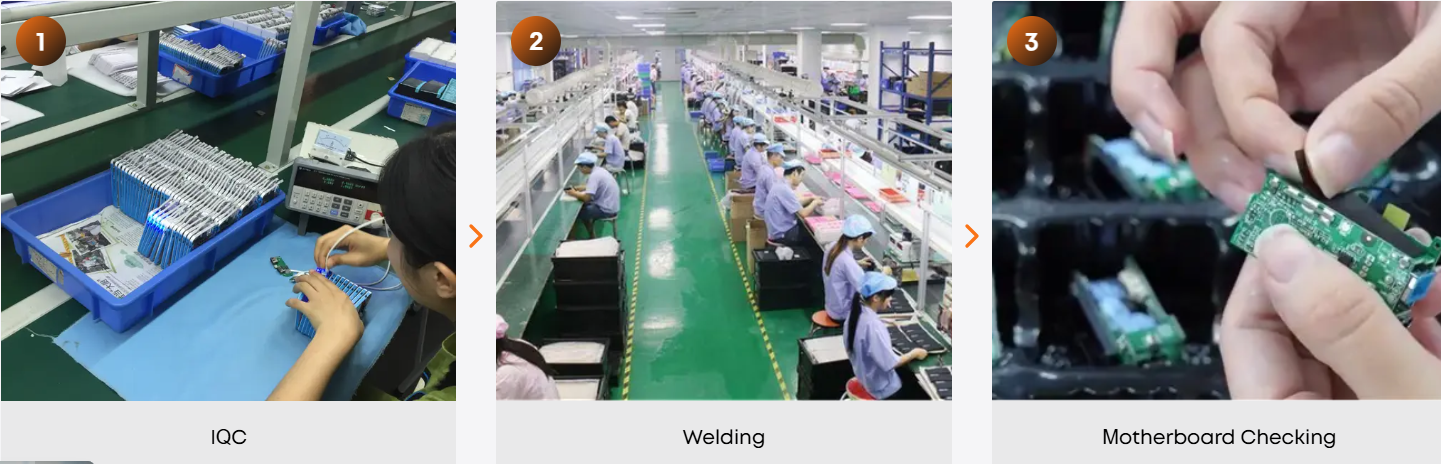
When searching for a foldable plug wall charger wholesale supplier, the stability of bulk orders often matters more than sample performance.
The Truth About Factory Direct Pricing
Real factories do not offer the lowest prices in the market because they must sustain quality control labor costs. A healthy B2B cooperation model typically includes an 8%–12% redundancy budget for R&D and quality.
If a quotation is significantly below industry averages, verify whether inductors use pure copper windings and whether solid capacitors are branded.
Lead Time Control for Bulk Orders
In consumer electronics, lead time is the lifeline. A mature supplier should have:
- Neutral stock capability: Semi-finished PCBA inventory for popular 65W/100W solutions
- Customization responsiveness: Delivery within 15–20 days after confirming logo and packaging design
- Universal plug compatibility: Support for interchangeable adapters for EU/UK markets
Deep Quality Control: Engineering Redundancy Beyond Surface Parameters

In B2B procurement, quality control inspection should not be limited to shipment sampling—it must involve full-cycle engineering intervention. For foldable chargers, small structural deviations are magnified after thousands of uses.
Laboratory-Level Rigorous Testing
A professional OEM/ODM charger manufacturer must have a complete in-house laboratory. Among all tests, the Burn-in Test is the most effective method to eliminate early failures.
For bulk orders, 100% four-hour full-load aging is recommended. Industry data shows that chargers skipping this process have over 15% higher first-month failure rates.
Additionally, Salt Spray Testing is essential for cross-border trade. Poor plating on foldable plug contacts can easily oxidize under high-salinity, high-humidity shipping conditions, leading to poor contact or even sparking.
Vertical Integration: The Ultimate Supply Chain Moat
In the consumer electronics industry, the traditional “PCBA + housing assembly” model is being phased out. True competitiveness comes from heavy-asset vertical integration.
Take AOVOLT, with 15 years of industry experience, as an example. Its Dongguan-based production facility integrates industrial design, circuit R&D, mold opening, injection molding, and metal processing into a full closed-loop system.
This means when you need a unique private mold design to avoid homogenized competition, the factory can rapidly iterate from design to tooling internally, without relying on external mold suppliers.
For high-end custom orders such as 140W full-protocol compatibility (PD 3.1, PPS, QC 3.0, FCP, SCP), only such source factories—with control over every inductor winding and injection tolerance—can ensure consistency at the million-unit scale. 140W GaN charger supplier for you 2026: CE certified and fully integrated.
Cross-Border Logistics and Packaging: The Overlooked “Last Mile” Risk
While foldable plugs protect other devices, they themselves require protection during transportation.
| Logistics Risk | Engineering Solution |
|---|---|
| High-pressure stacking in sea freight causing micro-cracks | Reinforced V0-rated PC housing |
| Rough last-mile delivery causing hinge displacement | Custom high-density EVA cushioning |
| Customs clearance delays due to missing certifications | Pre-engraved UL/CE/UKCA/RoHS markings |
For wholesale suppliers, offering DDP or FOB logistics support is basic. The real differentiator is whether they can provide integrated packaging solutions tailored to different regional standards (US fixed plug, EU/UK adapters).
FAQ: 5 Core Questions About Foldable Charger Wholesale (PAA)
Q1: Are foldable plugs more prone to damage than fixed plugs?
Structurally, additional moving parts introduce failure points. However, with a mature quality control system and reinforced materials such as manganese steel springs and high-wear polycarbonate hinges, foldable plugs can easily exceed 5,000 cycles. Avoid strong lateral impacts while plugged in, and durability is comparable to fixed plugs.
Q2: Why must 140W chargers support PD 3.1?
PD 3.1 breaks the 100W limit and supports up to 28V output. For B2B buyers, it is essential for powering devices like MacBook Pro and high-performance laptops. Products limited to PD 3.0 will become obsolete within two years.
Q3: What is the typical lead time for OEM orders?
For mature solutions, lead time is typically 25–35 days. New mold development requires an additional 20–30 days. Vertically integrated factories like AOVOLT can shorten timelines by over 15%.
Q4: How to ensure chargers won’t interfere with touchscreens or produce noise?
This depends on EMI filtering design and ripple control. High-quality suppliers use premium Y capacitors and common-mode inductors. Ripple & Noise should be controlled below 100mV or lower.
Q5: What certifications are required for cross-border e-commerce (e.g., Amazon)?
- North America: UL or ETL certification (including foldable plug safety tests)
- Europe: CE-LVD, CE-EMC, and RoHS
Always verify original certificates, not edited images.
Conclusion: Building a Supply System with Technical Barriers
In selecting a foldable plug wall charger wholesale supplier, low price is always the starting point—not the endpoint. A supplier capable of sustaining long-term brand growth must be an engineering partner willing to invest in invisible circuit redundancy and refine the tangible folding mechanism.
From 65W mainstream fast charging to 140W extreme power, and from single-port output to complex multi-port dynamic allocation, the charger industry has entered a “deep-water zone” defined by heavy assets, high technology, and strict compliance.
Choosing a Dongguan-based source factory like AOVOLT—with 15 years of manufacturing expertise and full-chain capabilities from R&D to molding and injection—is not just about securing factory direct pricing. It is about attaching a “high reliability” label to your brand.
If you are planning your next quarter’s procurement or need technical evaluation for specific OEM/ODM requirements, understanding the vertical integration of source factories will be your critical first step.
References:
IEC 62368-1 / UL 62368-1 – Audio/Video, ICT Equipment Safety Standard