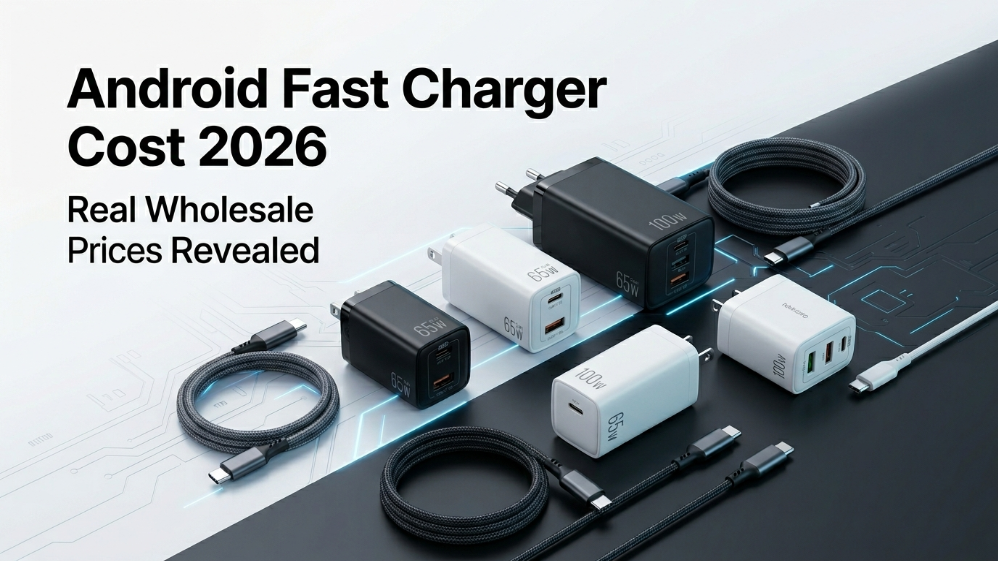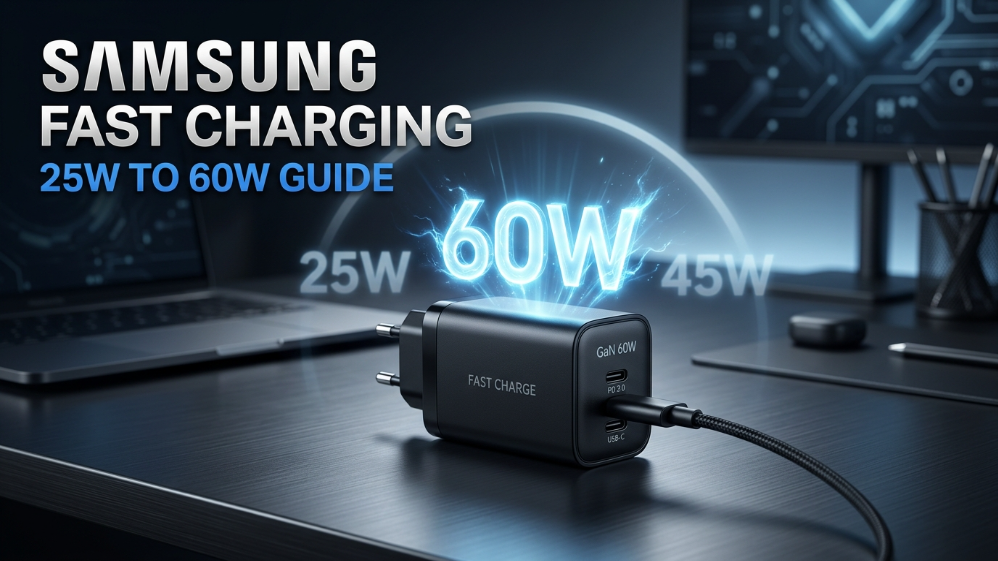

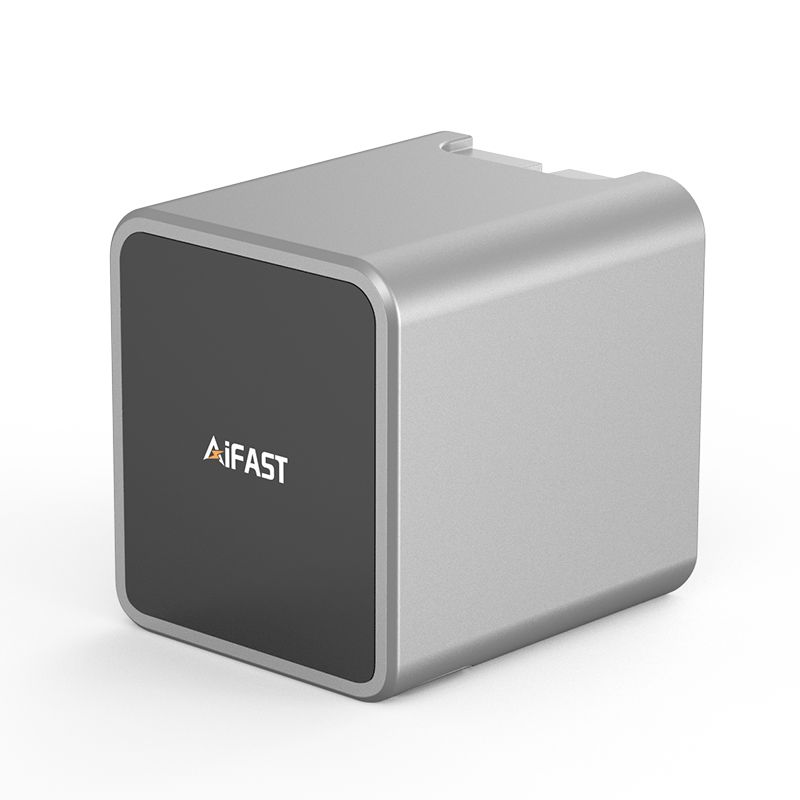
The 140W PD 3.1 Gallium Nitride (GaN) charger has become standard equipment for high-performance laptops, workstations, and mobile energy storage devices.
For B2B buyers, the core challenge has shifted from “finding a 140W charger” to “finding a PCBA solution that can sustain 28V/5A at full load, deliver OEM-grade charging curves, and maintain superior thermal stability.”
When evaluating OEM factories, global brands and large sellers frequently encounter hidden risks such as product homogenization, thermal runaway under high load, and cross-border patent infringement.
Backed by a core R&D team originating from Xiaomi, OPPO, and Vivo, AOVOLT leverages deep expertise in in-house fast-charging ICs and power management technologies to deliver customized fast-charging solutions with “Original Speed” performance and extreme stability for global clients.
Entering the PD 3.1 Era

Why Not All 140W Chargers Deliver “Original Speed”
With the adoption of USB-C PD 3.1 EPR (Extended Power Range), 140W (28V/5A) has become the new benchmark for premium hardware.
However, many so-called “140W” universal chargers on the market fail real-world testing, often suffering from slow protocol handshakes and severe power throttling under sustained high loads.
Key Technical Differences: PD 3.0 vs. PD 3.1
| Technical Parameter | PD 3.0 (Legacy) | PD 3.1 EPR (New Standard) | AOVOLT Optimized Solution |
|---|---|---|---|
| Max Voltage / Current | 20V / 5A | 28V / 5A | Smooth dynamic V-I curve adjustment |
| Max Output Power | 100W | 140W (and above) | 140W sustained full load, no throttling |
| Protocol Handshake Speed | Nominal | Slower (EMI risk) | Millisecond-level AVS response |
| Typical Applications | Smartphones, ultrabooks | MacBook Pro 16”, gaming laptops | Intelligent multi-port dynamic allocation |
The Engineering Challenge Behind “Original Speed”
Delivering “Original Speed” is not merely about protocol compliance—it requires precise charging curve matching.
By deeply reverse-engineering the charging logic of Apple M2/M3 Max platforms, AOVOLT engineers optimized AVS (Adjustable Voltage Supply) response timing, enabling third-party chargers to:
-
Reliably trigger OEM fast-charge indicators
-
Maintain compatibility across system updates
-
Avoid future firmware-level incompatibility risks
AOVOLT’s R&D Moat
Engineering DNA from Leading Smartphone Brands
In power electronics, high power output and compact form factor are natural opposites. AOVOLT stands out in the OEM market by transferring smartphone-grade extreme integration techniques into high-power chargers.
Tier-1 Brand Experience
Our core team has led multi-million-unit fast-charging projects, giving us a level of tuning precision in LLC resonant topologies and high-frequency synchronous rectification that traditional power suppliers struggle to match.
In-House PCBA & Chip-Level Optimization
Unlike assemblers relying on public reference designs, AOVOLT operates an independent power management PCBA R&D center.
By optimizing integration between the main control IC and GaN power devices, we push conversion efficiency beyond 94%.
Performance Benchmarks: AOVOLT vs. Industry Average
-
Power Density
Patented stacking architecture reduces charger volume by 15–20% compared to industry averages. -
Ripple Control
Full-load ripple is kept below 100 mV, significantly outperforming the common 200 mV industry standard—extending battery lifespan of connected devices. -
Electromagnetic Compatibility (EMC)
Multi-layer shielding ensures zero interference with Bluetooth and Wi-Fi, even at full output.
Thermal Architecture Deep Dive
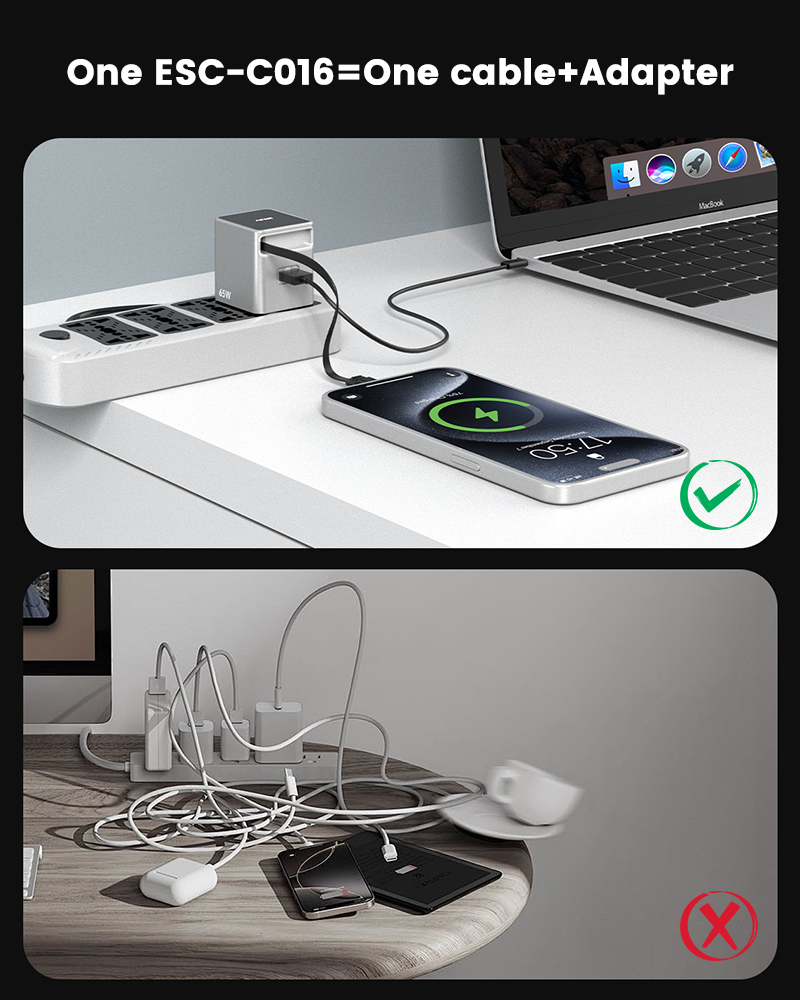
Solving the Heat Problem in High-Power Fast Charging
For end users, excessive heat is more than a comfort issue—it directly causes thermal throttling and accelerates component aging.
AOVOLT introduces a system-level thermal balance strategy in its 140W GaN solution, ensuring that after 2 hours of continuous full-load operation, enclosure temperatures remain well below IEC 62368-1 safety limits. 140W GaN Desktop Charger: The Ultimate Guide to Fast Charging.
Core Thermal Engineering Pathways
3D Thermal Conduction Packaging
Instead of conventional potting, AOVOLT uses aerospace-grade thermal silicone (>3.0 W/m·K) combined with custom pure copper heat spreaders to rapidly extract heat from critical PCBA components.
Dynamic Power Allocation 3.0
AOVOLT’s proprietary algorithm monitors multi-port loads in real time. As internal temperature approaches thresholds, output is smoothly rebalanced—not abruptly cut—maintaining both efficiency and thermal control.
Ultra-Low-Loss LLC Topology
By minimizing switching losses, overall efficiency reaches ~95%, meaning only ~5% of energy converts into heat, dramatically reducing thermal stress at the source.
140W Full-Load Stability Comparison
| Key Metric | Standard 140W Reference Design | AOVOLT 140W Flagship Solution | Advantage |
|---|---|---|---|
| Full-Load Efficiency | 89% – 91% | 94.5% – 95.5% | >30% less heat generation |
| Peak Surface Temperature | 75°C – 82°C | 62°C – 65°C | Cooler touch, higher safety |
| Continuous Full-Load Runtime | Throttles after 30 min | 4+ hours sustained | Ideal for workstations |
| Component Lifespan | 3–5 years | 8–10 years | Industrial-grade durability |
Avoiding Platform Takedown Risks
The Commercial Value of Patents & Global Certifications
On cross-border platforms such as Amazon and Lazada, listings are frequently removed due to design homogeneity or patent infringement, often accompanied by account fund freezes.
For B2B buyers, compliance is not a bonus—it is a prerequisite for survival.
Private Mold Design: Building a Defensive Brand Moat
AOVOLT offers patented private-mold design services.
Our industrial designers combine ergonomics with distinctive foldable prongs and enclosure textures, delivering:
-
Strong visual differentiation
-
Long-term IP protection
-
Reduced risk of appearance-based patent disputes
Global Market Access: Certification Coverage
AOVOLT understands regulatory barriers across regions. All 140W fast-charging products undergo the most stringent laboratory testing to ensure zero risk during import clearance and market entry.
-
North America: FCC, UL reports, DOE Level VI
-
Europe: CE (LVD/EMC), ERP, RoHS, REACH
-
Asia & Others: PSE (Japan), KC (Korea), CCC (China), CB Scheme
B2B Due Diligence Checklist
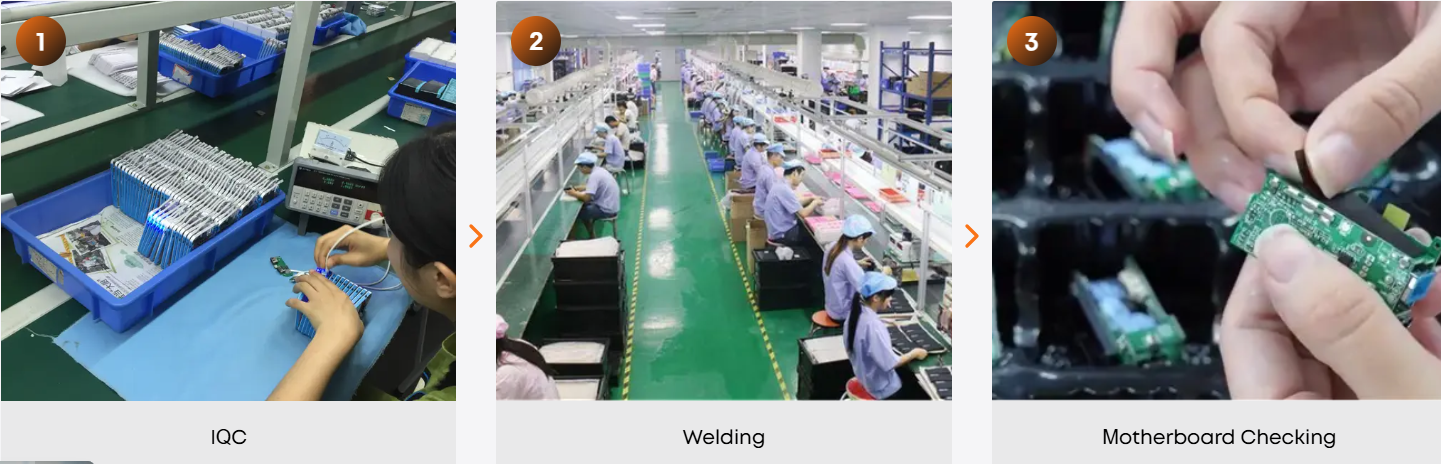
How to Evaluate a 140W GaN Charger OEM Factory
For experienced procurement professionals, factory audits should focus on the following technical criteria:
-
Aging Test Standards
Confirm whether 100% full-load aging tests are performed for at least 4 hours.
AOVOLT conducts 45°C constant-temperature aging. -
Key Component Sourcing
Verify that core GaN ICs come from tier-1 suppliers such as Navitas, GaN Systems, or Infineon. -
SMT Assembly Precision
Compact 140W designs demand extreme SMT accuracy.
AOVOLT uses fully automated high-speed SMT lines, meeting IPC-A-610G Class 2 standards. -
Customization Responsiveness
Assess whether the factory can modify PD protocol firmware to support future or niche devices.
Conclusion
Give Your Brand True OEM-Grade Competitiveness
By 2026, fast-charging competition is no longer about price—it is a contest of core R&D capability and compliance strength.
Choosing AOVOLT as your 140W GaN charger OEM/ODM partner means gaining:
-
OEM-grade charging performance
-
A tier-1 smartphone R&D team as your backbone
-
Zero-risk IP protection
-
Globally recognized quality benchmarks
Your brand deserves an experience that stands shoulder-to-shoulder with original manufacturers.
Contact Our Senior Technical Consultants
Request the latest 140W PD 3.1 solution dossier and sample application form today.
Let’s build the next industry-defining fast-charging product—together.
References: