
Power Banks 2026: More Than Just Backup Power
In 2026, power banks are no longer simple portable batteries—they’re advanced smart devices integrating GaN fast charging, multi-port output, wireless compatibility, and AI-assisted power management.
Whether you’re an individual user or an OEM distributor, choosing the right power bank means understanding how capacity, technology, materials, and certifications align with your actual needs.
This guide breaks down the key elements every buyer should consider before making a purchase or signing a supplier contract.
1. Define Your Purpose Before You Buy
Identify Your Use Case
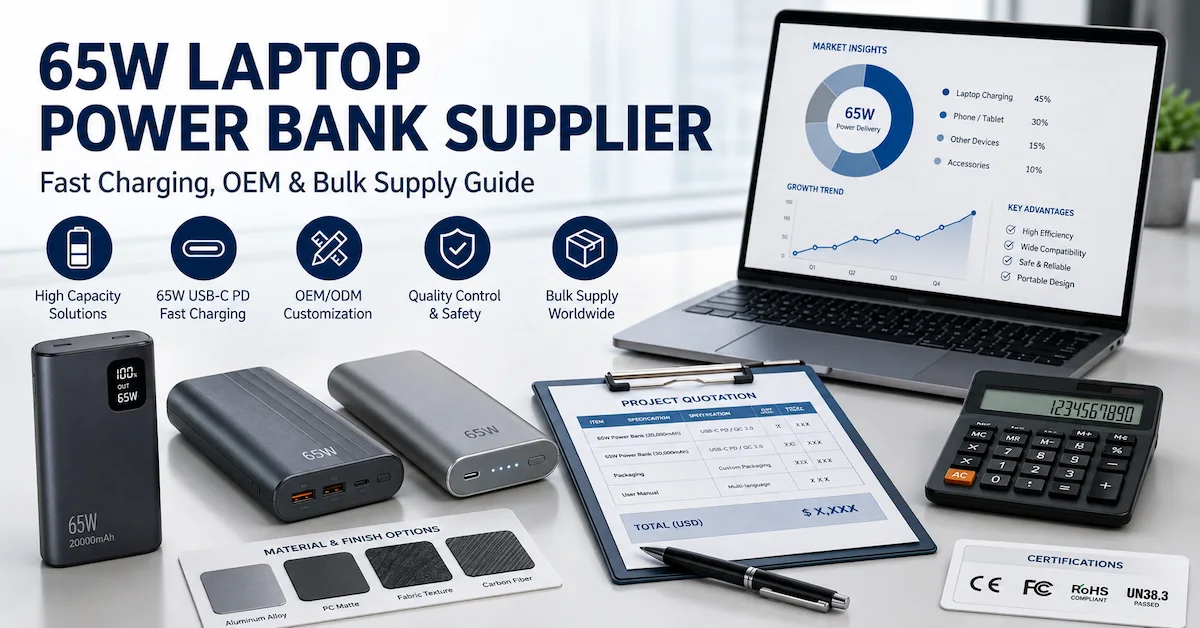
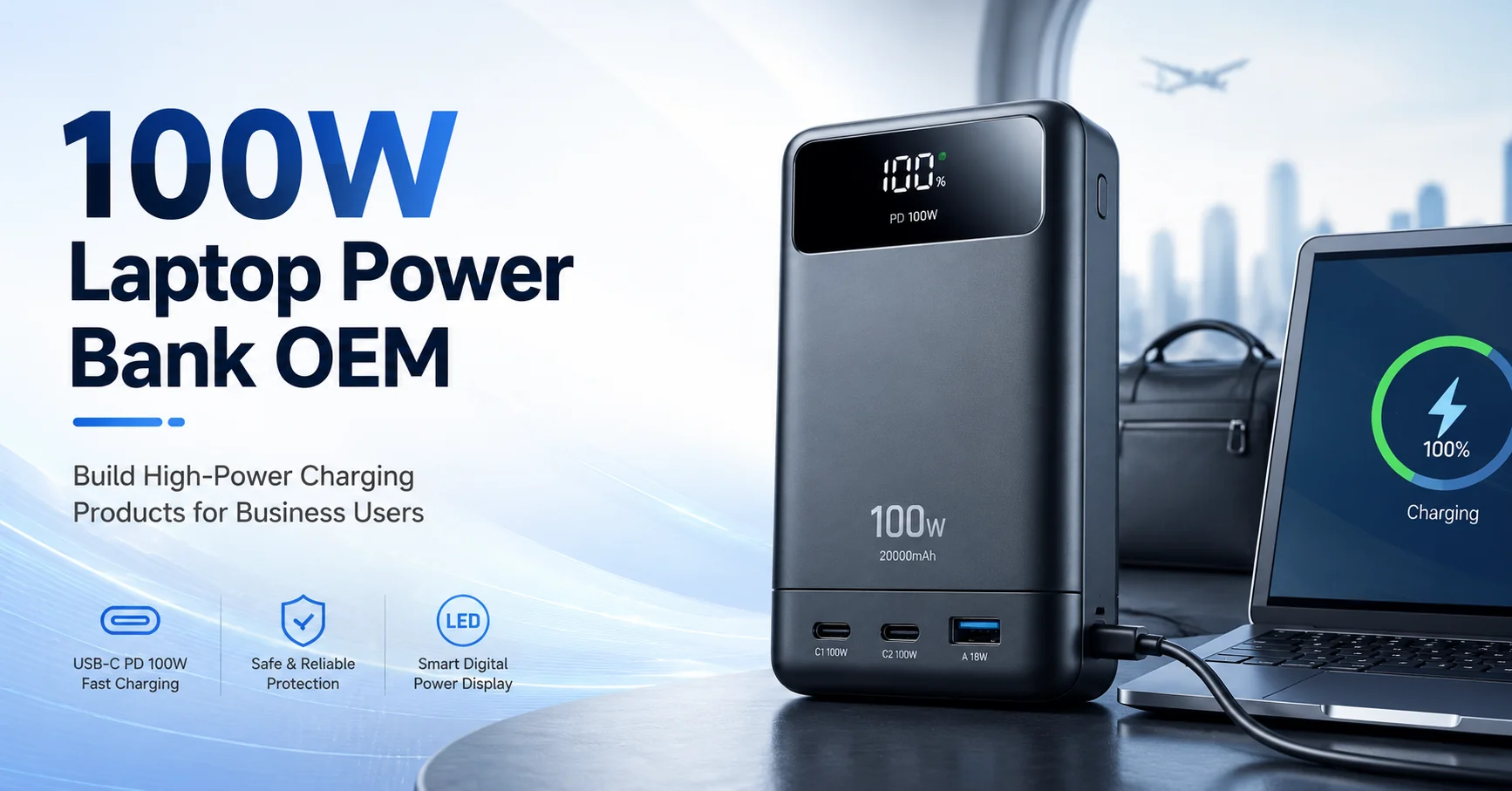
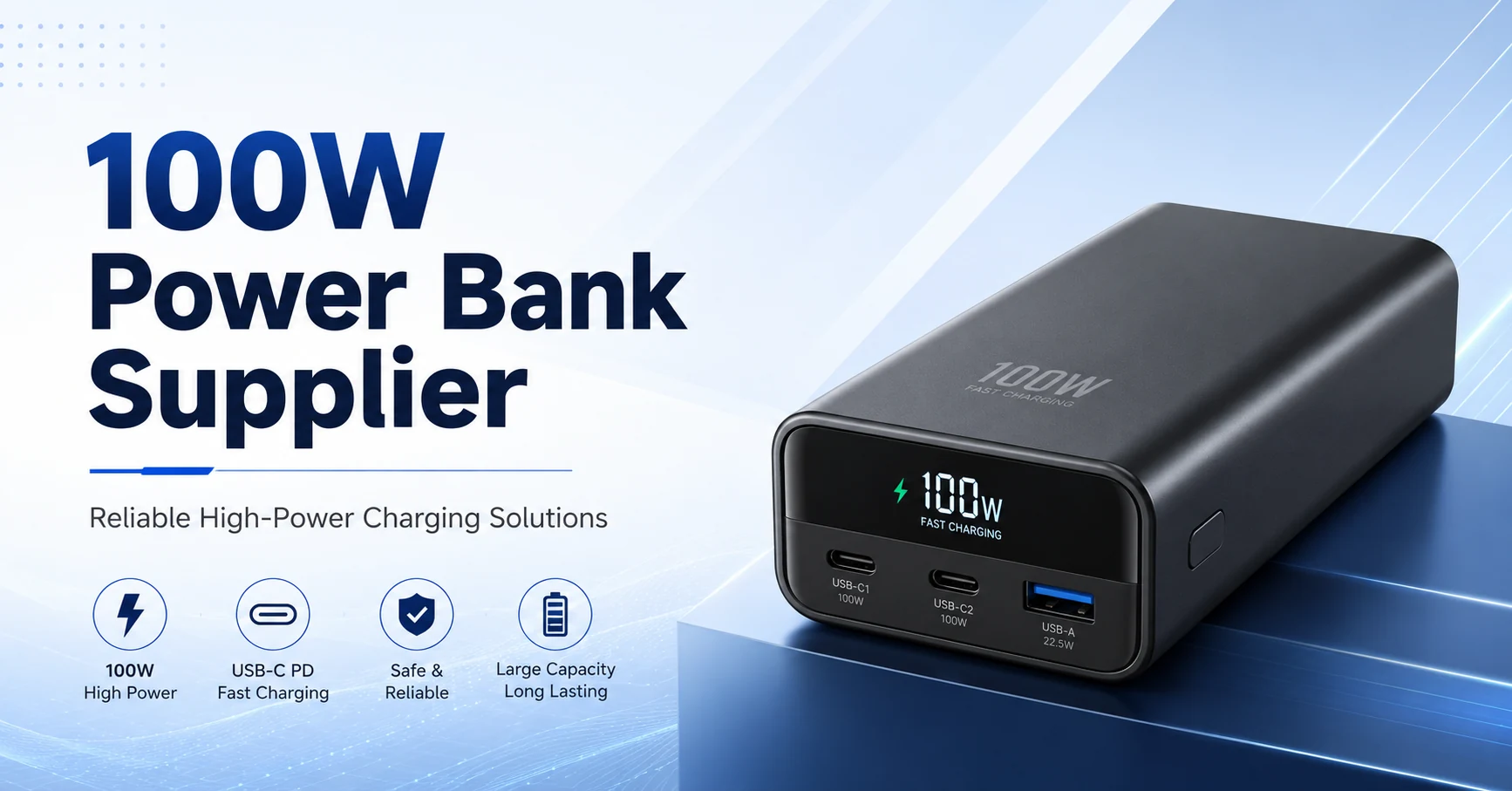
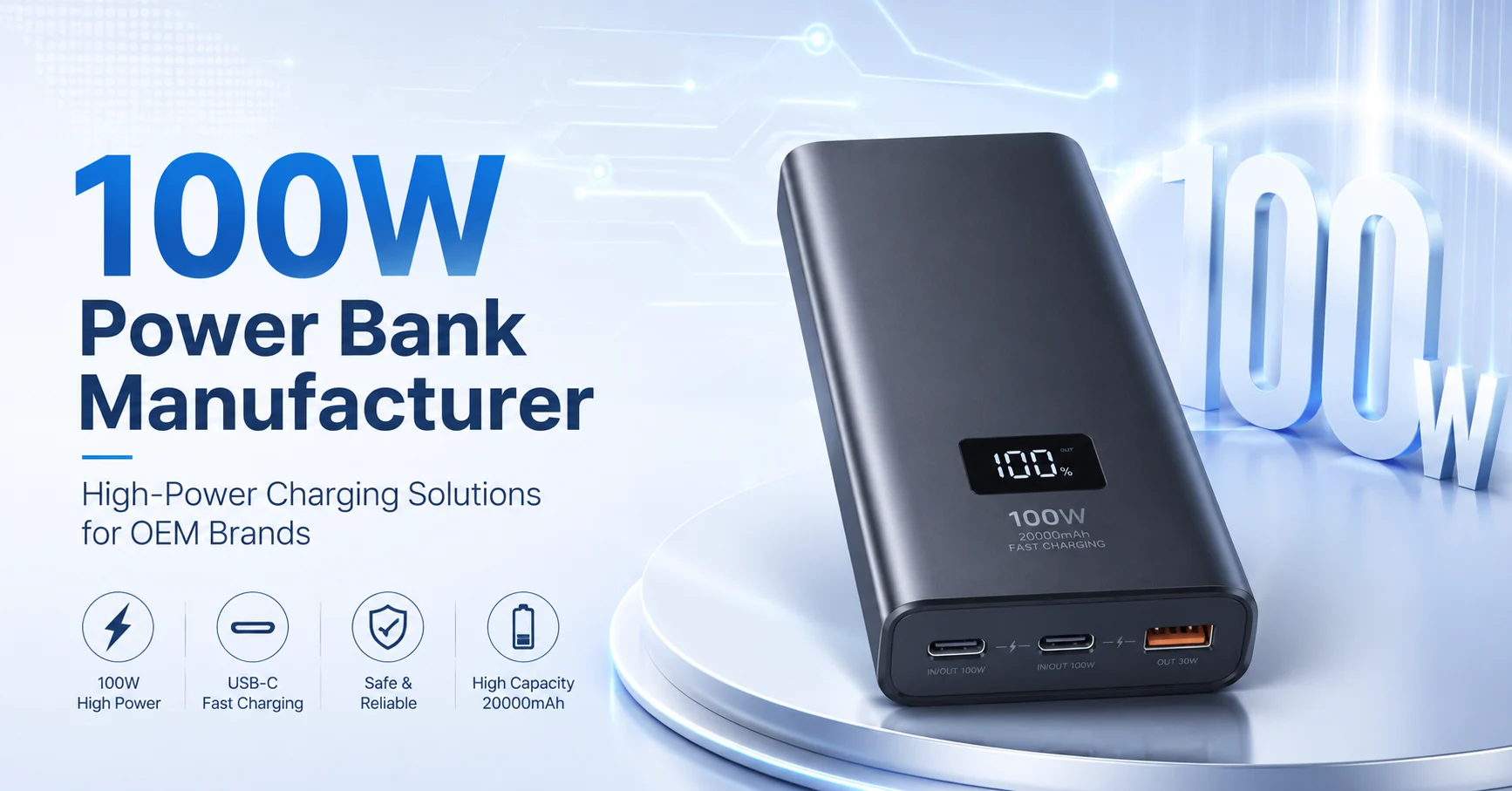
Not every power bank is built for the same scenario. A compact 5,000 mAh model may suit commuters, while a 100 W high-capacity GaN power bank is essential for laptops and professionals.
Main categories in 2026:
-
Mini Power Banks (3,000–5,000 mAh): pocket-size, ideal for light travel or daily carry.
-
Standard Portable Power Bank (10,000–20,000 mAh): mainstream for phones and tablets.
-
High-Capacity Power Stations (30,000 mAh +): designed for laptops, drones, or outdoor work.
-
Wireless & MagSafe Magnetic Power bank Models: integrated magnetic alignment for cable-free charging.
Tip: When sourcing for retail or OEM projects, match product type to your end-user profile—don’t over-specify or under-deliver.
2. Understand Battery Capacity vs. Output Power
Why Capacity Alone Is Misleading
A common buyer mistake is assuming that bigger capacity equals better performance.
What matters more in 2026 is effective output efficiency—how much of the stored energy your device can actually use.
| Spec | Meaning | Ideal Value |
|---|---|---|
| Rated Capacity | Total battery storage | 10,000–30,000 mAh |
| Conversion Efficiency | Energy lost during transfer | ≥ 85 % |
| Output Power | Charging wattage | 20 W (phones), 65–100 W (laptops) |
Modern GaN-based models optimize conversion, offering smaller size but faster output, which is why they’re replacing older lithium-ion packs.

3. Prioritize Fast Charging Standards (PD 3.1 & QC 4.0)
Charging Speed Defines User Experience
A 2026 power bank should at least support USB-C PD 3.1 (Power Delivery) and Quick Charge 4.0 or higher.
These protocols ensure compatibility across smartphones, tablets, and even laptops.
Why it matters:
-
PD 3.1 = up to 140 W output (laptops, iPads Pro, MacBooks).
-
QC 4.0 = optimized charging curve for Android devices.
-
GaN chips = cooler operation + compact build.
Extra Tip: For OEM buyers, confirm protocol testing in supplier datasheets—many budget factories claim PD support but fail real-load validation.
4. Check for Certified Safety and Reliability
Safety Is Not Optional
A certified power bank protects both users and brands. Look for the following marks and reports:
-
UN38.3 – mandatory for international shipping.
-
CE / FCC / RoHS – electronic compliance for EU & US markets.
-
MSDS & Battery Report – chemical and transport safety.
-
Qi 2.0 Certification – for wireless and MagSafe models.
According to UL Solutions, verified certification reduces failure rates by over 40 %, especially for lithium-based energy storage devices.
5. Evaluate Build Quality and Materials
What’s Inside Matters Most
A durable, safe, and visually appealing casing can elevate product value.
Recommended materials in 2026:
-
PC + ABS fire-resistant shell – for standard models.
-
Aluminum alloy frame – for GaN or high-power series.
-
Soft-touch silicone finish – for MagSafe and portable designs.
-
Graphene thermal layer – improves heat dissipation efficiency.
Mechanical testing standards:
-
Drop Test ≥ 1.2 m (no battery rupture)
-
Thermal Cycle Test (–20 °C ↔ 45 °C)
-
Continuous Discharge Efficiency ≥ 90 %
A premium build doesn’t just look better—it ensures battery stability, cooling control, and long-term reliability.
6. Consider New-Generation Features in 2026 Models
Innovation Adds Real Value
| Feature | Function | Advantage |
|---|---|---|
| MagSafe 2.0 / Magnetic Alignment | Auto snap to iPhone series | One-hand charging, no cables |
| Smart Display Screen | Shows wattage, temperature, % output | Transparency for users |
| Built-in Cables | Integrated USB-C / Lightning | Travel-ready convenience |
| Solar or Hybrid Input | Energy from DC or solar panels | Outdoor charging flexibility |
| AI Power Management | Adaptive current control | Extends battery lifespan |
Buyers should focus on features with real-world benefits, not just marketing terms. Ask suppliers for firmware or PCB architecture details when sourcing OEM batches.
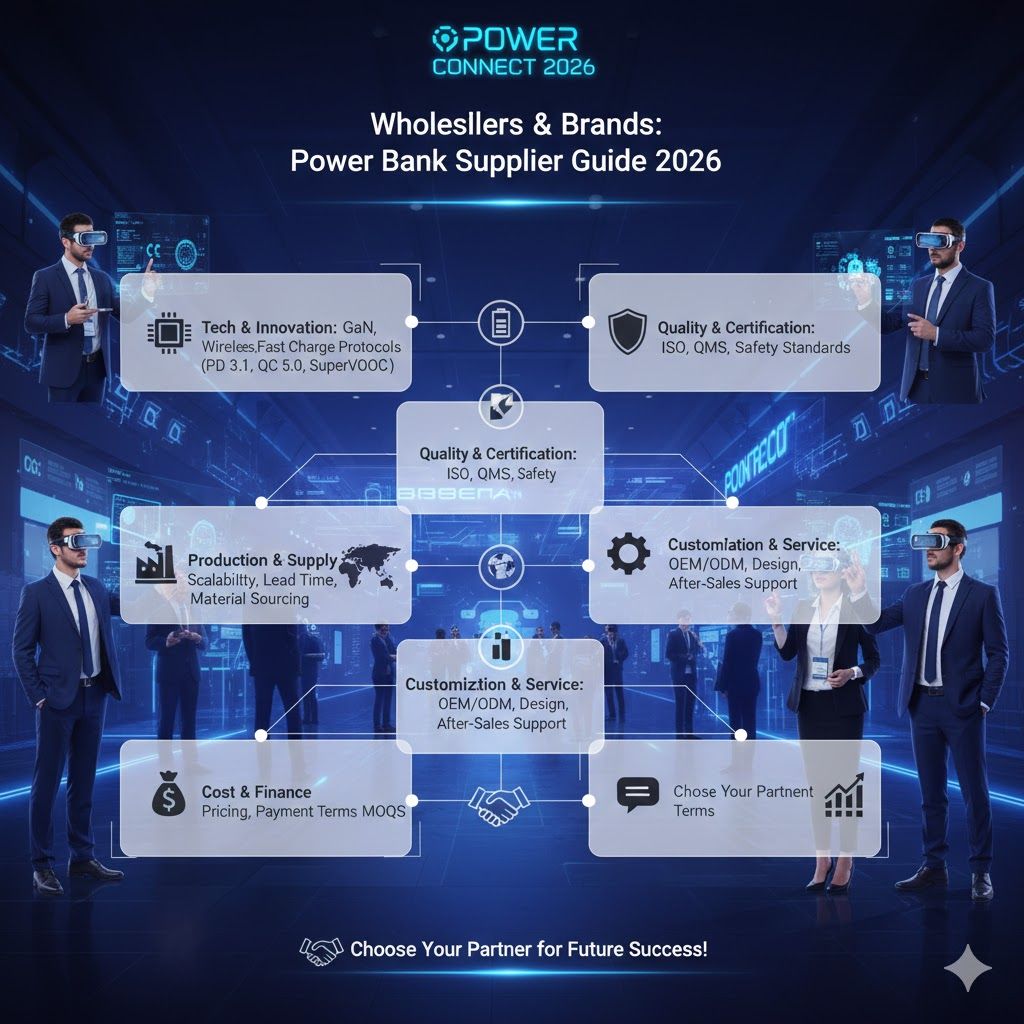
7. Compare OEM Options and Supplier Reliability
Partnering for the Long Run
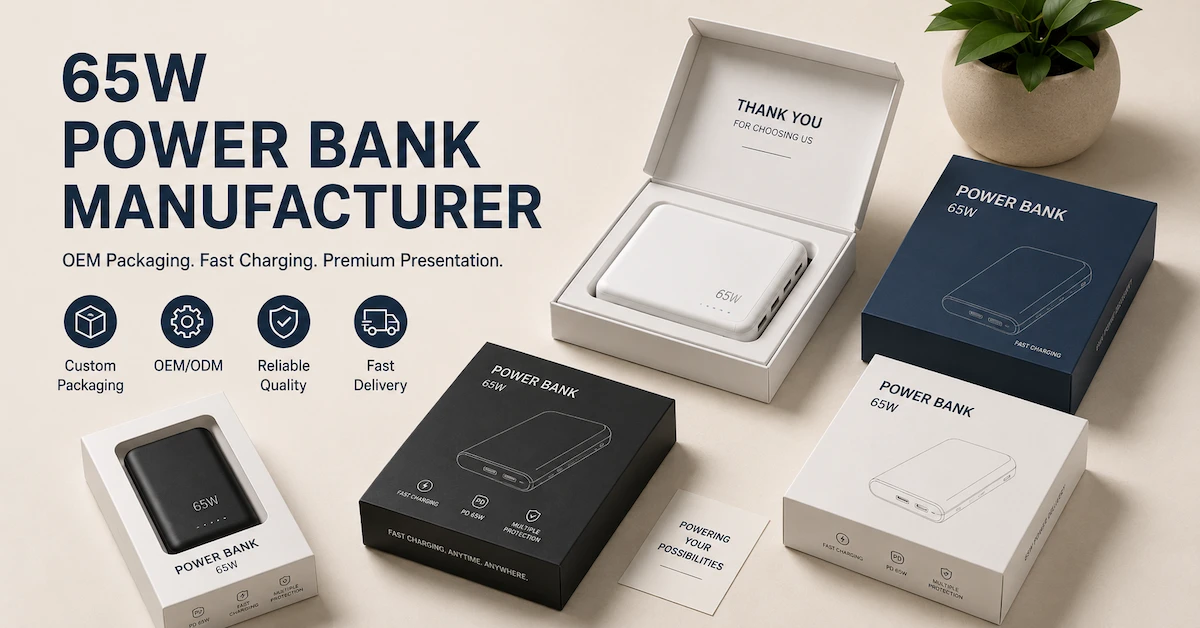
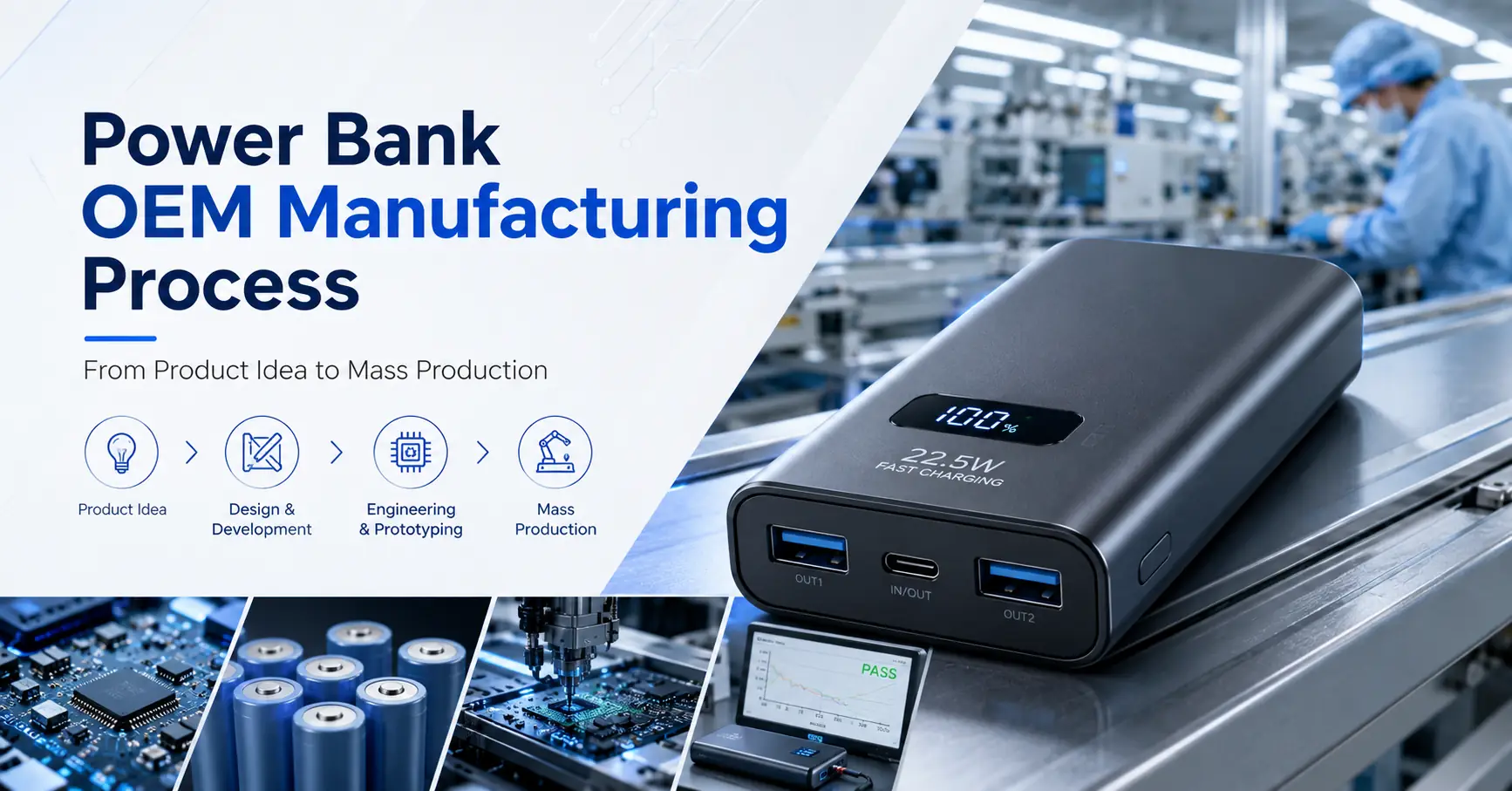
If you plan to launch a custom brand or private-label product, your supplier is as important as the product itself.
Checklist for OEM sourcing:
-
In-house assembly & SMT production
-
QC process = incoming test → aging test → FOD test
-
MOQ flexibility & sample testing before bulk orders
-
Real capacity report with serial traceability
-
Warranty ≥ 12 months
A factory like ESCCharge provides OEM and ODM power bank solutions—from concept design to certification support—helping global distributors shorten time-to-market.
8. Don’t Overlook Sustainability and Recyclability
Eco-Friendly Design Is a 2026 Priority
Environmental awareness is now a commercial advantage.
Power banks with recyclable shells, low-VOC coatings, and energy-efficient GaN chips appeal to modern buyers and meet new EU eco-standards.
IRENA notes that reducing e-waste and improving battery recycling efficiency could cut carbon emissions from consumer electronics by 30 % by 2030.
Choosing sustainable designs is not just ethical—it’s smart business.
Conclusion: The Right Power Bank Defines the Experience
The ideal power bank in 2026 combines power, portability, and protection.
Whether you’re charging a phone, laptop, or multiple devices at once, reliability and certification always outweigh flashy claims.
For OEM and distribution buyers, selecting a trusted supplier ensures consistent quality, safety compliance, and a scalable partnership.
To explore OEM-ready fast-charging power banks and magnetic wireless models, visit
ESCCharge Official Website
and discover portable energy solutions built for the next generation of mobile devices.