
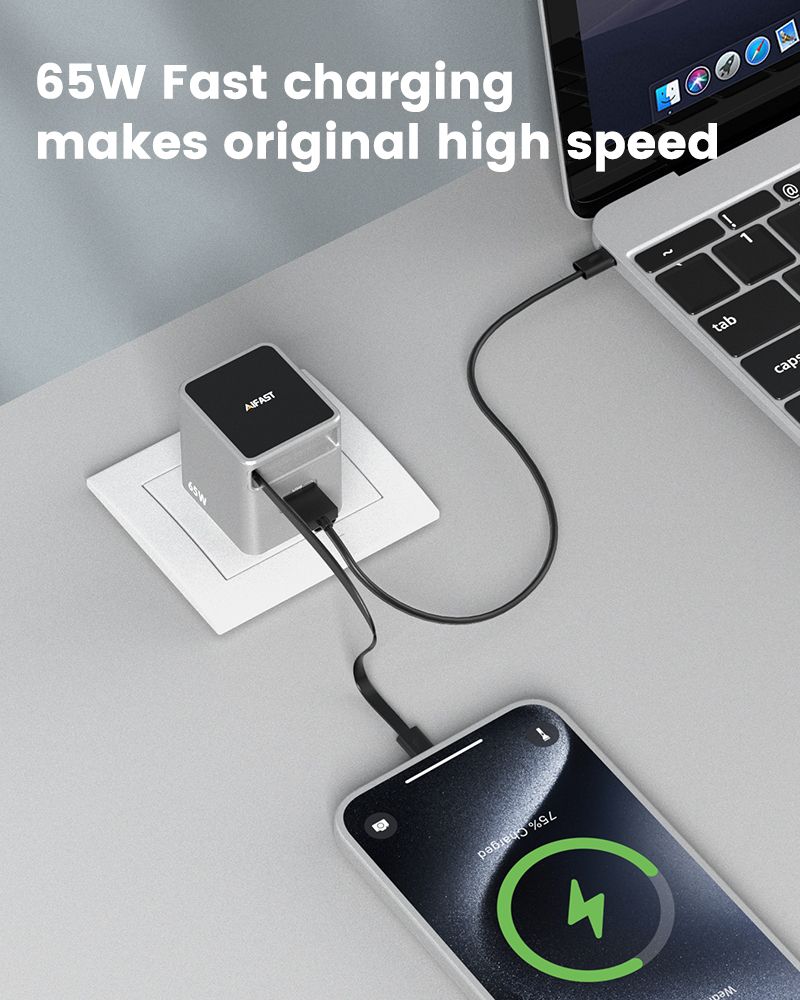
In the 2026 consumer electronics battleground, buyers of white label GaN fast chargers are no longer satisfied with mere private labeling. The reality is harsh: if your product doesn’t support PD 3.1 140W high-integration solutions, or if you’re still relying on three-year-old generic molds, your profit margins will be completely eroded by Amazon’s homogenized competition. The only way to avoid a brutal price war is through a vertically integrated system from Dongguan B2B source factories, offering end-to-end delivery—from PCBA R&D to proprietary mold development.
Wholesale data today is clear: 65W–140W chargers with GaN III technology and global safety certifications must keep a repair rate under 0.3% while maintaining a 15%–25% brand premium. This is the survival line for B2B procurement in 2026.
Why GaN III Is the Benchmark for the 2026 Power Market
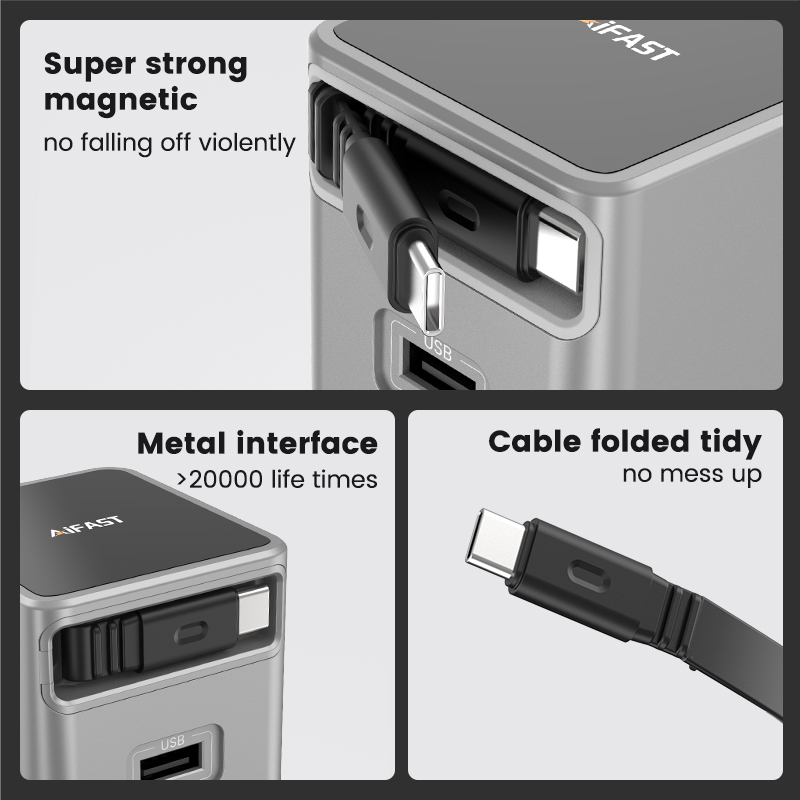
If you’re still debating the difference between silicon and gallium nitride (GaN), you’re already two technology generations behind. The battlefield now belongs to GaN III (Gallium Nitride) technology.
The Efficiency vs. Size Dilemma: GaN’s Deep Evolution
Early GaN solutions merely shrank the physical size. Today’s third-generation technology achieves the ultimate balance between power density and thermal management. In our 15 years of industry experience, top-tier OEM/ODM wall charger manufacturers can reach conversion efficiencies above 94%. At 140W output, this allows the charger’s surface temperature to stay 5–8°C lower than second-generation solutions.
Thermal control is a matter of survival. A charger that overheats is perceived by consumers as a ticking time bomb.
PD 3.1 140W: Crossing the Smartphone Divide
Fast charging is no longer just a smartphone accessory. PD 3.1 140W multi-port charging is becoming a universal protocol for high-performance laptops, cameras, and even lightweight office devices. Buyers seeking white label GaN fast chargers want a single charger that handles all desktop power needs. This versatility is the true source of brand premium.
Pitfall Guide: Three Hidden Traps in White Label Charger Procurement
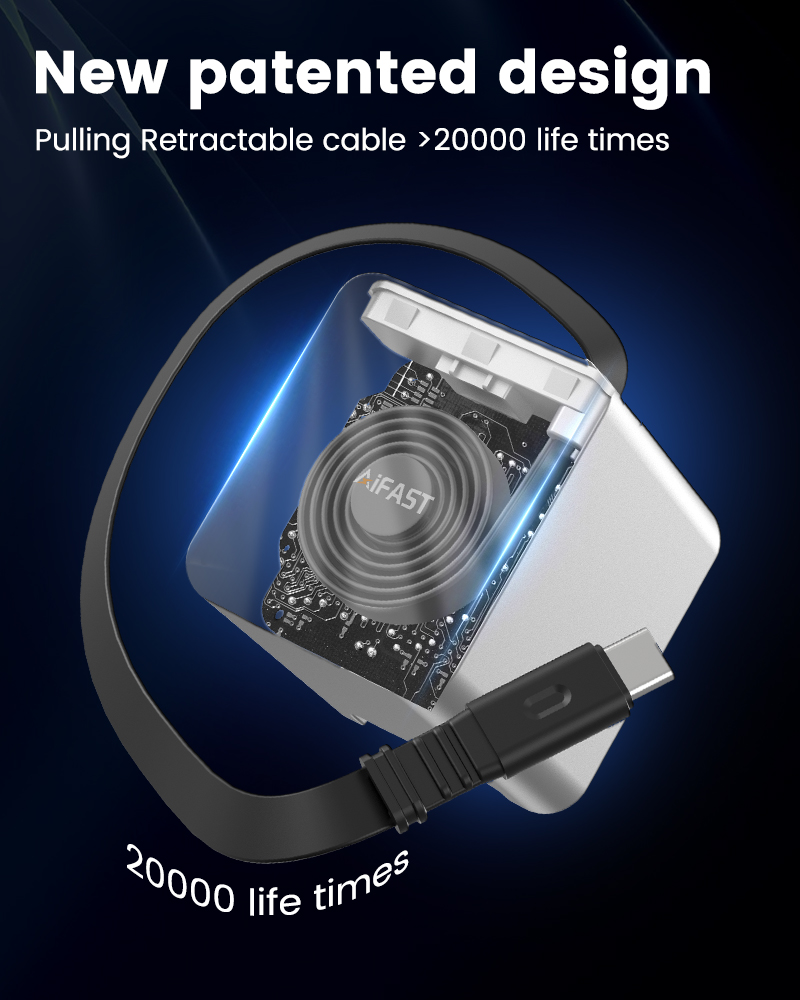
During the search for Dongguan source factories, many purchasing managers get dazzled by flashy presentations.
1. “Fake Protocols” Trap: Genuine Universal Compatibility
Some factories claim PPS, QC3.0, AFC, and SCP compatibility. Yet in real tests, simultaneous multi-port use often fails voltage handshake, causing repeated disconnections.
When developing our 140W flagship, the most frustrating challenge was protocol logic conflicts. True universal fast charging requires deep secondary development on the PCBA, not just buying off-the-shelf chipsets. This ensures smooth, intelligent current distribution from Apple 2.4A and PD 3.0 to the latest PD 3.1 in 2026.
2. Generic Mold Killer: The “Chronic Poison” to Brand Profit
Buying common molds exposes your supply chain. Competitors can easily trace upstream suppliers and start undercutting. Custom branding in consumer electronics is not just about logo printing—it’s about proprietary mold opening capability.
3. Non-Vertical Supply Chain: The Hidden Cost Sink
Many trading companies masquerade as factories without injection molding workshops. If the shell or metal components have color or tolerance issues, they can only pass the blame. Disconnected supply chains are the main reason B2B clients lose market share.
Anatomy of High-Performance GaN Chargers: A Factory Perspective on PCBA Design
Around 70% of a fast charger’s value lies within its green circuit board (PCBA).
Advanced PCBA Design: The Heart of Stable Output
In power electronics PCBA manufacturing, routing topology directly affects EMI performance. Our engineers jokingly say a good PCBA is like a precise waltz. At AOVOLT, we use high-spec planar transformers and low ESR solid capacitors to suppress high-frequency interference—not just adding components, but ensuring global safety certification pass rates (UL/CE/UKCA) on the first attempt.
Current White Label GaN Charger Tier Comparison:
| Key Metrics | Basic | Pro | Flagship (AOVOLT Standard) |
|---|---|---|---|
| GaN Generation | GaN I / II | GaN II | GaN III (2026 Latest Gen) |
| Max Power | 30W–65W | 65W–100W | 140W+ (PD 3.1) |
| Thermal Management | Standard thermal paste + heatsink | High thermal conductivity injection molding + vacuum heat plate | Advanced thermal management |
| Protocol Compatibility | Basic PD/QC | Major fast-charging protocols | Full protocol compatibility (PPS, AFC, SCP, Apple 2.4A, BC1.2) |
| Shell Process | Generic mold | Modified mold | Proprietary mold + visual recognition |
| Safety Mechanisms | 4 layers | 6 layers | 10-layer smart protection (chip-level monitoring) |
Industrial Design & Proprietary Mold: The Power of Visual Hooks
Technology sets the floor; design sets the ceiling. In 2026, if your white label charger is still a plain plastic block, you’re destined for price wars.
Our unique visual identity integrates cooling grilles with geometric aesthetics, giving products a professional “engineering beauty” feel. Purchasing managers immediately sense these chargers come from a Dongguan source factory with 15 years of injection molding experience, not a makeshift workshop. This visual authority reduces the B2B buyer’s decision barrier, signaling quality across the board.
Strategic Advantages of Dongguan Source Factories: Heavy-Asset Vertical Integration
When sourcing OEM partners halfway across the globe, physical distance amplifies communication errors. Dongguan’s vertically integrated, heavy-asset factories dominate not with cheap labor but with concentrated supply chains and capital-intensive production.
Many overseas buyers initially prefer smooth-talking trading companies. But at the DFM (Design for Manufacturing) stage—especially with 140W high-density thermal layouts—middlemen often trigger catastrophic delays. With 15 years of electronics manufacturing experience, we’ve already navigated nearly every fast charger R&D pitfall.
From design sketches to injection molding, PCBA assembly, and final metal integration, everything happens in-house. Our automated production lines start first article inspection (FAI) even while trading companies wait for external mold schedules. This rapid prototyping ability is the decisive weapon for capturing the 2026 peak sales season.
Global Compliance & Certification: Mitigating Market Risk
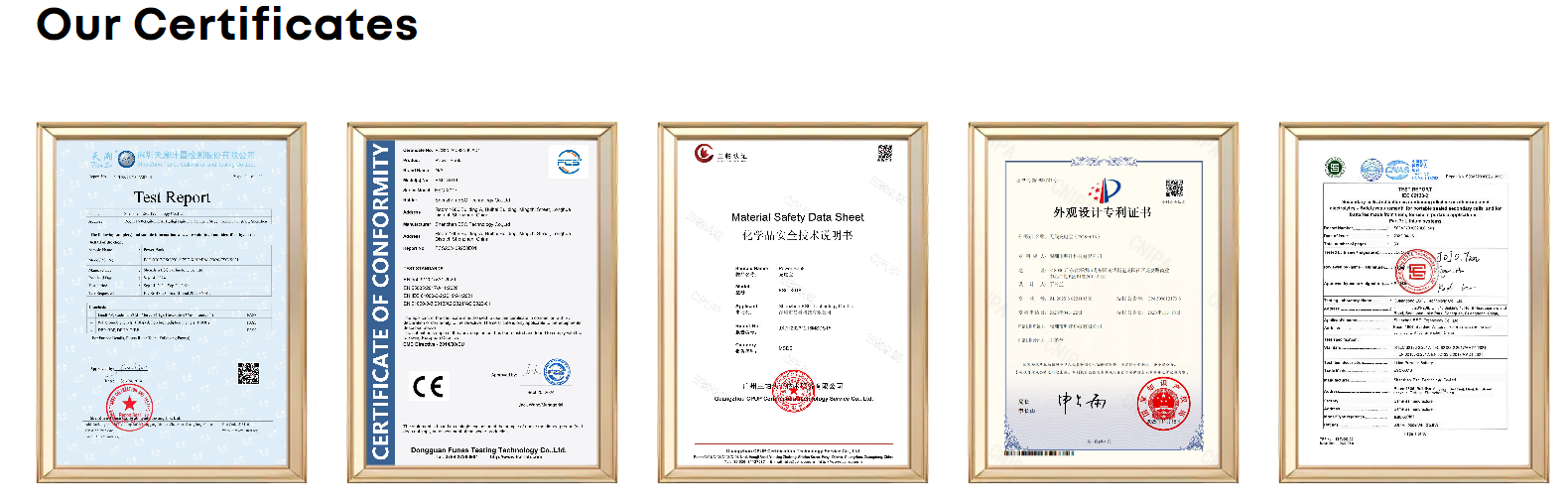
For high-power chargers, safety certifications are not just customs credentials—they are shields against costly liability. With tightening 2026 standards on e-waste and energy efficiency, relying on PS certificates or generic mold reports is obsolete.
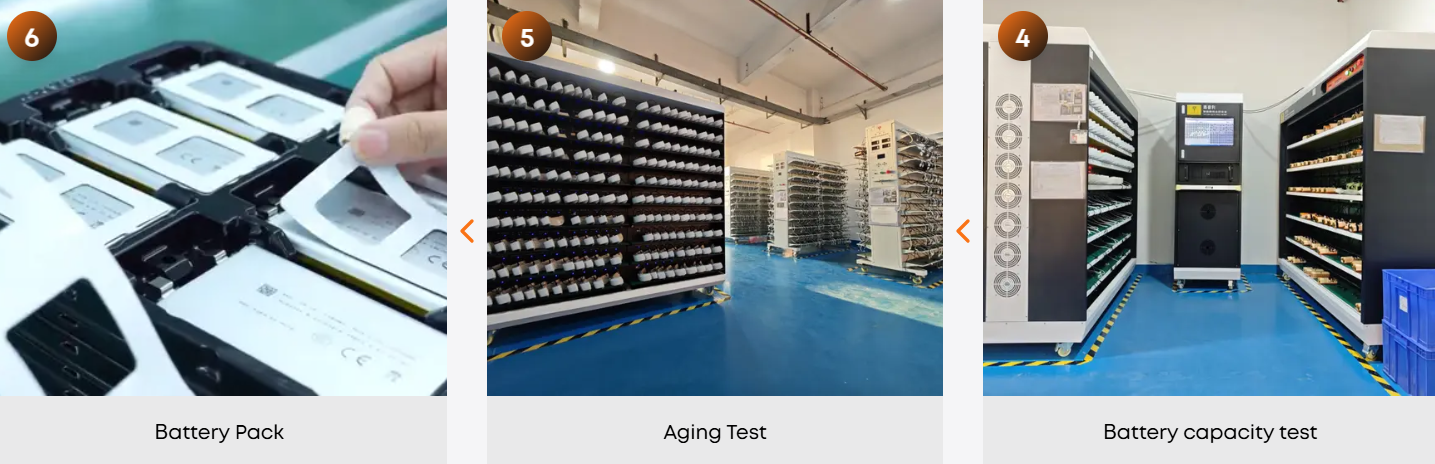
High-end white label GaN chargers must embed compliance logic from the component selection stage. For our 140W flagship, internal Tier-1 testing includes 500 hours of full-load endurance testing in temperature and humidity-controlled chambers, monitoring each capacitor’s temperature rise. 140W GaN charger supplier for you 2026: CE certified and fully integrated.
Global Market Certification Comparison:
| Market | Mandatory Certification | Energy & Environmental Standards | AOVOLT Internal Testing (140W) |
|---|---|---|---|
| North America (US/Canada) | FCC, UL 62368-1 | DOE Level VI, CEC | 48h continuous full-load thermal monitoring, surge & shock tests |
| Europe (EU/UK) | CE (LVD+EMC), UKCA | ErP Tier 2, RoHS, REACH | 230V wide-voltage THD analysis, high-voltage ESD simulation |
| Asia-Pacific (Japan/Australia) | PSE, RCM | MEPS | Drop & vibration tests, flame-retardant casing V0 verification |
| Global CB Scheme | - | Universal protocols (PPS, QC3.0, FCP, AFC) | Blind-plug dynamic power distribution fatigue testing |
Automated Quality Control (ATE) ensures each 140W GaN charger is inspected for load-free power, multi-port handshake, and ripple anomalies, preventing defective units from leaving the factory.
Beyond the Logo: True ODM Depth
A factory that only silkscreens your logo is just private labeling. True customization redefines power distribution logic.
Modern B2B clients demand fragmented solutions: some need dual-port charging where C1 maintains 100W for MacBook Pro full load, while others need dynamic 140W distribution across multiple ports. Our PCBA expertise allows custom MCU-level programming for precise power strategies.
High-end surface finishes—from anti-fingerprint textures to metal-like NCVM vacuum coating, and ESG-compliant packaging—complete the full commercial package, enabling $100+ retail pricing immediately out of the box.
Industry FAQ: Core Buyer Concerns
Q1: What is the difference between GaN II and GaN III in practical use?
GaN III optimizes switching frequency and conduction resistance, reducing switch loss at 140W and enabling compact designs without triggering over-temperature protection (OTP).
Q2: How can we verify a factory’s true PD 3.1 140W capability?
Check test equipment and aging chambers. Genuine lines have load instruments supporting 28V/5A or wider voltage ranges and oscilloscopes capturing complex handshake packets. Request PD 3.1 waveforms and full-load thermal imaging reports.
Q3: Can we customize only the PCBA while keeping our unique industrial design?
Yes. Provide 3D structural drawings; engineers will optimize 3D component layout and thermal simulation for high-stability bareboard solutions.
Q4: How long does it take to launch a fully new mold (private mold)?
With in-house vertical integration, design confirmation to 3D prototyping takes 3–5 days. Mold creation and T0 testing can be completed in 15–20 days, well ahead of the industry average of 35 days.
Q5: Are your white label GaN chargers already certified overseas?
Most standard PCBA models have pre-compliance tests with UL, CE, FCC. For standard models, we provide ready-to-use reports. For custom designs, expedited certification services are available.
Rebuilding the 2026 Supply Chain Moat
Technology cycles ruthlessly eliminate slow-moving brands. Consumers now expect a compact GaN charger to power phones, tablets, and even high-power workstations. Relying on old solutions marginalizes your brand. Leveraging source factories’ heavy-asset R&D to manage protocol handshakes, strict thermal standards, and mold injection is the path to maintaining high margins.
With 15 years in the field, we’ve seen brands fail due to broken supply chains. Our end-to-end closed-loop system—from industrial design to PCBA development and precision manufacturing—eliminates uncertainty. For next-quarter product lines or if your current supplier can’t handle 140W multi-protocol compatibility, entrusting experienced engineers with design and power distribution evaluations is the best way to optimize your product roadmap.
References:
USB Implementers Forum – USB Power Delivery Specification
Energy Star – External Power Supply (EPS) Program Requirements