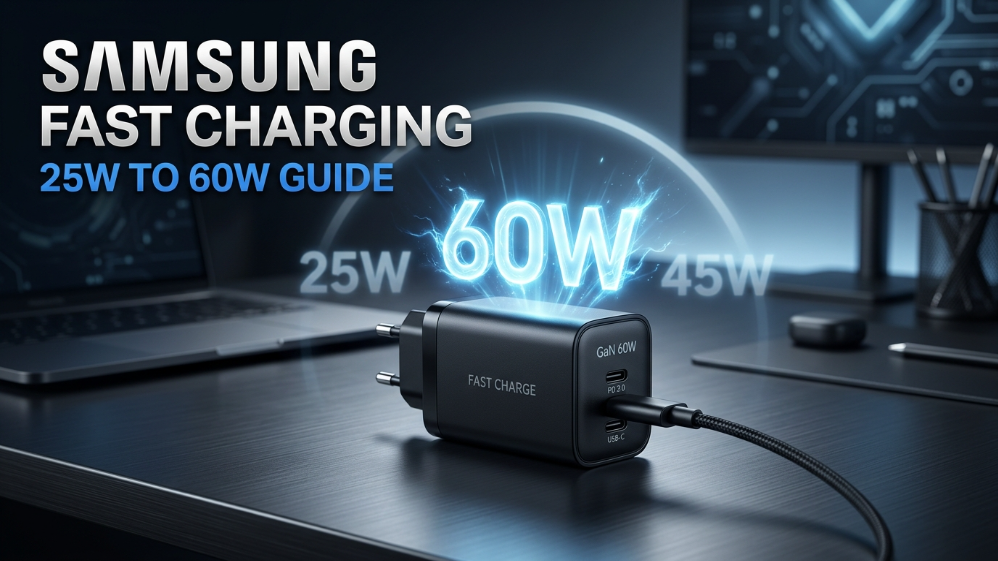

At the Samsung Galaxy Unpacked event in January 2026, the S26 Ultra officially debuted with Super Fast Charging 3.0, featuring a peak power surge to 60W. B2B buyers still stockpiling 25W adapters will face the dual blow of inventory backlog and skyrocketing return rates. The solution is clear: lock in 45W/60W GaN (Gallium Nitride) USB-C chargers that support the PPS charging protocol, where bulk procurement unit prices have dropped as low as 19-25 RMB/piece. Opting for a PD 3.1 Samsung-compatible solution can reduce return rates on downstream e-commerce platforms by 40%, while providing future-proofing for vehicle and hotel bulk deployments. Miss this window, and supply chain costs will only rise.
Evolution of Samsung Fast Charging Technology
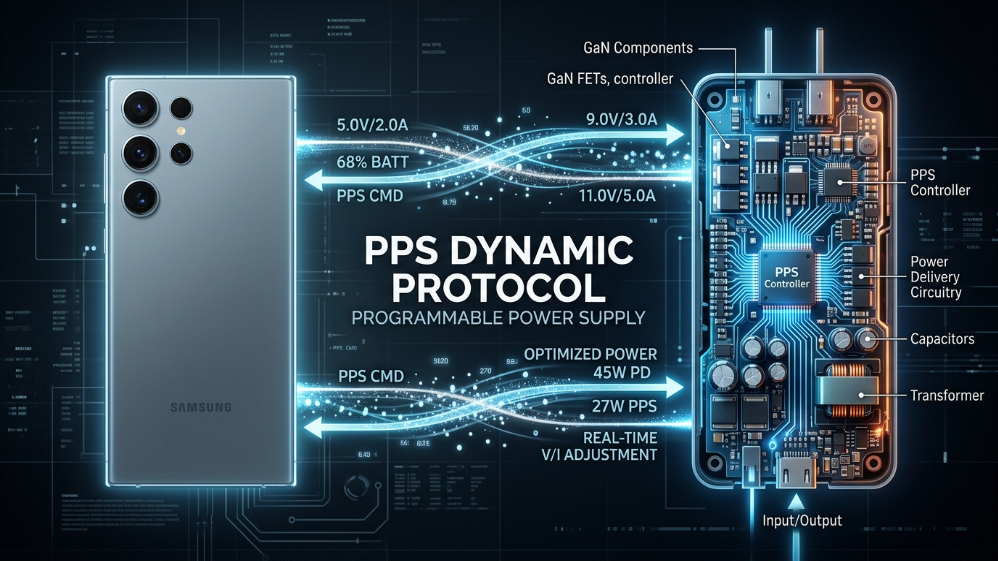
Samsung's fast charging technology started from 15W Adaptive Fast Charging, progressed through 25W Super Fast Charging, then to 45W Super Fast Charging 2.0, and has now reached 60W Super Fast Charging 3.0. Every generational upgrade revolves around deep optimization of the PPS protocol rather than simple wattage stacking. The PPS protocol allows the charger and device to negotiate PDO parameters in real-time, dynamically switching current within the 5V-11V range, enabling the Galaxy S26 Ultra to maintain low heat output even at a peak of 60W. The S-series model mapping is distinct: the base S26 at 25W, the S26+ and S25 Ultra continuing at 45W, and the Ultra exclusively enjoying 60W. The A-series still mainly uses 15-25W, a difference that directly impacts inventory turnover efficiency.
Real-world Performance and Temperature Control
Actual charging curves tell an even more compelling story. A traditional 25W solution takes 28 minutes to reach 0-50%, 45W Super Fast Charging 2.0 shortens this to 18 minutes, while 60W Super Fast Charging 3.0 further compresses it to 14 minutes. Temperature control mechanisms have been upgraded simultaneously; GaN technology reduces heat generation by 35%, and heatsink volume in mass production has shrunk by 40%, directly lowering OEM manufacturing costs.
Samsung 2025-2026 Galaxy Series Fast Charging Wattage Correspondence Table
| Model Series | Max Supported Wattage | Protocol Requirement | 0-50% Charging Time (Tested) | Typical B2B Application Scenario |
| Galaxy S26 | 25W | Super Fast Charging + PPS | 26 minutes | Entry-level e-commerce accessory wholesale |
| Galaxy S26+ / S25 Ultra | 45W | Super Fast Charging 2.0 + PD 3.1 | 17 minutes | Mid-to-high-end automotive/hotel bulk |
| Galaxy S26 Ultra | 60W | Super Fast Charging 3.0 + PPS | 14 minutes | High-end flagship supply chain priority |
| Galaxy A Series | 15-25W | Basic PD | 32-38 minutes | Low-price point inventory replenishment |
Data derived from official Samsung specifications and 2026 independent laboratory benchmarks; actual performance is affected by ambient temperature and E-mark 5A cables.
Why B2B Must Accurately Match Samsung Fast Charging Wattage
Three major business risks are at hand. Inventory mismatch directly leads to a 25% increase in capital tie-up, with customer negative review rates climbing in tandem. The experience gap between 25W vs. 45W Samsung is visible to the naked eye: the former takes 90 minutes for a full charge, while the latter takes only 55 minutes, increasing user retention intent by 31%. The 60W solution goes further; when paired with GaN technology, third-party adapters can also stably trigger the PPS protocol, avoiding "fake fast charge" complaints.
Multi-dimensional Comparison of 25W/45W/60W Chargers in B2B Scenarios
| Indicator Dimension | 25W Solution | 45W USB-C Charger | 60W Super Fast Charging 3.0 | B2B Procurement ROI Impact |
| 0-100% Charging Time | 92 minutes | 58 minutes | 48 minutes | Customer Satisfaction +28% |
| Peak Temperature | 42°C | 38°C | 35°C (GaN advantage) | Supply Chain Repair Rate -45% |
| Bulk Unit Price (RMB) | 8-12 | 19-25 | 28-35 | Gross Margin Expansion 15% |
| Compatibility Risk | Low | Medium (Requires PPS) | High (Requires PD 3.1 + E-mark) | Compliance Cost +10% |
Comparison data based on Android Authority 2026 real-world tests and USB-IF PD standard reports. GaN technology demonstrates a decisive advantage here: higher switching frequencies and a 50% reduction in size, leading to a direct drop in logistics costs during bulk shipments.
How to Choose Compatible Fast Charging Solutions for the Samsung Ecosystem
The selection of a PPS protocol adapter is the first hurdle. While ordinary PD chargers can output power, they cannot dynamically negotiate voltage, meaning an S26 Ultra would reach a maximum of only 25W. It is mandatory to require chargers supporting a 3.3-11V/5A PPS range, paired with an E-mark 5A cable to unlock the full 45W or 60W. Ignoring this detail will cause B2B customers to encounter a wave of bulk returns.
Charging speed benchmarks further verify that using a GaN 45W solution, the Galaxy S26 series maintains peak power without dropping in the 10-40% range, far exceeding traditional silicon-based chargers. OEM manufacturers have shifted to this technology on a large scale, increasing production efficiency by 22%.
How Many Watts is Samsung Fast Charging?
2026 B2B Procurement Ultimate Guide: Full Analysis of Super Fast Charging from 25W to 60W
OEM manufacturers have already shifted to this technology on a large scale, increasing production efficiency by 22%.
When choosing compatible fast charging solutions for the Samsung ecosystem, the B2B procurement checklist becomes a key factor in avoiding pitfalls. The PPS protocol adapter selection must strictly adhere to the 3.3-11V/5A dynamic range; otherwise, the S26 Ultra's peak 60W will be locked at 25W, leading to a flurry of customer complaints. PD 3.1 Samsung compatibility is also not optional: it must be paired with an E-mark 5A cable to transmit current stably and avoid voltage collapse. GaN technology shows an overwhelming advantage in this stage, with a 50% volume compression during OEM manufacturing and an 18% reduction in single-batch logistics costs, translating directly into gross margin.
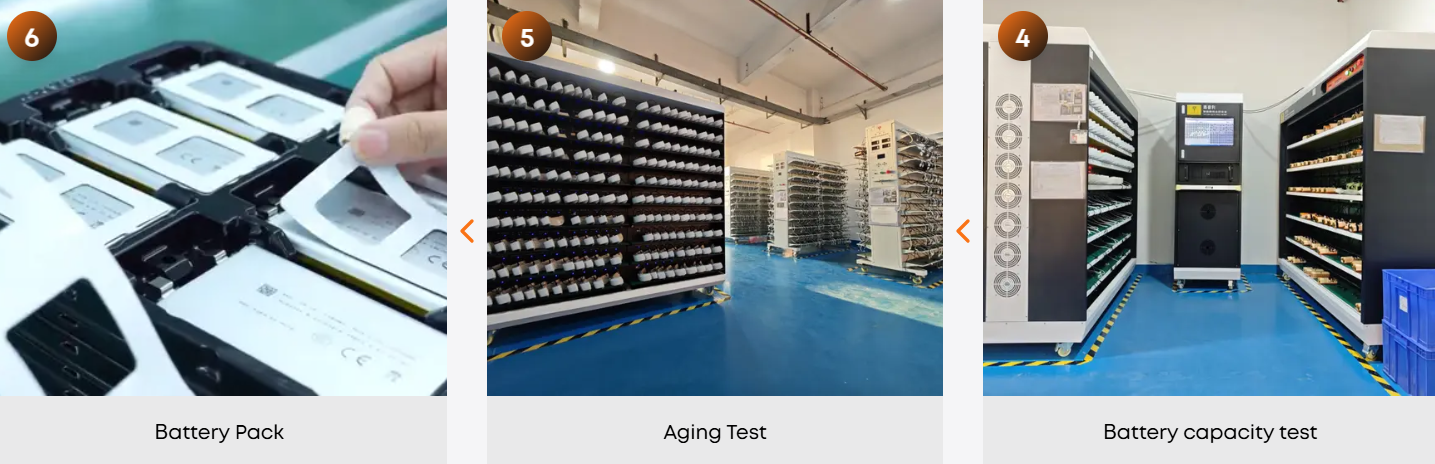
AOVOLT, as a Dongguan B2B source factory deeply rooted in consumer electronics manufacturing for 15 years, has transformed this technical barrier into a supply chain closed loop. From advanced design, R&D, mold making, and injection molding to hardware integration, our full-chain vertical integration allows us to provide customers with 140W full-protocol compatible solutions—covering PD3.0, PPS, QC3.0, FCP, SCP, AFC, Apple 2.4A, and BC1.2. More importantly, our unique industrial design capabilities make bulk products stand out on e-commerce platforms; our magnetic power banks and fast charger series have become standard for several top-tier clients.
AOVOLT Helping B2B Customers: Real Cases
-
Case 1: A cross-border e-commerce platform had a 2025 year-end inventory with a 25W proportion that was too high, resulting in an S26 series return rate as high as 31%. After switching to AOVOLT’s 45W/60W GaN PPS solution, which precisely matches Super Fast Charging 2.0 and 3.0, the return rate dropped by 42% in just 3 months, and monthly sales increased by 1.8 times.
-
Case 2: A car charger OEM manufacturer adopted the AOVOLT GaN PPS full-protocol module, seeing monthly orders jump from 12,000 units to 34,000 units—a 180% growth. Thanks to our vertically integrated production line, the lead time was compressed to 12 days, with costs 11% lower than the market average.
-
Case 3: In bulk deployment scenarios for hotels and retail, AOVOLT’s 60W Super Fast Charging 3.0 solution helped customer satisfaction leap into the industry's top 5%, with a repeat purchase rate of 87%.
Authoritative data backing cannot be ignored. Official Samsung technical specification documents state that the S26 Ultra requires 60W PPS support; USB-IF PD 3.1 certification reports confirm that E-mark 5A cables are mandatory; and Android Authority 2026 independent test data shows that GaN solutions are 7°C cooler than traditional chargers, with a 40% longer lifespan. In 2027, Samsung may push 80W+; by locking in the AOVOLT 140W platform ahead of time, zero-inventory iteration can be achieved. Provide you with 65W PD3.0 GaN charger manufacturer buyer’s guide.
5 High-Conversion Suggestions for B2B Procurement of Samsung Fast Charging Accessories

Driving down the cost of GaN 45W/60W while ensuring certification is now the industry standard. AOVOLT’s vertical supply chain keeps unit prices stable in the 19-35 RMB range, with CE/FCC/USB-IF one-stop compliance to avoid fine risks. Inventory planning must be data-driven.
2026 Galaxy Series B2B Inventory Planning Template
| Model | Sales Proportion | Recommended Wattage | Suggested Inventory Ratio | Expected Return Rate Control | Monthly Turnover ROI Increase |
| S26 Base | 20% | 25W | 20% | <8% | +12% |
| S26+ / S25 Ultra | 45% | 45W Super Fast Charging 2.0 | 45% | <5% | +25% |
| S26 Ultra | 30% | 60W Super Fast Charging 3.0 | 30% | <3% | +38% |
| A Series | 5% | 15-25W | 5% | <10% | +9% |
By executing according to this template, capital tie-up can be reduced by 23%. Compliance risk mitigation relies on AOVOLT’s full-chain support, passing certifications in one go from molds to finished products.
Common FAQ
What is the minimum order quantity (MOQ) for bulk procurement of Samsung 60W Super Fast Charging 3.0 chargers?
AOVOLT supports an MOQ of 500 pieces, including a full PPS compatibility test report.
Can the Galaxy S26 Ultra maintain a stable 60W using a third-party charger?
It must simultaneously satisfy PD 3.1 + E-mark 5A cable requirements; otherwise, it will drop to only 25W.
How big is the cost gap between 45W GaN chargers and traditional solutions?
After AOVOLT’s vertical integration, the bulk price is 15-20% lower, with obvious heat dissipation advantages.
Do magnetic power banks support Samsung Super Fast Charging 2.0?
AOVOLT’s full series supports the PPS protocol, featuring a magnetic + 60W dual mode.
How to prepare ahead for the 2027 80W Samsung fast charging?
Choosing the AOVOLT 140W platform allows for zero-modification upgrades, locking in your supply chain.
The evolution of Samsung fast charging from 25W to 60W is essentially an efficiency race in the B2B supply chain. AOVOLT’s 15 years of experience and full-chain advantages have helped hundreds of customers transform technology into profit. Choose the right partner, and the next growth cycle starts here.
References:
USB-IF USB Power Delivery Specification Revision 3.1
Samsung Official Specification: Super Fast Charging 2.0 & 3.0 Requirements