
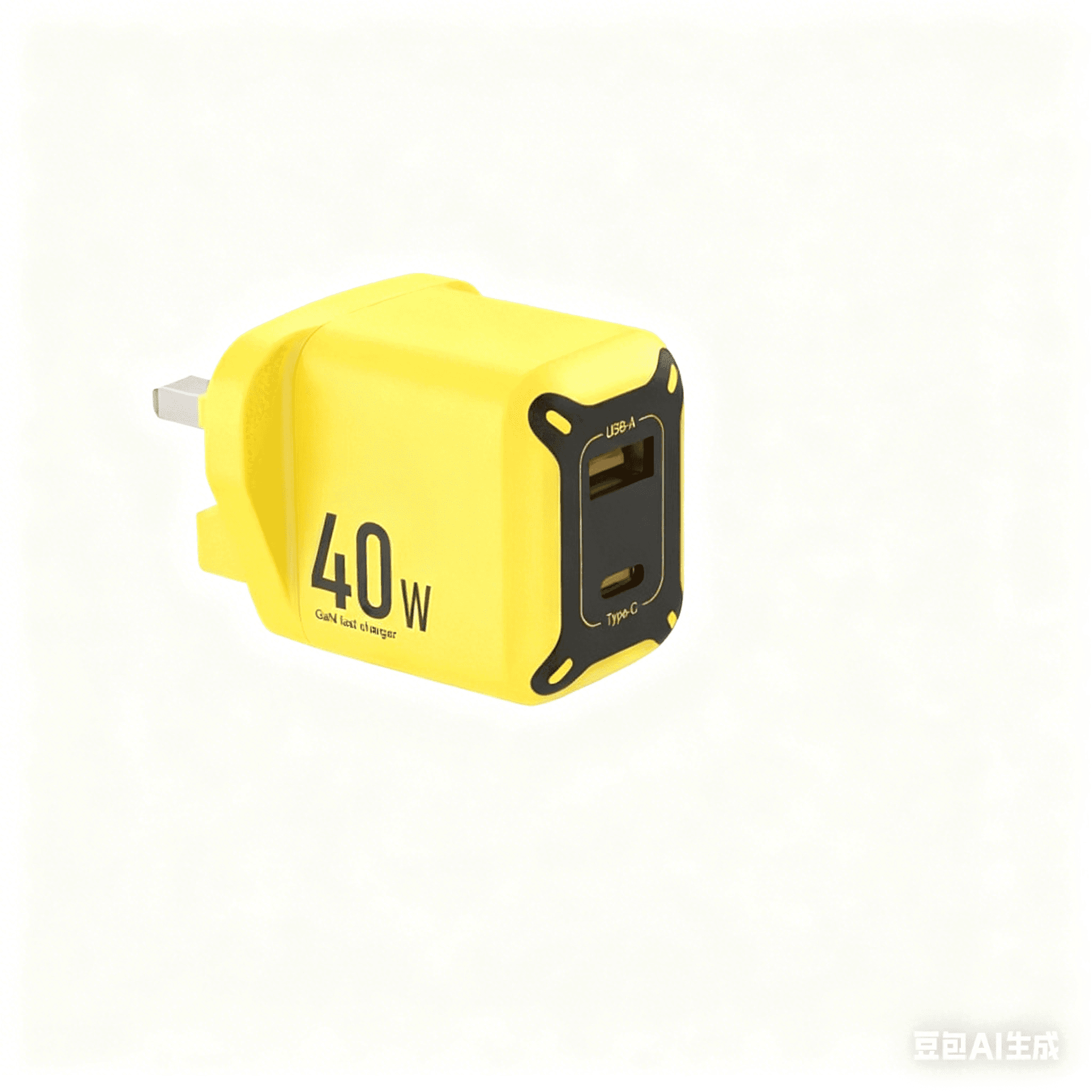
Qualcomm Quick Charge 4.0 (QC 4.0) stands out for its deep integration with the USB Power Delivery Programmable Power Supply (USB-PD PPS) protocol. Leveraging the INOV 3.0 (Intelligent Negotiation for Optimum Voltage) algorithm, it achieves precise voltage adjustments in $20mV$ increments.
This technology fundamentally addresses conversion losses in high-power fast charging and has become an industry benchmark for balancing universality and thermal efficiency in modern smart charging solutions.
For global B2B buyers, choosing QC 4.0 products is not only about maximizing charging speed but also about mitigating technical entry barriers and thermal-related after-sales risks in cross-border trade.
AOVOLT (a subsidiary of ESC Technology), with R&D heritage from leading smartphone brands such as Xiaomi, OPPO, and Vivo, leverages in-house power management PCBA design to elevate QC 4.0 charger conversion efficiency to industry-leading levels. By addressing the “fast-charging heat” problem at the hardware level, AOVOLT removes a critical bottleneck for scalable B2B deployment.
Strategic Focus in 2026: Why QC 4.0 Remains the Technical Choice
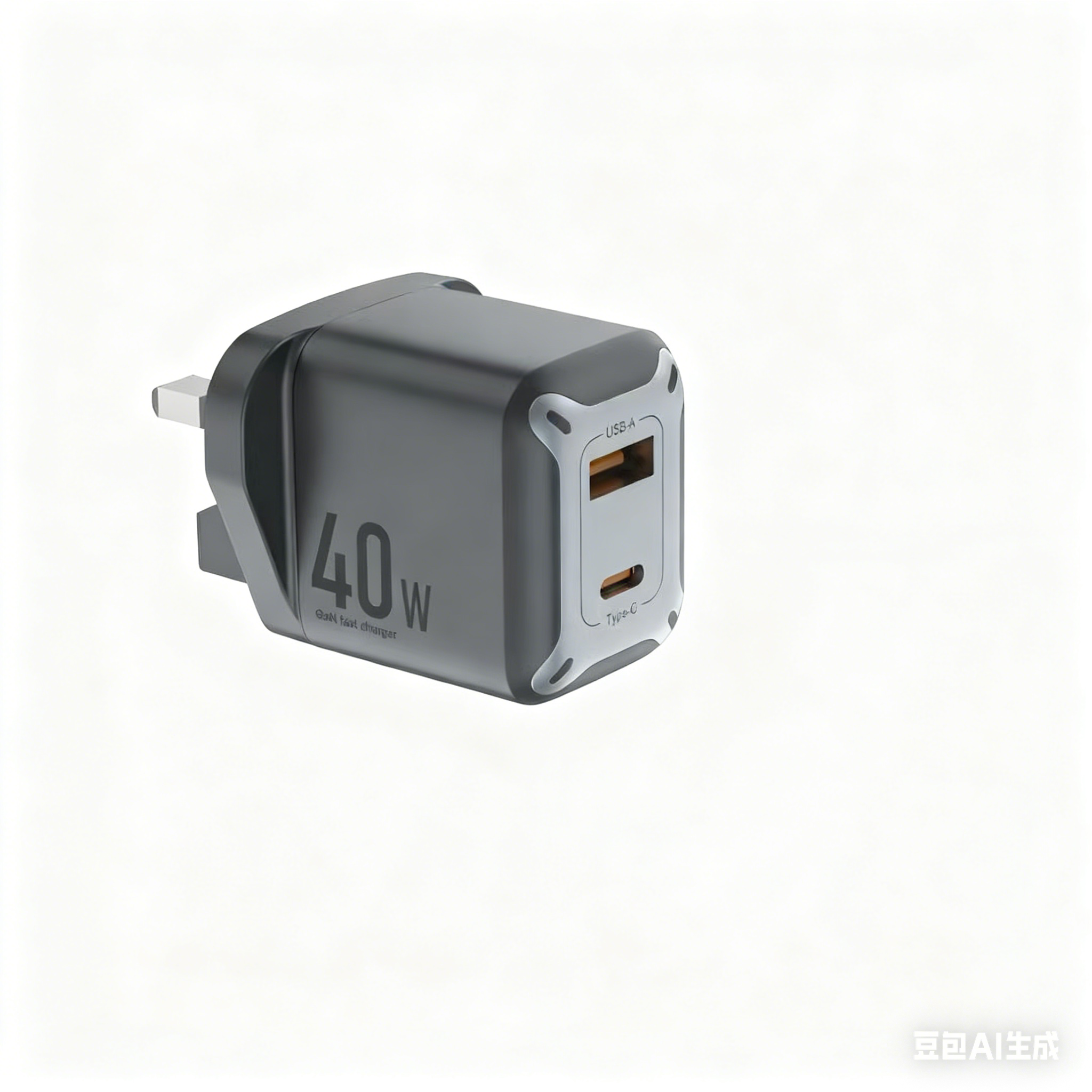
Even as new protocols emerge in 2026, QC 4.0 remains a cornerstone for global distributors and brands seeking competitive products.
QC 4.0 & USB-PD PPS Synergy: Beyond Speed
QC 4.0 is no longer a closed ecosystem. It is fully compatible with USB-PD 3.0 and its core component PPS.
Implications for B2B buyers:
-
Seamless interoperability: A QC 4.0 charger produced by AOVOLT can support everything from flagship Android devices to iPhones, tablets, and even some ultraportable laptops.
-
Reduced SKU stacking: Eliminates protocol barriers, simplifying cross-border procurement.
-
Future-proof compliance: Meets EU and global requirements for standardized Type-C charging interfaces and protocol conformity.
INOV 3.0 Algorithm: Minimizing Heat Through Smart Voltage Regulation
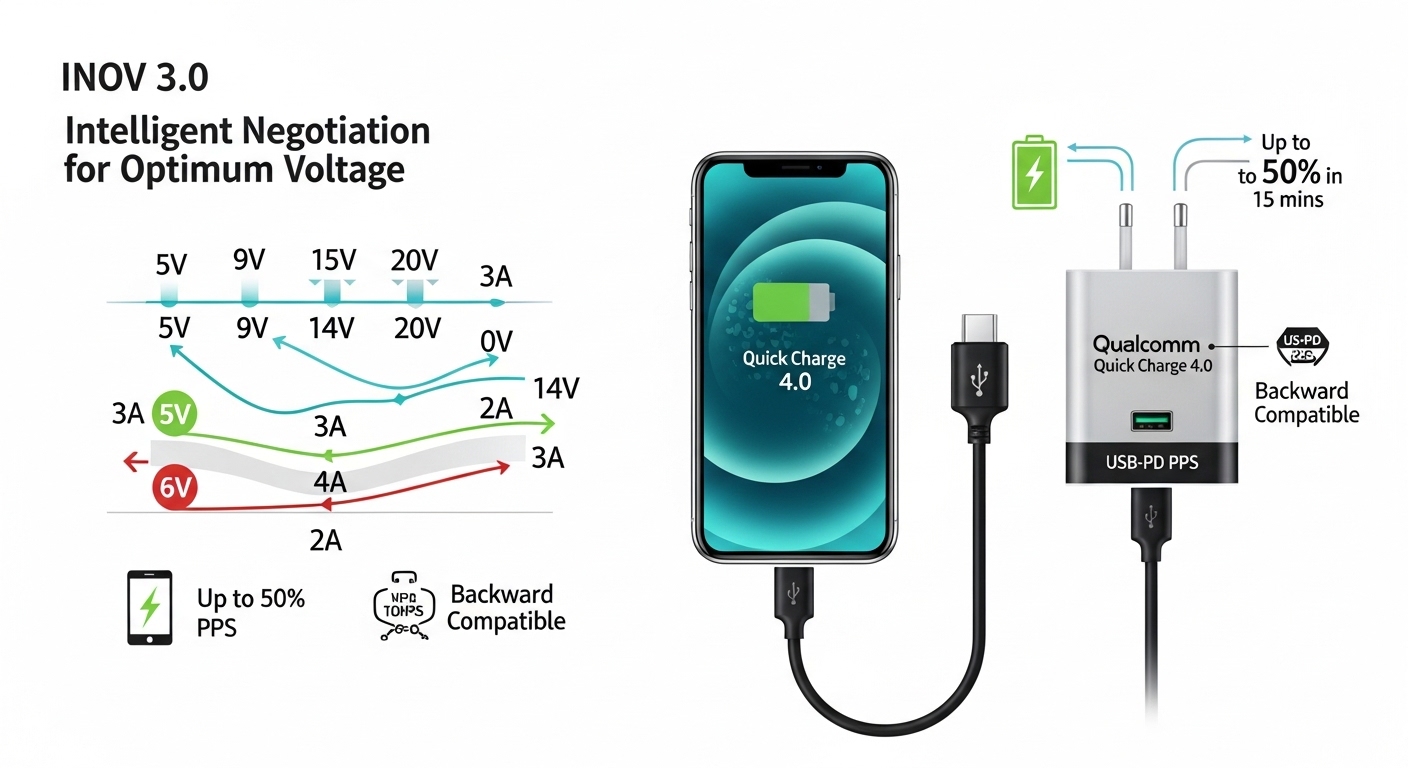
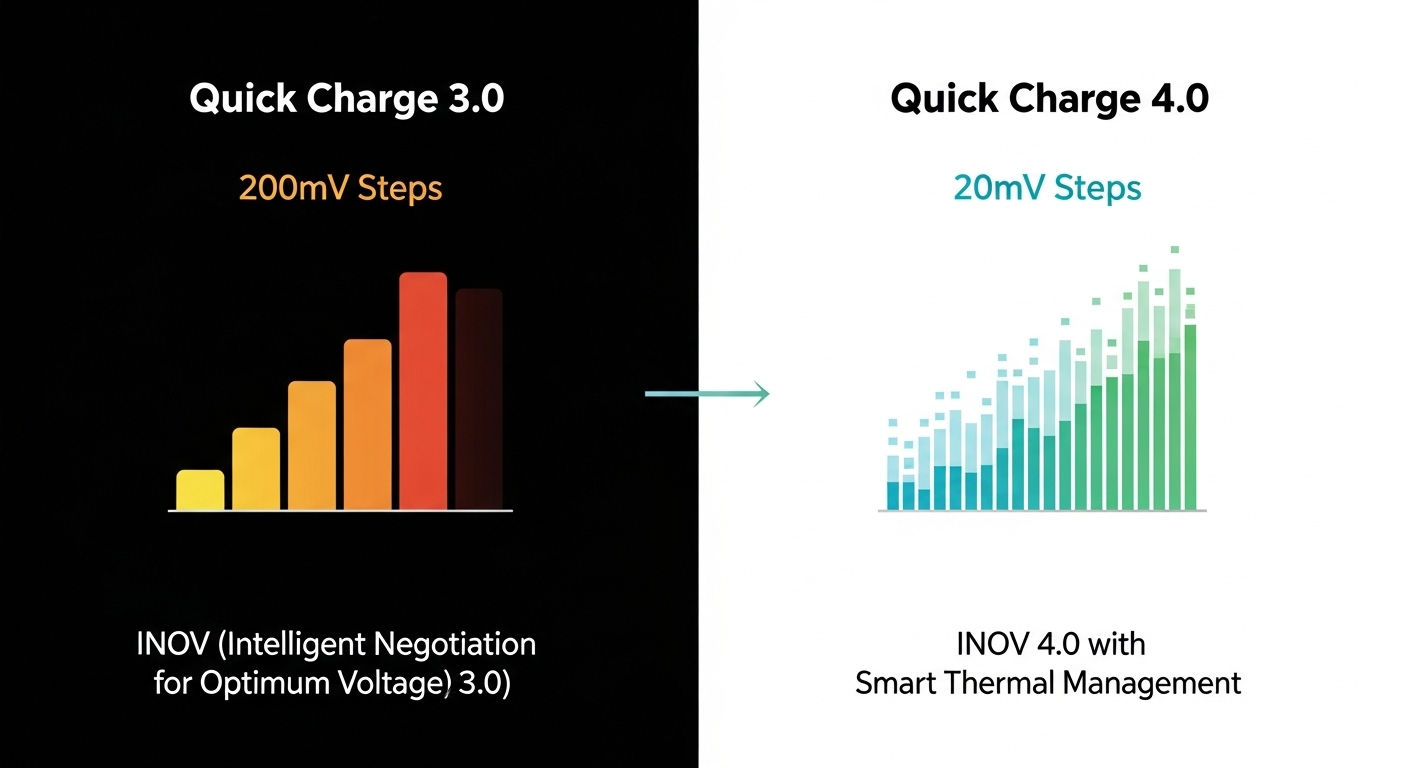
Thermal management is a leading cause of returns in B2B electronics trade. QC 4.0 introduces INOV 3.0, which does more than simple current limiting—it communicates in real-time with the device to optimize voltage.
| Technical Feature | QC 3.0 | QC 4.0 / 4.0+ | B2B Procurement Value |
|---|---|---|---|
| Voltage Steps | 200mV increments | 20mV increments | Extremely high conversion efficiency, significantly reducing heat |
| USB-PD Compatibility | Not supported | Fully compatible (including PPS) | Supports more devices, improving inventory turnover |
| Thermal Management Logic | Basic current limiting | INOV 3.0 smart monitoring | Extends battery life, reduces complaints |
| Cable Quality Compensation | Not supported | Intelligent cable detection | Enhances safety with low-quality cables |
Engineering Excellence: Core Standards of Tier-1 QC 4.0 Chargers
In B2B manufacturing, product durability and consistency depend on unseen PCBA design and component selection. AOVOLT’s engineering team follows the “Original Speed” principle, setting strict technical thresholds from the design stage.
In-House PCBA Design: Why Generic Chips Fall Short
Approximately 80% of low-cost chargers use generic integrated chip solutions, which struggle with multi-port power distribution and ripple control.
AOVOLT’s Approach:
-
Precision power management: Custom PCBA layout optimizes high-frequency transformers and filter capacitors, keeping output ripple below 50mV, far exceeding the industry average of $100mV$.
-
Low RDS(on) MOSFETs: Reduces Joule heating at the source.
-
GaN (Gallium Nitride) integration: Enables extreme thermal control without sacrificing power.
GaN Technology: Achieving Extreme Thermal Efficiency
AOVOLT deeply integrates third-generation GaN semiconductors in QC 4.0 designs:
-
High-frequency, high-efficiency: GaN switches at higher frequencies than silicon, reducing inductor and capacitor size.
-
Low-temperature operation: Even under full load at $65W$ or $100W$, the charger’s surface temperature remains below 50^\circ C, well within international safety standards.
B2B Procurement Risk Management: Compliance, Patent Barriers, and Brand Safety

In global electronics trade, compliance is not optional—it’s survival. Non-compliant products risk removal from platforms or costly patent litigation.
Deep Compliance: Beyond CE/FCC Labels
AOVOLT provides full-chain compliance documentation covering batteries, PCBA, and finished enclosures. Choose a differentiated power bank provider: Beyond capacity and price.
-
IEC 62133 & UN38.3: Ensures chemical stability under extreme stress, temperature cycling, and drop tests for battery-containing devices.
-
UL Standards: North American compliance with overcurrent, overvoltage, overheat, and short-circuit protections.
Patented Industrial Design: Preventing Infringement and Enhancing Brand Value
-
Exclusive industrial design: All AOVOLT products have patented appearances, avoiding marketplace disputes.
-
Differentiated premium: Unique aesthetics and tactile feel (e.g., V0 fireproof enclosure textures) enhance retail brand perception.
Supplier Assessment from a Manufacturing Perspective: PCBA to Finished Product

A qualified QC 4.0 partner is defined not by sample performance but by the consistency of the 10,000th unit versus the first.
AOVOLT’s Vertical Integration Advantage:
-
ISO9001 certified factory: From R&D to finished product.
-
SMT self-controlled production: Ensures component traceability, preventing counterfeit or refurbished parts.
-
AOI automated inspection: Detects defective solder joints.
-
High-standard burn-in testing: Each batch undergoes 4–8 hours of full-load, powered aging tests.
Global Certification Overview
| Market | Core Certification Requirements | AOVOLT Compliance | Key Testing Focus |
|---|---|---|---|
| Europe (EU) | CE, RoHS, ErP | Fully compliant | EMC, standby power, eco-materials |
| North America (NA) | FCC, UL standards | Fully compliant | Emission, flame-retardancy, high-voltage insulation |
| Global Shipping | MSDS, UN38.3 | Fully compliant | Air/sea pressure simulation, thermal stability |
| General Safety | IEC 62133 | Fully compliant | Charge/discharge cycles, external short-circuit resistance |
Key Technical FAQs for QC 4.0 Procurement
Q1: Is QC 4.0 backward compatible with QC 3.0 or QC 2.0 devices?
Yes. QC 4.0 automatically detects the protocol version during handshake. If the device only supports QC 3.0, it downgrades to INOV 2.0 mode (200mV steps) to ensure safety.
Q2: How does AOVOLT maintain high power output while keeping the charger compact?
Using GaNFast technology, transformer size is reduced by ~30%, combined with a high-density PCBA layout maintaining $>6mm$ creepage distance, achieving high power density in a compact form factor.
Q3: How is power distributed in multi-port QC 4.0 chargers?
Dynamic Power Allocation adjusts each port in real-time. Single-port operation delivers full QC 4.0/PD power; multi-port operation distributes power without interrupting charging, preventing overloading and component aging.
Conclusion: Fast Charging Built on Engineering Integrity
In the competitive 2026 power accessories market, QC 4.0 chargers offer more than charging speed—they represent standardized protocols, intelligent thermal management, and brand-safe compliance.
AOVOLT integrates leading-brand R&D depth into OEM/ODM services, delivering a “high-conversion, low-return, zero-infringement” growth loop for global B2B buyers. Choosing AOVOLT is choosing to partner with pioneers in fast-charging technology.
References:
Quick Charge 4.0 & USB-PD PPS Integration White Paper
USB Implementers Forum (USB-IF) USB Power Delivery Specification v3.1