
B2B charger procurement is not a simple price comparison game; it is a rigorous engineering audit. In the 2026 market environment, if you are still hesitating over the USB-A port ratio, you are already falling behind. Core conclusion upfront: a true Dual USB-C high-power solution must be based on GaN III (Gallium Nitride) architecture and support PD 3.1 or PPS dynamic allocation. For cross-border brands seeking long-term cooperation, a qualified Dual USB-C charger supplier provides not just products, but technical endorsement from highly integrated PCBA design to full 140W protocol compatibility. Currently, factories with self-developed mold capabilities offer 65W dual-port GaN chargers at stable, reasonable B2B wholesale prices; any quotation far below cost implies insurmountable risks in capacitor lifespan or protocol chips.
Why Dual USB-C Chargers Are Dominating the PD Fast-Charging Market
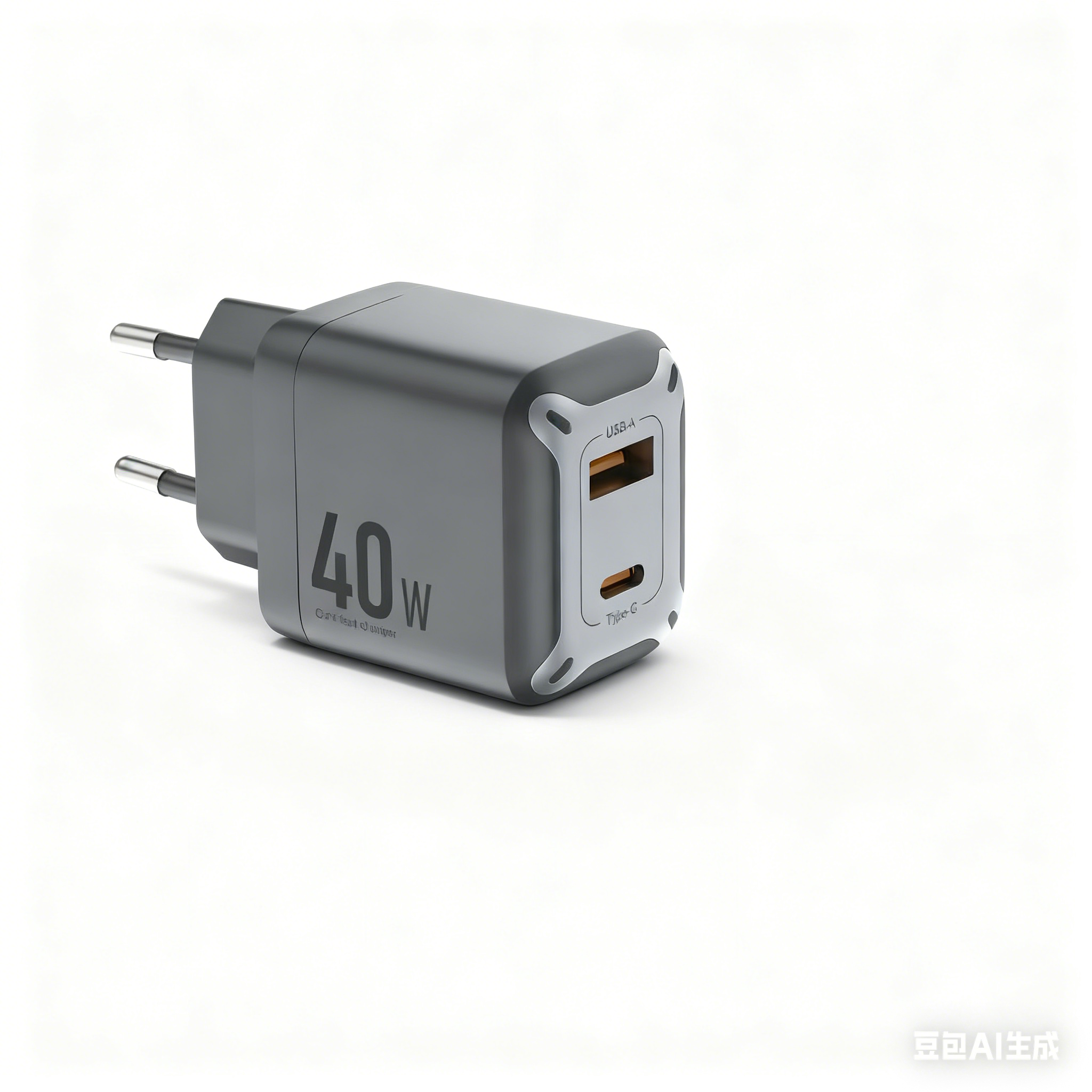
Market trends never shift according to human will. With laptops fully embracing Type-C power delivery and smartphone boxes eliminating chargers, end users’ demand for “simultaneous multi-port fast charging” has transformed from a luxury into a necessity.
Paradigm Shift from USB-A to Full Type-C Ecosystem
Over the past 15 years, I have witnessed countless iterations of interface protocols. The USB-A port, limited by physical structure and maximum current load (usually no more than 18W–22.5W), shows weakness when facing ultrabooks starting at 60W and PD charging protocols. B2B buyers must realize that today’s end users prefer carrying only one charger while traveling. Dual USB-C solutions have become mainstream because they fully resolve the “device priority contention” problem. When both ports can provide independent and efficient PD output, the market premium of such products far exceeds that of outdated 1A1C configurations.
Power Sharing Needs of Laptops and Smartphones
Modern procurement managers, when sourcing GaN (Gallium Nitride) fast charger wholesale, no longer only consider the maximum single-port power. They care about whether power allocation logic is intelligent enough when both ports are used simultaneously. Excellent suppliers adopt independently controlled DC-DC buck circuits to ensure the main port can allocate current to the secondary port without disconnection. This high-density PCBA design imposes stringent thermal requirements and distinguishes “small workshops” from experienced OEM factories.
Rigorous Technical Standards That Reliable Suppliers Must Meet
If, when screening a 140W USB-C wall charger manufacturer, the supplier can only provide basic CE certification and cannot clearly explain protocol handshake logic, proceed with caution.
Full Protocol Compatibility: Beyond PD 3.0 and PPS
A professional multi-port PD 3.0 PPS power adapter should not support only a single brand. At AOVOLT’s Dongguan lab, when developing 140W flagship chargers, the core challenge is not power enhancement but “deep compatibility of handshake protocols.”
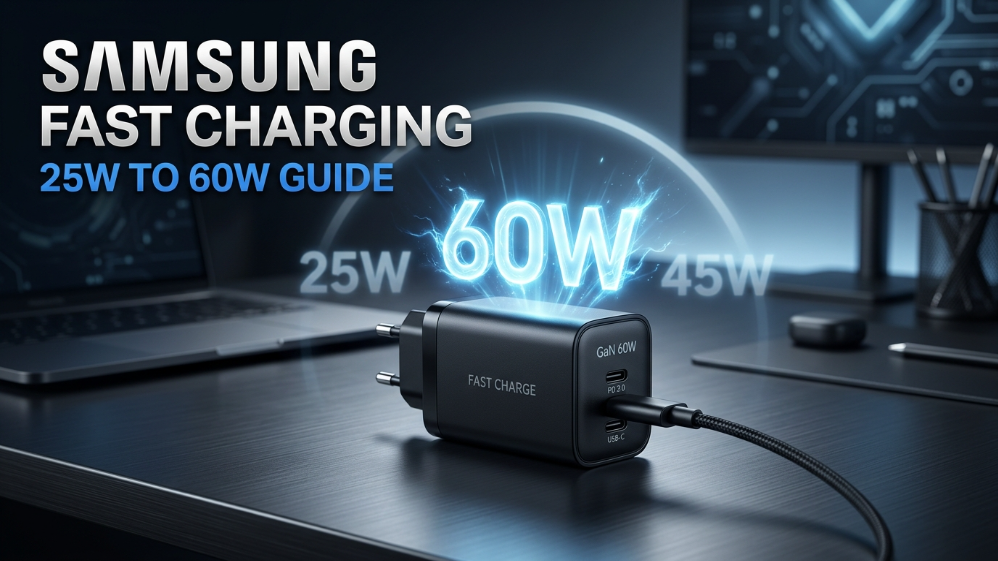
Many suppliers claim PD 3.0 support, yet encounter repeated reconnections or trickle charging when facing Samsung’s 45W Super Fast Charging (PPS protocol) or Apple’s 2.4A legacy protocol. When designing full-protocol compatibility, we embed high-frequency sampling circuits to identify connected devices in milliseconds and precisely match from PD 3.0, QC 3.0, FCP, SCP to AFC. Experience from developing AOVOLT 140W full-protocol products shows: only true full-protocol coverage can ensure zero-complaint compatibility across global smartphones, tablets, and laptops.
Thermal Management and Efficiency in GaN III Technology
GaN is not a cure-all. Although it reduces size, under high-power operation, heat accumulates in very small spaces. If thermal management fails, plastic housings (usually PC or ABS+PC flame-retardant materials) may deform or even catch fire.
| Technical Indicator | Traditional Silicon (Si) Solution | First-Generation GaN Solution | AOVOLT GaN III + High-Density PCBA |
|---|---|---|---|
| Efficiency (%) | ~85–88% | ~90–92% | ≥94% |
| Max Single-Port Power | ≤65W | 65–100W | Supports 140W (PD 3.1) |
| Thermal Performance | Large heatsink, significant heat | Better, but still stressed under high load | Full-load temperature rise controlled below 60°C |
| Power Allocation Response | Mechanical voltage division, prone to disconnection | Intelligent allocation with handshake delay | Dynamic allocation, seamless switching |
| Volume (same power) | Bulky | Lightweight | Extremely compact, supports high integration design |
Safety Certifications: Passports for Global Markets
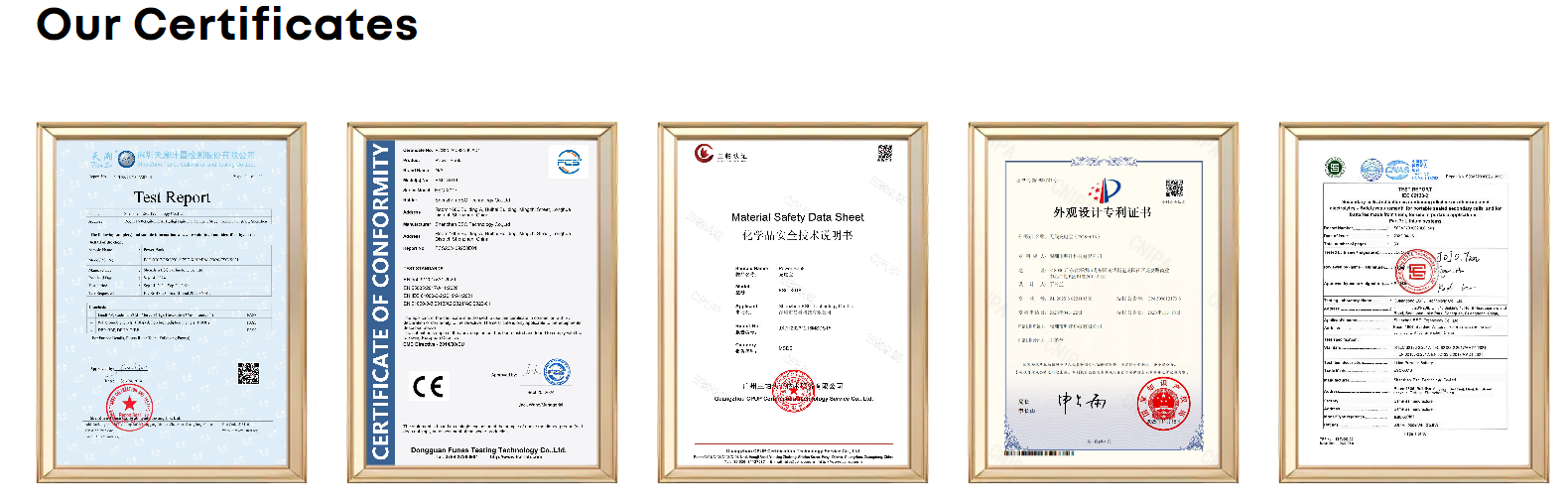
For cross-border brands, UL/CE/RoHS certified USB-C chargers are only the entry ticket, not the endpoint. A deep B2B factory must have a complete compliance system, including but not limited to FCC, PSE, KC, UKCA, and country-specific mandatory access requirements. When customizing private-label GaN chargers, we consider certification compliance from the circuit design stage, adding over-voltage protection (OVP), over-current protection (OCP), and short-circuit protection to ensure stable operation even in unstable power grids.
Vertical Integration: The Ultimate Secret for Lead Time and Quality Control
Having worked in consumer electronics manufacturing for 15 years, I deeply understand: fewer intermediaries mean lower risks. Many so-called “factories” are merely assembly plants; housings, cables, and even core PCBAs are purchased or outsourced. This becomes a disaster when facing urgent orders or high-precision customization.
From Solution Design to Full Assembly: Value of a Closed-Loop Production Line
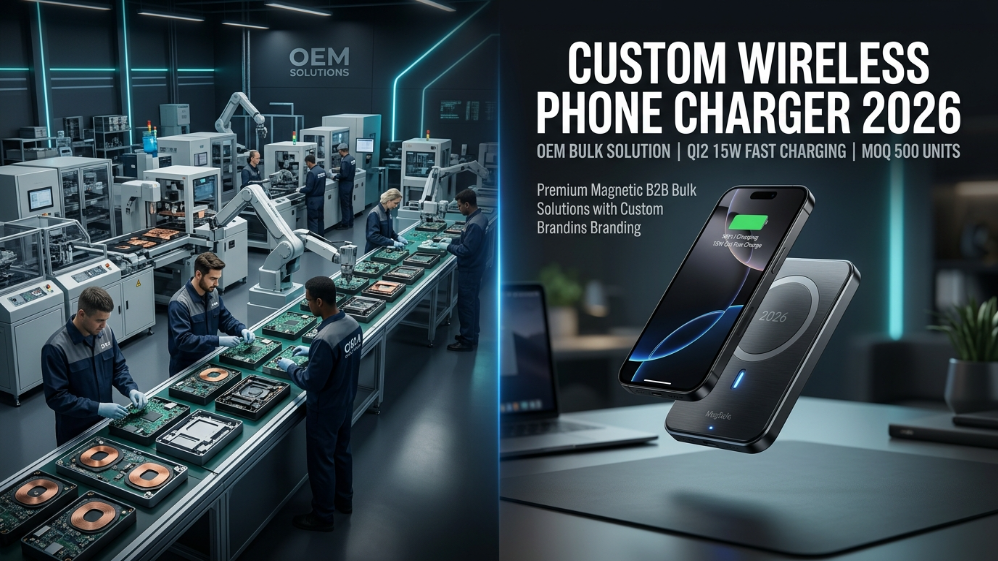
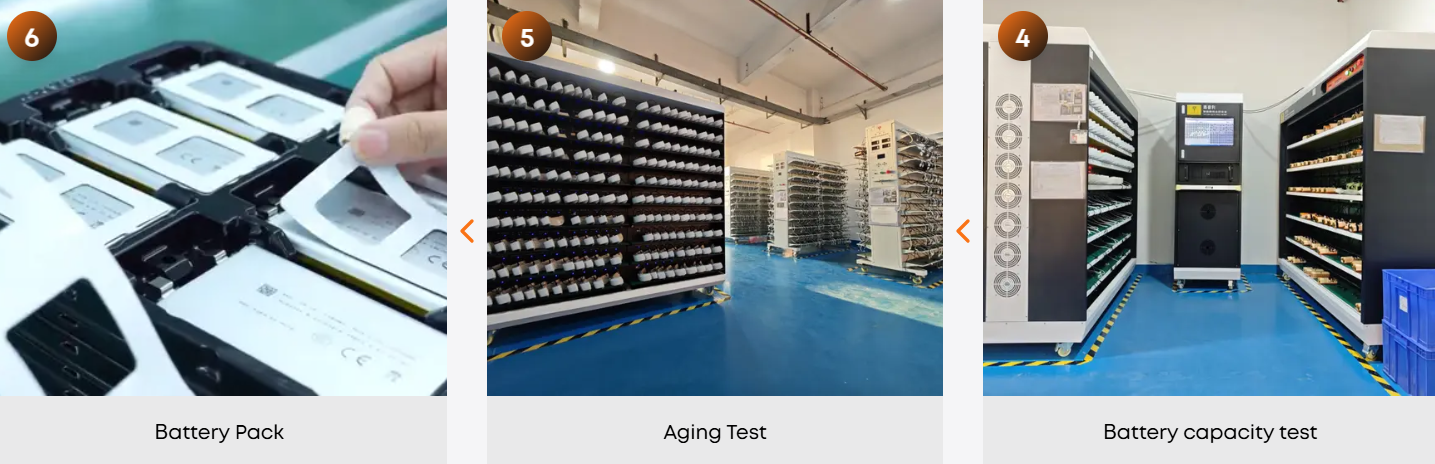
True integrated supply chain manufacturing covers the full product lifecycle. At AOVOLT’s Dongguan factory, when a client proposes a new design, our R&D team directly participates in PCB layout design, ensuring optimal circuit arrangement and housing space utilization.
Although “heavy-asset” investment incurs high initial costs, it provides strong error-correction capability. If ripple control is suboptimal during testing, we can adjust components directly on the production line instead of waiting for supplier feedback. This model ensures factory-direct fast charging solutions maintain high yields even under 140W extreme power conditions.
In-House Mold Opening and Injection Molding: Shortening R&D Cycles
For brands seeking differentiated products, public molds are profit killers. If your housing is identical to 90% of low-end market products, where is your premium? Tooling and injection molding capabilities distinguish strong suppliers. AOVOLT owns an independent mold workshop, enabling OEM/ODM custom electronics services from scratch, with highly recognizable industrial design. Our design team insists on tactile feedback and scratch resistance, impossible with purchased molds. From 3D prototypes to final mass injection, the cycle is drastically shortened, often giving a two-week head start in a fast-changing cross-border market.
Leveraging High-Power Solutions for Brand Upgrading: 140W PD 3.1 Technical Depth
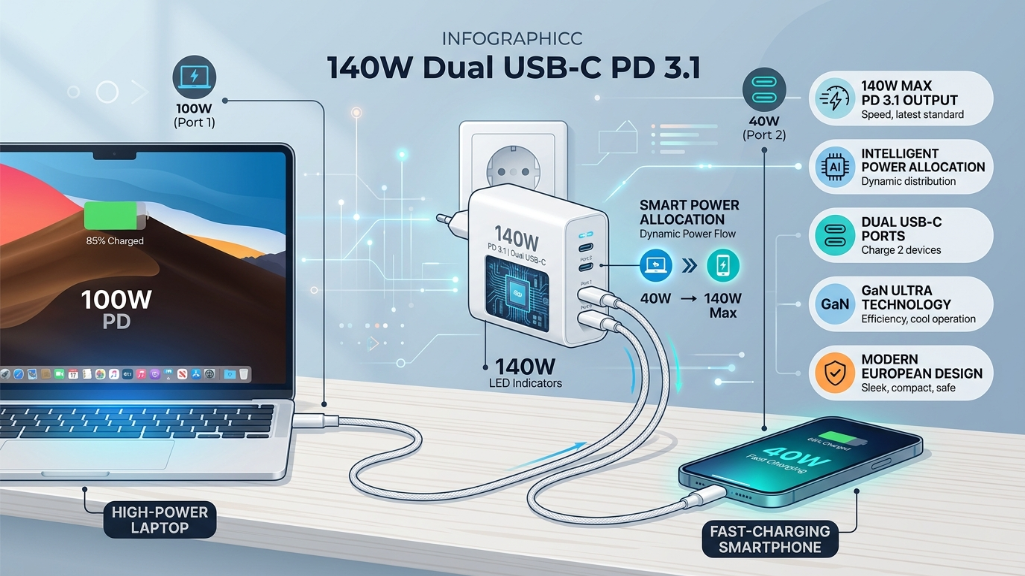
In B2B trade, avoiding price wars requires controlling the narrative. While most suppliers compete in the 65W “red sea,” 140W (PD 3.1) has become the new battleground for high-end brands and industrial procurement.
Technical Challenges of 140W Power Delivery: AVS and Ripple Control
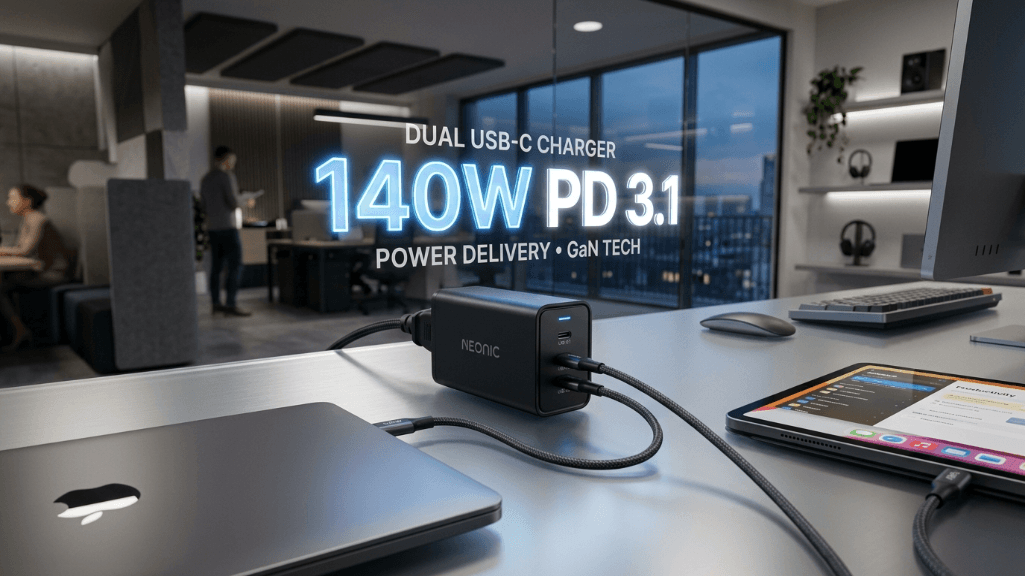
140W is not just stacked power. According to USB-PD 3.1 specifications, voltage rises from 20V to 28V, requiring PCBA topology to evolve from traditional flyback to higher-efficiency LLC or ACF architectures. The main challenge with high voltage is AVS (adjustable voltage supply) dynamic stability. Immature PCBA designs can significantly increase output ripple at 28V, shortening high-end laptop motherboard lifespan. We mitigate this with custom GaN driver chips and precise synchronous rectification, keeping ripple at industry-leading levels and delivering surgical-precision power output—a detail often overlooked but critical for B2B procurement audits.
Creating Premium Through Aesthetics and Industrial Design
While seeking high-density PCBA designs, remember the end market is visual. A Dual USB-C charger that looks identical to a five-year-old product cannot command a premium. At AOVOLT, we adhere to “technical aesthetics,” integrating complex heatsink structures with housing ID, reducing volume by 30% and creating a highly recognizable tech feel. For private-label GaN charger brands, this end-to-end customization is key to building a moat. Provide you with 140W PD charger factory direct sales to avoid technical and cost traps.
Navigating OEM/ODM Partnerships: From Communication to Delivery
Finding a Dual USB-C charger supplier is just the beginning; establishing an efficient collaboration system ensures longevity.
White Label vs. Deep Customization: Which Suits You?
Many procurement managers are confused about the level of customization needed. The table below illustrates technical boundaries and resource investment for different cooperation models:
| Dimension | White Label | OEM Basic Customization | ODM Full Customization (AOVOLT Advantage) |
|---|---|---|---|
| Circuit Design | Existing PCBA | Minor adjustments | Modular PCBA R&D from scratch |
| Appearance Design | Existing mold | Print/color modifications | Exclusive tooling development |
| Protocol Customization | Fixed PD/PPS logic | Fixed logic | Programmable protocol chip, supports private fast charge |
| MOQ | Very low (stock-based) | Medium | High, suitable for large clients long-term |
| Launch Cycle | Immediate | 4–6 weeks | 12–16 weeks (including tooling & testing) |
| Profit Margin | Low (price-driven) | Medium | Extremely high (brand moat) |
Q4 Peak Season Capacity and Lead Time Management
In B2B, lead time is a lifeline. A mature supplier must predict supply chain risks. With our heavy-asset closed-loop from injection molding to hardware, we control production pace better than light-asset assembly plants. Even during global semiconductor price hikes or material shortages, AOVOLT’s long-term chip and core material reserves ensure 25–35 day rapid delivery during peak season.
FAQ: Technical Clarifications for B2B Procurement
Q1: What is the fundamental difference between PD 3.0 and PD 3.1 chargers in B2B procurement?
PD 3.0 is usually capped at 100W (20V/5A). PD 3.1 introduces Extended Power Range (EPR), supporting up to 240W (mainstream commercial is 140W). For clients with MacBook Pro 16-inch or high-performance gaming laptops, PD 3.1 support is a hard requirement.
Q2: Why do some products frequently disconnect when charging two ports simultaneously?
This is due to coarse power reallocation logic in the PCBA. When the second device is plugged in, the MCU must handshake again. Excellent suppliers optimize firmware to reduce disconnection to milliseconds or achieve seamless switching, depending on PCBA integration and chip solution quality.
Q3: How long does tooling development typically take?
At AOVOLT, with internal mold workshops, precision injection molds are developed in 25–30 days, saving at least 15 days compared to external OEMs.
Q4: How to ensure high-power chargers do not generate EMI/EMC interference?
High-frequency switching in GaN chargers easily causes interference. Multi-stage filters and metal shielding are used on PCBA, and all products pass electromagnetic compatibility sweep tests to avoid interference with Bluetooth or Wi-Fi devices.
Q5: What is the MOQ for private-label GaN chargers?
For mature white-label solutions, MOQ is usually 500–1000 units. For deep ODM customization requiring mold changes and PCB rerouting, MOQ is typically 3000+ units to amortize R&D and tooling costs.
Conclusion: Driving Long-Term Growth Through Technical Audit
In the consumer electronics stock competition era, selecting the wrong supplier costs not only batch losses but also brand reputation collapse. A qualified Dual USB-C charger supplier should optimize every milliamp in the lab and ensure consistent screw torque on the production line.
From basic chargers 15 years ago to today’s AOVOLT 140W high-density PCBA closed-loop manufacturing, we understand that B2B procurement is not “buying and selling” but “delivering trust.” Whether sourcing high-performance GaN core boards or full OEM solutions, understanding the technical logic behind products is the first step. In your next supplier audit, ask about “protocol compatibility stress testing” and “vertical full-unit yield”—that is where the truth lies.