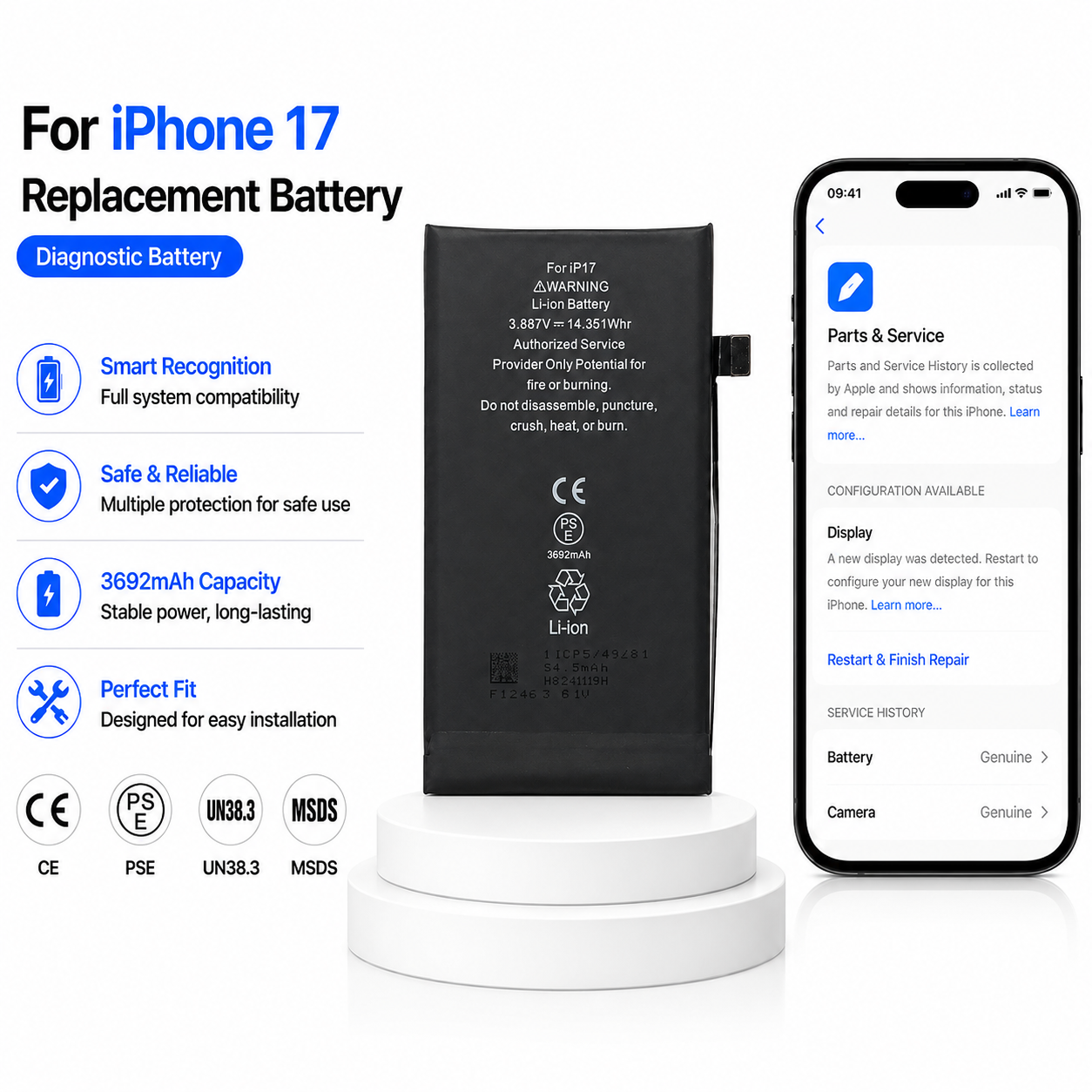

Why Choose ESC iPhone 16 Diagnostic Battery?
Professional iPhone Battery Manufacturer
ESC is an experienced iPhone battery manufacturer specializing in replacement, diagnostic and repair-market batteries for professional B2B customers.
Its target customers include smartphone repair chains, refurbishment factories, parts wholesalers, distributors, e-commerce sellers and private label battery brands.
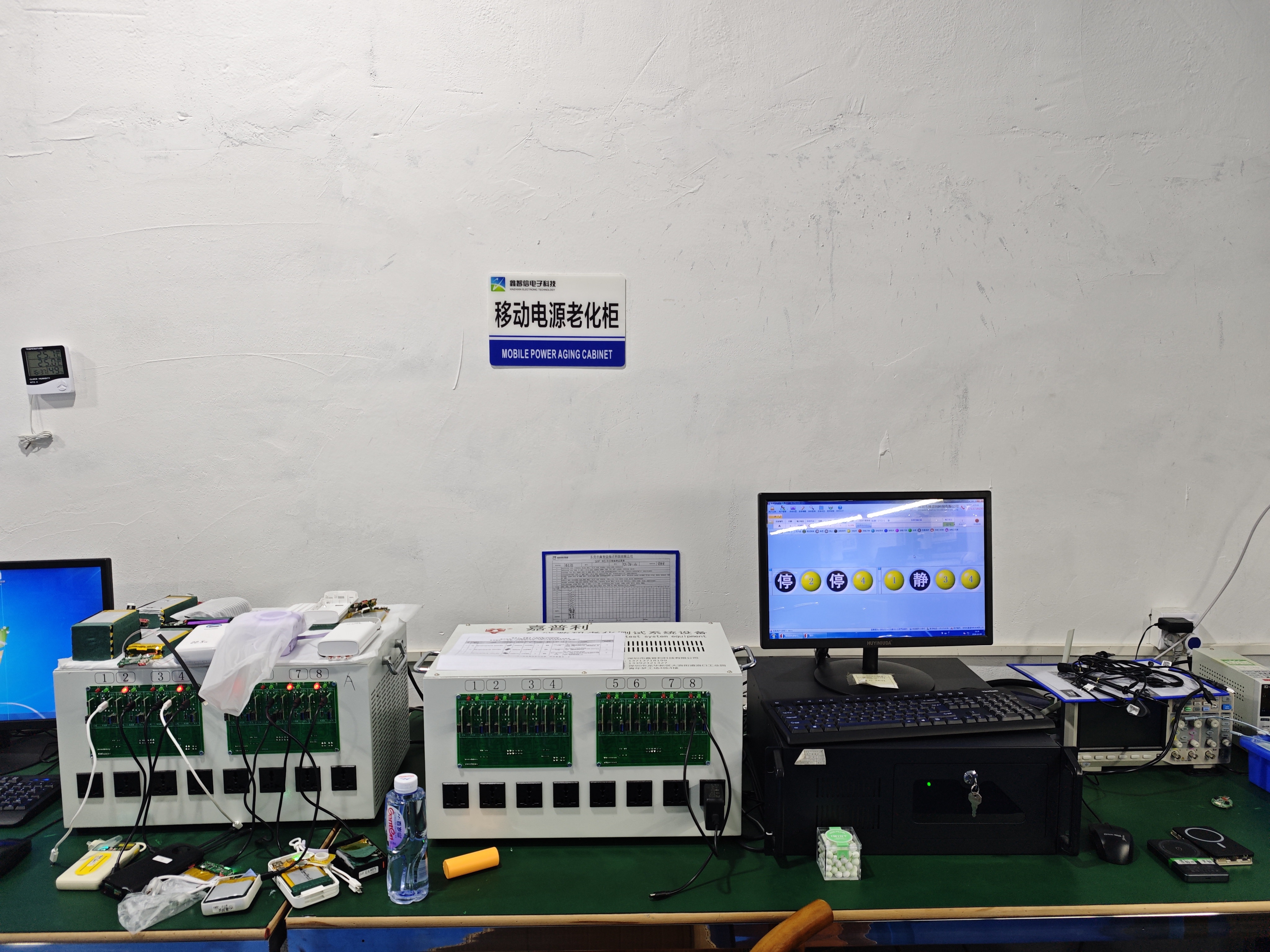
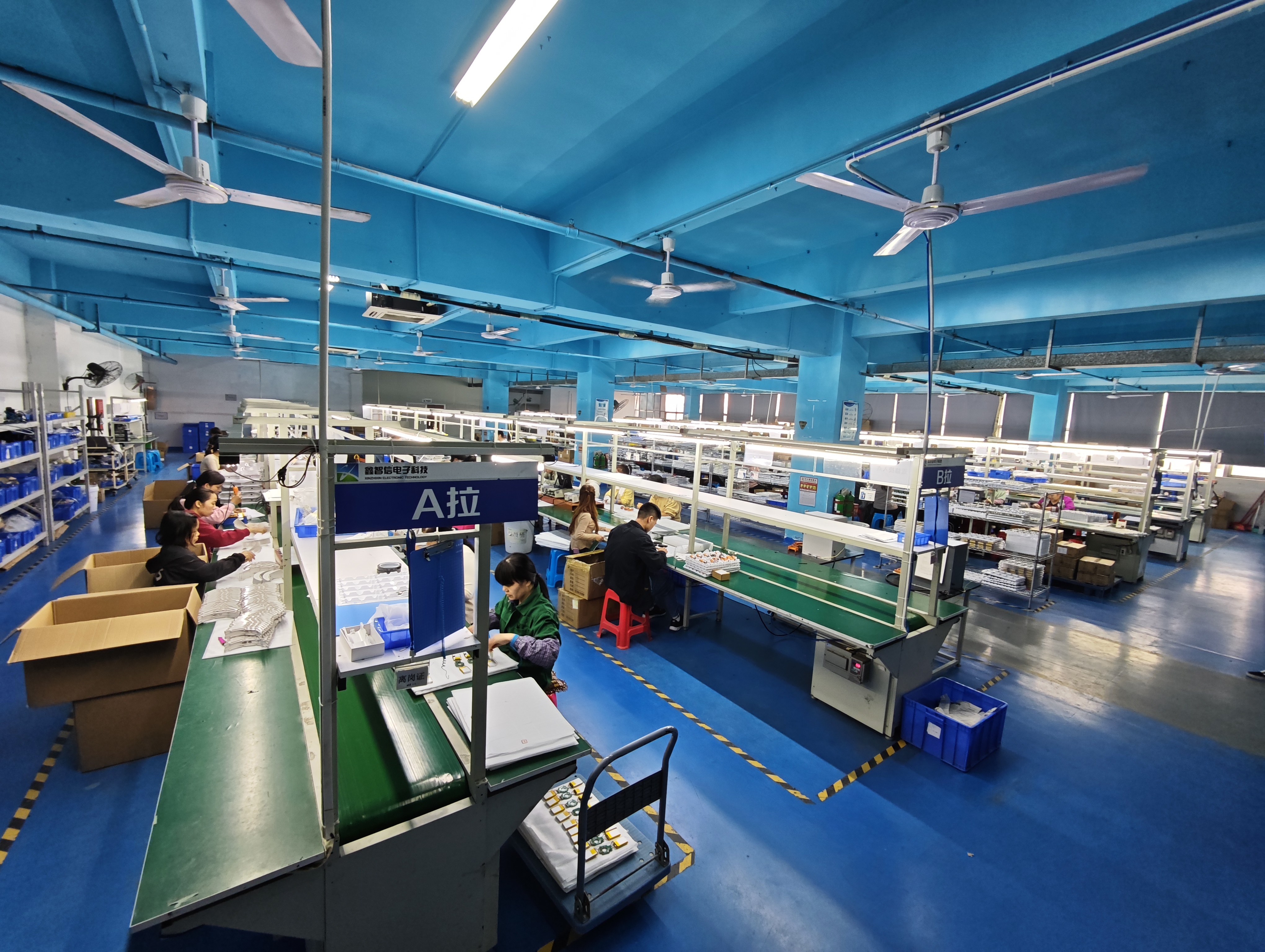
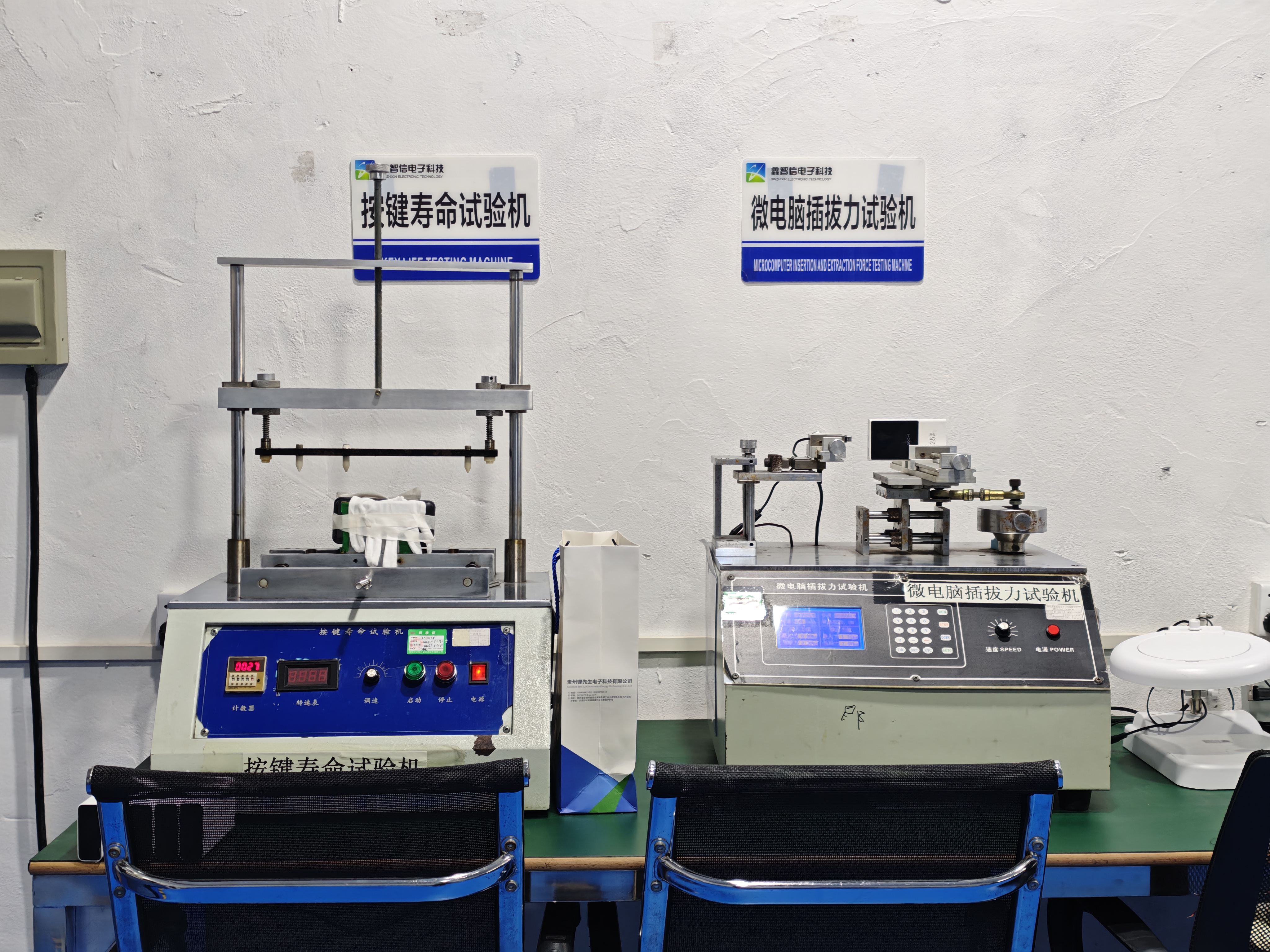
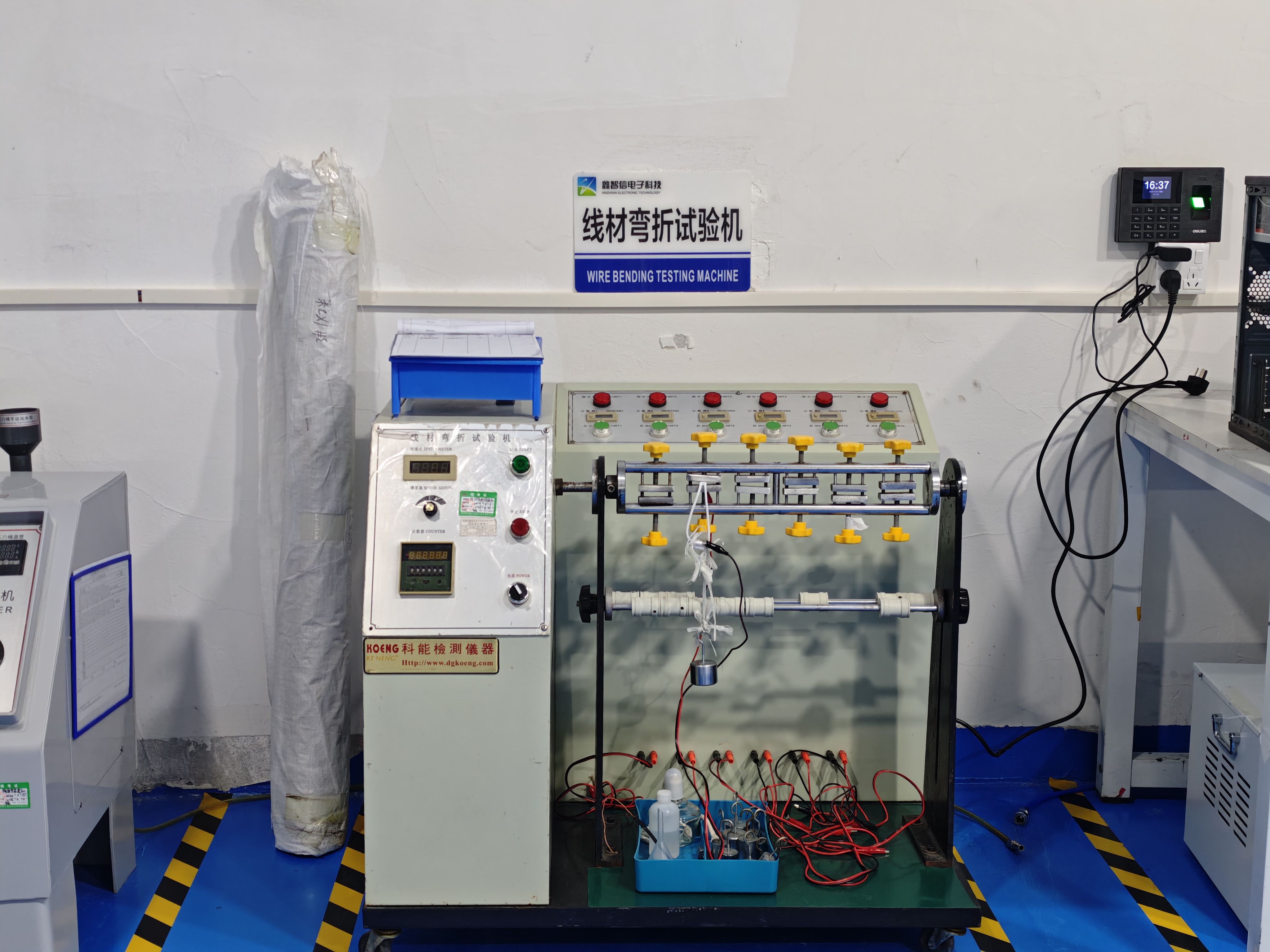
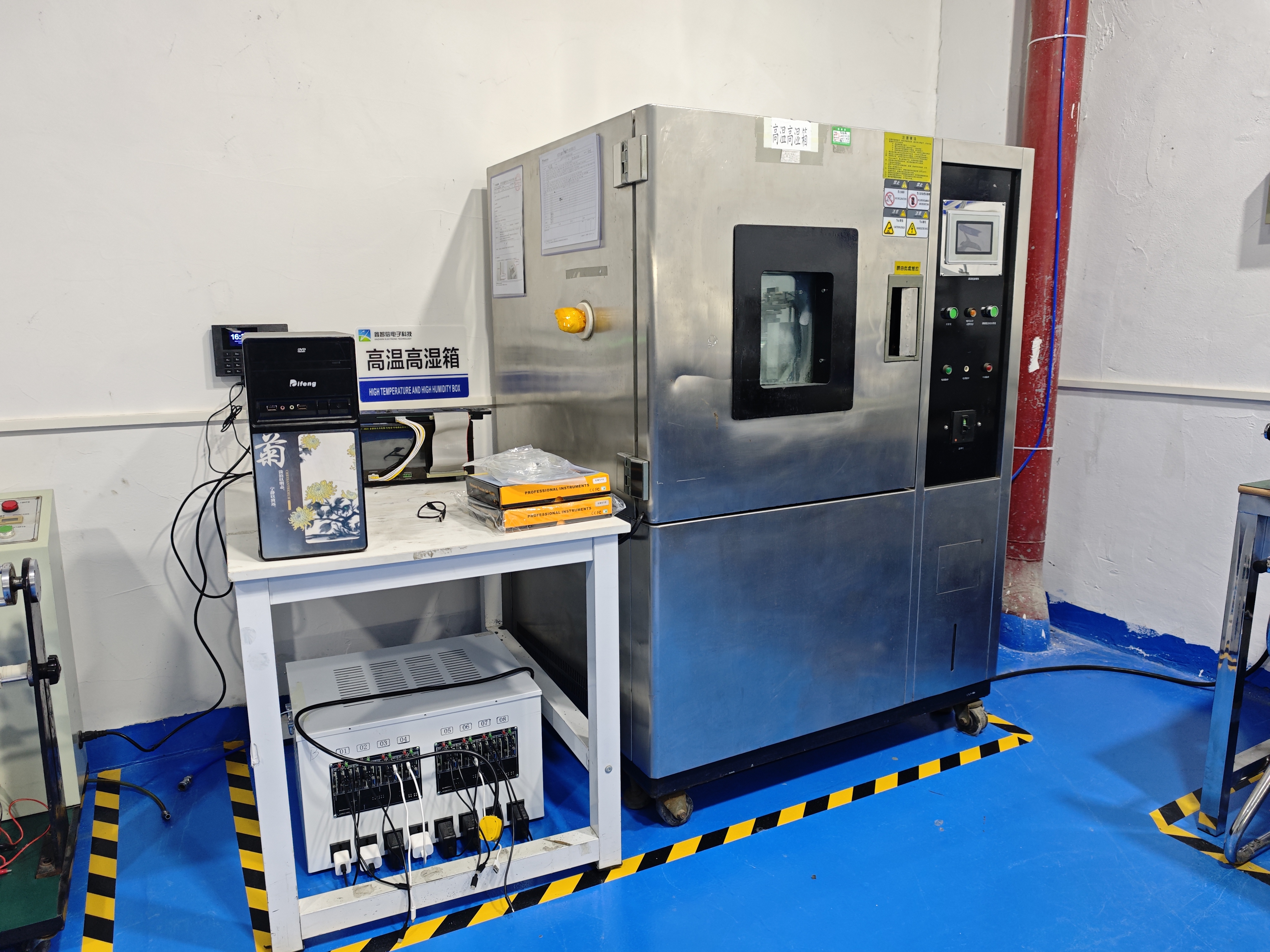
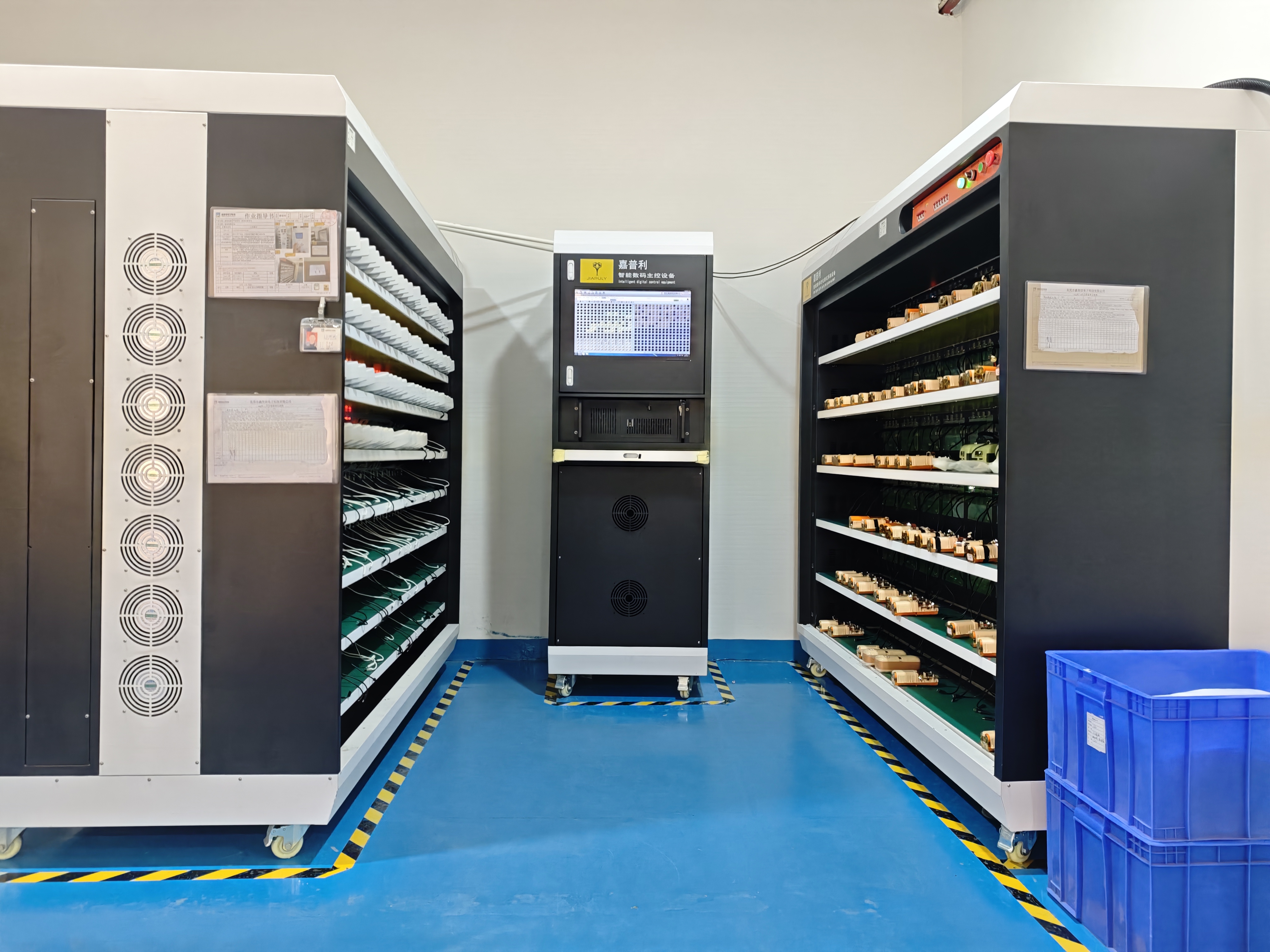
ESC states that its battery manufacturing process uses automated production equipment, professional R&D support and individual pre-shipment testing.
Diagnostic Battery Solution for Repair Professionals
Unlike a conventional replacement battery, a diagnostic battery is developed specifically for professional repair and testing workflows.
Diagnostic designs can simplify battery replacement, post-repair testing and battery-data verification. ESC's diagnostic battery range is positioned around reducing additional welding, flex transfer and programming procedures.
Actual battery recognition, Battery Health information and Parts and Service History behavior depend on the battery electronics, repair procedure, iOS version and Apple's verification system.
3560mAh Capacity
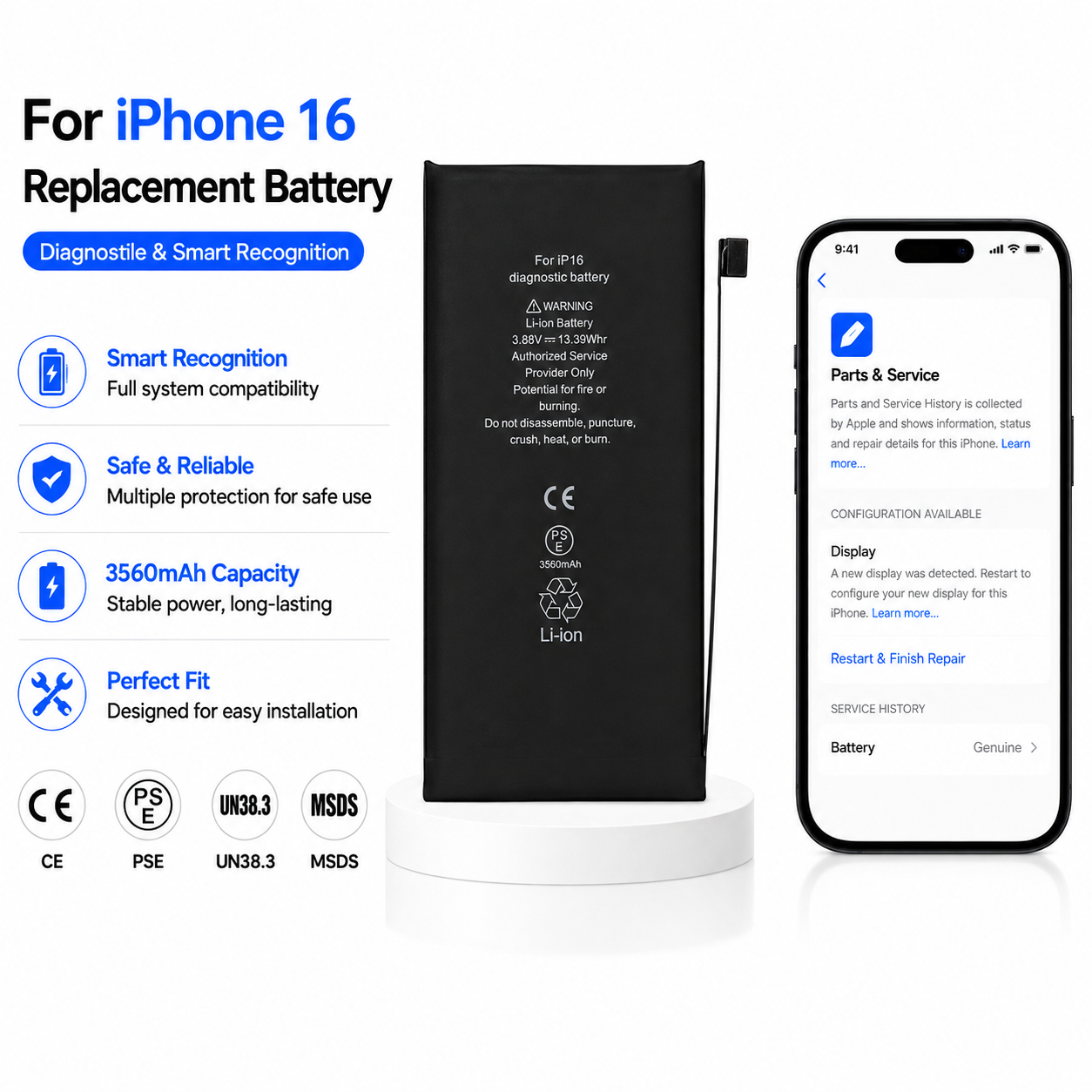
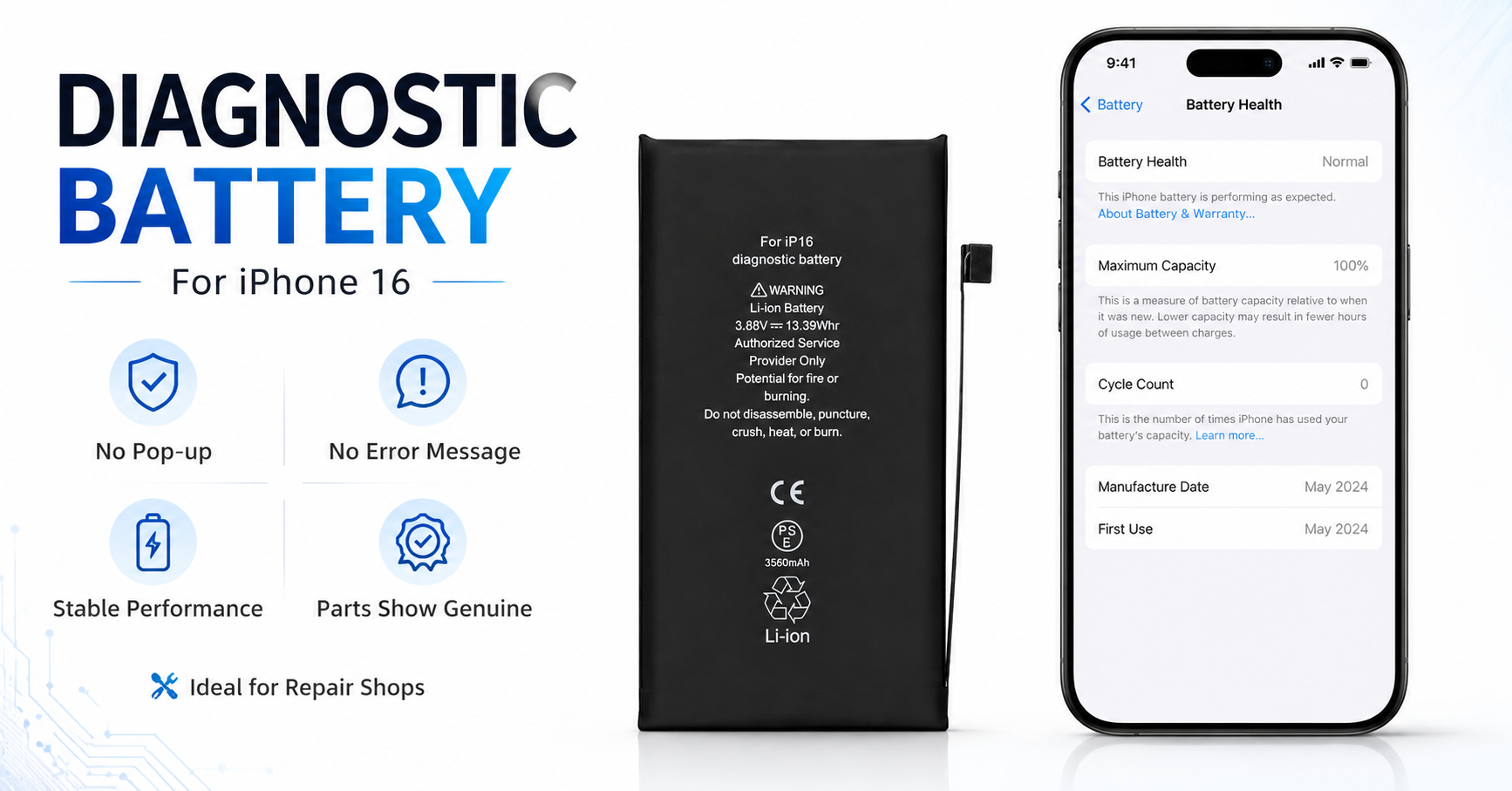
The supplied iPhone 16 diagnostic battery is labeled with a 3560mAh capacity.
For wholesale purchasing, capacity should be verified through controlled charge-discharge testing instead of relying only on the printed battery label.
3.88V Li-ion Battery Design
The battery image identifies the product as a rechargeable Li-ion battery with a 3.88V voltage specification.
Professional buyers should validate voltage stability, internal resistance, charging behavior and temperature performance during sample approval.
One-by-One Quality Inspection
ESC states that its phone batteries undergo pre-shipment testing and that strict quality control can reduce factory defect rates to below 0.1%, while reported end-user defect rates for its battery range are below 1%.
Quality requirements can include capacity, voltage, internal resistance, protection functions, connector alignment, charging performance and aging inspection.
Professional Battery Safety Protection
Diagnostic phone batteries require both electrical protection and stable communication electronics.
ESC's phone battery range uses PCM protection against overcharge, over-discharge and short-circuit conditions.
OEM Battery Factory Support
As an OEM battery factory, ESC supports customized battery labels, customer logos and private packaging for wholesale buyers.
OEM services are suitable for regional distributors, repair chains, replacement battery brands and e-commerce sellers developing their own phone battery product lines.
Flexible B2B MOQ
ESC's standard battery parameter tables list a 20-piece MOQ for individual models, while mixed-model wholesale orders are generally available from 100 pieces.
Final MOQ should be confirmed according to diagnostic solution, label customization and packaging requirements.
12-Month Warranty
ESC lists a 12-month warranty for its smartphone replacement and diagnostic battery range.
This provides professional wholesalers and repair businesses with after-sales support for qualified manufacturing defects.
Certification and Shipping Support
The supplied product image visibly carries CE and PSE markings.
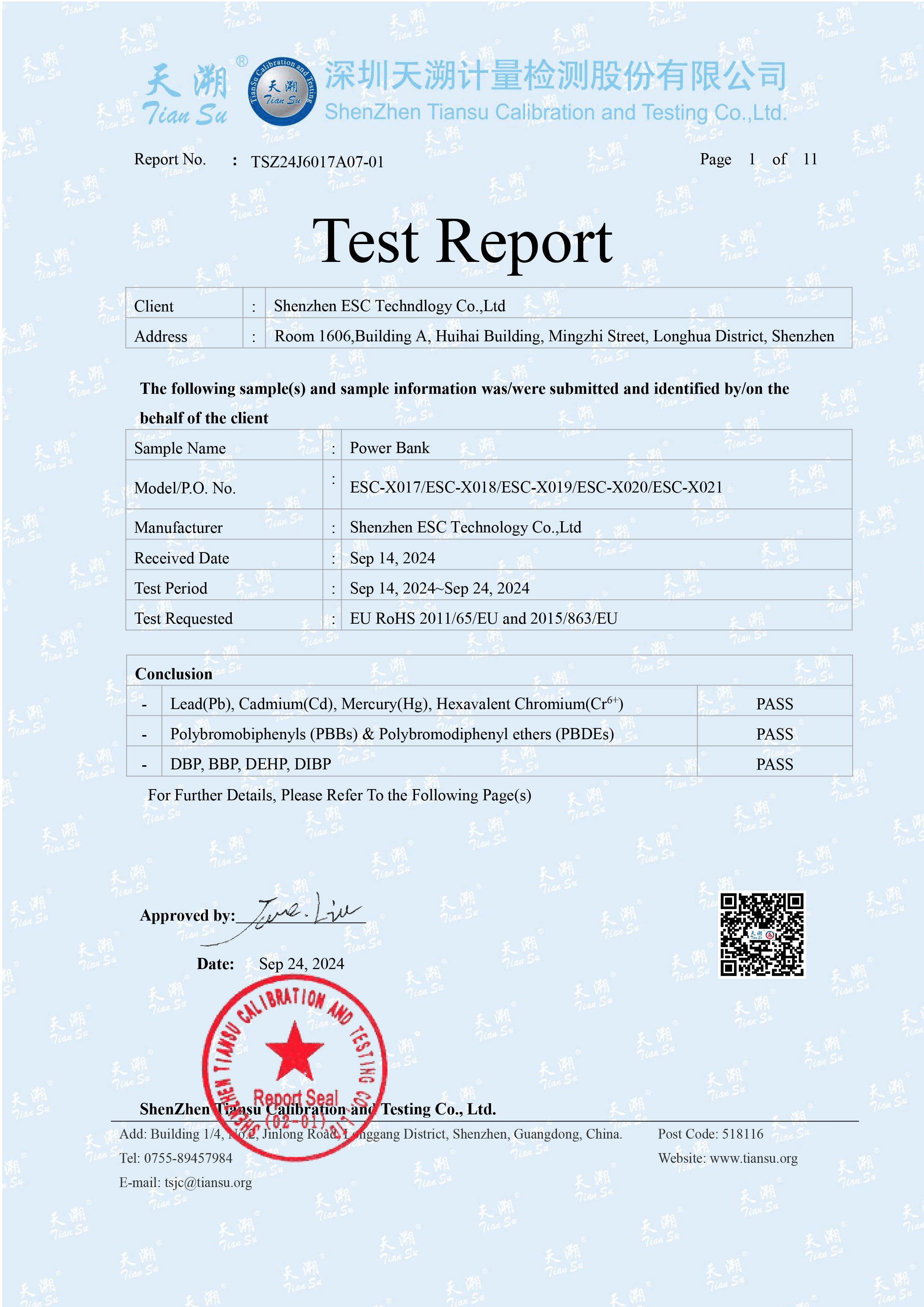
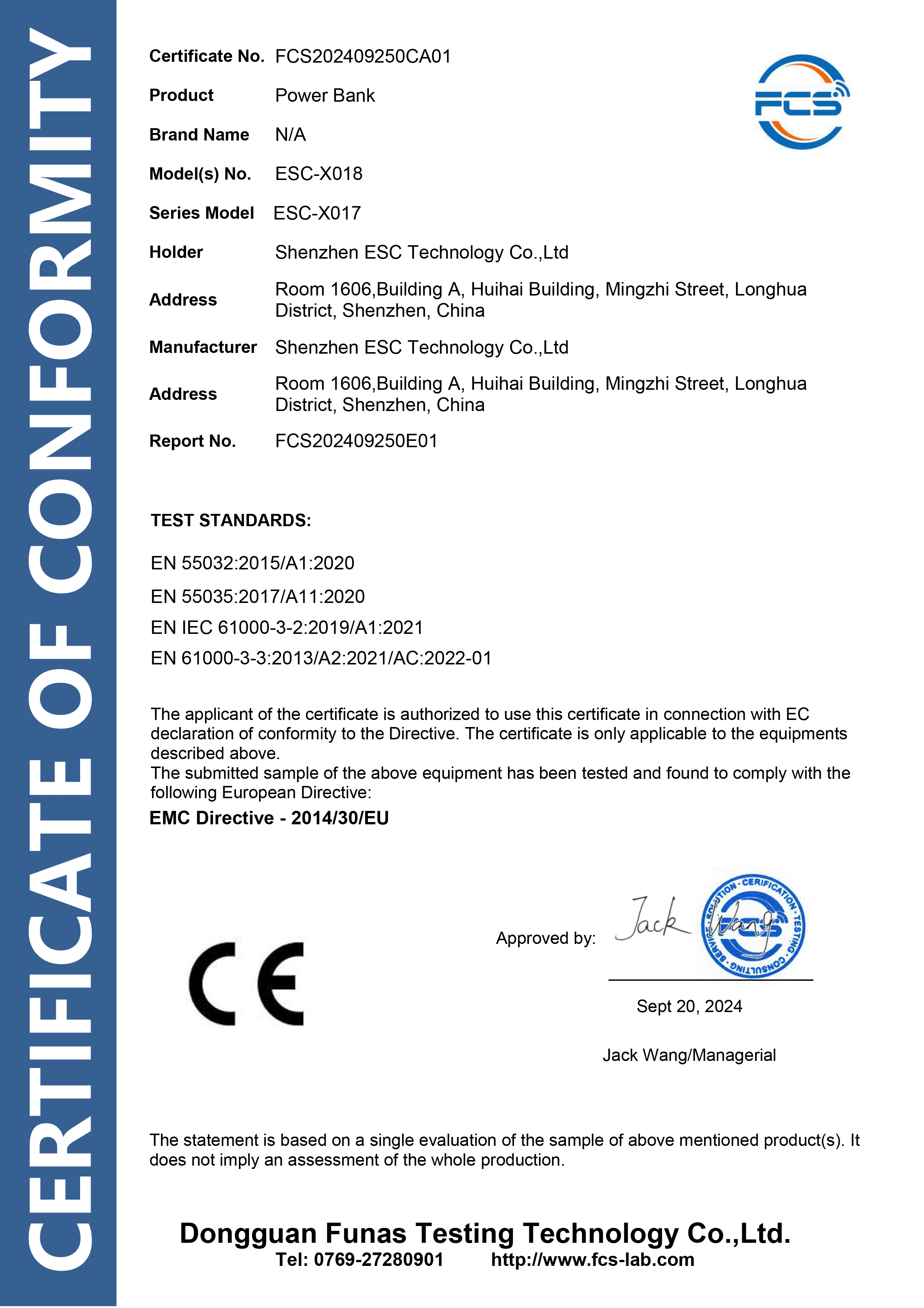
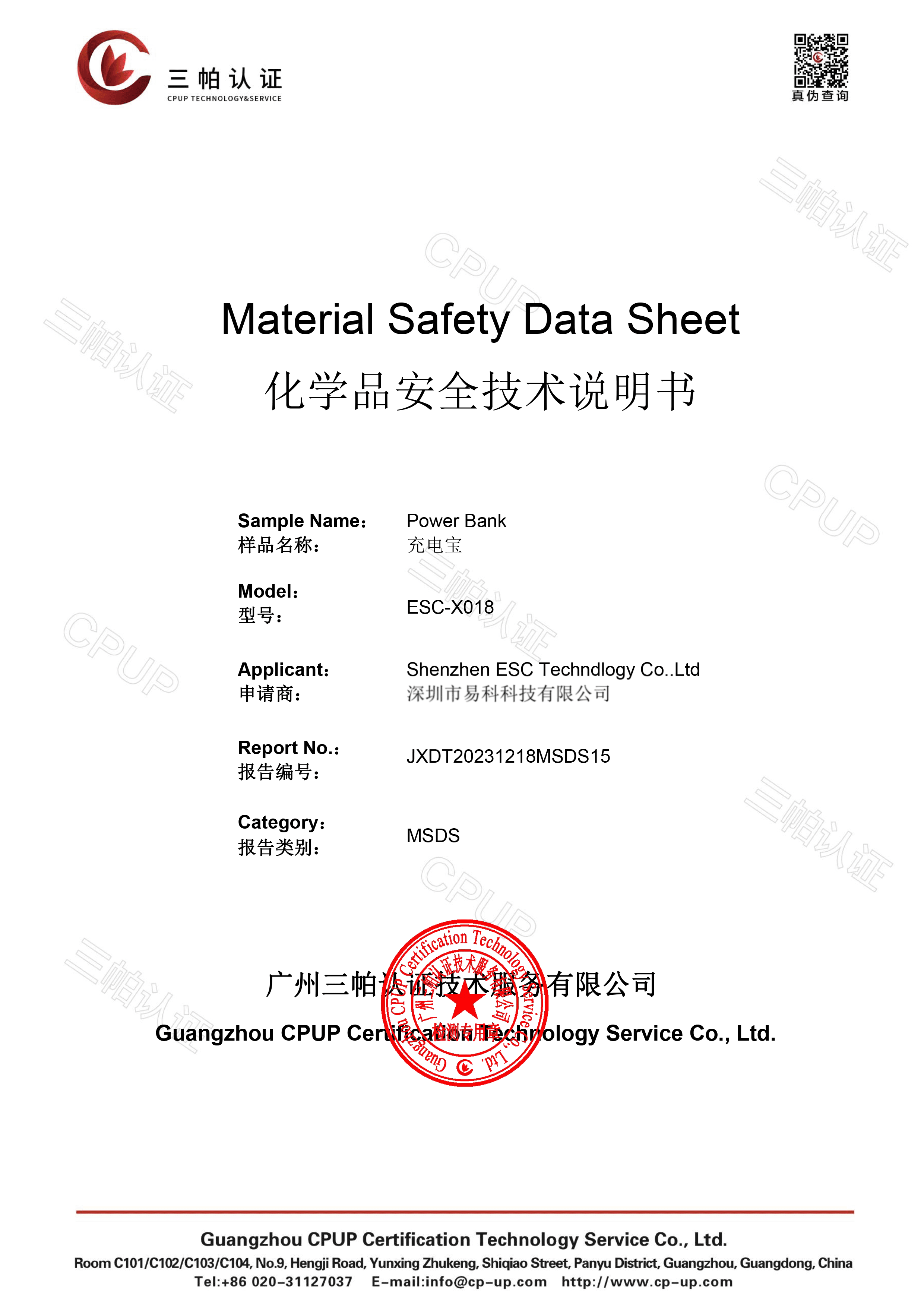
ESC's broader diagnostic battery range also lists CE, FCC, RoHS, MSDS, UN38.3, PSE, KC, IEC62133 and TISI documentation, subject to the exact production batch and destination requirements.
International shipping options include UPS/DHL, air freight, sea freight, railway and road transportation.
Quick Specifications
| Specification | Details |
|---|---|
| Product Name | iPhone 16 Diagnostic Battery |
| Compatible Device | Apple iPhone 16 |
| Compatible Model Numbers | A3081, A3286, A3287, A3288 |
| Product Type | Diagnostic Replacement Battery |
| Battery Type | Rechargeable Li-ion Battery |
| Capacity | 3560mAh |
| Voltage | 3.88V |
| Energy Marking on Shown Sample | 13.39Wh |
| Product Function | Professional Repair and Battery Diagnostic Application |
| Visible Certification Marks | CE, PSE |
| Protection | PCM-Based Overcharge, Over-Discharge and Short-Circuit Protection |
| Factory Defect-Rate Target | Below 0.1% |
| End-User Reported Defect Rate | Below 1% for ESC Battery Range |
| Warranty | 12 Months |
| Single-Model MOQ | 20 Pieces |
| Mixed-Model MOQ | 100 Pieces |
| OEM/ODM | Custom Logo, Battery Label and Private Packaging |
| Available Documents | CE, FCC, RoHS, MSDS, UN38.3, PSE, KC, IEC62133, TISI, Subject to Batch |
| Express Shipping | UPS / DHL, Approximately 3–6 Days |
| Sea Freight | Approximately 20–40 Days |
| Railway Freight | Approximately 30–35 Days |
| Road Transportation | Approximately 20–25 Days |
| Shipping Port | Shenzhen |
Apple identifies iPhone 16 model numbers as A3081, A3286, A3287 and A3288, depending on the sales region.
Important specification check: the shown label states 3560mAh, 3.88V and 13.39Wh. A 3560mAh battery at 3.88V mathematically corresponds to approximately 13.81Wh, so the capacity, voltage and Wh marking should be reconciled on the final production label before publishing or mass production.
What Is an iPhone 16 Diagnostic Battery?
Product Definition
An iPhone 16 diagnostic battery is a 3560mAh Li-ion replacement battery designed for professional repair testing and battery diagnostics. ESC is an iPhone battery manufacturer, phone battery supplier and OEM battery factory offering strict QC, private labels, bulk supply and global shipping.
It is an aftermarket professional repair component and should not be represented as a genuine Apple battery.
Key Features
1. Professional Diagnostic Battery Design
The battery is developed for professional iPhone 16 repair, diagnostic testing and refurbishment workflows rather than being positioned only as a standard replacement battery.
The diagnostic architecture is intended to simplify battery testing and post-repair verification.
2. 3560mAh Li-ion Battery
The supplied sample is labeled at 3560mAh and 3.88V.
Professional B2B buyers should verify actual discharge capacity, voltage and energy during sample approval.
3. Repair-Oriented Battery Electronics
Diagnostic battery solutions can reduce additional repair operations compared with conventional battery-cell-only replacement processes.
System recognition and battery-data behavior must still be validated against the intended iOS version and repair method.
4. Safety and Quality Control
PCM protection, capacity testing, voltage inspection, internal resistance testing and aging checks help reduce product-quality risks before wholesale shipment.
5. OEM and Private Label Ready
Custom battery labels, logos, packaging and barcode solutions are available for wholesalers, distributors and private label replacement battery brands.
Compatible iPhone Models
| Compatible Device | Model Number | Primary Market | Compatibility |
|---|---|---|---|
| iPhone 16 | A3081 | United States / Puerto Rico | Compatible |
| iPhone 16 | A3286 | Canada, Japan, Middle East and Selected Markets | Compatible |
| iPhone 16 | A3287 | Other Countries and Regions | Compatible |
| iPhone 16 | A3288 | China Mainland / Hong Kong / Macao | Compatible |
Apple officially identifies these four model numbers as iPhone 16 variants.
This battery should not be confused with batteries for the iPhone 16 Plus, iPhone 16 Pro or iPhone 16 Pro Max. These devices use different battery dimensions, capacities and internal configurations.
Applications
Mobile Phone Repair Shops
Suitable for professional technicians performing iPhone 16 battery replacement, diagnostic testing and post-repair functional checks.
Smartphone Refurbishment Facilities
Supports batch refurbishment programs that require repeatable battery specifications, diagnostic functionality and controlled quality inspection.
Repair Chain Stores
Suitable for centralized purchasing programs where multiple repair locations require standardized iPhone 16 diagnostic batteries.
Mobile Phone Parts Wholesalers
Designed for B2B wholesalers supplying repair technicians, independent service centers and regional phone-parts distributors.
Diagnostic Battery Distributors
Suitable for distributors specializing in repair-oriented batteries, battery-health solutions and advanced smartphone repair components.
Private Label Battery Brands
OEM battery labels, logos, packaging and barcodes can be customized for independent replacement battery brands.
E-Commerce Repair Parts Sellers
Suitable for online sellers requiring clear model compatibility, professional repair positioning and standardized SKU information.
Diagnostic Battery vs Original iPhone 16 Battery
Apple specifies the iPhone 16 as using a built-in rechargeable lithium-ion battery and rates the device for up to 22 hours of video playback. Apple does not publish an mAh figure on its standard iPhone 16 technical-specifications page.
| Comparison Item | ESC Diagnostic Battery | Original iPhone 16 Battery |
|---|---|---|
| Product Type | Aftermarket Diagnostic Replacement Battery | Factory-Installed / Genuine Service Battery |
| Compatible Device | iPhone 16 | iPhone 16 |
| Battery Type | Rechargeable Li-ion | Built-In Rechargeable Li-ion |
| Capacity | 3560mAh Listed on Sample | Apple Does Not Publish mAh on Standard Tech Specs |
| Voltage | 3.88V Listed on Sample | Original Specification Controlled by Apple |
| Energy Marking | 13.39Wh on Shown Sample | Original Specification Controlled by Apple |
| Primary Purpose | Repair, Diagnostic Testing and Replacement | Original Device Operation / Genuine Service Repair |
| Battery Electronics | Diagnostic Replacement Electronics | Original Apple Battery Electronics |
| Battery Data | Depends on Diagnostic Solution and Repair Process | Native Apple Integration |
| Battery Health | Depends on Electronics, iOS and Repair Procedure | Native Apple Integration When Properly Verified |
| Parts and Service History | Depends on Repair Configuration | Supported Through Apple's Parts Verification System |
| Repair Assistant | Compatibility Must Be Validated | Supported for Applicable Genuine Repair Workflows |
| System Recognition | Must Be Tested by Production Batch | Native Original Integration |
| Installation | Professional Repair Installation | Factory or Genuine Service Installation |
| OEM Branding | Available | Not Available |
| Private Packaging | Available | Not Available |
| Wholesale Supply | Available for B2B Buyers | Controlled Through Apple's Service Supply Chain |
| MOQ | Flexible Wholesale Supply | Not Open General Wholesale |
| Target Customer | Repair Shops, Refurbishers, Wholesalers | Device Production and Apple Repair Channels |
Apple's Parts and Service History distinguishes genuine, used and unknown parts based on device and repair circumstances. Repair Assistant may also be required to finish certain supported repairs.
For this reason, claims such as "Genuine," "100% Battery Health," "No Unknown Part" or "No Pop-Up" should be validated on the exact diagnostic battery version and current iOS before being guaranteed in product marketing.
Diagnostic Battery Functions
Battery Replacement Testing
Technicians can use the battery as part of a professional repair workflow to verify device charging, discharge and battery-related operation after installation.
Battery Data Verification
Depending on the battery electronics, diagnostic solutions may support battery-data reading and repair-related verification.
Post-Repair Device Testing
After installation, technicians should verify charging, Battery Health behavior, Parts and Service History, temperature and system messages.
iOS Compatibility Validation
Diagnostic functionality should be retested after major iOS updates because system-level parts verification and battery-data handling can change.
Apple continues to use Parts and Service History and Repair Assistant as part of its repair ecosystem.
Quality Control Process
Capacity Testing
Each production batch should be tested to verify that measured discharge capacity meets the approved 3560mAh specification.
Voltage and Internal Resistance Testing
Voltage and internal resistance should be measured to identify abnormal cells before assembly or shipment.
Diagnostic Function Testing
The selected diagnostic electronics should be tested on an actual iPhone 16 with the intended iOS environment.
Charging and Discharging Testing
Battery charging behavior, discharge stability, temperature and protection functions should be checked before shipment.
Connector and Flex Inspection
Connector position, flex alignment, welding quality and electrical continuity should be inspected to reduce installation failures.
Aging Testing
Aging tests help identify abnormal self-discharge, unstable cells and premature electrical failure.
Final Device Validation
Professional diagnostic batteries should be tested not only electrically but also in a real device for recognition, charging and repair-related behavior.
OEM and Private Label Service
Custom Battery Labels
Custom labels can include brand name, capacity, voltage, model reference, barcode, batch number and traceability information.
Private Label Packaging
Retail boxes and wholesale packaging can be developed for repair brands, distributors and e-commerce sellers.
Diagnostic Solution Customization
The required battery electronics, flex configuration and diagnostic functions should be confirmed according to the target repair market.
Barcode and SKU Management
Customized barcodes and SKU labels help distributors manage different iPhone diagnostic battery models.
Mixed-Model Wholesale Supply
Professional buyers can combine iPhone 16 diagnostic batteries with other iPhone replacement and diagnostic battery models according to confirmed order terms.
FAQ
1. What is an iPhone 16 diagnostic battery?
An iPhone 16 diagnostic battery is a replacement Li-ion battery designed for professional repair, device testing and battery diagnostic workflows.
Unlike a basic replacement cell, the diagnostic version includes repair-oriented battery electronics intended to simplify testing and post-repair validation.
2. What is the capacity of this iPhone 16 diagnostic battery?
The supplied sample is labeled at 3560mAh with a 3.88V voltage rating.
Wholesale buyers should verify actual capacity through controlled charge-discharge testing before approving mass production.
3. Which iPhone 16 model numbers are compatible?
The iPhone 16 model family includes A3081, A3286, A3287 and A3288.
These correspond to different sales regions but belong to the iPhone 16 device platform.
4. Is this battery compatible with the iPhone 16 Plus or iPhone 16 Pro?
No.
The iPhone 16, 16 Plus, 16 Pro and 16 Pro Max use different battery dimensions and internal layouts, so batteries should be selected by exact device model.
5. Will the battery show 100% Battery Health after installation?
Battery Health behavior depends on the diagnostic electronics, iOS version, device status and repair method.
The exact production sample should be tested on the current target iOS version before making a guaranteed Battery Health claim.
6. Will it show Genuine in Parts and Service History?
Apple controls Parts and Service History and parts verification at the system level.
Apple explains that genuine, used and unknown-part information can be displayed depending on the component and repair circumstances. Therefore, an aftermarket diagnostic battery should not automatically be marketed as guaranteed to show "Genuine" without current device testing.
7. Does the diagnostic battery require welding or programming?
ESC's diagnostic battery platform is designed to reduce procedures such as welding, flex transfer and programming compared with conventional repair solutions.
The exact workflow for this iPhone 16 version should be confirmed with the approved sample before bulk ordering.
8. What is the MOQ for wholesale iPhone 16 diagnostic batteries?
ESC's standard battery range lists a 20-piece MOQ for individual models and 100 pieces for mixed-model wholesale orders.
Final MOQ can vary according to diagnostic electronics, private labeling and packaging requirements.
9. Can ESC customize the battery label and packaging?
Yes.ESC supports OEM and private label services including customer logos, customized battery labels and private packaging for professional wholesalers and distributors.
10. What warranty, certifications and shipping options are available?
ESC lists a 12-month warranty for its phone battery range. The shown battery carries CE and PSE marks, while additional documentation such as FCC, RoHS, MSDS, UN38.3, IEC62133, KC and TISI may be available depending on the production batch and destination.
International shipping options include UPS/DHL, air, sea, railway and road transportation.