
When repair shops ask why does iPhone battery drain fast after replacement, the answer is not always “the new battery is defective.” Fast drain can come from the replacement battery itself, but it can also come from high internal resistance, unstable discharge curve, poor PCM matching, connector contact issues, battery percentage calibration, iOS background activity, charging circuit faults or motherboard leakage. Apple explains that iPhone batteries use lithium-ion technology, and Battery Health includes maximum capacity and peak performance capability, so real battery performance must be judged by both stored capacity and power delivery under load.
Product Pain Points: Fast Drain Becomes a Repair Complaint and a Business Cost
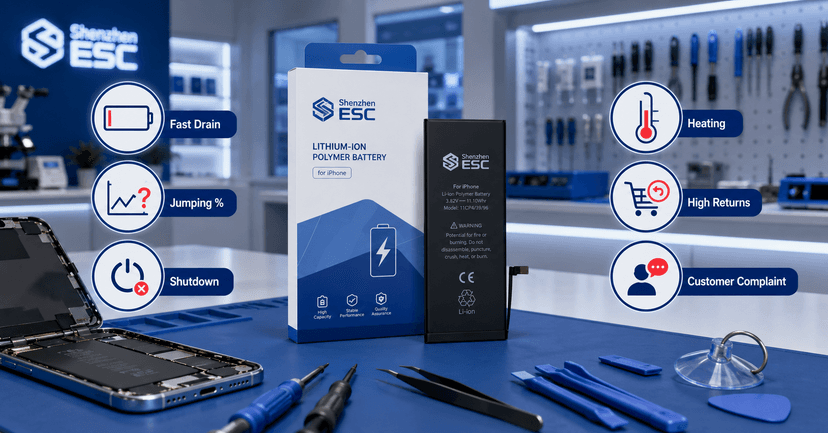
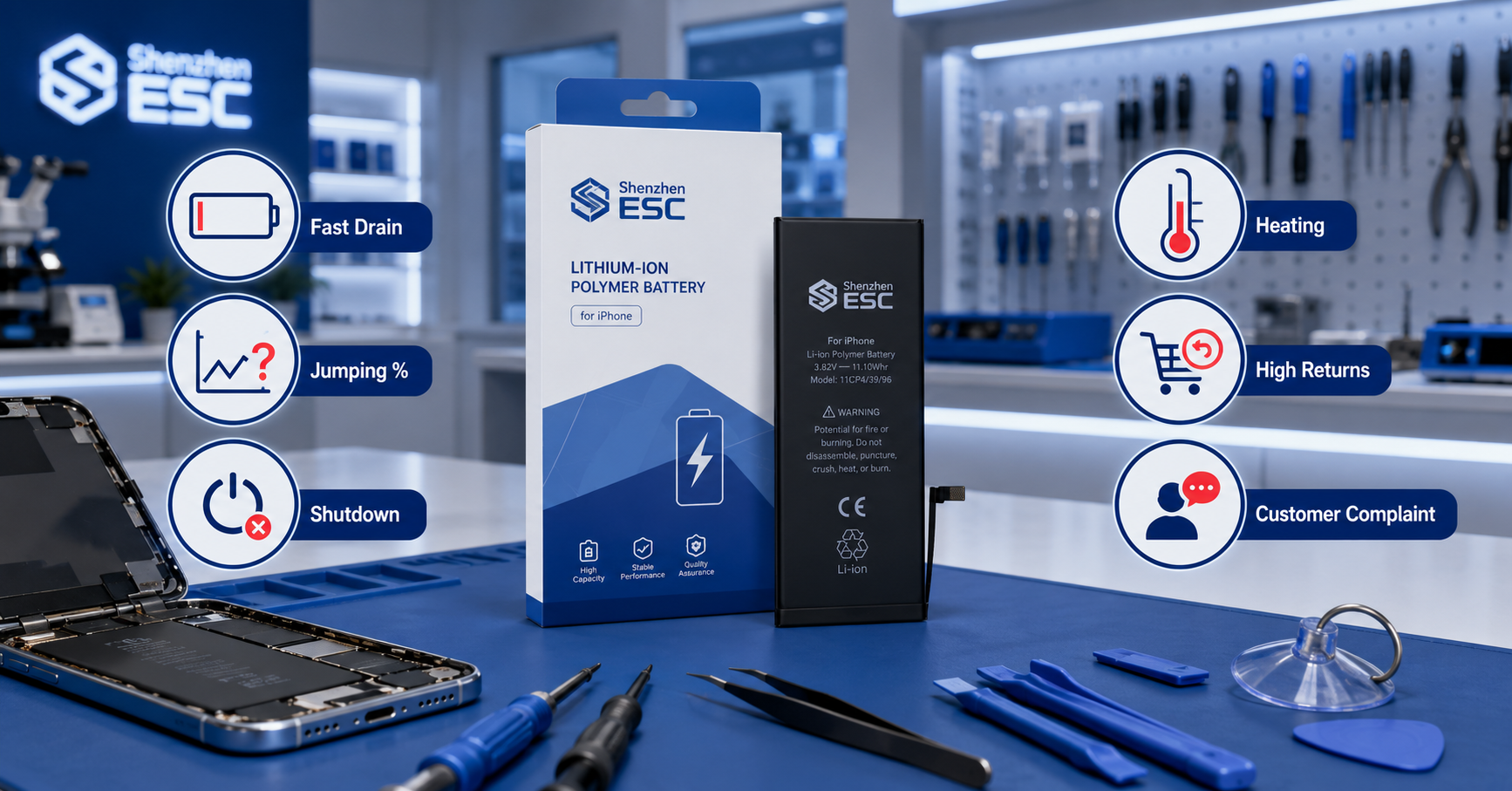
For repair shops, fast drain is one of the most difficult after-sales problems because customers usually blame the replacement battery first.
The customer may return after one or two days and say the new battery drops from 100% to 80% too quickly.
The phone may shut down at 20% or 30%.
The battery percentage may jump after restart.
The phone may heat during charging or normal use.
Standby drain may be much higher than expected.
Battery Health may look normal, but real runtime may still be poor.
For wholesalers, these complaints become warranty claims from repair stores.
For e-commerce sellers, they become negative reviews and return requests.
For private label brands, they become brand trust damage.
The brutal truth is this: one weak battery batch can destroy a repair shop’s confidence, but one motherboard leakage issue can also make a good battery look bad.
This is why B2B buyers need a technical diagnostic mindset before judging why does iPhone battery drain fast after replacement.
Working Principle: Fast Drain Is Usually a System Problem, Not Only a Capacity Problem
An iPhone replacement battery is not only a lithium-ion cell.
It is a battery system made of lithium-ion polymer cell, PCM protection board, flex cable, connector, insulation layer, pouch film, adhesive structure, label and packaging.
The lithium-ion cell stores and releases energy.
The PCM protection board helps manage overcharge, over-discharge, over-current and short-circuit risks.
The flex cable and connector provide power and signal connection.
The phone’s power-management circuit controls charging and discharging behavior.
iOS estimates battery percentage based on battery data, voltage, current, usage load and system behavior.
Fast drain happens when this system cannot deliver stable energy under real use.
A battery with acceptable mAh may still drain fast if internal resistance is high.
A battery with clean appearance may still perform poorly if the discharge curve is unstable.
A battery with good capacity may still trigger complaints if the phone motherboard has leakage current.
A replacement battery may look normal, but if the connector contact is weak, the phone may show unstable charging or sudden shutdown.
Apple also notes that all rechargeable batteries are consumables and their capacity and performance decline over time, which means replacement is normal, but replacement quality must still be tested carefully.
Comparison: Battery Problem vs Phone Problem
Not every fast-drain case comes from the replacement battery.
A professional repair shop should separate battery-related causes from phone-related causes before replacing the battery again.
Battery-related causes may include unstable cell capacity, high internal resistance, poor self-discharge control, PCM mismatch, weak cell consistency, damaged flex cable, poor connector contact, insufficient aging test or exaggerated capacity label.
Phone-related causes may include motherboard leakage, charging IC problems, damaged charging port, shorted components, water damage, background apps, weak signal environment, abnormal system indexing, high screen brightness or heavy app usage.
The difference matters because the solution is completely different.
If the same battery drains fast in one iPhone but performs normally in another known-good iPhone, the original phone may be the real problem.
If several batteries from the same batch show similar fast-drain behavior across different known-good iPhones, the battery batch should be investigated.
If battery percentage jumps after restart, the issue may involve SOC estimation, internal resistance, PCM behavior or phone-side calibration.
If the phone heats even after testing different batteries, the motherboard, charging circuit or software load should be checked.
Repair shops that skip this comparison often lose money by replacing good batteries again and again.
Solution: How to Diagnose iPhone Battery Fast Drain After Replacement
Check the Complaint Pattern First
The first step is to define the drain pattern.
Does the iPhone drain fast during standby?
Does it drain fast only during heavy use?
Does it heat while charging?
Does the percentage jump after restart?
Does it shut down at a specific percentage?
Standby drain often points to background activity, motherboard leakage, signal issue or software process.
Heavy-use drain may point to real capacity, internal resistance or power delivery under load.
Heating may point to battery, charging circuit, motherboard leakage, charger quality or software load.
Sudden shutdown may point to voltage drop, high internal resistance, PCM behavior or power-management issue.
Do not guess before separating the symptom.
Test Voltage and Internal Resistance
Voltage and internal resistance are basic but powerful indicators.
Abnormal voltage may suggest poor storage, self-discharge or battery condition issues.
High internal resistance can cause voltage drop, heat generation, weak peak output and sudden shutdown.
For wholesalers, testing one sample is useless as proof.
Test multiple samples from the same batch and compare the variation.
A good supplier should care about consistency, not only one good reading.
Run a Controlled Capacity Test
Capacity should be tested under controlled conditions.
A practical testing flow is:
Fully charge the battery.
Let it rest.
Discharge under controlled current.
Record mAh and Wh.
Compare the result with rated capacity.
Observe heat and voltage behavior.
This helps identify fake capacity or weak cell performance.
But capacity alone is not enough.
A battery can pass a basic capacity test and still perform badly if internal resistance is high or the PCM behavior is unstable under real phone load.
Check PCM Protection and Discharge Behavior
The PCM protection board affects charging, discharging and safety behavior.
Poor PCM matching can lead to no charging, abnormal shutdown, heating, unstable percentage or fast-drain complaints.
Buyers should ask whether the supplier tests PCM function, charge-discharge behavior and aging performance before shipment.
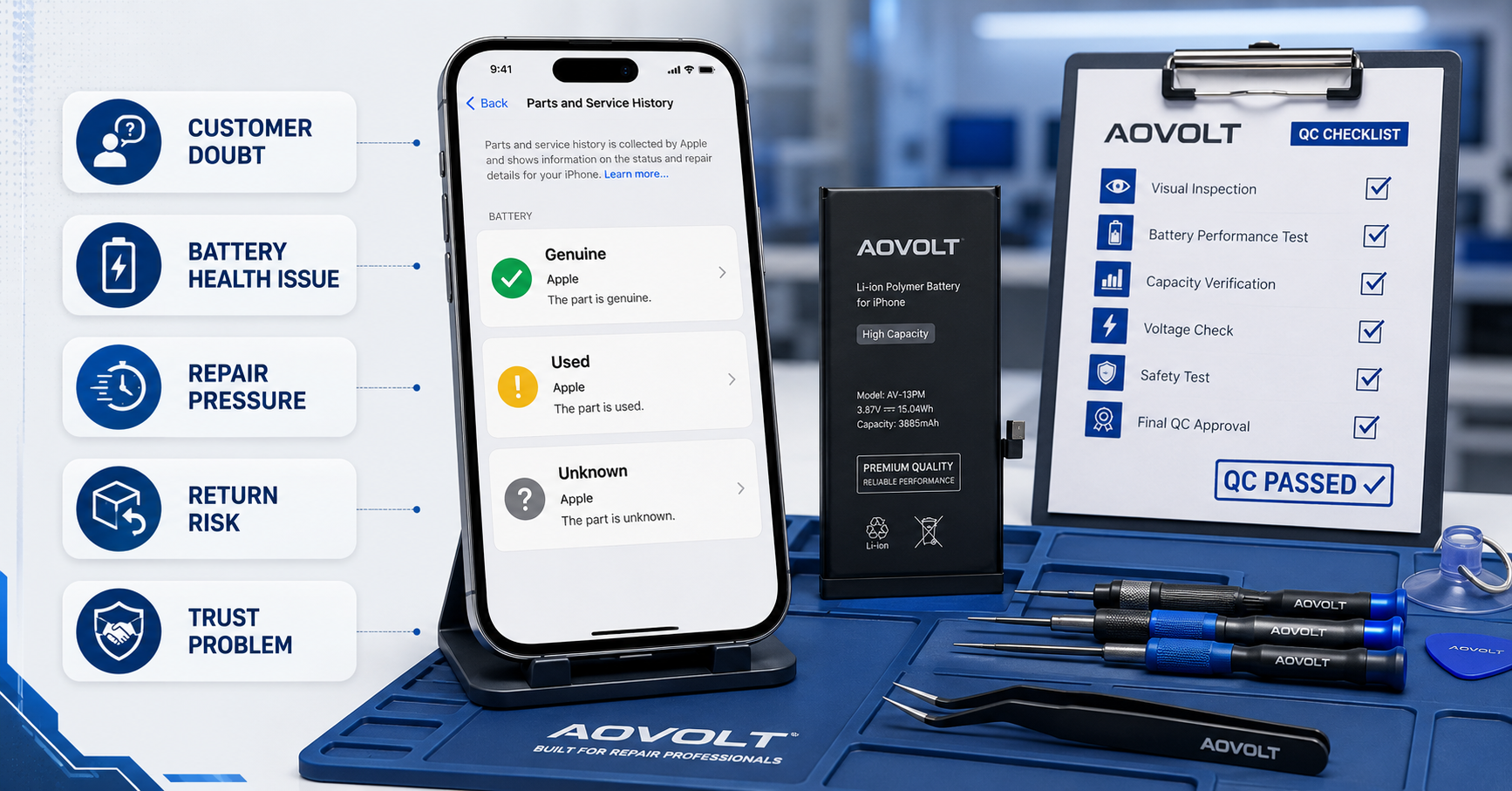
For iPhone repair, buyers should also consider post-repair information and customer-facing messages. Apple states that supported iPhone models can show battery-related repair information in Parts and Service History, including whether a part is shown as Genuine, Unknown, Used or Unverified depending on model, software version and repair condition.
Install the Battery in a Known-Good iPhone
This is one of the most practical checks.
If the battery performs normally in a known-good phone, the original phone may have motherboard leakage, charging circuit fault, software issue or abnormal power consumption.
If the battery drains fast in several known-good phones, the battery itself should be treated as suspicious.
This simple comparison can save repair shops from unnecessary replacements.
Check Motherboard Leakage and Charging Circuit
Fast drain after replacement often comes from the phone itself, especially if the device has been dropped, repaired before, water-damaged or used with poor chargers.
Repair technicians should check standby current, charging IC behavior, shorted components, charging port condition, abnormal heat areas and board-level leakage.
A replacement battery cannot fix a phone with leakage current.
This is where many repair shops get tricked by symptoms.
They keep changing batteries, but the real thief is the board.
Review Installation Quality
Installation damage can also cause fast drain or unstable performance.
Check whether the flex cable was bent too hard.
Check whether the connector is seated correctly.
Check whether the battery pouch was pressed, punctured or stressed.
Check whether adhesive placement creates pressure.
Check whether the phone was reassembled cleanly.
A good battery can become a bad repair result if the installation process is rough.
Shenzhen ESC Solution: Reducing Fast-Drain Complaints from Product and Process
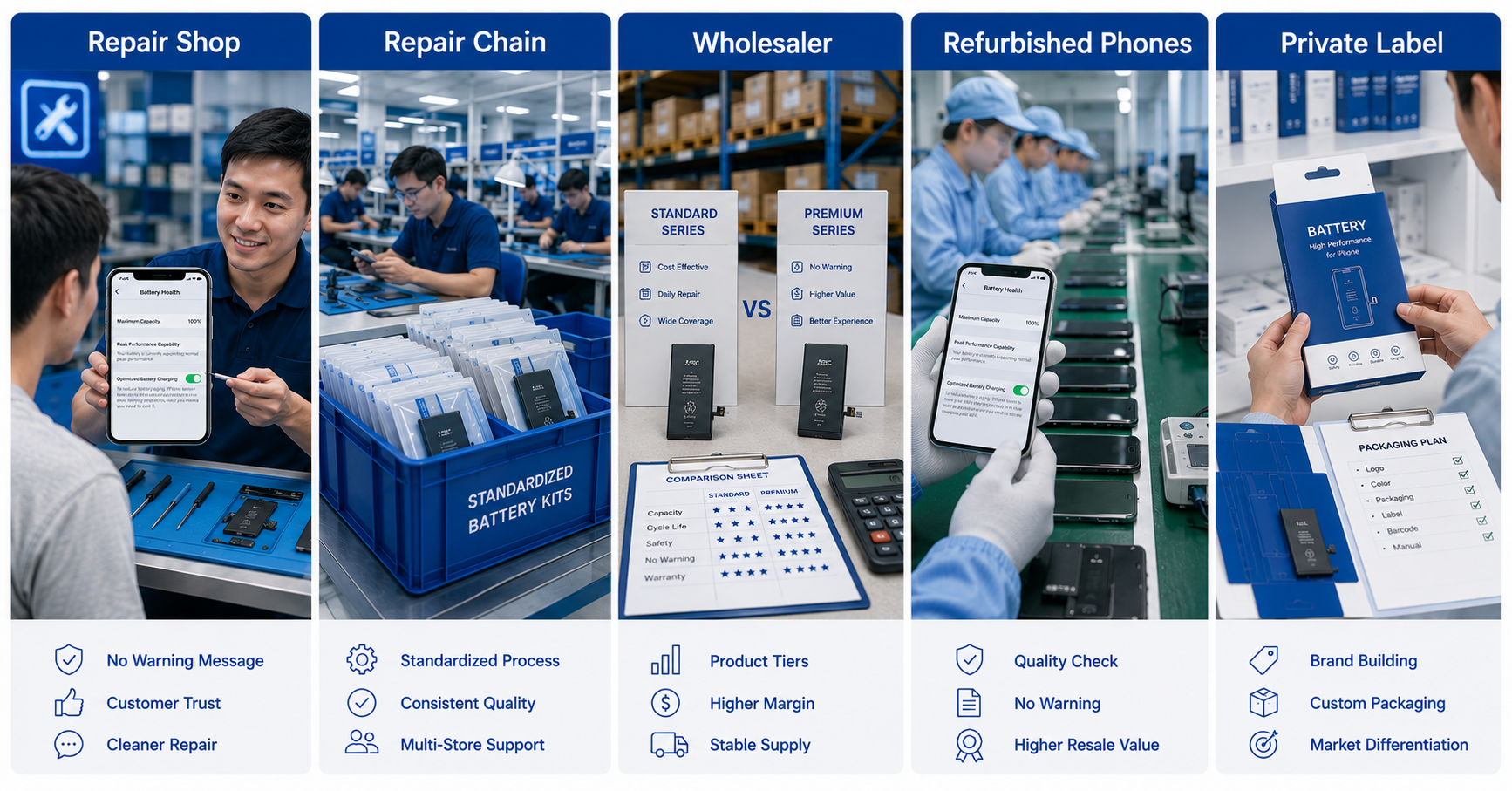
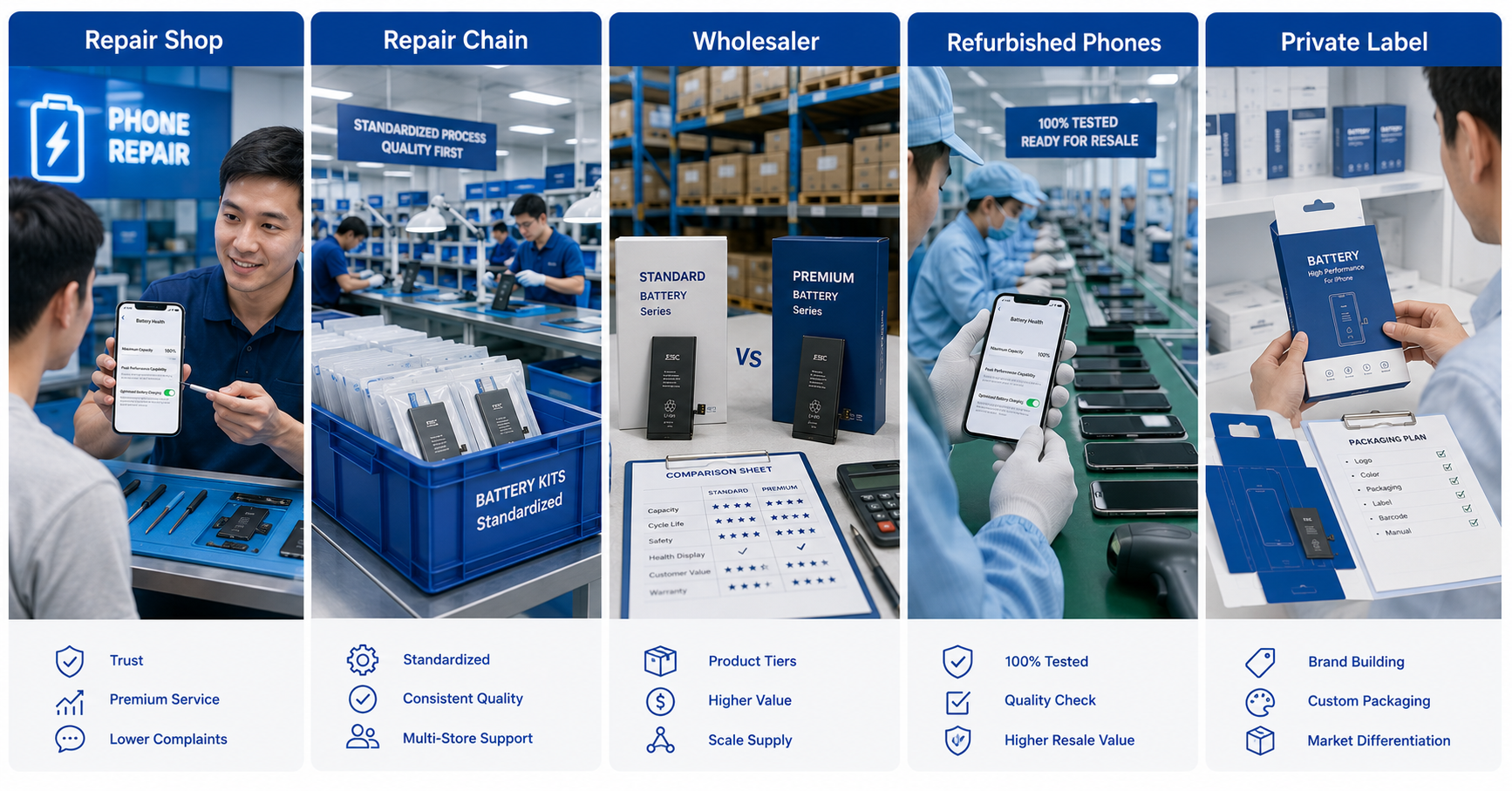
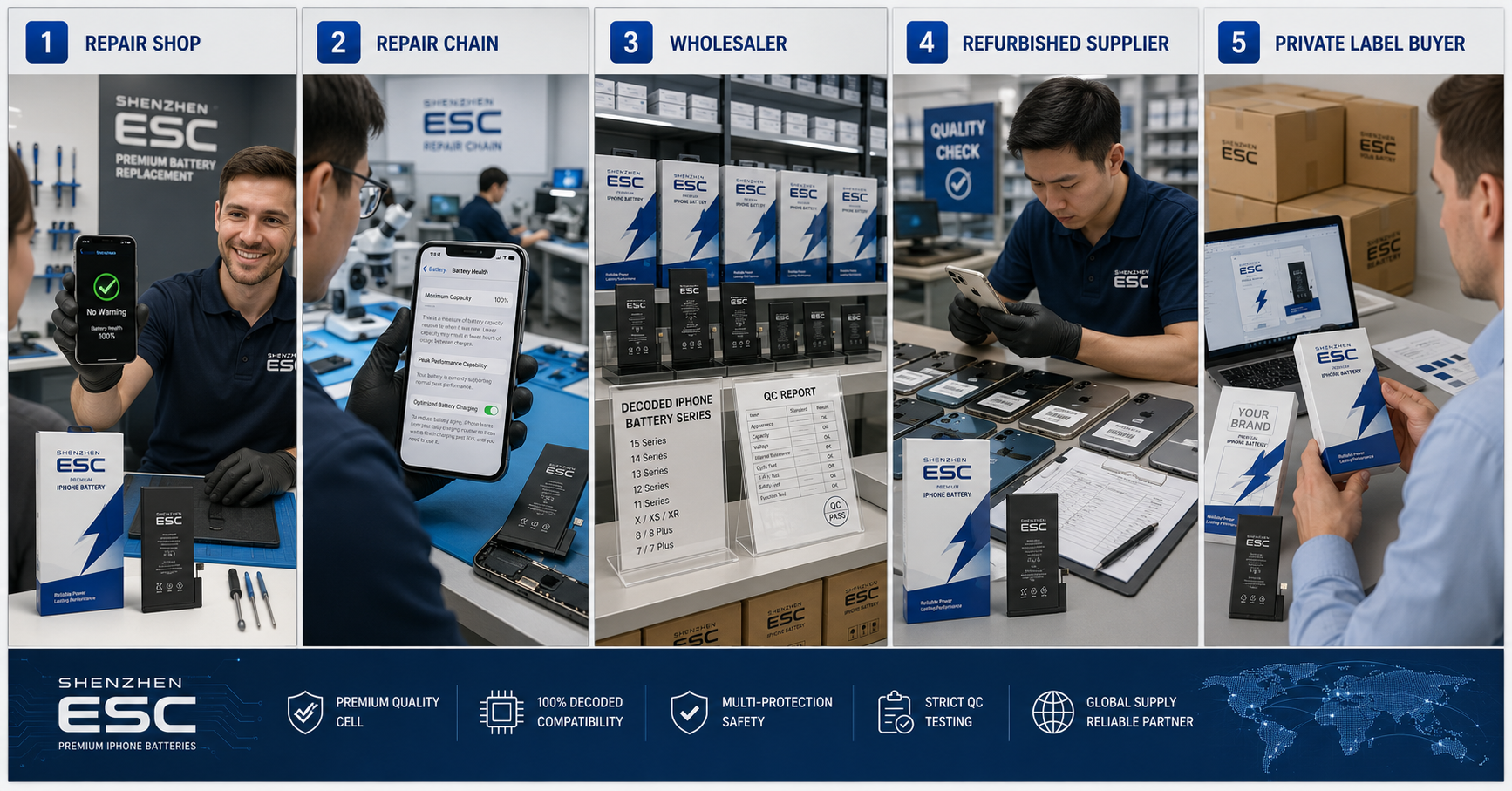
Shenzhen ESC supports repair shops, wholesalers, repair chains, refurbished phone suppliers, e-commerce sellers and private label brands with iPhone replacement battery solutions.
For buyers asking why does iPhone battery drain fast after replacement, Shenzhen ESC focuses on practical B2B control points: stable cell sourcing, realistic capacity, internal resistance control, PCM protection, model fit, flex cable accuracy, connector matching, sample testing, packaging protection and after-sales analysis.
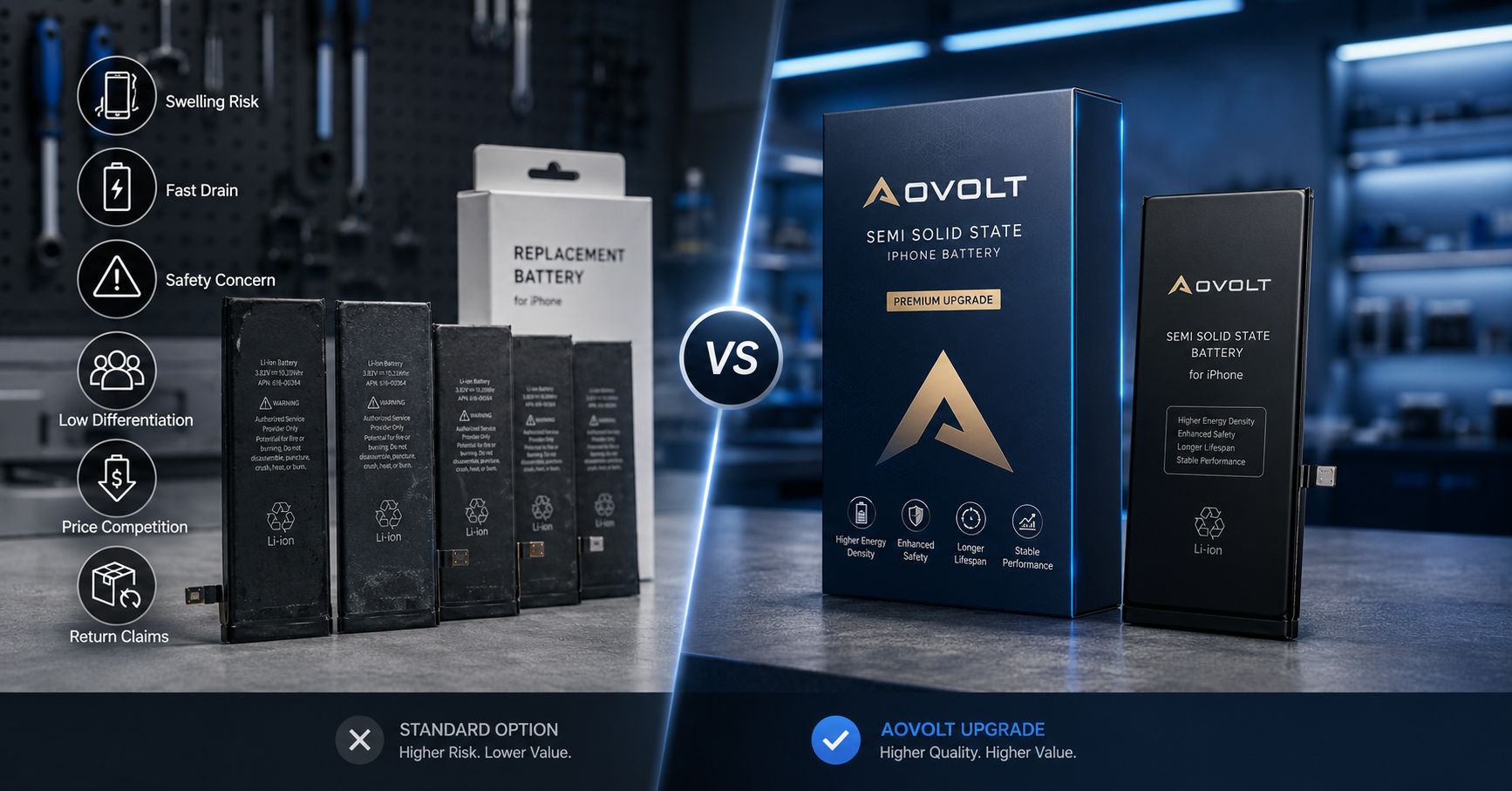
The product direction can include standard capacity iPhone batteries, high capacity iPhone batteries, Battery Health display options, decoded battery solutions, no-pop-up warning options and OEM packaging.
The goal is not to promise that no customer will ever complain.
That would be childish.
The real goal is to reduce avoidable fast-drain cases through better product selection, sample testing, batch consistency and technical communication.
Core Advantages: Why Fast-Drain Control Protects B2B Profit
The first advantage is fewer warranty claims.
When buyers check capacity, internal resistance, PCM function and installation fit before bulk orders, many weak products can be filtered earlier.
The second advantage is better repair-shop reputation.
Customers judge repair quality by real runtime, not by supplier promises.
The third advantage is stronger wholesale stability.
Wholesalers that supply stable batteries receive fewer disputes from downstream repair stores.
The fourth advantage is better e-commerce reviews.
Online customers rarely understand PCM, IR or SOC logic.
They only know whether the battery lasts.
The fifth advantage is better private label protection.
If your logo is on the package, every fast-drain complaint becomes your brand problem.
Application Scenarios: Where Fast-Drain Control Matters Most
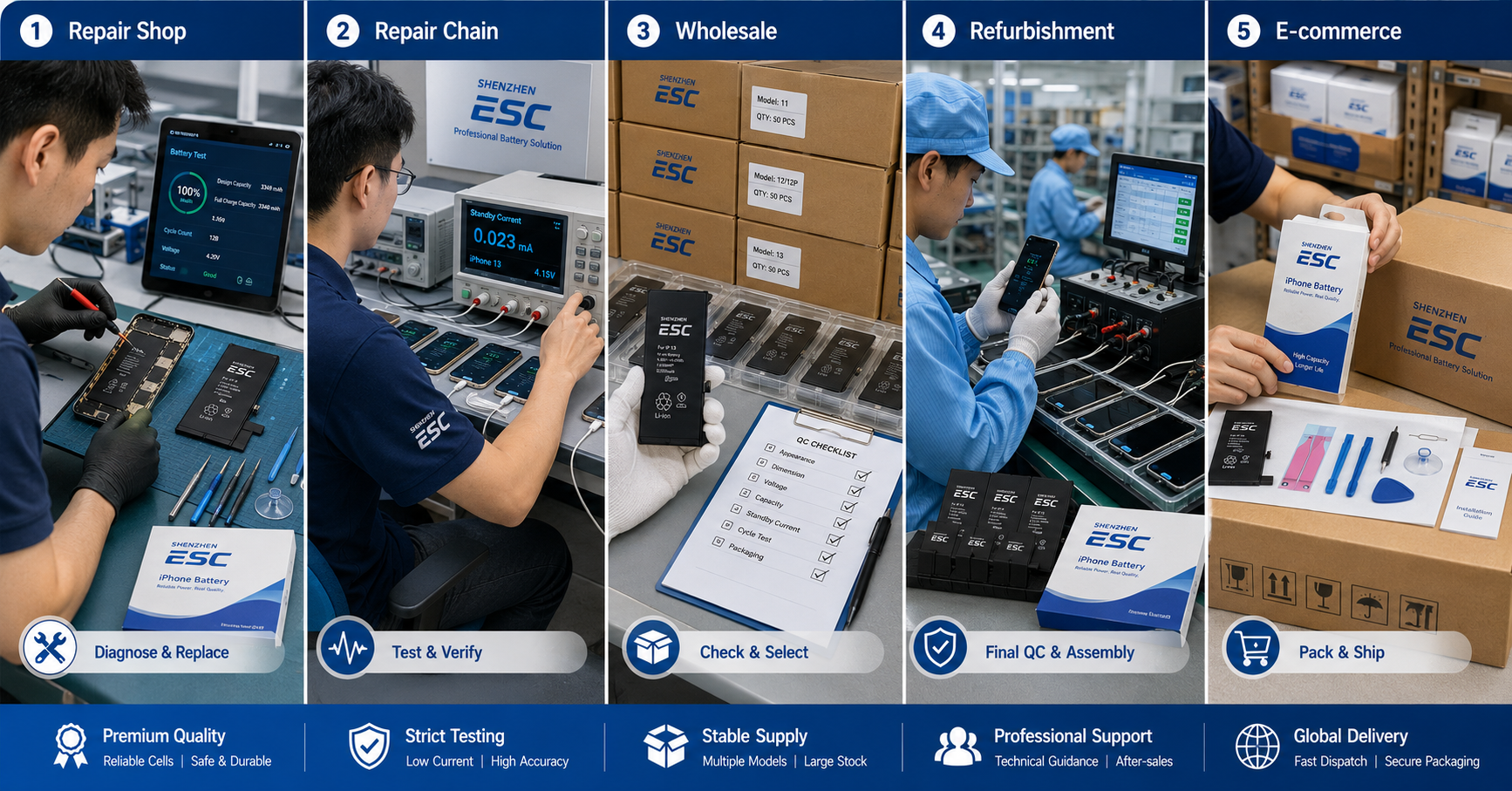
Repair shops need replacement batteries that reduce customer return visits after installation.
Repair chains need consistent batteries across multiple stores so technicians can follow the same testing and repair process.
Wholesalers need batch consistency because one unstable batch can create complaints across many downstream customers.
Refurbished phone suppliers need predictable runtime before used iPhones are resold.
E-commerce sellers need batteries that match product claims and reduce return risk.
Private label brands need stable performance because every fast-drain complaint damages local brand trust.
In all these scenarios, the business logic is the same.
Stable runtime creates trust.
Trust creates repeat orders.
Selection Advice: How Different Buyers Should Choose
Repair shops should choose iPhone batteries with stable installation fit, realistic capacity, low internal resistance and clear after-sales communication.
They should also keep diagnostic tools ready to separate battery problems from phone problems.
Wholesalers should test multiple samples from one batch before large orders.
They should compare voltage, internal resistance, capacity, discharge behavior, installation fit and complaint history.
Refurbished phone suppliers should choose batteries with predictable performance and easy installation.
For refurbishment, consistency is more important than inflated capacity claims.
E-commerce sellers should avoid exaggerated mAh descriptions.
A bigger number may increase clicks, but if runtime does not match expectations, returns will punish the product.
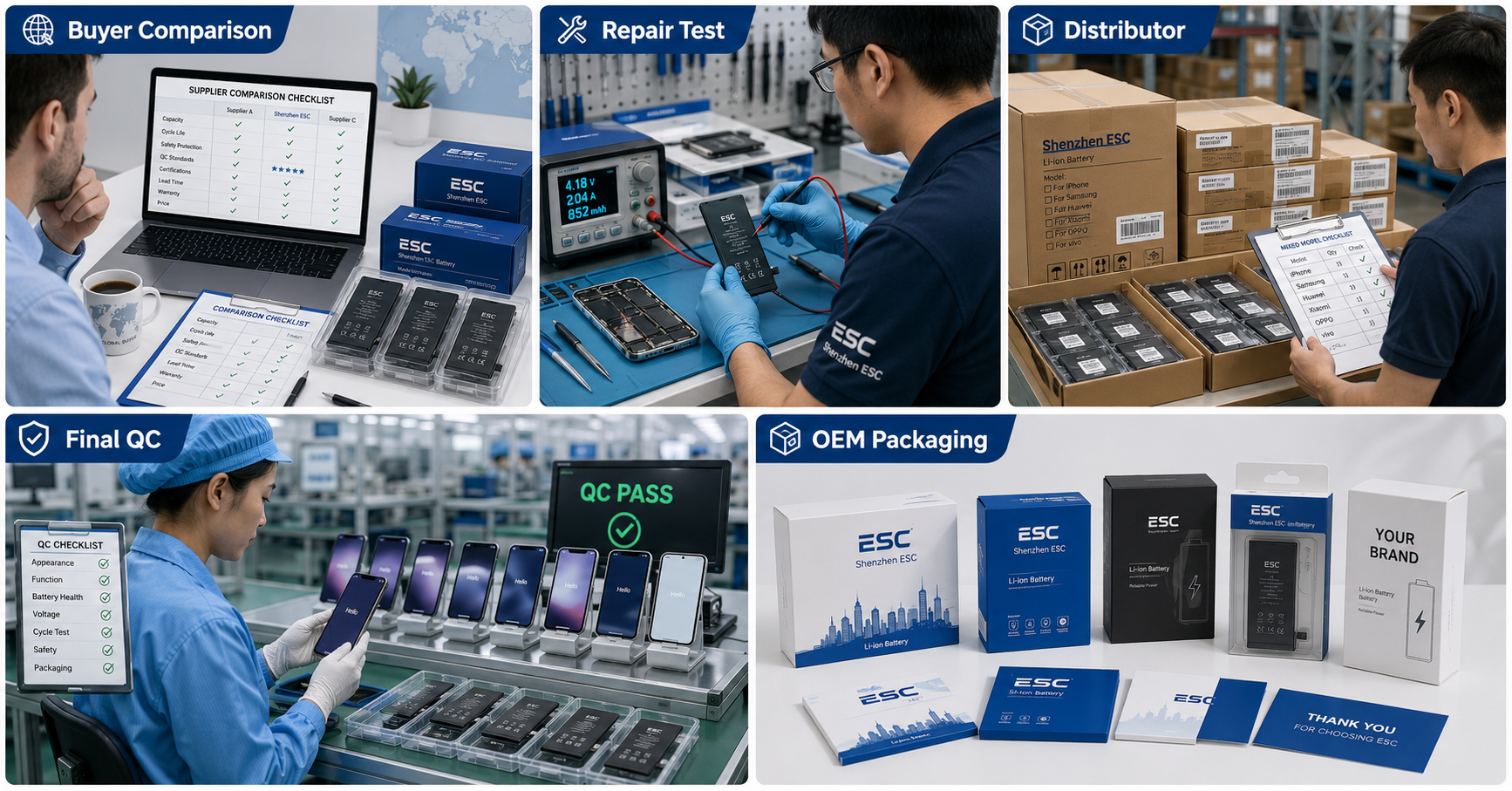
Private label buyers should choose an OEM partner that supports product tier planning, sample testing, packaging and complaint analysis.
Before bulk purchasing, buyers should confirm sample testing, warranty terms, packaging protection, QC process and after-sales analysis support.
FAQ
Why does iPhone battery drain fast after replacement?
An iPhone battery may drain fast after replacement because of unstable cell capacity, high internal resistance, PCM mismatch, connector contact problems, inaccurate percentage behavior, motherboard leakage, charging circuit faults, software background activity, installation damage or exaggerated capacity claims.
Does fast drain always mean the new battery is defective?
No.
Fast drain may come from the replacement battery, but it may also come from the iPhone motherboard, charging IC, software, signal environment, damaged charging port or installation process.
Can a battery show good capacity but still drain fast?
Yes.
Capacity is only one indicator.
A battery may show acceptable mAh but still perform poorly if internal resistance is high, discharge curve is unstable or PCM behavior is poorly matched.
How can repair shops identify whether the battery or phone is the problem?
Repair shops can test voltage, internal resistance, capacity, standby current, charging behavior, heat, percentage stability and performance in another known-good iPhone.
If several batteries drain fast in the same phone, the phone should be inspected.
Why does battery percentage jump after replacement?
Battery percentage jumping may be caused by SOC estimation issues, high internal resistance, unstable voltage under load, PCM behavior, software reporting or phone-side power-management problems.
Can high-capacity iPhone batteries reduce fast drain complaints?
High-capacity batteries can improve runtime if the capacity is real and the battery is properly designed.
Fake high-capacity labels create more complaints, not fewer.
What should wholesalers test before buying iPhone batteries in bulk?
Wholesalers should test voltage, internal resistance, capacity, charge-discharge behavior, installation fit, heat, standby drain and batch consistency across multiple samples.
Can Shenzhen ESC help reduce iPhone fast-drain complaints?
Yes.
Shenzhen ESC supports B2B buyers with iPhone replacement battery solutions focused on realistic capacity, internal resistance control, PCM protection, sample testing, model selection, QC discussion and OEM packaging.
Conclusion
Understanding why does iPhone battery drain fast after replacement helps repair shops, wholesalers and private label buyers avoid wrong warranty decisions, unnecessary replacements and weak supplier choices.
Fast drain can come from the battery cell, internal resistance, PCM, connector contact, iPhone motherboard, charging circuit, software, installation process or unrealistic capacity claims.
A professional sourcing process should combine sample testing, real-device checking, electrical measurement, installation review and supplier quality evaluation.
Shenzhen ESC supports B2B customers with iPhone replacement battery solutions, including realistic capacity, PCM protection, model fit, quality-control support, Battery Health display options, decoded solutions and OEM packaging.
Contact Shenzhen ESC to request iPhone battery samples, model recommendations and wholesale pricing for your repair or distribution business.