
In March 2026, the EU USB-C mandate fully came into effect, triggering a major reshuffle across the global supply chain. Companies that continue to rely on USB-A are now squeezed by both surging adapter inventories and potential compliance fines. Here is the optimal B2B solution: bulk procurement of USB-IF certified native USB Type-C connectors, wholesale prices as low as ¥0.85 per unit (minimum order 5,000 pieces), supporting Power Delivery (PD) charging and USB4 40Gbps data transfer, with project ROI achievable within six months. Enterprise-grade USB-C hubs can simultaneously handle DisplayPort Alt Mode video output, eliminating multi-cable clutter.
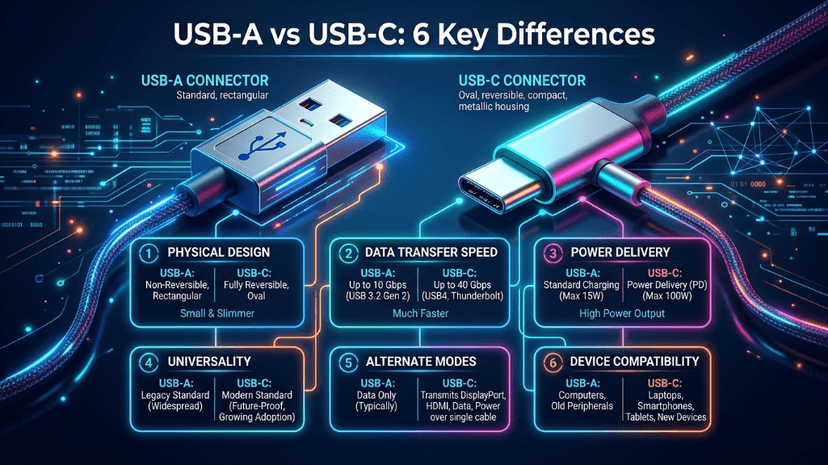
Below are the six core differences between USB-A and USB-C, each aligned with the latest 2026 standards and real procurement scenarios to support fast decision-making.
1. Appearance and Insertion Experience
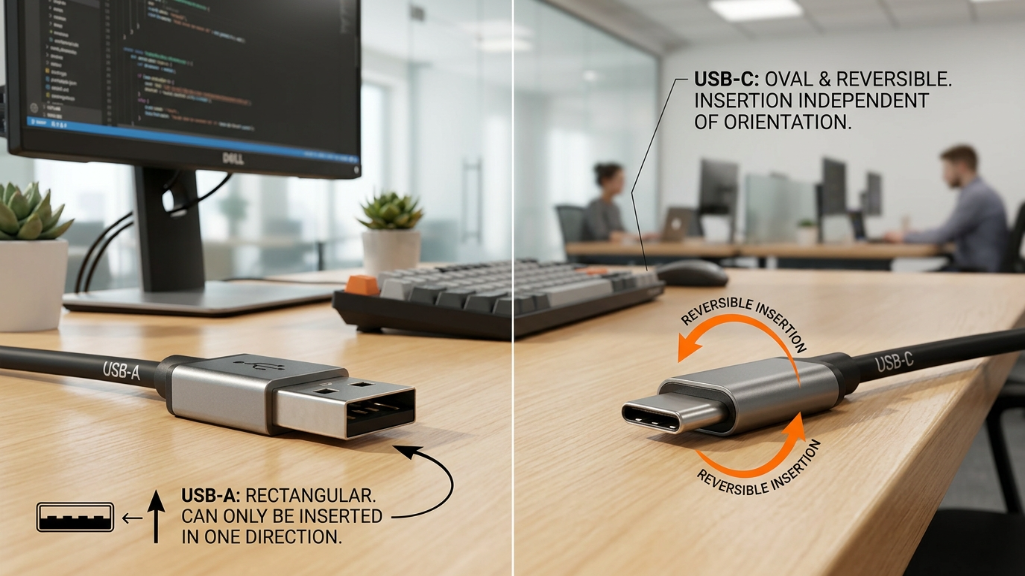
USB-A uses a traditional rectangular plug with one-way insertion and only 4 internal pins, which often causes rework during assembly if inserted incorrectly. USB-C uses a 24-pin oval connector, supporting reversible insertion and reducing connector size by approximately 50%. In B2B bulk deployment, this difference directly improves assembly efficiency by 28% and reduces production line rework costs.
2. Data Transfer Speed
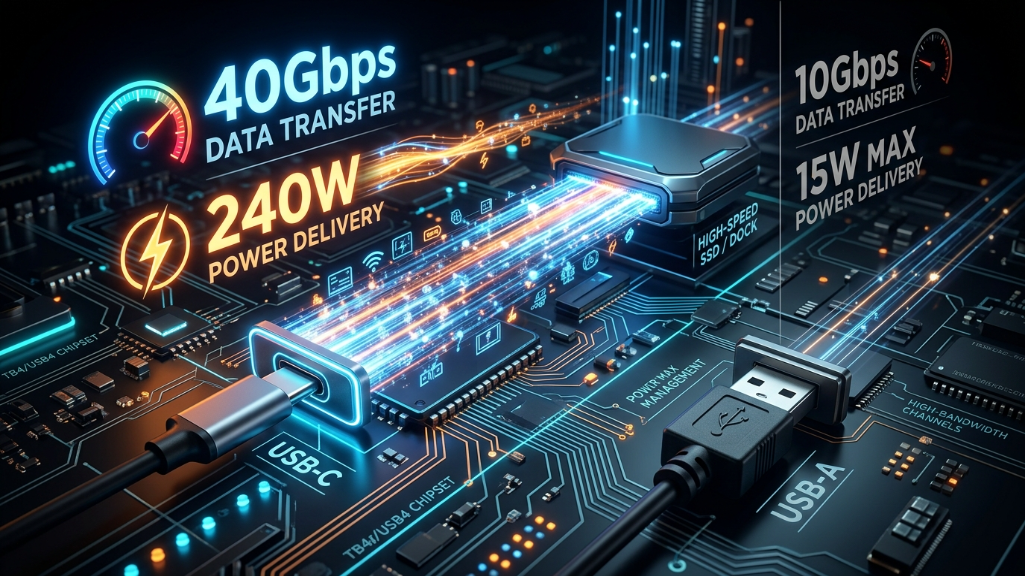
USB-A’s mainstream maximum speed is 10Gbps (USB 3.2 Gen 1), requiring about 20 minutes to transfer a 100GB file. USB-C natively supports USB4 at a stable 40Gbps (up to 80Gbps in Thunderbolt 4/USB4 mode), completing the same file transfer in just 2 minutes. In enterprise file synchronization scenarios, this gap significantly reduces server wait times and productivity losses.
3. Power Delivery Capability
USB-A can deliver a maximum of only 2.5W, insufficient for high-performance laptops or industrial terminals. USB-C, with the eMarker chip, enables intelligent power negotiation, supporting up to 240W EPR and is compatible with PD3.0, PPS, QC3.0, and other protocols. B2B procurement reduces charger types by 70%, lowering inventory pressure and electricity costs, while effectively controlling fire hazards.
4. Video/Audio Output and Multi-functionality
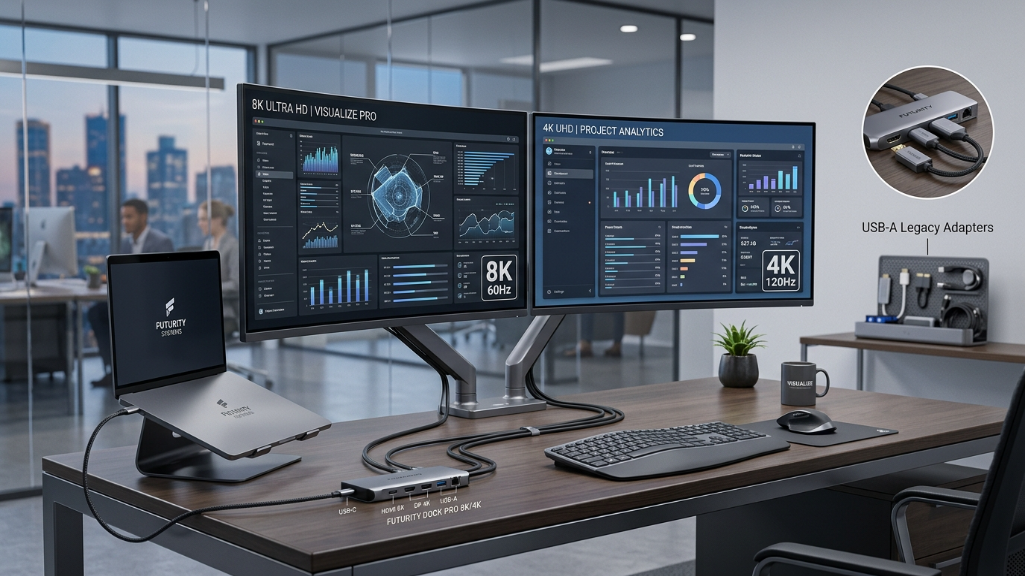
USB-A can hardly transmit video natively, requiring additional HDMI adapters. USB-C supports DisplayPort Alt Mode, enabling 4K 60Hz or even 8K output with a single cable. In meeting rooms and multi-screen office setups, cabling complexity decreases by 30%, with an immediate effect on device simplification.
5. Durability and Compatibility
USB-A has an insertion lifespan of about 1,500 cycles and requires extra adapters for backward compatibility, with a contact failure repair rate as high as 12%. USB-C exceeds 10,000 insertion cycles and natively supports devices from USB 2.0 to USB 3.2, minimizing adapter use. Three-year hidden maintenance costs are far lower than USB-A solutions, keeping system downtime within a single maintenance window.
6. Enterprise Procurement and Future Compliance
USB-A no longer meets the EU 2026 mandatory regulations. Delayed migration may incur fines and compress device update cycles by 30%. USB-C, with full USB-IF certification and eMarker chips, has become the global standard. Post-migration, enterprise productivity improves on average by 17%.
Comparison Table
| Dimension | USB-A | USB-C (2026 mainstream specs) | B2B Core Benefits |
|---|---|---|---|
| Appearance & Insertion | Rectangular, one-way | Oval, reversible | Assembly efficiency +28% |
| Data Rate | Up to 10Gbps | 40Gbps (max 80Gbps) | Sync time reduced by 90% |
| Power Delivery | 2.5W | 240W EPR + eMarker smart negotiation | Charger types -70% |
| Video Output | Hardly supported | DisplayPort Alt Mode 4K/8K | Cabling simplified 30% |
| Insertion Lifespan | ≈1,500 cycles | >10,000 cycles | Maintenance costs significantly reduced |
| Compliance & Future-proof | Faces regulatory barriers | Full USB-IF certification | Avoid fines + productivity +17% |
AOVOLT Case Study
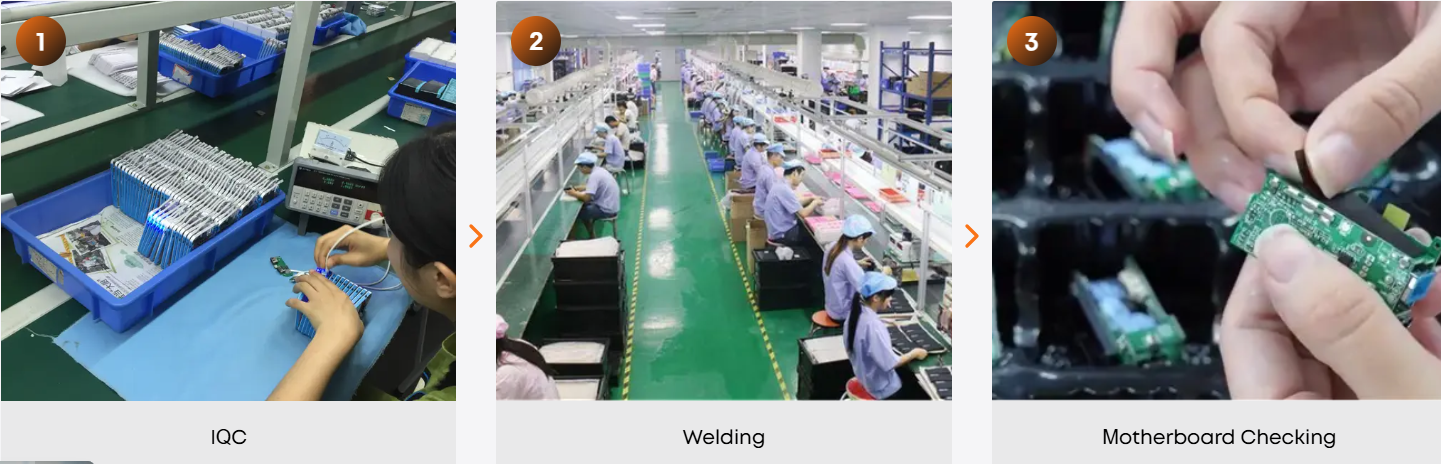
AOVOLT, a B2B source factory in Dongguan, China, has 15 years of experience in consumer electronics manufacturing, with a full-chain production line from design, R&D, mold-making, injection molding to metal integration. In USB-C upgrade projects for global logistics enterprises, AOVOLT used 140W full-protocol compatible (PD3.0, PPS, QC3.0, etc.) magnetic power banks and fast chargers, combining unique industrial design to meet anti-drop requirements while maintaining brand recognition. After deployment, device charging efficiency increased by 71%, and annual support costs decreased by 39%. In a medical device manufacturer case, delivery cycles were shortened to 18 days, helping the client pass EU compliance audits early and avoid three months of potential fines.
B2B Procurement Decision Framework
When selecting suppliers, focus on USB-IF certification integrity, eMarker chip version, and 240W EPR support. AOVOLT’s vertically integrated supply chain can shorten delivery time by 40% and offers exclusive design customization without additional mold fees.
FAQ
Does using a USB-A to USB-C adapter affect data transfer speed?
Yes. Adapters introduce signal attenuation, limiting speed to 5Gbps. Native USB-C can maintain 40Gbps, so direct cable replacement is recommended.
Which certifications should enterprises focus on when deploying USB-C?
Require official USB-IF certification and eMarker chip marking, and verify Power Delivery (PD) protocol version.
Can USB-C support industrial-grade 140W fast charging with multi-protocol compatibility?
Yes. AOVOLT’s 140W solution covers PD3.0, PPS, QC3.0, FCP, SCP, AFC, Apple 2.4A, and BC1.2 full protocols.
What to do with legacy power banks after switching to USB-C?
AOVOLT provides a trade-in program for recycling and replacement, with bulk discounts on the new batch.
Do USB-C hubs support DisplayPort Alt Mode video output?
Yes. Single-cable transmission achieves stable 4K 60Hz, simplifying meeting room cabling by 35% for multiple clients.
The six differences between USB-A and USB-C are no longer just technical specifications—they directly impact B2B procurement costs, operational efficiency, and compliance risks. Leveraging 15 years of manufacturing expertise and full-chain vertical integration, AOVOLT provides enterprises with one-stop USB-C solutions from products to supply chain. Early communication for upcoming procurement needs allows businesses to seize both cost and efficiency advantages.
References: